Universities and credentialing teams still face one urgent puzzle: maintaining academic honesty outside physical rooms. Automated online exam proctoring now anchors many digital programs, yet myths persist. Decision-makers often ask whether it truly deters cheating in at home proctored exams, respects privacy, or scales fairly. This article delivers concise, up-to-date answers drawn from research, court rulings, and vendor data. We cut through jargon so every reader can judge if an ai based remote proctoring system fits their specific needs.
Automated Online Exam Proctoring
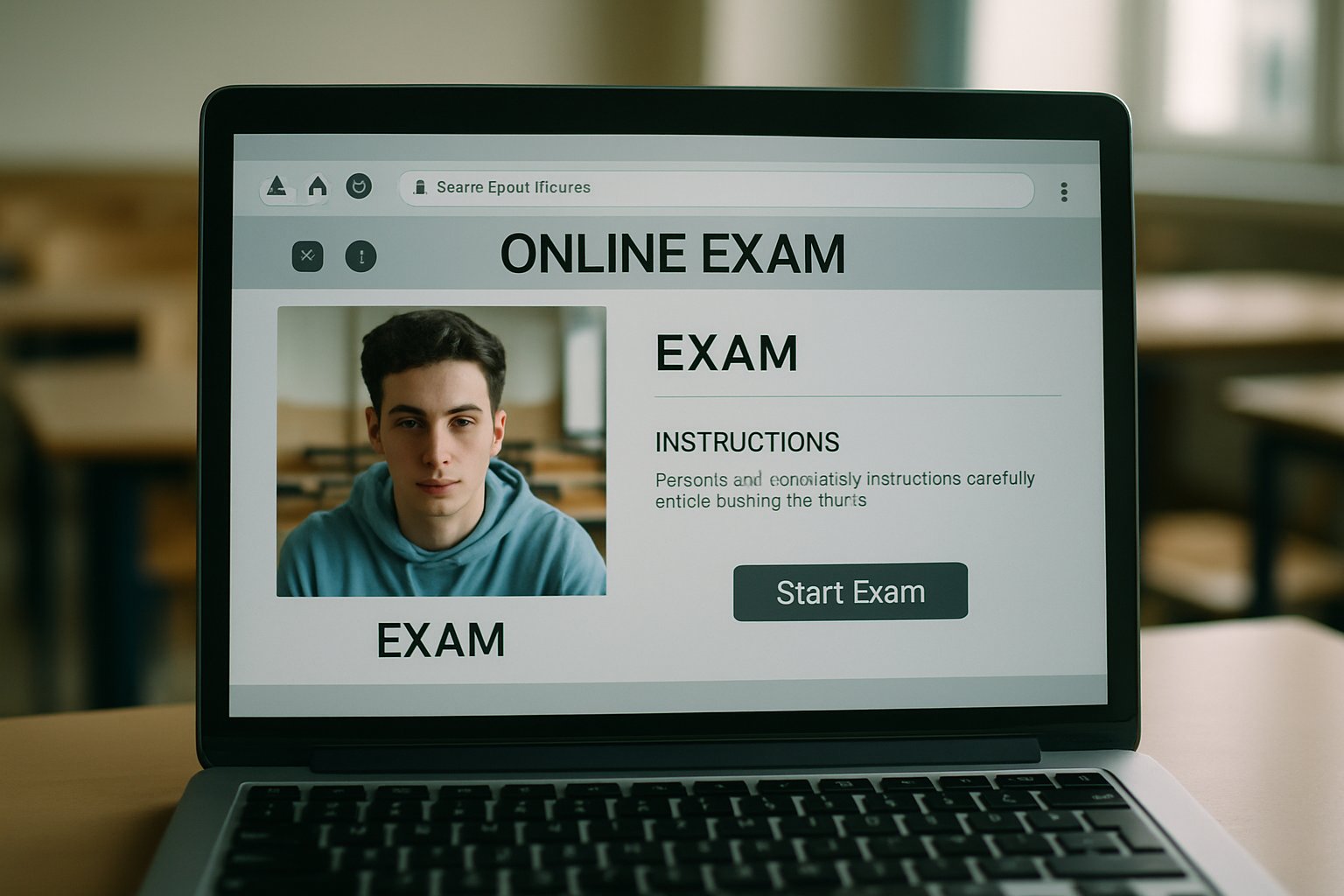
The term describes software that records webcams, microphones, and screens while algorithms flag suspicious behavior. Systems can work alone or route alerts to trained reviewers. Because everything happens online, institutions gain global reach without hiring hundreds of human invigilators. However, the same visibility raises privacy debates.
Recent policy shifts focus on room scans and biometric storage limits. Courts, like in Ogletree v. Cleveland State, ruled intrusive scans unconstitutional in certain contexts. Consequently, many vendors updated workflows to optional panoramic sweeps instead of mandatory full scans.
Summary: The technology blends machine vision, identity checks, and cloud storage to monitor exams remotely. Institutions must weigh reach against regulatory scrutiny. Next, we explore why adoption keeps rising.
Why Interest Has Surged
Pandemic closures sparked the first wave of adoption, yet growth continued through 2025. Hybrid learning models now demand reliable off-site assessments year-round. Moreover, employers and certification bodies seek verified online credentials to speed hiring.
Market analysts place 2025 global revenue between US$800 million and US$1.36 billion, with forecasts above 10% CAGR to 2032. Cost comparisons also matter; automated services often price far below live proctor staffing.
Summary: Continuous remote learning and credential portability fuel steady demand. Therefore, understanding the technical stack becomes essential.
Core Technology Methods Explained
An ai based remote proctoring system combines several modules:
- Lockdown browser stops tab switching and URL typing.
- Facial detection verifies presence and matches ID photos.
- Behavior analytics watch gaze direction, voice spikes, and extra devices.
- Human review layers audit algorithm flags before final reports.
Many vendors now publish SOC 2 or ISO 27001 audits to prove security. Some even store immutable logs on blockchain for dispute resolution.
Summary: Layered controls tighten exam integrity while offering audit trails. Yet, effectiveness against cheating in at home proctored exams remains debated. Let’s review the evidence.
Evidence On Exam Cheating
Peer-reviewed studies paint a complex picture. Low-effort cheating drops when cameras record, but sophisticated collusion still occurs. One 2023 integrity survey found 37% of students hit bandwidth issues and 21% saw face-detection failures.
Experts therefore recommend multiple assessment formats instead of relying solely on automated online exam proctoring. They also call for open publication of false-positive rates, something few vendors share.
Summary: Data shows partial deterrence but also systemic gaps. Consequently, risk analysis must consider technical and human factors.
Key Risks And Concerns
Privacy groups argue that compulsory room scans violate home sanctity. Disability advocates document mis-flagging of neurodivergent behaviors. Additionally, researchers uncovered racial bias when face models missed darker skin tones more often.
Stress is another cost. Surveys link heightened anxiety to constant surveillance, especially during cheating in at home proctored exams allegations. These findings push universities to offer opt-out pathways.
Summary: Bias, privacy, and mental health form the core stakeholder worries. Next, we outline practical safeguards.
Best Practice Checklist Today
Institutions can mitigate issues with a structured checklist:
- Demand documented accuracy across demographics.
- Set data-retention limits and deletion timelines.
- Pilot the system with diverse students before rollout.
- Offer alternatives for documented accommodations.
- Publish clear appeal and review procedures.
Furthermore, pair proctoring with open-book or project tasks to reduce high-stakes pressure. When done, disclose every criterion used by the ai based remote proctoring system.
Summary: Transparent policies and multiple assessment modes lower risk. The final section reviews current suppliers and growth forecasts.
Market Trends And Players
Key vendors include Proctorio, Respondus, Honorlock, Examity, PSI, and newer entrants like Integrity Advocate. Each platforms different mixes of automation and live review.
Procurement teams now request VPAT accessibility reports and independent bias audits before signing. Meanwhile, vendors compete on user experience, touting no-download browsers and near-instant identity checks.
Summary: Competition increasingly centers on transparency and student comfort. Those elements shape future adoption curves.
Conclusion: Automated online exam proctoring remains a useful but imperfect tool. Careful vendor vetting, clear policies, and diverse assessment designs cut most risks while preserving scale.
Why Proctor365? Proctor365 delivers automated online exam proctoring with advanced AI identity verification, scalable cloud monitoring, and human audit layers trusted worldwide. Experience lower false positives and higher student confidence by visiting Proctor365.ai today.
Frequently Asked Questions
- How does automated online exam proctoring work?
Automated online exam proctoring monitors exams by using AI to record webcam, microphone, and screen activity. It uses facial detection, behavioral analytics, and human review layers to maintain exam integrity while deterring cheating. - What are the benefits of an AI based remote proctoring system?
An AI based remote proctoring system provides secure identity verification, fraud prevention, automatic alerts, and scalable cloud monitoring. This combination ensures academic integrity and minimizes cheating risks during online assessments. - How does Proctor365 uphold exam integrity and student privacy?
Proctor365 upholds exam integrity and student privacy by utilizing advanced AI proctoring, identity verification, and human audits. Its flexible scanning options, clear data-retention policies, and unbiased algorithms ensure secure and fair assessments. - How does Proctor365 outperform traditional proctoring solutions?
Proctor365 outperforms traditional proctoring by offering lower false positives, real-time cloud monitoring, and swift identity checks. Its scalable, user-friendly platform delivers enhanced exam security and a more reliable assessment experience.