Remote proctor cheating is the single biggest headache for digital assessment teams moving into 2026. Consequently, stakes are soaring. The latest Journal of Academic Ethics review found 44.7% of students admitted online dishonesty. Meanwhile, market reports predict online proctoring revenues will triple by 2029, showing institutions will not retreat. However, recent California Bar litigation proved that scale without resilience invites disaster. As adoption accelerates, leaders need evidence-based, student-centred defence plans. This article distills fifteen advanced techniques that universities, ed-tech firms, and corporate teams can deploy today. We balance technology, policy, and pedagogy, highlighting lessons from frontline incidents and research labs. Furthermore, we align each tactic with emerging privacy standards and accessibility obligations. By the end, you will hold a practical roadmap for resilient online exam security next year. Let us begin by examining the cheating landscape.
Remote Proctor Cheating Data
Research still paints a worrying picture. During COVID-19, self-reported remote proctor cheating almost doubled compared with pre-pandemic levels. Moreover, civil-liberties groups argue excessive surveillance harms trust and participation. Institutions therefore need solid evidence before investing in new controls.
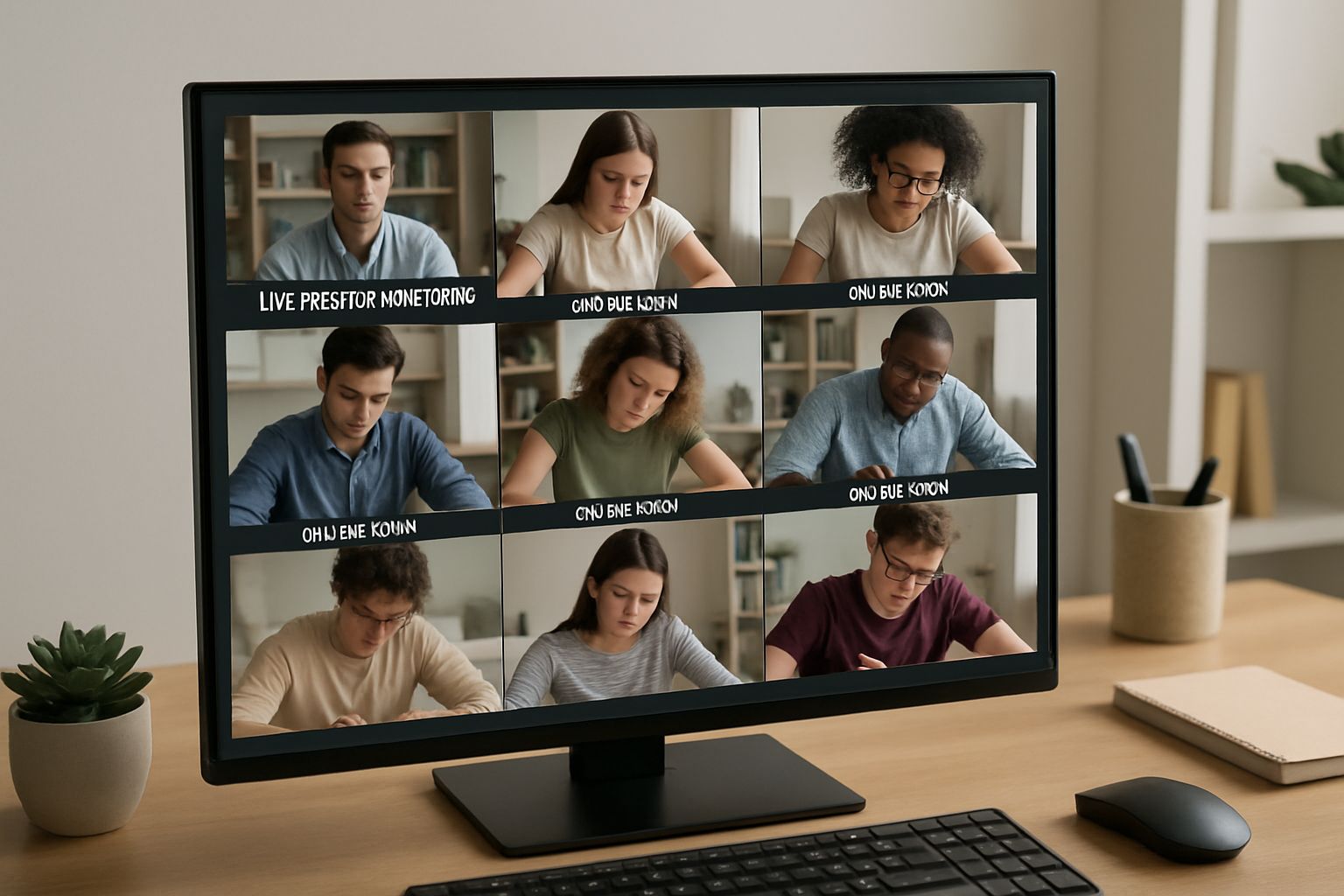
- 44.7% of students admit online cheating (Newton & Essex, 2024).
- Online proctoring market forecast to triple by 2029.
- California Bar meltdown shows operational risk in high-stakes exams.
These data points confirm that robust online exam security remains non-negotiable, and proactive online exam monitoring should start immediately. Consequently, leaders must adopt layered defences before attackers evolve further.
Layered Exam Security Framework
Layered defence outperforms single tools. Firstly, start with assessment design that can prevent cheating in online exams by reducing lookup value. Secondly, add secure infrastructure, including a well-audited lockdown browser and attested virtual machines. Thirdly, overlay continuous identity checks and AI-based cheating detection, supported by trained human reviewers. Finally, publish transparent policies and accessible appeal routes.
This stack shields high-stakes tests without overwhelming students. Moreover, it aligns with EDUCAUSE ethical guidance and upcoming regulations.
When the layers integrate within certified online proctoring software, institutions gain scalable control while maintaining student dignity.
In short, a layered framework delivers durable online exam security across varied assessment contexts. Next, we unpack each advanced tactic.
Fifteen Advanced Control Tactics
The table below groups fifteen frontier tactics into identity, environment, behaviour, content, and governance domains. Each tactic targets a specific remote proctor cheating vector.
- Continuous multimodal authentication for unbroken identity assurance.
- Dual-camera sweeps that expose hidden devices.
- Lockdown browser tools paired with secure containers.
- Behaviour analytics plus AI-based cheating detection for subtle anomalies.
- Authentic assessment design that can prevent cheating in online exams naturally.
Each control offers unique strengths. Nevertheless, they work best together. For example, behavioural analytics may flag suspicious pauses, while real-time online exam monitoring verifies the alert visually. In contrast, item bank randomisation blocks answer sharing without extra surveillance.
Leading online proctoring software now bundles these features with configurable privacy settings, giving administrators granular choice.
Deploying multiple controls forces would-be offenders to juggle several obstacles, dramatically lowering remote proctor cheating success rates.
Collectively, these tactics modernise online exam security without excessive invasiveness. Next, we examine cautionary vendor failures.
Vendor Failures Teach Lessons
The February 2025 California Bar disaster shows technology alone cannot guarantee success. Meazure Learning’s platform crashed, leaving thousands unable to submit. Lawsuits followed within weeks. Consequently, regulators now demand stress testing, backup plans, and independent audits.
Without such safeguards, even minor bugs can cascade into large-scale remote proctor cheating opportunities and reputational harm.
Before signing contracts, request uptime logs, SOC2 reports, and clear escalation paths from every online proctoring software vendor.
Moreover, insist on hybrid human-AI online exam monitoring during peak load to reduce false positives.
The case proves that resilience, transparency, and capacity planning must accompany technology promises. Moving forward, governance completes the defence.
Governance Transparency And Fairness
Technical tools fail if policies lag. Therefore, publish data maps, retention periods, and appeal workflows well before exam day. Transparent communication lowers anxiety and helps prevent cheating in online exams by boosting perceived fairness.
Additionally, track false-positive and appeal rates by demographic group. This practice detects bias within AI-based cheating detection pipelines.
Regular policy reviews keep online exam monitoring aligned with evolving privacy legislation.
Clear policies also clarify consequences, further deterring remote proctor cheating attempts.
Strong governance elevates trust and resilience in equal measure. Finally, let us translate strategy into a purchase checklist.
Smart Procurement Checklist Guide
A concise checklist empowers teams to vet potential partners efficiently.
- Demand independent SOC2 plus HECVAT responses.
- Check documented false-positive rates and linked online proctoring software versions.
- Require accessible lockdown browser alternatives for assistive technology users.
- Review disaster recovery tests and sustained online exam monitoring capacity.
- Insert liability clauses referencing recent litigation and remote proctor cheating failures.
Following this checklist reduces surprises and protects long-term online exam security investments.
Moreover, suppliers should offer instructional resources that teach faculty how to prevent cheating in online exams proactively.
With procurement covered, we conclude by outlining next steps and highlighting a trusted partner.
Conclusion And Next Steps
Remote proctor cheating evolves fast, yet institutions can stay ahead by combining layered technology, thoughtful pedagogy, and transparent governance. By applying the fifteen tactics above, you fortify online exam security while respecting student rights. Why Proctor365? Our AI-powered platform offers real-time identity checks, scalable online exam monitoring, and adaptive AI-based cheating detection. Additionally, our audited lockdown browser and multimodal analytics deliver industry-leading protection against remote proctor cheating exploits. Trusted by universities, certification bodies, and global corporates, Proctor365 simplifies deployment and keeps compliance effortless. Discover how our online proctoring software elevates integrity—visit Proctor365.ai to schedule a strategy session today.
Frequently Asked Questions
- How does Proctor365 enhance online exam integrity using AI proctoring?
Proctor365 leverages AI proctoring with continuous identity verification and behavioral analytics. This layered security approach effectively detects anomalies and prevents remote proctor cheating, ensuring exam integrity and robust fraud prevention. - What advanced tactics does Proctor365 use to prevent online exam cheating?
Proctor365 employs multimodal authentication, dual-camera verification, a secure lockdown browser, and AI-based behavioral analytics. These tactics form a layered defence system that minimizes cheating opportunities and strengthens exam security. - How does Proctor365 maintain transparency and fairness in online testing?
Proctor365 ensures transparency by publishing data maps, retention policies, and appeal processes. This openness reduces false positives, supports accessible online exam monitoring, and upholds fairness and compliance with privacy standards. - Why is vendor reliability crucial for secure online proctoring?
Reliable vendors, like Proctor365, provide stress-tested systems, independent audits, and hybrid human-AI monitoring. This operational stability helps prevent exam failures and reinforces digital assessment security against evolving cheating tactics.