Universities now rely on online tests more than ever. Consequently, ai based remote proctoring has moved from emergency fix to strategic pillar. Vendors promise scalable integrity, yet regulators and students demand safeguards. Meanwhile, new algorithms and market forecasts suggest rapid growth through 2026. This article unpacks the numbers, policies, and technologies shaping the next period. We also provide an exam proctoring readiness checklist to guide purchasing teams. Moreover, quotes from privacy advocates and market analysts highlight diverging priorities. Therefore, prepare to balance opportunity with compliance risk.
AI Based Remote Proctoring
At its core, the approach uses computer vision, audio analysis, and behavior metrics to flag suspicious events. Most decision makers still view ai based remote proctoring as the frontline defense against cheating. Current systems blend identity verification, multi-modal monitoring, and explainable scoring. Importantly, many vendors now speak of privacy-first design and human oversight.
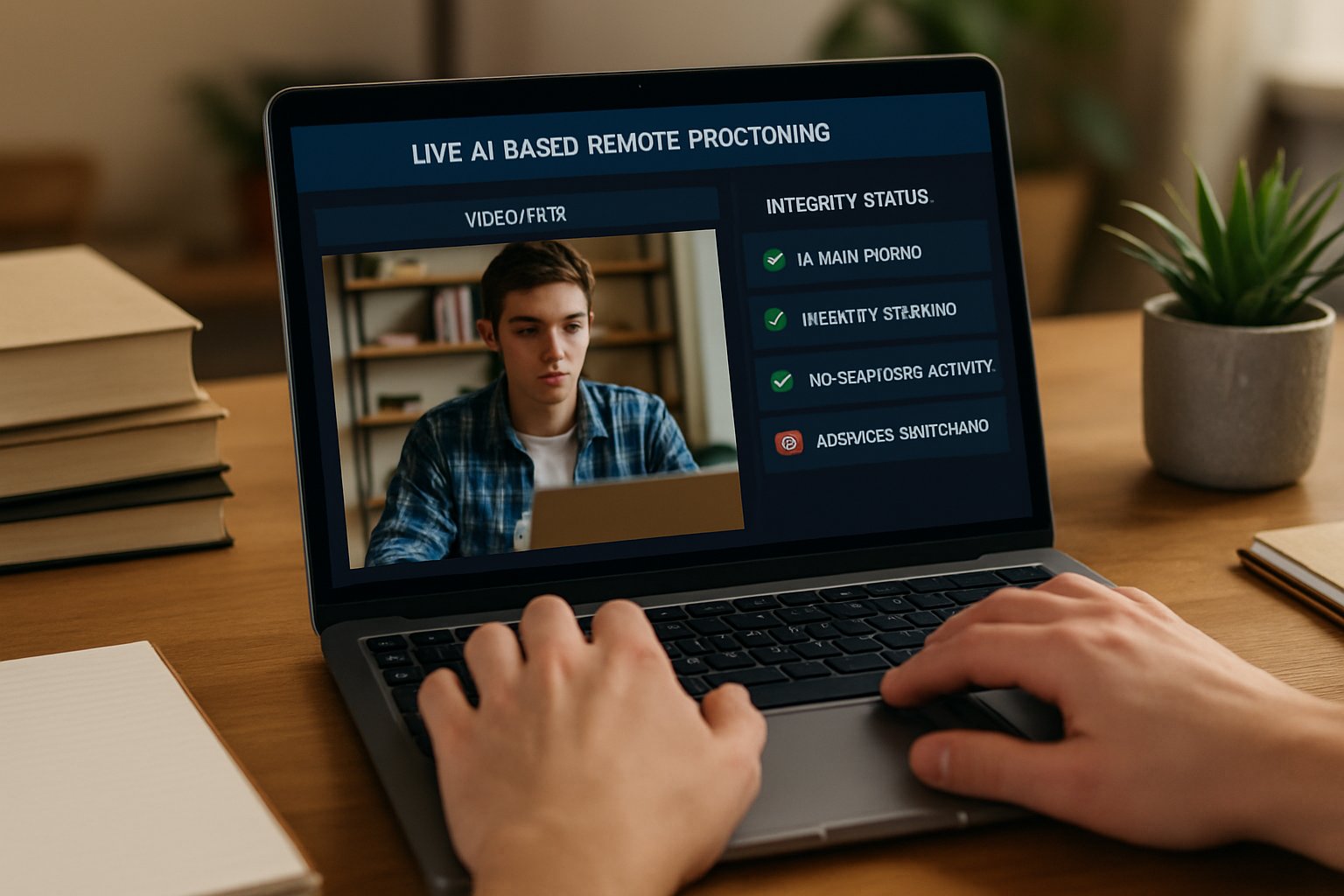
These capabilities offer instant scale and consistent audit trails. However, markets ultimately grow when trust and legal certainty follow.
Market Outlook For 2026
Analyst houses disagree on exact revenue totals. Forecasts specifically highlight ai based remote proctoring revenue overtaking live proctoring by 2027. Reports peg 2026 revenues between USD 0.8 and 1.6 billion, with 15-20% CAGR. Meanwhile, higher education and certification bodies account for most spending.
- Rising AI-assisted cheating incidents
- Growth of fully online degree programs
- Corporate skills testing at scale
- Regulatory acceptance of digital ID
Collectively, these factors sustain double-digit expansion despite controversy. Next, we examine the rules that could slow adoption.
Regulation Deadlines Loom
The EU AI Act will mark 2 August 2026 as the high-risk compliance deadline. Therefore, vendors must file technical documents, register systems, and prove human oversight. Noncompliance may bar ai based remote proctoring platforms from EU procurement lists. US operators face fragmented state biometric laws, especially Illinois BIPA.
Consequently, institutions should request clear data retention timelines during contract talks. Regulatory costs will rise, yet compliance opens vast European markets. Technology updates can ease that journey, as we discuss next.
Emerging Tech Stacks Ahead
Future ai based remote proctoring suites will likely bake dual-camera sensors into one dashboard. Research prototypes show dual-camera setups reducing blind spots by 32%. Moreover, keystroke dynamics help flag ghostwriters without intrusive video. Vendors also add LLM-aware detectors to spot generated text during essay exams.
Multi-Modal Detection Gains Ground
Fusion models combine webcam, mic, screen, and keystroke feeds for higher confidence scores. However, transparency dashboards now display how each signal weighted the final flag.
LLM Aware Response Detection
Detection models still miss multilingual or short answers. Therefore, educators pair detectors with revised question pools and open-book formats.
Technology innovations promise richer evidence with fewer false alerts. Yet, every upgrade deepens the need for vendor due diligence.
Student Equity Concerns Rise
Studies link proctoring software to higher anxiety and differential flag rates. One 2024 paper found disabled students reported greater stress under camera surveillance. Privacy advocates warn that mandatory face scans compel disproportionate data surrender. Nevertheless, some institutions offer alternative assessment rooms or turn off high-risk features.
Balancing integrity with well-being requires flexible settings and clear appeal channels. Next, we outline how buyers can operationalize that balance.
Smart Procurement Strategy Playbook
Procurement officers often juggle price, accuracy, and compliance pressures. Begin with a data protection impact assessment referencing the EU AI Act annex.
- Map data flows and storage locations.
- Request third-party bias audits.
- Verify human review workflows.
- Simulate failure scenarios.
This mini exam proctoring readiness checklist helps surface hidden implementation costs. Moreover, include service-level targets for false positive resolution and student appeals. Institutions adopting ai based remote proctoring should embed the checklist into every RFP.
Following a robust playbook protects budgets and reputations. Finally, let us convert that playbook into a practical exam readiness checklist guide.
Exam Readiness Checklist Guide
Below is a condensed exam proctoring readiness checklist tailored for 2026 deployments.
- Identify stakeholder roles and escalation paths.
- Define acceptable data retention windows.
- Confirm support for adaptive accessibility tools.
- Schedule annual compliance and bias audits.
- Run small-scale pilots before high-stakes launches.
Use the checklist during vendor demos and legal reviews. Consequently, teams avoid surprises once live exams begin.
Prepared buyers shorten launch times and strengthen student trust. With groundwork complete, attention can shift to solution performance.
Conclusion
2026 will push institutions to balance integrity, equity, and ever tighter regulation. Market data, tech innovation, and the exam proctoring readiness checklist all point toward prepared growth. However, success requires the right partner.
Why Proctor365? Proctor365 delivers ai based remote proctoring with AI-powered behaviour analysis and real-time alerts. Our platform combines advanced identity verification, scalable exam monitoring, and resilient cloud architecture. Moreover, global exam bodies trust us to safeguard millions of assessments yearly.
Schedule a demo today to protect integrity and calm stakeholder nerves. Visit Proctor365.ai and secure your next online session.
Frequently Asked Questions
- What is AI based remote proctoring?
AI based remote proctoring uses computer vision, audio analysis, and behavior metrics to monitor exam environments. It ensures exam security with robust identity verification and scalable fraud prevention. - How does Proctor365 enhance exam integrity?
Proctor365 leverages AI-powered behavior analysis, real-time alerts, and advanced identity verification to deliver reliable exam monitoring. Its scalable, cloud-based platform ensures consistent audit trails and fraud detection. - How do regulatory requirements impact AI based remote proctoring?
Compliance standards like the EU AI Act require vendors to meet strict privacy and data retention guidelines. This drives the integration of human oversight and robust security features in proctoring platforms. - How does Proctor365 balance exam security with student equity concerns?
Proctor365 balances security and equity by incorporating flexible monitoring options, adaptive accessibility tools, and clear appeal channels while ensuring privacy-first designs and effective fraud prevention.