Student concerns over digital surveillance continue to shape the debate around remote exam proctoring software. Universities, ed-tech platforms, and corporate L&D teams now face rising legal pressure and market growth simultaneously. Our 2026 privacy snapshot compares leading tools and answers the question, Which proctoring software is best for student privacy?
This guide converts scattered research, lawsuits, and policy updates into a single, actionable resource. You will see how proctoring software for institutes can respect privacy while still defending exam integrity. Consequently, decision makers can balance compliance, cost, and student trust.
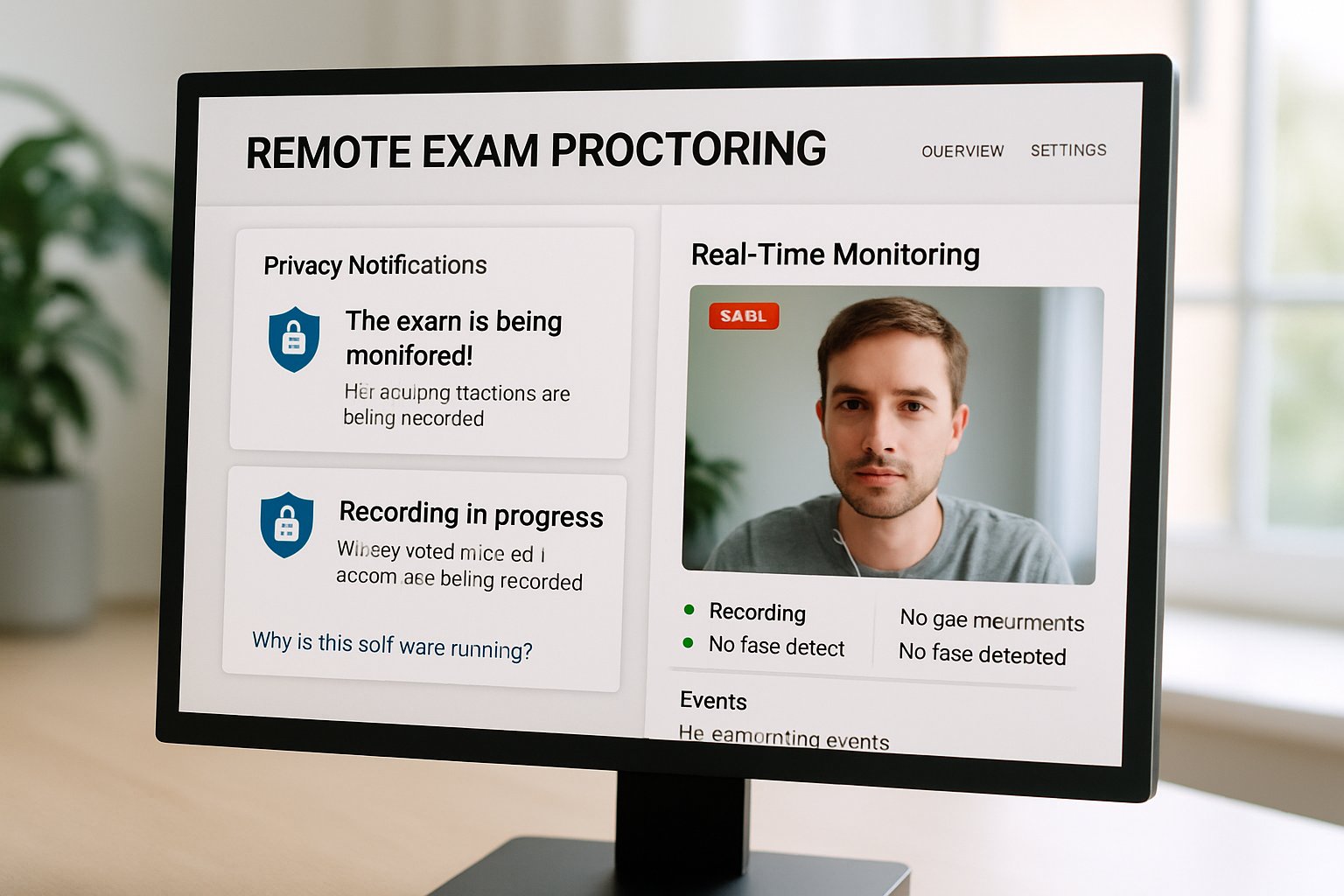
Moreover, we outline clear criteria that any online proctoring software must satisfy in 2026. Read on to discover rankings, market signals, and practical steps you can implement today. Meanwhile, our analysis spans live, recorded, and AI proctoring software models across global regions. Therefore, you can benchmark each vendor before your next procurement cycle. Finally, we highlight the primary risks regulators flagged, from biometric data storage to opaque algorithms.
Selecting Remote Exam Proctoring Software
Every procurement starts with a clear problem definition. Institutions ask, Which proctoring software is best for student privacy? before releasing any request for proposal. Firstly, map your assessment types, stakes, and existing LMS integrations.
Secondly, shortlist tools that allow feature toggles for data minimization. Remote proctoring software that lets instructors disable gaze tracking reduces biometric exposure immediately. Finally, verify vendor deletion schedules align with your regional statutes.
Proctoring software for institutes should publish an auditable data map. Use that document to compare each exam proctoring software on transparency.
In short, privacy due diligence begins before any demo call. Next, we explore why rankings matter in 2026.
Context Behind Privacy Rankings
Public rankings grew because institutions wanted a quick signal amid vendor marketing noise. However, no single body has released an official 2026 list. Instead, lawyers, journalists, and advocacy groups have pieced together scattered evidence.
Consequently, decision makers must triangulate privacy policies, litigation records, and university audits. Online proctoring software often updates policies quietly, so historical reports can mislead. Therefore, annual reviews remain essential.
The absence of an authority increases due diligence burdens. Consequently, market context helps prioritize your evaluation criteria.
2026 Market Growth Signals
Analysts project the online exam proctoring market will hit about USD 1.06 billion in 2026. Moreover, compound annual growth remains in the high teens across reports. Adoption of AI proctoring software expands beyond higher education into professional certification.
Meanwhile, 50-65 percent of universities still reference proctoring tools in official documentation. Those figures explain why investors ignore short-term controversies. Vendors marketing remote exam proctoring software cite these figures to reassure investors.
- USD 1.06 billion projected global revenue by 2026
- Teens-percent CAGR across 2024-2028
- 50-65 percent institutional adoption in higher education
- Growing demand for proctoring software for institutes in corporate L&D
Clearly, growth pressures vendors to prove trustworthy handling of student data. Next, let us compare how leading vendors respond.
Key Vendor Privacy Comparisons
Proctorio highlights zero-knowledge encryption and allows fine-grained feature toggles. However, previous disputes with critics show reputational risk persists. Respondus stresses institution-controlled data and a familiar LockDown Browser experience. Accessibility complaints, nevertheless, remain unresolved for many disabled users.
Honorlock claims face detection only; investigative journalists questioned that claim after “honeypot” revelations. ProctorU, now Meazure Learning, emphasizes contractual retention schedules and human appeal workflows. Which proctoring software is best for student privacy? still depends on regional laws and institutional tolerance for controversy. Remote proctoring software with transparent audit logs generally scores higher in university reviews.
Vendor marketing alone cannot answer every compliance question. Therefore, objective criteria offer a stronger foundation.
Core Privacy Criteria Explained
Data minimization tops the 2026 checklist. Gather only what is essential: webcam video, screen capture, and ID photo. Moreover, biometric risk rises sharply when face recognition creates persistent templates.
Consequently, many exam proctoring software vendors removed template storage from their stack. Compliance certifications like SOC 2 or ISO 27001 support auditability claims. However, Which proctoring software is best for student privacy? remains undecided without human policy review.
Remote exam proctoring software that discloses false-positive rates also improves algorithmic transparency.
Each criterion maps to a measurable contract clause. Next, we weigh benefits against the known harms.
Balancing Benefits And Harms
Institutions adopt online proctoring software because travel costs and test centers strain budgets. Furthermore, AI proctoring software promises scale for thousands of simultaneous candidates. Conversely, students cite room scans and webcam anxiety as major stressors.
False positives disproportionately flag neurodivergent candidates, raising equity concerns. Consequently, proctoring software for institutes must offer accommodations such as extra review and assistive tech compatibility. Remote proctoring software with human appeal channels mitigates algorithmic bias.
Proper policies convert remote exam proctoring software from a threat into a trust asset.
Benefits and harms coexist in every deployment. Therefore, governance frameworks should guide feature activation.
Practical Steps For Institutions
Start with a privacy impact assessment aligned to GDPR or local statutes. Next, create a rubric that scores each exam proctoring software against the criteria above. Include students and accessibility officers on the selection committee.
Moreover, insist that proctoring software for institutes supports single sign-on to reduce credential risk. Document how remote exam proctoring software integrates with your LMS during pilots.
- Request latest SOC 2 or ISO reports
- Negotiate deletion within 30 days
- Run a bias audit pilot
- Publish privacy FAQ for candidates
Which proctoring software is best for student privacy? will emerge once testing exposes real data flows. Consequently, remote proctoring software procurement becomes more evidence-driven each year.
Transparent pilots build trust among stakeholders. Next, we conclude with actionable insights and a solution recommendation.
Conclusion And Next Steps
The 2026 landscape shows fast growth, intense scrutiny, and rising expectations around student data. Institutions that evaluate data minimization, biometric risk, and transparency early choose safer online proctoring software. Meanwhile, proctoring software for institutes must balance scale with fairness and accessibility. Remote proctoring software and AI proctoring software offer benefits only when governance keeps vendors accountable.
Proctor365 delivers remote exam proctoring software that excels in privacy, identity verification, and global scalability. Its AI-powered proctoring flags anomalies in real time while human reviewers ensure due process. Advanced biometric checks confirm the right candidate without storing unnecessary data. Consequently, exam bodies worldwide trust Proctor365 for secure, high-stakes delivery. Explore how our remote exam proctoring software boosts integrity and confidence at https://www.proctor365.ai/.
Frequently Asked Questions
- How does remote exam proctoring ensure student privacy?
Remote exam proctoring minimizes data collection with feature toggles like disabled gaze tracking and transparent audit logs, ensuring compliance with GDPR and local laws while protecting student privacy. - What key features should institutions consider when selecting proctoring software?
Institutions should look for data minimization, transparent audit logs, and compliance certifications such as SOC 2 or ISO 27001, along with human review channels to address algorithmic bias and biometric risks. - How does Proctor365 maintain exam integrity and fairness?
Proctor365 uses AI-powered monitoring with real-time anomaly detection and human reviewers to verify identity, ensuring exam integrity while preventing fraud and respecting data privacy through minimal biometric data storage. - What role does AI play in modern exam proctoring?
AI enhances exam proctoring by enabling scalable monitoring and rapid anomaly detection, while human oversight mitigates false positives, ensuring both fraud prevention and equitable treatment of all candidates.