Institutions depend on digital testing, yet false accusations ruin trust fast. Consequently, exam leaders now measure system accuracy as closely as grades. The phrase ai proctor exam appears in many board reports, usually beside a troubling graph of false positives. Moreover, academic studies show some detectors mislabel more than half of honest sessions, especially for non-native speakers. Therefore, leaders seek concrete steps that reduce risk while preserving deterrence.
ai proctor exam precision
False positives happen when benign actions trigger alarms. Stanford researchers found 61.2% erroneous flags on TOEFL essays, highlighting bias. Meanwhile, vendors like Respondus claim an 80% flag reduction after model tweaks, yet independent audits remain scarce. Clearly, institutions must build precision into every layer of an ai proctor exam deployment.
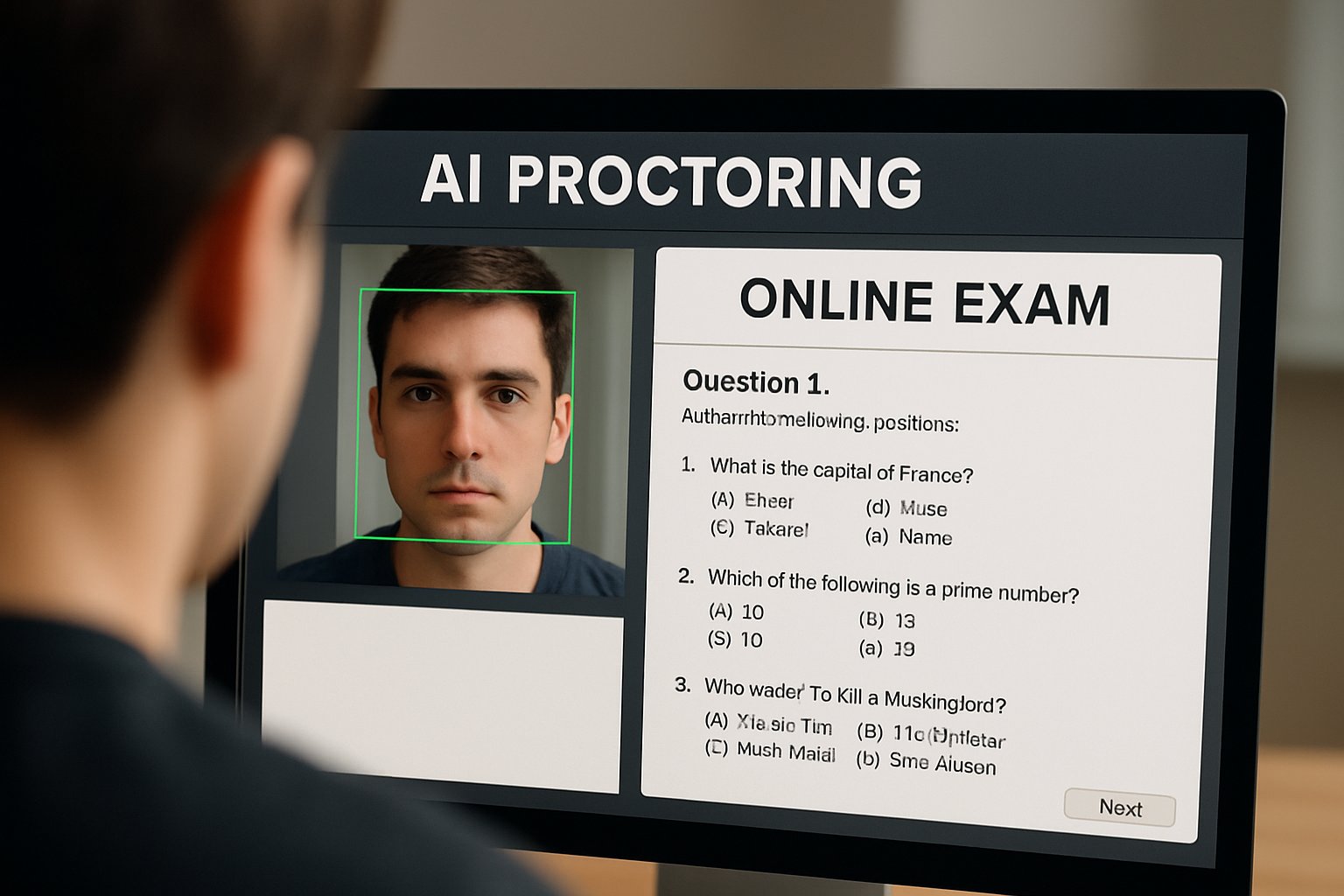
This section underscores the scale of harm and the urgent need for better design. Issues span legal exposure, equity, and reviewer workload. Institutions that ignore precision invite appeals and reputational loss. Precision starts with the five tactics below.
Cutting false positives protects students and staff. Careful engineering also improves public perception. Next, we examine multimodal signal strategies.
Multimodal Signals Reduce Flags
Single-sensor gaze trackers often misfire under poor lighting. Conversely, multimodal models combine webcam, audio, screen, and system telemetry to cross-validate behavior. Nature research shows higher accuracy when two independent anomalies co-occur. Additionally, limiting collection to essential data eases privacy concerns.
Institutions using proctoring software for online exam sessions reported up to 25% fewer erroneous reviews after adding system telemetry. However, extra sensors add storage costs and regulatory obligations.
Multimodal corroboration trims noise while preserving deterrence. Evidence therefore supports deploying layered signals. The next tactic refines thresholds and workflows.
Multiple data streams improve precision. Still, policy must translate scores into fair actions. Consequently, calibration becomes critical.
Threshold Calibration And Workflows
Every detector balances missed cheats and false flags. Therefore, institutions should pilot score thresholds on real cohorts. Graduated workflows map low scores to no action, medium scores to instructor review, and high scores to human escalation.
For example, a midwestern university cut false positives 43% after setting corroboration rules. Furthermore, regular recalibration guards against model drift.
Clear thresholds turn raw scores into defensible decisions. Consequently, reviewer effort focuses on genuine risk. Next, we explore why people remain vital.
Calibration aligns system behavior with policy. Regular reviews ensure continued fairness. Subsequently, human oversight adds essential context.
Human Review Still Essential
Algorithms flag, but trained staff decide. Two-reviewer confirmation reduces wrongful sanctions sharply. Moreover, reviewers need concise clips, device metadata, and accommodation notes.
Institutions using ai proctor exam systems with human triage cut appeals time in half. Nevertheless, reviewer staffing adds cost; triage should target only medium-high bands.
Human eyes catch context machines miss. Therefore, combining AI speed with expert judgment limits harm. Our fourth tactic targets dataset fairness.
Human reviewers safeguard due process. Well-defined SOPs support consistent outcomes. Consequently, data quality moves into spotlight.
Fairness Through Better Data
Bias thrives when training data lacks diversity. Thus, collect opt-in samples across languages, devices, and lighting. Adversarial testing under low bandwidth exposes hidden failure modes.
Quarterly audits should publish group-level false-positive rates. Additionally, privacy rules may require aggregated reporting. Several campuses using proctoring software for online exam found disproportionate flags on dark-skinned students until datasets improved.
Diverse data shrinks bias and builds legitimacy. As a result, institutions face fewer legal challenges. The next tactic shifts assessment design itself.
Fair datasets boost precision across groups. Regular audits maintain trust. Subsequently, educators can redesign exams to lower surveillance needs.
Rethink Assessment Design Policies
Authentic tasks reduce cheating incentives. Open-book problems, randomized pools, or short oral vivas weaken collusion value. Consequently, systems can adopt higher tolerance thresholds without spiking missed cases.
Policy should state that an ai proctor exam flag alone never triggers punishment. Furthermore, an appeals timeline must be transparent.
Better assessments lessen surveillance pressure. Therefore, technical and pedagogical reforms should advance together. Implementation details tie all tactics together next.
Assessment redesign shrinks risk. Transparency supports fairness. Consequently, teams need a practical checklist.
Implementation Checklist In Practice
Use this quick guide when rolling out ai proctor exam capability:
- Pilot with diverse devices, measure real false-positive rates.
- Band flags by confidence, define reviewer actions.
- Train reviewers and require two-person confirmation.
- Audit fairness metrics quarterly and publish results.
- Document accommodations inside every syllabus.
Teams using proctoring software for online exam plus this checklist report smoother launches. Moreover, audits highlight improvements to share with stakeholders.
Structured rollouts transform policy into practice. Therefore, institutions can scale securely. We now summarize core insights and introduce a trusted partner.
Checklists convert strategy into action. Continued measurement fosters improvement. Consequently, a reliable platform becomes crucial.
Conclusion
False positives erode confidence faster than any cheat. The five tactics—multimodal corroboration, calibration, human review, fair data, and assessment redesign—cut errors while keeping vigilance high. Institutions following this roadmap reduce review workload, legal exposure, and student stress.
Why Proctor365? Our ai proctor exam engine delivers AI-powered monitoring, advanced identity verification, and global scale. Trusted by certification bodies worldwide, Proctor365 pairs smart automation with expert human review to protect every assessment. Experience higher integrity today with Proctor365.
Frequently Asked Questions
- How does Proctor365’s AI proctor exam system reduce false positives?
Proctor365 utilizes multimodal signals, precise threshold calibration, and human review to cross-validate suspicious behavior, significantly reducing false positives and enhancing exam integrity. - Why are multimodal signals important in online exam proctoring?
Multimodal signals combine webcam, audio, screen data, and system telemetry to provide accurate behavior assessment, ensuring reliable fraud prevention and improving overall exam accuracy. - How does Proctor365 ensure fairness and prevent bias during exam monitoring?
Proctor365 gathers diverse data samples, conducts quarterly audits, and continuously refines its AI models to reduce bias, ensuring equitable monitoring and robust identity verification. - What role does human review play in Proctor365’s proctoring approach?
Human review adds essential context by confirming AI flags, using concise exam clips and metadata, thereby balancing smart automation with expert judgment for defensible exam decisions.