Issuing high-stakes exams online no longer feels optional. Universities, certifiers, and corporate trainers all face global cohorts. Consequently, they must guarantee integrity without physical test centers. Many teams turn to remote proctoring software for that safeguard. However, choosing the wrong tool creates legal, reputational, and student-experience risks. The remote exam proctoring landscape has expanded rapidly since the pandemic peak. Moreover, AI online proctoring promises speed yet invites new scrutiny about bias. Procurement teams therefore need a rigorous checklist before signing a contract. This guide outlines ten must-check factors and shares market data, lawsuits, and expert advice. Read on to avoid costly mistakes and select a platform that shields learners and institutions alike.
Market Shift Forces Scrutiny
First, understand the market trajectory. ResearchAndMarkets estimates the sector reached about US$836M in 2023. Furthermore, analysts predict volumes could near US$1.9B by 2029.
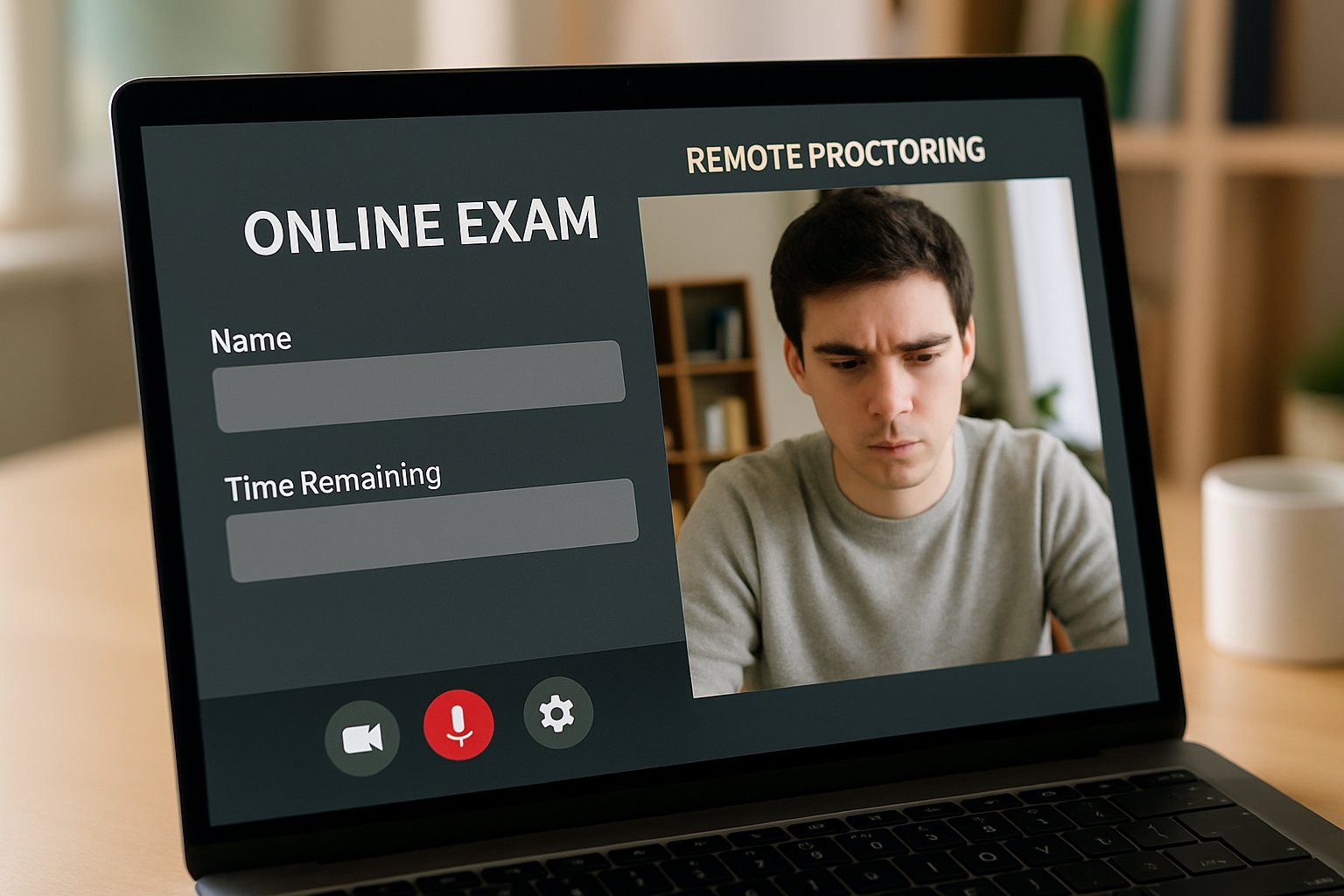
Growth attracts every Online Proctoring Company and dozens of startups. Consequently, choice overload hides weak offerings behind glossy demos. Institutions saw many Hybrid proctoring solution press releases after 2024.
Meanwhile, regulators also intensified oversight. Illinois BIPA cases and California’s new Student Test Taker Privacy Protection Act highlight evolving rules. Therefore, procurement teams must map compliance gaps early.
Scalable online proctoring platform promises tempt budget holders. Nevertheless, scaling without governance risks lawsuits and student protests.
The market is booming yet volatile. Scrutiny from regulators and students keeps stakes high.
Next, examine tool selection fundamentals.
Choosing Remote Proctoring Software
Selecting technology starts with a structured rubric. HECVAT 4, releasing January 2025, adds privacy and AI questions. Therefore, align your assessment with those expanded inquiries.
Below are ten checkpoints every team should verify:
- Legal compliance and data residency proof.
- Clear privacy policy and retention limits.
- Documented detection accuracy and error rates.
- Independent bias and fairness audits.
- Accessibility features and accommodation workflow.
- Seamless LMS and SIS integration.
- Human review and student appeal paths.
- Robust security certifications and pen tests.
- Transparent student experience requirements.
- Flexible pricing, exit, and data portability.
An Online Proctoring Company unwilling to document these areas signals risk. Moreover, insist on a live pilot before paying invoices.
Remote exam proctoring success depends on institutional context, not generic promises. Consequently, gather feedback from faculty, IT, and disability staff during trials.
Comprehensive checklists reveal vendor depth. Skip one item and surprises emerge later.
Compliance details deserve deeper attention.
Compliance Risks Demand Clarity
Data protection laws vary across regions. GDPR compliant proctoring requires explicit purpose limitation and deletion rights. Additionally, biometric collection invokes extra legal bases.
Ask where every byte is stored and processed. Vendors must accept contractual limits on cross-border transfers. Therefore, document obligations in the Data Processing Agreement.
Any remote proctoring software that conceals storage locations fails this test.
AI online proctoring often captures voice, video, and keystrokes. However, only some data is necessary for identity assurance. Minimize fields to reduce threat surface and liability.
Hybrid proctoring solution models sometimes pass data to third-party reviewers. Ensure sub-processors follow your institutional standards. Include breach notification SLAs of 24 hours or less.
Institutions in Europe also demand detailed Records of Processing Activities. GDPR compliant proctoring vendors should supply that automatically.
Clear documentation prevents regulatory surprises. Strong contracts also strengthen vendor accountability.
Accuracy claims require equal scrutiny.
Accuracy Evidence Remains Essential
False flags erode trust quickly. Proctoring vendors often market 95% accuracy without context. Consequently, request confusion matrices and test methodology.
Remote proctoring software decisions impact student records and graduations. Therefore, examine false positive rates across demographics.
AI proctoring system vendors should publish bias audits annually. Nature 2024 highlighted racial disparities in facial detection models. Insist on third-party verification, not internal slide decks.
Scalable online proctoring platform marketing often downplays human review steps. Yet human context reduces erroneous cheating accusations.
Conduct internal pilots with diverse test takers before purchase. Remote exam proctoring trials will surface edge cases, such as low light conditions.
Validated accuracy protects students and reputations. Next, address systemic fairness concerns.
Bias Audits Safeguard Fairness
Bias harms certain groups disproportionately. International Journal for Educational Integrity linked proctoring to anxiety spikes for disabled students. Moreover, EFF documented chilling effects on expression.
AI proctoring system bias emerges from unbalanced training datasets. Consequently, demand demographic performance breakdowns for every flag type.
Online Proctoring Company leaders now arrange independent fairness reviews. Nevertheless, ask for published audit summaries and remediation steps.
Hybrid proctoring solution approaches can blend human empathy with algorithmic scale. Such blends may reduce adverse impacts when configured carefully.
GDPR compliant proctoring also requires explainability for automated decisions. Students must receive clear appeal pathways.
Remote proctoring software bias scandals already triggered campus moratoria.
Fairness reviews build community trust. With trust established, integration details take focus.
Integration and experience come next.
Integration Shapes User Experience
Smooth workflows decide daily success. Integration failures trigger support tickets and faculty frustration. Therefore, verify deep links with major LMS platforms before rollout.
Scalable online proctoring platform vendors provide REST APIs and SAML SSO. Test those endpoints in a sandbox using representative courses.
AI online proctoring should avoid browser plug-ins that break after updates. Instead, prefer lightweight WebRTC implementations.
GDPR compliant proctoring demands data flow diagrams for each integration pattern. In addition, document log retention within the LMS.
A responsive helpdesk matters as much as code. Remote proctoring software should publish 24/7 support SLAs.
Online Proctoring Company reputations often hinge on exam-day uptime statistics.
Solid integrations reduce stress. Finally, negotiate strong contracts.
Contract details close the deal.
Contracts Secure Future Flexibility
Pricing models differ wildly. Some vendors bill per exam; others require multiyear site licenses. Consequently, calculate total cost across program growth scenarios.
Include exit terms that ensure data destruction within 30 days. Remote proctoring software vendors should provide encrypted exports for institutional archives.
Demand SOC 2 Type II or ISO certifications with annual renewal dates. AI proctoring system providers usually meet those standards if mature.
Scalable online proctoring platform contracts must cap liability and guarantee breach disclosures.
Hybrid proctoring solution suppliers sometimes bundle identity verification with human review. Ensure pricing transparency for each service layer.
Robust contracts preserve flexibility and leverage. With diligence complete, finalize a trustworthy partnership.
The key points follow.
Conclusion
Institutions that follow this checklist will negotiate stronger deals, protect privacy, and deliver fair assessments. By verifying compliance, accuracy, bias controls, integration, and contract terms, you minimise surprises after deployment. Remote proctoring software remains invaluable, yet only when selected and governed with evidence and transparency.
Why Proctor365? The AI-powered platform blends live, automated, and hybrid monitoring with advanced identity verification. Moreover, its scalable exam monitoring supports small quizzes and global certification runs alike. Trusted by leading universities and exam bodies, Proctor365 delivers GDPR compliant proctoring without sacrificing student dignity. Discover how Proctor365 can elevate integrity today at Proctor365.ai.
Frequently Asked Questions
- How does remote proctoring software maintain exam integrity?
Remote exam proctoring software leverages advanced AI proctoring combined with human oversight. It employs robust identity verification and fraud prevention measures to ensure exam integrity while meeting GDPR compliance. - What steps does Proctor365 take to prevent bias and safeguard fairness?
Proctor365 blends AI monitoring with regular independent bias audits and human review to ensure fairness. Its transparent detection methods and bias control features create a secure and inclusive exam environment. - How does Proctor365 integrate with existing LMS platforms for a seamless exam experience?
Proctor365 offers seamless integration with LMS through secure REST APIs and SAML SSO. This setup minimizes technical issues and ensures a smooth, GDPR compliant proctoring experience with automated monitoring. - What contract and compliance measures are crucial when choosing an online proctoring solution?
Key measures include clear legal compliance, data residency, and breach notification policies. Proctor365 secures partnerships with strict contracts, SOC2/ISO certifications, and transparent data handling for legal and operational safety.