Cheating fears now dominate digital assessment discussions. Consequently, leadership teams demand proven safeguards. Online test proctoring empowers institutions to protect credibility while expanding access. However, success at scale requires careful strategy, solid technology, and transparent policy.
This article reviews market shifts, technical foundations, and governance practices that matter most to higher-education decision makers.
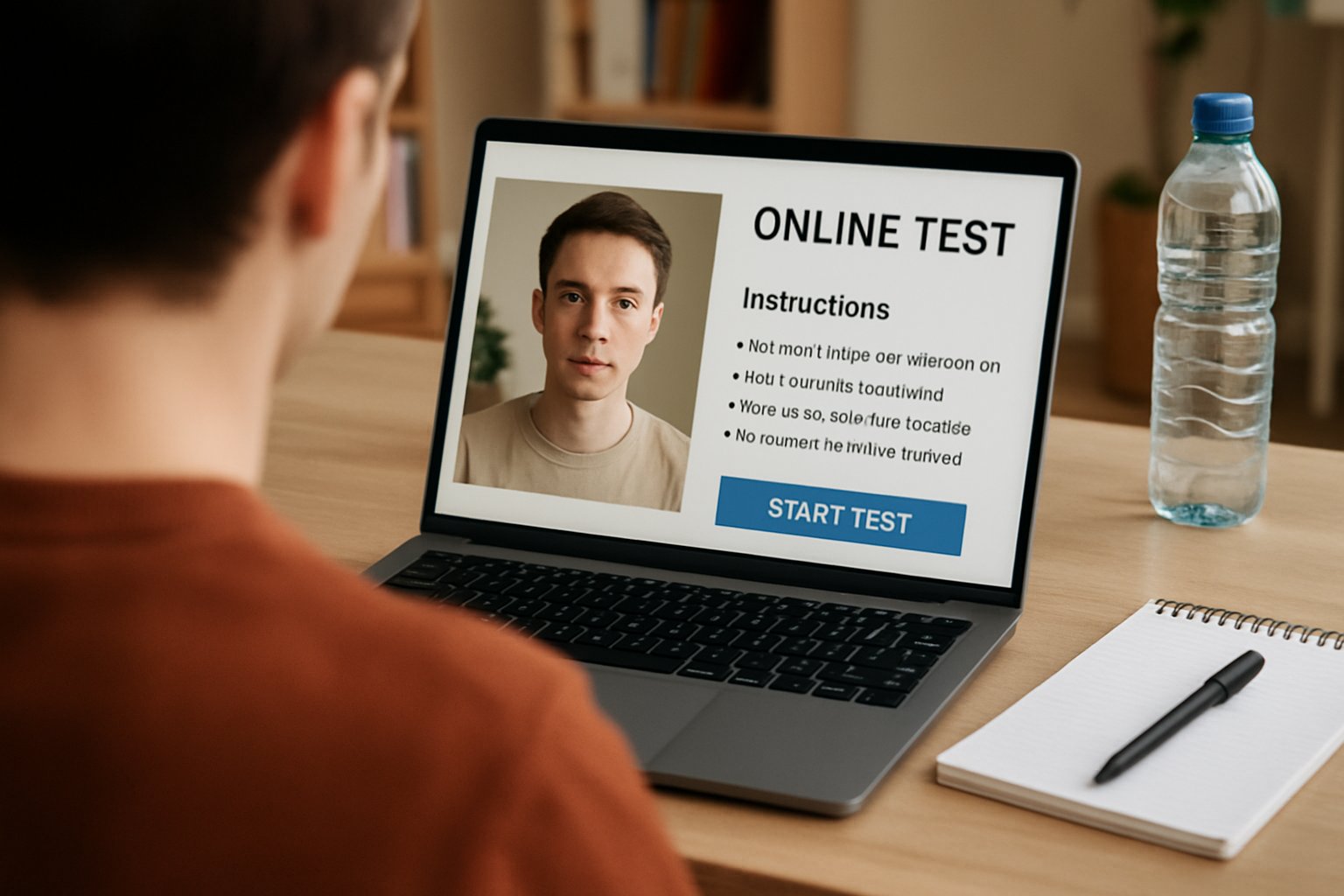
Online Test Proctoring Evolution
Pandemic lockdowns forced emergency adoption. Moreover, 2025 market reports show momentum continues, with projections near US$1 billion. Vendors now blend AI exam monitoring with optional human review to balance scale and fairness.
Meanwhile, generative AI tools raised fresh integrity threats. Faculty surveys reveal rising anxiety about automated plagiarism and impersonation. Therefore, modern solutions must flag multi-device collusion, suspicious gaze shifts, and identity fraud in real time.
Key takeaway: Evolution favors flexible, hybrid models that adapt as cheating tactics change. Institutions should track feature roadmaps and bias-testing disclosures before signing multiyear deals.
Global Market Momentum Snapshot
Industry analysts predict compound annual growth rates above 10%. Additionally, 60–65% of North American colleges mention proctoring on public sites. In contrast, UK Freedom of Information data shows inconsistent supervision despite 78% still running online exams.
- Market size 2023–2024: US$0.8–1.0 billion.
- Student discomfort with webcams: 30–55% across surveys.
- Self-reported cheating during remote tests: often exceeds 50%.
Key takeaway: Demand rises, yet skepticism persists. Procurement teams must weigh growth promises against student trust metrics. Proper communication bridges that gap.
Integrity Risks Intensify Online
Philip Newton warns that unsupervised digital exams threaten degree validity. Furthermore, Lyssa Vanderbeek notes generative AI accelerates dishonest behavior. Therefore, institutions require multilayer defenses.
Remote proctored exam workflows deter impersonation, but privacy missteps invite lawsuits. Regulators recently rejected invasive room scans, pressuring campuses to refine practice. Consequently, leaders must pair policy with technology, not rely on gadgetry alone.
Key takeaway: Strong integrity demands a triad—robust design, adaptive monitoring, and clear student rights. Transitioning with this mindset prevents backlash.
Scalable Architecture Essentials Explained
Three proctoring modes dominate today. Live human oversight suits high-stakes sessions but strains budgets. Recorded sessions reduce staffing while retaining human judgment. Automated AI exam monitoring maximizes volume yet risks false positives.
Most universities now deploy remote proctoring solutions that combine AI triage with targeted human review. Additionally, online proctoring software often embeds browser lockdown, multi-factor identity checks, and analytics dashboards.
Secure online exam proctoring also depends on resilient cloud infrastructure, regional data centers, and LMS-native plugins. Moreover, best proctoring solutions 2026 advertise mobile camera support and real-time network diagnostics.
Key takeaway: Scale emerges from modular stacks—lockdown, detection, verification, and appeals portals. Integration beats standalone tools.
Policy And Privacy Pressures
Court challenges citing biometric laws shaped vendor contracts. Therefore, data governance clauses now demand minimal retention windows and explicit deletion triggers. Institutions also publish alternative assessment paths to respect equity concerns.
Civil-liberties groups continue to monitor online exam proctoring vendors. Consequently, transparent algorithm explainability and accessibility testing become deal breakers. Remote proctored exam pilots should document false-positive rates and student feedback before expansion.
Key takeaway: Legal clarity builds trust. Proactive privacy impact assessments streamline adoption and reduce surprise headlines.
Equitable Student Experience Practices
Bandwidth constraints and crowded housing still hamper test-takers. Moreover, neurodiverse learners may trigger AI flags unintentionally. Jisc guidance recommends multiple accommodations.
Leading remote proctoring solutions now offer offline uploads, captioned instructions, and device loan programs. Additionally, assessment redesign—such as randomized question pools—minimizes surveillance demands.
Secure online exam proctoring must include clear appeals. Meanwhile, online proctoring software should surface context so reviewers understand behaviors before sanctioning.
Key takeaway: Equity thrives when technology, pedagogy, and support services align. Continuous audits maintain that balance.
Procurement Playbook For Leaders
Successful buyers follow structured steps:
- Define stakes and scalability goals first.
- Shortlist vendors offering AI exam monitoring with human escalation.
- Demand bias audits, retention limits, and accessibility certifications.
- Pilot remote proctored exam scenarios across bandwidth tiers.
- Publish policies, opt-outs, and transparent incident workflows.
Additionally, track vendor mergers to avoid sudden roadmap shifts. Best proctoring solutions 2026 will likely bundle identity verification, analytics, and plagiarism detection under unified dashboards.
Key takeaway: Due diligence protects budgets and reputations. Continuous vendor review sustains alignment as laws evolve.
Conclusion: Digital assessment will keep expanding. However, sustainable integrity demands technology, policy, and empathy working together. Online test proctoring, when paired with equitable design, helps universities maintain trust and credential value.
Why Proctor365? Proctor365 delivers AI-powered online test proctoring with advanced identity verification and elastic cloud scaling. Global exam bodies trust our secure online exam proctoring to monitor thousands concurrently without compromising privacy. Therefore, elevate your assessment strategy today by visiting Proctor365.ai.
Frequently Asked Questions
- What makes modern online test proctoring effective against cheating?
Modern online test proctoring combines AI monitoring with human review, robust identity verification, and fraud prevention measures. This multi-layered approach detects suspicious behaviors and improves exam integrity during digital assessments. - How does AI-powered monitoring improve exam security?
AI-powered monitoring uses advanced algorithms to detect anomalies like multi-device collusion and unusual gaze shifts. Real-time alerts and human escalation enhance exam security and fraud prevention in online testing environments. - What critical policies should institutions consider when adopting online proctoring?
Institutions must enforce transparent data governance, minimal retention policies, and clear escalation procedures. These policies balance student privacy with robust fraud detection, ensuring legal compliance and trust in digital assessments. - How does Proctor365 ensure a secure and equitable exam experience?
Proctor365 delivers AI-powered online test proctoring with advanced identity verification and scalable cloud solutions. Its fair policies and real-time analytics maintain exam integrity, improve fraud prevention, and support an equitable student experience.