Educational consultants face mounting pressure to deliver secure assessments at scale. Therefore, many now turn to proctor exam software to protect integrity without building tools from scratch. The market’s double-digit growth, privacy rulings, and partner programs create both promise and pitfalls.
Market Demand Snapshot Today
Forecasts place the remote proctoring market near USD 2.1 billion in 2024. Moreover, reports predict a 13% CAGR through 2035. Universities, certification bodies, and corporate L&D teams drive this surge with expanding remote programs. However, advocacy groups push for privacy limits, forcing vendors to add transparency and opt-outs.
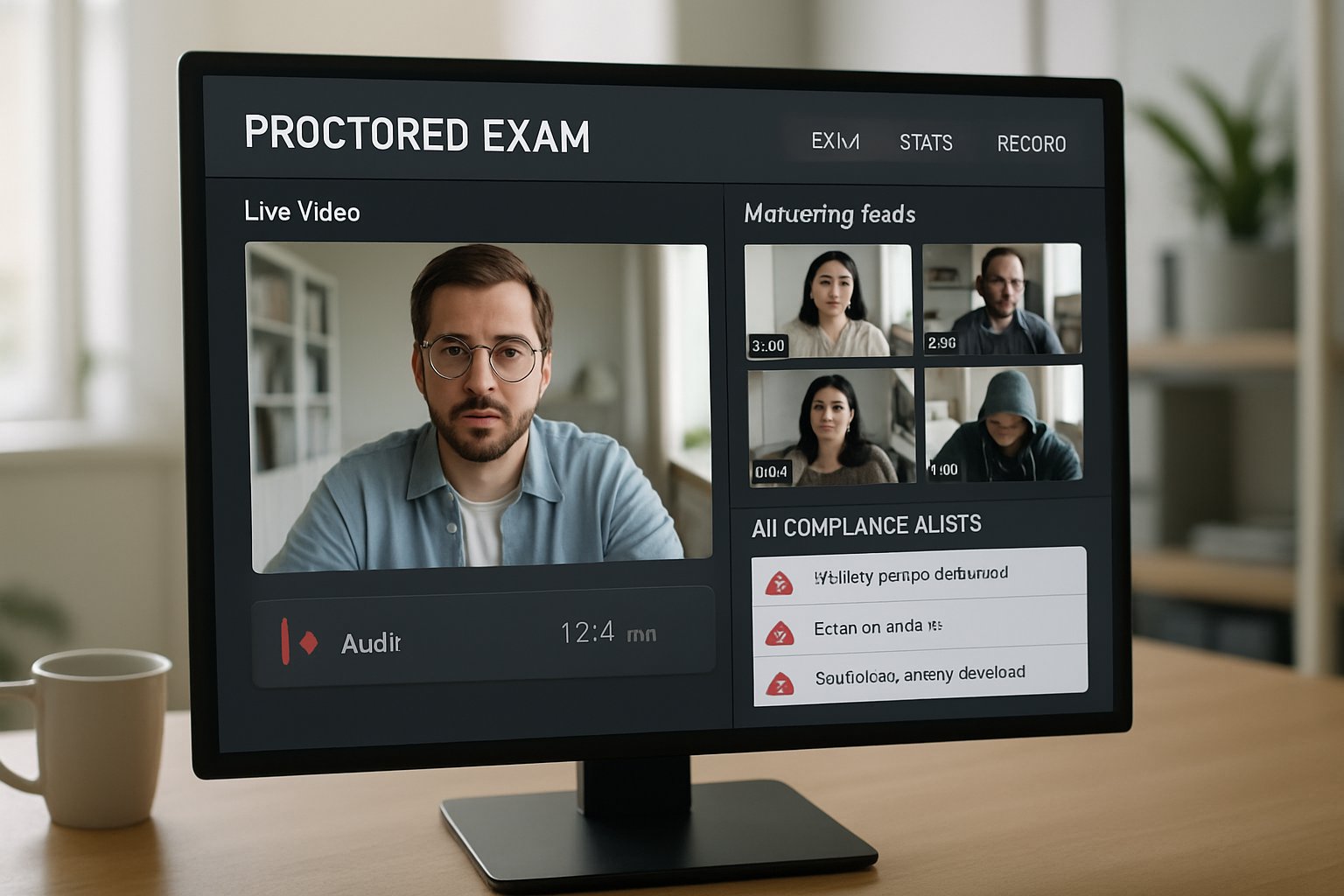
The data proves rising demand yet stricter scrutiny. Consultants who master both themes stand out. Consequently, opportunity sits alongside responsibility.
Choosing Proctor Exam Software
Consultants should start with need analysis. First, match exam stakes to live, automated, or record-and-review modes. Additionally, ensure the tool integrates with the target online examination platform via LTI or REST APIs. Compare vendors like Talview, OctoProctor, and ThinkExam that advertise white-label branding.
Remember to validate screen recording in online exams because some courts restrict intrusive room scans. Likewise, ask vendors for SOC 2 or ISO 27001 reports. Finally, request pilot access to measure false positives before a full launch.
Clear alignment of mode, risk, and compliance delivers smoother deployments. Therefore, deliberate selection mitigates downstream headaches.
White-Label Business Case
White-label proctoring turns a complex stack into a branded service within days. Consequently, consultants gain recurring revenue on each session. Many vendors offer bulk pricing tiers that drop below public $10–$80 per-exam fees.
Typical partner models include:
- Full white-label: your brand fronts the service.
- Reseller: vendor branding remains visible yet you earn margins.
- Referral: you pass leads and collect commission.
Fast market entry meets steady cash flow. Nevertheless, liability shifts toward the consultant’s name. Thus, robust contracts are essential.
The model scales profit quickly yet widens legal exposure. Therefore, balanced agreements guard your reputation.
Key Compliance Checklist Points
Privacy laws grow stricter each quarter. Consequently, every agreement needs a strong Data Processing Addendum. Specify retention limits, deletion rights, and breach notifications. Furthermore, require accessibility statements that confirm WCAG alignment.
Because students fear biometric misuse, mandate explicit consent flows and clear appeal steps for AI flags. Meanwhile, maintain alternatives for learners who cannot share private spaces.
A tight checklist shrinks risk while boosting institutional trust. In contrast, vague terms invite costly disputes.
Feature Set Essentials Explained
Clients expect more than a webcam feed. Modern proctoring software should include identity verification, lockdown browser, and AI flagging. Additionally, it must support online exam software integration and real-time dashboards.
Many institutions also request screen recording in online exams to validate technical skills tests. Moreover, cloud scale enables tens of thousands of concurrent sessions on an online exam platform for education and recruitment.
An enriched feature stack enhances value perception. Consequently, consultants can justify premium pricing tiers.
Pricing Models Compared Clearly
Vendors offer per-exam, seat-license, or concurrent bundles. Per-exam suits certification events, while seat licensing aligns with semester calendars. Furthermore, setup fees cover domain mapping, logos, and support scripts.
Always factor human proctor wages when mixing live monitoring. Meanwhile, automated or AI-based proctoring lowers marginal costs but needs human review for flagged clips.
Transparent pricing builds client confidence and protects your margin. Therefore, model scenarios before quoting.
Implementation Best Practices Guide
Begin with a two-week pilot on the chosen online examination platform. Subsequently, train faculty on reviewing AI flags. Provide students with hardware checklists and practice exams because preparation reduces support calls.
Use transition APIs to push results back into the learning system. Additionally, enable white-label proctoring branding across email templates for seamless user experience.
Finally, monitor analytics to refine rules and cut false positives. Continual tuning maintains fairness and scalability.
Structured rollout minimizes disruption and proves ROI quickly. Consequently, satisfied clients renew and refer.
Conclusion And Next Steps
White-label proctoring unlocks rapid growth for consultants who balance technology, compliance, and experience. Select vendors carefully, embed privacy-by-design, and price transparently to thrive.
Why Proctor365? Our proctor exam software delivers AI-powered proctoring, advanced identity checks, and elastic cloud monitoring trusted by global exam bodies. Schedule a demo and see how Proctor365 boosts exam integrity today at Proctor365.ai.
Frequently Asked Questions
- How does AI proctoring enhance exam integrity?
AI proctoring monitors exam sessions in real time, identifying suspicious behavior and reducing cheating. Proctor365 uses advanced algorithms and identity verification to ensure robust fraud prevention and uphold exam integrity. - What key features should I look for in proctor exam software?
Essential features include identity verification, lockdown browser, AI flagging, and seamless LMS integration via LTI or REST APIs. Proctor365 offers these capabilities to improve security and streamline exam management. - How does white-label proctoring benefit educational consultants?
White-label proctoring enables consultants to brand the service, accelerate market entry, and generate recurring revenue. Proctor365’s customizable solutions support rapid deployment and consistent exam integrity. - What compliance measures ensure exam security and privacy?
Key measures include SOC 2 and ISO 27001 certifications, data processing agreements, and explicit consent protocols. Proctor365 adheres to strict privacy laws, enhancing both security and trust in exam environments.