Technical hiring has changed fast. Many teams now rely on remote test proctoring to screen coders worldwide. Candidates enjoy flexibility. Recruiters gain scale. However, stakes remain high. Privacy, bias, and AI-assisted cheating complicate every click. Consequently, leaders must blend policy, technology, and communication.
This guide explains current threats, proven controls, and practical procurement steps. It targets universities, certification bodies, ed-tech platforms, training institutes, and corporate L&D teams that run HR recruitment tests at scale.
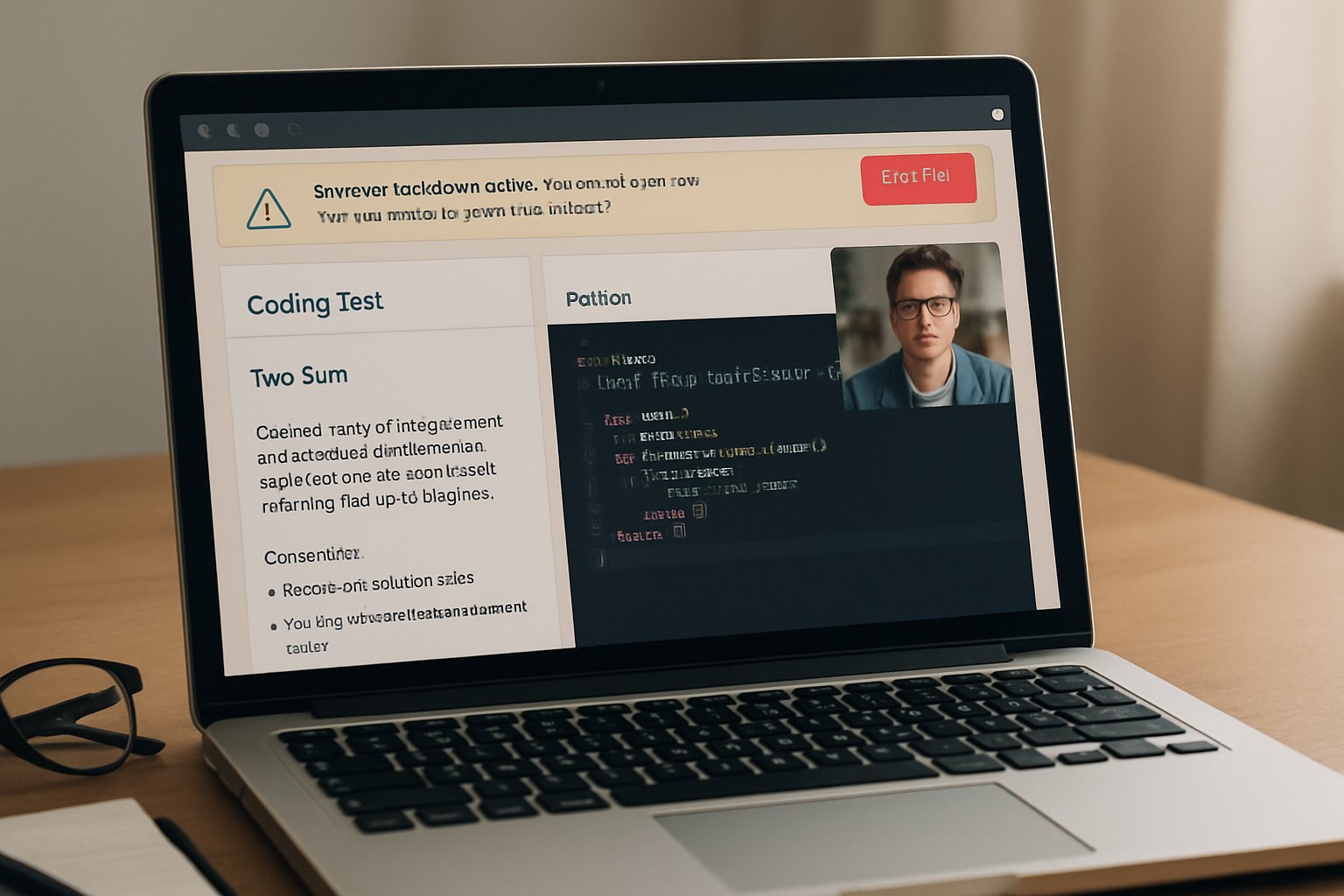
Remote Test Proctoring Essentials
Modern platforms unite ID proofing, webcam and screen capture, and AI-based proctoring. Furthermore, they integrate browser lockdown software that stops tab switching and copy-paste actions. Session replay then lets reviewers watch the coding journey, not just the final answer.
There are three common service levels:
- Live monitoring with a human proctor.
- Record-and-review using automated flags.
- Fully automated AI analysis for large HR recruitment tests.
Choose the tier that fits risk, budget, and candidate comfort. Each mode should sync with your remote proctoring software stack and talent systems.
Key takeaway: Remote exam proctoring succeeds when security layers match assessment stakes. Next, examine the evolving market forces.
Market Shifts In 2025
Market analysts expect online exam proctoring software revenue to nearly triple by 2029. Moreover, HackerRank and CodeSignal added dedicated proctor modules in 2024-2025. Both vendors process millions of coding sessions yearly, proving massive demand.
Simultaneously, privacy groups pushed universities to restrict intrusive proctoring software for universities. Several campuses banned room scans after recent court rulings. Therefore, vendors now emphasise transparent data retention and fairness testing.
Key takeaway: Growth remains strong, yet scrutiny rises. Accordingly, recruiters must balance scale with compliance before adopting new remote proctoring software.
Emerging Cheating Threats Today
LLM tools like ChatGPT boost candidate productivity. Nevertheless, they also enable covert plagiarism during HR recruitment tests. Research from 2025 shows rising incidents of AI-generated code.
Hackers market overlays that bypass browser lockdown software. Meanwhile, paid “ghost coders” sell undetectable support. In response, AI-based proctoring now analyses typing cadence, code similarity, and behavioural anomalies.
Key takeaway: Threat actors evolve quickly. Thus, enterprises need layered remote exam proctoring that detects AI assistance without harming honest talent.
Essential Security Control Layers
Effective defences combine technology and process:
- Identity proofing aligned with NIST IAL2.
- Desktop lockdown plus single-monitor checks.
- Code similarity and AI-detection engines.
- Hybrid AI+human review to avoid false positives.
Additionally, proctoring software for universities often adds accommodations for disabilities and low-bandwidth modes. Corporate teams should copy that inclusive mindset.
Key takeaway: No single tool solves integrity. Therefore, integrate layered controls into your online exam proctoring software blueprint.
Designing Fair Trusted Assessments
Technology alone cannot ensure fairness. Consequently, design assessments that value process. Multi-step prompts, follow-up explanations, and live debriefs reduce dependence on harsh surveillance.
Use lighter remote test proctoring for first-round screens, then escalate only for finalists. Moreover, publish clear consent forms and give candidates a channel to challenge flags.
Key takeaway: Fair design boosts brand reputation while meeting compliance. Next, verify vendors against a structured checklist.
Vendor Evaluation Checklist Steps
When selecting remote proctoring software, demand evidence:
- Whitepapers on AI accuracy and demographic performance.
- Data retention timelines and deletion workflows.
- Browser lockdown software capabilities and audit logs.
- SLAs for human review turnaround.
- Integrations with ATS and LMS for seamless HR recruitment tests.
Also ask for pilot access. Subsequently measure false-positive rates and candidate satisfaction.
Key takeaway: Rigor protects budgets and reputation. Finally, monitor future trends to stay ahead.
Future-Proof Hiring Strategy Guide
Forward-looking teams consider allowing controlled AI usage during assessments. They score how applicants prompt, verify, and optimise code, not whether AI appears.
Meanwhile, regulations will tighten biometric and privacy requirements. Therefore, keep legal counsel involved and update policies yearly. Proctoring software for universities already follows such cycles; corporate L&D should mirror that cadence.
Key takeaway: Flexibility and compliance will define success. Organisations must refine remote exam proctoring continuously.
Conclusion
Secure hiring demands vigilance. Recent market growth, smarter threats, and stricter laws shape every decision. Layered controls, transparent processes, and fair design keep coding assessments credible.
Why Proctor365? Our platform delivers industry-leading remote test proctoring with AI-powered proctoring, advanced identity verification, and infinitely scalable monitoring. Universities, certification bodies, and global employers already trust us to protect exam integrity. Experience the difference at Proctor365.ai today.
Frequently Asked Questions
- How does Proctor365 ensure secure and fair remote exam proctoring?
Proctor365 delivers secure and fair remote proctoring by integrating AI-powered monitoring, robust identity verification, and layered fraud prevention measures. This approach minimizes cheating risks while safeguarding privacy and compliance. - What are the key security control layers in remote test proctoring?
Key security controls include strong identity proofing, browser lockdown, code similarity checks, and AI detection with human review. These layers work together to maintain exam integrity and deter fraudulent behavior. - How does Proctor365 balance candidate privacy with effective fraud prevention?
Proctor365 balances privacy and fraud prevention by using transparent data practices and minimal intrusion techniques alongside advanced AI proctoring. This combo maintains fairness and compliance while preventing cheating. - How does remote proctoring aid technical hiring and global assessments?
Remote proctoring streamlines technical hiring by screening candidates globally with flexible, scalable solutions. Proctor365’s AI analysis and secure monitoring ensure reliable, fair assessments for both universities and corporate teams.