Remote test proctoring now anchors digital assessment strategies across universities, certification bodies, and global enterprises. However, decision makers still debate whether virtual invigilation can match in-person center controls without raising fresh risks. This security audit compares both models through the lenses of privacy, bias, and evolving regulation.
We draw on 2024-2025 rulings, breach data, and market numbers to guide policy and procurement teams. After reading, you will know where remote platforms excel, where test centers dominate, and how to audit both. Let’s move from hype to evidence.
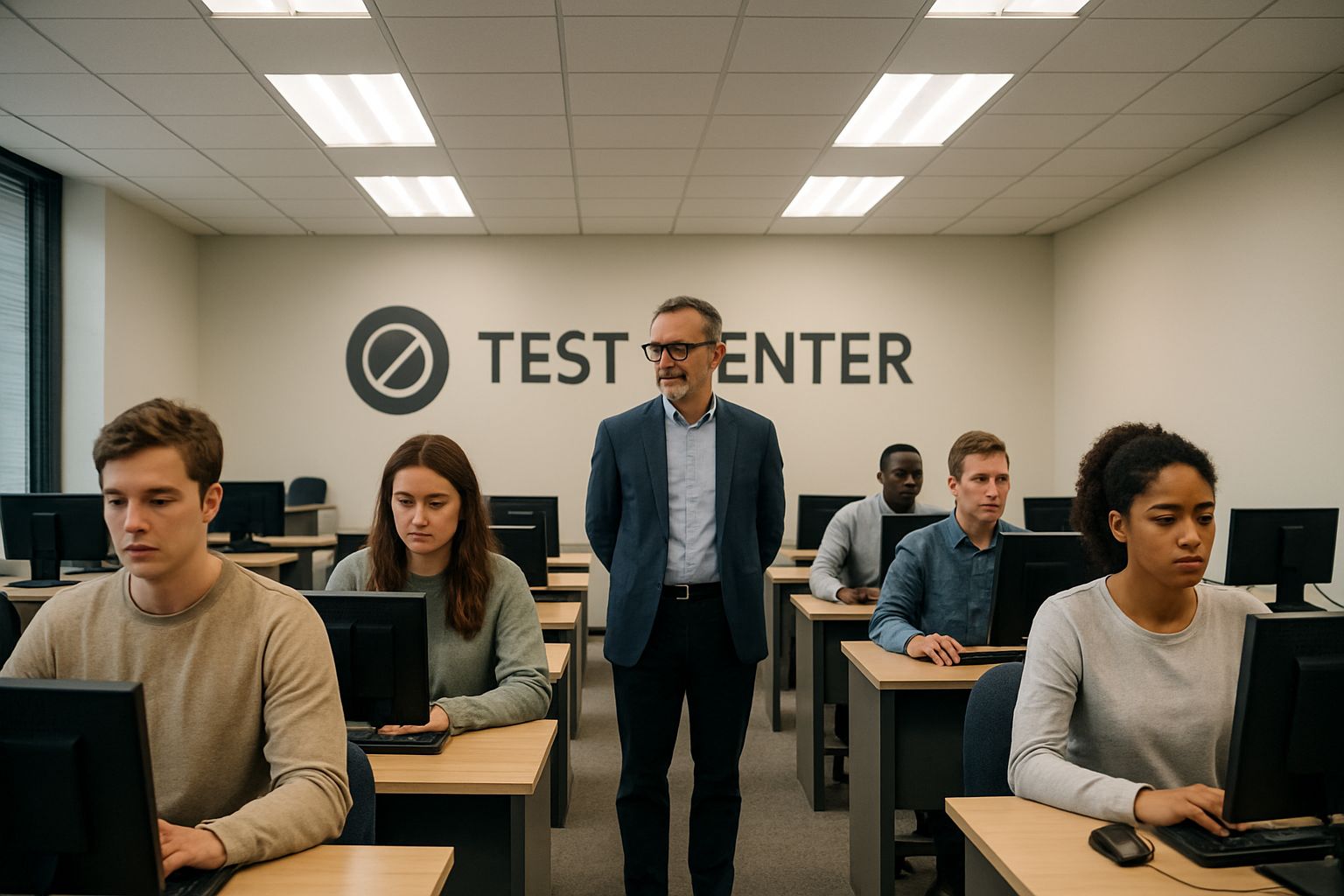
The analysis targets ed-tech leaders, corporate L&D, and accreditation boards planning high-stakes exams at scale. Throughout, we highlight In-person vs Remote debates, AI-based proctoring security metrics, and secure remote assessments best practices. Compliance teams gain an actionable checklist grounded in current law and peer-reviewed technical research. Consequently, you can defend budget choices and protect candidate trust. Moreover, the article meets upcoming EU AI Act readiness checkpoints.
Remote Test Proctoring Landscape
Market analysts place remote proctoring revenue between USD 0.6 and 1.2 billion for 2024-2025. Growth accelerates as certification providers chase flexible delivery and lower overhead. Consequently, remote test proctoring adoption outpaces new test-center construction.
Nevertheless, investors now ask deeper questions about remote test proctoring security and regulatory resilience. Early adopters recall the 2020 ProctorU breach and demand transparent audits before signing multiyear contracts. Our next section examines shifting laws that feed this scrutiny.
Key takeaway: scale drives growth, yet security questions grow louder. Therefore, legal trends deserve close attention.
Key Regulatory Shifts
Spain’s AEPD ruled in 2025 that continuous facial recognition breaks GDPR without explicit enabling law and safeguards. Consequently, several Iberian universities paused remote deployments to avoid fines. In the United States, California’s STTPPA restricts data retention and grants students new rights against excessive collection.
Ogletree v. Cleveland State further signaled that invasive room scans can violate constitutional privacy expectations. Together, these actions force a fresh In-person vs Remote calculus for every assessment owner. Regulators now prioritize AI-based proctoring security impact assessments and bias audits before authorizing widescale use.
Main point: remote test proctoring now faces laws tightening faster than technology evolves. Subsequently, security teams must align policy with each jurisdiction.
Security Risk Matrix
Technical researchers reverse engineered leading suites and bypassed all core lockdown controls within hours. Moreover, algorithms flagged darker-skinned candidates at higher rates, exposing systemic bias. These findings challenge marketing claims of remote test proctoring security and fairness.
- ProctorU breach leaked 444k records in 2020, stressing secure online exam proctoring basics.
- Lockdown clients demand high privileges, opening supply-chain risks.
- AI monitoring for exams now fights deepfake identity spoofing.
- Data retention gaps erode secure remote assessments compliance.
Consequently, audit teams must map each threat to practical mitigations and contractual clauses. Takeaway: documented controls outrank vendor promises. Next, we compare accessibility and fairness gaps.
Bias And Accessibility
Bias extends beyond face recognition into bandwidth assumptions and neurodivergent behaviors. For example, glare or assistive technology can trigger automated flags during secure online exam proctoring sessions. Meanwhile, students who live with multiple roommates face constant noise-based interruptions.
In-person vs Remote discussions often ignore the cost of false positives on marginalized groups. Therefore, AI-based proctoring security reviews must include demographic performance metrics and human escalation paths.
Key lesson: equity is inseparable from any security audit. Consequently, the next section values physical center strengths.
Solid In-Person Center Advantages
Physical sites deliver controlled lighting, standardized hardware, and immediate staff assistance. Therefore, anomaly rates fall and session stability improves. No webcams enter private homes, so data protection impact assessments are simpler.
However, candidates must travel, book limited slots, and sometimes wait weeks during busy seasons. In-person vs Remote flexibility comparisons show higher opportunity costs for rural or disabled learners.
Summary: test centers excel at chain-of-custody but lack scale. Subsequently, many institutions adopt blended models.
Hybrid Audit Checklist
A balanced program pairs solid centers with remote test proctoring to maximize reach and compliance. Use this checklist during vendor selection.
- Verify lawful basis and data minimization under each jurisdiction.
- Request SOC-2 reports and AI-based proctoring security metrics.
- Demand demographics-based false flag data to assure secure online exam proctoring fairness.
- Set deletion deadlines aligning with secure remote assessments policy.
- Offer equivalent In-person vs Remote options for accommodations.
- Mandate live human review for AI monitoring for exams alerts.
Consequently, stakeholders can defend decisions before auditors and student councils. Takeaway: structured audits equal stronger credibility. Finally, we explore future safeguards.
Future Proof Strategies
Vendors now integrate liveness checks, edge encryption, and explainable AI monitoring for exams to deter deepfakes. Moreover, lightweight browser agents reduce privilege exposure while supporting secure remote assessments at scale. Advanced analytics feed continuous improvement dashboards, enhancing remote test proctoring security over time.
Meanwhile, EU AI Act guidelines push vendors to publish risk profiles and undergo yearly third-party audits. Institutions that track such lifecycles will maintain competitive trust.
Bottom line: remote test proctoring must stay transparent and accountable. Now, let’s conclude with actionable next steps.
Conclusion
Remote test proctoring excels at scale yet demands rigorous legal, technical, and fairness controls. In-person centers still offer low-risk chain-of-custody, but hybrid designs combine strengths when guided by our checklist. Furthermore, AI monitoring for exams, when audited, can ensure secure remote assessments without over-collecting data.
Proctor365 delivers AI-powered remote test proctoring with advanced identity verification and real-time anomaly detection. Our scalable cloud monitors thousands simultaneously, blending human oversight with AI-based proctoring security safeguards. Global universities and certification bodies trust Proctor365 for secure online exam proctoring and transparent analytics. Book a demo today and see how our platform preserves integrity across every assessment modality at Proctor365.ai.
Frequently Asked Questions
- What is remote test proctoring and how does it work?
Remote test proctoring uses advanced AI for real-time monitoring, fraud prevention, and identity verification. This secure method supports large-scale online exams while maintaining integrity through continuous oversight and transparent analytics. - How does Proctor365 ensure exam integrity?
Proctor365 blends AI-powered proctoring with real-time anomaly detection and human oversight. Its advanced identity verification and secure remote assessment protocols protect exam integrity while meeting strict regulatory and data privacy standards. - What security challenges are associated with remote proctoring?
Remote proctoring can face challenges like data breaches, algorithmic bias, and regulatory hurdles. Proctor365 mitigates these risks with secure AI monitoring, comprehensive audits, and compliance with evolving laws to maintain exam fairness and security. - How does a hybrid proctoring model benefit exam administration?
A hybrid model combines remote and in-person proctoring strengths, offering flexible options and robust security. This approach leverages Proctor365’s advanced remote monitoring alongside controlled in-person checks to optimize exam integrity and accessibility.