Universities and certification bodies face a fast-evolving threat: remote proctor cheating now scales globally. Consequently, reputation and credential value hang in the balance. Institutions need fact-based tools, not guesswork.
Recent suspensions of the online LSAT in China showed how organized rings exploit gaps. Moreover, online proctored exam cheating tactics adapt as AI tools mature. Cheating detection alone no longer suffices; proactive vulnerability audits must guide policy. Therefore, many stakeholders demand a dedicated Remote Exam Security & Cheating Vulnerability Audit Tool.
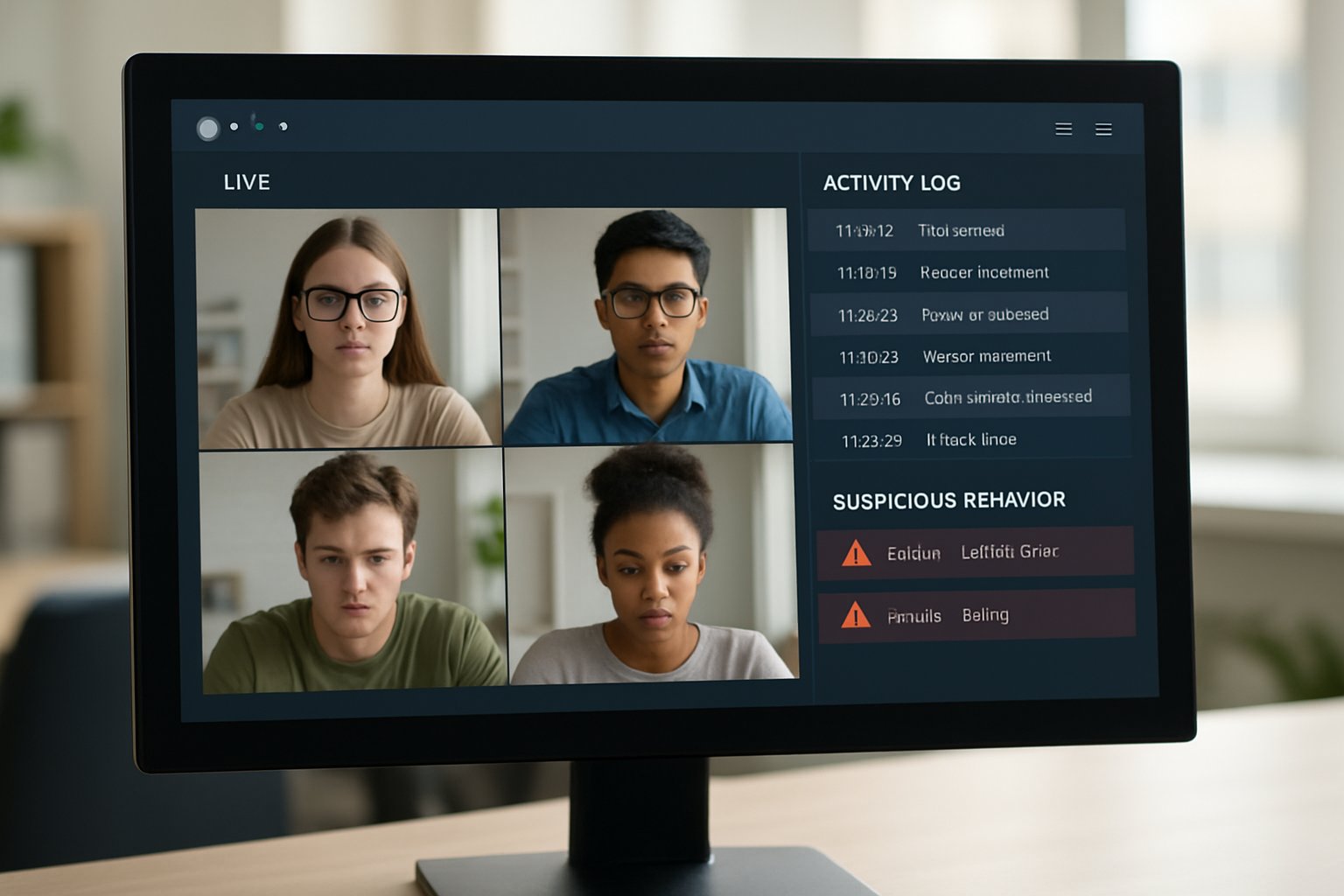
This article outlines market forces, attack patterns, and a blueprint for that audit platform. We reference independent research, vendor data, and field incidents. Above all, we explain how rigorous testing drives remote exam cheating detection success. Prepare to benchmark your current defenses.
Market Forces Rapidly Shift
The online proctoring market expands at over fifteen percent CAGR, according to Insight Partners. Furthermore, analyst reports suggest adoption rates above sixty percent for at least one high-stakes program per institution. This growth intensifies remote proctor cheating incentives.
Consequently, ed-tech platforms must improve cheating detection accuracy and scalability. Meanwhile, regulators cite fairness and privacy when reviewing vendor algorithms. A proactive audit tool supplies transparent evidence for policy decisions.
Market momentum is undeniable and remote proctor cheating risk grows with scale. Institutions thus need structured visibility before problems erupt.
Common Cheating Attack Patterns
Independent researchers documented many remote proctor cheating workarounds. Moreover, organized networks advertise proxy test-taking for high fees.
- Impersonation by skilled proxy candidates.
- Remote access tools controlling the exam device.
- Hidden cameras streaming questions outward.
- LLM based answer generation.
- Client tampering to disable monitoring.
LLM tools raise new stakes. In contrast, remote assessment cheating prevention now requires item analysis alongside environment controls.
Additionally, many developers attempt to bypass secure remote developer assessments using virtual machines and code obfuscation.
Attack creativity keeps evolving. Therefore, any audit framework must simulate remote proctor cheating routes in a controlled lab.
Audit Tool Core Modules
The audit targets remote proctor cheating vectors at every layer. Nine modules keep the scope clear.
First, threat modeling maps rules to measurable controls. Subsequently, client reverse-engineering exposes hidden services that hinder remote exam cheating detection efforts.
Automated scripts test lockdown browsers while human red-teams stage online proctored exam cheating scenarios. Moreover, LLM scoring flags vulnerable items and supports cheating detection triage.
Bias tests ensure fair outcomes, supporting remote assessment cheating prevention across diverse cohorts.
These modules deliver actionable evidence, not vague ratings. Consequently, decision makers can prioritize high-impact fixes.
Testing Workflow In Action
Let us walk through a typical audit sprint. Initially, engineers configure dummy exams for secure remote developer assessments.
Next, automated scripts attempt virtual machine escapes. Meanwhile, a second team streams the exam feed to an LLM, measuring cheating detection latency.
Observers document whether alerts fire within two minutes, a benchmark for remote exam cheating detection reliability.
- Detection rate against scripted attacks.
- False positive percentage on clean runs.
- Average time-to-detect events.
- LLM answer success ratio.
- Audit log tamper index.
Structured metrics keep teams honest. Moreover, continuous re-testing tracks progress over product releases.
Balancing Security And Fairness
Strong controls can still backfire if bias rises. However, transparent metrics spotlight disproportionate flags on darker skin tones.
Institutions should pair flagging data with demographic audits. Likewise, privacy reviews ensure logs respect data laws.
Stakeholders fear false accusations of remote proctor cheating more than downtime. Trust suffers when accusations of online proctored exam cheating rely on opaque algorithms.
Proactive communication forms the heart of remote assessment cheating prevention policies.
Fairness and security are not opposites. Therefore, data transparency keeps both goals aligned.
Implementation Roadmap For Institutions
Begin with stakeholder alignment around risk appetite and resources. Subsequently, appoint an internal owner for the audit program.
Phase one runs baseline tests on live courses, including secure remote developer assessments for coding roles.
Phase two integrates audit findings into vendor contracts, linking payments to measurable KPIs.
Finally, quarterly red-team drills recalibrate remote exam cheating detection thresholds and expand question vulnerability scans.
A phased plan avoids disruption and builds confidence. Consequently, roadmaps turn into repeatable practice.
Conclusion
Exam fraud threats escalate alongside market growth. A structured audit tool, backed by robust cheating detection, remote exam cheating detection testing, and simulation of online proctored exam cheating, equips institutions to stay ahead. Furthermore, continuous metrics support remote assessment cheating prevention while protecting candidate trust.
Why Proctor365? Our AI-powered platform stops remote proctor cheating with advanced identity verification, scalable monitoring, and real-time analytics trusted by global exam bodies. Visit Proctor365 to see how we raise integrity standards today.
Frequently Asked Questions
- How does Proctor365 address remote exam fraud?
Proctor365 uses AI proctoring and real-time analytics with advanced identity verification to stop remote exam cheating. Its integrated system supports fraud prevention by continuously monitoring exam sessions and detecting suspicious activity. - What are common cheating attack patterns in online exams?
Typical cheating methods include impersonation, use of proxy test-takers, virtual machine exploits, hidden cameras, and AI-generated answers. Institutions can use our audit tool to simulate these attack vectors and enhance detection accuracy. - Why are regular vulnerability audits essential for exam integrity?
Regular vulnerability audits provide clear insights into remote exam cheating risks. They enable institutions to benchmark defenses, update policies, and ensure fairness while supporting enhanced security measures like Proctor365’s AI-driven, real-time fraud prevention. - How does Proctor365 support secure remote developer assessments?
Proctor365 implements robust AI proctoring and secure remote assessment workflows. By integrating automated testing, red team drills, and continuous monitoring, the platform ensures identity verification, fraud prevention, and compliance across various assessment scenarios.