Remote assessment is now mainstream across universities, certification boards, and corporate academies.
However, choosing the right proctor for test sessions and building a reliable testing environment still challenge many teams.
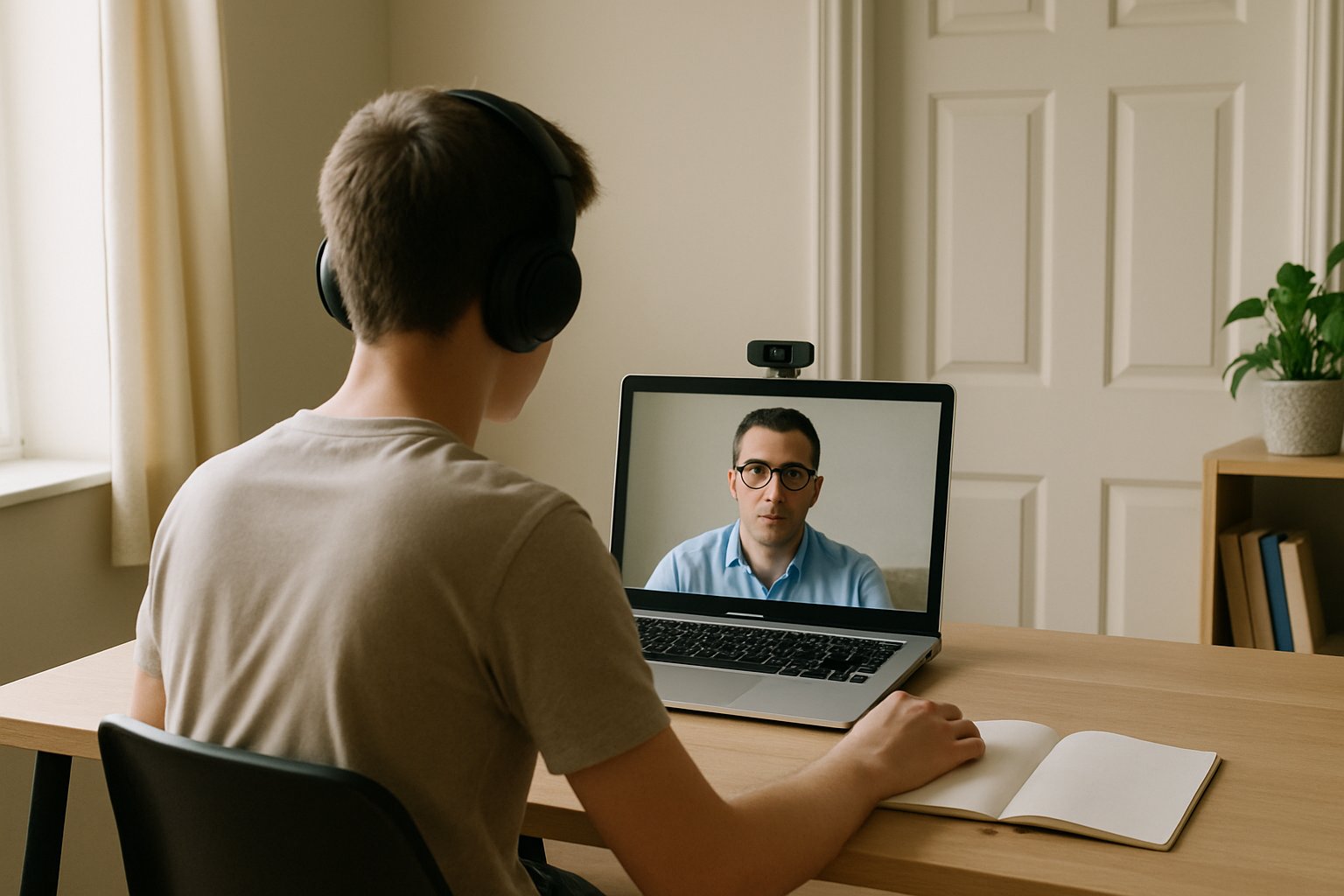
Exam integrity, student privacy, and technical reliability must align.
Moreover, Market Research Future values the remote proctoring market at up to USD 2.1 billion for 2024.
Consequently, leaders need a disciplined framework that balances security with fairness.
This guide distills recent research, vendor updates, and campus best practices into clear, actionable steps.
From randomized field experiments to EPIC’s privacy complaints, evidence shows proctoring deters cheating yet can introduce bias.
Therefore, professionals must anticipate pitfalls before any webcam activates.
Read on to master the process and create a stress-free experience for every candidate.
Meanwhile, rapid AI advances demand constant policy refinement.
Clear Policy Comes First
A coherent integrity policy anchors the entire testing environment.
Additionally, it sets expectations early and reduces anxiety.
Publish the rules in the syllabus and LMS at least two weeks before each exam.
Offer explicit accommodation pathways and require an honor statement.
- Outline allowed materials and room requirements.
- Provide a mandatory low-stakes practice run.
- Explain data retention, review, and appeal windows.
- Link to privacy notices and alternative assessment options.
These actions build transparency and trust.
Consequently, fewer disputes reach academic misconduct panels.
Next, focus on vendor selection that meets your policy goals.
Choosing Proctor For Test
Picking a capable proctor for test delivery demands clear criteria.
Moreover, institutions should compare live, recorded, and automated models.
Honorlock’s hybrid Analytics Hub, for example, pairs AI flags with human review.
In contrast, purely automated tools risk false positives and legal pushback, as EPIC’s complaint shows.
Evaluate each candidate on data minimization, accessibility features, and regional compliance.
Summarize findings in a short decision matrix, then match the choice to your policy.
This careful alignment prevents surprise limitations during implementation.
Now validate the technical fit before scheduling any real exam.
Robust Technical Checks Matter
A flawless testing environment depends on verified devices and networks.
Therefore, mandate a technical self-test at least 48 hours prior.
Minimum specs should follow CompTIA and Respondus guidance: modern OS, one display, frontal webcam, and 3 Mbps upload.
Require Ethernet when feasible to avoid wireless drops.
Meanwhile, instruct candidates to disable VPNs and close background apps.
If the chosen proctor for test uses a lockdown browser, communicate browser installation steps early.
Provide a 24/7 help line to manage last-minute issues.
These measures cut exam-day disruptions and uphold fairness.
Next, secure the physical space around each candidate.
Create Secure Room Setup
The physical room shapes both comfort and compliance.
Additionally, instruct candidates to choose a quiet, private area with stable lighting.
Ask them to perform a limited room scan only when strictly necessary for the testing environment.
Remove notes, phones, and secondary monitors.
Before launch, have candidates display their ID beside their face for manual confirmation.
Consequently, the proctor for test can spot anomalies quickly.
Post clear signage to deter household interruptions.
With the space secured, attention turns to live monitoring conduct.
Effective Live Exam Protocols
During the session, proctors follow a standardized escalation script.
Moreover, human review must verify any AI flag before disciplinary action.
Universities that disabled biased facial detection highlight this safeguard.
If bandwidth drops, allow a short reconnection window rather than ending the attempt.
Meanwhile, the proctor for test should log time-stamped notes for audit purposes.
At exam completion, display a confirmation screen so candidates know their submission succeeded.
These practices maintain order and credibility.
Subsequently, review the evidence with equal rigor.
Thorough Post Exam Review
After the session, trained staff review flagged clips alongside log data and submission files.
Furthermore, multiple evidence sources reduce wrongful accusations.
Notify students of any investigation within defined timelines.
Provide secured access to relevant footage on request.
Consequently, appeals remain grounded in transparent records.
Once findings close, delete data according to the published retention period.
This discipline reinforces trust before the next cycle.
Finally, address broader equity and privacy questions.
Address Equity And Privacy
Proctoring technology can amplify bias if ignored.
Therefore, collect only essential data and disable intrusive analytics until validated.
Offer low-surveillance alternatives or in-person sessions for students without a suitable testing environment.
Moreover, publish vendor audit results and update the community on feature changes.
EPIC’s ongoing litigation shows the risk of opaque data use.
By foregrounding ethics, institutions future-proof their programs.
With the framework complete, summarize the critical steps and choose a trusted partner.
Conclusion. Aligning policy, technology, space, and review creates a resilient proctor for test workflow that respects privacy and deters cheating.
Moreover, the checklist above lets universities, ed-tech firms, and corporate L&D leaders scale assessments without surprises.
Why Proctor365? Our AI-powered platform serves as the smartest proctor for test delivery, offering real-time analytics, advanced identity verification, and limitless scalability.
Trusted by global exam bodies, Proctor365 safeguards every click while meeting strict privacy laws.
Visit Proctor365 to boost exam integrity today.
Frequently Asked Questions
- How does Proctor365 enhance exam integrity with its AI proctoring technology?
Proctor365’s AI-powered proctoring monitors tests in real time, detecting suspicious behavior and minimizing fraud. Its advanced identity verification and analytics ensure exam integrity while upholding strict privacy standards. - What technical checks are essential for a smooth remote exam experience?
Implementing pre-exam self-tests, verifying device and network specifications, and following setup guidelines are vital. Proctor365 supports these measures with technical checks to ensure a secure, uninterrupted testing environment. - How do clear proctoring policies contribute to a successful exam process?
Clear policies set expectations and reduce candidate anxiety by outlining conduct and setup requirements. This transparency, combined with Proctor365’s rigorous monitoring, builds trust and promotes a fair exam environment. - How does Proctor365 balance exam security with candidate privacy?
Proctor365 collects only essential data and employs non-intrusive AI analytics. Its methods protect candidate privacy while efficiently deterring fraudulent activities, ensuring a secure and ethical testing process.