Exams drive credibility in higher education. However, digital delivery has opened fresh doors for misconduct. As universities expand online programs, online test monitoring emerges as a frontline defense.
Recent studies show cheating drops when webcams supervise assessments. Meanwhile, market analysts expect the global proctoring sector to top two billion dollars within three years. Consequently, decision-makers must weigh benefits, legal duties, and student wellbeing.
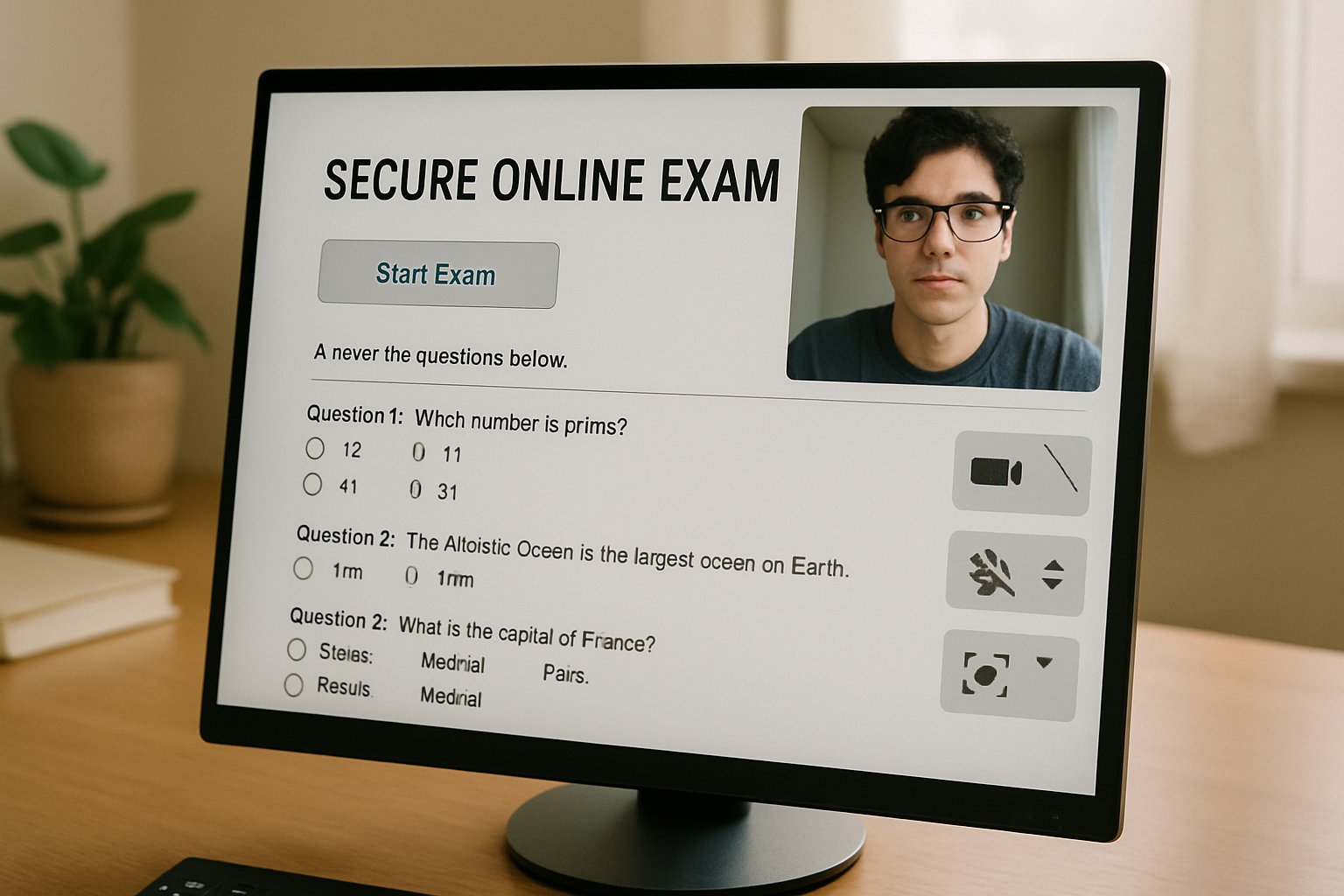
Academic Integrity Pressures Rise
Faculty have reported more contract-cheating cases during untimed take-home exams. Moreover, employer surveys question the reliability of unverified scores. Therefore, many programs now require at least one remotely proctored exam in every core module.
Regulators also warn that unchecked misconduct could erode public trust. In contrast, civil-liberties groups challenge invasive surveillance and room scans. Nevertheless, campuses still search for balanced oversight that deters dishonesty without harming equity.
In summary, integrity threats and compliance mandates push institutions toward stronger safeguards. The next section reviews market momentum and data supporting that shift.
Global Market Growth Snapshot
Vendor innovation has accelerated since 2020. Additionally, hybrid AI-plus-human models cut costs while raising detection accuracy. Consequently, adoption widens across community colleges and international universities.
- Estimated market size: USD 0.8–2.4 billion (2024 baseline).
- Forecast CAGR: 15–20% through 2029, according to multiple reports.
- Institutional adoption: 40–70% in North America and Europe already use at least one solution.
- Randomized trials: webcam supervision lowered average scores, signalling reduced cheating rates.
Those figures underscore strong demand for scalable oversight. Next, we explore concrete advantages institutions should expect.
Online Test Monitoring Benefits
Deterrence And Credential Protection
Controlled studies confirm that online test monitoring deters academic dishonesty. Moreover, recordings create an audit trail that supports fair disciplinary processes. As a result, credentials maintain employer and accreditor confidence.
Scalability And Cost Control
AI flagging lets small review teams oversee thousands of sessions. Furthermore, students can complete a remotely proctored exam from any location, eliminating travel and venue fees. Institutions therefore reallocate budgets toward teaching rather than invigilation.
To conclude, well-implemented monitoring boosts integrity and access simultaneously. However, leaders must also manage notable risks, discussed next.
Online Proctoring Risk Factors
Privacy remains the loudest criticism surrounding online test monitoring. For instance, the federal room-scan ruling labeled the practice an unreasonable search. Additionally, algorithmic bias can flag darker-skinned students more often, demanding urgent vendor transparency.
Mental-health surveys reveal over 70% of respondents feel heightened anxiety during a remotely proctored exam. Bandwidth gaps can also crash sessions and unfairly penalize rural learners. Therefore, campuses need safeguards, governance, and rapid appeals.
Overall, risk awareness must match technological enthusiasm. The following section offers actionable mitigation steps.
Implementation Best Practice Tips
Administrators should prioritize pedagogy before software. Moreover, policy clarity will reduce confusion and litigation.
- Map assessment goals; only deploy online test monitoring where outcomes demand closed-book control.
- Adopt hybrid reviews; always let humans confirm AI flags before sanctions.
- Publish concise privacy notices and minimise data retention periods.
- Provide accessibility accommodations and optional low-intrusion modes.
- Pilot with diverse cohorts, collect metrics, and iteratively refine settings.
Executed together, these steps cut false positives and stress. Next, we consider the road ahead for responsible adoption.
Toward Balanced Future Approach
Market signals show monitoring will not disappear. However, institutions increasingly pair authentic assessments with selective online test monitoring to limit surveillance time. Meanwhile, vendors race to audit algorithms, reduce facial bias, and support low-bandwidth modes.
Policy experts urge transparent governance boards that include students. Consequently, trust can improve even when a remotely proctored exam remains necessary for licensure or accreditation.
In essence, balance hinges on ethics-by-design and continuous dialogue. We close with key takeaways and a proven partner solution.
Conclusion
Online test monitoring offers measurable deterrence, scale, and documentation when integrated thoughtfully. Yet privacy, equity, and wellbeing challenges demand ethical frameworks and hybrid human oversight.
Why Proctor365? The AI-powered platform pairs advanced identity verification with adaptive, scalable exam monitoring trusted by global exam bodies. Its smart behavior analytics flag anomalies in real time while human auditors provide final judgment. Seamless LMS integration means rapid deployment and low faculty overhead. Institutions can scale from small cohorts to nationwide certification campaigns without infrastructure stress. Therefore, universities gain reliable integrity without excessive intrusion. Explore how online test monitoring through Proctor365 safeguards your programs today by visiting Proctor365.
Frequently Asked Questions
- How does online test monitoring improve exam integrity?
Online test monitoring deters cheating by using webcam supervision and real-time behavior analytics. It creates audit trails and supports fair disciplinary processes, enhancing exam integrity and maintaining credibility in academic assessments. - What benefits does combining AI proctoring with human oversight offer?
Combining AI proctoring with human oversight enhances fraud prevention. AI detects suspicious activities instantly while human reviewers confirm flags, ensuring reliable decision-making and balance between strict integrity checks and fair student treatment. - How does Proctor365 safeguard student privacy and reduce bias?
Proctor365 ensures privacy with transparent identity verification and low-intrusion monitoring. Its adaptive AI minimizes algorithmic bias, and human auditors verify potential issues, balancing exam security with student equity and ethical oversight. - How can institutions benefit from Proctor365’s scalable proctoring solutions?
Proctor365 offers scalability with seamless LMS integration and cost-efficient monitoring. Its AI-powered alerts combined with human judgment reduce faculty overhead, making it ideal for both small cohorts and nationwide certification programs.