Online test monitoring has become the new front line for digital assessment security. Universities, ed-tech platforms, and corporate trainers now rely on it daily. Furthermore, the practice verifies identity, deters cheating, and supports flexible scheduling. A remotely proctored exam can occur anywhere, yet administrators still need confidence. Therefore, understanding the technology and its workflow is vital before procurement. Market analysts predict fast growth as certification providers shift online. However, legal challenges and AI-enabled cheating raise new questions. Consequently, decision makers must grasp both technology and policy fundamentals. This article unpacks core concepts, workflows, emerging trends, and procurement guidance. Read on to understand benefits, risks, and compliance essentials for your programs. The insights draw on recent court rulings, market data, and peer-reviewed research. Practical tips appear throughout each section.
Foundational Concepts Explained Here
Three delivery models dominate the space: live, recorded review, and automated AI. Live proctors watch candidates in real time and can intervene immediately. Recorded review captures video and screens, which staff examine later for suspicious moments. Automated systems apply computer vision to flag face swaps, phone use, or tab changes. Each model integrates identity checks, webcam streaming, and secure browsers, forming the backbone of online test monitoring.
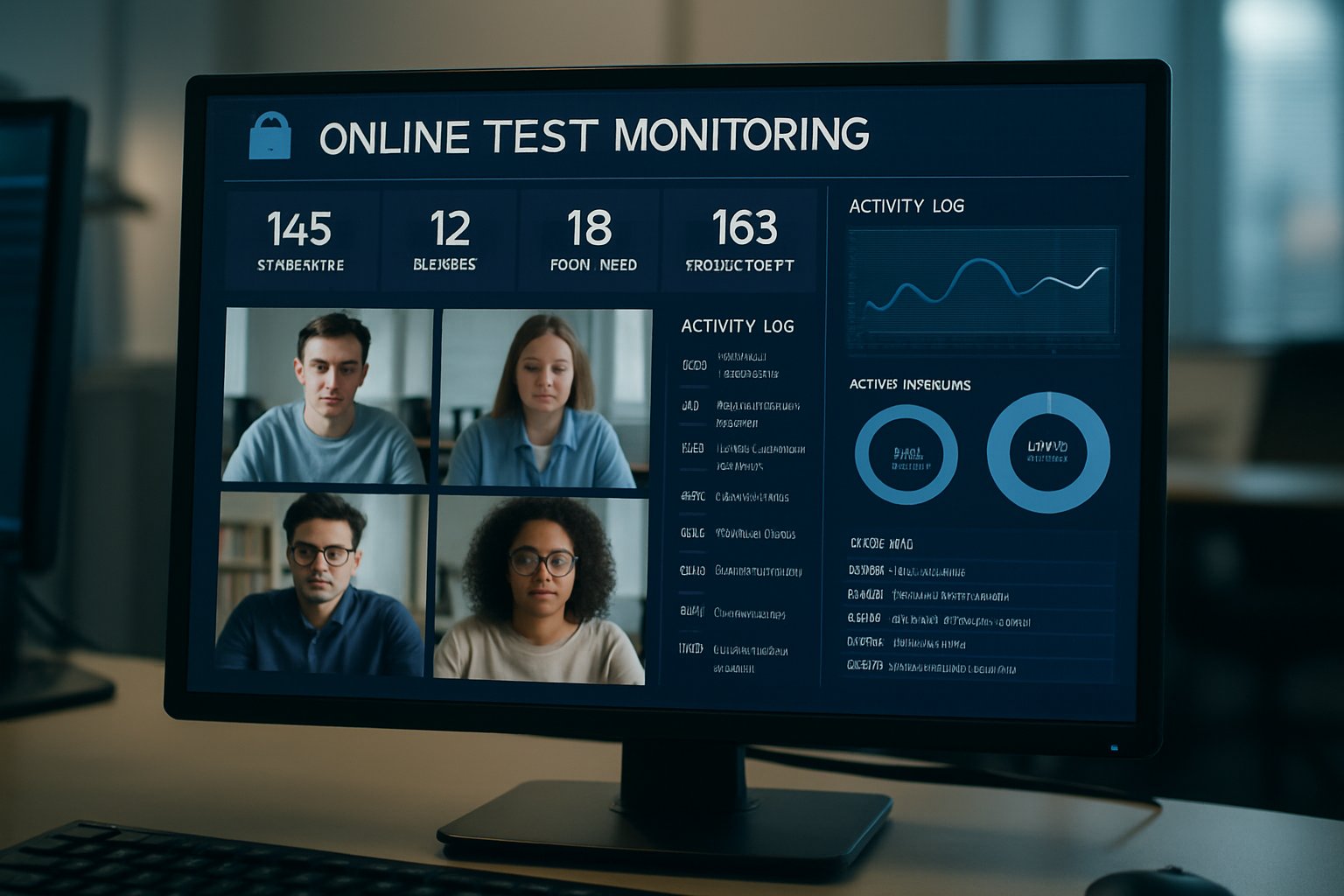
Consequently, institutions can mix these models for different risk levels. This flexibility will appear again in the workflow discussion below.
Typical Workflow Steps Unpacked
An effective workflow starts before the timer begins. Firstly, a system check validates camera, microphone, and bandwidth. Secondly, multifactor authentication confirms identity with ID photo and facial match. After a quick room scan, the candidate launches a locked browser that bars shortcuts. During the exam, AI or a live proctor watches video, audio, and screen feeds. Suspicious events receive time stamps that flow into a dashboard for instructors. Subsequently, staff review flags and decide on sanctions or clearance. This end-to-end chain showcases how online test monitoring delivers auditability.
- Pre-test checks
- Authentication
- Environment scan
- Live or AI surveillance
- Post-exam review
In short, a clear workflow reduces surprises and supports consistent decisions. Next, we examine fresh trends shaping these workflows.
Emerging Trends For 2026
AI now triages false positives, letting human reviewers focus on real threats. Moreover, vendors are moving analytics on-device to lower privacy risk and latency. Market reports forecast multi-billion dollar revenue by 2035, driven by corporate credentialing demand. However, legal rulings against intrusive room scans push companies to refine consent workflows. These developments will redefine online test monitoring over the next decade. Meanwhile, the typical remotely proctored exam must adapt to AI-enabled cheating tools.
As trends accelerate, institutions must stay agile. Therefore, proactive policy reviews remain essential. Benefits and drawbacks reveal why.
Key Benefits And Drawbacks
Proponents highlight cost savings versus physical test centers and rapid scheduling worldwide. Empirical studies show webcam surveillance can lower cheating rates compared with unmonitored exams. Yet, without balanced policies, online test monitoring may trigger privacy or equity concerns. A poorly configured remotely proctored exam can also overwhelm support teams with false alarms.
Clearly, benefits depend on thoughtful configuration. Legal obligations heighten that need.
Legal And Privacy Considerations
Ogletree v. Cleveland State ruled mandatory room scans unconstitutional, setting a precedent. Additionally, Illinois’ BIPA fines vendors for mishandled biometric data. Consequently, institutions must evaluate consent forms, retention limits, and data residency. Vendor contracts should state how online test monitoring complies with GDPR and similar laws. Accessibility accommodations for a remotely proctored exam must also be spelled out clearly.
Ignoring privacy invites litigation and brand damage. Selecting the right partner mitigates risk.
Selecting Reliable Providers Wisely
Procurement teams should shortlist vendors offering live, automated, and hybrid modes. Request demonstrations that reveal flagging accuracy, reviewer workflow, and dashboard clarity. Moreover, analyze integration with LMS, SSO, and analytics tools for seamless scaling. A mature online test monitoring suite will export granular logs for accreditation audits. Pilot a remotely proctored exam with diverse candidates to surface technical or accessibility issues early.
Diligent vetting fosters resilience and trust. Finally, let us recap.
Conclusion
Online test monitoring combines identity checks, locked browsers, and AI surveillance to protect remote assessments. Adopt clear workflows, respect privacy law, and choose vendors carefully. Doing so balances integrity, student trust, and institutional reputation. Regular reviews of analytics help refine policies. Continuous communication with learners improves acceptance and reduces anxiety. Furthermore, integrating honor codes and adaptive assessments multiplies security gains. Pair these tactics with training for proctors and faculty.
Why Proctor365? Our AI-powered platform delivers real-time analytics, robust identity verification, and scalable exam monitoring trusted worldwide. Therefore, institutions can deploy secure tests anywhere without friction. Experience superior safeguarding today by visiting Proctor365.
Frequently Asked Questions
- What is online test monitoring and how does it enhance exam security?
Online test monitoring uses live, recorded, and AI-powered proctoring to verify identities and detect suspicious behavior, reducing fraud risks and ensuring secure, transparent remote assessments. - How does AI proctoring improve the integrity of remote exams?
AI proctoring employs computer vision and real-time alerts to identify anomalies like face swaps or unauthorized device use, significantly enhancing exam integrity and fraud prevention. - What are the key steps in the remote exam proctoring workflow?
The workflow includes system checks, multifactor authentication, environmental scans, and continuous AI or live monitoring, all designed to prevent fraud and maintain a secure exam environment. - How does Proctor365 differentiate itself in the online proctoring space?
Proctor365 stands out with its advanced AI proctoring, robust identity verification, and real-time analytics, ensuring secure, scalable exam monitoring with effective fraud prevention and compliance support.