Remote learning surged, and online exam proctoring became essential within months. Institutions loved the scale but soon faced identity fraud and AI-driven cheating. Automated verification now stands at the center of every proctored online test workflow. This article unpacks current methods, market shifts, benefits, and risks. Because the threat landscape evolves weekly, leaders must grasp how each technology layer works. We use 2024-2026 data, vendor claims, and legal cases to guide decisions. Moreover, we highlight practical procurement tips that protect test integrity and student rights. Finally, we show why adaptive, certified liveness checks matter more than ever. Market forecasts predict double-digit growth for identity-centric proctoring, yet major exam bodies retreat. For example, ACCA will scrap most remote sittings in March 2026 after widespread AI abuse. Understanding that paradox is critical for every assessment leader today.
Identity Checks Rapidly Evolve
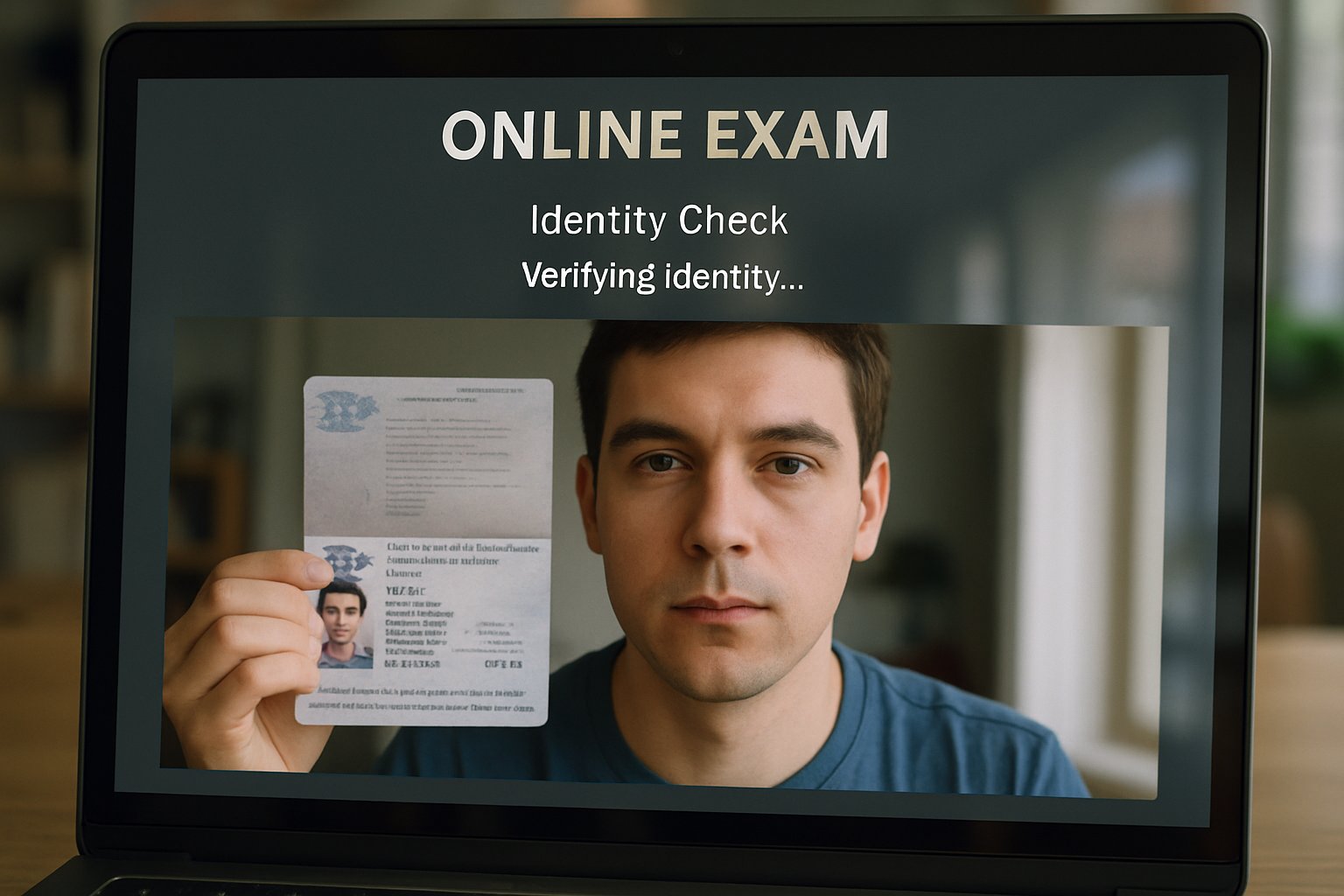
Most platforms begin with document capture and OCR. The candidate photographs a government ID. Algorithms extract text, verify holograms, and flag tampering cues. Then one-to-one face matching compares the ID photo with a live webcam selfie. This first gate remains vital for online exam proctoring because it deters quick impersonation attempts. However, forged documents and credential sharing still slip through single snapshots.
- MRFR valued the market at USD 2.1 billion during 2024.
- More than 40% of platforms adopted facial recognition by 2024.
- Independent PAD labs recorded zero spoofs across 1,500 attacks for some vendors.
Document plus face checks scale easily. Yet better liveness is required; the next section explains recent PAD gains.
Liveness Detection Gets Tougher
Deepfakes and silicone masks forced vendors to harden anti-spoofing. Level-2 ISO 30107-3 certifications from iBeta and FIME dominated 2024-2025 headlines. 1Kosmos, Identy.io, and others achieved perfect scores during controlled evaluations. Passive liveness now analyzes subtle texture and lighting cues while users proceed naturally. Active prompts, such as head turns, remain available for poor camera conditions. Both modes now guard a proctored online test against replay video attacks. Consequently, institutions strengthen online exam proctoring by requiring Level-2 proof in contracts.
Modern PAD blocks most casual spoofs. However, continuous monitoring remains essential, as the following section shows.
Continuous Authentication Gains Traction
Single checkpoints fail when imposters tag-team mid-session. Therefore, platforms record gaze, keystroke rhythm, and mouse cadence throughout the sitting. Machine-learning models compare these signals to baseline enrollment profiles. Alerts trigger when patterns deviate sharply, prompting human review. Early research reports encouraging accuracy, yet false positives affect neurodivergent students. During a proctored online test, head-pose drift can wrongly flag restless examinees. When combined with online exam proctoring analytics, behavior data delivers real-time identity assurance.
Continuous signals keep imposters out. Yet privacy and bias debates intensify, as discussed next.
Privacy Bias Concerns Escalate
Face recognition algorithms still show demographic gaps, according to NIST FRVT studies. Students wearing hijabs or with darker skin report higher false rejection rates. Room-scan lawsuits, like Ogletree v. CSU, highlight privacy boundaries courts may enforce. Senators continue to question opaque algorithms and expansive data retention policies. A misflag during a proctored online test can disrupt careers and invite legal claims. Therefore, any online exam proctoring rollout must publish clear appeals and deletion procedures.
Transparency eases student anxiety. Procurement teams can codify safeguards, as the next guide explains.
Strategic Procurement Playbook Guide
Begin with a detailed matrix covering threats, disability access, and legal mandates. Demand independent PAD and FRVT letters, plus demographic disaggregated bench results. Moreover, insist on data-retention caps, audit clauses, and human review service-level agreements.
- Ask for anonymized false-positive statistics each semester.
- Require BIPA compliance for biometric storage in US regions.
- Test with low-bandwidth devices before campus-wide rollout.
Such diligence ensures online exam proctoring aligns with institutional ethics and risk appetite. It also protects every proctored online test from needless litigation.
Strong contracts reduce surprises. Finally, we must anticipate emerging threats.
Future Threats And Defenses
Cheaters increasingly orchestrate deepfake video relays and real-time language model coaching. Multi-camera setups, browser locks, and multimodal fusion now counter these sophisticated plots. However, platform privileges create new attack surfaces, so vendors must harden code security. Experts predict an arms race, yet layered analytics will slow fraud momentum. Continual innovation keeps online exam proctoring viable even as tactics evolve.
Threats grow, yet layered AI fights back. The conclusion summarises and shows Proctor365’s edge.
Conclusion And Next Steps
Automated identity verification now blends document scans, liveness PAD, behavioral analytics, and secure browsers. Together these layers deliver scalable integrity for every credentialing program. Yet leaders must balance fairness, privacy, and constant technical upgrades.
Why Proctor365? Our AI-powered platform unites advanced identity verification, certified liveness, and continuous analytics. Consequently, we scale monitoring from a single class to global certification networks without friction. Trusted by universities and professional boards, our solution elevates online exam proctoring reliability. Visit Proctor365.ai to safeguard every proctored online test today.
Frequently Asked Questions
- How does Proctor365 ensure exam integrity during remote tests?
Proctor365 employs AI-powered identity verification, certified liveness detection, and continuous behavioral analytics to prevent fraud and impersonation, ensuring secure and reliable online exam proctoring. - What measures does Proctor365 use to prevent cheating?
Our platform integrates advanced document capture, one-to-one face matching, and robust liveness PAD to counter deepfakes and impersonation, effectively reducing fraud in proctored online tests. - How is identity verification handled in online exam proctoring?
Proctor365 verifies identity using government ID scans, OCR, and real-time face matching, combining these with continuous monitoring to maintain rigorous exam integrity. - How does Proctor365 address privacy concerns during proctored tests?
We prioritize transparency and fairness by implementing clear data usage policies, secure biometric storage, and robust appeals procedures, ensuring privacy while maintaining exam security.