Mobile phones have become the cheapest cheating partner in high-stakes assessments.
Consequently, universities and certification providers now demand airtight surveillance during remote tests.
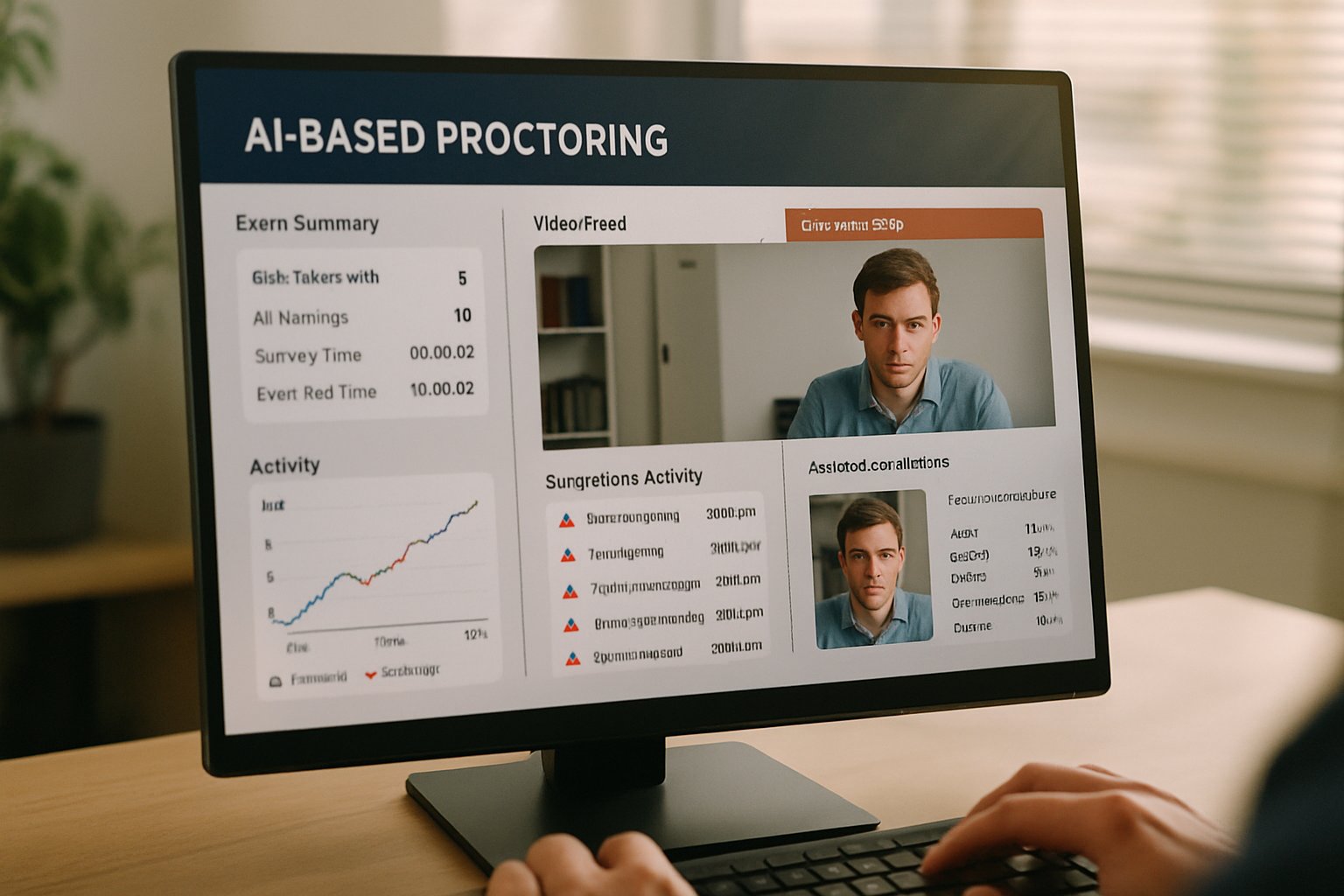
Advanced proctoring software for online exam delivery answers that demand with layered, AI-driven monitoring.
However, students still attempt to hide a second device just outside the webcam frame.
This article unpacks how modern systems detect those covert phones without breaching acceptable privacy limits.
Moreover, we highlight real-world strengths, gaps, and practical steps for safer deployment.
Educators, ed-tech leaders, and corporate L&D managers will gain actionable insights.
We also review recent market trends and ongoing legal debates shaping proctoring policy.
Finally, we explain why adopting the right solution matters for reputation and learner trust.
Let us examine the fast-evolving playbook used to spot secondary mobile devices.
Cutting-edge ai proctor exam solutions now form a billion-dollar sub-sector within ed-tech.
Proctoring Software For Online Exam
At its core, proctoring platforms integrate webcam feeds, audio streams, browser lockdown, and real-time analytics.
These unified modules allow one console to flag suspicious behavior within seconds.
Furthermore, vendors increasingly market specialised modules that target hidden smartphones, tablets, and smartwatches.
Because cheaters evolve quickly, providers update detection engines every release cycle.
Consequently, stakeholders must understand each layer to evaluate risk, budget, and student experience.
Key takeaway: integrated suites unify multiple detection streams.
Second takeaway: hidden phones sit at the center of vendor roadmaps.
Next, we explore why that threat keeps rising.
Rising Mobile Cheating Threats
COVID-era remote testing normalised unsupervised bedrooms as exam halls.
Meanwhile, low-cost 5G phones enabled instant search and chat with outsiders.
Because 71% of violations reportedly involve phones, proctoring software for online exam administrators focuses on mobile misuse.
- Honorlock marketing claims 71% of recorded violations involve secondary devices.
- A 2024 investigative piece documented 26,000 honeypot pages targeting phone searches.
- Market analysts forecast double-digit CAGR for remote proctoring through 2029.
Moreover, investigative stings have proven that organised cheating rings still exploit system blind spots.
Summary: smartphones present the most common and scalable risk vector.
Institutions therefore prioritise mobile-specific countermeasures.
The next section breaks down those layered defences.
Layered Device Detection Methods
Effective countermeasures stack independent signals so one failure cannot doom integrity.
Consequently, systems marry browser telemetry, computer vision, audio analysis, and network breadcrumbs.
For example, extensions log tab switches while webcam models spot phone silhouettes.
Additionally, honeypots record off-screen searches, and BLE sniffing hints at nearby iPhones.
This layered design lets proctoring software for online exam sessions raise confidence without intrusive scanning.
Audio And BLE Signals
Microphone streams flag notification pings and assistant keywords.
Meanwhile, BLE proximity data hints at nearby Apple devices via Continuity signals.
These ancillary cues often corroborate visual or honeypot evidence.
Takeaway: minor signals fill gaps left by cameras and browsers.
Now, we zoom into the camera-based layer.
Takeaway: redundancy limits false negatives and strengthens evidence chains.
However, each layer still suffers inherent error rates.
Next, we zoom into the camera-based layer.
Computer Vision Watchdogs Rise
Camera feeds stream to AI models derived from YOLO or R-CNN architectures.
Moreover, these models classify hands, phones, extra screens, and reflective glow with millisecond latency.
Some vendors request a second phone as an auxiliary camera, creating a 360° view.
Consequently, a device repurposed as a camera cannot double as a cheating assistant.
Several ai proctor exam vendors report 90% object-detection precision under controlled lighting.
Summary: vision models detect physical phones in many configurations.
Yet they struggle with pocket-hidden devices or poor lighting.
Therefore, systems augment vision with network intelligence.
Honeypots Trap Exam Searches
Honeypot pages mimic answer sites and carry watermarked exam questions.
When a hidden phone googles text, the decoy silently logs IP, timestamp, and fingerprints.
Subsequently, servers cross-reference that hit against the active test session.
If the match aligns, instructors receive high-priority alerts.
This technique helps proctoring software for online exam environments catch stealth queries that evade ai proctor exam vision.
Summary: honeypots expose digital footprints left by secondary devices.
Limit: the device must actually visit the decoy page.
Let us examine overall reliability and open gaps.
Reliability And Current Limitations
Field data show layered ai proctor exam systems reduce casual cheating but remain imperfect.
False positives arise when students look away to think or when ambient noises resemble alerts.
Meanwhile, professional cheating services still bypass controls using remote desktops or sophisticated screen overlays.
Cleveland State’s 2022 ruling also warned against overbroad room scans, underscoring legal headwinds.
Consequently, institutions using proctoring software for online exam delivery must balance deterrence, privacy, and due process.
Key point: technology deters but never eliminates misconduct.
Secondary point: legal and ethical frameworks must evolve alongside software.
The following best practices help strike that balance.
Practical Implementation Best Practices
Plan deployments early with clear academic-integrity policies and transparent student communication.
Furthermore, pilot tests let teams calibrate sensitivity thresholds before high-stakes rollout.
- Run accessibility and bandwidth checks for all candidates.
- Enable multi-factor identity verification at login.
- Set secondary-camera workflows for high-risk exams.
- Define human review procedures for every AI flag.
Institutions pairing these controls with proctoring software for online exam sessions report smoother audits and fewer disputes.
Best practice summary: policies, pilots, and human oversight protect fairness.
Next, we conclude with strategic considerations and a trusted platform recommendation.
Conclusion And Next Steps
AI has armed exam administrators with robust shields against hidden phones.
Layered computer vision, audio cues, honeypot analytics, and BLE signals raise the bar.
Nevertheless, no stack is infallible; continuous review and transparent policy remain essential.
For institutions seeking dependable proctoring software for online exam integrity, Proctor365 delivers unmatched advantages.
Proctor365 unites AI proctoring, biometric verification, and global-scale monitoring within one secure cloud platform.
We are trusted by universities, certification bodies, and enterprise L&D teams worldwide.
Choose Proctor365 to:
- Stop mobile and browser-based cheating with multilayer AI.
- Verify every test-taker’s identity in seconds.
- Scale to thousands of concurrent sessions effortlessly.
Visit Proctor365.ai today and safeguard your next ai proctor exam journey.
Frequently Asked Questions
- How does Proctor365 detect hidden mobile devices during online exams?
Proctor365 uses layered detection methods combining computer vision, audio cues, BLE signals, and honeypot analytics to spot hidden devices and prevent cheating efficiently. - What are the benefits of AI proctoring for online exams?
AI proctoring offers real-time analytics, rapid identity verification, and multifaceted fraud prevention, thereby ensuring exam integrity and creating a secure testing environment. - How does Proctor365 prevent cheating and maintain exam integrity?
Proctor365 integrates advanced AI detection, biometric verification, and multi-layer monitoring to flag suspicious behavior and prevent fraud, ensuring reliable exam integrity. - What best practices should institutions follow when deploying online proctoring?
Institutions should conduct pilot tests, establish clear academic policies, perform bandwidth checks, and set up human review workflows alongside Proctor365’s advanced proctoring system.