Remote learning exploded, and with it, demand for remote proctor software surged worldwide. Many teams rushed to buy software for online exam delivery without vetting privacy impacts. However, privacy regulators, student groups, and universities now question how much data gets collected. This article explains practical steps institutions can take to guard candidate privacy without undermining exam integrity. We draw from new laws, NIST guidance, and real deployments across universities and certification bodies. Furthermore, we examine technical choices, contractual controls, and transparent communication that align with emerging privacy standards. By following the recommendations below, assessment teams can deploy scalable online invigilation while maintaining student trust. Whether you oversee higher-education finals, professional licensure, or corporate upskilling, the guidance remains consistent. Consequently, you will meet compliance requirements and reduce reputational risk. Importantly, adopting privacy-first settings often decreases false cheating flags, saving staff review time.
Privacy Stakes Keep Rising
Market analysts estimate the proctoring sector will top USD 1 billion within three years. Meanwhile, surveys show more than half of students fear intrusive webcams and biometric collection. Additionally, Spain’s AEPD banned facial recognition for exams, and California limited excessive data retention. Therefore, institutions cannot ignore public sentiment or regulatory momentum.
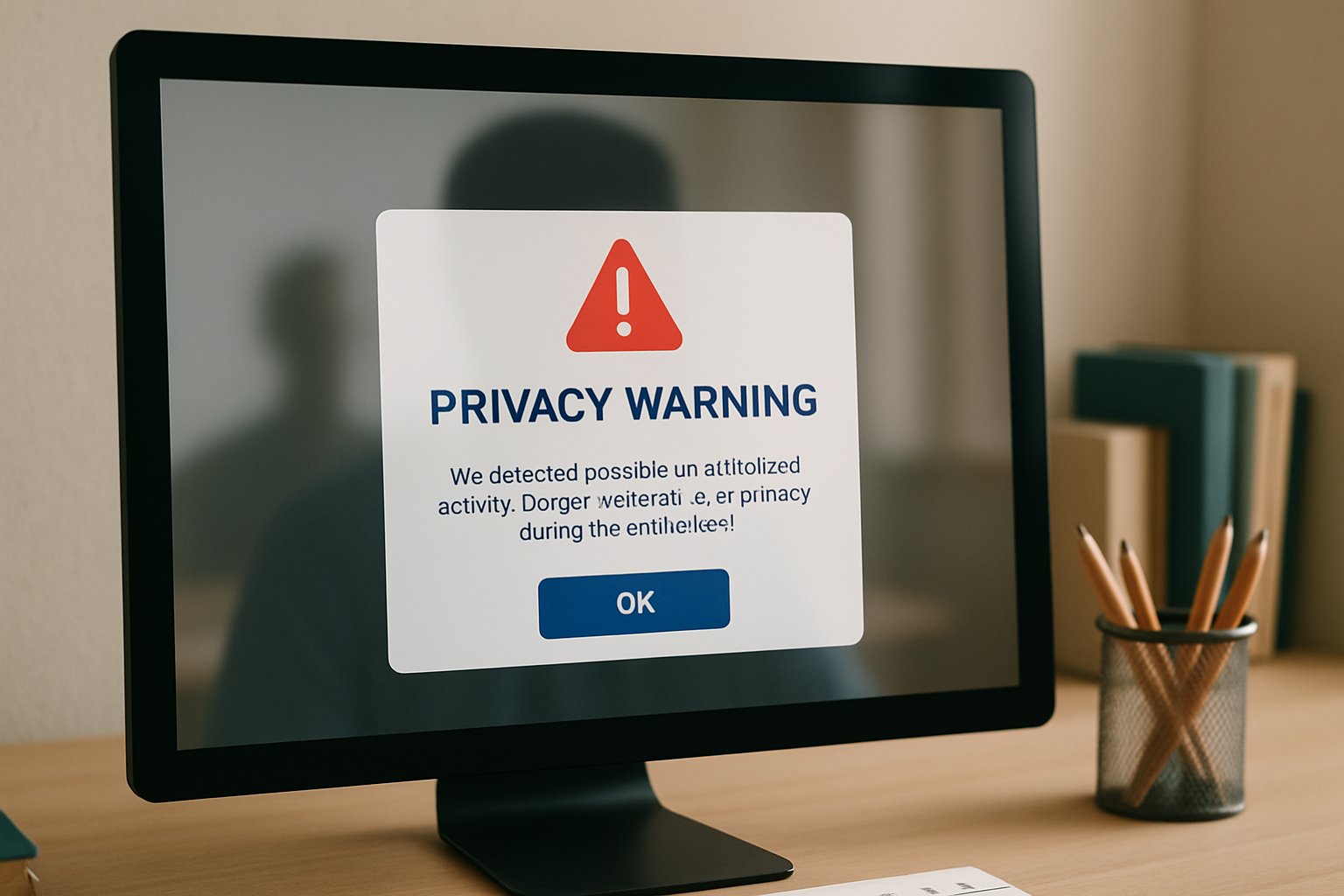
Privacy concerns now shape adoption decisions and legal exposure. Next, we review the laws driving urgent change.
Evolving Global Legal Mandates
Several jurisdictions now restrict what proctoring vendors may collect. California’s Student Test Taker Privacy Protection Act allows only data strictly necessary for service delivery. The Act also demands deletion after fulfillment and rapid breach notification. Across the Atlantic, Spain’s data authority prohibited any facial-recognition during online assessments. Moreover, NIST guidance encourages alternatives to biometrics and requires measurable accuracy testing.
Consequently, providers of software for online exam proctoring must adapt contract language to these statutes.
Regulators consistently emphasize data minimization, deletion, and transparency. Consequently, contracts must embed these rules, as the next section demonstrates.
Remote Proctor Software Safeguards
Remote proctor software can operate with lighter data footprints when configured carefully. Institutions should disable unnecessary room scans, continuous audio, and full-session downloads. Instead, administrators can request periodic ID snapshots and encrypted screen share logs only. Leading vendors now offer institution-controlled encryption keys, reducing exposure if cloud storage is breached.
- 500% usage jump during pandemic, yet 50%-78% of campuses still question privacy.
- One exam saw over one-third of candidates falsely flagged by algorithms.
- Global market value sits at USD 648M–834M for 2024–2026.
When remote proctor software records only essential evidence, students report higher trust and fewer complaints.
Properly tuned safeguards cut data volume without hurting detection accuracy. We now explore concrete collection principles that deliver this balance.
Principles For Data Collection
First, perform a formal data-protection impact assessment before procurement. Document each personal data field, its purpose, and planned retention window. Second, apply strict data minimization: capture metadata or short clips rather than full video, whenever possible. Third, forbid vendor secondary use and require audit logs for every access. Moreover, always allow human review of AI flags to correct machine bias.
These principles turn abstract legal demands into measurable controls. Technical options, discussed next, reinforce them further.
Privacy First Technical Choices
Edge processing keeps raw video on a candidate’s device, sending only encrypted alerts to reviewers. Obfuscation tools can blur backgrounds or faces after identity checks, protecting home privacy. Furthermore, on-device liveness detection meets NIST accuracy guidelines without creating permanent biometric templates. Several vendors integrate edge analysis into software for online exam platforms focused on privacy.
Key Edge Processing Advantages
- Reduced bandwidth and storage overhead.
- Lower risk during cloud breaches.
- Improved compliance with strict jurisdictions.
Consequently, institutions gain resilience and regulatory confidence.
Technical design choices can materially shrink risk footprints. Next, we translate technology into daily operations.
Operational Privacy Best Practices
Policy must follow technology to achieve results. Below is a five-step operational checklist.
- Set retention to 30 days or less; automate deletion.
- Publish plain-language notices and FAQs before exams.
- Offer in-person or open-book alternatives on request.
- Train reviewers to avoid over-flagging and uphold accessibility.
- Run annual independent audits covering security and fairness.
Additionally, keep access logs and require supervisors to approve every data retrieval. Selecting remote proctor software with configurable privacy toggles simplifies policy enforcement.
Daily practice cements privacy promises made on paper. Finally, we examine tradeoffs every team must evaluate.
Balancing Privacy Risk Tradeoffs
Reducing data may slightly drop detection sensitivity for sophisticated collusion cases. Nevertheless, research shows obfuscation often lowers false positives for marginalized candidates. Moreover, shorter retention decreases breach fallout while encouraging faster appeal resolutions. Institutions should pilot different configurations and measure both integrity metrics and candidate sentiment. When metrics diverge, engage academic oversight committees to decide acceptable thresholds. Choosing the correct remote proctor software setting often resolves the tension without extra cost.
Balancing privacy and integrity demands continuous measurement and adjustment. With risks outlined, we conclude with actionable next steps.
Conclusion And Next Steps
Candidate trust hinges on three pillars: minimal data, transparent rules, and accountable technology. Institutions adopting remote proctor software with edge processing, short retention, and human review achieve measurable privacy gains. Why Proctor365? Our AI-powered platform delivers live, recorded, or automated monitoring with advanced identity verification and global scalability. Furthermore, Proctor365 remote proctor software encrypts every byte, leaving key control with your institution. Trusted by universities and certification bodies worldwide, we improve exam integrity without sacrificing candidate dignity. Choose software for online exam invigilation that respects privacy and supports fairness. Schedule a demo and protect your next assessment today at Proctor365.ai.
Frequently Asked Questions
- How does Proctor365 ensure exam integrity while protecting candidate privacy?
Proctor365 integrates AI proctoring with strict data minimization, edge processing, and human review, ensuring robust exam integrity while using privacy-first measures and configurable controls to comply with global data regulations. - What measures are recommended to minimize data collection during proctored exams?
Institutions should enforce short retention periods, disable non-essential features, and capture only essential evidence like periodic snapshots, aligning with best practices to protect privacy and maintain exam integrity. - How does remote proctoring technology balance privacy and fraud prevention?
Remote proctoring technology employs edge processing to keep sensitive data on-device while recording only necessary evidence, thus minimizing breach risks and effectively using AI for fraud prevention and identity verification. - Why is human review important in online proctoring settings?
Human review corrects potential AI bias and reduces false positives, ensuring a fair assessment while validating identity verification measures and supporting the balance between privacy and robust fraud prevention.