In 2026, academic integrity faces unprecedented threats from generative AI and contract cheating. Consequently, universities and certification bodies now debate whether remote proctor software or live human proctors offer stronger protection. However, security is only half the story; cost and scale also drive decisions. This article compares both models, cites recent evidence, and outlines a pragmatic hybrid strategy.
Market analysts value the global online proctoring sector near one billion dollars, with double-digit growth expected this decade. Meanwhile, court rulings and privacy laws challenge intrusive monitoring tactics. Institutions therefore need data-driven guidance, not vendor hype. Finally, we synthesise peer-reviewed studies, legal outcomes, and vendor contracts to reveal practical steps that safeguard learners and reputations.
Remote Proctor Software Scale
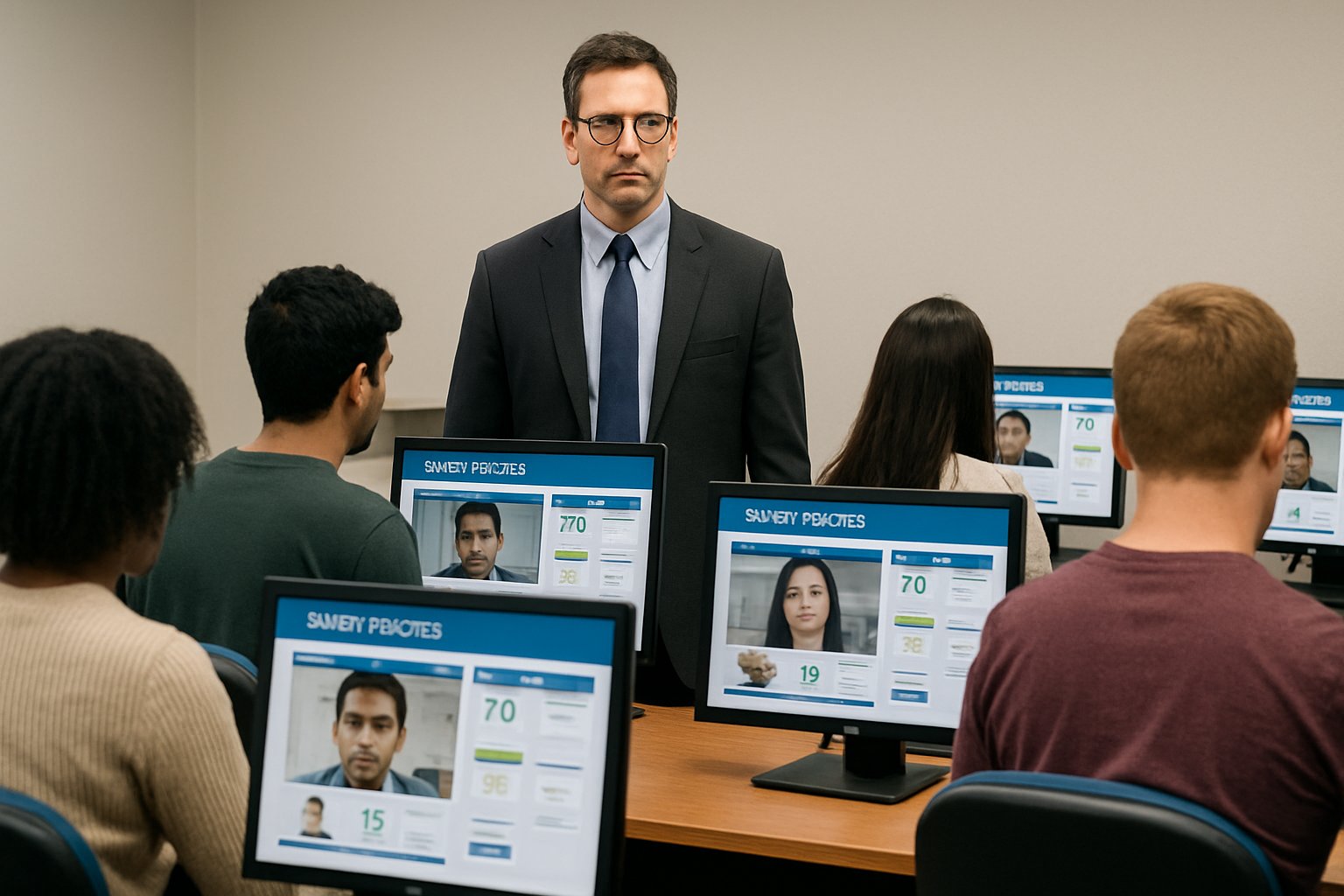
Automated systems monitor thousands of candidates simultaneously, while one human proctor typically supervises twenty. That difference drives dramatic cost savings, often slashing per-exam fees by 60–80 percent. Moreover, 24/7 availability supports global cohorts without scheduling bottlenecks. Early pandemic adoption of software for online exam monitoring proved the model’s logistical power.
Many universities deploy remote proctor software because it lowers per-exam costs and eliminates timezone barriers. In contrast, live proctors require shifts, overtime, and strict staffing ratios. Consequently, institutions seeking rapid enrollment growth lean toward automation first.
Key numbers illustrate the gap:
- Automated concurrency: up to 50,000 sessions per cloud region.
- Live concurrency: about 200 sessions per proctor center.
- Average automated session cost: USD 4-10.
- Average live session cost: USD 15-30.
Scalability clearly favors machines; yet security needs deeper review. This sets the stage for the next comparison.
Automation delivers unmatched volume and lower fees. However, security trade-offs remain critical. Next, we examine protection strengths.
Key Security Strengths Compared
When configured carefully, remote proctor software can detect browser tampering, virtual machines, and hidden applications within milliseconds. Humans cannot reliably spot these stealth exploits without technical tools. Furthermore, AI models apply rules consistently, reducing proctor variability.
Yet live proctors excel at context. They can question suspicious behavior immediately and de-escalate misunderstandings. Moreover, human intuition recognizes legitimate movements, cultural differences, and accessibility needs that confuse algorithms.
Therefore, security outcomes depend on threat type. Automated detection dominates technical cheating; human vigilance dominates behavioral anomalies. Both approaches complement each other when merged.
Machines catch digital tricks, while people interpret nuance. Consequently, fairness considerations enter the discussion.
Fairness And Bias Risks
Critics argue that remote proctor software sometimes mislabels harmless actions as misconduct, especially for darker skin tones or neurodiverse behaviors. False positives force stressful appeals and can tarnish records. University audits report many AI flags that later prove benign.
Live proctors also carry bias, yet they can ask clarifying questions before escalating. Nevertheless, fatigue and human error still generate inconsistencies. Institutions must therefore balance algorithmic and human bias through policy and training.
Reducing wrongful accusations protects students and reputations. Simultaneously, privacy regulations intensify the pressure to refine monitoring.
Evolving Legal Privacy Pressures
Room scan mandates faced judicial pushback, most notably in Ogletree v. Cleveland State University. Meanwhile, Illinois BIPA lawsuits focus on biometric collection without proper consent. Consequently, institutions deploying software for online exam supervision must conduct privacy impact assessments.
Generative AI also complicates evidence. Studies show markers missed 94% of AI-generated answers. Thus, allegations require human review plus transparent appeal pathways.
Legal scrutiny forces careful vendor selection and contract language. Privacy risk fuels interest in balanced hybrid approaches, explored next.
Hybrid Model Advantage Explained
Institutions often start with remote proctor software and add human reviewers for flagged events. This hybrid workflow harnesses machine scale yet preserves human judgment where stakes are highest. Moreover, high-stakes licensure tests still rely on live proctors or secure centers.
A risk-based framework guides deployment:
- Low stakes: open-book or alternate tasks.
- Medium stakes: AI monitoring plus rapid human audits.
- High stakes: live proctors or in-person sessions.
This tiered method aligns cost with risk and satisfies regulators demanding proportional surveillance.
Hybrid models share workload intelligently, improving fairness without sacrificing capacity. Implementation details matter, as the next section shows.
Implementation Best Practices Guide
Before selecting remote proctor software, teams should run a documented privacy and accessibility review. They must also benchmark software for online exam performance across diverse devices and bandwidth conditions. Furthermore, publish clear consent notices and alternative assessment options.
Experts recommend human confirmation for every serious AI flag before disciplinary action. Additionally, track false-positive rates and feed corrections back to vendors for model tuning.
Following these steps minimizes legal exposure and student harm. Attention then shifts to emerging market dynamics.
Market Trends Ahead Now
Procurements citing remote proctor software now span entire state systems, such as Utah and California community colleges. Analysts forecast the market will reach several billion dollars by 2030, fueled by corporate L&D demand and worldwide certification growth.
Simultaneously, vendors pursue ISO and SOC certifications to reassure buyers. Ed-tech platforms bundle software for online exam monitoring directly into learning ecosystems, simplifying adoption.
Growth accelerates, yet litigation and pedagogy reforms shape product roadmaps. Consequently, institutions must watch both revenue headlines and courtroom dockets.
The future promises smarter automation combined with transparent governance, leading naturally to our final considerations.
Conclusion
AI delivers unrivaled scale and technical detection; humans provide context, empathy, and fair adjudication. Consequently, a calibrated hybrid remains the most defensible choice today. By aligning surveillance intensity with assessment risk, institutions can protect integrity without overreaching.
Why Proctor365? Proctor365 merges cutting-edge remote proctor software with AI analytics, advanced identity checks, and scalable monitoring. Trusted by global exam bodies, our platform balances automation and human insight to reduce false positives and legal risk. Moreover, dedicated support teams guide deployments and ensure smooth candidate experiences worldwide. Schedule a personalized demo to see the difference in action by visiting Proctor365.ai.
Frequently Asked Questions
- How does Proctor365 ensure exam integrity using remote proctor software?
Proctor365 leverages AI analytics and advanced identity verification to maintain exam integrity by detecting technical cheating while reducing false positives and legal risks. Our scalable platform supports global exam monitoring. - What benefits does a hybrid proctoring model offer?
A hybrid proctoring model combines the scale of remote AI monitoring with human judgment, ensuring cost-effective, secure, and fair exam processes. This approach minimizes false positives and upholds academic integrity. - How does Proctor365 overcome biases in exam proctoring?
By integrating AI-driven analytics and human oversight, Proctor365 minimizes bias risks during exam supervision. Our platform refines detection algorithms and employs human review, providing balanced, transparent, and fair candidate assessments. - Can Proctor365 help institutions manage privacy and legal compliance?
Yes, Proctor365 is designed to align with privacy regulations and is constantly upgraded to meet legal standards. Our system incorporates robust identity verification and clear consent protocols, ensuring secure, compliant exam environments.