Online learning exploded during the pandemic. Institutions still rely on virtual finals, certification tests, and quizzes. Each ai proctored exam raises pressing privacy questions for administrators and learners. Meanwhile, regulators intensify scrutiny of webcam monitoring and biometric tracking. Lawsuits under Illinois BIPA show the stakes for mismanaging sensitive data. More classrooms now end the semester with a remotely proctored exam rather than a crowded hall. However, vendors and universities now deploy layered safeguards that keep student information secure. Encryption, role controls, and strict data retention all play vital roles. Furthermore, transparent policies and human review build essential trust. Consequently, decision makers can balance integrity, compliance, and learner experience.
AI Proctored Exam Safeguards
Every ai proctored exam now relies on a three-layer defense model. First, technical controls lock down raw video, audio, and screen streams. Second, contractual terms define institutions as data controllers and vendors as processors.
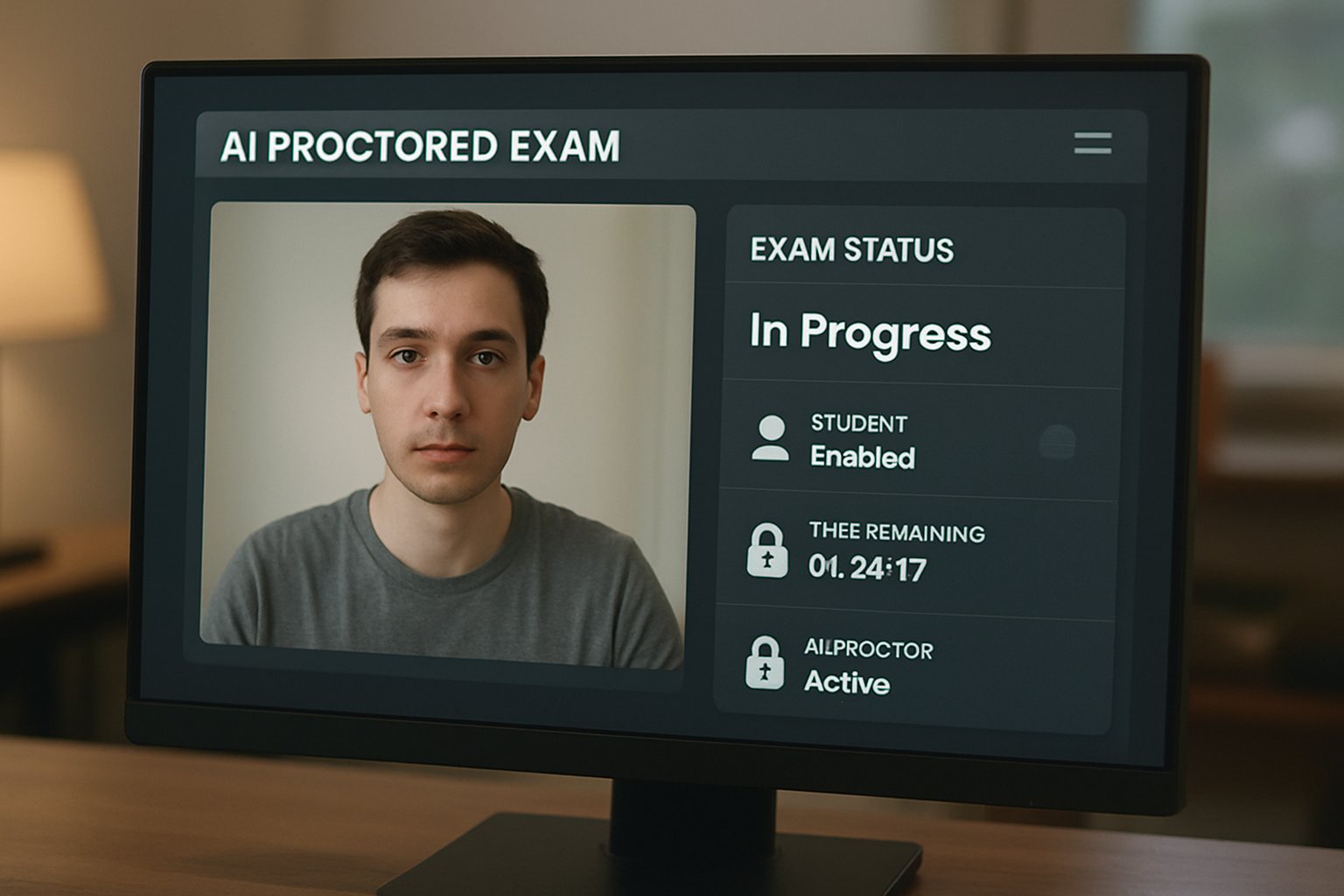
Third, operational policies minimise collection and force time-bound deletion. Moreover, human reviewers confirm AI flags before any disciplinary move. Consequently, students face fewer false accusations and preserved due process.
Together, these layers create a privacy posture that withstands growing legal pressure. Next, encryption techniques deserve deeper attention.
Encryption Guards Exam Videos
Encryption works at two critical stages. During transmission, TLS keeps sniffers from intercepting webcam streams. At rest, vendors use AES-256 or stronger alongside “zero-knowledge” key custody.
Under this model, universities hold decryption keys, not the cloud service. Therefore, even an internal breach cannot reveal unencrypted student footage. Proctorio markets this structure and publishes SOC 2 audit summaries.
Additionally, audit logs record every access attempt for investigations. Edge encryption begins the moment a remotely proctored exam session starts. These measures reassure procurement teams during any ai proctored exam rollout.
Robust cryptography stops leaks before they start. However, access governance decides who may see decrypted material.
Strict Access Control Layers
Role-based permissions limit recording access to authorised staff only. Two-factor authentication and IP restrictions add extra hurdles. Moreover, background-checked proctors follow documented viewing protocols.
Live sessions generate real-time alerts and immutable audit trails. Subsequently, administrators can trace every click and playback event. Such accountability discourages casual snooping or improper sharing.
Institutions should request monthly access reports from vendors. During a remotely proctored exam pilot, these reports expose unusual patterns quickly. Consequently, an ai proctored exam session stays visible only to authorised eyes.
Effective governance pairs nicely with data minimisation. Let us explore how vendors now collect less information.
Data Minimization Policies Work
Privacy laws reward organisations that take only what they need. Accordingly, modern platforms offer granular feature toggles. Universities can disable gaze tracking or room scans for low-stakes quizzes.
Common reduction choices include:
- ID validation only
- Screen lockdown without webcam
- Short retention deletion
- Pseudonymised analytics only
Moreover, default retention windows now shrink to 30 or 60 days. Institutions may demand shorter windows, especially for minors.
Limiting scope slashes breach impact and regulatory exposure. Nevertheless, biometric rules introduce extra complexity.
Biometric Laws Shape Practice
Illinois BIPA and updated COPPA define facial geometry as sensitive data. Therefore, written consent and posted retention schedules become mandatory. Recent lawsuits against Respondus illustrate the high statutory penalties.
Universities now ask vendors to disable template storage or hash deletion after grading. Meanwhile, some campuses paused gaze detection after bias incidents. These moves show policy is actively reshaping product roadmaps.
Choosing an ai proctored exam vendor without biometric clarity invites courtroom attention. Compliance pressures push vendors toward transparent algorithms and shorter storage. Building trust requires communication as well as code.
Procurement Privacy Checklist
Buyers need a structured approach when selecting surveillance tools. The following checklist reflects current best practice.
- Contractual controller–processor clarity
- Encryption specifications with key custody
- Retention window documented and auditable
- Human review and appeals pathway
- Accessibility and bias testing reports
Following this list keeps institutions ahead of legal trends. Consequently, each remotely proctored exam launches with reduced risk.
Student Trust Takeaways
Transparent communication remains the missing link. Students worry about cameras in bedrooms and algorithmic mistakes. Universities should publish plain-language FAQs and offer camera-free alternatives. Offering non-camera alternatives preserves choice without abandoning the ai proctored exam option.
Furthermore, sharing audit summaries and deletion logs demonstrates accountability. Proactive outreach lowers opt-out requests and complaints.
Trust grows when privacy safeguards appear visible, not hidden. The final section summarises benefits and the Proctor365 advantage.
An ai proctored exam can both secure integrity and respect privacy when designed thoughtfully. When encryption, governance, and minimisation align, privacy concerns shrink dramatically. However, vigilance is vital as laws and threats evolve.
Proctor365 delivers AI-powered proctoring, advanced identity verification, and scalable monitoring trusted by global exam bodies. Moreover, our platform embeds zero-knowledge encryption and configurable privacy settings by default. Consequently, institutions launch each remotely proctored exam with integrity and full compliance. Explore the solution at Proctor365.ai and strengthen your next assessment today.
Frequently Asked Questions
- How does AI proctoring ensure exam integrity while maintaining student privacy?
AI proctoring deploys layered safeguards including encryption, strict access controls, and human review to secure exam data. Proctor365 leverages advanced identity verification and operational policies to ensure privacy compliance. - What encryption measures safeguard exam videos?
Our system employs TLS for secure transmission and AES-256 encryption at rest with zero-knowledge key custody. This ensures that even internal breaches cannot expose unencrypted data, maintaining robust exam security. - How do strict access controls protect exam integrity?
Role-based permissions, two-factor authentication, and detailed audit trails restrict data access to authorized personnel only. Proctor365’s protocols minimize fraud risks and ensure secure, compliant exam sessions. - How does data minimization enhance privacy in AI proctored exams?
Data minimization restricts collection to essential information, reducing breach impacts and regulatory exposure. Proctor365 supports configurable feature toggles and time-bound retention for transparent and secure data handling.