Universities now face rising test volumes, shrinking budgets and loud demands for flexible delivery. Consequently, many leaders consider the ai proctored exam model a fast route to relief. Automated monitoring claims to reduce staffing, venue and scheduling costs. However, decision makers still weigh privacy, bias and legal risks. This article distills two years of market evidence, industry case studies and legal developments. Readers will see where savings appear, where new overhead lurks and how to deploy technology responsibly.
Market analysts peg online proctoring for higher education at roughly USD 780 million in 2025, growing by double digits. Meanwhile, about sixty percent of colleges report at least one remotely proctored exam each term. Yet credentialing giants like ACCA plan to abandon most remote assessments by 2026, worried about sophisticated AI‐driven cheating. This mixed landscape forces institutions to examine total cost of ownership, not vendor pricing alone.
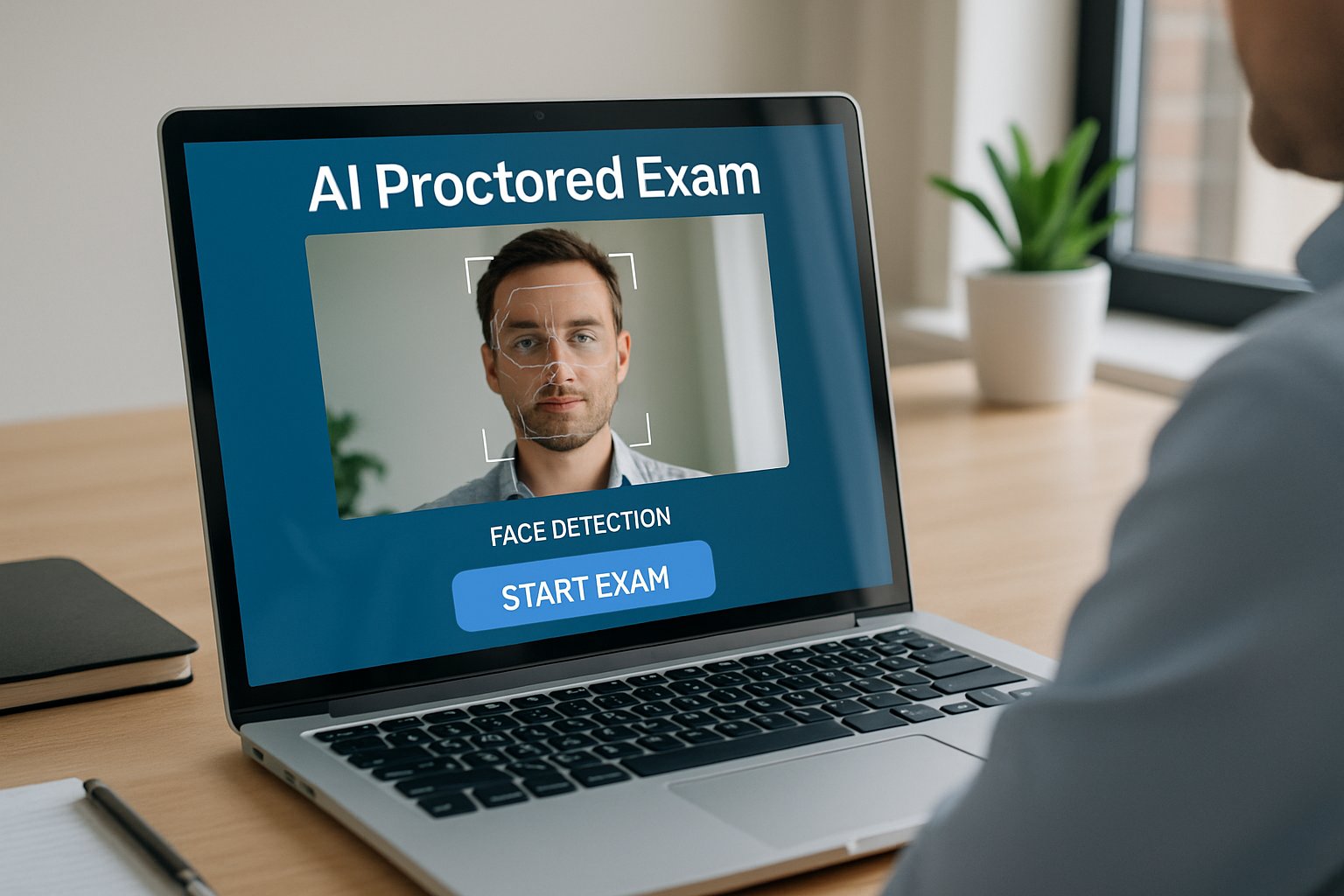
This report offers an expert roadmap. It explains overhead drivers, showcases cost-saving evidence, flags hidden liabilities and lists proven governance models. The goal is clear: help assessment leaders cut expenditure without trading away integrity or trust.
Key Exam Overhead Drivers
Several cost centres vanish once assessments move online. Facility hire, travel payments and printed materials disappear first. Moreover, an ai proctored exam removes the need for dozens of hourly invigilators.
However, other drivers replace them. Each remotely proctored exam creates video storage, help-desk calls and possible appeals. Additionally, privacy compliance tasks demand lawyer and IT hours.
Overall, net savings depend on volume, risk tolerance and policy design. Institutions should calculate both direct and indirect workloads before signing any contract.
In short, cost shifts rather than vanishes. Next, we review concrete savings data.
AI Proctored Exam Gains
Vendor case studies provide early evidence. The University of Florida saved USD 1.14 million across three semesters after deploying an ai proctored exam platform at scale.
Similarly, market reports cite automated monitoring prices as low as USD 3 per attempt, contrasted with USD 50 for live proctoring. Moreover, faculty in the Florida study reclaimed eight hours each term because AI handled identity checks.
These numbers illustrate that staffing and facility reductions translate into cash. Nevertheless, institutions must validate results through independent audits.
Documented gains are real yet context-specific. The following section explores risks that erode those gains.
Hidden Overhead Risk Factors
Not every ai proctored exam ends in savings. False positives can soar when algorithms misread lighting, accents or disabilities.
Consequently, staff must investigate disputes, extend deadlines and schedule a new remotely proctored exam session, adding unseen hours.
Legal exposure also grows. The EFF lawsuit against Proctorio shows how privacy mishandling triggers court costs and reputational damage.
Unchecked risks convert predicted savings into unexpected bills. Therefore, governance strategies become crucial.
Legal And Privacy Pressures
Data retention, biometric consent and cross-border transfer rules vary by jurisdiction. Moreover, regulators can levy heavy fines for lapses.
Institutions must impose strict deletion schedules and demand breach notifications within vendor SLAs.
Strong contracts prevent many legal headaches. Next, let’s examine proven operational models.
Hybrid Best Practice Models
Experts increasingly endorse a hybrid approach. AI handles detection, while trained reviewers decide outcomes. This balance retains the speed of an ai proctored exam yet reduces false accusations.
- AI triage only flags clear anomalies.
- Humans review before penalties or grade changes.
- Transparent rubrics guide every decision.
- Short data retention limits privacy risk.
Moreover, clear communication reduces student anxiety and support tickets.
Hybrid designs cut both risk and workload. Next, we outline rollout steps.
Strategic Rollout Steps
Leaders should start small. Pilot one high-enrollment course with an ai proctored exam and gather total cost metrics.
Subsequently, compare results against an in-center control and another remotely proctored exam using legacy methods.
- Define success metrics: cost per attempt, appeals volume, completion rate.
- Negotiate SLAs covering uptime, human review times and breach reporting.
- Train faculty on evidence standards and escalation paths.
- Publish an accessible appeals policy.
Measured pilots expose hidden costs early. Finally, we look ahead to market trends.
Upcoming Market Outlook Trends
Market analysts forecast the online proctoring sector to top USD 940 million next year. Moreover, investments in adaptive AI promise faster and more accurate ai proctored exam workflows.
In contrast, high-stakes bodies like ACCA retreat to test centers, highlighting credibility concerns. Their move may steer some institutions toward limited remotely proctored exam usage and broader assessment redesign.
Consequently, demand will favor vendors offering audited bias metrics, open APIs and transparent pricing.
The market will keep growing yet maturing. Institutions prepared for transparency will capture sustainable savings.
Reducing institutional overhead requires balance. Thoughtful deployment of an ai proctored exam framework delivers facility and staffing savings. Pair that approach with hybrid review, strict policies and transparent appeals to sustain benefits. Conversely, ignored privacy, bias or technical pitfalls can erase gains.
Why Proctor365? Proctor365 combines advanced AI-powered proctoring, multi-factor identity verification and scalable exam monitoring in one secure cloud platform. Global exam bodies already trust our solution to protect integrity at volume. Therefore, your next ai proctored exam rollout can move faster and safer with Proctor365. Schedule a demo today at Proctor365.ai.
Frequently Asked Questions
- How do AI proctored exams help cut institutional costs?
AI proctored exams reduce expenses by cutting staffing, facilities, and material costs. Proctor365’s advanced AI monitoring and identity verification streamline exam processes, offering a cost-effective and secure solution. - What are the risks associated with AI proctoring?
AI proctoring can lead to false positives, privacy concerns, and legal challenges if algorithms misinterpret data. Proctor365 mitigates these issues with a hybrid review, ensuring balanced exam integrity and compliance. - What is a hybrid proctoring model and why is it important?
A hybrid proctoring model combines automated AI detection with human oversight to reduce false flags and ensure exam fairness. Proctor365 employs this balanced approach for secure, reliable, and transparent exam processes. - How does Proctor365 ensure exam security and fraud prevention?
Proctor365 leverages advanced AI, multi-factor identity verification, and real-time monitoring to prevent fraud. Its secure platform maintains exam integrity, addresses privacy risks, and supports robust, scalable exam proctoring.