Exam cheating surged when campuses closed during COVID. Consequently, universities scrambled for dependable oversight online. Enter the ai based proctoring exam model, promising machine-driven vigilance at scale. Industry case studies even trumpet a stunning 95% malpractice drop. However, independent researchers urge careful interpretation of such figures. Yet, evidence does confirm a strong deterrent effect. Moreover, advanced analytics now flag impersonation and suspicious gaze in real time. Therefore, stakeholders from credentialing boards to corporate L&D teams want hard numbers and clear guidance. This article examines the technology, the 95% claim, and a practical remote exam security strategy to maximize integrity.
Cheating Spike Post-COVID Era
Before 2020, online exams were niche for many institutions. During lockdowns, digital assessments became the default overnight.
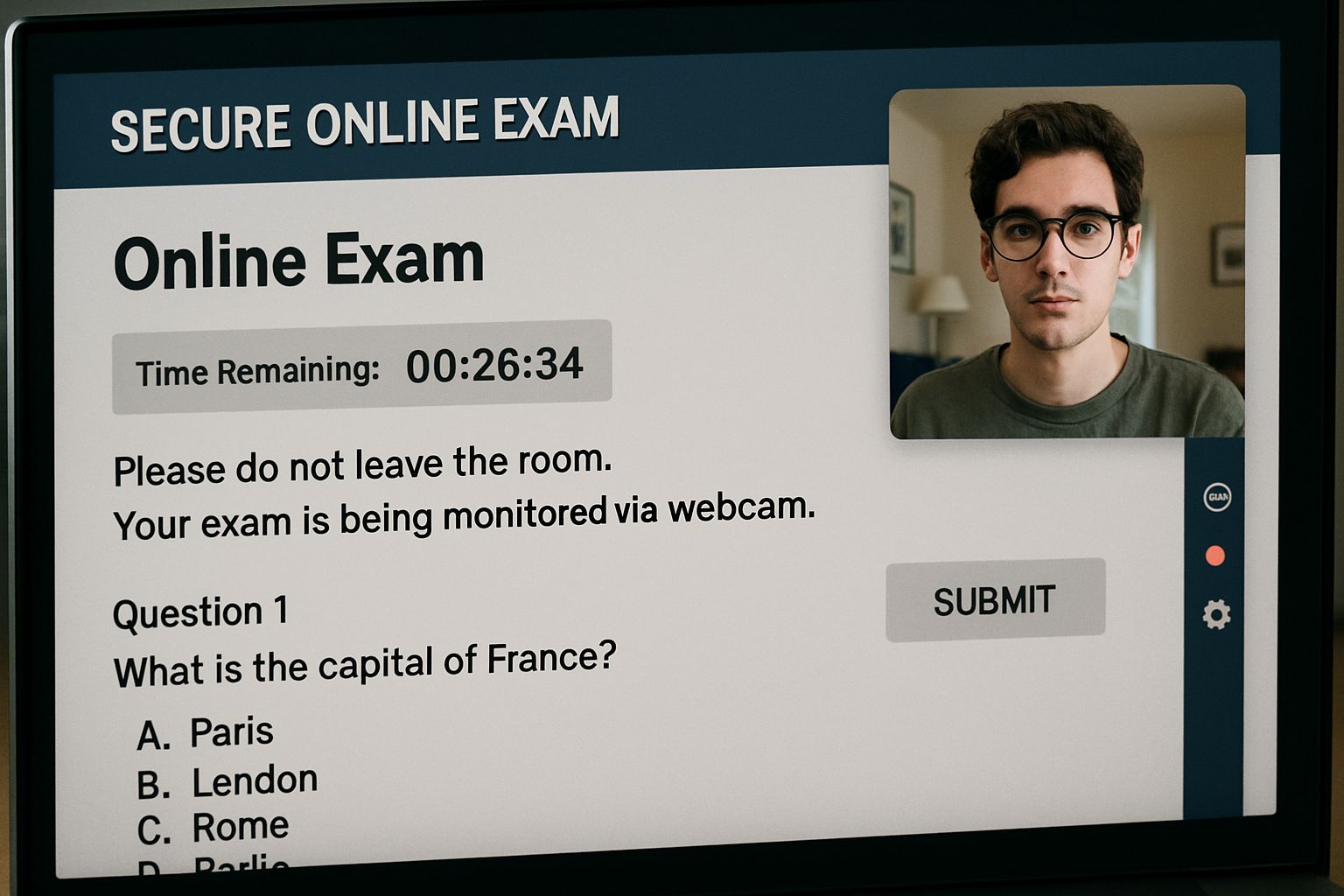
A 2023 systematic review found 54.7% of students self-reported cheating during pandemic exams. Meanwhile, opportunistic fraudsters exploited weak identity checks and unsecured browsers. Consequently, administrators sought a remote exam security strategy that could scale fast.
Cheating clearly spiked when safeguards vanished. Therefore, demand for monitoring tech skyrocketed. Next, we unpack how AI tools answer that demand.
How AI Tools Work
AI-based proctoring blends computer vision, audio analysis, and secure browser telemetry. Algorithms compare live video against stored ID photos and watch for extra faces. Additionally, keystroke dynamics flag bots or copy-paste attempts.
Most vendors run automated triage first, then human reviewers inspect high-risk clips. This hybrid keeps false positives manageable while containing cost. Moreover, continuous model updates improve detection of emerging cheat vectors.
Using an ai based proctoring exam approach, universities monitor thousands of candidates without extra staff. In short, layered sensors create a dynamic watchtower. However, the scale of impact still varies. That variance fuels debate over the famous 95% figure.
Ninety-Five Percent Claim Exam
Marketing decks often cite a 95% reduction after deployment of an ai based proctoring exam system. Yet, those numbers usually track a single vector like impersonation.
Independent randomized trials confirm cheating drops, but percentages stretch from 15% to 70% depending on context. Therefore, institutions must benchmark against their own baseline rather than generic slogans.
- Small sample windows inflate percentages.
- Measuring only confirmed incidents, not suspected.
- Combining AI with human live proctors for select exams.
- Students alter behavior once surveillance is announced.
Vendor claims are not fake, but they are narrow. Consequently, you need stronger metrics baked into your remote exam security strategy. The next section outlines those layered tactics.
Layered Security Tactics For
First, lock down the browser to block copy, paste, and navigation. Next, apply biometric identity checks at login and randomly mid-exam. Moreover, enable multimodal AI flagging for gaze, audio, and secondary devices.
- Randomized question pools reduce answer sharing.
- Time-limited sections curb external consultation.
- Post-exam analytics expose unusual response patterns.
Together, these layers drive large malpractice declines in many ai based proctoring exam deployments. However, privacy and fairness remain critical.
This section outlined technical levers institutions control. Therefore, we now explore ethical balances you must strike.
Privacy And Fairness Balance
Privacy advocates warn about excessive biometric retention and opaque algorithms. Meanwhile, bias studies show higher false alerts for darker skin tones and neurodivergent movements.
Consequently, choose vendors that offer transparent flag criteria, appeal workflows, and rigorous audits. Additionally, provide disability accommodations and clear communication to reduce anxiety.
An ai based proctoring exam solution must respect privacy while deterring fraud. Strong governance sustains trust while technology deters fraud. Next, we turn to a concrete implementation checklist.
Implementation Roadmap Checklist Guide
Follow these five evidence-backed steps to approach a 90% plus reduction.
- Define success metrics before rollout.
- Combine secure browser, multimodal AI, and human audit.
- Redesign assessments toward higher-order thinking.
- Publish transparent data and appeals policies.
- Mandate third-party algorithmic audits yearly.
Embed an ai based proctoring exam module within your LMS early for smoother adoption. Executing this roadmap embeds integrity in culture and technology. Consequently, your remote exam security strategy becomes sustainable, not reactive.
Finally, let us recap and show why Proctor365 leads this journey.
Conclusion: AI proctoring dramatically reduces malpractice when deployed with layered controls, transparent governance, and continuous audits. Institutions that link technology with pedagogy see the strongest gains.
Why Proctor365? The Proctor365 ai based proctoring exam platform delivers real-time AI vigilance, advanced identity verification, and scalable monitoring trusted by global exam bodies. Therefore, your organization enjoys resilient integrity without ballooning costs. Explore how Proctor365 elevates assessment security today at Proctor365.ai.
Frequently Asked Questions
- How does AI based proctoring help prevent exam cheating?
AI based proctoring uses computer vision, audio analysis, and biometric identity verification to detect suspicious behavior. Proctor365’s real-time monitoring and fraud prevention system enhances exam integrity. - What does the 95% malpractice drop claim mean?
The 95% reduction usually targets impersonation and detected cheating incidents. Institutions are advised to benchmark against their data, ensuring their remote exam security strategy is robust and tailored. - What are the benefits of a layered remote exam security strategy?
A layered approach combines secure browsers, biometric checks, and multimodal AI alerts. Proctor365 integrates these features with continuous audits and transparent governance to effectively curb exam malpractice. - How does Proctor365 ensure exam integrity and privacy?
Proctor365 secures exams using AI-driven proctoring, advanced identity verification, and fraud prevention tools. Its transparent policies and rigorous audits maintain exam integrity while safeguarding candidate privacy.