Introduction
An at home proctored exam lets a learner prove mastery without stepping into a test center. Demand for that flexibility has exploded across universities, certification boards, and corporate academies. Consequently, education leaders now rank remote assessment among their top digital priorities for 2026 budgets.
Yet many still ask what is an ai based remote proctoring system and whether it truly safeguards integrity. This article unpacks the technology, market forces, benefits, and legal risks shaping the next assessment decade. Furthermore, every insight draws on recent policy rulings, vendor updates, and higher-ed adoption data.
Read on to learn why experts view the at home proctored exam as more than a pandemic stopgap. Moreover, discover actionable steps for deploying privacy-first, bias-aware solutions at scale. Each section ends with concise takeaways to streamline decision making.
At Home Proctored Exam
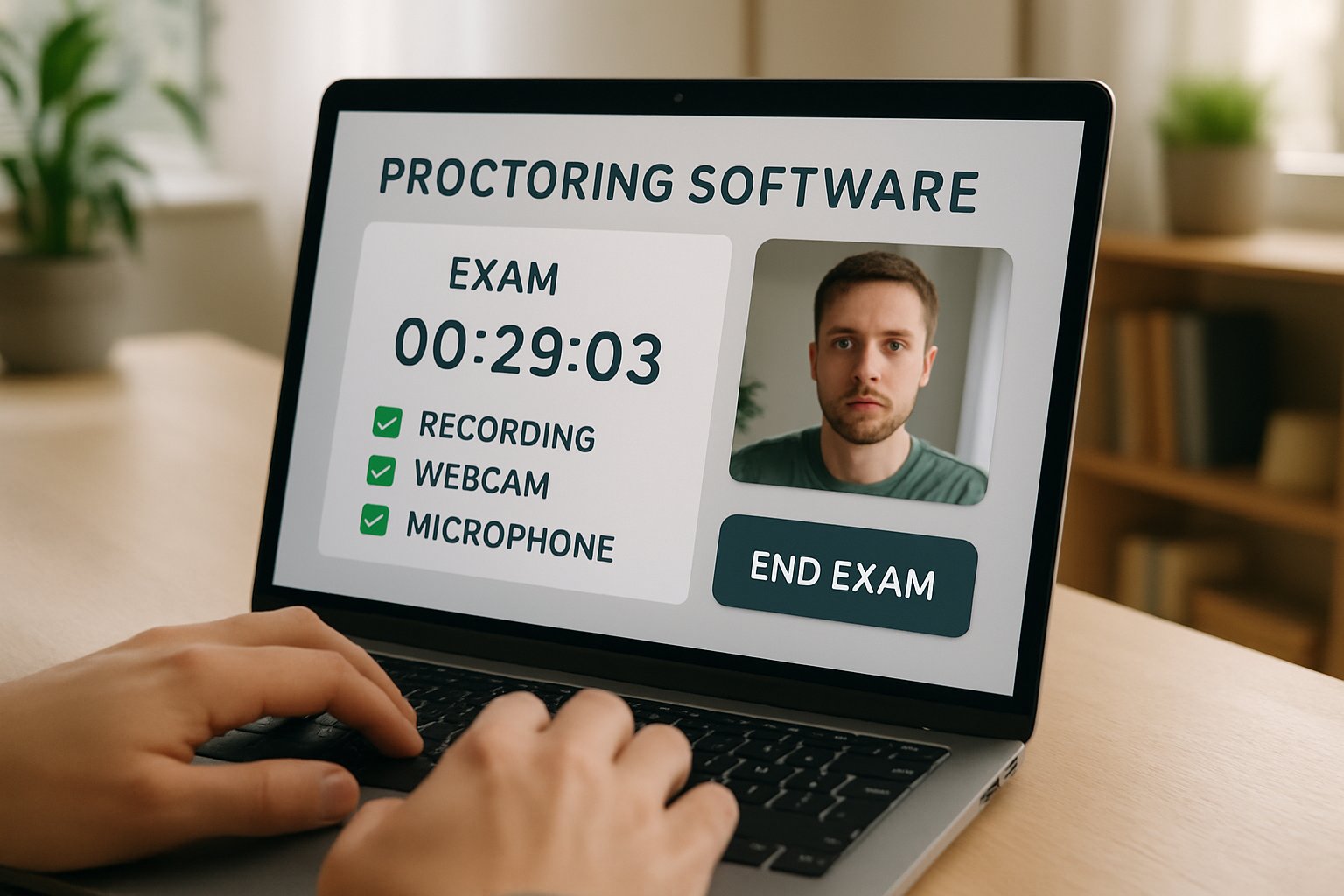
The term at home proctored exam describes any high-stakes test monitored online from a candidate’s private space. Live human proctors, AI analytics, or a hybrid watch the webcam, screen, and audio for suspicious activity. Institutions receive time-stamped incident reports and identity verification snapshots minutes after completion.
Faculty often ask what is an ai based remote proctoring system; they refer to automated flagging algorithms. These models detect gaze shifts, extra faces, phone glances, and blocked microphones within milliseconds. However, a trained human reviewer usually confirms any serious alert before action.
In short, the at home proctored exam pairs convenience with auditability. The next section tracks the market momentum fueling adoption.
Market Growth Trends Ahead
Commercial analysts peg the online proctoring market between USD 0.8 and 1.5 billion today. Moreover, forecasts suggest a 15 percent CAGR through 2031, reaching multi-billion valuations. Hybrid learning investments at large universities accelerate that curve.
Several mergers show incumbents bundling content delivery with remote oversight. Consequently, procurement officers increasingly receive single-vendor offers covering LMS, exams, and proctoring. This consolidation raises bargaining power for buyers seeking privacy concessions.
Growth data confirms the at home proctored exam will remain central, not fringe. Next, we explore how varying technologies deliver that promise.
Technology Models Explained Clearly
Three primary models dominate remote oversight. Live proctoring streams video to a supervisor in real time. Automated AI proctoring flags anomalies automatically and costs less per candidate. Record-and-review stores sessions for later human checks, balancing cost and accuracy.
- Lockdown browser restricts navigation and copy actions.
- Biometric ID checks match photos against stored templates.
- Edge processing reduces raw video leaving a device.
These components answer again what is an ai based remote proctoring system. Together, they create layered, auditable protection. Subsequently, institutions gain insight without overwhelming staff.
Technology variety gives buyers flexibility. The following section highlights concrete advantages.
Benefits For Modern Institutions
The at home proctored exam boosts accessibility by removing travel time and cost. Moreover, automated dashboards let faculty review flagged events quickly, shortening dispute cycles. Scalable cloud infrastructure handles thousands of simultaneous candidates with minimal extra staffing.
Additional gains include:
- Digital audit trails that support accreditation reviews.
- Lower per-exam costs compared with staffed centers.
- Global reach for professional certification markets.
Consequently, remote proctoring keeps career pathways open for working adults. The next section balances these perks with real risks.
Risks And Key Mitigations
Privacy stands first among concerns. Room-scan lawsuits show courts protect home spaces vigorously. Algorithmic bias can also trigger false positives that disproportionately affect marginalized students.
Institutions mitigate by demanding short data-retention windows and human-in-the-loop reviews. Furthermore, vendors now provide bias testing, on-device processing, and clear consent flows. Transparent policies reduce pushback while upholding integrity.
Mitigation strategies keep the at home proctored exam sustainable. However, policy shifts worldwide still influence deployment, as the next section explains.
Policy Landscape Shifts Worldwide
Courts in the United States deemed involuntary room scans an unreasonable search. Meanwhile, European regulators enforce strict biometric rules. Consequently, universities often provide alternative assessment options for students who refuse webcams.
Understanding what is an ai based remote proctoring system helps policy teams craft compliant guidelines. Moreover, EDUCAUSE advises clear opt-out pathways and disability accommodations.
Policy tailwinds shape vendor roadmaps. Stakeholders must watch legislation closely while planning future exams.
Conclusion And Next Steps
The evidence shows the at home proctored exam will anchor flexible, credible assessment worldwide. Market growth, versatile technology, and strong mitigations outweigh existing hurdles.
Why Proctor365? Proctor365 couples AI-powered proctoring with advanced identity verification, delivering scalable exam monitoring trusted by global exam bodies. Consequently, institutions strengthen integrity without sacrificing privacy. Explore how an at home proctored exam becomes seamless through Proctor365 at Proctor365.ai.
Frequently Asked Questions
- What is an AI-based remote proctoring system?
An AI-based remote proctoring system uses automated algorithms to monitor webcam, screen, and audio activities for anomalies in real time. With identity verification and fraud prevention, Proctor365 ensures exam integrity. - How do at-home proctored exams ensure exam integrity?
At-home proctored exams use lockdown browsers, biometric ID checks, and live or recorded sessions to secure assessments. Proctor365 enhances integrity with AI proctoring, fraud prevention, and robust identity verification. - What are the benefits of using Proctor365 for remote proctoring?
Proctor365 offers scalable AI-powered proctoring that reduces staffing needs while maintaining exam integrity. Its advanced features include real-time fraud prevention, biometric identity verification, and compliance with evolving privacy standards. - How does AI proctoring technology address exam fraud?
AI proctoring technology uses smart algorithms to quickly identify suspicious behavior such as multiple faces or unusual screen activity. Proctor365 leverages these tools with additional identity checks, effectively preventing exam fraud.