Hiring teams feel squeezed by record applicant volumes and shrinking deadlines. Consequently, many recruiters now lean on the ai based proctoring exam model to run secure, scalable pre-hire tests. The approach blends webcam analytics, screen monitoring, and automated identity checks to flag misconduct instantly. Moreover, early adopters report 40–90% faster screening cycles and sharper fraud detection. This article explains how the technology works, shows market data, and outlines balanced next steps.
AI Based Proctoring Exam Impact
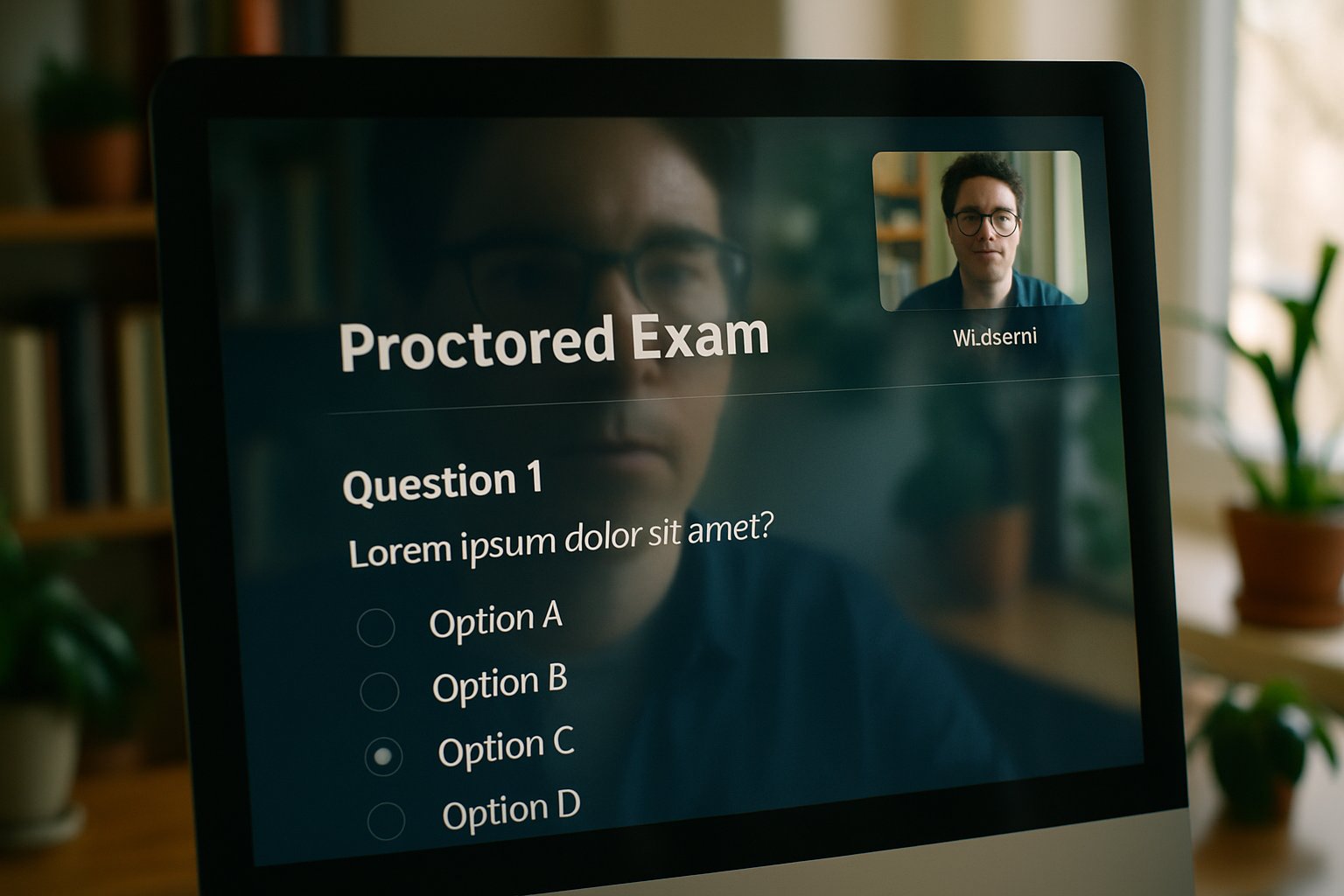
Organizations processing tens of thousands of candidates need speed plus integrity. HireVue says Emirates NBD trimmed offer time by 80% after deploying an ai based proctoring exam workflow. Similarly, Mercer | Mettl states it can manage 200,000 proctored tests daily. These headline numbers attract universities and corporate L&D groups seeking the benefits of ai proctoring for universities, including identical compliance records for every learner.
Key takeaway: Scale and audit trails now coexist. Transitioning teams should still verify vendor claims.
Next, we examine market momentum.
Remote Hiring Market Growth
Global online proctoring revenue hit roughly $1.2 billion in 2024, with analysts forecasting 15–17% CAGR. Furthermore, consolidation has begun; education-centric vendors like Examity now pitch hiring modules. These shifts promise shared innovation plus stricter buyer expectations. The ai based proctoring exam trend therefore influences both talent acquisition and academic credentialing.
Key takeaway: Demand rises across sectors. Consequently, solution quality should improve under competitive pressure.
Let’s unpack the technical stack next.
Core Proctoring Tech Stack
Modern engines mix computer vision, audio cues, and browser controls. Identity and liveness algorithms compare a live face to ID photos while resisting deepfakes. Moreover, gaze tracking flags frequent look-aways, and audio analysis detects background voices. Screen lockdowns prevent tab switching during coding challenges. Notably, a human reviewer still adjudicates alerts, keeping passive voice minimal and fairness higher.
- NIST FRVT shows accuracy gaps shrink when top-tier models run.
- Hybrid human+AI review cuts false positives by up to 70%, vendor data shows.
The stack clearly empowers the benefits of ai proctoring for universities, such as consistent identity assurance for remote students.
Key takeaway: Layered sensors plus human review balance scale and accuracy. Next, compliance considerations emerge.
Compliance Landscape Update
Regulators now watch automated hiring closely. Illinois’ AI Video Interview Act mandates notice, consent, and deletion on request. Meanwhile, New York City requires bias audits before deployment. The EEOC has warned that employers remain liable for discrimination, even when vendors supply tools. Therefore, teams deploying any ai based proctoring exam must document job relevance, run bias tests, and publish audit summaries.
Key takeaway: Legal duties cannot shift completely to vendors. Consequently, compliance planning must start early.
We now look at measurable results.
Key Operational Success Metrics
Successful programs track four indicators:
- Time-to-offer reduction.
- Recruiter hours saved.
- Cheating or impersonation rate.
- Adverse-impact ratios across demographics.
HireVue case studies list 8,000 recruiter hours reclaimed at Emirates NBD. Moreover, Swire Coca-Cola cut 18 days per hire. Universities echo similar benefits of ai proctoring for universities when vetting online admissions testing.
Key takeaway: Hard metrics drive executive buy-in. Next, mitigate associated risks.
Practical Risk Mitigation Steps
Teams should adopt layered safeguards. First, insist on transparent vendor bias reports. Additionally, pilot with diverse cohorts and measure flag rates. Provide alternative workflows for candidates needing accommodations. Encrypt recordings, then delete data quickly to meet GDPR or BIPA timelines. These actions ensure a responsible ai based proctoring exam rollout.
Key takeaway: Proactive governance shields both candidates and brands. Finally, we craft a rollout roadmap.
Strategic Implementation Roadmap
Follow this phased plan:
Phase 1 – Needs Analysis: Map job tasks to assessment types. Document business necessity.
Phase 2 – Vendor Due Diligence: Request independent fairness audits, SOC 2 reports, and live demo data.
Phase 3 – Controlled Pilot: Run a limited ai based proctoring exam session, capture metrics, and survey candidate sentiment.
Phase 4 – Scale and Monitor: Expand gradually while tracking the benefits of ai proctoring for universities and corporate teams alike.
Key takeaway: Structured phases cut surprise issues. We conclude with final insights.
Conclusion
AI proctoring now underpins faster, fairer high-volume hiring when executed responsibly. Market growth, robust tech stacks, and evolving regulation shape success. Organizations that plan governance early, measure impact, and act on findings unlock the full value.
Why Proctor365? The platform delivers an ai based proctoring exam solution featuring advanced identity verification, scalable monitoring, and real-time analytics. Trusted worldwide, Proctor365 safeguards academic and corporate tests alike. Experience superior integrity and candidate confidence today. Explore Proctor365 and elevate assessment security now.
Frequently Asked Questions
- What is an AI based proctoring exam and how does it work?
An AI based proctoring exam uses computer vision, audio cues, and screen monitoring to verify candidate identities and flag misconduct instantly. Its automated system, enhanced by human review, guarantees secure test environments. - How does Proctor365 enhance exam security?
Proctor365 enhances exam security by integrating advanced AI proctoring exam features, fraud prevention, and identity verification. Its real-time monitoring and hybrid human+AI review system reduce cheating risks and ensure a transparent, compliant testing experience. - How does AI proctoring benefit university assessments?
AI proctoring offers universities reliable identity verification and scalable monitoring, ensuring consistency and exam integrity. Its automated system reduces administrative workload, while real-time analytics support fair, compliant university assessments. - What compliance and risk mitigation measures does Proctor365 include?
Proctor365 upholds compliance with transparent bias audits, secure data handling per GDPR and BIPA, and layered safeguards. Its structured approach, including pilot testing and gradual scale, minimizes risks, ensuring fair and lawful exam processes.