Evolving Cheating Threats Today
Generative AI lowered the barrier to sophisticated misconduct. For instance, students can feed entire PDFs into ChatGPT and receive step-by-step answers within seconds.
However, research is fighting back. The 2026 “Integrity Shield” watermark blocks some language models from reading protected files and embeds traceable signatures.
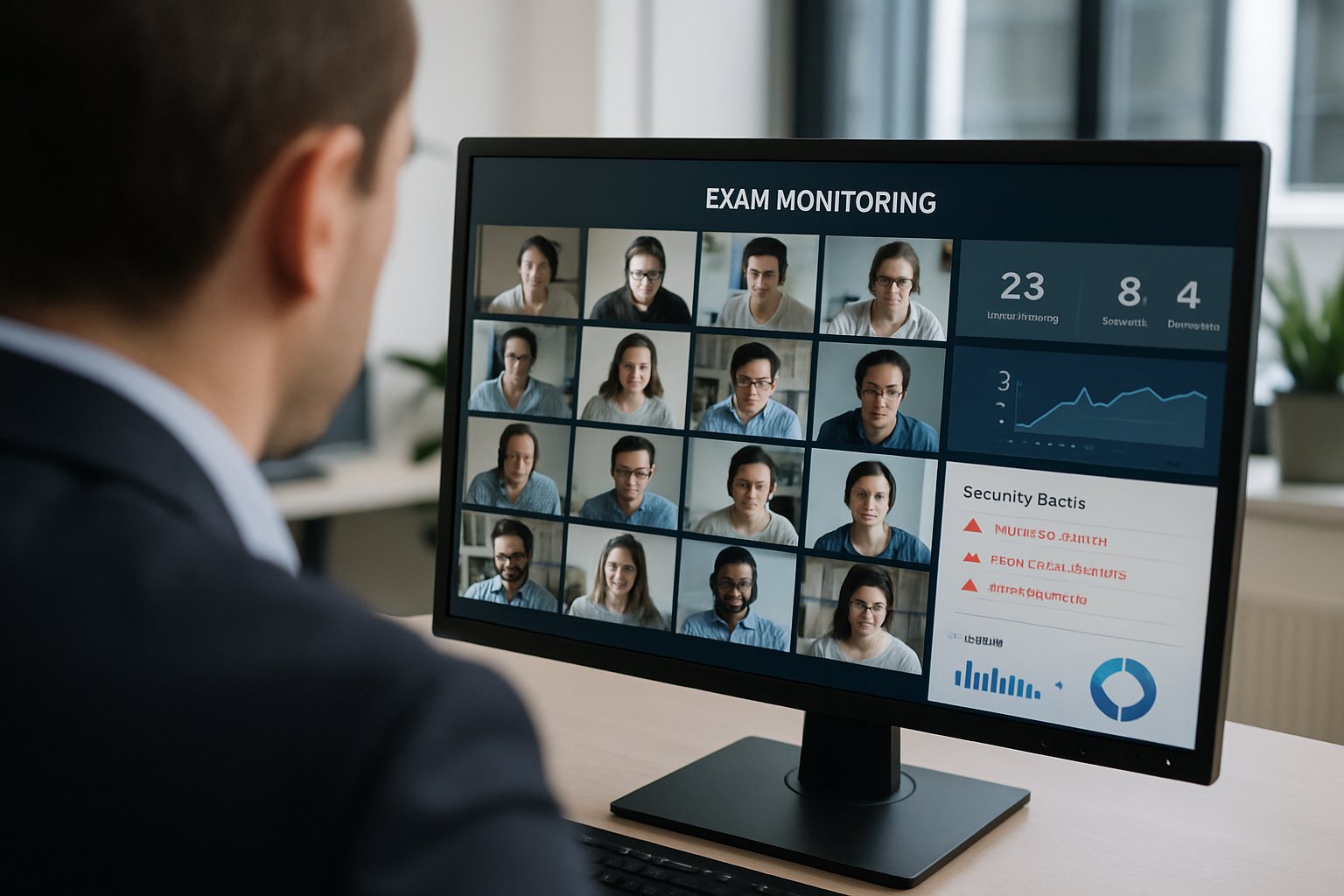
Meanwhile, contract-cheating marketplaces integrate browser overlays that dodge lockdown browsers and ai proctor exam flags. Incidents, therefore, continue to rise.
Key takeaway: threats evolve monthly; your risk score must stay dynamic. Consequently, institutions should track both AI and human cheating vectors before moving forward.
Proctoring Software For Online Exam
Many campuses rely on proctoring software for online exam supervision to deter misconduct and collect evidence. Choices include live, recorded, and automated models.
Furthermore, vendors add dashboards, AI flags, and incident reviewers. ExamSoft reminds clients that humans must still investigate every flag because ai proctor exam systems are not perfect.
Nevertheless, the tools supply rich telemetry—video streams, keystroke logs, and response times—that feed directly into a quantitative risk framework.
Summary: treat software as a sensor, not a silver bullet. Consequently, pair it with data forensics and human judgment.
Key Data Inputs Explained
Your risk score combines measurable elements.
- Exam vulnerability: item reuse, stakes, allowed resources.
- Delivery context: remote share, proctoring mode, AI monitoring adoption.
- Authentication strength: ID checks, biometrics, multifactor.
- Historical incidents: confirmed misconduct percentage, forensic flags per 1,000 attempts.
- Vendor posture: SOC2 status, breach history, secure roadmap.
- AI exposure: document export controls, watermarking, question rotation.
Moreover, equity modifiers adjust the score if false positives cluster within specific demographics.
Two-line takeaway: measurable inputs create transparency and foster targeted action. Therefore, gather data before assigning weights.
Mitigation Actions That Matter
Once high-risk areas surface, prioritize quick wins. Expand item banks to cut reuse, and randomize order to disrupt collusion.
Additionally, restructure high-stakes remote tests. Some institutions shift oral defenses or project submissions, thereby reducing dependence on proctoring software for online exam sessions.
For technical protections, deploy Integrity Shield or similar PDF controls. Combine them with ai proctor exam analytics for layered defense.
Key takeaway: blend assessment design, technical controls, and human review. Consequently, risk scores drop measurably.
Balancing Privacy And Equity
However, every camera feed carries legal and ethical weight. U.S. senators and advocacy groups demand transparency and bias testing.
Therefore, vet each vendor’s false-positive metrics, accommodation workflows, and data-retention policy. Remember the 2020 ProctorU breach still colors public perception.
Moreover, communicate policy to students. Explain why proctoring software for online exam sessions are recorded and how algorithms are reviewed by trained staff.
Takeaway: ethical diligence builds trust and shields your reputation. Consequently, add privacy audits to the risk framework.
Procurement Red Flags List
Before signing a contract, scan for warning signs.
- Vendor refuses SOC2 or ISO reports.
- AI flags adjudicated without human review.
- Facial recognition lacks bias testing.
- Kernel-level software access unapproved by IT.
- Documented breaches related to proctoring software for online exam services.
Nevertheless, solid vendors publish metrics and allow sandbox trials.
Two-line takeaway: procurement diligence prevents costly surprises. Therefore, integrate red flags into your scoring rubric.
Conclusion And Next Steps
Institutions cannot ignore exam integrity risk. A structured score illuminates where fraud may strike and where privacy may fail. By gathering data inputs, deploying layered defenses, and auditing vendors, you convert uncertainty into actionable insight.
Why Proctor365? Our AI-powered platform fuses advanced identity verification, scalable monitoring, and human-in-the-loop review. Proctor365’s proctoring software for online exam delivery supports universities, certification bodies, and corporations worldwide. Therefore, you gain trusted protection without sacrificing student experience. Schedule a demo today and elevate every ai proctor exam session.
Frequently Asked Questions
- How does Proctor365 ensure exam integrity during online assessments?
Proctor365 fuses AI-powered analytics, robust identity verification, and human-in-the-loop reviews to detect and prevent cheating, ensuring secure and reliable exam environments with comprehensive fraud prevention protocols. - How does AI proctoring enhance online exam security?
AI proctoring leverages real-time video analytics, keystroke monitoring, and dynamic risk scoring to detect irregular behavior, while Proctor365’s system integrates identity verification and human review to secure exams effectively. - What fraud prevention measures are integrated into Proctor365?
Proctor365 employs layered security with AI analytics, detailed telemetry, secure authentication checks, and human oversight, all of which work together to identify and mitigate fraud risks during online exam sessions. - How does Proctor365 balance privacy with robust exam monitoring?
Proctor365 combines transparent privacy policies, bias-tested facial recognition, and regular privacy audits with AI-driven monitoring and human review, ensuring stringent exam security without compromising student privacy.