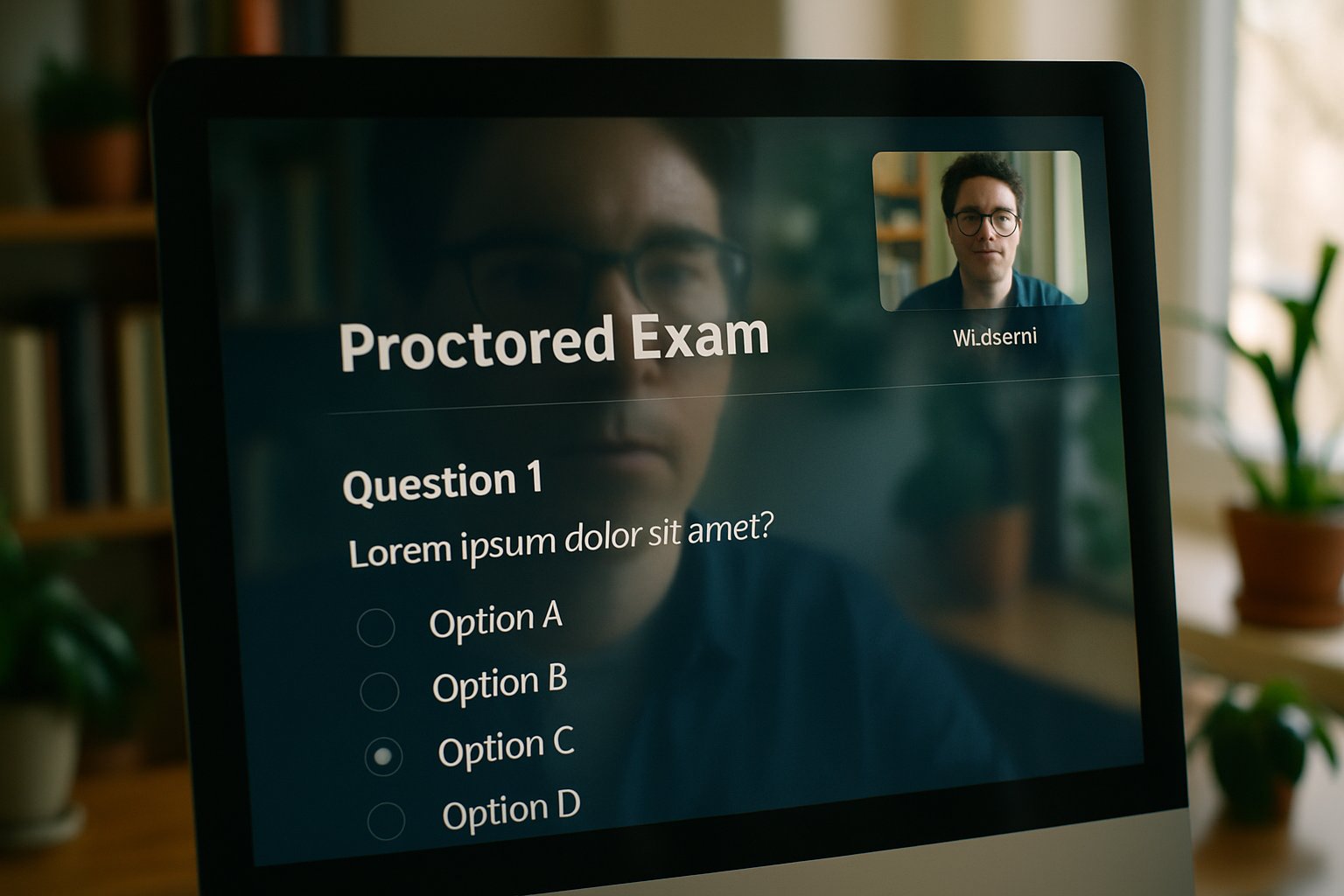
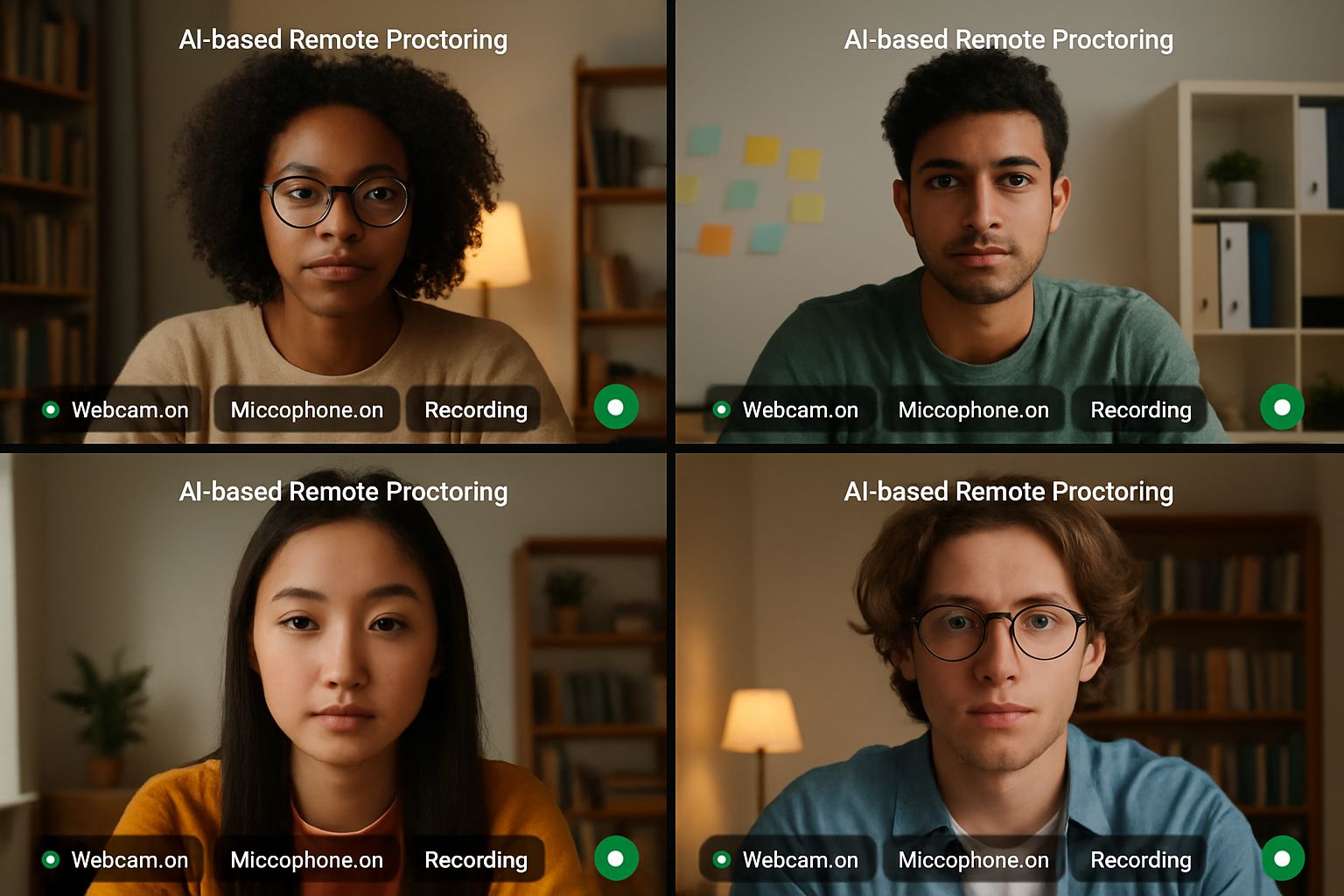
AI Based Remote Proctoring Readiness Checklist for Institutions

Distance learning exploded after 2020. Consequently, exam integrity teams now compare dozens of ai based remote proctoring options. Market analysts forecast a 15.5% CAGR, pushing revenues beyond US$2 billion by 2031. However, campuses also confront fierce privacy, accessibility, and equity scrutiny.

This article delivers an institutional readiness checklist. Readers will gain a clear remote exam security strategy grounded in current data, vendor activity, and emerging policy guidance.
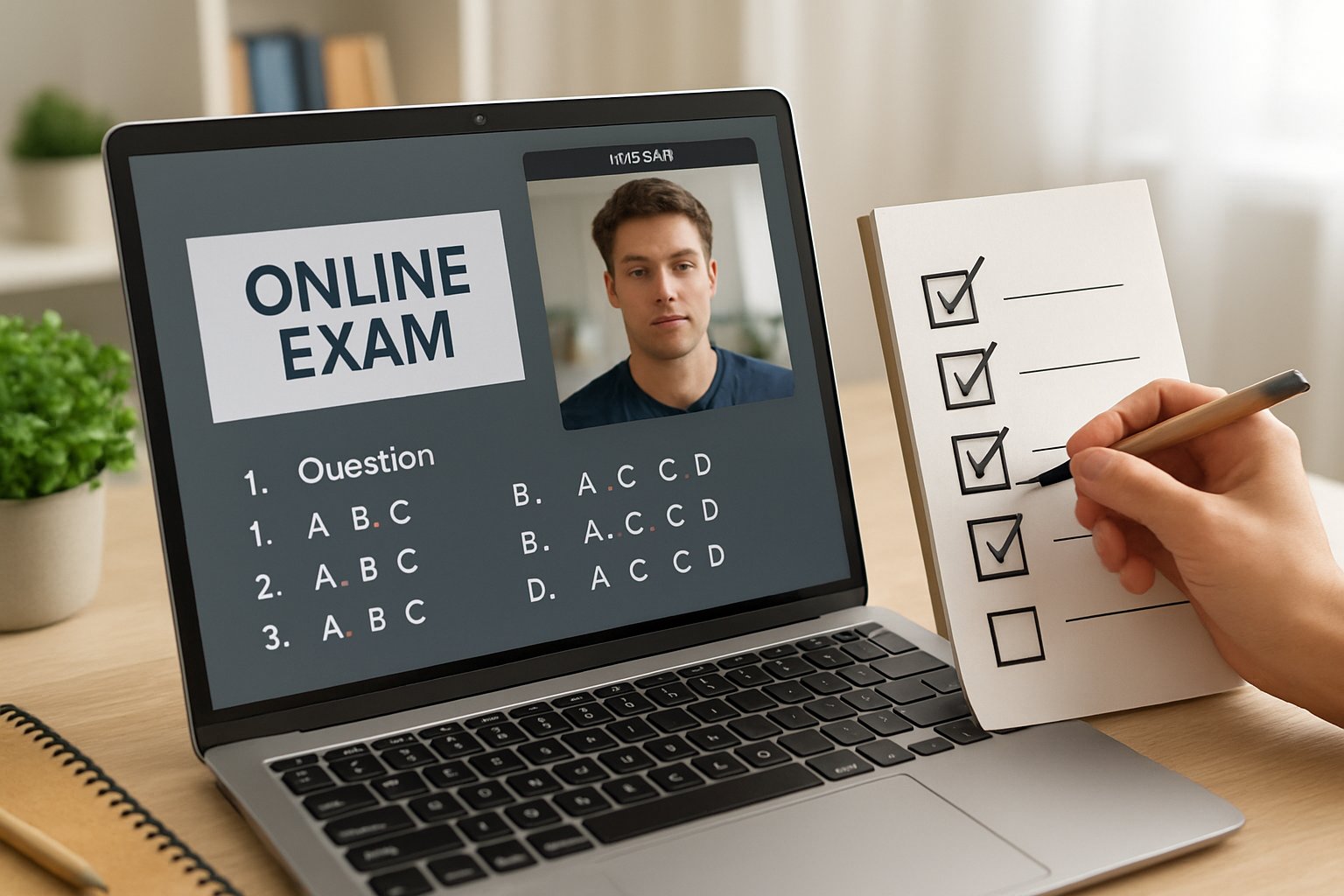
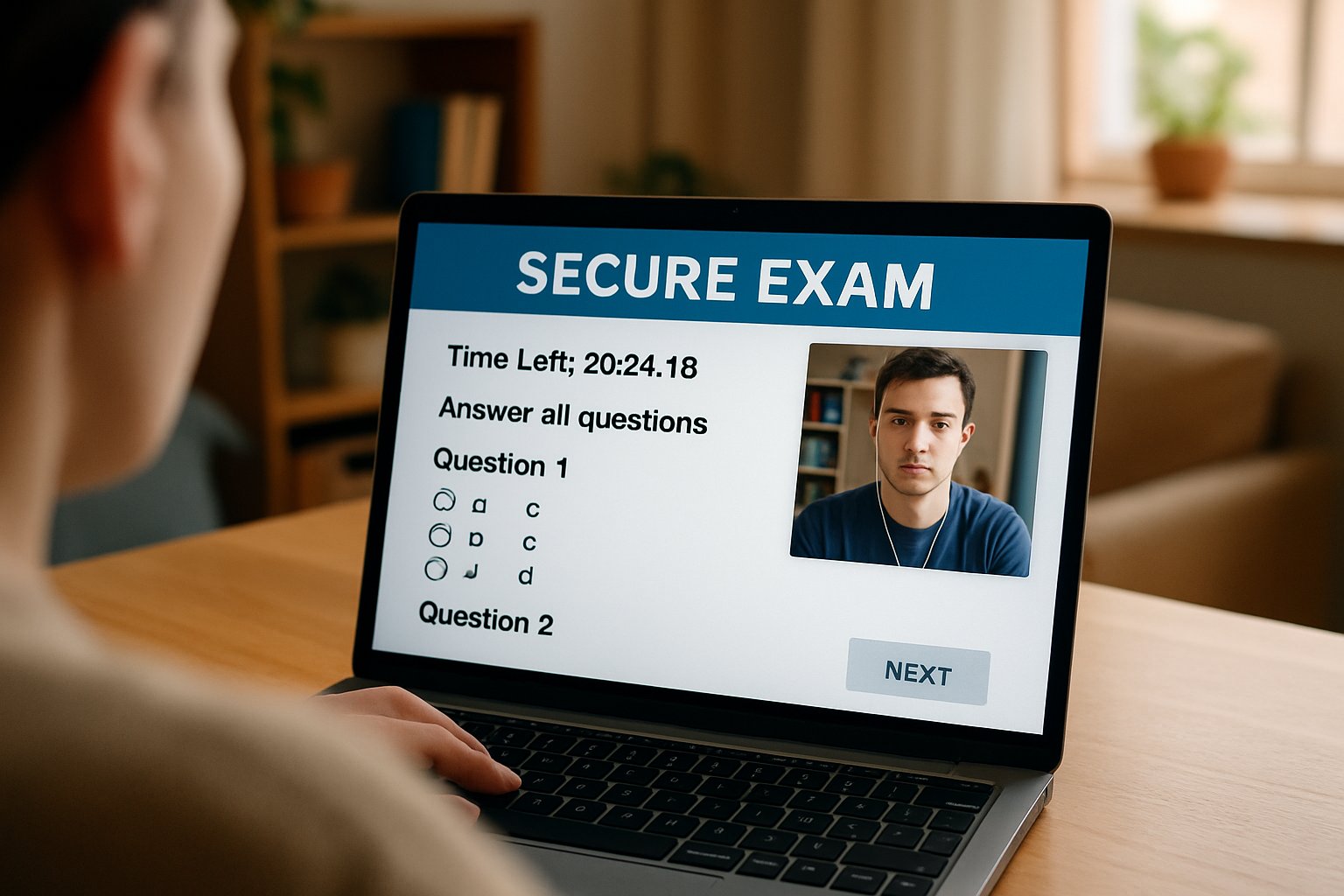
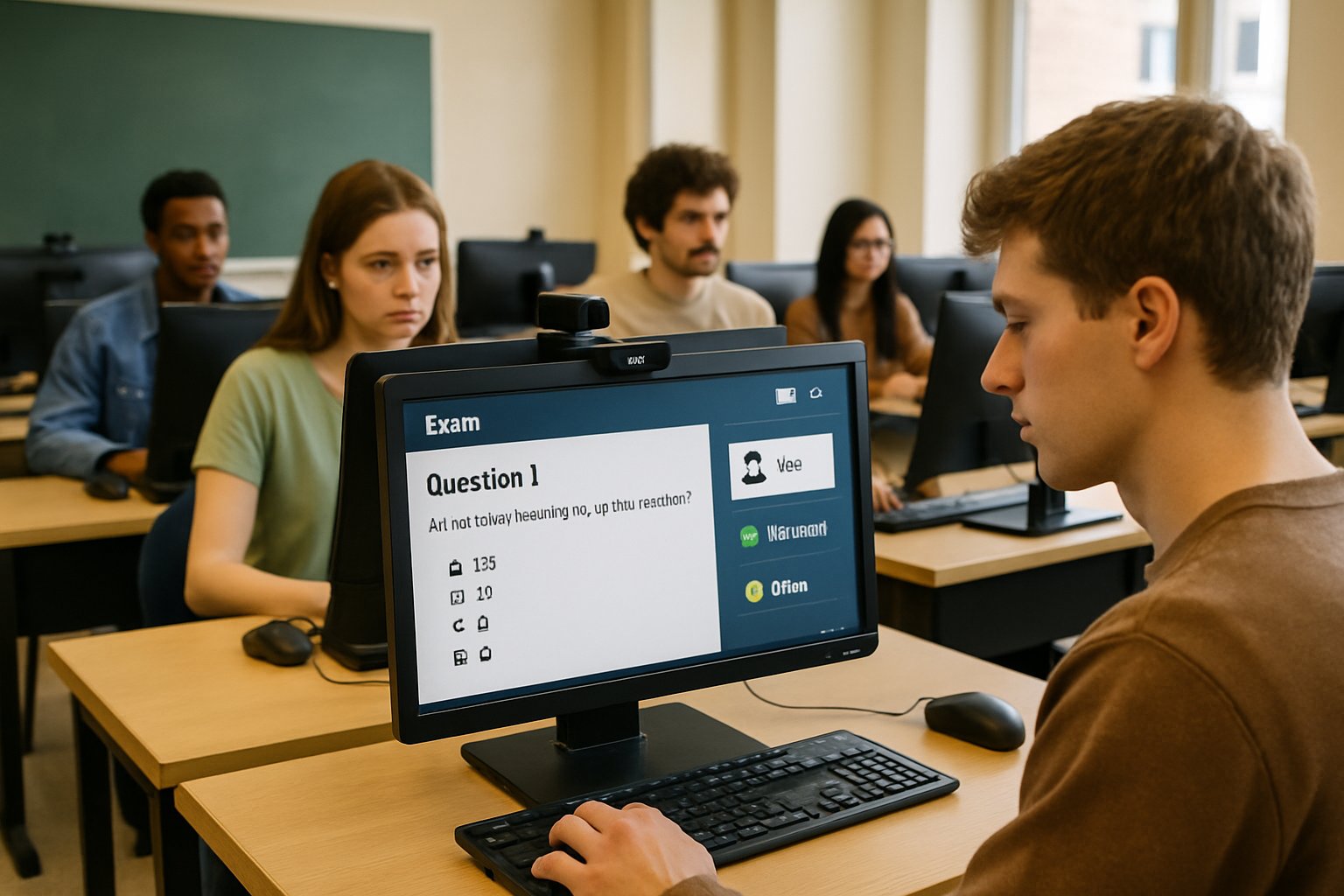
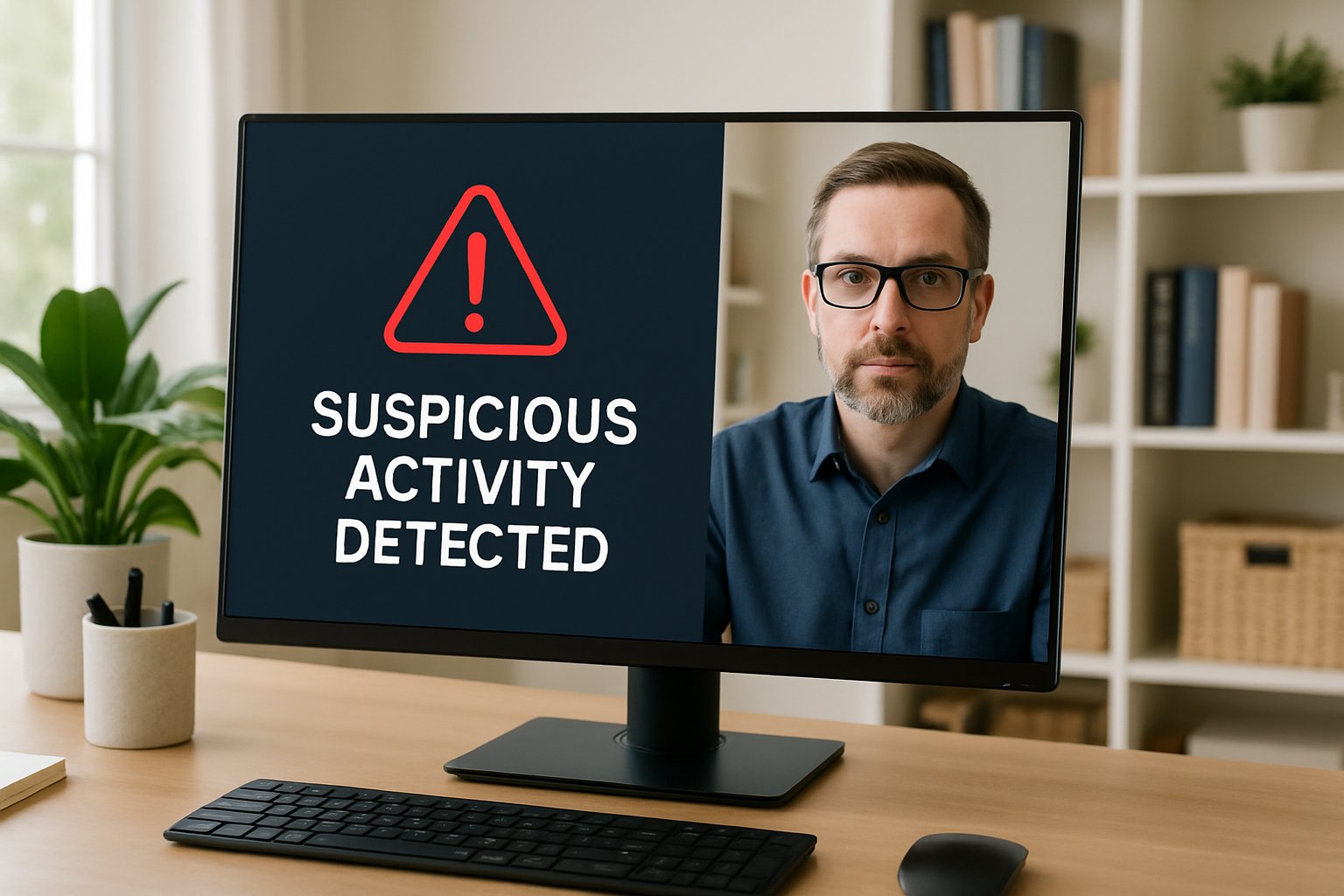
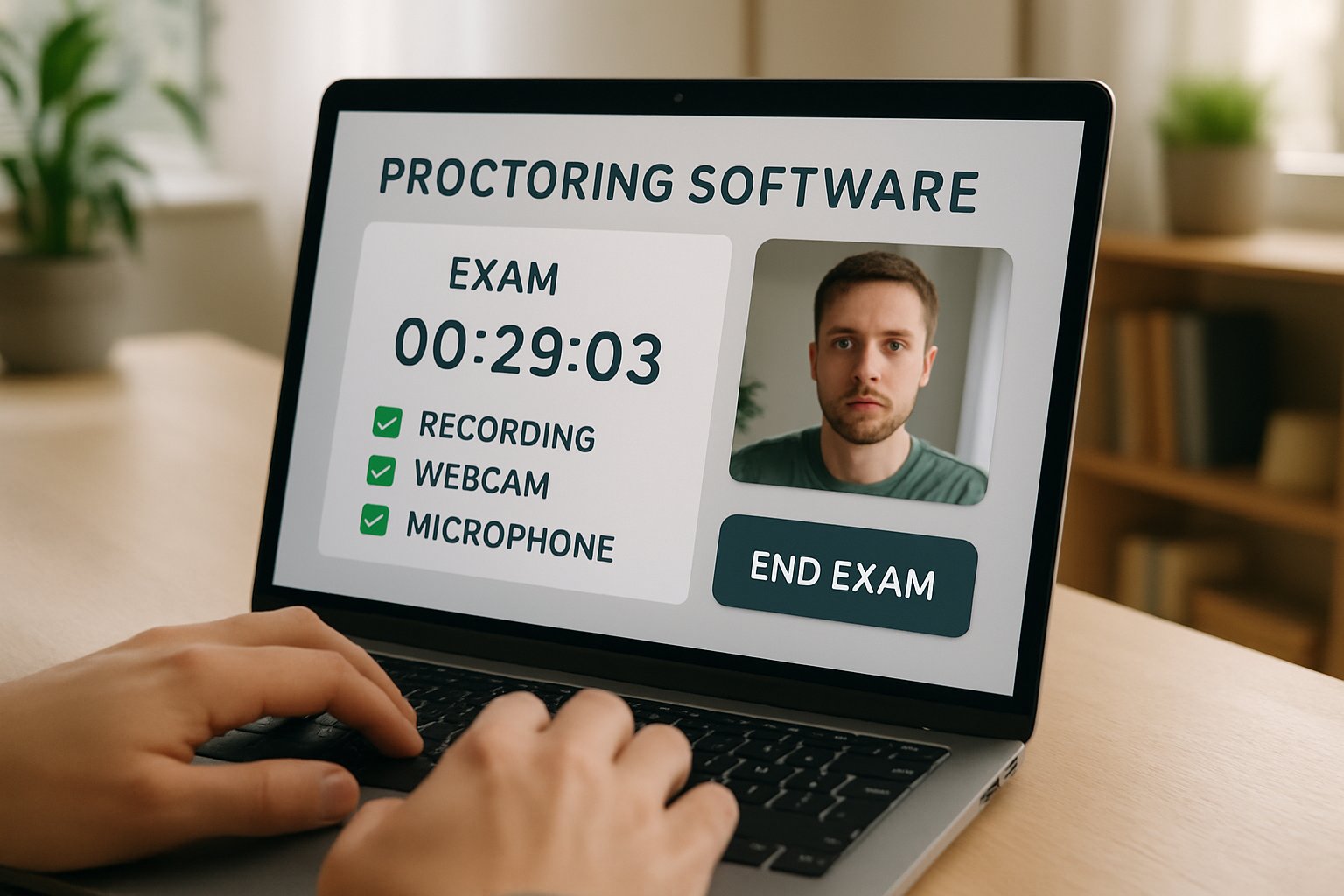
Checklist for deploying ai based remote proctoring next to exam computer.
Follow this readiness checklist for responsible AI based remote proctoring deployment.

Moreover, the ACM urges data minimization, while 1EdTech publishes governance templates. Meanwhile, 63% of U.S. students already use generative AI for coursework and 36% admit chatbot help during quizzes. Therefore, leaders must act fast, yet responsibly. The checklist below guides procurement, legal, and faculty teams through a practical, risk-balanced path to deployment.

Follow each step to secure academic trust without stifling innovation. The result is a roadmap any university, ed-tech platform, or corporate L&D unit can adapt within weeks.

AI Based Remote Proctoring

AI blends computer vision, biometrics, and heuristics to watch test sessions in real time. Institutions favor the model because it scales globally and operates 24/7. Consequently, ai based remote proctoring now represents 40–60% of total deployments in several vendor surveys. Vendors stress hybrid AI-plus-human reviews to cut false positives.

Pros include rapid flag triage, detailed audit logs, and lower staffing costs. Nevertheless, risks grow when algorithms mislabel eye gaze or background noise as misconduct.

Key takeaway: AI delivers scale, yet human oversight remains essential. Next, we examine market signals shaping adoption.

Market Trends And Data

Analysts at The Insight Partners expect the market to exceed US$2 billion by 2031. Moreover, automated solutions outpace live-only models each quarter. Student behavior fuels demand: an Honorlock survey found 36% use chatbots during quizzes, challenging legacy invigilation.

  • 15.5% projected CAGR through 2031.
  • 63% of students already leverage AI for coursework.
  • Community-college systems now include AI proctoring in statewide RFPs.

These numbers signal urgent pressure for a stronger remote exam security strategy. Institutions that delay risk reputational damage and credential dilution.

Key takeaway: Growth and student AI usage make inaction risky. Next, we define governance moves that build trust.

Governance And Policy Actions

Leadership should first form a cross-functional advisory council. The provost, legal counsel, IT security, disability services, and student reps must join. Together, they decide where an ai based proctoring exam is truly necessary.

Clear policy outlines permitted courses, data retention limits, and appeal steps. Furthermore, publish a public FAQ to ease anxiety and improve transparency.

Key takeaway: Shared governance prevents unilateral mandates. Next, we tackle privacy and legal safeguards.

Legal And Privacy Safeguards

Conduct a FERPA or GDPR analysis before any live rollout. Require vendors to delete raw video within 90 days and encrypt data at rest. Additionally, insist on SOC 2 Type II or ISO 27001 certification.

Contract clauses must grant audit rights and list every sub-processor. Without these checkpoints, ai based remote proctoring can expose institutions to fines and lawsuits.

Key takeaway: Strong contracts protect students and budgets. Next, we address accessibility and equity.

Accessibility And Equity Focus

Bias remains a core concern. Computer vision can misinterpret dark skin tones, wheelchairs, or medication-related movements. Therefore, disability services should pre-approve alternative workflows for any ai based proctoring exam.

Require vendors to share disaggregated accuracy data. Moreover, prohibit punitive action until a trained human reviews every flag.

Key takeaway: Inclusive design avoids legal exposure and student harm. Next, we discuss pilots and metrics.

Pilot Metrics And Review

Run at least 500 sessions under peak load. Collect the following metrics:

  1. Flag rate by demographic group.
  2. Reviewer override percentage.
  3. Average review time per flag.
  4. System uptime during concurrency spikes.

This data refines your remote exam security strategy and builds evidence for full adoption. Subsequently, share summary dashboards with faculty and students.

Key takeaway: Measured pilots reveal hidden flaws early. The checklist closes with final recommendations.

Implementation Checklist Summary

The readiness checklist covers governance, contracts, technical testing, accessibility, training, and incident response. Institutions that follow each step can deploy ai based remote proctoring confidently while respecting privacy and equity.

A robust remote exam security strategy paired with transparent communication will sustain academic integrity amid rapid AI growth.

Next Steps For Teams

Adopt policy templates from 1EdTech. Schedule a campus-wide pilot. Finally, seek independent audits before renewing any contract.

Frequently Asked Questions

  1. How does AI-based remote proctoring enhance exam security?
    AI-based remote proctoring leverages computer vision, biometrics, and real-time monitoring to detect suspicious behavior. This scalable system strengthens exam integrity while supporting fraud prevention and identity verification.
  2. What trends in student behavior drive the need for advanced exam security?
    Increased use of generative AI and chatbots during assessments pushes institutions to adopt robust exam security measures. AI proctoring, combined with human oversight, ensures identity verification and effective fraud prevention.
  3. How can institutions address privacy and accessibility challenges with AI proctoring?
    Institutions can enforce strict data retention and privacy policies while implementing flexible workflows. Using secure systems like Proctor365, they achieve robust identity verification and fraud prevention while respecting accessibility needs.
  4. What metrics are essential for evaluating remote proctoring pilots?
    Key metrics include flag rates, reviewer override percentages, average review times, and system uptime. These metrics help optimize AI proctoring effectiveness, enhancing fraud prevention and confirming reliable identity verification.
Balancing Privacy with AI Based Remote Proctoring

Cheating scandals move faster than campus policies. Hybrid programs now administer finals from dorm rooms and dining tables. Consequently, many institutions adopt ai based remote proctoring to secure those dispersed exam sessions.

However, students push back, citing intrusive webcams and biased algorithms. Balancing privacy with integrity defines the next assessment battleground. Understanding the benefits of ai proctoring for universities, while respecting legal limits, demands clear strategy. This article unpacks current risks, regulations, and proven safeguards.

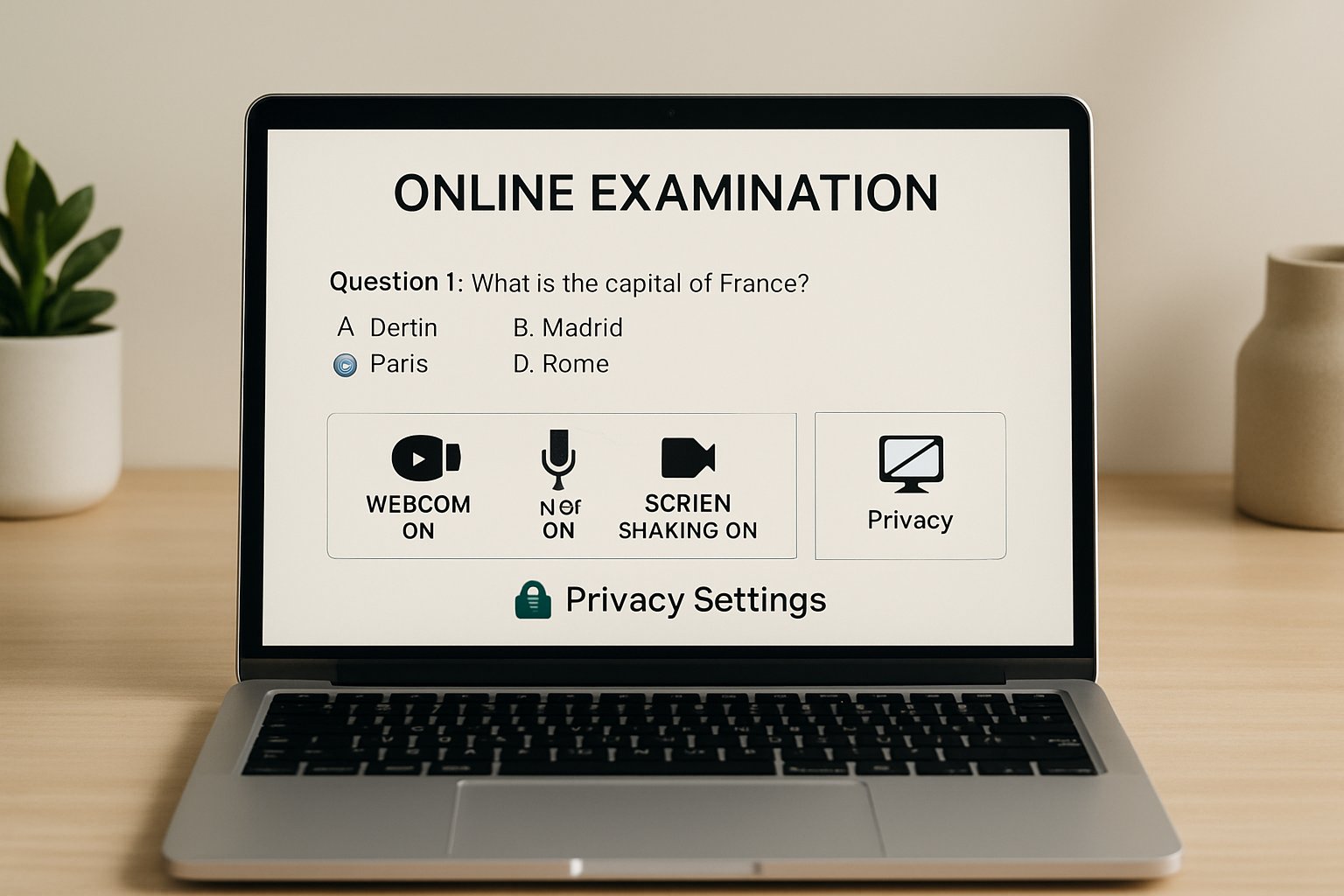
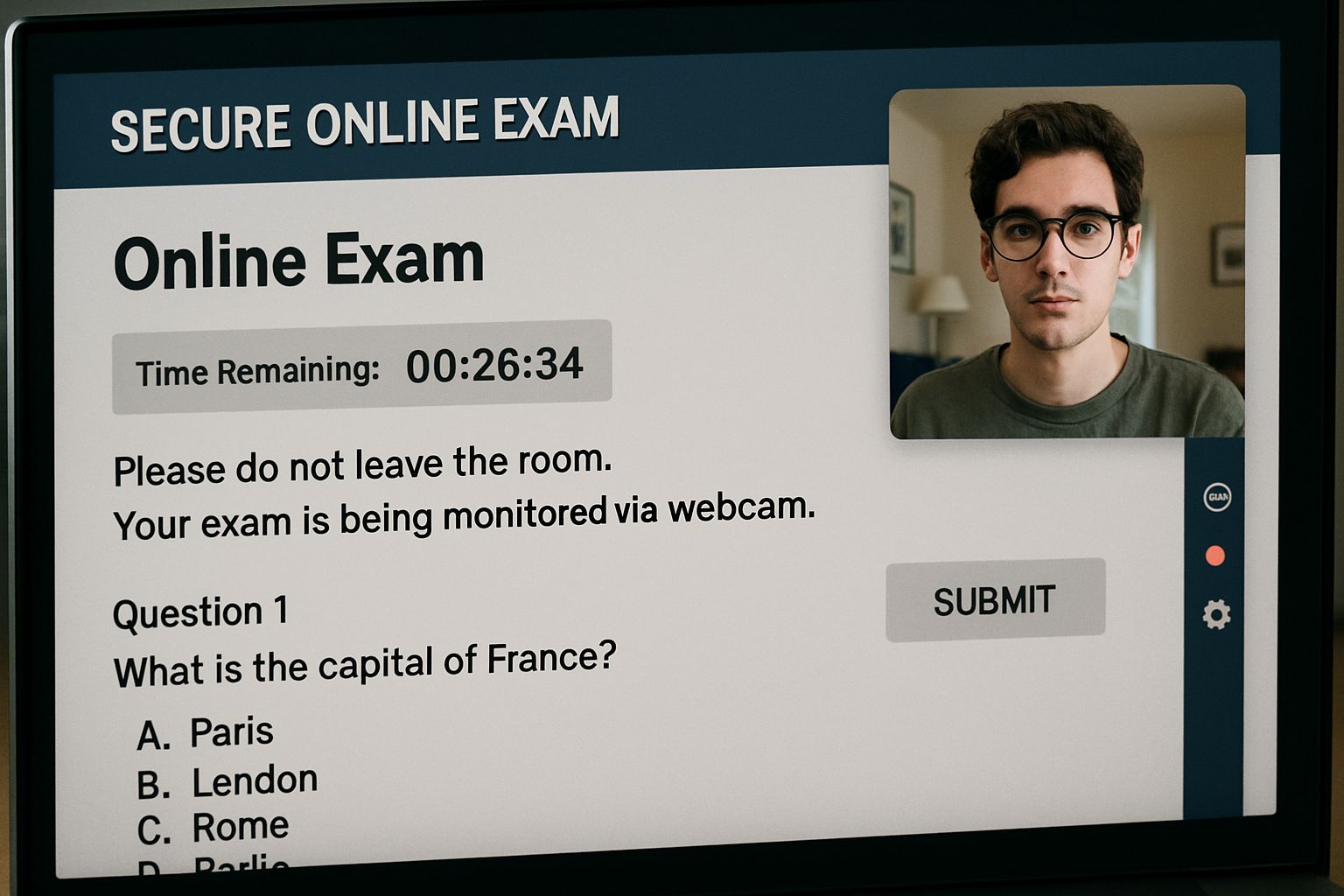
Laptop displaying ai based remote proctoring interface with privacy options.
Online exam interface with transparent AI proctoring and privacy settings visible.

AI Based Remote Proctoring

At its core, ai based remote proctoring records webcam, microphone, screen, and keystroke data. Algorithms flag gaze deviation, extra faces, or suspicious window switching for later human review.

Market Growth Signals Strong

ResearchAndMarkets projects sustained double-digit growth as credentials migrate online and corporate L&D budgets expand. Consequently, vendors investing in ai based remote proctoring tout flexible settings and lower false positives.

  • Over 1,500 universities now license automated proctoring suites.
  • Vendors claim more than 50 million exams monitored since 2020.
  • Scalability cuts per-exam supervision costs by up to 60%.

In short, demand shows little sign of slowing. Consequently, privacy governance must mature just as quickly.

Privacy Risks Spotlighted Today

The Ogletree ruling declared mandatory room scans unconstitutional, galvanizing privacy advocates. Similarly, investigations show some face recognition engines misflag students of color at double the average rate.

Furthermore, constant recording captures family members and sensitive belongings, creating significant data-protection obligations.

Student Trust Building Steps

When ai based remote proctoring is explained clearly, student resentment drops. Universities can publish clear FAQs, run live onboarding sessions, and let students test the system early. Moreover, open communication lowers anxiety and reduces support tickets.

These findings erode trust and invite litigation. Thus, universities need sharper risk controls before the next term begins.

Regulatory Landscape Tightens Globally

Meanwhile, the EU AI Act labels automated proctoring as high-risk, triggering strict conformity assessments. US campuses still follow FERPA, yet new state privacy laws add retention and notice requirements.

Therefore, any ai based remote proctoring rollout now demands a Data Protection Impact Assessment and transparent student notices.

Ignoring these obligations increases fines, reputational damage, and contract delays. Hence, compliance planning must precede technical deployment.

Mitigation Best Practice Checklist

Experts recommend starting with necessity analysis before selecting any monitoring feature.

  • Limit recordings to exam screen and face; avoid 360° room scans.
  • Keep retention under 30 days unless investigations require longer.
  • Validate algorithms across the institution’s demographic mix and publish results.
  • Provide alternative assessment modes for students with disabilities.
  • Ensure every AI flag receives rapid human review and an appeal path.

Implementing these steps delivers tangible benefits of ai proctoring for universities while showing respect for student autonomy.

Careful design reduces bias and legal exposure. Consequently, institutional trust rebounds.

Future Outlook And Actions

In contrast to early pandemic panic, the sector now prioritizes proportionality over pure surveillance. Subsequently, we expect edge processing, background redaction, and open algorithms to dominate next-generation platforms.

Those improvements promise fresh benefits of ai proctoring for universities without compromising dignity.

Still, technology alone cannot settle the debate. Therefore, policy dialogue must continue.

Conclusion

ai based remote proctoring will remain part of digital assessment, yet privacy-first design is now essential. Institutions that embrace transparent policies, rigorous testing, and student choice will safeguard integrity and trust.

Why Proctor365? Our platform delivers ai based remote proctoring with advanced identity verification, scalable exam monitoring, and human review trusted by global exam bodies. Experience seamless security today at Proctor365.

Frequently Asked Questions

  1. What is AI based remote proctoring and how does it ensure exam integrity?
    AI based remote proctoring employs advanced algorithms to monitor exams via webcam, microphone, and screen activity. Proctor365 leverages fraud prevention and identity verification to secure exam integrity while ensuring privacy and compliance.
  2. How does Proctor365 build student trust in remote proctoring?
    Proctor365 builds student trust by providing clear guidelines, live onboarding sessions, and transparent privacy policies. This balanced approach reassures students that strong exam security does not compromise their privacy.
  3. What privacy measures are implemented in AI proctoring solutions?
    Proctor365 implements strict privacy measures by limiting recordings to essential exam activities and maintaining robust data retention policies. Validated algorithms help prevent bias, ensuring compliance with FERPA and international data protection laws.
  4. How does Proctor365 address regulatory compliance in remote proctoring?
    Proctor365 meets regulatory requirements by performing thorough Data Protection Impact Assessments and offering transparent student notifications. This proactive compliance strategy adheres to FERPA and global privacy laws while ensuring secure exam monitoring.

How ai based proctoring exam tech cuts cheating by 95%

Exam cheating surged when campuses closed during COVID. Consequently, universities scrambled for dependable oversight online. Enter the ai based proctoring exam model, promising machine-driven vigilance at scale. Industry case studies even trumpet a stunning 95% malpractice drop. However, independent researchers urge careful interpretation of such figures. Yet, evidence does confirm a strong deterrent effect. Moreover, advanced analytics now flag impersonation and suspicious gaze in real time. Therefore, stakeholders from credentialing boards to corporate L&D teams want hard numbers and clear guidance. This article examines the technology, the 95% claim, and a practical remote exam security strategy to maximize integrity.

Cheating Spike Post-COVID Era

Before 2020, online exams were niche for many institutions. During lockdowns, digital assessments became the default overnight.

Secure ai based proctoring exam portal interface with live camera feed visible
An AI based proctoring exam portal demonstrates live identity verification.

A 2023 systematic review found 54.7% of students self-reported cheating during pandemic exams. Meanwhile, opportunistic fraudsters exploited weak identity checks and unsecured browsers. Consequently, administrators sought a remote exam security strategy that could scale fast.

Cheating clearly spiked when safeguards vanished. Therefore, demand for monitoring tech skyrocketed. Next, we unpack how AI tools answer that demand.

How AI Tools Work

AI-based proctoring blends computer vision, audio analysis, and secure browser telemetry. Algorithms compare live video against stored ID photos and watch for extra faces. Additionally, keystroke dynamics flag bots or copy-paste attempts.

Most vendors run automated triage first, then human reviewers inspect high-risk clips. This hybrid keeps false positives manageable while containing cost. Moreover, continuous model updates improve detection of emerging cheat vectors.

Using an ai based proctoring exam approach, universities monitor thousands of candidates without extra staff. In short, layered sensors create a dynamic watchtower. However, the scale of impact still varies. That variance fuels debate over the famous 95% figure.

Ninety-Five Percent Claim Exam

Marketing decks often cite a 95% reduction after deployment of an ai based proctoring exam system. Yet, those numbers usually track a single vector like impersonation.

Independent randomized trials confirm cheating drops, but percentages stretch from 15% to 70% depending on context. Therefore, institutions must benchmark against their own baseline rather than generic slogans.

  • Small sample windows inflate percentages.
  • Measuring only confirmed incidents, not suspected.
  • Combining AI with human live proctors for select exams.
  • Students alter behavior once surveillance is announced.

Vendor claims are not fake, but they are narrow. Consequently, you need stronger metrics baked into your remote exam security strategy. The next section outlines those layered tactics.

Layered Security Tactics For

First, lock down the browser to block copy, paste, and navigation. Next, apply biometric identity checks at login and randomly mid-exam. Moreover, enable multimodal AI flagging for gaze, audio, and secondary devices.

  • Randomized question pools reduce answer sharing.
  • Time-limited sections curb external consultation.
  • Post-exam analytics expose unusual response patterns.

Together, these layers drive large malpractice declines in many ai based proctoring exam deployments. However, privacy and fairness remain critical.

This section outlined technical levers institutions control. Therefore, we now explore ethical balances you must strike.

Privacy And Fairness Balance

Privacy advocates warn about excessive biometric retention and opaque algorithms. Meanwhile, bias studies show higher false alerts for darker skin tones and neurodivergent movements.

Consequently, choose vendors that offer transparent flag criteria, appeal workflows, and rigorous audits. Additionally, provide disability accommodations and clear communication to reduce anxiety.

An ai based proctoring exam solution must respect privacy while deterring fraud. Strong governance sustains trust while technology deters fraud. Next, we turn to a concrete implementation checklist.

Implementation Roadmap Checklist Guide

Follow these five evidence-backed steps to approach a 90% plus reduction.

  1. Define success metrics before rollout.
  2. Combine secure browser, multimodal AI, and human audit.
  3. Redesign assessments toward higher-order thinking.
  4. Publish transparent data and appeals policies.
  5. Mandate third-party algorithmic audits yearly.

Embed an ai based proctoring exam module within your LMS early for smoother adoption. Executing this roadmap embeds integrity in culture and technology. Consequently, your remote exam security strategy becomes sustainable, not reactive.

Finally, let us recap and show why Proctor365 leads this journey.

Conclusion: AI proctoring dramatically reduces malpractice when deployed with layered controls, transparent governance, and continuous audits. Institutions that link technology with pedagogy see the strongest gains.

Why Proctor365? The Proctor365 ai based proctoring exam platform delivers real-time AI vigilance, advanced identity verification, and scalable monitoring trusted by global exam bodies. Therefore, your organization enjoys resilient integrity without ballooning costs. Explore how Proctor365 elevates assessment security today at Proctor365.ai.

Frequently Asked Questions

  1. How does AI based proctoring help prevent exam cheating?
    AI based proctoring uses computer vision, audio analysis, and biometric identity verification to detect suspicious behavior. Proctor365’s real-time monitoring and fraud prevention system enhances exam integrity.
  2. What does the 95% malpractice drop claim mean?
    The 95% reduction usually targets impersonation and detected cheating incidents. Institutions are advised to benchmark against their data, ensuring their remote exam security strategy is robust and tailored.
  3. What are the benefits of a layered remote exam security strategy?
    A layered approach combines secure browsers, biometric checks, and multimodal AI alerts. Proctor365 integrates these features with continuous audits and transparent governance to effectively curb exam malpractice.
  4. How does Proctor365 ensure exam integrity and privacy?
    Proctor365 secures exams using AI-driven proctoring, advanced identity verification, and fraud prevention tools. Its transparent policies and rigorous audits maintain exam integrity while safeguarding candidate privacy.

Six Ways AI Based Proctoring Exam Scales Higher Education

Higher education now tests remote students at record volume. Administrators still demand airtight integrity and smooth student experience. The ai based proctoring exam model promises both speed and trust. Vendors blend computer vision, audio analysis, and identity checks. Market analysts expect double-digit growth in this niche. However, critics ask, is ai proctoring legal and secure for every learner? This report explores six operational levers that let universities scale safely. Each point includes evidence, cautions, and practical steps. All examples draw from recent studies and product launches. Let us examine how automation reshapes exam oversight. We will also spotlight privacy, equity, and regulatory considerations. Finally, we explain how institutions can balance technology with fairness. Read on to understand scalable strategies without sacrificing student trust. The journey starts with market numbers.

AI Based Proctoring Exam Impact

Scaling matters now. Institutions run thousands of assessments every semester. The ai based proctoring exam approach delivers automation, analytics, and flexibility. It links machine vision to human review, so flags reach reviewers instantly. Universities gain consistency across departments and locations.

Home exam setup with ai based proctoring exam visible on laptop screen.
Remote learner completes an ai based proctoring exam at home.
  • Automated monitoring prioritizes suspicious clips.
  • Identity checks block impersonation schemes.
  • Dashboards reveal cheating patterns fast.
  • Cloud delivery removes room scheduling.

In short, the model pairs AI speed with human judgment. That blend unlocks sustainable growth.

Next, we examine market momentum driving adoption.

Remote Proctoring Market Growth

Market reports value remote proctoring near one billion dollars for 2024. Analysts forecast double-digit CAGR through 2030. Widespread campus uptake fuels that curve.

  1. EDUCAUSE polls show over 70% of colleges use online proctoring.
  2. Vendors launch analytics hubs for enterprise oversight.

Such growth proves the ai based proctoring exam trend has shifted from pilot to mainstream.

Nevertheless, boards keep asking, is ai proctoring legal and secure under evolving privacy laws?

Demand rises, yet scrutiny intensifies. Institutions need balanced adoption strategies.

The next scaling lever addresses human cost constraints.

Automation Cuts Human Load

AI reviews video, audio, and screen feeds in real time. Only flagged clips reach live proctors. That design slashes labor hours per session.

During a 500-seat ai based proctoring exam, a single reviewer can handle dozens of concurrent sessions.

Labor optimization lowers marginal cost dramatically. Savings enable frequent low-stakes quizzes.

We now explore around-the-clock availability.

24-7 Global Testing Access

Cloud platforms allow candidates to start tests anytime. Time-zone barriers vanish, supporting distance learners and working professionals.

A midnight ai based proctoring exam in Tokyo can run alongside a morning session in Toronto.

This flexibility widens reach while reducing campus scheduling stress. Students appreciate the autonomy.

Still, identity assurance must hold firm at scale.

Identity Verification Advances Rapidly

Face matching, ID scans, and keystroke biometrics confirm the correct learner sits the exam. Periodic checks deter swaps.

Yet administrators still ask, is ai proctoring legal and secure when biometrics enter the mix?

Vendors now link multi-factor login to every ai based proctoring exam, but provide human review for disputed matches.

Robust verification boosts confidence, yet privacy compliance remains vital. Clear consent and alternatives help equity.

Next, we turn to oversight analytics.

Analytics Drive Program Oversight

Dashboards aggregate flag rates, location data, and device profiles. Leaders see macro trends in seconds.

An ai based proctoring exam dashboard can highlight spikes in browser-switch attempts within a course.

Data enables faster interventions and policy tuning. Transparency builds stakeholder trust.

Finally, seamless platform integration completes the scaling picture.

Seamless LMS Integrations Matter

LMS plug-ins launch proctored tests with single sign-on and automatic gradebook return. Faculty workflows stay familiar.

Strong integrations also reassure compliance teams that data paths are visible, answering whether is ai proctoring legal and secure in their jurisdiction.

Integrations reduce support tickets and speed deployment. Consistency across courses cements adoption.

We now summarize key lessons and explain why Proctor365 leads the field.

Conclusion And Next Steps

The six levers—automation, global access, lower cost, identity checks, analytics, and integration—allow universities to scale remote assessments responsibly. However, continuous equity audits and privacy reviews must accompany every rollout. Leaders should keep asking, is ai proctoring legal and secure, and adjust policies accordingly.

Why Proctor365? Our ai based proctoring exam platform pairs advanced computer vision with live experts. We deliver deep identity verification, elastic cloud monitoring, and rich analytics trusted by global exam bodies. Visit Proctor365 to protect academic integrity at scale today.

Frequently Asked Questions

  1. How does AI-based proctoring enhance exam security and integrity?
    AI-based proctoring uses advanced computer vision and identity verification to detect suspicious behaviors in real-time, ensuring exam integrity and secure assessment environments while reducing manual review labor.
  2. Is AI proctoring legal and secure under current privacy regulations?
    Modern AI proctoring platforms, including Proctor365, blend multi-factor authentication and human review to comply with privacy laws and maintain robust legal security measures, ensuring trust for all exam participants.
  3. How does remote proctoring scale assessments for global learners?
    Remote proctoring delivers 24/7 cloud-based access, enabling tests across time zones seamlessly. It provides real-time monitoring and automated analytics, offering a convenient, scalable solution for global learners and busy professionals.

AI Based Proctoring Exam: Definitive 2026 Guide

Universities now face a new integrity puzzle. Remote learners expect fair, secure assessments wherever they log in. Consequently, institutions are turning to the ai based proctoring exam model to scale trust without physical rooms. Market reports place global spend near one billion USD and project strong double-digit growth. Vendors promise AI that detects cheating faster than humans. However, sceptics cite privacy lawsuits and algorithmic bias. Decision makers therefore need balanced information before they sign the next contract.

Over the next pages we explore core technologies, market drivers, and regulatory shifts shaping remote assessment. Additionally, we reveal practical steps that help programs adopt ai based remote proctoring while respecting student rights. Each section ends with concise actions you can share with boards and accreditation teams. By the end, you will answer what is ai based proctoring in exams and learn how to pilot responsibly.

University students using ai based proctoring exam in computer lab.
University students complete an ai based proctoring exam in a campus lab.

AI Based Proctoring Exam Growth

Pandemic disruptions normalised remote tests across continents. Consequently, adoption rates soared from under 20% to almost 60% of surveyed institutions by 2025.

Analysts at ResearchAndMarkets valued the market between USD 0.8 and 1.5 billion in mid-2020s. Moreover, forecasts suggest revenue could triple by 2031, implying mid-teens CAGR.

  • Massive shift to hybrid learning models requiring ai based remote proctoring at scale.
  • Need to deter AI-assisted cheating tools like Cluely.
  • Cost pressure pushing automation over live invigilation.

Adoption momentum shows no sign of slowing. Institutions therefore need a strategy that scales responsibly.

Next, we dissect the technology powering that growth.

Core Proctoring Tech Components

An ai based proctoring exam stack usually combines five building blocks. These include a secure browser, identity checks, liveness detection, behavioural analytics, and human review.

Machine learning models flag anomalies like gaze wandering or suspicious audio. However, trained human auditors still make final misconduct decisions in most systems.

These modular parts work together to protect exam integrity. Understanding each part means you finally grasp what is ai based proctoring in exams.

With the mechanics clear, let us explore tangible value for stakeholders.

Benefits For Test Owners

Automated workflows cut scheduling effort by up to 80%, according to vendor case studies. Consequently, staff can support more candidates without extra payroll.

An effective ai based proctoring exam deters casual cheating and reassures stakeholders.

  • Scalable 24/7 testing across time zones.
  • Instant identity verification reduces impersonation.
  • Rich audit trails simplify appeals.

Corporate certifiers also leverage ai based remote proctoring to reach global employees who cannot travel. Moreover, faster result release improves learner satisfaction and program revenue.

Greater scale, faster insights, and higher candidate trust define the business case. Those gains, however, arrive with notable trade-offs.

We now address the most pressing risks and criticisms.

Major Risks And Controversies

When an ai based proctoring exam misfires, innocent students bear stress. False positives remain a top fear.

Equity researchers found lighting, skin tone, and disability factors influence accuracy. Consequently, institutions must calibrate models and offer alternative assessments.

Legal exposure also looms. Illinois BIPA lawsuits against Respondus show real monetary risk for biometric processing.

Meanwhile, the EU AI Act will classify many systems as high-risk by 2026. Therefore, non-compliant features like emotion analysis could soon be banned.

Privacy, bias, and regulation pose concrete threats to projects. Addressing them early prevents costly surprises and clarifies what is ai based proctoring in exams.

The following section outlines practical safeguards.

Best Practice Implementation Steps

First, run a limited pilot with diverse volunteers. Collect metrics on false positives, user sentiment, and technical downtime.

Second, minimise data collection and retention. Therefore, store recordings only as long as policy or law demands.

Third, integrate human review for every algorithmic flag. Additionally, publish clear appeal procedures for candidates.

Pilot data will reveal whether your ai based proctoring exam meets accuracy targets.

Following these steps anchors integrity in process, not promises. Prepared teams move forward confidently.

Regulatory awareness complements sound process, so we map the landscape next.

Regulation And Legal Landscape

In the United States, state privacy laws create a patchwork. BIPA treats each biometric capture as a separate violation.

FERPA also governs student records, requiring clear consents for data sharing. Consequently, universities must align proctoring workflows with registrar policies.

Across the Atlantic, the EU AI Act introduces mandatory risk assessments and registry disclosures. Moreover, certain emotion or undisclosed biometric features face outright bans.

Each ai based proctoring exam must document biometric handling to satisfy regulators.

Legal stakes vary by region but penalties grow sharper each year. Early compliance planning protects institutional reputations.

We now wrap with key insights and an action plan.

Conclusion And Next Steps

You now hold the knowledge needed to deploy secure, respectful testing. Growth is rapid but regulation tightens. Clear processes, human review, and minimal data collection reduce risk. Ongoing pilots confirm accuracy and equity. Implementation varies by context. However, tested frameworks speed adoption. Stakeholders who still wonder what is ai based proctoring in exams should begin with a small pilot. Stakeholders should revisit metrics quarterly to ensure continuous improvement.

An ai based proctoring exam, when executed well, preserves trust while scaling programs. Why Proctor365? The platform blends real-time AI monitoring, advanced identity verification, and elastic cloud infrastructure trusted by global exam bodies. Consequently, your organisation safeguards integrity without harming learner experience. Explore the benefits at Proctor365.ai today.

Frequently Asked Questions

  1. What is AI based proctoring in exams?
    AI based proctoring uses advanced algorithms, biometric identity verification, and human oversight to monitor remote exams. This secure system prevents cheating and ensures fairness while meeting compliance and regulatory requirements.
  2. How does Proctor365 enhance exam integrity?
    Proctor365 enhances exam integrity through real-time AI monitoring, elastic cloud infrastructure, and automated identity checks. These features work together to detect fraud quickly, reduce false positives, and maintain secure exam conditions.
  3. What benefits does AI based remote proctoring offer institutions?
    AI based remote proctoring streamlines scheduling, enables instant fraud detection, and reduces manual workloads. Proctor365’s solution improves candidate trust, scales assessments globally, and complies with privacy laws for secure testing.
  4. How does Proctor365 address privacy and bias concerns?
    Proctor365 minimizes data retention, employs human review to counter algorithmic bias, and adheres to regional privacy regulations. This balanced approach protects sensitive biometric data while ensuring fair and secure exam monitoring.

Inside ai based remote proctoring: real-time misconduct detection

Cameras watch, browsers lock, and algorithms judge—yet few know what happens behind that curtain.

AI based remote proctoring sits at the center of this invisible exam surveillance network.

ai based remote proctoring monitor detecting real-time exam misconduct
Real-time alerts help proctors intervene when misconduct is detected by AI.

Universities, certification boards, and corporate trainers depend on it after the pandemic moved testing online.

However, accuracy, fairness, and regulatory scrutiny now dominate boardroom conversations.

Understanding the technology helps decision makers set realistic expectations and strong governance.

This article opens the black box and tracks every critical component.

Along the way, we answer what is ai based proctoring in exams for busy leaders.

Moreover, we map current market numbers, legal shifts, and real-world failure modes.

Consequently, readers gain concrete steps for safer, student-centered deployments.

Let us start with a precise definition before diving deeper.

AI Based Remote Proctoring

First, we define the term many ask about: what is ai based proctoring in exams.

It refers to software that records video, audio, screens, and system events during an assessment.

Algorithms analyze these streams in real time and flag potential misconduct.

However, flagged sessions usually undergo human review before institutions decide on penalties.

This hybrid model promises scale while keeping accountability.

In short, the system watches, scores, and escalates.

Next, we break down each technical layer.

Detection Pipeline Explained Clearly

AI based remote proctoring relies on four synchronized input channels.

Webcam video supports face detection, gaze tracking, and object spotting.

Screen recording captures tab switches, copy actions, or unexpected overlays.

Microphone streams feed voice-activity detection that highlights extra speakers or whispered coaching.

Meanwhile, a lockdown browser tracks running processes and blocks remote desktops.

The system converts every event into numeric flags, then aggregates them into a suspicion score.

Consequently, proctors see a ranked queue instead of thousands of raw recordings.

This pipeline transforms messy sensor data into actionable alerts.

However, market forces also shape adoption, which we review next.

Market Growth Snapshot Today

Market analysts disagree on exact numbers, yet growth is undeniable.

ResearchAndMarkets projects the online proctoring segment to reach US$1.99 billion by 2029, rising 16% annually.

DIResearch suggests a more modest US$1.6 billion by 2033, with CAGR near 9%.

Moreover, venture reports show heavy investment in computer-vision upgrades and hybrid review workflows.

Consequently, ai based remote proctoring vendors race to claim higher accuracy and faster turnaround.

Money keeps flowing despite methodological gaps in estimates.

Regulation, however, may slow the sprint, as the next section shows.

Recent Regulatory Shifts Worldwide

The EU Artificial Intelligence Act classifies student-monitoring systems as high-risk starting in 2026.

Therefore, vendors must document risk management, ensure human oversight, and file compliance logs.

Meanwhile, U.S. civil-rights groups use privacy laws like BIPA to sue institutions over biometric collection.

Canada faces similar challenges, with several provincial watchdogs drafting guidance on informed consent.

Consequently, ai based remote proctoring buyers now demand clear data-retention limits and bias audits.

Compliance costs will rise and shape feature roadmaps.

Next, we inspect technical accuracy and fairness.

Accuracy And Fairness Challenges

Independent researchers from University of Twente staged cheating and recorded zero algorithmic flags.

Therefore, false negatives remain a critical weakness.

On the flip side, NIST’s FRVT benchmark shows higher false alarms for darker-skinned faces.

Moreover, low-bandwidth connections can blur video, raising flag rates for rural learners.

Critics ask again: what is ai based proctoring in exams doing to student equity?

Consequently, some institutions pair algorithms with culturally responsive human reviewers to lower disparities.

Technical limits can undermine fairness and legitimacy.

Hence, balanced risk-benefit analysis remains vital, as our next list demonstrates.

Pros And Cons Balanced

Stakeholders often weigh purported deterrence against possible harm.

Below, we summarize headline arguments from vendors and critics.

  • Pro: Scales assessments to thousands without hiring more invigilators.
  • Pro: Creates recorded audit trails for dispute resolution.
  • Con: University of Twente study found placebo-level detection.
  • Con: NIST reported demographic error gaps in facial algorithms.
  • Con: EPIC cites privacy, bias, and legal exposure under BIPA.

Consequently, boards routinely revisit the question: what is ai based proctoring in exams truly protecting?

Balanced governance policies can tip the scales toward net benefit.

Lists reveal trade-offs that deserve transparent debate.

Implementation guidance follows immediately.

Implementation Best Practice Steps

Start with a small pilot using diverse devices and controlled cheat scenarios.

Secondly, define sensitivity thresholds and retention periods in a documented policy.

Moreover, train reviewers to override algorithmic flags when context warrants.

Finally, publish audit results and accept student feedback loops.

These steps answer critics asking what is ai based proctoring in exams doing for accountability.

Methodical rollouts reduce surprises and build trust.

The concluding section ties all findings together.

Conclusion And Next Steps

AI based remote proctoring will keep evolving, yet its core promise remains integrity at scale.

Consequently, decision makers must pair technology with clear policies and ongoing audits.

Institutions that do so deploy ai based remote proctoring responsibly and win student trust.

Why Proctor365? Our ai based remote proctoring couples multi-modal detection with advanced identity verification.

Moreover, scalable cloud architecture monitors thousands of sessions without lag.

Trusted by universities and global exam boards, Proctor365 slashes review times and false alarms.

Visit Proctor365 to secure upcoming assessments now.

Frequently Asked Questions

  1. What is AI based remote proctoring?
    AI based remote proctoring uses multi-modal sensors like cameras, microphones, and screen recordings to detect suspicious behavior. Proctor365 couples this with advanced identity verification and human review for enhanced exam integrity.
  2. How does AI proctoring maintain exam integrity and fairness?
    By detecting suspicious behavior via cameras, browsers, and audio, AI proctoring upholds exam integrity. Combining algorithmic flags with human reviews ensures fairness and compliance, a balance achieved by Proctor365’s system.
  3. What regulatory challenges affect AI based proctoring?
    Regulations like the EU AI Act and privacy laws such as BIPA require transparent data retention and human oversight. These challenges drive vendors, including Proctor365, to enhance fraud prevention and refine review protocols.
  4. What best practices improve automated exam monitoring?
    Adopting small pilot programs, clear sensitivity thresholds, and well-trained reviewers can improve monitoring. Transparent audit trails and student feedback further refine AI proctoring, ensuring robust exam integrity with Proctor365.

5-Pillar Guide to AI Based Remote Proctoring

Hybrid learning has turned every laptop into a potential test center. However, security gaps emerge when supervision shifts online. Institutions therefore ask a direct question: what is ai based proctoring in exams? The answer lies in sophisticated platforms that watch, verify, and report at scale. ai based remote proctoring brings automation, analytics, and instant alerts to digital assessments. Nevertheless, privacy, fairness, and regulatory scrutiny demand a structured approach. This article presents a five-pillar framework grounded in recent research and market developments. Each pillar offers clear controls, KPIs, and procurement questions for universities, ed-tech, and certification leaders. Follow these steps to balance integrity, accessibility, and legal compliance. Consequently, you will gain a blueprint ready for next semester’s high-stakes sessions.

Robust Identity Assurance Steps

Identity fraud remains the top remote testing threat. Moreover, generative AI marketplaces openly sell proxy services. A layered identity workflow therefore starts the five-pillar model. Begin with institutional SSO, then add government-ID capture and real-time liveness. ai based remote proctoring platforms now publish demographic accuracy reports to prove fairness. Request those reports and retention details during procurement. Summary: multi-factor verification, audited fairness, and clear retention KPIs reduce impersonation risk. Next, protect devices and surroundings.

Administrator overseeing ai based remote proctoring dashboard in a professional office.
An education leader supervises exam integrity via ai based remote proctoring tools.

Device And Environment Controls

Students often exploit multiple screens or virtual machines. Consequently, secure browsers and device health checks are essential. Lockdown clients block copying, screen grabs, and app switching. However, accessibility software can conflict with harsh lockdowns. ai based remote proctoring vendors therefore publish compatibility matrices and WCAG statements. Ask for them and for documented fallback options like supervised test centers.

  • 13% average false positives from automated flags (industry estimate).
  • North America leads adoption with hundreds of institutions onboarded.

These numbers highlight why balanced controls matter. In contrast, over-restrictive setups can inflate support tickets. Section takeaway: lock devices, yet keep accessibility central before moving forward. Next comes continuous behavior analysis. Meanwhile, regular patch cycles keep lockdown clients resistant to new exploits.

Behavior Monitoring Human Review

Algorithmic detectors watch webcams, microphones, and keystrokes for anomalies. However, false positives remain in the low-to-high teens percentage. Therefore, human reviewers must audit every flagged session within a strict SLA. Institutions still ask: what is ai based proctoring in exams when humans intervene? Answer: automation surfaces risk; trained staff deliver final judgment. ai based remote proctoring should expose evidence packages and explainable AI scores. Summary: combine multimodal analytics with timely human oversight to uphold due process. Subsequently, focus shifts to data stewardship. Moreover, cohort analytics can detect answer pattern collusion across large classes.

Privacy Governance Compliance Focus

Remote proctoring captures faces, rooms, and screens. Consequently, data-minimization, encryption, and short retention windows are non-negotiable. European regulators reinforced this stance in 2023 guidance. ai based remote proctoring vendors now chase ISO, SOC2, and AI management certifications. Demand Data Processing Agreements, deletion certificates, and audit logs during RFPs. Summary: strong governance mitigates legal, reputational, and student trust risks. With privacy anchored, policies decide fairness. Additionally, student unions favor shorter retention as a trust-building compromise.

Policy Access Appeals Framework

Even perfect technology fails without transparent rules. Therefore, publish exam rubrics, acceptable materials, and sanction tiers well before test day. Provide accommodations and opt-out choices, supported by alternate assessment or centers. Appeals dashboards reveal overturn rates and help tune algorithms. ai based remote proctoring systems should integrate directly with ticketing systems for speed. Students also search online for what is ai based proctoring in exams guidance. Summary: clear policy plus measured appeals preserve equity. Finally, track outcomes to prove success. Consequently, faculty gain faster closure when disputes arise.

Measuring Integrity Success KPIs

Data closes the loop. Moreover, executive teams demand dashboards that show integrity, workload, and student impact. Key metrics include:

  • Verification success rate by demographic group.
  • Flags per 1,000 sessions and overturn percentage.
  • Average appeal resolution time in hours.
  • Technical failure incidents and downtime minutes.

ai based remote proctoring delivers these numbers in real time through LMS plugins. These insights show how ai based remote proctoring scales without drowning staff in manual reviews. Consequently, leaders can adjust policy before next term rather than react after scandals. Summary: quantified insights translate controls into continuous improvement cycles. Let us conclude with practical next steps.

Conclusion

Securing online exams requires coordinated action across five pillars. Identity, environment, behavior, privacy, and policy each carry measurable controls and vendor checkpoints. Together, they turn the question—what is ai based proctoring in exams—into manageable practice. ai based remote proctoring aligned with this framework safeguards integrity while respecting rights.

Why choose Proctor365 today? Our ai based remote proctoring combines advanced facial matching, behavioral analytics, and human audit in one cloud platform. We deliver instant identity verification and scalable exam monitoring trusted by global universities and certification bodies. Furthermore, granular dashboards and short data retention boost transparency. Visit Proctor365 to elevate exam integrity now.

Frequently Asked Questions

  1. What is AI based proctoring in exams?
    AI based proctoring uses advanced algorithms to monitor exam sessions in real time by analyzing behavior, verifying identity, and detecting suspicious activities. Proctor365 leverages facial matching and instant alerts to uphold exam integrity and prevent fraud.
  2. How does Proctor365 use identity verification to prevent cheating?
    Proctor365 uses a layered identity verification process that includes institutional SSO, government ID capture, and real-time liveness checks. This AI proctoring feature significantly minimizes impersonation risk and enhances exam security.
  3. What measures ensure privacy compliance and fairness during online exams?
    Proctor365 adheres to strict privacy standards by using data minimization, encryption, and short retention windows. Compliance with ISO, SOC2, and AI management certifications ensures fairness and builds a trusted, transparent online exam environment.
  4. How does behavioral monitoring enhance exam security in remote proctoring?
    Proctor365 integrates AI-based behavioral analytics that monitor webcam feeds, audio, and keystrokes for irregular activities. Combined with prompt human review, this approach reduces false positives while maintaining robust exam security and integrity.

Why the at home proctored exam leads modern education

Introduction

An at home proctored exam lets a learner prove mastery without stepping into a test center. Demand for that flexibility has exploded across universities, certification boards, and corporate academies. Consequently, education leaders now rank remote assessment among their top digital priorities for 2026 budgets.

Proctoring software on screen during at home proctored exam session.
Secure AI-driven monitoring tools power the at home proctored exam experience.

Yet many still ask what is an ai based remote proctoring system and whether it truly safeguards integrity. This article unpacks the technology, market forces, benefits, and legal risks shaping the next assessment decade. Furthermore, every insight draws on recent policy rulings, vendor updates, and higher-ed adoption data.

Read on to learn why experts view the at home proctored exam as more than a pandemic stopgap. Moreover, discover actionable steps for deploying privacy-first, bias-aware solutions at scale. Each section ends with concise takeaways to streamline decision making.

At Home Proctored Exam

The term at home proctored exam describes any high-stakes test monitored online from a candidate’s private space. Live human proctors, AI analytics, or a hybrid watch the webcam, screen, and audio for suspicious activity. Institutions receive time-stamped incident reports and identity verification snapshots minutes after completion.

Faculty often ask what is an ai based remote proctoring system; they refer to automated flagging algorithms. These models detect gaze shifts, extra faces, phone glances, and blocked microphones within milliseconds. However, a trained human reviewer usually confirms any serious alert before action.

In short, the at home proctored exam pairs convenience with auditability. The next section tracks the market momentum fueling adoption.

Market Growth Trends Ahead

Commercial analysts peg the online proctoring market between USD 0.8 and 1.5 billion today. Moreover, forecasts suggest a 15 percent CAGR through 2031, reaching multi-billion valuations. Hybrid learning investments at large universities accelerate that curve.

Several mergers show incumbents bundling content delivery with remote oversight. Consequently, procurement officers increasingly receive single-vendor offers covering LMS, exams, and proctoring. This consolidation raises bargaining power for buyers seeking privacy concessions.

Growth data confirms the at home proctored exam will remain central, not fringe. Next, we explore how varying technologies deliver that promise.

Technology Models Explained Clearly

Three primary models dominate remote oversight. Live proctoring streams video to a supervisor in real time. Automated AI proctoring flags anomalies automatically and costs less per candidate. Record-and-review stores sessions for later human checks, balancing cost and accuracy.

  • Lockdown browser restricts navigation and copy actions.
  • Biometric ID checks match photos against stored templates.
  • Edge processing reduces raw video leaving a device.

These components answer again what is an ai based remote proctoring system. Together, they create layered, auditable protection. Subsequently, institutions gain insight without overwhelming staff.

Technology variety gives buyers flexibility. The following section highlights concrete advantages.

Benefits For Modern Institutions

The at home proctored exam boosts accessibility by removing travel time and cost. Moreover, automated dashboards let faculty review flagged events quickly, shortening dispute cycles. Scalable cloud infrastructure handles thousands of simultaneous candidates with minimal extra staffing.

Additional gains include:

  1. Digital audit trails that support accreditation reviews.
  2. Lower per-exam costs compared with staffed centers.
  3. Global reach for professional certification markets.

Consequently, remote proctoring keeps career pathways open for working adults. The next section balances these perks with real risks.

Risks And Key Mitigations

Privacy stands first among concerns. Room-scan lawsuits show courts protect home spaces vigorously. Algorithmic bias can also trigger false positives that disproportionately affect marginalized students.

Institutions mitigate by demanding short data-retention windows and human-in-the-loop reviews. Furthermore, vendors now provide bias testing, on-device processing, and clear consent flows. Transparent policies reduce pushback while upholding integrity.

Mitigation strategies keep the at home proctored exam sustainable. However, policy shifts worldwide still influence deployment, as the next section explains.

Policy Landscape Shifts Worldwide

Courts in the United States deemed involuntary room scans an unreasonable search. Meanwhile, European regulators enforce strict biometric rules. Consequently, universities often provide alternative assessment options for students who refuse webcams.

Understanding what is an ai based remote proctoring system helps policy teams craft compliant guidelines. Moreover, EDUCAUSE advises clear opt-out pathways and disability accommodations.

Policy tailwinds shape vendor roadmaps. Stakeholders must watch legislation closely while planning future exams.

Conclusion And Next Steps

The evidence shows the at home proctored exam will anchor flexible, credible assessment worldwide. Market growth, versatile technology, and strong mitigations outweigh existing hurdles.

Why Proctor365? Proctor365 couples AI-powered proctoring with advanced identity verification, delivering scalable exam monitoring trusted by global exam bodies. Consequently, institutions strengthen integrity without sacrificing privacy. Explore how an at home proctored exam becomes seamless through Proctor365 at Proctor365.ai.

Frequently Asked Questions

  1. What is an AI-based remote proctoring system?
    An AI-based remote proctoring system uses automated algorithms to monitor webcam, screen, and audio activities for anomalies in real time. With identity verification and fraud prevention, Proctor365 ensures exam integrity.
  2. How do at-home proctored exams ensure exam integrity?
    At-home proctored exams use lockdown browsers, biometric ID checks, and live or recorded sessions to secure assessments. Proctor365 enhances integrity with AI proctoring, fraud prevention, and robust identity verification.
  3. What are the benefits of using Proctor365 for remote proctoring?
    Proctor365 offers scalable AI-powered proctoring that reduces staffing needs while maintaining exam integrity. Its advanced features include real-time fraud prevention, biometric identity verification, and compliance with evolving privacy standards.
  4. How does AI proctoring technology address exam fraud?
    AI proctoring technology uses smart algorithms to quickly identify suspicious behavior such as multiple faces or unusual screen activity. Proctor365 leverages these tools with additional identity checks, effectively preventing exam fraud.

AI Based Proctoring Exam Transforms High-Volume Hiring

Hiring teams feel squeezed by record applicant volumes and shrinking deadlines. Consequently, many recruiters now lean on the ai based proctoring exam model to run secure, scalable pre-hire tests. The approach blends webcam analytics, screen monitoring, and automated identity checks to flag misconduct instantly. Moreover, early adopters report 40–90% faster screening cycles and sharper fraud detection. This article explains how the technology works, shows market data, and outlines balanced next steps.

AI Based Proctoring Exam Impact

Organizations processing tens of thousands of candidates need speed plus integrity. HireVue says Emirates NBD trimmed offer time by 80% after deploying an ai based proctoring exam workflow. Similarly, Mercer | Mettl states it can manage 200,000 proctored tests daily. These headline numbers attract universities and corporate L&D groups seeking the benefits of ai proctoring for universities, including identical compliance records for every learner.

Home office setting with ai based proctoring exam interface visible on laptop.
Remote hiring powered by AI based proctoring exams.

Key takeaway: Scale and audit trails now coexist. Transitioning teams should still verify vendor claims.

Next, we examine market momentum.

Remote Hiring Market Growth

Global online proctoring revenue hit roughly $1.2 billion in 2024, with analysts forecasting 15–17% CAGR. Furthermore, consolidation has begun; education-centric vendors like Examity now pitch hiring modules. These shifts promise shared innovation plus stricter buyer expectations. The ai based proctoring exam trend therefore influences both talent acquisition and academic credentialing.

Key takeaway: Demand rises across sectors. Consequently, solution quality should improve under competitive pressure.

Let’s unpack the technical stack next.

Core Proctoring Tech Stack

Modern engines mix computer vision, audio cues, and browser controls. Identity and liveness algorithms compare a live face to ID photos while resisting deepfakes. Moreover, gaze tracking flags frequent look-aways, and audio analysis detects background voices. Screen lockdowns prevent tab switching during coding challenges. Notably, a human reviewer still adjudicates alerts, keeping passive voice minimal and fairness higher.

  • NIST FRVT shows accuracy gaps shrink when top-tier models run.
  • Hybrid human+AI review cuts false positives by up to 70%, vendor data shows.

The stack clearly empowers the benefits of ai proctoring for universities, such as consistent identity assurance for remote students.

Key takeaway: Layered sensors plus human review balance scale and accuracy. Next, compliance considerations emerge.

Compliance Landscape Update

Regulators now watch automated hiring closely. Illinois’ AI Video Interview Act mandates notice, consent, and deletion on request. Meanwhile, New York City requires bias audits before deployment. The EEOC has warned that employers remain liable for discrimination, even when vendors supply tools. Therefore, teams deploying any ai based proctoring exam must document job relevance, run bias tests, and publish audit summaries.

Key takeaway: Legal duties cannot shift completely to vendors. Consequently, compliance planning must start early.

We now look at measurable results.

Key Operational Success Metrics

Successful programs track four indicators:

  1. Time-to-offer reduction.
  2. Recruiter hours saved.
  3. Cheating or impersonation rate.
  4. Adverse-impact ratios across demographics.

HireVue case studies list 8,000 recruiter hours reclaimed at Emirates NBD. Moreover, Swire Coca-Cola cut 18 days per hire. Universities echo similar benefits of ai proctoring for universities when vetting online admissions testing.

Key takeaway: Hard metrics drive executive buy-in. Next, mitigate associated risks.

Practical Risk Mitigation Steps

Teams should adopt layered safeguards. First, insist on transparent vendor bias reports. Additionally, pilot with diverse cohorts and measure flag rates. Provide alternative workflows for candidates needing accommodations. Encrypt recordings, then delete data quickly to meet GDPR or BIPA timelines. These actions ensure a responsible ai based proctoring exam rollout.

Key takeaway: Proactive governance shields both candidates and brands. Finally, we craft a rollout roadmap.

Strategic Implementation Roadmap

Follow this phased plan:

Phase 1 – Needs Analysis: Map job tasks to assessment types. Document business necessity.

Phase 2 – Vendor Due Diligence: Request independent fairness audits, SOC 2 reports, and live demo data.

Phase 3 – Controlled Pilot: Run a limited ai based proctoring exam session, capture metrics, and survey candidate sentiment.

Phase 4 – Scale and Monitor: Expand gradually while tracking the benefits of ai proctoring for universities and corporate teams alike.

Key takeaway: Structured phases cut surprise issues. We conclude with final insights.

Conclusion

AI proctoring now underpins faster, fairer high-volume hiring when executed responsibly. Market growth, robust tech stacks, and evolving regulation shape success. Organizations that plan governance early, measure impact, and act on findings unlock the full value.

Why Proctor365? The platform delivers an ai based proctoring exam solution featuring advanced identity verification, scalable monitoring, and real-time analytics. Trusted worldwide, Proctor365 safeguards academic and corporate tests alike. Experience superior integrity and candidate confidence today. Explore Proctor365 and elevate assessment security now.

Frequently Asked Questions

  1. What is an AI based proctoring exam and how does it work?
    An AI based proctoring exam uses computer vision, audio cues, and screen monitoring to verify candidate identities and flag misconduct instantly. Its automated system, enhanced by human review, guarantees secure test environments.
  2. How does Proctor365 enhance exam security?
    Proctor365 enhances exam security by integrating advanced AI proctoring exam features, fraud prevention, and identity verification. Its real-time monitoring and hybrid human+AI review system reduce cheating risks and ensure a transparent, compliant testing experience.
  3. How does AI proctoring benefit university assessments?
    AI proctoring offers universities reliable identity verification and scalable monitoring, ensuring consistency and exam integrity. Its automated system reduces administrative workload, while real-time analytics support fair, compliant university assessments.
  4. What compliance and risk mitigation measures does Proctor365 include?
    Proctor365 upholds compliance with transparent bias audits, secure data handling per GDPR and BIPA, and layered safeguards. Its structured approach, including pilot testing and gradual scale, minimizes risks, ensuring fair and lawful exam processes.

Choosing the right ai based remote proctoring system

Exams are moving online at record speed. Institutions now face a critical challenge: hold secure, fair assessments without physical rooms. For many, preventing cheating in online exams drives policy and procurement. An ai based remote proctoring system delivers that virtual invigilation, yet the technology sparks debate.

Many vendors market ai based remote proctoring as a turnkey fix. This guide unpacks current data, regulations, benefits, and risks so decision-makers can act with confidence. Furthermore, the market for these tools could top USD 1 billion in 2025, according to multiple reports. Meanwhile, new laws in Europe and California impose strict privacy and bias safeguards.

Group of students monitored by ai based remote proctoring system during an online exam.
Multiple students participate in an online test watched by an advanced AI proctoring system.

Consequently, vendors scramble to update algorithms, add human review, and publish audit results. Read on for a concise, evidence-based briefing tailored to universities, ed-tech leaders, and corporate L&D teams.

AI Based Remote Proctoring System

First, understand the workflow. Every ai based remote proctoring system begins with identity checks and environment requirements. Machine models then watch webcam, microphone, and on-screen actions for rule violations. Finally, human reviewers confirm or dismiss any AI alerts.

Automated tools promise scale, yet live proctoring still matters for nuanced judgment. Most vendors therefore offer hybrid options blending ai based remote proctoring and trained staff oversight. Additionally, behavioral biometrics like keystroke rhythm supplement webcam analytics.

In short, the system ties multiple data streams to keep exams honest. Proper calibration determines success.

Key takeaway: The ai based remote proctoring system relies on AI triage plus optional human review. Effective deployment starts with clear identity, environment, and data policies.

Next, let’s explore market momentum.

Global Market Momentum Today

Global demand keeps rising. Market Growth Reports values online proctoring between USD 648 million and USD 1.2 billion in 2024. Moreover, compound annual growth rates hover near 15% through the decade. Around 70% of surveyed solutions now embed AI modules, confirming widespread adoption.

Adoption of ai based remote proctoring remains uneven across disciplines, yet momentum increases in credentialing and corporate upskilling programs. Analysts agree an ai based remote proctoring system now sits at the heart of digital assessment strategies.

Universities chase flexibility; certification bodies want global access; corporate L&D teams seek cost savings. Consequently, platform vendors sign multi-year deals and add capacity fast.

Major players include Proctorio, Honorlock, Respondus, Examity, PSI, and Pearson VUE’s OnVUE. Each markets hybrid workflows and privacy dashboards.

Key takeaway: Strong growth and vendor competition signal maturity, yet differentiation rests on trust and compliance. Market sizing still varies, so cite ranges not absolutes.

Those compliance pressures are our next focus.

Evolving Global Compliance Pressures

Regulators now shape product design. The EU AI Act bans emotion recognition in education and treats proctoring as high-risk from 2025 onward. Therefore, vendors must provide risk assessments, human oversight, and detailed logs. Meanwhile, California’s Student Test Taker Privacy Protection Act limits data retention and room scans.

Additional bills, like SB 930 introduced January 2026, would mandate end-to-end encryption for contracts. Consequently, legal teams now evaluate jurisdictional differences before signing.

Institutions also craft internal policies that require opt-outs, accessibility accommodations, and transparent audits. Failure to comply risks reputational harm.

Choosing an ai based remote proctoring system that meets Annex III is now mandatory for EU universities. Policies increasingly require that ai based remote proctoring solutions undergo impact assessments.

Key takeaway: Compliance demands drive product features and contract language. Staying ahead reduces legal and ethical exposure.

Next, we weigh concrete benefits.

Benefits Institutions Value Most

Despite challenges, decision-makers still invest because the tools solve real problems. Below are standout advantages:

  • Scalability: thousands of concurrent sessions without hiring extra invigilators.
  • Convenience: 24/7 testing supports working learners worldwide.
  • Integrity signals: hybrid AI flags deterring and preventing cheating in online exams.
  • Cost efficiency: travel and site fees disappear for many programs.

Moreover, early studies show reduced cheating incident rates when ai based remote proctoring is paired with strict honor codes. Training institutes also appreciate quick result turnaround. Ultimately, selecting the right ai based remote proctoring system also supports accreditation renewal.

Key takeaway: Institutions cite scale, convenience, and deterrence as primary gains. These gains must, however, balance student trust.

Therefore, we must examine persistent risks.

Persistent Risks And Gaps

Technical audits reveal bias in facial recognition accuracy across skin tones and lighting. Additionally, connectivity drops can trigger false flags, frustrating test takers.

Privacy groups label some room-scan practices intrusive, while accessibility experts note incompatibility with assistive tech. Consequently, several universities now restrict or ban mandatory webcam scans.

Determined cheaters also evolve. Services offering deepfake overlays or hidden gadgets sell workarounds online. Thus, layered defenses and rapid incident response stay vital.

Key takeaway: Bias, privacy, and evasion risks persist. Continuous auditing and policy refinement remain necessary.

Finally, consider how to select trusted partners.

Practical Vendor Selection Checklist

Teams should press vendors on the following checkpoints:

  1. Independent bias audits with public summaries.
  2. Data hosting region and retention limits.
  3. Human review protocols and escalation time.
  4. Accessibility conformance to WCAG 2.2 AA.
  5. Encryption compliance with EU and state laws.

Furthermore, request historical false-positive rates and demographic breakdowns. Institutions can pilot the platform to verify usability and bandwidth tolerance. Ask how the tool balances preventing cheating in online exams with accessibility obligations.

Key takeaway: A rigorous checklist reduces surprises post-launch. Clear metrics and trials build stakeholder trust.

We now close with overarching guidance and a proven partner.

Conclusion

Remote proctoring now stands at a crossroads. Adoption grows, regulations tighten, and research highlights both promise and peril. Institutions that weigh evidence, follow our checklist, and require transparency will protect learners while maintaining credibility.

Why Proctor365? Proctor365’s ai based remote proctoring system combines advanced computer vision with live human oversight. The platform offers lightning-fast identity verification, scalable cloud monitoring, and analytics trusted by global exam bodies. Moreover, its architecture aligns with EU AI Act and California privacy rules. Consequently, organizations focused on preventing cheating in online exams achieve results without sacrificing equity.

Schedule a personalized demo today and see how Proctor365 elevates exam integrity from day one.

Frequently Asked Questions

  1. What is AI-based remote proctoring?
    AI-based remote proctoring uses computer vision, identity verification, and human oversight to monitor exams. Proctor365 leverages these techniques to ensure secure, fair, and compliant online assessments.
  2. How does Proctor365 support exam integrity?
    Proctor365 integrates rapid identity checks with scalable AI analytics and live human review, deterring cheating and enhancing exam integrity while meeting global privacy and compliance standards.
  3. How do proctoring systems address privacy and compliance?
    Proctor365 and similar systems adhere to regulations like the EU AI Act and California laws by implementing robust data encryption, risk assessments, and transparent identity protocols for secure online tests.
  4. What are the benefits of AI-based remote proctoring for institutions?
    Institutions enjoy 24/7 exam access, scalability, cost savings, and quick result turnarounds. Proctor365’s approach enhances fraud prevention and supports accreditation through reliable, compliant proctoring.