Live or Automated: Choosing the Proctor for Test Success

Online exams are mainstream today, yet integrity worries persist. Consequently, educators debate whether humans or software should supervise. Choosing the right proctor for test events affects cost, compliance, and student trust. Moreover, privacy laws and fairness research pressure institutions to examine every option. Recent forecasts predict online proctoring will exceed two billion dollars by 2031. Meanwhile, over sixty percent of North American colleges already mention some form of remote monitoring. Therefore, exam teams must grasp live and automated differences before signing lengthy contracts.

Live Proctoring Core Facts

Live proctoring places a human on the other side of the screen in real time. Additionally, proctors may pause or end a session when misconduct appears. A one-to-many ratio often applies, where one agent watches up to eight candidates. However, paying hourly wages raises total expense. Trained humans can exercise context, reducing false accusations.

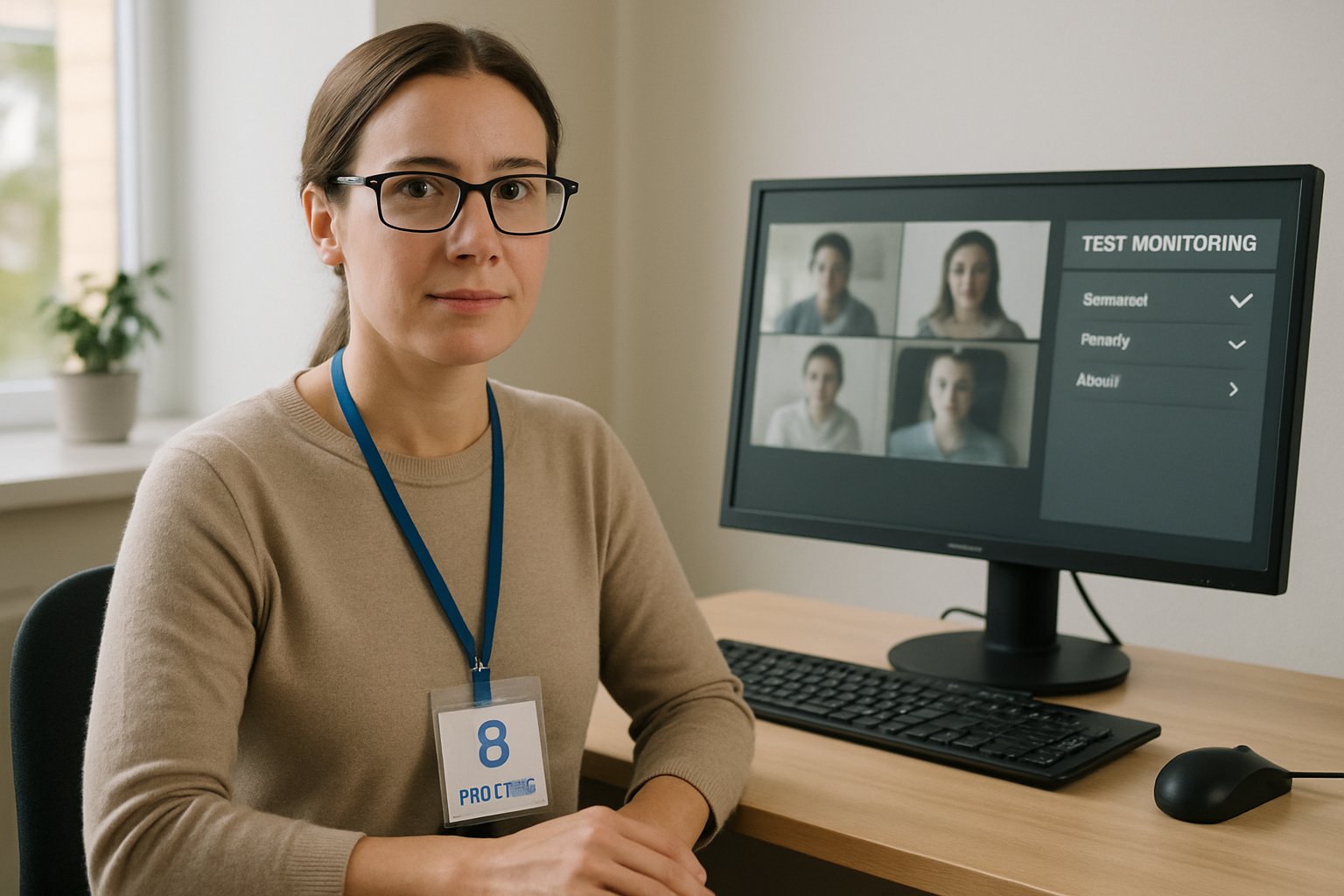
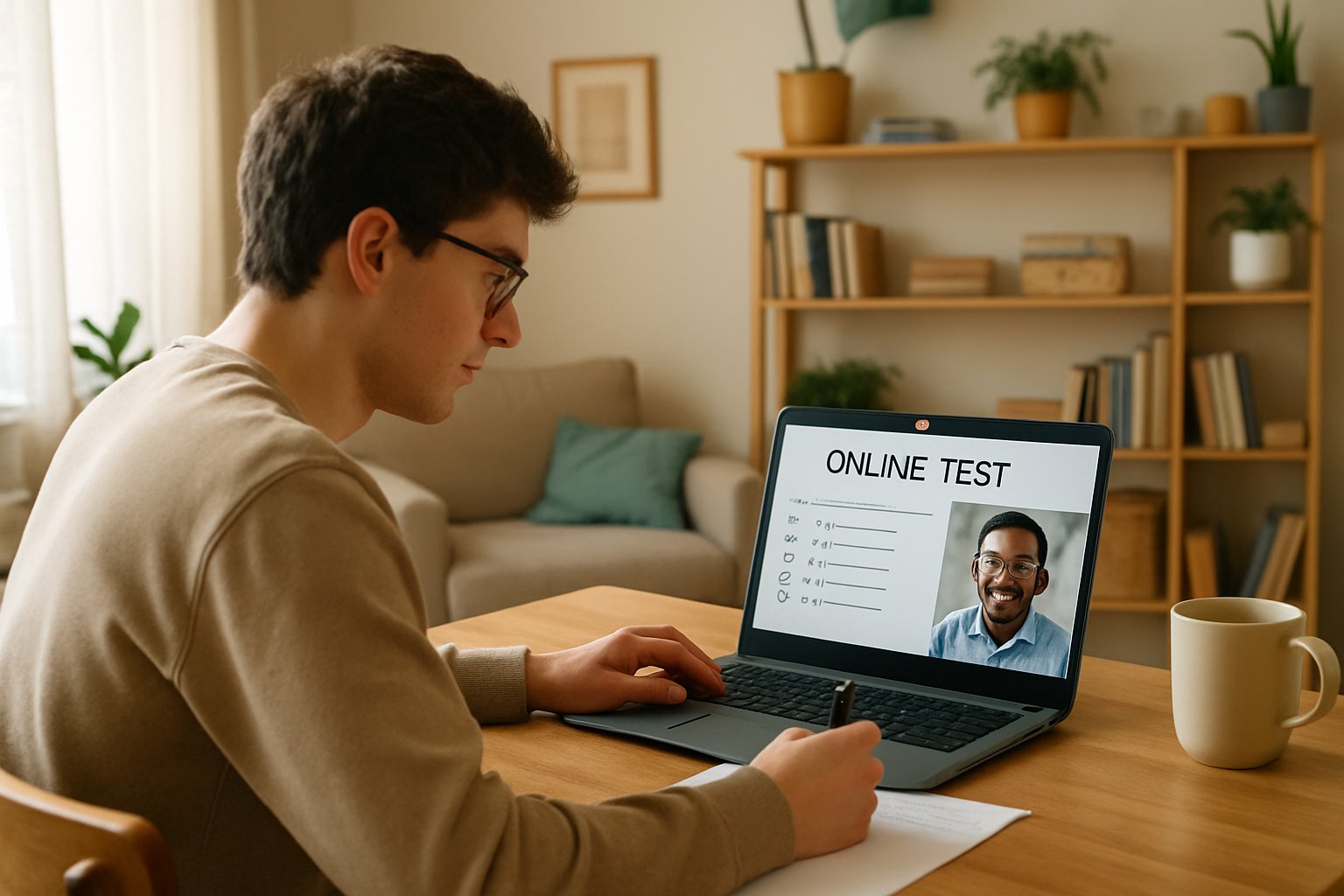
Automated proctor for test software monitoring candidate during remote exam.
Automated proctoring software keeps online assessments secure.

In short, live oversight delivers nuanced judgment but scales poorly. Next, we examine automated oversight.

Automated Proctoring Core Facts

Automated systems rely on AI to flag eye movement, extra voices, or window changes. Furthermore, continuous remote monitoring occurs 24/7 without scheduling friction. Vendors record video, audio, and screen telemetry, then generate incident clips.

Cost per seat drops sharply; some providers quote three dollars per proctor for test attempt. Nevertheless, documented bias exists. Studies from 2022 found higher false flags for darker skin tones.

Automated tools scale and cut costs yet raise equity questions. Consequently, finance teams compare numbers closely, which we cover next.

Cost And Scalability Insights

Budgets dictate adoption speed. Moreover, analysts forecast a 15.5% compound growth rate through 2031.

  • Live proctor pricing: roughly $11–$25 per hour (Examity FAQ).
  • Automated tier pricing: about $3–$10 per exam.
  • Projected market size: near $2.35 B by 2031 (Insight Partners).

Institutions seeking thousands of sittings often prefer automated or hybrid models. Consequently, volume discounts widen the gap. Selecting a proctor for test delivery becomes a budget exercise and a security decision. However, higher support costs can offset savings.

In summary, numbers favor automation when exams scale. Yet risk factors complicate the equation, as the next section shows.

Risk And Compliance Lens

Privacy lawsuits under Illinois BIPA illustrate real financial exposure. Additionally, universities named in Respondus litigation face reputational damage. Civil-liberties groups argue remote monitoring collects excessive biometric data.

Independent research confirms demographic disparities in automated flags. Therefore, institutions must design appeal mechanisms. Choosing the wrong proctor for test partner can invite costly class actions.

Thus, compliance teams demand transparent data flows and deletion schedules. Next, we outline selection criteria.

Selecting Proctor For Test

Decision makers should map exam stakes, bandwidth realities, and learner demographics. Furthermore, hybrid models combine AI alerts with live audits, balancing judgment and scale.

Before issuing an RFP, list must-have features for the proctor for test platform, including identity verification and analytics. Meanwhile, remote monitoring policies should specify retention periods to satisfy regional privacy laws.

Careful requirement mapping prevents regret later. Finally, we view emerging trends shaping tomorrow’s choices.

Market Outlook Ahead Now

Analysts agree demand will climb as corporate L&D certifies global learners. Moreover, vendor roadmaps spotlight fairness auditing and explainable AI.

Expect every major proctor for test vendor to tout bias dashboards within two years. Additionally, regulators may mandate impact assessments. Consequently, remote monitoring will feel less intrusive as interfaces improve and data is minimized.

Overall, innovation continues while scrutiny intensifies. Therefore, proactive governance remains essential.

Conclusion And Next Steps

Remote proctoring choice hinges on scale, budget, fairness, and law. Live oversight offers human nuance, while automation supplies 24/7 coverage. Hybrid designs try to deliver both. Institutions should benchmark pricing, validate bias claims, and read every privacy clause before selecting a proctor for test partner.

Why Proctor365? Proctor365 delivers AI-powered proctoring, advanced identity verification, and scalable exam monitoring trusted by global exam bodies. Consequently, our platform stops cheating without compromising privacy. Ready to protect every assessment? Talk to Proctor365 today.

Frequently Asked Questions

  1. What differences exist between live and automated proctoring?
    Live proctoring provides human oversight with nuanced judgment, while automated proctoring uses AI for continuous remote monitoring. Institutions must weigh cost, fairness, and compliance when choosing a proctor for test solution.
  2. How does Proctor365 ensure exam integrity?
    Proctor365 employs advanced AI proctoring and robust identity verification to stop fraud and ensure compliance. Our platform offers secure remote monitoring 24/7, maintaining exam integrity while upholding privacy standards.
  3. What key factors should institutions consider for selecting a proctor for test solution?
    Institutions should consider cost-efficiency, scalability, and adherence to privacy laws. Evaluating live judgment versus AI-powered proctoring, bias mitigation, and identity verification are essential for choosing the right proctor for test.
  4. How does Proctor365 address bias and fairness in online proctoring?
    Proctor365 integrates bias dashboards and explainable AI to monitor fairness. Our system minimizes false flags while ensuring robust identity verification and transparent analytics, creating an equitable and secure online proctoring environment.
 

How a Proctor For Test Stops Online Cheating Efficiently

Online exams scaled fast after 2020. Consequently, threats to integrity multiplied. Selecting the right proctor for test now sits high on every assessment leader’s agenda. This article explains how modern systems detect misconduct, why hybrid AI-human models matter, and where privacy debates stand. Readers will see proven data, current trends, and clear next steps for effective cheating prevention.

Core Cheating Detection Methods

Effective platforms combine layered controls. First, a locked browser blocks tabs, screen sharing, and apps. Secondly, continuous webcam and microphone streams reveal extra people, whispers, or off-screen notes. Additionally, screen capture and browser telemetry log on-device searches.

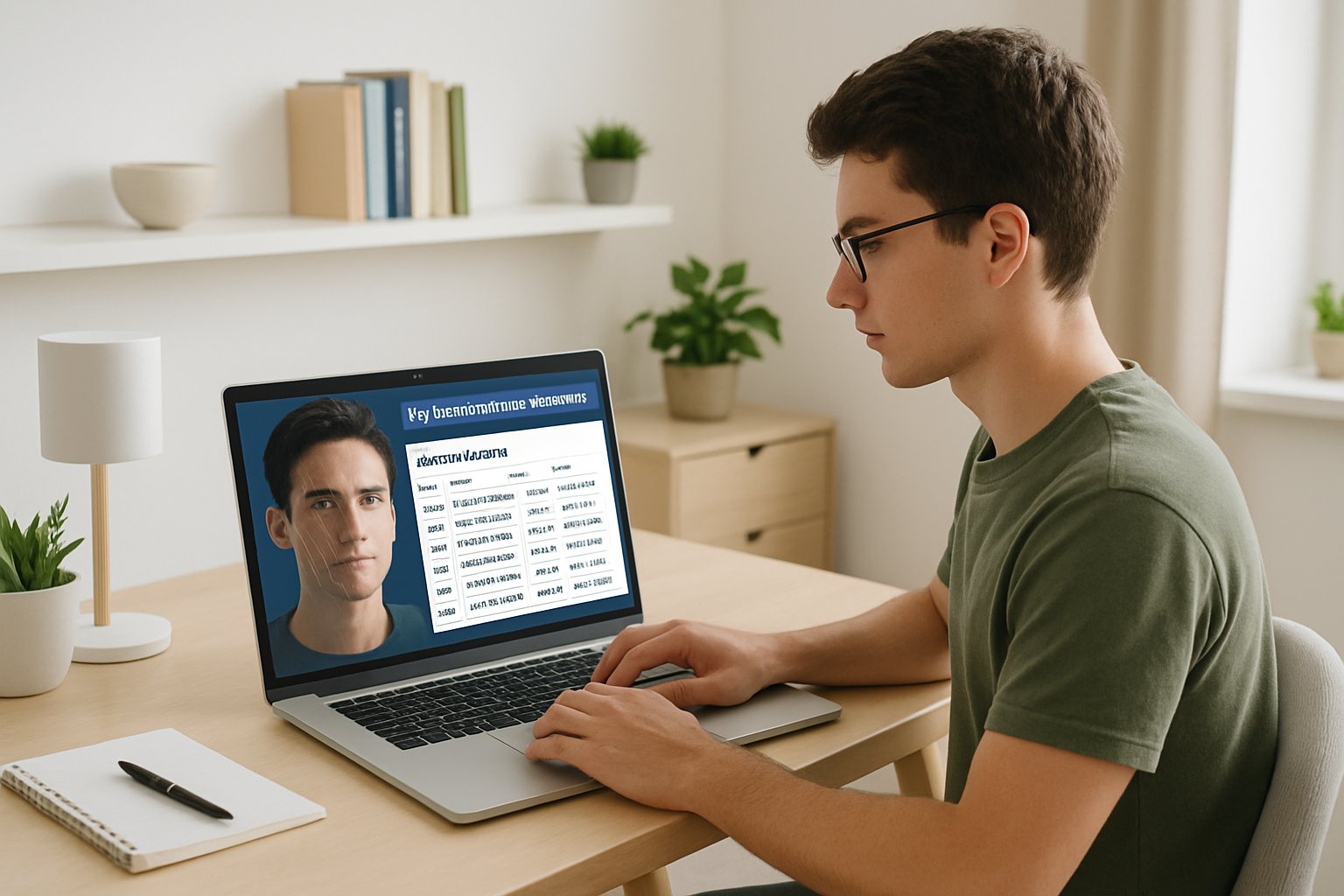
proctor for test leveraging biometrics and human audits for secure exams
Proctors use biometric scanning and audit logs for enhanced test security.
  • AI anomaly detection scores gaze shifts, head pose, and phone signals.
  • Biometric ID checks match faces before and during the exam.
  • Room scans, though disputed, attempt to verify a clean workspace.

Furthermore, trained human proctors review flagged clips or pop in live when AI escalates. This layered mix deters misconduct and supplies strong evidence. Consequently, institutions gain faster, defensible decisions.

The section shows that technical depth plus human judgment delivers stronger cheating prevention. Next, we explore how the market evolved.

Recent Industry Shifts

Over the last year, vendors pushed “AI + human” hybrids. Honorlock markets Live Pop-In, while Proctortrack offers ProctorLive AI. Moreover, anti-ChatGPT features now block in-browser bots and detect second devices. Consolidation also rose; Turnitin bundles plagiarism, item banking, and proctoring in one suite.

Security incidents triggered scrutiny. Consumer Reports exposed credential leaks at a major vendor, pushing universities to vet code and audits. Meanwhile, immutable blockchain logs entered marketing pages, although adoption remains limited.

Institutions therefore ask harder questions when choosing a proctor for test. They now demand audited metrics, not glossy claims. This shift leads directly into privacy and equity debates.

Balancing Privacy Concerns

Privacy groups, including EPIC and the ACLU, warn about intrusive room scans and broad biometric capture. They argue algorithms flag darker skin tones more often, risking inequity. However, universities counter that verified identity and logs protect credential value.

Consequently, many schools adopt lighter settings: no mandatory room scan, lower gaze sensitivity, and shorter data retention. Transparent policies and student opt-in notices also build trust while supporting solid cheating prevention.

The takeaway: strong safeguards and user transparency can coexist. Next, we map the operational workflow end-to-end.

Detection Workflow From Start

The workflow begins with device checks and biometric ID verification. During the exam, a locked browser enforces restrictions. Meanwhile, AI monitors gaze, audio spikes, and tab activity. If anomalies spike, the system alerts a live proctor.

After submission, AI compiles an integrity score. Human reviewers examine top-risk clips, then forward findings to faculty. Some vendors also scan the web for leaked items and issue takedowns.

Therefore, a reliable proctor for test handles detection, context, and evidence seamlessly. Understanding this flow helps buyers ask precise questions, which the next section covers.

Practical Procurement Advice

Decision makers should request audited false-positive and demographic bias rates. Additionally, ask for SOC-2 or ISO certifications plus breach history. Institutions must verify deletion timelines for video and biometrics.

When comparing each proctor for test, insist on:

  • Hybrid review that lets humans overrule AI.
  • Flexible settings for accommodations and bandwidth limits.
  • Detailed flag reports aligned with honor-code processes.

Moreover, explore assessment redesigns—randomized questions, open-book formats, or oral checks—to complement technological cheating prevention. Robust policy plus the right tools form a resilient integrity strategy.

Armed with these guidelines, institutions can select a proven proctor for test wisely. The following heading looks at future hurdles.

Choosing Proctor For Test

Stakeholders often ask which features matter most. Start with AI capability tuned by extensive training data. Equally, verify live proctor staffing ratios for high-stakes windows. Furthermore, ensure multi-language support, because global cohorts bring diverse accents and scripts.

Price models vary—per-exam, per-seat, or subscription. Therefore, calculate total cost across projected enrollments. Importantly, confirm LMS integration depth to avoid login friction.

Selecting the ideal proctor for test requires balancing budget, user experience, and rigorous cheating prevention. Next, we forecast emerging challenges.

Future Challenges Ahead

AI writers will grow more covert, and headset-like devices may hide in plain sight. Consequently, detection models need constant retraining. Simultaneously, regulators may tighten biometric rules, limiting data retention windows.

Thus, vendors must publish audited fairness metrics and support privacy-preserving analytics. Institutions, meanwhile, should diversify assessment types to reduce high surveillance reliance.

Facing these trends, any forward-looking proctor for test must evolve swiftly while remaining transparent. We close with actionable conclusions.

Conclusion And Next Steps

Online exam integrity demands layered technology, informed policy, and sustained vigilance. Hybrid AI-human monitoring, secure browsers, and biometric checks drive effective cheating prevention. Yet privacy, equity, and security must stay central to procurement and configuration choices.

Why Proctor365? The platform pairs advanced AI with live experts, delivers industry-leading identity verification, and scales monitoring to thousands instantly. Trusted by global exam bodies, the proctor for test capabilities exceed standard offerings. Experience higher integrity by visiting Proctor365.ai today.

Frequently Asked Questions

  1. How does AI proctoring improve online exam security?
    AI proctoring monitors gaze, audio, and screen activity, using anomaly detection to flag suspicious behavior. Paired with live human intervention, it enhances exam integrity and fraud prevention while ensuring secure identity verification.
  2. What are the key features of a robust proctoring platform?
    Key features include a locked browser, continuous webcam and microphone monitoring, and biometric ID checks. These layers, combined with AI and human proctor reviews, create an effective shield against cheating and maintain exam integrity.
  3. How does Proctor365 ensure secure and fair exam proctoring?
    Proctor365 integrates advanced AI with live expert reviews for precise anomaly detection and verified identity checks. Its transparent privacy settings and flexible configurations ensure equity while supporting comprehensive cheating prevention strategies.
  4. Why is a hybrid AI-human proctoring model important?
    A hybrid AI-human model combines automated detection with live proctor intervention, reducing false positives and ensuring accurate fraud detection. This balance maintains exam integrity while offering a secure, responsive environment to deter cheating effectively.

Why Universities Need a Proctor for Test Integrity Today

Remote learning exploded after 2020. Consequently, cheating opportunities multiplied. Universities now fight to protect academic honesty while still offering flexible assessments. A reliable proctor for test sessions gives administrators confidence that results reflect real learning. Moreover, regulators and employers demand credible grades. This article explains why proctoring remains essential, how institutions address privacy worries, and which best practices keep students supported.

Mounting Online Cheating Pressures

Cheating data tells a stark story. The Journal of Academic Ethics reported 54.7% of surveyed students admitted online cheating during the pandemic. Furthermore, a 2024 Wiley survey found 96% of instructors suspect some dishonesty. AI tools now write essays, solve math, and even mimic code style. Therefore, detection alone no longer suffices; prevention must occur in real time.

Remote proctor for test monitoring a student’s online exam at home.
An online proctor oversees a student’s test remotely, safeguarding fairness in virtual exams.
  • 54.7%: self-admitted online exam cheating (2023).
  • 11%: assignments with 20%+ AI content, Turnitin 2024.
  • $9.3 B: broad global proctoring market estimate for 2024.

Institutions see these numbers and act. They deploy a proctor for test sessions to make cheating riskier and grades credible. In summary, rising misuse of generative AI pushes campuses toward stronger oversight. Next, we explore credential value.

Protecting Credential Value Fairness

Employers trust transcripts when they believe the scores. Likewise, licensure boards require validated skills before granting practice rights. Consequently, any hint of widespread fraud erodes that trust. Proctored exams reassure external stakeholders that students truly earned marks.

Additionally, robust monitoring supports fairness among learners. Students who study honestly resent those who gain advantage through deception. A visible integrity layer reinforces community standards of academic honesty. In short, credential value rises when assessments remain secure. Let’s examine the specific proctoring role.

Proctor for test role

The modern proctor for test sessions combines human vigilance and AI analytics. Live proctors verify IDs, monitor behavior, and intervene instantly. Meanwhile, algorithms flag gaze aversion, extra faces, and screen switching. Institutions then review alerts before any penalty, which limits false accusations.

Moreover, recorded sessions create audit trails. Administrators can replay incidents, document due process, and train staff. This evidence supports consistent rulings, which strengthens perceptions of fairness and academic honesty. Ultimately, layered oversight deters impersonation and collusion. Up next, privacy considerations arise.

Balancing Privacy Equity Concerns

Webcams peer into bedrooms. Biometric checks capture sensitive data. Consequently, student groups challenge invasive methods. Advocacy organizations such as EFF and EPIC demand transparency, data minimization, and opt-outs.

Forward-thinking campuses now disclose policies clearly, encrypt recordings, and allow on-site alternatives. Furthermore, many platforms keep humans in the loop to reduce algorithmic bias. These steps calm anxiety while preserving integrity. Overall, privacy safeguards maintain trust and support academic honesty. The next section lists concrete institutional actions.

Institutional Best Practice Checklist

  • Explain proctoring rules in syllabi before registration.
  • Verify identity with multi-factor methods, not only face scans.
  • Require human review of all AI flags.
  • Offer accessible room, device, or schedule alternatives.
  • Delete or anonymize recordings after defined retention windows.

Each item reduces complaints and legal risk. Importantly, administrators still maintain a visible proctor for test presence that deters misconduct. Consequently, best practices balance rigor and respect. Next, we consider market trends.

Market Outlook And Insights

Analysts disagree on size yet agree on growth. Some scopes forecast USD 12 B by 2033, while education-only studies show smaller figures but higher CAGRs. Regardless, demand stays strong as hybrid learning normalizes.

Additionally, vendors innovate with AI emotion detection, keystroke biometrics, and real-time language translation. Institutions that pilot early can shape ethical standards. Therefore, knowledge of vendor roadmaps helps buyers choose the right proctor for test suite. We now conclude with key takeaways.

Conclusion And Next Steps

Cheating pressures climb, credentials rely on trust, and privacy debates intensify. However, a well-implemented proctor for test program safeguards value, promotes academic honesty, and meets stakeholder expectations.

Why Proctor365? Proctor365 pairs AI-powered proctoring, advanced identity verification, and scalable monitoring trusted by global exam bodies. Consequently, institutions close integrity gaps without sacrificing user experience. Experience the difference and keep every proctor for test session secure. Visit Proctor365.ai today.

Frequently Asked Questions

  1. How does Proctor365 ensure exam integrity during remote assessments?
    Proctor365 uses AI-powered proctoring combined with human oversight and advanced identity verification to detect and deter cheating, ensuring that every proctor for test session maintains high academic honesty standards.
  2. What features are integrated into modern proctor for test sessions?
    Modern proctor for test sessions utilize live monitoring, real-time AI analytics, biometric checks, and recorded sessions, all designed to prevent fraud while ensuring fair and credible assessments for both students and institutions.
  3. How do proctoring solutions balance privacy with exam security?
    Proctoring solutions balance security and privacy by using transparent policies, encryption methods, multi-factor identity checks, and human review of AI flags, which are essential for maintaining trust and academic honesty.
  4. How does effective proctoring support credential value?
    Effective proctoring safeguards credential value by ensuring exam results reflect genuine student effort, reducing fraud and impersonation, and providing documented evidence through audit trails that support reliable and trustworthy test outcomes.

Top 10 FAQs: Proctor For Test Explained

Universities now deliver high-stakes exams online. Consequently, institutions need a reliable proctor for test integrity. Remote testing demand continues to climb worldwide.

However, decision makers still face confusion. They ask how remote proctoring tools work, what data they collect, and whether laws permit certain features. This article answers the ten questions leaders raise most. Furthermore, it highlights current market numbers, risk areas, and preparation tips.

Certified proctor for test preparing workstation with security credentials displayed.
Certified proctor prepares a secure and fair test environment.

Market reports value online proctoring at US$941.3 million in 2024 and project US$2.1 billion by 2030. Consequently, procurement teams must grasp both benefits and controversies before signing new contracts.

Remote Proctoring Core Basics

Remote proctoring combines identity checks, lockdown browsers, and live or automated monitoring for each proctor for test session. Most platforms integrate with an LMS within minutes. During remote testing, students verify identity with a photo and ID. The system then records webcam, screen, and audio feeds.

AI flags face absence, extra faces, or tab switching. Human reviewers examine flagged clips to confirm issues. Therefore, institutions gain an audit trail without staffing on-site labs.

In short, remote proctoring mirrors traditional invigilation online. The next section tackles data collection concerns.

Proctoring Data Privacy Concerns

Institutions must know exactly what data each platform records. Common items include webcam video, screen captures, audio, ID photos, IP address, and device metadata.

Moreover, storage length differs by vendor. Some tools delete footage after 30 days, while others keep files for a year or more. Administrators should demand written retention schedules.

State biometric laws add further pressure. When a platform uses facial detection, regulators may treat it as biometric processing. Therefore, choosing a compliant proctor for test partner reduces litigation risk.

Clear policies, encryption, and limited retention build learner trust. Next, consider fairness and accessibility.

Bias And Accessibility Risks

Automated face detection still struggles with darker skin tones and certain lighting conditions. Consequently, students may receive false flags more often.

Additionally, movement limitations or assistive technology can trigger suspicion algorithms. Vendors now allow disability overrides, yet instructors must configure them carefully.

Proctor for test tools become equitable only when institutions provide alternative spaces or flexible assessment formats. When equity improves, so does academic reputation.

Addressing bias early safeguards student wellbeing. Let us review evidence on cheating reduction.

Evidence On Cheating Reduction

Market studies credit proctoring with lowering blatant cheating attempts, such as phone use or external help. Researchers, however, note that better assessment design also deters misconduct.

During remote testing pilots, courses using strict lockdown browsers reported fewer incident reports than control sections. Yet privacy-respecting honor code reminders produced similar gains, according to a 2023 Computers & Education paper.

Therefore, leaders should weigh technical safeguards, cultural approaches, and the chosen proctor for test solution together.

Balanced strategies save money and limit controversy. We now examine vendor selection factors.

Selecting Proctor For Test

Decision makers compare live, recorded, and automated models. Live human oversight offers immediate intervention but costs more at scale.

Recorded review lowers cost; nevertheless, instructors must budget time for clip audits. Automated only solutions scale fastest, yet they raise higher false-positive risk.

Moreover, contract terms should cover support response times, data deletion guarantees, and accommodation workflows.

A structured rubric shortens procurement cycles. The final section helps students prepare.

Student Preparation Checklist Guide

Students succeed when they know what to expect during remote testing. Encourage them to follow this quick checklist:

  • Read the course policy and software guides.
  • Test bandwidth, webcam, and microphone 24 hours early.
  • Clear the desk and background before starting.
  • Keep a government ID within reach.
  • Note support numbers for immediate help.

Following these steps reduces stress and supports the proctor for test workflow.

Prepared students create smoother sessions. We close with key takeaways and a platform recommendation.

Conclusion

Remote proctoring gives institutions scalable oversight, yet it demands attention to privacy, fairness, and legal detail. Leaders should map data flows, address bias, and balance technical controls with assessment design. When done well, the approach strengthens credibility across global programs.

Why choose Proctor365 as your proctor for test partner? Our AI-powered engine checks identity within seconds and flags anomalies in real time. It also scales from small classes to nationwide certification drives. Moreover, advanced identity verification, multilingual support, and cloud resilience keep sessions stable. Trusted by universities, exam bodies, and enterprises worldwide, Proctor365 safeguards exam integrity without compromising user experience. Explore the platform today at Proctor365.ai.

Frequently Asked Questions

  1. What is remote proctoring and how does it ensure exam integrity?
    Remote proctoring uses AI-driven monitoring combined with identity verification techniques to secure exam sessions. It collects webcam, audio, and screen data to flag anomalies and uphold exam integrity.
  2. How does Proctor365 address data privacy concerns during remote testing?
    Proctor365 employs robust encryption, secure storage, and strict retention policies to protect exam data. The system complies with biometric and data privacy laws while collecting only essential verification data.
  3. What measures does Proctor365 use to prevent cheating?
    Proctor365 uses AI-powered monitoring and real-time anomaly detection to flag suspicious activity. This approach, combined with human review, minimizes fraud and ensures a secure remote testing environment.
  4. How can students best prepare for remote testing?
    Students should verify their technology, review exam policies, clear their workspace, and have valid identification ready. These steps, recommended by Proctor365, help ensure a smooth and secure exam session.

Five Pillars of Proctor for Test Equity and Trust

Remote assessment has matured, yet public scrutiny has intensified. Institutions must now prove that each proctor for test platform protects students as thoroughly as it protects grades.

Consequently, regulators, faculty senates, and civil-rights groups spotlight equity gaps. Meanwhile, lawsuits and access audits mount weekly.

Proctor for test checking clipboard in a spacious, equitable examination setting.
Attention to detail defines a responsible proctor for test during exam administration.

This article distills the research into five practical pillars. They offer a roadmap to uphold exam fairness while meeting looming legal deadlines.

Moreover, each pillar aligns with concrete checklists, tested statistics, and campus case studies. By following them, universities, ed-tech firms, and corporate trainers can safeguard reputation, learner trust, and financial sustainability.

However, skipping even one pillar can trigger discrimination claims, expensive data breaches, or false cheating allegations. Therefore, decision makers should benchmark current workflows against these guidelines today, not tomorrow.

Subsequently, the following sections unpack each pillar and provide swift actions you can deploy this semester.

Accessibility And Accommodation Pillar

First, a platform cannot claim integrity if disabled students face extra hurdles. DOJ’s 2024 Title II rule mandates WCAG 2.1 AA compliance by 2026 for most public campuses.

Therefore, any proctor for test solution must work seamlessly with screen readers, captioning, and extended-time controls.

Moreover, disability offices should integrate accommodation workflows directly into exam settings, avoiding ad-hoc fixes that strain staff.

Key takeaway: accessibility saves legal costs and broadens legitimate access. Next, we examine demographic algorithmic bias.

Algorithmic Fairness For Exams

Face detection errors can derail honest students, especially those with darker skin tones. NIST tested 200 algorithms and found higher false positives for several demographic groups.

Consequently, institutions should demand vendor audit reports that show balanced accuracy across race, gender, and age.

Additionally, the proctor for test workflow must include human verification whenever biometric checks fail rather than auto-blocking entry.

Two-line summary: test bias harms exam fairness and invites civil-rights claims. Now, turn to privacy stewardship.

Privacy And Data Governance

Large video archives and biometric templates attract hackers and class-action lawyers. Illinois BIPA suits already target careless vendors.

Therefore, map every data field from capture to deletion. Publish retention limits, sub-processor lists, and breach notification timelines.

Moreover, select a proctor for test partner that deletes biometric identifiers within days, not semesters.

Key takeaway: strong governance strengthens trust and thwarts costly incidents. Next, spotlight transparency and choice.

Transparency Choice Alternatives Path

Students deserve to know how surveillance works before exam day. Syllabus statements should detail recordings, reviewers, and evidence storage.

However, forces beyond control, like unreliable broadband, may make webcams impossible. Offer on-campus rooms or alternate assessments without penalty.

Additionally, publish false-positive rates so faculty weigh flags carefully. This practice protects exam fairness and respects due process.

Summary: clarity plus options defuse conflict. Next comes operational reliability.

Reliability Review And Redress

No system is perfect. Consequently, institutions must review every AI flag before accusing students.

EFF reported that only 14% of flagged sessions once received faculty eyes. That gap erodes trust faster than any cheat.

Select a proctor for test provider that offers live chat support during outages.

Therefore, track human-review rates, appeal outcomes, and outage incidents. Moreover, build backup plans for power or bandwidth loss.

Key takeaway: prompt, fair review keeps exam fairness intact. Finally, the checklist synthesizes all actions.

Proctor For Test Checklist

Use this quick list during procurement or annual audits:

  • Demand vendor demographic accuracy reports and WCAG statements.
  • Write opt-out workflows that preserve exam fairness.
  • Set 30-day retention ceilings for sensitive recordings.
  • Require human review of each proctor for test flag.
  • Publish semester metrics on outages, appeals, and student satisfaction.

Moreover, assign cross-functional teams to monitor progress and update stakeholders every term.

Summary: consistent governance turns policy into culture. The conclusion explains why Proctor365 leads this evolution.

Conclusion

The five pillars—accessibility, algorithmic equity, data stewardship, transparency, and reliable review—offer a proven roadmap to protect exam fairness. Ignoring any pillar invites legal, reputational, and pedagogical damage.

Why Proctor365? Our AI-powered proctor for test platform embeds each pillar by design. It uses adaptive face matching with documented fairness audits. Advanced identity verification guards against fraud. Scalable monitoring handles thousands of concurrent sessions. Trusted by global exam bodies, Proctor365 delivers swift human review and transparent reports.

Consequently, your institution can raise integrity and student trust today. Schedule a demo at Proctor365.ai and experience equitable assessment at scale.

Frequently Asked Questions

  1. How does Proctor365 ensure exam fairness with its AI proctoring platform?
    Proctor365’s AI proctoring platform embeds fairness checks such as adaptive face matching, human verification, and comprehensive audits. This approach minimizes bias and preserves exam integrity while supporting secure fraud prevention.
  2. What measures are in place to prevent algorithmic bias in exam proctoring?
    Our system uses balanced accuracy audits and human verification to counter algorithmic bias. Proctor365 ensures demographic fairness by monitoring facial detection accuracies across diverse groups, enhancing overall exam integrity.
  3. How does Proctor365 protect student data and maintain privacy during assessments?
    Proctor365 implements strong data governance by mapping data flow, enforcing strict retention limits, and deleting biometric identifiers promptly. These measures ensure privacy, compliance with regulations, and bolster overall exam security.
  4. What support does Proctor365 offer if technical issues or false positives occur?
    Proctor365 provides live chat support and prompt human review of flagged sessions. This reliable support system allows for swift redress of technical issues and false positives, ensuring fair treatment during remote examinations.

Why a Proctor for Test Solution Safeguards Student Data

Remote assessment surged during the pandemic. However, concerns about student privacy and data security grew just as fast. Institutions now demand clear safeguards before selecting any proctor for test platform. This article unpacks how modern online proctoring protects sensitive student records while still deterring cheating.

We draw from new laws, vendor innovations, and watchdog reports. Moreover, this guide serves universities, ed-tech firms, and corporate learning teams. Read on to see which controls truly matter.

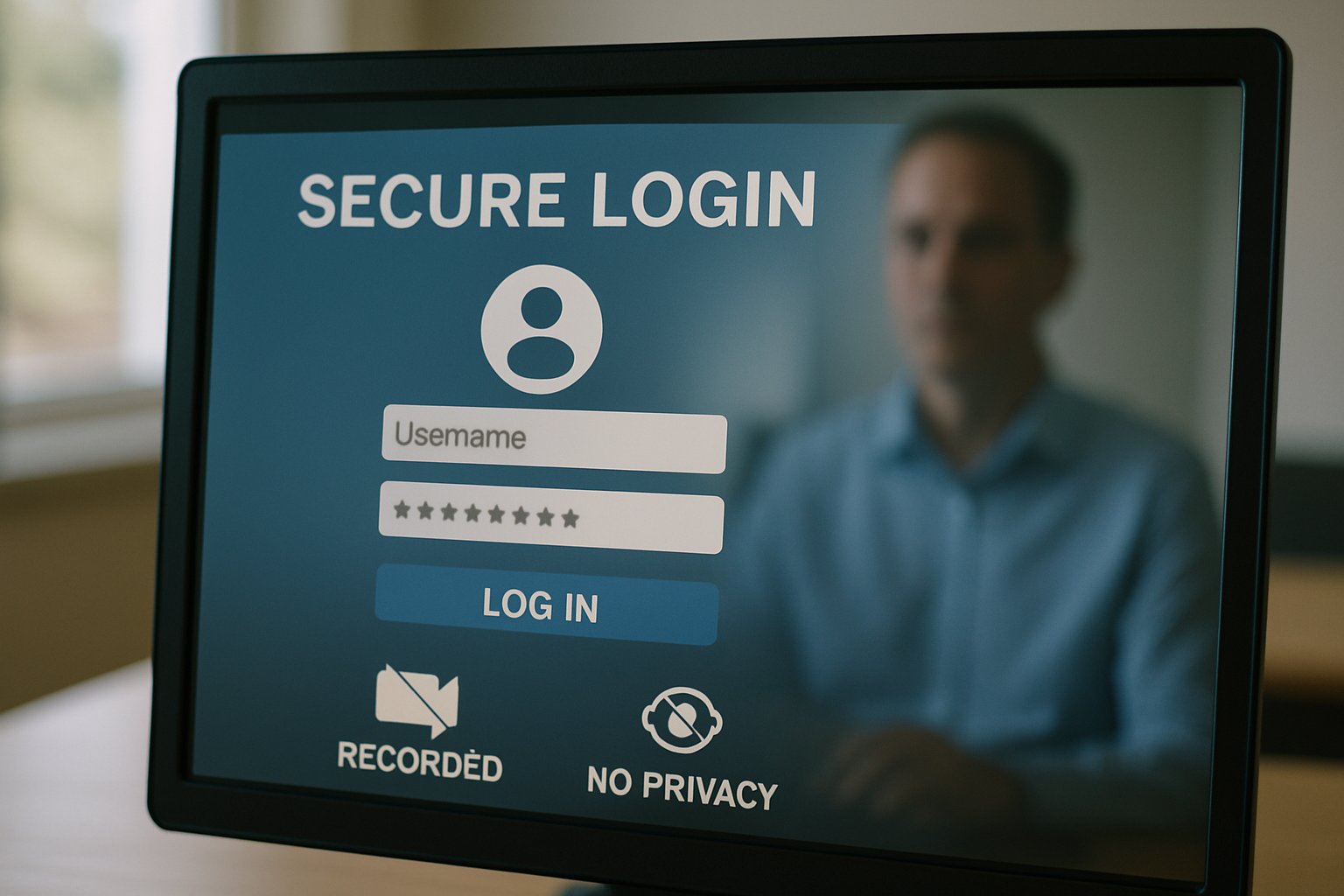
Computer showing secure proctor for test platform with privacy icons visible.
A secure proctor for test software login screen emphasizes privacy controls.

Finally, we balance benefits against real risks. Consequently, decision makers gain a concise playbook for privacy-friendly exam integrity.

Rising Data Privacy Pressures

Online exams remain mainstream today. EDUCAUSE found 54% of campuses used proctoring tools in 2020.

  • Pandemic adoption: 54% of institutions used remote proctoring (EDUCAUSE, 2020).
  • Market growth: Analysts expect double-digit CAGR through 2028.
  • Legislation: California SB 1172 limits biometric collection.

Meanwhile, advocacy groups like EFF spotlight overcollection and bias. Consequently, universities face intense media and legal scrutiny.

Pressure rises from students, lawmakers, and journalists. Next, we examine the technical safeguards vendors promote.

Core Student Data Safeguards

Vendors tout layered controls to earn trust. Encryption in transit and at rest is now standard.

Moreover, some providers claim zero-knowledge architecture, meaning only institutions hold decryption keys.

Short retention windows, role-based access, and detailed audit logs strengthen accountability.

Choosing Right Proctor For Test

A careful evaluator should verify every proctor for test claim through contracts and audit reports. Ask for SOC 2 or ISO 27001 summaries and confirm deletion workflows.

Strong safeguards exist, yet verification remains essential. Regulatory duties magnify this need, as the next section shows.

Evolving Regulation And Compliance

Legal frameworks now shape procurement decisions. FERPA treats vendors as school officials only when contracts restrict data use.

Additionally, California SB 1172 sets a higher bar for biometric handling.

European regulators enforce GDPR, and several investigations fined vendors for opaque AI.

Institutions that deploy a proctor for test solution must map these laws to every data flow.

Compliance gaps invite lawsuits and reputational harm. Therefore, understanding risk factors becomes critical.

Critical Technology Risk Factors

Despite controls, technical flaws still surface.

  • Source-code leaks exposed passwords at one vendor.
  • Algorithmic bias flagged disabled students disproportionately.
  • Breached servers revealed ID photos.

Moreover, automated flagging can create false positives, forcing manual reviews.

If the chosen proctor for test tool lacks penetration testing, such issues may remain hidden.

Unchecked risks undermine trust and learning outcomes. Consequently, due diligence becomes non-negotiable.

Robust Due Diligence Checklist

Institutions should follow a structured review before signing.

  1. Request the vendor’s DPA with clear retention and deletion terms.
  2. Verify encryption and key custody diagrams.
  3. Demand third-party SOC 2 or ISO reports.
  4. Test local processing to minimize uploads.
  5. Ensure appeals for algorithmic flags.

This checklist helps vet any proctor for test vendor in hours, not months.

Systematic checks filter unreliable players quickly. Next, we balance integrity with student expectations.

Balancing Trust And Integrity

Online assessments thrive only when student privacy feels respected.

Therefore, transparency notices must detail collection, storage, and deletion timelines.

Faculty can reduce camera scans for low-stakes quizzes while still verifying identity for finals.

Balancing integrity with rights fosters acceptance. Finally, we explore how Proctor365 advances this mission.

Remote learning demands reliable oversight and strong privacy. Selecting a proctor for test platform with encryption, audits, and short retention delivers both outcomes.

Why Proctor365? Our AI-powered proctor for test service combines live and automated monitoring. It adds advanced identity verification and cloud scalability trusted by global exam bodies. Moreover, our secure cloud meets global SOC 2 standards. Consequently, institutions raise integrity while honoring student privacy.

Ready to protect integrity without compromise? Visit Proctor365 to schedule a demo today.

Frequently Asked Questions

  1. What are the primary data security measures in online proctoring?
    Modern proctoring ensures data security with encryption in transit and at rest, zero-knowledge architecture, short retention windows, and role-based access controls. These safeguards protect student privacy and prevent data breaches.
  2. How does Proctor365 balance exam integrity with student privacy?
    Proctor365 balances exam integrity and privacy by combining live and AI proctoring, advanced identity verification, and robust encryption measures. This approach ensures effective fraud prevention while respecting student rights and data security.
  3. What steps should institutions take when vetting a proctoring service?
    Institutions should review vendor contracts, verify SOC 2 or ISO 27001 certifications, inspect encryption practices, and test deletion workflows. This due diligence supports reliable AI proctoring, fraud prevention, and proper identity verification.
  4. How do technical flaws impact the reliability of online proctoring platforms?
    Technical flaws like algorithmic bias or breaches can create false positives and expose sensitive data. Rigorous security measures, including regular penetration testing, help minimize these risks while ensuring robust fraud prevention and identity verification.

Proctor for Test Success: Craft the Perfect Exam Environment

Remote assessment is now mainstream across universities, certification boards, and corporate academies.

However, choosing the right proctor for test sessions and building a reliable testing environment still challenge many teams.

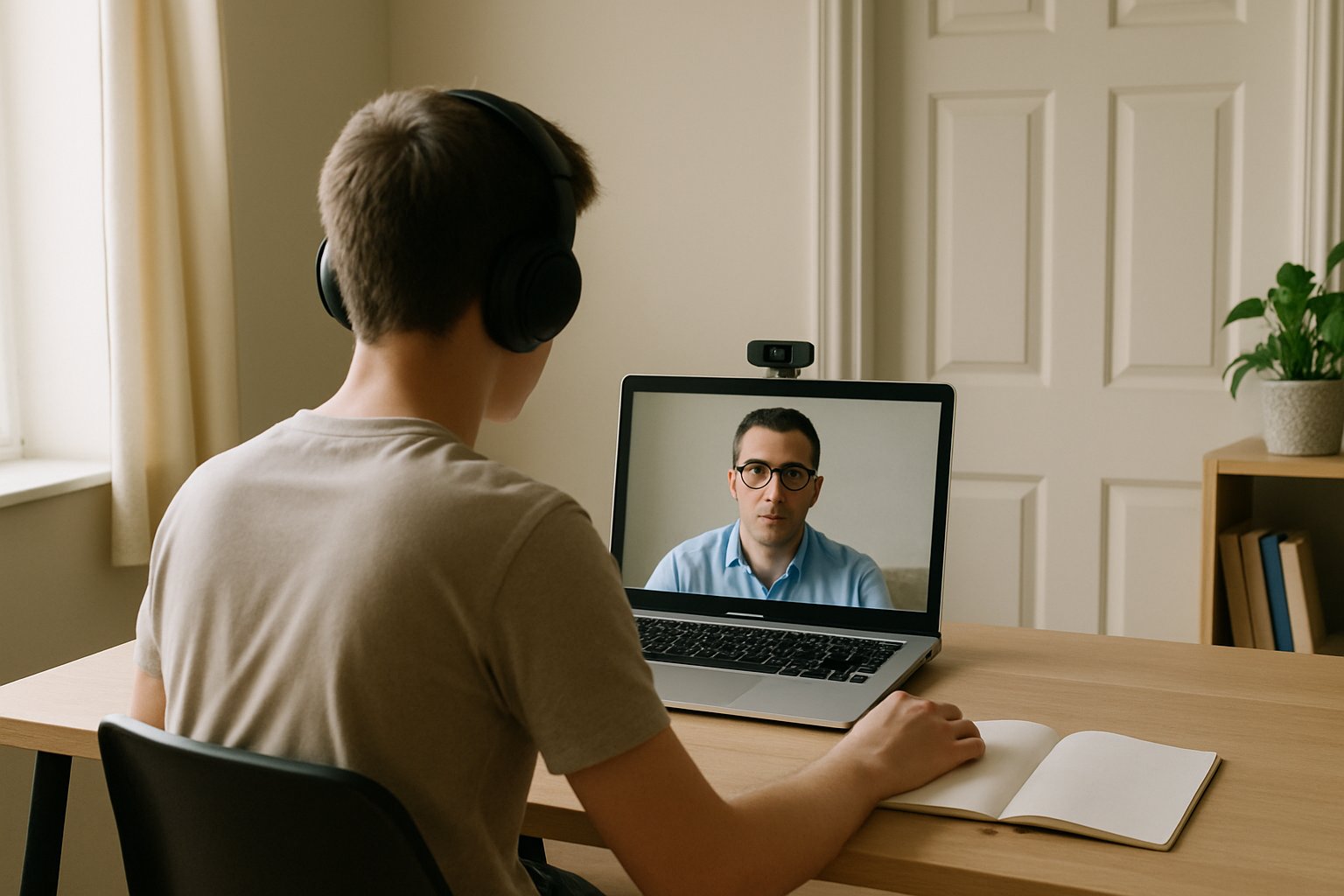
Remote student with online proctor for test in a realistic home office setting.
Remote exams utilize an online proctor for test to ensure integrity at home.

Exam integrity, student privacy, and technical reliability must align.

Moreover, Market Research Future values the remote proctoring market at up to USD 2.1 billion for 2024.

Consequently, leaders need a disciplined framework that balances security with fairness.

This guide distills recent research, vendor updates, and campus best practices into clear, actionable steps.

From randomized field experiments to EPIC’s privacy complaints, evidence shows proctoring deters cheating yet can introduce bias.

Therefore, professionals must anticipate pitfalls before any webcam activates.

Read on to master the process and create a stress-free experience for every candidate.

Meanwhile, rapid AI advances demand constant policy refinement.

Clear Policy Comes First

A coherent integrity policy anchors the entire testing environment.

Additionally, it sets expectations early and reduces anxiety.

Publish the rules in the syllabus and LMS at least two weeks before each exam.

Offer explicit accommodation pathways and require an honor statement.

  • Outline allowed materials and room requirements.
  • Provide a mandatory low-stakes practice run.
  • Explain data retention, review, and appeal windows.
  • Link to privacy notices and alternative assessment options.

These actions build transparency and trust.

Consequently, fewer disputes reach academic misconduct panels.

Next, focus on vendor selection that meets your policy goals.

Choosing Proctor For Test

Picking a capable proctor for test delivery demands clear criteria.

Moreover, institutions should compare live, recorded, and automated models.

Honorlock’s hybrid Analytics Hub, for example, pairs AI flags with human review.

In contrast, purely automated tools risk false positives and legal pushback, as EPIC’s complaint shows.

Evaluate each candidate on data minimization, accessibility features, and regional compliance.

Summarize findings in a short decision matrix, then match the choice to your policy.

This careful alignment prevents surprise limitations during implementation.

Now validate the technical fit before scheduling any real exam.

Robust Technical Checks Matter

A flawless testing environment depends on verified devices and networks.

Therefore, mandate a technical self-test at least 48 hours prior.

Minimum specs should follow CompTIA and Respondus guidance: modern OS, one display, frontal webcam, and 3 Mbps upload.

Require Ethernet when feasible to avoid wireless drops.

Meanwhile, instruct candidates to disable VPNs and close background apps.

If the chosen proctor for test uses a lockdown browser, communicate browser installation steps early.

Provide a 24/7 help line to manage last-minute issues.

These measures cut exam-day disruptions and uphold fairness.

Next, secure the physical space around each candidate.

Create Secure Room Setup

The physical room shapes both comfort and compliance.

Additionally, instruct candidates to choose a quiet, private area with stable lighting.

Ask them to perform a limited room scan only when strictly necessary for the testing environment.

Remove notes, phones, and secondary monitors.

Before launch, have candidates display their ID beside their face for manual confirmation.

Consequently, the proctor for test can spot anomalies quickly.

Post clear signage to deter household interruptions.

With the space secured, attention turns to live monitoring conduct.

Effective Live Exam Protocols

During the session, proctors follow a standardized escalation script.

Moreover, human review must verify any AI flag before disciplinary action.

Universities that disabled biased facial detection highlight this safeguard.

If bandwidth drops, allow a short reconnection window rather than ending the attempt.

Meanwhile, the proctor for test should log time-stamped notes for audit purposes.

At exam completion, display a confirmation screen so candidates know their submission succeeded.

These practices maintain order and credibility.

Subsequently, review the evidence with equal rigor.

Thorough Post Exam Review

After the session, trained staff review flagged clips alongside log data and submission files.

Furthermore, multiple evidence sources reduce wrongful accusations.

Notify students of any investigation within defined timelines.

Provide secured access to relevant footage on request.

Consequently, appeals remain grounded in transparent records.

Once findings close, delete data according to the published retention period.

This discipline reinforces trust before the next cycle.

Finally, address broader equity and privacy questions.

Address Equity And Privacy

Proctoring technology can amplify bias if ignored.

Therefore, collect only essential data and disable intrusive analytics until validated.

Offer low-surveillance alternatives or in-person sessions for students without a suitable testing environment.

Moreover, publish vendor audit results and update the community on feature changes.

EPIC’s ongoing litigation shows the risk of opaque data use.

By foregrounding ethics, institutions future-proof their programs.

With the framework complete, summarize the critical steps and choose a trusted partner.

Conclusion. Aligning policy, technology, space, and review creates a resilient proctor for test workflow that respects privacy and deters cheating.

Moreover, the checklist above lets universities, ed-tech firms, and corporate L&D leaders scale assessments without surprises.

Why Proctor365? Our AI-powered platform serves as the smartest proctor for test delivery, offering real-time analytics, advanced identity verification, and limitless scalability.

Trusted by global exam bodies, Proctor365 safeguards every click while meeting strict privacy laws.

Visit Proctor365 to boost exam integrity today.

Frequently Asked Questions

  1. How does Proctor365 enhance exam integrity with its AI proctoring technology?
    Proctor365’s AI-powered proctoring monitors tests in real time, detecting suspicious behavior and minimizing fraud. Its advanced identity verification and analytics ensure exam integrity while upholding strict privacy standards.
  2. What technical checks are essential for a smooth remote exam experience?
    Implementing pre-exam self-tests, verifying device and network specifications, and following setup guidelines are vital. Proctor365 supports these measures with technical checks to ensure a secure, uninterrupted testing environment.
  3. How do clear proctoring policies contribute to a successful exam process?
    Clear policies set expectations and reduce candidate anxiety by outlining conduct and setup requirements. This transparency, combined with Proctor365’s rigorous monitoring, builds trust and promotes a fair exam environment.
  4. How does Proctor365 balance exam security with candidate privacy?
    Proctor365 collects only essential data and employs non-intrusive AI analytics. Its methods protect candidate privacy while efficiently deterring fraudulent activities, ensuring a secure and ethical testing process.

How a Proctor for Test Uses Lockdown Browsers

Online exams keep expanding. Consequently, every university or certification body must choose a reliable proctor for test sessions. Lockdown browsers now sit at the center of that decision. These clients restrict the device, bolster browser security, and combine with AI monitoring to reduce cheating. However, myths and legal worries still cloud adoption decisions. This guide explains how the technology works, its limits, and practical steps for safer assessments.

Why Lockdown Browsers Matter

Remote delivery fuels growth in global assessments. Moreover, research shows proctored exams record far fewer suspicious events than unproctored ones. Lockdown browsers deter quick web searches, screen grabs, or app switching. Therefore, they restore a baseline of fairness equal to classroom conditions. Vendors like Respondus and open projects such as Safe Exam Browser now support millions of candidates worldwide.

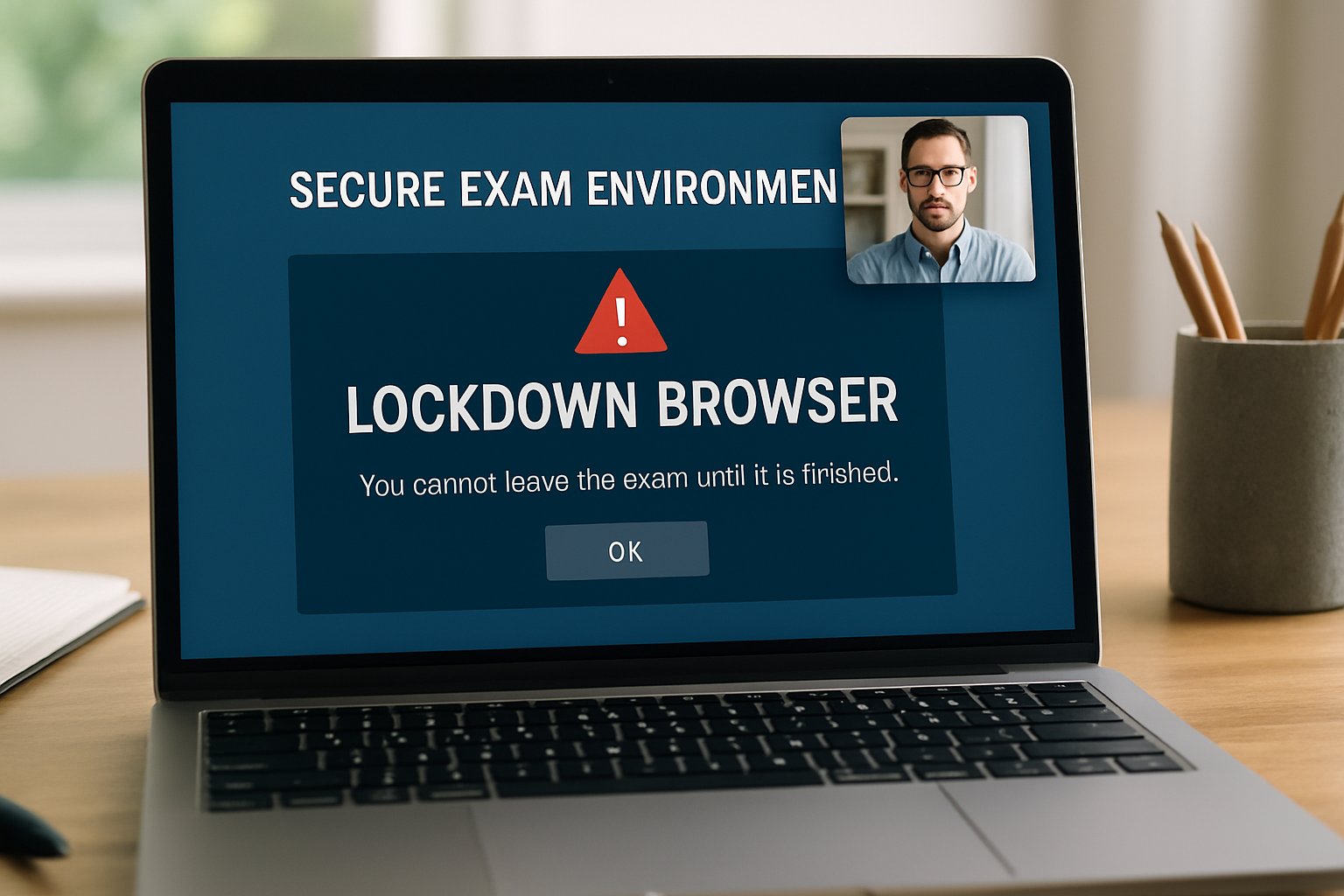
Secure lockdown browser with proctor for test supervising online assessment.
Lockdown browsers let a proctor for test monitor examinees to protect exam security.

Key takeaway: restricting the local environment creates powerful first-line defense. Next, we explore the wider security stack.

Proctor For Test Advantages

Institutions choose a proctor for test solution primarily for scale and audit trails. Additionally, automation frees staff from manual invigilation. Many platforms integrate directly with Canvas, Moodle, or Blackboard, allowing one-click setup. Furthermore, identity checks, recording, and time-stamped flags simplify post-exam investigations.

  • Global online proctoring market expected to top US $2 billion by 2030.
  • Studies report single-digit cheating rates when lockdown and AI combine.
  • Support logs show 10-20% of tickets relate to compatibility issues.

Summary: advantages extend beyond mere deterrence; they also provide defensible evidence. We now turn to technical foundations.

Core Browser Security Mechanics

Once launched, the client forces full-screen mode and disables task switching. Moreover, it blocks copy-paste, printing, and screen capture. Proprietary checks detect virtual machines, remote-desktop tools, or extra displays. In contrast, ordinary browsers expose many escape routes.

The open-source Safe Exam Browser uses signed configuration files to set similar rules. Meanwhile, vendors continually update detection modules to patch known bypasses. That agile cycle keeps browser security ahead of popular cheat forums.

Takeaway: strong OS hooks plus frequent updates sustain the lock. Still, surveillance layers add another shield.

AI Flagging Workflow Explained

Many providers pair lockdown software with automated webcam analysis. The system records video, audio, and sometimes the screen. Algorithms subsequently tag events such as lost face, suspicious gaze, or extra voices. Therefore, instructors can review concise highlight reels rather than full sessions.

However, false positives remain a concern. Consequently, human review and appeal channels are essential. Recent Ontario privacy findings also stress explicit consent for biometric processing.

Key lesson: AI triage accelerates reviews, yet human judgment must confirm outcomes. Legal frameworks reinforce that balance.

Regulatory And Legal Landscape

Privacy regulators increasingly examine proctoring contracts. For example, the Ontario IPC criticized one university for inadequate notice about biometric uses. Additionally, Illinois’ BIPA prompted a settlement against Respondus regarding data retention.

Institutions should run data-protection impact assessments, define retention limits, and ensure vendor access aligns with purpose. Moreover, they must support students needing accommodations because some assistive tools conflict with lockdown modes.

Summary: compliance work must accompany technical deployment. Let’s assess real-world effectiveness.

Effectiveness And Key Limitations

Evidence shows lockdown browsers plus AI monitoring cut obvious digital cheating. Nevertheless, contract cheating rings offering proxy takers still bypass controls. Likewise, a second phone placed off-camera evades detection. Furthermore, network dropouts can freeze the session, creating stress.

Therefore, combine design tactics—randomized questions, shorter windows, and plagiarism checks—with proctoring. Meanwhile, honest communication reduces student anxiety and boosts acceptance.

Takeaway: layered security outperforms single measures. Implementation details decide final success.

Operational Best Practices

1. Pilot with low-stakes quizzes before high-stakes launches.
2. Provide clear privacy disclosures and support channels.
3. Maintain backup login paths for connectivity failures.
4. Train staff to audit AI flags rapidly.

Now, we look ahead to future needs.

Future Proofing Exam Security

Threat landscapes evolve quickly. Consequently, vendors now test selective app-share modes for spreadsheets or coding IDEs. Additionally, lightweight screen-only recording offers privacy-sensitive alternatives. Open standards may soon enable third-party audits of detection algorithms, boosting trust.

Furthermore, rising hybrid classrooms demand flexible licensing models. A robust proctor for test system must integrate mobile identity verification, adaptive analytics, and resilient cloud scaling. Meanwhile, IT teams should monitor emerging guidelines around browser security and biometric data.

Key insight: future-proofing requires continual vendor evaluation and governance reviews. Strategic partnerships deliver that agility.

Conclusion

Lockdown browsers restrict local environments, while AI flagging adds audit depth. Moreover, strong policies guard privacy and accessibility. Institutions that layer multiple controls achieve the best defense. Still, vigilant updates and responsive support remain mandatory.

Why Proctor365? Proctor365 delivers an AI-powered proctor for test platform with industry-leading identity verification, scalable monitoring, and certified browser security. Trusted by global exam bodies, our cloud engine adapts to diverse assessment formats. Therefore, you secure integrity without sacrificing candidate experience. Explore Proctor365 today at Proctor365.ai and elevate your next exam session.

Frequently Asked Questions

  1. How do lockdown browsers enhance exam security?
    Lockdown browsers secure exam environments by enforcing full-screen mode, disabling task switching, and blocking copy-paste functions. This controlled setting minimizes cheating and upholds exam integrity and fairness.
  2. What role does AI proctoring play in online exam monitoring?
    AI proctoring automates exam surveillance by analyzing webcam feeds and audio in real-time. It flags suspicious activities, such as missing faces or extra voices, enabling swift review and enhanced test integrity.
  3. How does Proctor365 ensure exam integrity?
    Proctor365 combines AI-powered monitoring with robust identity verification and secure browser security. Its scalable, cloud-based system deters fraud, streamlines exam processes, and provides reliable audit trails for comprehensive security.
  4. How can institutions address legal and privacy concerns in online exam proctoring?
    Institutions can meet legal requirements using Proctor365’s transparent data handling and clear consent for biometric processing. Regular audits, privacy disclosures, and adaptive policies ensure compliance and protect student rights.

Minimum Internet Speed When Choosing a Proctor for Test Success

Nothing ruins a high-stakes online exam faster than a lagging webcam or sudden disconnect. Before you hire a proctor for test delivery, you must confirm your connection can cope. Bandwidth issues, shaky Wi-Fi, and ignored tech requirements cause thousands of rescheduled assessments every month. This guide offers clear, vendor-verified speed benchmarks and practical fixes for universities, ed-tech platforms, and corporate trainers.

Follow the recommendations below to avoid last-minute stress and preserve academic integrity. We close each section with concise takeaways to streamline decision making.

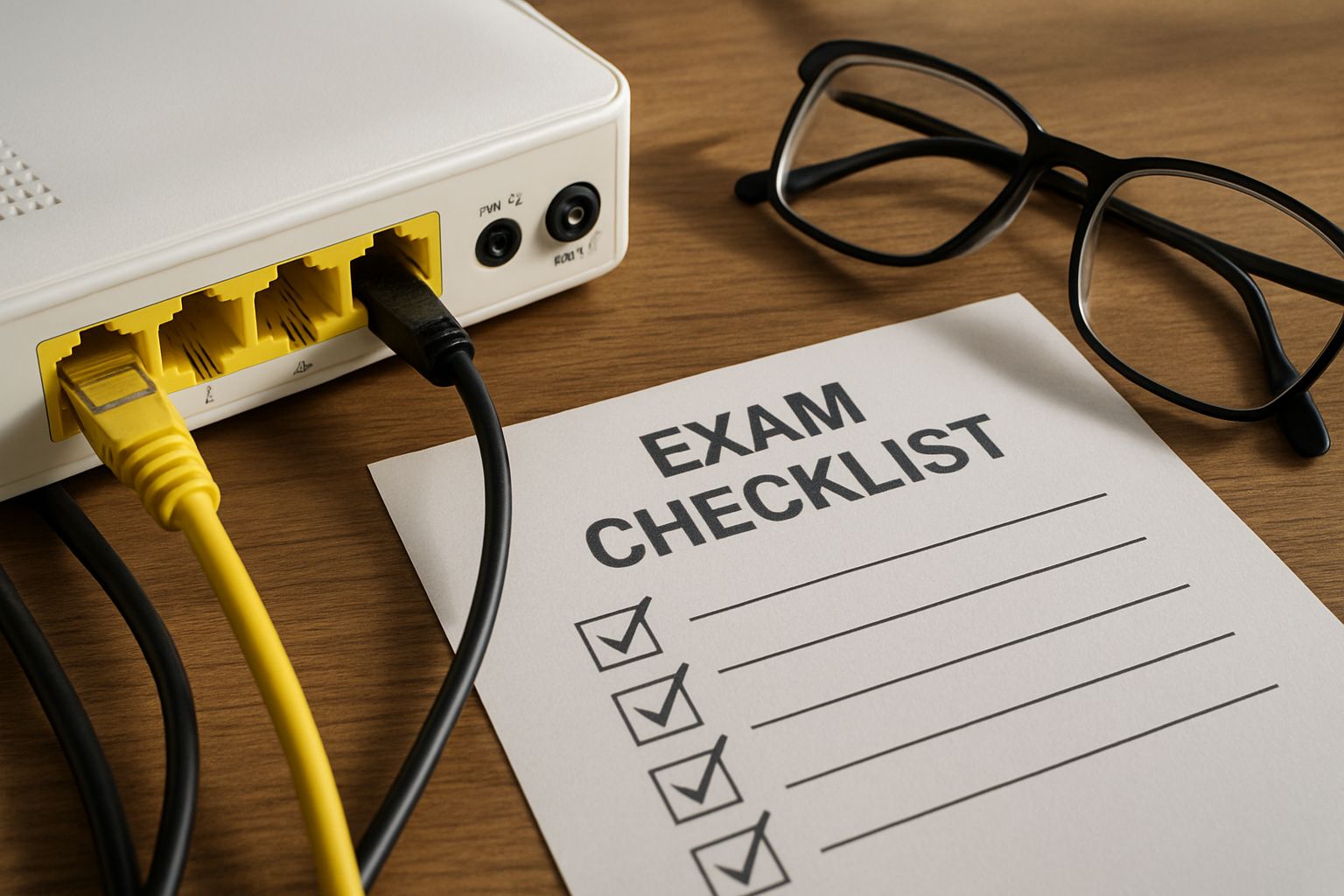
Reliable internet equipment for proctor for test setup
Reliable equipment ensures success with any proctor for test.

Whether you oversee certification exams or campus quizzes, the stakes remain identical. Disconnections drain credibility, spark student anxiety, and undermine hard-won trust in online learning.

Choose Proctor For Test

Different proctoring models stream, record, or upload exam footage in real time. Each model demands its own bandwidth ceiling and device setup. When selecting any service, confirm the advertised tech requirements and the vendor’s system-check tool.

Live human monitoring, for example, continuously uploads webcam and screen data to the cloud. Recorded solutions often buffer locally, then upload afterward, tolerating slower upstream speeds.

Match the product type with your learners’ connectivity realities to prevent unfair disruptions. Next, we explore why upstream speed dominates the conversation.

Why Upload Speed Matters

Streaming video rides on WebRTC, the same engine that powers Zoom and Teams. That protocol needs stable, sustained upload to maintain 480p to 720p image quality. If bandwidth dips, frames drop, audio desyncs, and support staff may terminate the session.

Most vendors set 1.5-3 Mbps upload as a floor because this covers webcam plus screen share. However, Pearson’s OnVUE pushes requirements to 2–3 Mbps upstream to safeguard longer, graphics-heavy exams. Selecting a proctor for test without checking upload is risky.

In short, upload governs continuity, while download rarely limits proctoring. Now compare vendor baselines.

Vendor Baseline Speeds Compared

Official pages show diverse numbers. Honorlock asks only 0.75 Mbps upload, while OnVUE insists on 2-3 Mbps. Examity lists 2 Mbps minimum but prefers 10 Mbps for smooth video.

ProctorU now posts 3 Mbps in both directions for live workflows. Meanwhile, Proctorio’s secure-browser mode runs on less than 0.2 Mbps because it uploads later. These gaps explain why no single speed standard exists. Always read the small print before contracting a proctor for test delivery at scale.

Vendor charts highlight only baseline numbers, not peak congestion tolerances. Next, we outline safe cushions above those baselines.

Recommended Safe Bandwidth Levels

Across sources, a pragmatic floor sits at 3 Mbps upload and 5-10 Mbps download. That buffer handles HD webcam, screen share, and background packet loss.

Institutions working with rural candidates often provide on-campus rooms to guarantee connectivity. Consider offering loaner hotspots when wired access is impossible, although vendors discourage mobile data. Such safeguards reduce panic calls to the proctor for test support desk.

Planning above the minimum builds confidence and spares help-desk overtime. Next comes equity risk.

Digital Equity Exam Risks

Pew reports that millions still lack affordable broadband, especially in low-income or rural areas. Requiring 6 Mbps becomes exclusionary when families survive on capped mobile data. Connectivity stress compounds privacy and accessibility worries already surrounding online surveillance.

Institutions mitigate risk with alternative test centers or extended windows for slower users. However, any such plan must remain transparent and fair.

Digital equity is inseparable from technical readiness. Therefore, proactive checklists become essential.

Practical Exam Setup Checklist

Share the following steps with every candidate one week before the exam.

  • Run the vendor system check on the exact device.
  • Use wired Ethernet; sit near router if Wi-Fi is the only option.
  • Close cloud sync, streaming, and other bandwidth drains.
  • Coordinate household usage during the proctor for test window.
  • Document unresolved tech requirements early and request accommodations.

Following this checklist reduces last-minute chaos and ticket volume. The next section shifts focus to institutional policy levers.

Policy Tips For Institutions

Publish unified speed guidance that mirrors the strictest vendor on campus. Add that statement to syllabi, booking portals, and orientation slides. Provide fallback testing labs for learners who fail connectivity checks.

Negotiate service-level agreements that define reconnection timeouts and reschedule fees. That clause protects both budgets and student success. Finally, audit recorded sessions with your proctor for test partner to measure disruption rates.

Clear policy plus robust infrastructure equals resilient assessment.

Conclusion And Next Steps

Stable bandwidth underpins credible online exams. Aim for at least 3 Mbps upload and 5-10 Mbps download whenever possible. Run system checks, respect tech requirements, and build equity plans for low-bandwidth learners. Select a proctor for test partner that matches those priorities. These steps cut cancellations and preserve academic honesty. Consistently measuring performance will reveal areas for further improvement.

Why Proctor365? Proctor365 delivers AI-powered monitoring, biometric identity checks, and elastic cloud scaling trusted by global exam bodies. Our platform spots anomalies in real time, supports diverse tech requirements, and protects data privacy. Schedule a demo today and see how Proctor365 secures every session. Visit Proctor365.ai to strengthen your next rollout.

Frequently Asked Questions

  1. What are the minimum bandwidth requirements for online proctored exams?
    Ensure at least 3 Mbps upload and 5–10 Mbps download speeds for smooth video streaming. This supports AI proctoring and fraud prevention, reducing disruptions and maintaining exam integrity.
  2. Why does upload speed matter more than download speed during online exams?
    Upload speed is vital for continuous webcam and screen data streaming. A reliable upload prevents frame drops and supports clear biometric identity verification during AI proctoring sessions.
  3. How does Proctor365 enhance exam security and integrity?
    Proctor365 leverages AI-powered monitoring, biometric identity checks, and elastic cloud scaling. These features collectively detect anomalies in real time, ensuring robust fraud prevention and exam credibility.
  4. What steps can institutions take to ensure a smooth online exam experience?
    Institutions should run system checks, verify tech requirements, and favor wired connections. Strategic measures like fallback labs support consistent AI proctoring and help uphold academic integrity.

Why Every Certification Needs a Proctor for Test Security

Hiring managers trust certifications only when scores reflect real competence. Therefore, every serious program appoints a proctor for test delivery and oversight. Without rigorous monitoring, cheating, impersonation, and item theft erode credential value swiftly. Moreover, regulators now scrutinize security claims, making transparent proctoring frameworks mission-critical for universities and vendors.

Why Proctor For Test

Programs select a proctor for test to confirm identity, deter misconduct, and guard item banks. Additionally, human or AI oversight sustains psychometric validity, ensuring that passing scores equal proven skill. Consequently, candidates and employers gain confidence in awarded digital credentials.

Proctor for test verifying identification before exam entry.
Proctor verifies IDs for secure exam access.

Effective proctoring also protects public safety in nursing, finance, and engineering. Furthermore, credential owners avoid legal exposure by demonstrating due diligence.

Key takeaway: Secure supervision keeps exams fair and defensible. Next, we explore why integrity underpins credential value.

Credential Value Depends Integrity

Certification brands rise or fall on perceived integrity. Therefore, compromised exams devalue related digital credentials overnight. Employers, regulators, and peers may reject uncertain scores, harming entire industries.

ETS notes that identity fraud and content theft directly threaten score validity. Likewise, Pearson VUE stresses security in every delivery stage.

Summary: Integrity sustains market trust and candidate motivation. Let us now examine the threats fueling that risk.

Core Threats Facing Exams

Credential owners confront a blend of technical and human threats. However, structured proctoring mitigates many of them.

  • Impersonation and proxy testers
  • Unauthorized materials and devices
  • Collusion through messaging apps
  • Item harvesting for resale
  • Score tampering or leaks

Moreover, remote delivery increases exposure to weak home networks and privacy loopholes. Consequently, robust monitoring frameworks remain essential.

Takeaway: Diverse threats demand layered defenses. Next, we detail those protective layers.

Proctoring Methods Explained Clearly

Credential owners deploy three dominant models. Live proctoring pairs candidates with trained staff in real time. Recorded review captures sessions and flags anomalies later. Automated AI monitoring analyzes video, screen data, and audio, escalating suspicious events.

Additionally, multi-factor identity checks—photo ID, facial match, and liveness prompts—stop proxy testers. Secure browsers lock machines, while environment scans reveal hidden devices.

Key insight: Combining people and algorithms balances scale with judgment. The following section shows market momentum behind these tools.

Market Data And Trends

Research firms size the online proctoring market between USD 1-9 billion for 2024. Market Research Future cites USD 2.1 billion, whereas other analysts project higher totals. Moreover, forecasts suggest double-digit compound growth through 2030.

  • Pearson VUE and ETS deliver millions of secure exams annually.
  • A vendor study flagged cheating in roughly 6.6 percent of monitored sessions.
  • Remote options increased candidate reach by double digits after 2020.

Consequently, investment continues despite regulatory pushback. Summary: Demand grows alongside scrutiny. We now assess that tension.

Balancing Risks And Rights

Privacy advocates warn that webcam scans and biometric storage intrude on civil liberties. In contrast, credential owners argue that without a proctor for test, cheating would surge.

Additionally, algorithmic bias can mis-flag darker skin tones or neurodiverse behaviors. Therefore, responsible-AI commitments, data minimization, and humane appeals processes are expanding.

Takeaway: Security must coexist with fairness and transparency. Finally, we look ahead.

Future Roadmap For Certifications

Hybrid delivery will dominate, letting candidates choose centers or remote oversight. Moreover, assessment redesign—projects, oral defenses, open-book tasks—will complement monitored exams.

Credential platforms will embed verifiable digital credentials in blockchain-backed wallets, linking scores to identity proofs captured by the proctor for test. Consequently, employers gain instant trust.

Summary: Innovation will pair stronger security with better candidate experience. Let us conclude with practical next steps.

Conclusion

Professional programs rely on proctoring to keep exams honest, protect digital credentials, and satisfy regulators. Responsible frameworks deter impersonation, safeguard item banks, and assure hiring managers that skills are real.

Why Proctor365? The platform applies AI to assign the ideal proctor for test, verifies identity within seconds, and scales monitoring to thousands of concurrent sessions. Trusted by global exam bodies, Proctor365 delivers unmatched integrity for every credential. Therefore, secure your next assessment with Proctor365’s advanced solution.

Book a demo today and elevate exam trust.

Frequently Asked Questions

  1. How does Proctor365 maintain exam integrity?
    Proctor365 combines AI monitoring with human oversight, multi-factor identity verification, and secure browser controls to prevent cheating and impersonation. This robust system safeguards exam integrity and digital credentials effectively.
  2. What role does AI play in Proctor365’s proctoring?
    Proctor365 leverages AI to continuously monitor video feeds, screen data, and audio cues during exams. This intelligent proctoring system detects anomalies in real-time, ensuring efficient fraud prevention and supplementing human oversight.
  3. How do robust identity verification measures contribute to exam security?
    Multi-factor identity checks, including photo ID and facial recognition, confirm candidate authenticity. These measures deter impersonation and maintain exam fairness, ensuring reliable credentialing and public trust in Proctor365.
  4. What are the benefits of remote proctoring with Proctor365?
    Remote proctoring by Proctor365 offers flexible testing environments, instant ID verification, and scalable monitoring. It reduces logistical challenges while maintaining exam integrity, making assessments accessible and secure worldwide.