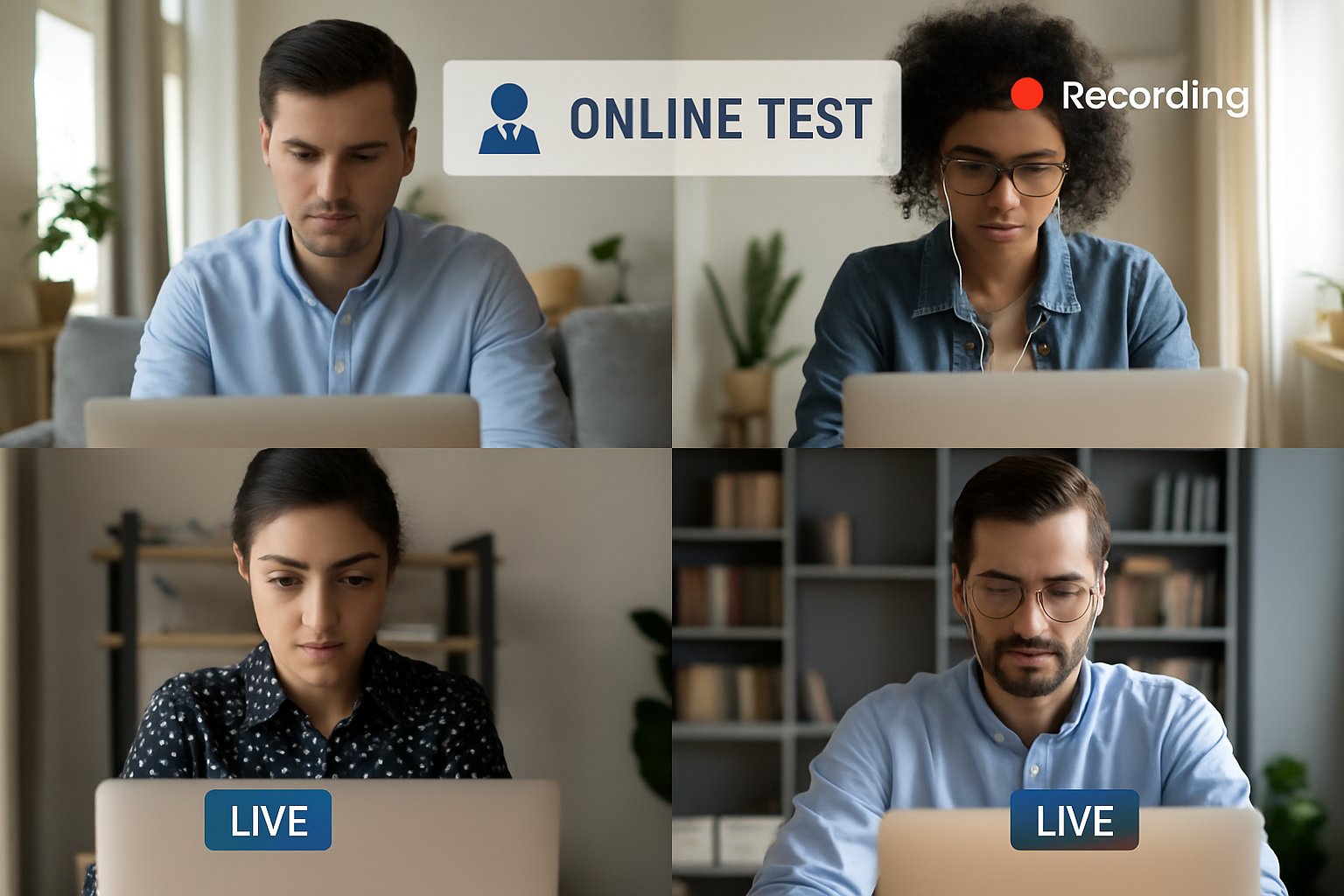
Is Proctor for Test Screen Recording Truly Safe?

Universities now face a tough puzzle. How can they protect exam integrity without violating privacy? Many rely on a proctor for test sessions that capture webcam and screen recording data.

However, student protests and recent court cases signal rising resistance. Consequently, decision-makers must weigh benefits against measurable risks before expanding surveillance.
Screen recording security with proctor for test software at home.
Screen recording is central to how proctor for test solutions maintain exam integrity.

This article unpacks current research, legal trends, and proven controls. After reading, you will decide whether continuous screen recording still makes sense—or if safer options exist.

Why Institutions Record Screens

Institutions embrace recording because it scales. One reviewer can audit dozens of sessions later. Moreover, recordings create an objective audit trail that supports misconduct hearings.

Market analysts place remote proctoring revenue between US$700 million and US$1 billion for 2024. That demand fuels feature wars among vendors.

Key claimed benefits include:

  • Deterrence: Visibility reduces opportunistic cheating by 10-30% in some studies.
  • Evidence: Time-stamped clips simplify academic-integrity panels.
  • Cost control: Asynchronous review lowers human invigilator hours.

Nevertheless, experts warn that vendor detection accuracy often stays below marketing claims.

Summary: Recording offers scale and documentation yet overstates detection precision. Next, we examine growing legal exposure.

Emerging Privacy Legal Risks

Regulators now scrutinize every proctor for test deployment. In 2022, a federal judge ruled room scans unconstitutional at Cleveland State. Consequently, universities revised monitoring policies overnight.

Meanwhile, privacy groups such as EPIC and ACLU file ongoing complaints. They argue that full screen recording captures sensitive, unrelated data.

Market Growth Data Points

Despite criticism, double-digit CAGR projections continue through 2030. Therefore, more vendors enter the field, but not all meet SOC 2 or ISO 27001 baselines.

Summary: Legal pressure rises even as demand grows. Institutions must now confront technical threat surfaces.

Key Technical Threat Surfaces

Browser extensions often request “read all sites” permissions. Attackers can exploit that scope long after exams end. Additionally, recordings may store unencrypted on third-party clouds.

False-positive flags create fairness issues. Eye-tracking algorithms mislabel lighting changes as cheating. Students with disabilities suffer disproportionate stress.

Recent Student Sentiment Trends

2023 surveys show only 28% of students feel comfortable with constant screen recording. Moreover, marginalized groups report higher anxiety and drop-out intent.

Summary: The attack surface spans software, storage, and biased AI. Now let’s review defenses that actually work.

Best Proven Risk Mitigations

First, adopt data-minimization contracts. Collect webcam plus periodic screenshots instead of full video when possible. Furthermore, specify 30-day retention with verified deletion logs.

Second, demand AES-256 at-rest encryption, TLS 1.3 in transit, and role-based access with MFA. Require vendor SOC 2 Type II certificates and yearly pen tests.

Third, avoid over-privileged extensions. Many institutions now select lightweight web clients that sandbox capture modules.

Finally, redesign assessments. Open-book formats, randomized pools, and oral defenses reduce reliance on surveillance.

Summary: Technical and contractual controls limit damage while new pedagogy reduces need. The next step is choosing the right partner.

Choosing Proctor for Test

When evaluating any proctor for test vendor, institutions should request a detailed data-processing agreement. Additionally, they should verify deletion timelines, encryption specifications, and subcontractor lists.

Ask for:

  1. Retention period and deletion verification reports.
  2. Evidence of external security audits and SOC 2.
  3. Access-control policy and audit-log samples.
  4. Explicit prohibition on model training with exam footage.

Moreover, pilot programs with diverse student groups reveal hidden accessibility issues before full rollout.

Summary: A structured checklist prevents surprises and builds trust early. Consequently, leadership can balance integrity with privacy.

Overall, institutions need solutions that respect students while safeguarding standards. The next section explains how.

Balancing Integrity And Trust

Effective oversight should feel invisible yet fair. Therefore, many organizations now blend lighter surveillance with honor codes and randomized questioning.

Academic literature concludes that mixed approaches curb cheating comparably to heavy monitoring. However, they dramatically lower privacy complaints.

Summary: Balanced models protect both reputation and student wellbeing. We close with actionable recommendations.

Transition: Let us recap and highlight Proctor365’s role.

Conclusion

Screen recording can bolster evidence, yet it magnifies security, legal, and equity risks. Institutions that deploy a proctor for test must enforce strict collection limits, robust encryption, and short retention. Furthermore, they should pair technical safeguards with thoughtful assessment design to maintain trust.

Why Proctor365? Proctor365 combines AI-powered proctor for test monitoring, advanced identity verification, and scalable cloud analytics. Our platform delivers real-time alerts while respecting data-minimization principles. Consequently, global exam bodies trust us for secure, fair, and efficient testing. Elevate your exam integrity today by visiting Proctor365.ai.

Frequently Asked Questions

  1. How does continuous screen recording help maintain exam integrity?
    Screen recording offers objective, time-stamped evidence to deter cheating and support misconduct reviews. Modern systems like Proctor365 combine AI proctoring with data-minimization to boost exam integrity while protecting privacy.
  2. What legal risks are associated with full session monitoring?
    Full session monitoring may capture sensitive data, inviting privacy law challenges. Recent legal cases and protests highlight these risks, urging institutions to adopt secure, minimal data collection practices like those implemented by Proctor365.
  3. How does Proctor365 ensure secure and fair online testing?
    Proctor365 uses AI-powered proctoring, advanced identity verification, and real-time alerts. With robust encryption, strict data retention, and fraud prevention measures, the platform delivers secure exams while respecting data minimization principles.
  4. How can institutions balance exam security with student privacy concerns?
    Institutions can balance security and privacy by using lighter surveillance methods, data-minimization contracts, and robust encryption. Combined with AI proctoring and diverse assessment designs, solutions like Proctor365 ensure fairness and reduced privacy risks.
Why a Proctor for Test Benefits International Students

Choosing the right proctor for test sessions now shapes international study journeys. Remote supervision is now the default for many exams. International students benefit most when institutions embrace secure, flexible online invigilation. However, schools must balance these gains against equity, privacy, and mental-health concerns. This article unpacks concrete advantages, fresh market data, and practical safeguards for global testing leaders. You will learn why universities now trust digital proctoring to welcome learners in 190 countries. Moreover, we spotlight case studies such as Arden University and the Duolingo English Test. Together, these insights guide policy teams, ed-tech platforms, and corporate trainers toward resilient exam delivery. Read on to understand how online oversight dismantles travel barriers and accelerates admission timelines. The discussion starts with access, the cornerstone of every international candidate’s dream.

Proctor For Test Access

Travel to authorized centers remains expensive, risky, and sometimes impossible. A proctor for test session delivered online eliminates that barrier instantly. Duolingo English Test, TOEFL Home Edition, and Pearson OnVUE report rising sign-ups from underserved regions. Arden University saw students from 32 countries join its April 2024 remote rollout, avoiding new brick-and-mortar sites.

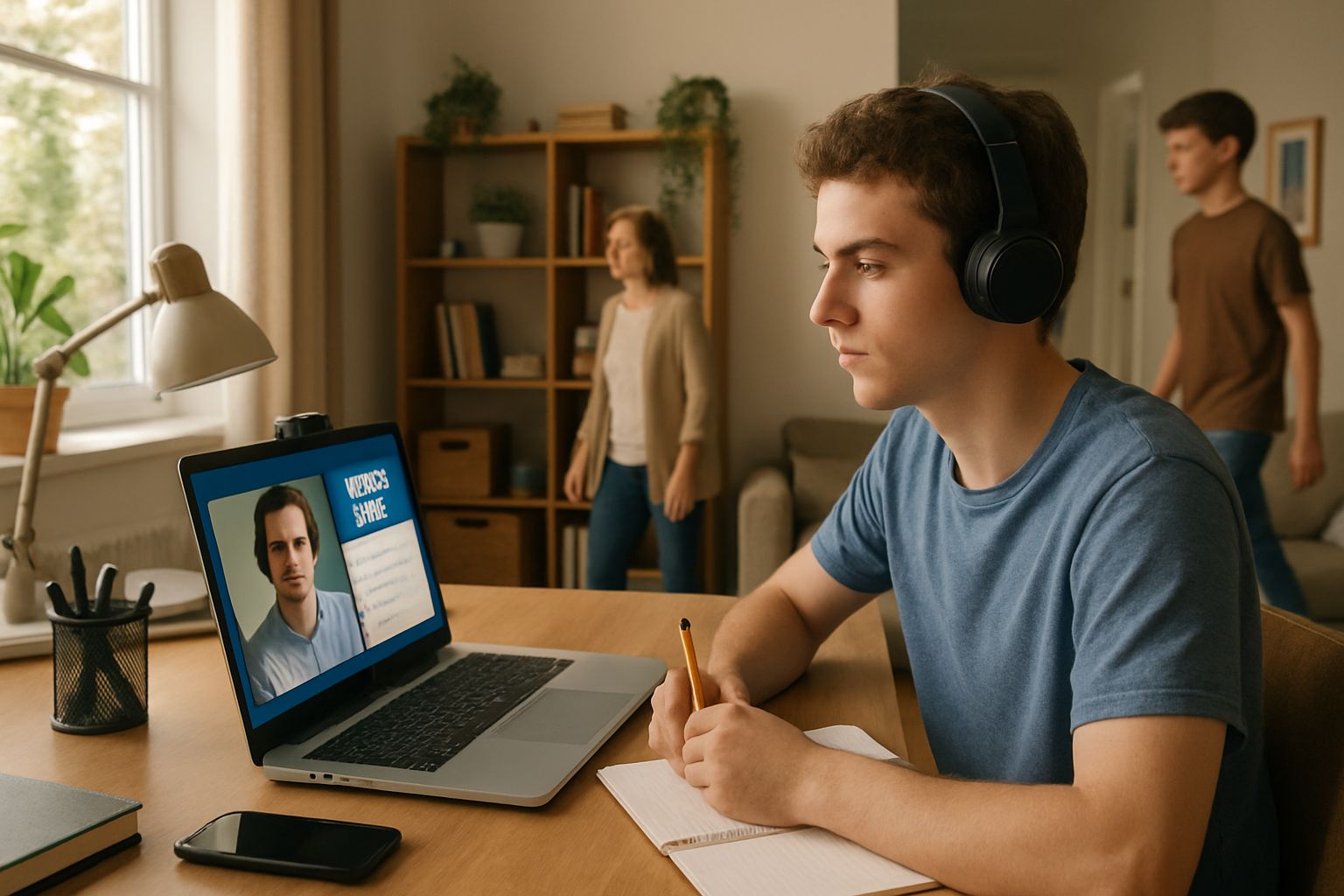
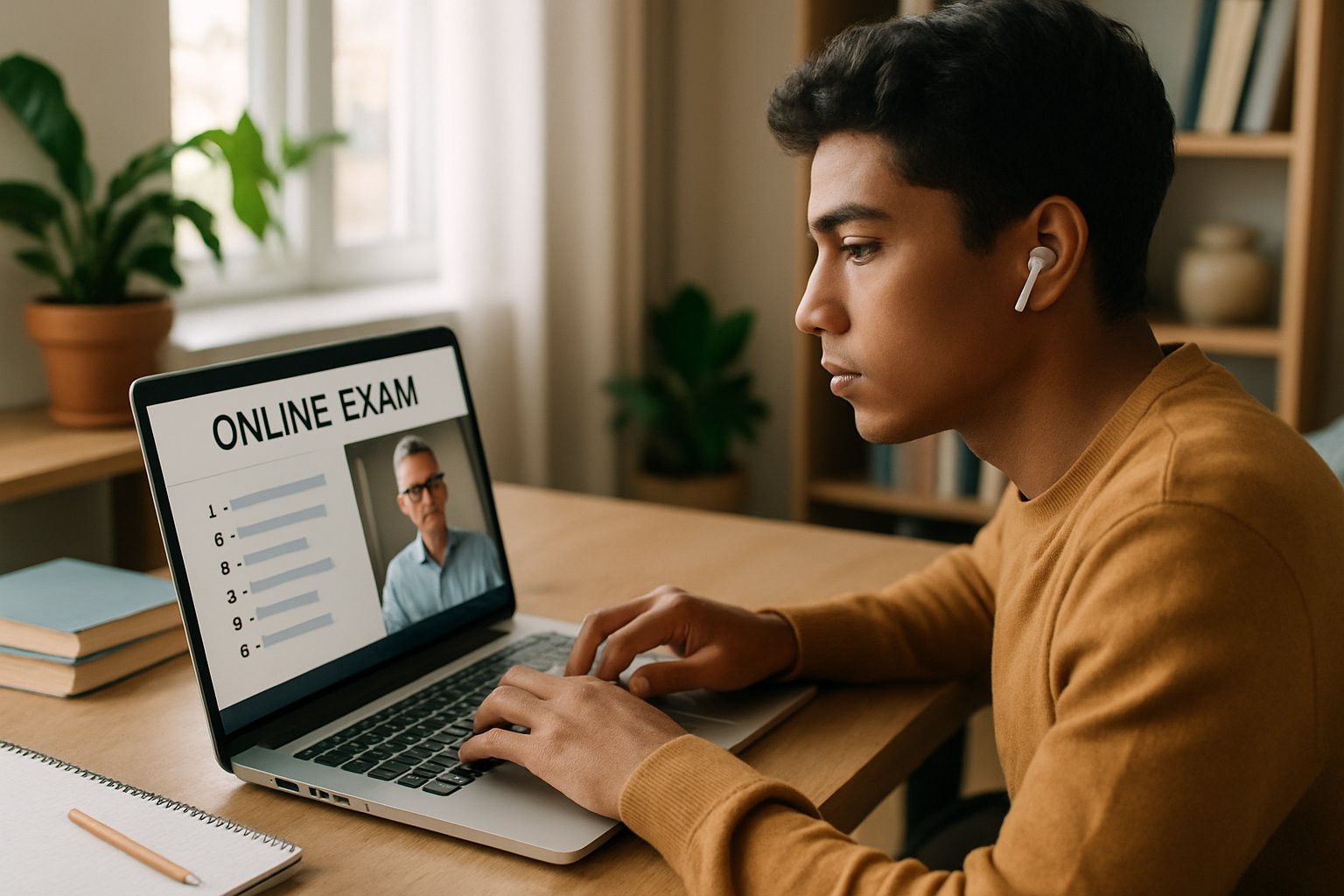
International student using laptop during online exam with remote proctor for test.
A remote proctor for test ensures secure and flexible online exam conditions.

Consequently, institutions widen applicant pools and promote equity. These access gains also future-proof programs against political unrest or sudden travel bans. In short, location stops limiting opportunity when exams move online. Access drives enrollment growth and improves fairness. Next, flexible scheduling multiplies that impact.

Smart Scheduling Across Timezones

International candidates live up to 12 hours away from legacy exam slots. Live or automated tools allow 24/7 start times under one centralized policy. Honorlock marketing shows students launching English proofs within five minutes of purchase. Moreover, recorded-review models capture attempts even if networks flicker, preserving fairness in rural areas.

Universities report happier learners and calmer proctors when exams fit local daylight hours. Therefore, time-zone flexibility now acts as a competitive differentiator during recruitment. Flexible timing removes fatigue and missed deadlines. A dependable proctor for test tool magnifies these results across continents.

Cutting Overall Testing Costs

Flights, visas, and hotel nights once added hundreds of dollars per sitting. Online delivery removes almost all ancillary costs and often lowers base fees. Duolingo charges under USD 60, compared to USD 200-plus for some center exams. Lower cost widens pipelines from lower-income regions, improving socioeconomic diversity.

Furthermore, candidates save vacation days and avoid lost wages. Institutions also cut invigilator payroll and room rental charges. Reduced cost supports sustainable, scalable growth. Faster processes amplify these savings, as we explore next.

Speeding Critical Admissions Decisions

Digital exams often return verified scores within 48 to 72 hours. Consequently, admissions teams release offers sooner and meet visa deadlines. Jason Chambers from Cincinnati notes smoother document collection when results arrive early. Meanwhile, applicants can book flights and housing without last-minute panic.

Shorter cycles also reduce administrative email traffic and call-center queues. Therefore, staff redirect effort toward advising rather than paperwork. Speed elevates candidate experience and operational efficiency. Yet, integrity remains vital, leading to necessary safeguards.

Essential Safeguards And Concerns

Equity challenges still exist. Low bandwidth, cramped housing, or disabilities can trigger false flags. Academic studies link heightened anxiety to strict gaze-tracking algorithms. Nevertheless, vendors now offer dual-camera modes, practice checks, and human review escalation.

  • 24/7 proctor for test availability supports local schedules.
  • Home delivery removes visa hurdles.
  • Lower fees foster inclusion.
  • Recorded evidence protects integrity.

These benefits soar when risks stay controlled. The next subsections explain market evidence and mitigation tactics.

Robust Market Growth Signals

Market analysts estimate remote proctoring hit USD 1.1 billion in 2024 with double-digit CAGR. Moreover, over half of North American universities report using online invigilation at least sometimes. Acceptance of Duolingo English Test spans thousands of programs, validating demand. Vendors now bundle AI and human proctor for test workflows to serve 190 nations. Growth momentum looks sustainable. Institutions now ask how, not whether, to implement.

Practical Mitigation Steps Institutions

First, offer both in-person and online options where regulations permit. Second, run mandatory system checks and low-bandwidth modes. Third, maintain human review, accessible appeals, and disability accommodations. Fourth, publish transparent data-retention and jurisdiction policies. Finally, track outcomes by region to expose unintended bias. Proactive policies convert risk into trust. With safeguards defined, selecting the right vendor is next.

Summary: Online proctoring delivers unmatched access, flexibility, savings, and speed for global testing programs. Careful safeguards ensure these gains reach every learner.

Conclusion And Next Steps

International candidates thrive when institutions pair flexible policies with a reliable proctor for test ecosystem. Access improves, costs drop, and admission cycles accelerate, all while integrity stays intact. Market data and case studies confirm sustained growth for global testing solutions.

Why Proctor365? Proctor365 combines AI-powered monitoring, advanced identity verification, and scalable dashboards into one seamless platform. The service acts as your trusted proctor for test partner and is already trusted by leading global exam bodies. Consequently, organizations secure exams anywhere, anytime, without sacrificing user experience. Elevate your exam integrity today by visiting Proctor365.ai.

Frequently Asked Questions

  1. What are the key benefits of online proctoring for global exams?
    Online proctoring enhances exam access, reduces costs, and speeds up admission decisions. It removes geographic barriers and supports flexible scheduling, ensuring both fairness and integrity for international candidates.
  2. How does Proctor365 ensure robust exam integrity in digital proctoring?
    Proctor365 uses AI-powered monitoring, advanced identity verification, and dual-camera setups to prevent fraud. The platform integrates human review to balance strict proctoring protocols with a positive user experience.
  3. How does flexible scheduling improve the online testing experience?
    Flexible scheduling accommodates candidates across multiple time zones, allowing exams to start at convenient times. This feature reduces fatigue and ensures that digital proctoring remains accessible and effective for all students.

How Online Test Monitoring Strengthens Higher-Ed Integrity

Exams drive credibility in higher education. However, digital delivery has opened fresh doors for misconduct. As universities expand online programs, online test monitoring emerges as a frontline defense.

Recent studies show cheating drops when webcams supervise assessments. Meanwhile, market analysts expect the global proctoring sector to top two billion dollars within three years. Consequently, decision-makers must weigh benefits, legal duties, and student wellbeing.

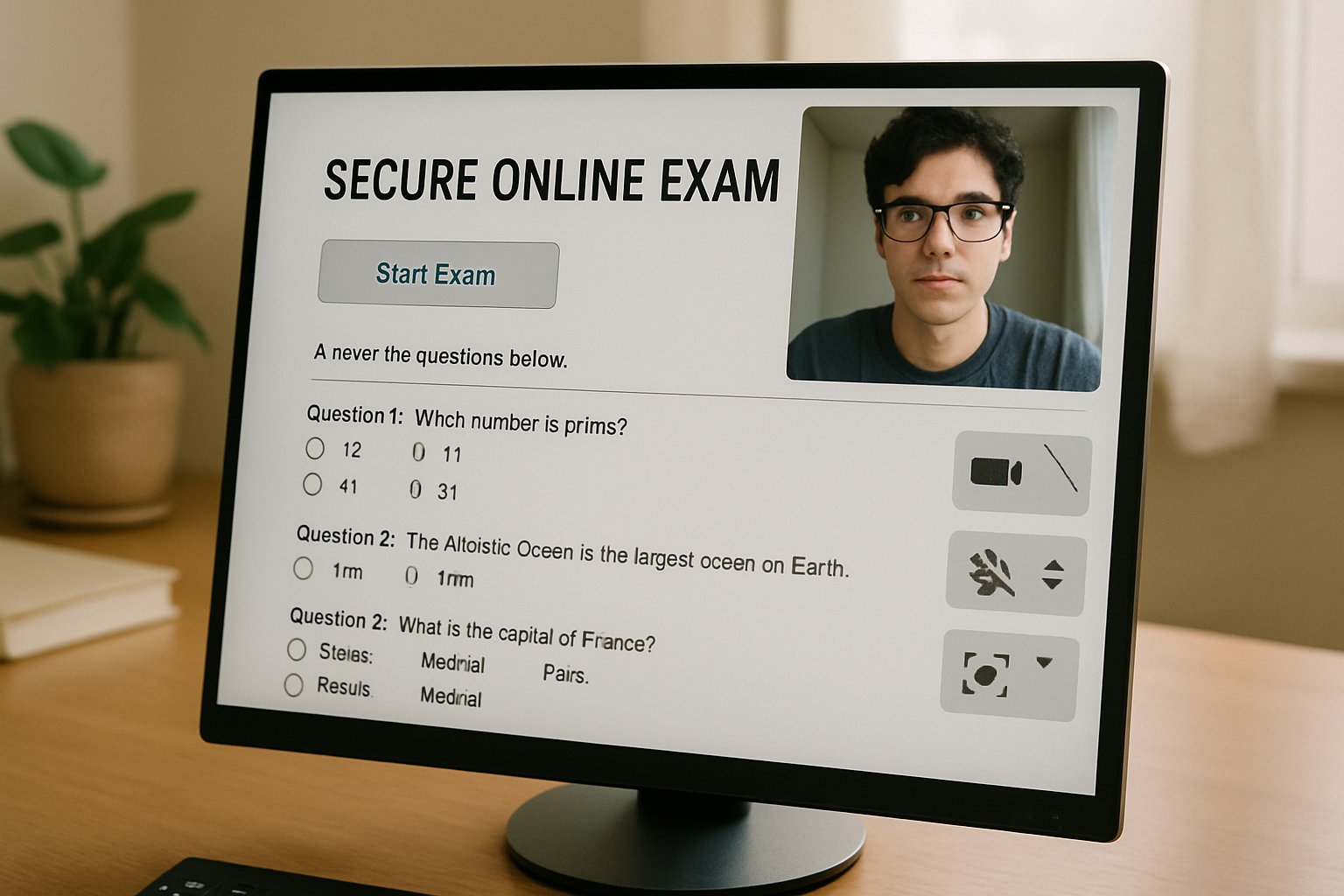
secure online test monitoring interface visible on a student computer
Secure online test monitoring tools help authenticate student identities and deter cheating.

Academic Integrity Pressures Rise

Faculty have reported more contract-cheating cases during untimed take-home exams. Moreover, employer surveys question the reliability of unverified scores. Therefore, many programs now require at least one remotely proctored exam in every core module.

Regulators also warn that unchecked misconduct could erode public trust. In contrast, civil-liberties groups challenge invasive surveillance and room scans. Nevertheless, campuses still search for balanced oversight that deters dishonesty without harming equity.

In summary, integrity threats and compliance mandates push institutions toward stronger safeguards. The next section reviews market momentum and data supporting that shift.

Global Market Growth Snapshot

Vendor innovation has accelerated since 2020. Additionally, hybrid AI-plus-human models cut costs while raising detection accuracy. Consequently, adoption widens across community colleges and international universities.

  • Estimated market size: USD 0.8–2.4 billion (2024 baseline).
  • Forecast CAGR: 15–20% through 2029, according to multiple reports.
  • Institutional adoption: 40–70% in North America and Europe already use at least one solution.
  • Randomized trials: webcam supervision lowered average scores, signalling reduced cheating rates.

Those figures underscore strong demand for scalable oversight. Next, we explore concrete advantages institutions should expect.

Online Test Monitoring Benefits

Deterrence And Credential Protection

Controlled studies confirm that online test monitoring deters academic dishonesty. Moreover, recordings create an audit trail that supports fair disciplinary processes. As a result, credentials maintain employer and accreditor confidence.

Scalability And Cost Control

AI flagging lets small review teams oversee thousands of sessions. Furthermore, students can complete a remotely proctored exam from any location, eliminating travel and venue fees. Institutions therefore reallocate budgets toward teaching rather than invigilation.

To conclude, well-implemented monitoring boosts integrity and access simultaneously. However, leaders must also manage notable risks, discussed next.

Online Proctoring Risk Factors

Privacy remains the loudest criticism surrounding online test monitoring. For instance, the federal room-scan ruling labeled the practice an unreasonable search. Additionally, algorithmic bias can flag darker-skinned students more often, demanding urgent vendor transparency.

Mental-health surveys reveal over 70% of respondents feel heightened anxiety during a remotely proctored exam. Bandwidth gaps can also crash sessions and unfairly penalize rural learners. Therefore, campuses need safeguards, governance, and rapid appeals.

Overall, risk awareness must match technological enthusiasm. The following section offers actionable mitigation steps.

Implementation Best Practice Tips

Administrators should prioritize pedagogy before software. Moreover, policy clarity will reduce confusion and litigation.

  1. Map assessment goals; only deploy online test monitoring where outcomes demand closed-book control.
  2. Adopt hybrid reviews; always let humans confirm AI flags before sanctions.
  3. Publish concise privacy notices and minimise data retention periods.
  4. Provide accessibility accommodations and optional low-intrusion modes.
  5. Pilot with diverse cohorts, collect metrics, and iteratively refine settings.

Executed together, these steps cut false positives and stress. Next, we consider the road ahead for responsible adoption.

Toward Balanced Future Approach

Market signals show monitoring will not disappear. However, institutions increasingly pair authentic assessments with selective online test monitoring to limit surveillance time. Meanwhile, vendors race to audit algorithms, reduce facial bias, and support low-bandwidth modes.

Policy experts urge transparent governance boards that include students. Consequently, trust can improve even when a remotely proctored exam remains necessary for licensure or accreditation.

In essence, balance hinges on ethics-by-design and continuous dialogue. We close with key takeaways and a proven partner solution.


Conclusion

Online test monitoring offers measurable deterrence, scale, and documentation when integrated thoughtfully. Yet privacy, equity, and wellbeing challenges demand ethical frameworks and hybrid human oversight.

Why Proctor365? The AI-powered platform pairs advanced identity verification with adaptive, scalable exam monitoring trusted by global exam bodies. Its smart behavior analytics flag anomalies in real time while human auditors provide final judgment. Seamless LMS integration means rapid deployment and low faculty overhead. Institutions can scale from small cohorts to nationwide certification campaigns without infrastructure stress. Therefore, universities gain reliable integrity without excessive intrusion. Explore how online test monitoring through Proctor365 safeguards your programs today by visiting Proctor365.

Frequently Asked Questions

  1. How does online test monitoring improve exam integrity?
    Online test monitoring deters cheating by using webcam supervision and real-time behavior analytics. It creates audit trails and supports fair disciplinary processes, enhancing exam integrity and maintaining credibility in academic assessments.
  2. What benefits does combining AI proctoring with human oversight offer?
    Combining AI proctoring with human oversight enhances fraud prevention. AI detects suspicious activities instantly while human reviewers confirm flags, ensuring reliable decision-making and balance between strict integrity checks and fair student treatment.
  3. How does Proctor365 safeguard student privacy and reduce bias?
    Proctor365 ensures privacy with transparent identity verification and low-intrusion monitoring. Its adaptive AI minimizes algorithmic bias, and human auditors verify potential issues, balancing exam security with student equity and ethical oversight.
  4. How can institutions benefit from Proctor365’s scalable proctoring solutions?
    Proctor365 offers scalability with seamless LMS integration and cost-efficient monitoring. Its AI-powered alerts combined with human judgment reduce faculty overhead, making it ideal for both small cohorts and nationwide certification programs.

Online Test Monitoring: Technology, Workflow, Compliance

Online test monitoring has become the new front line for digital assessment security. Universities, ed-tech platforms, and corporate trainers now rely on it daily. Furthermore, the practice verifies identity, deters cheating, and supports flexible scheduling. A remotely proctored exam can occur anywhere, yet administrators still need confidence. Therefore, understanding the technology and its workflow is vital before procurement. Market analysts predict fast growth as certification providers shift online. However, legal challenges and AI-enabled cheating raise new questions. Consequently, decision makers must grasp both technology and policy fundamentals. This article unpacks core concepts, workflows, emerging trends, and procurement guidance. Read on to understand benefits, risks, and compliance essentials for your programs. The insights draw on recent court rulings, market data, and peer-reviewed research. Practical tips appear throughout each section.

Foundational Concepts Explained Here

Three delivery models dominate the space: live, recorded review, and automated AI. Live proctors watch candidates in real time and can intervene immediately. Recorded review captures video and screens, which staff examine later for suspicious moments. Automated systems apply computer vision to flag face swaps, phone use, or tab changes. Each model integrates identity checks, webcam streaming, and secure browsers, forming the backbone of online test monitoring.

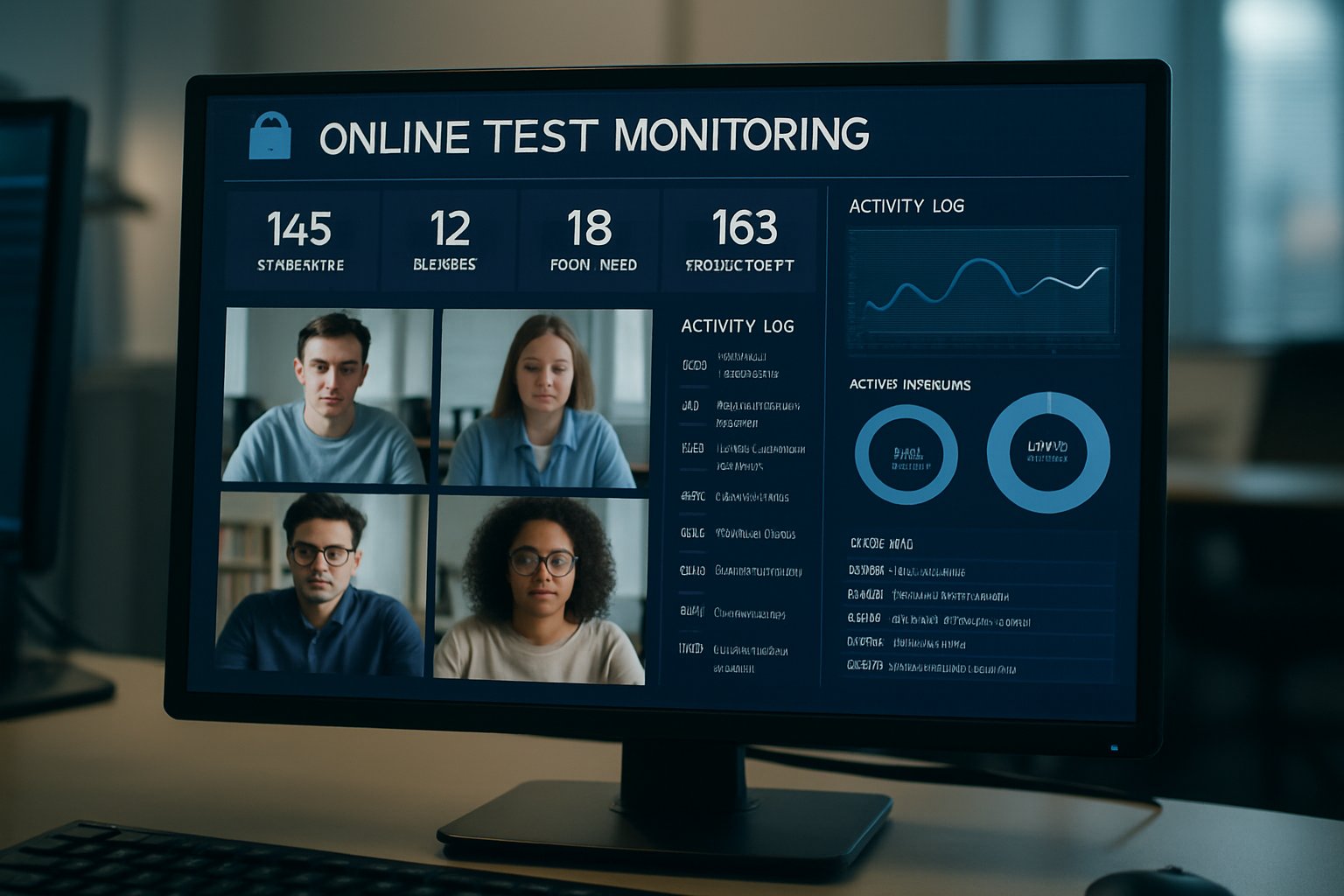
Dashboard analytics for online test monitoring showing live student video feeds.
Exam administrators use advanced dashboards for real-time online test monitoring.

Consequently, institutions can mix these models for different risk levels. This flexibility will appear again in the workflow discussion below.

Typical Workflow Steps Unpacked

An effective workflow starts before the timer begins. Firstly, a system check validates camera, microphone, and bandwidth. Secondly, multifactor authentication confirms identity with ID photo and facial match. After a quick room scan, the candidate launches a locked browser that bars shortcuts. During the exam, AI or a live proctor watches video, audio, and screen feeds. Suspicious events receive time stamps that flow into a dashboard for instructors. Subsequently, staff review flags and decide on sanctions or clearance. This end-to-end chain showcases how online test monitoring delivers auditability.

  • Pre-test checks
  • Authentication
  • Environment scan
  • Live or AI surveillance
  • Post-exam review

In short, a clear workflow reduces surprises and supports consistent decisions. Next, we examine fresh trends shaping these workflows.

Emerging Trends For 2026

AI now triages false positives, letting human reviewers focus on real threats. Moreover, vendors are moving analytics on-device to lower privacy risk and latency. Market reports forecast multi-billion dollar revenue by 2035, driven by corporate credentialing demand. However, legal rulings against intrusive room scans push companies to refine consent workflows. These developments will redefine online test monitoring over the next decade. Meanwhile, the typical remotely proctored exam must adapt to AI-enabled cheating tools.

As trends accelerate, institutions must stay agile. Therefore, proactive policy reviews remain essential. Benefits and drawbacks reveal why.

Key Benefits And Drawbacks

Proponents highlight cost savings versus physical test centers and rapid scheduling worldwide. Empirical studies show webcam surveillance can lower cheating rates compared with unmonitored exams. Yet, without balanced policies, online test monitoring may trigger privacy or equity concerns. A poorly configured remotely proctored exam can also overwhelm support teams with false alarms.

Clearly, benefits depend on thoughtful configuration. Legal obligations heighten that need.

Legal And Privacy Considerations

Ogletree v. Cleveland State ruled mandatory room scans unconstitutional, setting a precedent. Additionally, Illinois’ BIPA fines vendors for mishandled biometric data. Consequently, institutions must evaluate consent forms, retention limits, and data residency. Vendor contracts should state how online test monitoring complies with GDPR and similar laws. Accessibility accommodations for a remotely proctored exam must also be spelled out clearly.

Ignoring privacy invites litigation and brand damage. Selecting the right partner mitigates risk.

Selecting Reliable Providers Wisely

Procurement teams should shortlist vendors offering live, automated, and hybrid modes. Request demonstrations that reveal flagging accuracy, reviewer workflow, and dashboard clarity. Moreover, analyze integration with LMS, SSO, and analytics tools for seamless scaling. A mature online test monitoring suite will export granular logs for accreditation audits. Pilot a remotely proctored exam with diverse candidates to surface technical or accessibility issues early.

Diligent vetting fosters resilience and trust. Finally, let us recap.

Conclusion

Online test monitoring combines identity checks, locked browsers, and AI surveillance to protect remote assessments. Adopt clear workflows, respect privacy law, and choose vendors carefully. Doing so balances integrity, student trust, and institutional reputation. Regular reviews of analytics help refine policies. Continuous communication with learners improves acceptance and reduces anxiety. Furthermore, integrating honor codes and adaptive assessments multiplies security gains. Pair these tactics with training for proctors and faculty.

Why Proctor365? Our AI-powered platform delivers real-time analytics, robust identity verification, and scalable exam monitoring trusted worldwide. Therefore, institutions can deploy secure tests anywhere without friction. Experience superior safeguarding today by visiting Proctor365.

Frequently Asked Questions

  1. What is online test monitoring and how does it enhance exam security?
    Online test monitoring uses live, recorded, and AI-powered proctoring to verify identities and detect suspicious behavior, reducing fraud risks and ensuring secure, transparent remote assessments.
  2. How does AI proctoring improve the integrity of remote exams?
    AI proctoring employs computer vision and real-time alerts to identify anomalies like face swaps or unauthorized device use, significantly enhancing exam integrity and fraud prevention.
  3. What are the key steps in the remote exam proctoring workflow?
    The workflow includes system checks, multifactor authentication, environmental scans, and continuous AI or live monitoring, all designed to prevent fraud and maintain a secure exam environment.
  4. How does Proctor365 differentiate itself in the online proctoring space?
    Proctor365 stands out with its advanced AI proctoring, robust identity verification, and real-time analytics, ensuring secure, scalable exam monitoring with effective fraud prevention and compliance support.

Is Online Test Monitoring Safe for Student Data Privacy?

Universities moved exams online at unprecedented speed during the pandemic. Consequently, online test monitoring now dominates high-stakes exams across sectors. However, many leaders now ask a tough question: Is remote proctoring safe for student data privacy?

The answer is not binary. Safety depends on vendor practices, institutional contracts, and constantly evolving regulations such as FERPA and SB-1172. Meanwhile, documented breaches and civil-society complaints show genuine risk.

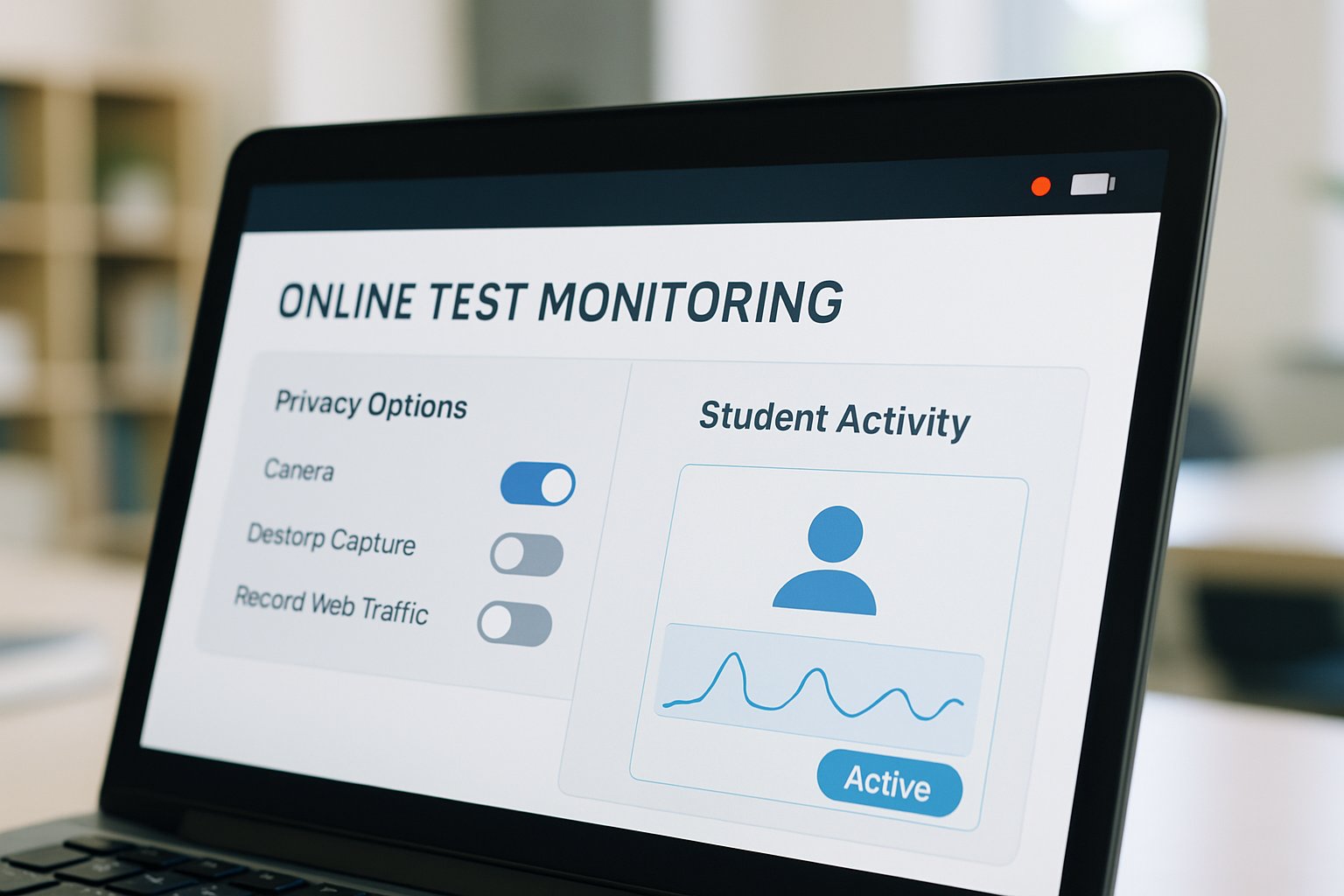
Online test monitoring dashboard displaying privacy controls and security settings
An online test monitoring dashboard displays privacy preferences and monitoring status.

This article unpacks the latest evidence, highlights key pitfalls, and offers a practical mitigation roadmap. Readers will leave knowing when a remotely proctored exam strengthens integrity and when it compromises trust. Let9s dive in.

Online Test Monitoring Safety

Adoption numbers remain high. EDUCAUSE surveys show that 54% of institutions used some form of online test monitoring during 2020-2024.

Proponents argue that automated flagging and live proctors reduce opportunistic cheating. Moreover, corporate L&D teams cite scalability and cost efficiency. However, security incidents like the Proctortrack leak remind decision-makers that popularity does not equal safety.

Online test monitoring succeeds only when privacy controls rival its detection capabilities. Next, we examine what can go wrong.

Privacy Risks Explained Clearly

Remote tools collect video, audio, screen feeds, and biometric identifiers. Consequently, a single breach can expose living spaces, medical devices, or family conversations. IBM pegs the average data breach cost at $4.45million, underscoring financial stakes.

Consumer Reports uncovered insecure storage at a major vendor, leaving student videos accessible. Meanwhile, EPIC9s complaint warns of algorithmic bias that disproportionately flags students of color or with disabilities. In contrast, privacy-by-design vendors promise local processing and minimal retention.

Real risks span technical, legal, and social domains. Therefore, institutions must understand the regulators now circling.

Regulatory Pressure Intensifies Globally

The U.S. Department of Education increased FERPA enforcement in March 2025. Additionally, California9s SB-1172 restricts collection to what is strictly necessary for a remotely proctored exam. European providers must also follow GDPR9s explicit-consent and data-minimization mandates.

Failure carries reputational, financial, and even criminal consequences. Consequently, procurement teams increasingly require SOC2, ISO 27001, and independent pen-tests before signing contracts. Nevertheless, audits vary in scope, so line-by-line analysis remains essential.

Regulators send a clear message: prove necessity or face penalties. Subsequently, vendors must adapt or risk exclusion.

Vendor Security Due Diligence

Smart buyers demand written evidence, not marketing slides. Effective online test monitoring depends on that evidence. Ask for precise data maps, role-based access matrices, and automated deletion logs. Moreover, confirm encryption in transit and at rest with recent penetration reports.

Request a list of subprocessors and data-center regions. Meanwhile, ensure breach-notification windows match institutional policy—typically 24 to 48 hours. Finally, insist on human review and appeal paths for any AI flags during a remotely proctored exam.

Comprehensive documentation separates trustworthy partners from risky ones. Next, translate documentation into concrete safeguards.

Risk Mitigation Checklist Essentials

Institutions can cut exposure by following a concise checklist. Consider the following controls.

  • Data minimization: collect only ID snapshot and exam screen feed.
  • Retention limits: delete all recordings after appeal window closes.
  • Encryption everywhere: TLS 1.3 plus disk-level AES-256 at rest.
  • Transparent AI: publish false-positive rate and allow student appeals.
  • Alternatives: offer on-site or camera-free options instead of online test monitoring when justified for any remotely proctored exam.

Moreover, embed these terms in the service contract to gain legal leverage. Therefore, a vendor breach becomes their liability, not yours.

Checklists turn abstract fears into measurable tasks. Consequently, privacy discussions shift from theory to action.

Balancing Integrity And Privacy

No tool is perfect. Open-book assessments, question pools, and project work can supplement online test monitoring when stakes are lower. Conversely, medical licensing bodies may still require a tightly monitored, remotely proctored exam.

Transparent communication calms student anxiety and builds trust. Additionally, involving disability services ensures equitable accommodations.

Privacy and integrity are not mutually exclusive. Therefore, context should drive solution design.

Future Outlook For Institutions

Market analysts project multi-billion growth for proctoring by 2030. Meanwhile, activism and lawmaking will keep tightening data boundaries. Consequently, competitive advantage will favor vendors that combine strong analytics with verifiable privacy.

Institutions that master online test monitoring today will adapt faster to evolving credential formats tomorrow. Consequently, leadership must track both revenue forecasts and legislative bills. Therefore, proactive strategy beats last-minute compliance.

Remote proctoring offers undeniable scale but creates equally undeniable privacy exposure. Regulatory scrutiny, documented breaches, and vocal student resistance prove the stakes. Institutions that pair strict contracts, rigorous audits, and transparent communication enjoy the best of both worlds. They protect learners while preserving assessment integrity.

Proctor365 delivers online test monitoring with AI-powered proctoring and advanced identity verification. Moreover, its cloud platform scales effortlessly and is trusted by global exam bodies. Visit Proctor365 to safeguard your next remotely proctored exam today.

Frequently Asked Questions

  1. How does remote proctoring ensure exam integrity and data privacy?
    Remote proctoring uses AI algorithms, secure encryption, and strict data-retention policies to maintain exam integrity while protecting student data. Proctor365’s features support compliance with key data privacy regulations.
  2. What measures can institutions take to mitigate privacy risks in online test monitoring?
    Institutions should enforce encrypted data transmission, strict retention limits, and transparent AI review processes. Regular vendor audits and clear contract safeguards, like those offered by Proctor365, help minimize privacy risks.
  3. How does Proctor365 contribute to secure and effective remote proctoring?
    Proctor365 employs AI-powered proctoring and advanced identity verification to deter fraud and ensure exam integrity. Its robust privacy controls and regulatory compliance make remote exam monitoring both secure and scalable.
  4. Why is compliance with data privacy regulations important in remote exam proctoring?
    Adhering to regulations such as FERPA, GDPR, and SB-1172 ensures that remote proctoring systems maintain high data security and privacy standards. Proctor365 meets these requirements, thus protecting sensitive student information.

Mastering Online Test Monitoring Room Scans

Remote assessments reshape academic and professional landscapes. Universities, ed-tech firms, and employers now test skills entirely online. Consequently, online test monitoring protects credential value and deters misconduct. Yet many candidates feel anxious when asked to perform a camera room scan. This article clarifies the process without revealing improper shortcuts. Moreover, you will discover practical preparation steps that boost confidence and privacy. We explain why scans exist, what proctors search for, and how to respond calmly. The guidance aligns with global academic integrity policies and data regulations. Therefore, administrators can share these recommendations with every remotely proctored exam cohort. Let us begin with core monitoring principles. Robust preparation reduces technical hiccups and unnecessary flagging. Meanwhile, institutions gain smoother sessions and fewer appeals.

Online Test Monitoring Basics

Proctoring platforms blend AI analytics with live reviewers. They track video, audio, screen activity, and browser events in real time. Therefore, any suspicious anomaly triggers immediate human review and potential intervention.

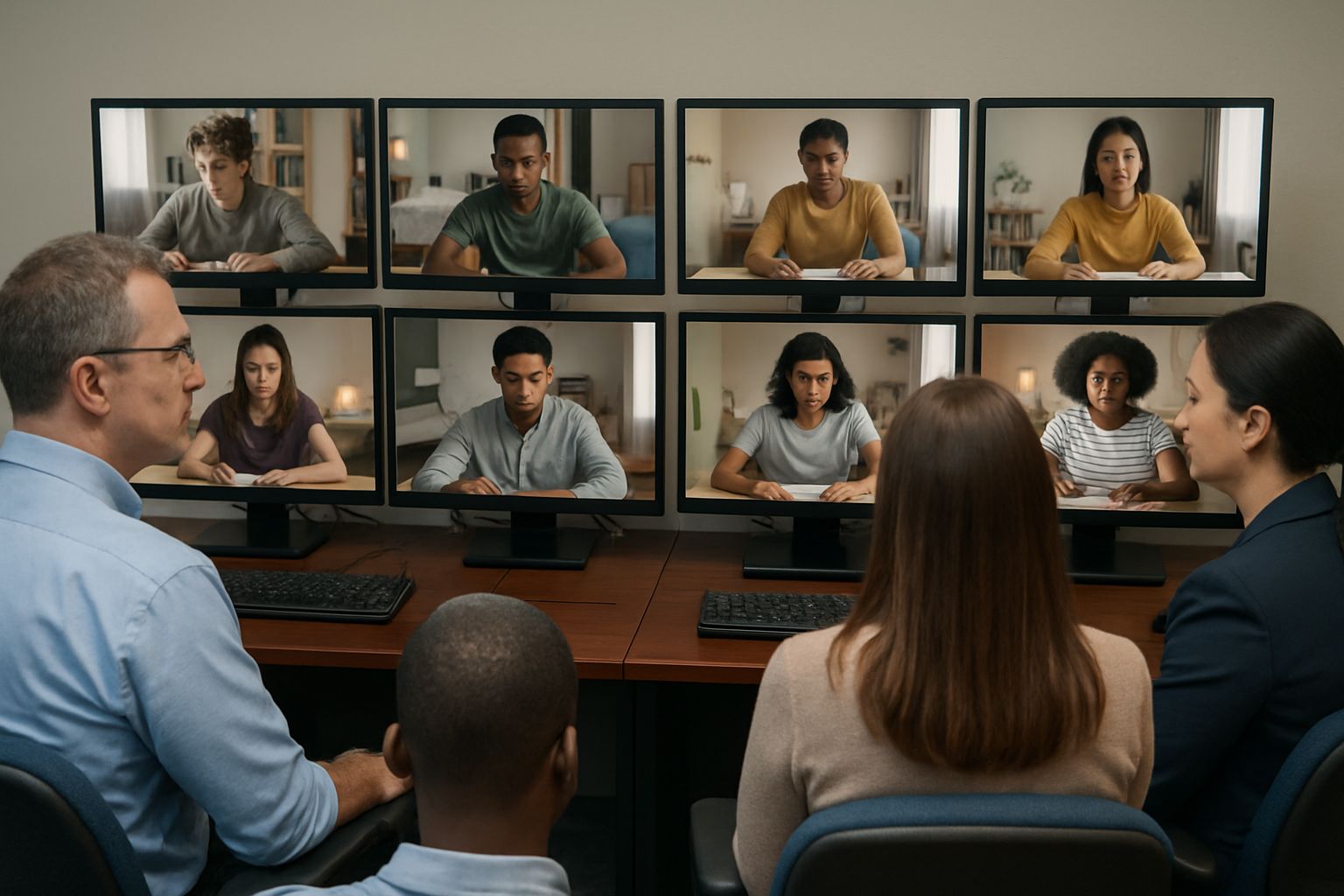
monitoring team overseeing online test monitoring room scans
Testing center staff supervise room scans to ensure fair online test monitoring.

During a remotely proctored exam, the first safeguard is the environment scan. Candidates must rotate cameras slowly, revealing walls, desk, and floor. Accuracy here decreases false flags later.

Scans establish baseline trust before questions appear. Next, examine the underlying purpose for stakeholders.

Room Scan Purpose Explained

Examiners aim to verify nobody else is present and no notes sit nearby. Moreover, clear desks remove temptation and technical distractions. Global studies report cheating drops 54% when scans precede testing.

Institutions also collect scan footage for auditing disputed outcomes later. Consequently, transparent policies reassure honest candidates about fairness. Regulators increasingly request documented proof of proctoring diligence.

Purpose centres on deterring misconduct, not invading personal life. With that understood, prepare your workspace effectively.

Workspace Setup Checklist Guide

Effective preparation starts days before test time. Follow the checklist below to streamline scans and performance.

  • Read official instructions and platform requirements thoroughly.
  • Remove books, phones, and additional monitors from view.
  • Place permitted materials, ID, and water visibly on the desk.
  • Position webcam at eye level with balanced front lighting.
  • Test microphone clarity and disable pop-up notifications.
  • Ensure reliable wired internet or strong Wi-Fi backup.

Completing each task prevents frantic adjustments minutes before launch. Meanwhile, your scan will satisfy online test monitoring criteria on the first attempt.

Pre-Exam Equipment Prep

Additionally, update browsers and install the required lockdown client early. Early installation reduces last-minute bandwidth spikes during the remotely proctored exam.

Ensuring Reliable Network Stability

Plug laptops into power and ethernet whenever possible. Consequently, unexpected disconnects will not invalidate progress or trigger proctor alerts.

Understanding checklists builds confidence for the next phase. Accordingly, privacy rights deserve equal focus.

Privacy And Data Rights

Privacy remains a common concern among test takers. Nonetheless, reputable providers disclose data collection, storage duration, and access roles. Review those policies before granting camera or microphone permissions.

For European candidates, GDPR grants rights to request deletion after assessment closure. Meanwhile, U.S. students can invoke FERPA protections through institution channels. Proactively documenting questions shows diligence and supports future appeals.

Understanding policies empowers informed consent within online test monitoring ecosystems. Accordingly, we now address disruption management.

Handling Scan Disruptions Correctly

Even perfect preparation cannot guarantee flawless technology. However, stay calm if audio drops or lighting shifts during the remotely proctored exam. Follow proctor prompts and repeat the scan when requested.

Additionally, document timestamps, screenshots, and chat transcripts. Provide these artifacts to instructors and support teams immediately. Therefore, human reviewers can quickly dismiss automated false flags.

Fast, transparent communication often resolves issues without penalties. Finally, remember online test monitoring detects most evasion attempts swiftly.

Key Takeaways And Proctor365

Authentic preparation remains the strongest defense against stress and suspicion. You learned why scans exist, how to ready your room, and how to protect privacy. Moreover, you discovered strategies to manage disruptions during any remotely proctored exam. Online test monitoring supports exam integrity when combined with clear policy and respectful communication. Why Proctor365? Its AI-powered online test monitoring engine pairs advanced identity checks with scalable oversight. Trusted by global universities and certification bodies, the platform delivers secure proctoring across thousands of exams. Consequently, institutions can uphold standards without burdening staff or legitimate learners. Robust online test monitoring begins here—schedule a demo now. Visit https://www.proctor365.ai/ to secure your next assessment cycle.

Frequently Asked Questions

  1. Why are room scans essential for remotely proctored exams?
    Room scans deter cheating by ensuring a clear workspace and verifying no unauthorized materials or individuals are present. Proctor365’s AI-powered proctoring uses these scans for robust fraud prevention and identity verification.
  2. How can I prepare my workspace for an online proctored exam?
    Prepare by clearing your desk of notes, gadgets, and distractions. Follow the checklist by testing equipment and ensuring proper lighting to minimize technical issues and false flags, all supported by Proctor365’s secure proctoring features.
  3. What should I do if a scan disruption occurs during the exam?
    If a scan disruption happens, remain calm and follow the proctor’s instructions to repeat the scan. Document issues like lighting or audio changes, so Proctor365’s human reviewers can quickly verify and resolve any false flags.
  4. How does Proctor365 balance exam security and candidate privacy?
    Proctor365 adheres to strict data regulations like GDPR and FERPA while using AI proctoring to monitor exams. The platform discloses data policies and ensures identity verification without compromising candidates’ privacy rights.

Why Certifications Depend on Online Test Monitoring Today

Professional credentials only matter when stakeholders trust the assessment behind them. Consequently, many awarding bodies now combine digital delivery with rigorous online test monitoring. This shift exploded during the pandemic and remains central to global certification strategy. However, critics still question privacy, equity, and technical reliability.

The solution that has prevailed is the remotely proctored exam, backed by AI and human review. In this article, we unpack why certification boards insist on that model. We also explore risks, mitigation tactics, and vendor selection tips.

Classroom setup with online test monitoring for group certification exam.
Educators rely on online test monitoring for group certification exam integrity.

Protecting Credential Value Stakes

Certification value depends on employer confidence in score authenticity. Moreover, identity fraud or leaked items can erode that confidence overnight. Online test monitoring supplies verifiable video, audio, and system logs that investigators can later audit. Therefore, boards view monitoring as insurance protecting both brand reputation and candidate effort.

In short, integrity fuels credential worth. Next, we examine identity proof tactics.

Robust Identity Proof Steps

Every session starts with multi-factor identity checks. Candidates submit photo ID, then facial recognition validates live images against registration data. Because online test monitoring already controls the webcam feed, programs can overlay biometric matching without extra hardware. Consequently, proxy testers struggle to bypass these layered defenses.

Strong identity proof blocks impersonation. However, cheating attempts still evolve.

Evolving Fraud Threat Landscape

Cheating techniques grow more creative each quarter. Remote access tools, hidden earpieces, and item harvesting forums headline recent incident reports.

  • Proxy testers logging in under stolen credentials.
  • Screen-sharing with external answer farms.
  • Group messaging apps coordinating live answers.

Live flags from online test monitoring alert security staff before significant damage occurs. Nevertheless, scale and accessibility also matter.

Fraud exists, yet detection improves. Our next focus is scale.

Scaling Online Test Monitoring

Millions of professionals live far from authorized test centers. Moreover, program budgets rarely cover global bricks-and-mortar expansion. A remotely proctored exam lets candidates test from home while preserving standardized conditions. Because online test monitoring works 24/7, programs can open rolling windows and reduce scheduling bottlenecks.

  1. Lower travel costs per candidate.
  2. Flexible retake scheduling within days.
  3. Rapid market expansion into new regions.

Scalability drives adoption momentum. Yet fairness concerns remain pressing.

Balancing Fair Testing Practice

Stakeholders also weigh privacy, bias, and accessibility. Academic studies found higher false-flag rates for darker skin tones. Therefore, vendors must validate algorithms and publish clear appeals workflows. Meanwhile, monitoring policies should always offer in-person alternatives for candidates lacking private spaces. Consequently, trust grows when transparency and options coexist.

Fairness protects both candidates and brands. Next, we review mitigation drills.

Mitigation Tactics Checklist Guide

Program teams can deploy a three-layer defense model. Firstly, use blended AI and human review for all severe flags. Secondly, disclose data retention schedules and allow prompt deletion requests. Thirdly, run psychometric checks across delivery modes to detect score anomalies. These steps reinforce credibility without excessive overhead.

Mitigation lowers operational risk. Finally, teams must choose partners wisely.

Selecting Right Proctoring Partner

Vendor ecosystems range from DIY lockdown browsers to full managed services. Certification leads should request security audits, data flows, and uptime metrics. Ask whether the platform supports a remotely proctored exam model with flexible language support. Also confirm that online test monitoring integrates with your LMS and analytics stack. Moreover, peer references from similar programs shorten evaluation cycles.

Diligent selection prevents unpleasant surprises. We conclude with key takeaways.

Conclusion

Professional certifications thrive when assessments stay secure, fair, and accessible. Identity proof, fraud prevention, and scalability make the remotely proctored exam indispensable. However, success hinges on transparent policy, careful vendor vetting, and continuous quality analytics.

Why Proctor365? Our AI-powered engine fuses advanced identity verification with real-time analytics to deliver unmatched integrity. Scalable cloud architecture allows you to extend online test monitoring worldwide without costly centers. Global exam bodies already trust our solution to safeguard thousands of high-stakes programs. Visit https://www.proctor365.ai/ to book a demo and elevate your next exam cycle.

Frequently Asked Questions

  1. How does remote proctoring help maintain exam integrity?
    Remote proctoring leverages AI-driven monitoring combined with human review to ensure secure, fraud-preventative testing, helping maintain credential value through rigorous identity verification and real-time analytics.
  2. What measures does Proctor365 use for robust identity verification?
    Proctor365 employs multi-factor authentication with photo ID and live facial recognition, ensuring accurate identity matching and preventing impersonation with advanced AI proctoring and biometric checks.
  3. How does Proctor365 support scalability and global access?
    Proctor365’s cloud-based AI solution offers scalable, 24/7 online test monitoring. This reduces travel costs and scheduling bottlenecks, enabling secure assessments worldwide without the need for physical centers.
  4. What steps does Proctor365 take to prevent exam fraud?
    Proctor365 integrates blended AI and human review with real-time analytics, system logs, and biometric verification to create a layered defense that effectively minimizes fraud and preserves exam integrity.

Why HR Accelerates Hiring With Online Test Monitoring

The pandemic normalised remote hiring. Consequently, HR leaders now rely on online test monitoring to validate skills across global talent pools. The approach supports skills-based hiring, lowers bias from résumés, and speeds decision cycles. Moreover, it counters impersonation schemes that surged during virtual recruitment. However, legal scrutiny grows, and candidates demand transparency. This article explores why adoption is rising, where risks lurk, and how forward-thinking teams stay ahead.

Online Test Monitoring Gains

Skills-based hiring jumped to 81% in 2024, according to TestGorilla. Therefore, assessments now sit at the centre of talent funnels. Yet, without oversight, cheating erodes data quality. Modern platforms pair AI flags with ID verification to secure every remotely proctored exam. Integrations with ATS systems push results directly into recruiter dashboards, trimming manual work.

Job applicants participating in online test monitoring during remote recruitment.
Remote candidates participate in secure online tests with live monitoring for fair assessment.

Key takeaway: Growth in skills testing drives equal growth in secure monitoring. Adoption will deepen as integrations mature.

Transitioning forward, let us examine the fraud pressures motivating this shift.

Fraud Prevention Drivers

Enterprises face organized cheating rings. Additionally, freelance marketplaces openly sell proxy test takers. A single bad hire can cost 30% of first-year salary. Consequently, HR budgets now reserve funds for live or automated proctoring. Platforms capture video, screen feeds, and keystroke data. They also lock browsers and verify government IDs.

  • Up to 40% time-to-hire reduction when assessments are secured (vendor-reported).
  • 25-30% of proctoring revenue now comes from enterprises.
  • Market size may exceed USD 8 billion by 2035 at 13% CAGR.

Key takeaway: Quantifiable cost savings and fraud deterrence justify investments in online test monitoring.

Next, regulatory currents shape how HR can deploy these tools.

Legal Landscape Shifts

However, oversight is tightening. Illinois BIPA and AIVIA mandate notice and consent for biometric scans. Meanwhile, New York City’s Local Law 144 requires audits of automated hiring tools. March 2025 saw an ACLU complaint accusing HireVue of bias against a deaf Indigenous worker. Vendors removed facial-analysis features after earlier suits, yet risk remains.

Key takeaway: Compliance now determines vendor selection and policy design.

With rules in mind, the candidate experience becomes critical.

Candidate Experience Balance

Job seekers dislike intrusive webcams. Nevertheless, clarity and accommodations improve acceptance. SHRM’s partnership with Prometric shows mainstreaming; yet, advocacy groups warn of false positives. Providing opt-out paths or live proctors for disabled users reduces churn. Furthermore, transparent consent pages explain data retention and boost trust.

Key takeaway: Respectful design turns monitoring from hurdle to brand differentiator.

Let us move to actionable safeguards.

Best Practice Guardrails

HR teams should adopt layered controls:

  1. Classify test stakes, then match proctoring mode.
  2. Demand vendor fairness audits and psychometric validity.
  3. Apply privacy-by-design and publish retention limits.
  4. Keep human reviewers for AI flags and offer appeals.
  5. Communicate purpose, process, and support channels clearly.

Key takeaway: Structured governance mitigates legal and ethical risks while preserving scale.

Finally, consider where the market heads next.

Future Market Outlook

Market Research Future values the sector at USD 2.1 billion in 2024. Moreover, analysts project multi-billion growth as remote work persists. HR credentialing bodies like HRCI deliver every remotely proctored exam option online. Consequently, vendors race to improve explainability dashboards and adaptive fraud models. Expect consolidation as buyers seek end-to-end assessment stacks.

Key takeaway: Momentum favours platforms that unite assessments, analytics, and online test monitoring in one ecosystem.

Transitioning to our wrap-up, let us summarise the journey.

Conclusion And Why Proctor365

Secure skills tests now power fast, fair hiring. Yet, privacy laws, bias concerns, and candidate sentiment demand thoughtful deployment. Effective policies pair transparent consent, robust governance, and adaptive technology.

Proctor365 delivers superior online test monitoring. Our AI-powered proctoring spots deceit in real time, while advanced identity verification confirms each test taker. The platform scales effortlessly across every remotely proctored exam, from coding challenges to compliance checks. Trusted by global exam bodies, Proctor365 safeguards integrity without harming user experience.

Ready to future-proof hiring? Visit Proctor365 and see how scalable exam monitoring elevates workforce quality today.

Frequently Asked Questions

  1. What is online test monitoring in remote hiring?
    Online test monitoring uses AI proctoring and fraud prevention techniques to secure remote exams. It verifies candidate identity and prevents impersonation, ensuring skill-based hiring is fair and reliable.
  2. How does Proctor365 ensure exam integrity?
    Proctor365 safeguards exam integrity with advanced AI proctoring and robust fraud prevention. Its identity verification and adaptive monitoring tools secure remotely proctored exams while maintaining a smooth candidate experience.
  3. How does Proctor365 balance candidate privacy with secure exam monitoring?
    Proctor365 balances privacy and security by using transparent consent processes and compliance with legal standards. It offers clear data retention policies alongside effective AI proctoring and identity verification measures.
  4. What benefits does integrated online test monitoring offer for remote hiring?
    Integrated online test monitoring streamlines skills assessments, reduces bias, and speeds up hiring. By combining ATS integrations with secure AI proctoring and fraud prevention, it enhances overall hiring quality and efficiency.

Navigating Online Test Monitoring Challenges at Scale

Budget pressures and hybrid learning push universities toward online test monitoring for high-stakes exams. However, delivering thousands of secure sessions is far from simple. Technical glitches, privacy fears, and emerging AI threats now collide on every remotely proctored exam.

Consequently, assessment leaders must balance scale, fairness, and institutional risk. Moreover, new research, market data, and legal shifts intensify the conversation. By the end, readers will grasp pitfalls, stakeholder expectations, and actionable paths toward trustworthy digital assessment.

Student taking online test at home with online test monitoring webcam enabled.
A student navigates online test monitoring privacy at home.

Online Test Monitoring Hurdles

Institutions adopt online test monitoring mainly for scalability and deterrence, yet fresh studies document persistent hurdles. Firstly, privacy advocates criticise room scans, biometric capture, and long data retention.

Secondly, algorithmic bias leads to higher flag rates for darker-skinned candidates. Moreover, technical flags often overwhelm review teams during each remotely proctored exam cycle.

In short, the hurdle list spans ethics, technology, and human capacity. Next, we examine scale pressures that intensify every pain point.

Scaling At Massive Scale

Large universities may run 20,000 concurrent sessions during finals. Consequently, bandwidth spikes, authentication queues, and proctor staffing stretch systems to breaking. Without resilient online test monitoring infrastructure, even small code changes cause cascading failures.

ExamSoft’s California bar event flagged roughly one-third of candidates, showing real consequences. Meanwhile, vendors quote optimistic service-level agreements that rarely cover peak disasters.

  • Global market value 2025: USD 0.8-2.4 B (varies by report).
  • Higher-ed adoption estimates: 40-70% of institutions use some proctoring.
  • False-positive rate in bar pilot: 31-36% flagged at least once.

Clearly, scale amplifies technical, operational, and reputational risks. Therefore, privacy debates grow louder when thousands experience glitches simultaneously. Let’s now explore privacy and bias concerns.

Privacy And Bias Fears

Student petitions across continents label online test monitoring digital surveillance. Furthermore, peer-reviewed research shows face detection accuracy drops for darker skin tones.

Algorithmic errors then trigger extra identity checks, prolonging stress during a remotely proctored exam. California’s SB1172 now limits data collection and forces deletion schedules. Moreover, European regulators examine biometric compliance under GDPR.

Privacy, equity, and compliance converge into a single governance challenge. Next, we discuss reliability issues that worsen these fears.

Reliability Under Heavy Load

Technical reliability still defines perception of fairness. During peak events, webcam freezes, disconnects, and false flag storms dominate help-desk logs.

Moreover, accessibility tools like screen readers sometimes crash within lockdown browsers. When that happens, online test monitoring sessions may terminate and force retakes. Consequently, appeals teams face mounting workloads and delayed results.

Reliability failures quickly erode trust built through policy. Therefore, mitigation becomes urgent and strategic. The following section outlines practical approaches.

Mitigation Approaches In Practice

Assessment redesign tops every mitigation list. Open-book, higher-order questions reduce cheating payoff and lower surveillance intensity. Such designs lessen reliance on online test monitoring and promote authentic learning.

Meanwhile, hybrid options let students choose an on-campus room or a remotely proctored exam. Vendor contracts must specify minimal data, short retention, and independent audits. Institutions should publish aggregate false-positive metrics to build accountability.

Additionally, human review before sanctions remains essential. Combined, these steps reduce litigation exposure and student anxiety. Next, we consider AI-driven cheating countermeasures.

Generative AI Cheating Countermeasures

Language models now draft essays that bypass plagiarism scanners. Therefore, oral follow-ups, randomised item banks, and post-exam interviews verify authentic competence. These tactics complement online test monitoring rather than replace it.

Institutions also pilot browser-integrated AI detectors, yet results remain mixed. Nevertheless, diverse assessment forms still outperform algorithmic policing.

Defensive innovation must evolve continuously as AI improves. Finally, we look ahead at integrity trends.

Future Facing Integrity Trends

Market forecasts predict double-digit growth despite intense scrutiny. Meanwhile, lawmakers and accreditation bodies craft stricter procurement standards.

Moreover, students expect transparency dashboards showing flag counts, data retention, and appeal timelines. Consequently, vendors that disclose algorithms and accept audits gain competitive trust.

Soon, immersive VR exams may reshape identity checks, yet core fairness principles will remain. The integrity landscape keeps shifting under regulatory and technological pressure. Therefore, proactive planning delivers resilience against future shocks. We conclude with key lessons and the Proctor365 advantage.

Large-scale assessments succeed only when privacy, reliability, and fairness align. This review showed how scale, bias, legal rules, and generative AI complicate online test monitoring projects. Nevertheless, thoughtful assessment design, transparent contracts, and student choice can tame the risks.

Why Proctor365? Our AI-powered proctoring combines live human oversight with adaptive analytics to secure every remotely proctored exam. Advanced identity verification validates faces, IDs, and liveness in seconds. Scalable exam monitoring easily supports tens of thousands without degrading performance. Consequently, global universities, certifiers, and corporate L&D teams trust Proctor365 for critical stakes. Explore future-ready proctoring at Proctor365.ai.

Frequently Asked Questions

  1. How does Proctor365 handle technical challenges in online test monitoring?
    Proctor365 uses AI-powered proctoring combined with live human oversight, adaptive analytics, and robust identity verification to overcome technical glitches and ensure secure, reliable exam monitoring.
  2. What makes Proctor365 scalable for large remote assessment sessions?
    Proctor365 supports tens of thousands of concurrent sessions by employing advanced AI techniques and strong data protocols, ensuring smooth operation even under peak load while maintaining exam integrity.
  3. How does Proctor365 address privacy and bias concerns?
    Proctor365 adheres to strict data retention policies and uses state-of-the-art biometric and identity verification to minimize algorithmic bias, ensuring fair and privacy-compliant proctoring.
  4. What benefits does AI-driven exam monitoring offer with Proctor365?
    Proctor365’s AI proctoring detects suspicious behavior in real time, integrates live review, and provides rapid identity checks, enhancing overall exam security and integrity.

AI’s Transformative Impact on Online Test Monitoring

Digital learning has exploded across universities, training firms, and enterprise programs. Consequently, securing assessment integrity now tops every administrator’s priority list. Advanced online test monitoring offers a scalable answer, yet it reshapes pedagogy and policy.

Moreover, artificial intelligence (AI) now drives a multimodal shift from simple webcams to complex analytics. Institutions evaluate face recognition, behavioral biometrics, and audio cues inside online test monitoring ecosystems. However, regulators and civil-liberties groups demand transparency, fairness, and rigorous evidence.

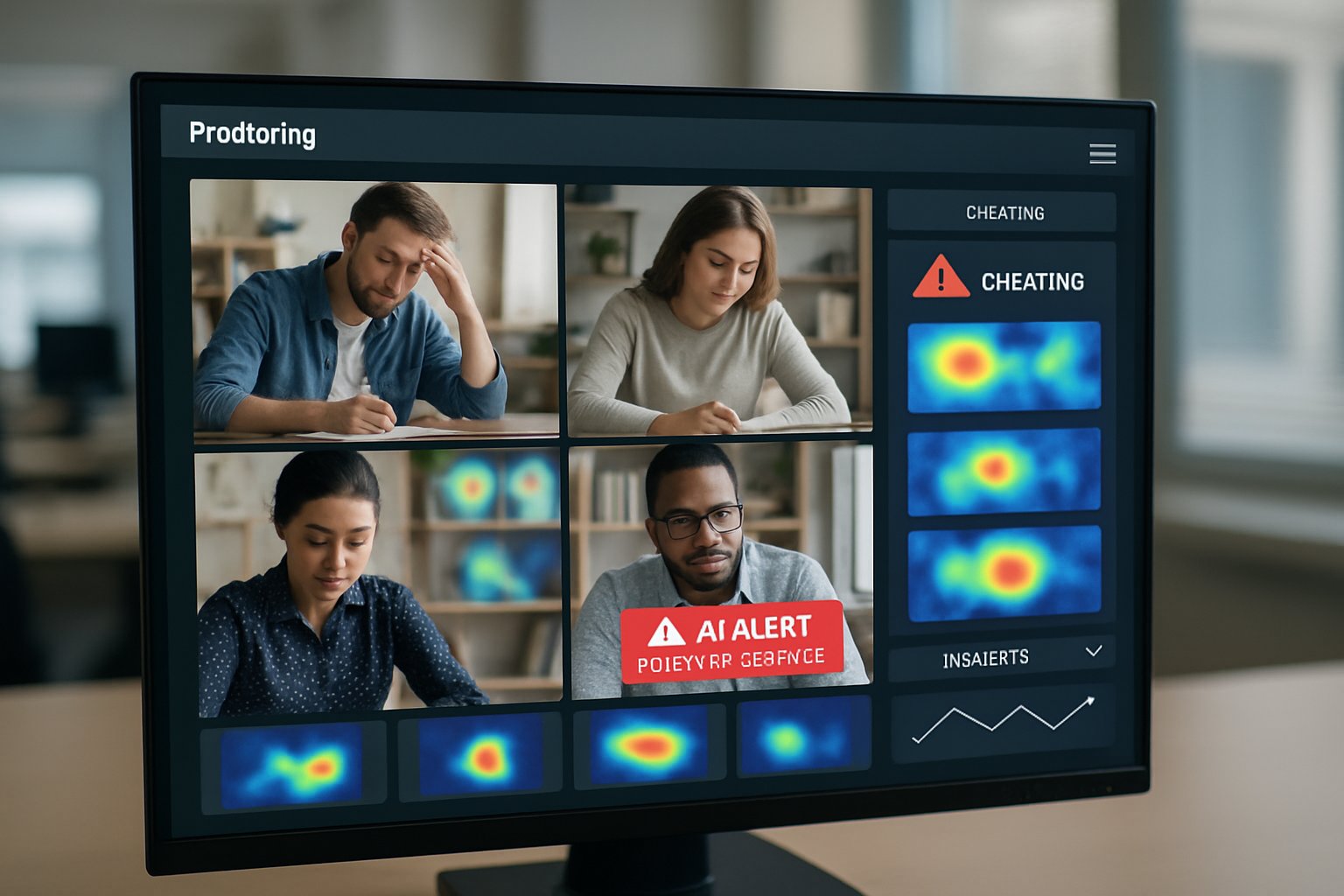
AI-powered dashboard enabling advanced online test monitoring solutions.
AI flagging suspicious activities through an online test monitoring dashboard.

This article examines the emerging landscape and forecasts the next five years. Readers will gain strategic guidance before their next remotely proctored exam rollout.

More than half of surveyed students took at least one monitored online exam last year. Therefore, understanding AI’s role in safeguarding future assessments has never been more urgent. Meanwhile, regulators intensify scrutiny of exaggerated AI claims and biometric data handling. Consequently, technology leaders must align innovation with accountability from day one.

Online Test Monitoring Outlook

Market analysts estimate the global online test monitoring sector will surpass USD 1.4 billion by 2032. Consequently, vendors race to merge AI vision, audio, and behavioral biometrics into unified dashboards.

Universities now seek fewer false flags and faster reviews. Therefore, hybrid human-AI workflows dominate new proposals.

In short, growth and sophistication are rising in tandem. Next, we examine how AI amplifies exam integrity.

AI Elevates Exam Integrity

Computer vision detects face matches, gaze shifts, and environment changes within milliseconds. Additionally, keystroke and mouse patterns confirm continuous identity without extra hardware. Such layered signals have lowered human review minutes per remotely proctored exam session by half, vendors claim.

However, AI alone never decides sanctions in responsible online test monitoring deployments. Consequently, trained proctors verify each flagged clip before faculty intervene.

AI boosts speed and coverage while humans guard due process. Yet technical advances demand equally advanced detection techniques, our next focus.

Multimodal Detection Techniques Advance

Modern platforms fuse webcam, screen, microphone, and interaction streams into one risk score. Moreover, liveness checks deter spoofed faces, while NLP flags suspicious background whispers. Audio algorithms now detect verbal prompts during a remotely proctored exam with growing precision.

Researchers also explore keystroke signatures that separate human typing from large language models. However, early studies show performance drops across devices and demographics.

Therefore, multimodal fusion reduces single-signal errors yet needs ongoing validation. Attention now shifts to privacy and fairness questions.

Balancing Privacy And Fairness

Students voice concerns about home surveillance, data retention, and facial bias. NIST studies reveal higher error rates for some demographic groups in face verification. Consequently, many institutions configure lighter settings for low-stakes quizzes.

GDPR, FTC, and state laws also push for minimal data collection and clear consent. Moreover, accessibility teams request alternative flows for neurodivergent or disabled test-takers.

Balancing security with equity demands transparent policies and flexible technology. Thus, hybrid oversight models are gaining momentum.

Hybrid Oversight Gains Traction

Institutions increasingly combine AI flagging with real-time or post-hoc human review. This layered model cuts costs yet preserves due process. Honorlock, Respondus, and others now market dashboards that prioritize incidents for faculty.

  • Human reviewers see time-stamped clips, not hours of footage.
  • Automated scores adapt to course risk profiles.
  • Online test monitoring insights appear instantly on faculty dashboards.

Consequently, faculty involvement drops while decision quality improves. Next, procurement teams demand hard evidence before purchase.

Procurement Trends And Evidence

Buyers now request confusion-matrix reports, demographic audits, and documented false-positive rates. Furthermore, the FTC warns that unsupported AI accuracy claims invite enforcement. Therefore, vendors share method papers and participate in NIST evaluations.

Universities also compare online test monitoring outcomes with classroom baselines. In one Unizin pilot, flagged events fell 23 % after calibration.

Data-driven procurement thus rewards transparent partners. We now explore the future roadmap guiding those partners.

Roadmap: Next Five Years

Expect richer multimodal fusion, including stylometry for AI-assisted cheating detection. Moreover, risk-based settings will let faculty match proctoring rigor to assessment stakes. Cloud architectures will scale online test monitoring to massive open programs with minimal latency.

Simultaneously, privacy dashboards will grant students granular control over stored data. Consequently, trust should rise across remotely proctored exam experiences.

In essence, technology, policy, and pedagogy will evolve together. The concluding section distills actionable insights for stakeholders.

AI now underpins secure, scalable online test monitoring while hybrid review protects fairness. Multimodal signals, transparent metrics, and adaptive thresholds will define credible, student-centric solutions. Nevertheless, institutions must audit bias, privacy, and learning outcomes each semester. Therefore, selecting a proven partner becomes critical.

Proctor365 delivers AI-powered proctoring, advanced identity verification, and elastic infrastructure that scales from classes to licensure. Trusted by global exam bodies, our solution blends real-time analytics with human oversight for reliable online test monitoring. Visit Proctor365.ai to secure every remotely proctored exam today.

Frequently Asked Questions

  1. What is online test monitoring and why is it important?
    Online test monitoring safeguards exam integrity during digital assessments by combining advanced AI analytics and human oversight. It quickly detects suspicious behavior, prevents fraud, and offers scalable, secure proctoring solutions.
  2. How does AI-driven proctoring enhance exam security?
    AI-driven proctoring uses computer vision, behavioral biometrics, and audio analytics to identify irregularities in real time. This technology, paired with human review, minimizes false flags and verifies student identities efficiently.
  3. What methods help balance exam security with student privacy?
    Modern proctoring platforms employ multimodal detection, transparent metrics, and selective data retention strategies. Hybrid oversight models maintain exam security while addressing privacy concerns and minimizing biases.
  4. How does Proctor365 provide a secure, scalable proctoring solution?
    Proctor365 integrates AI-powered proctoring with advanced identity verification and elastic cloud infrastructure. Its hybrid human-AI review system ensures reliable exam integrity, fraud prevention, and user-friendly, scalable proctoring services.