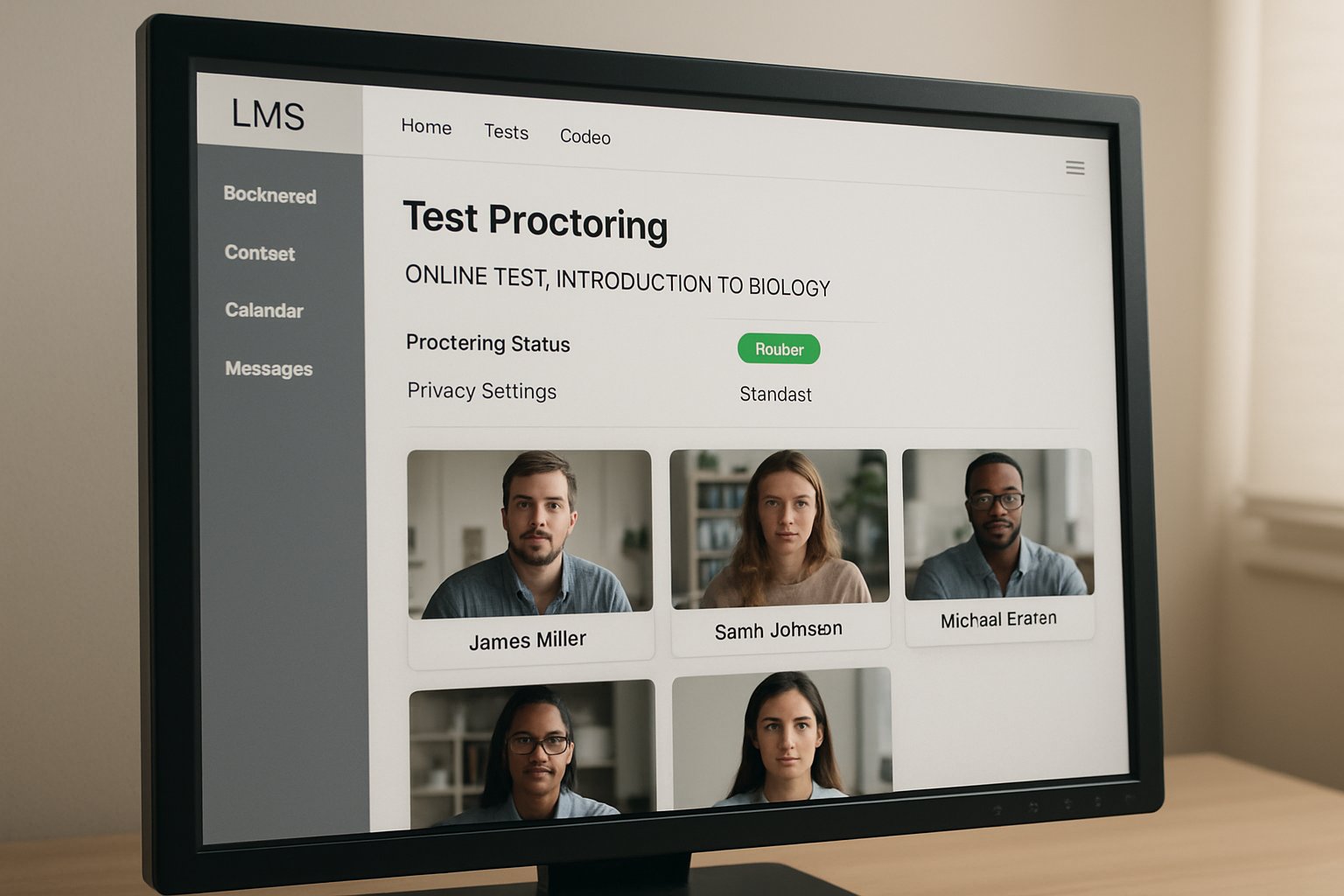
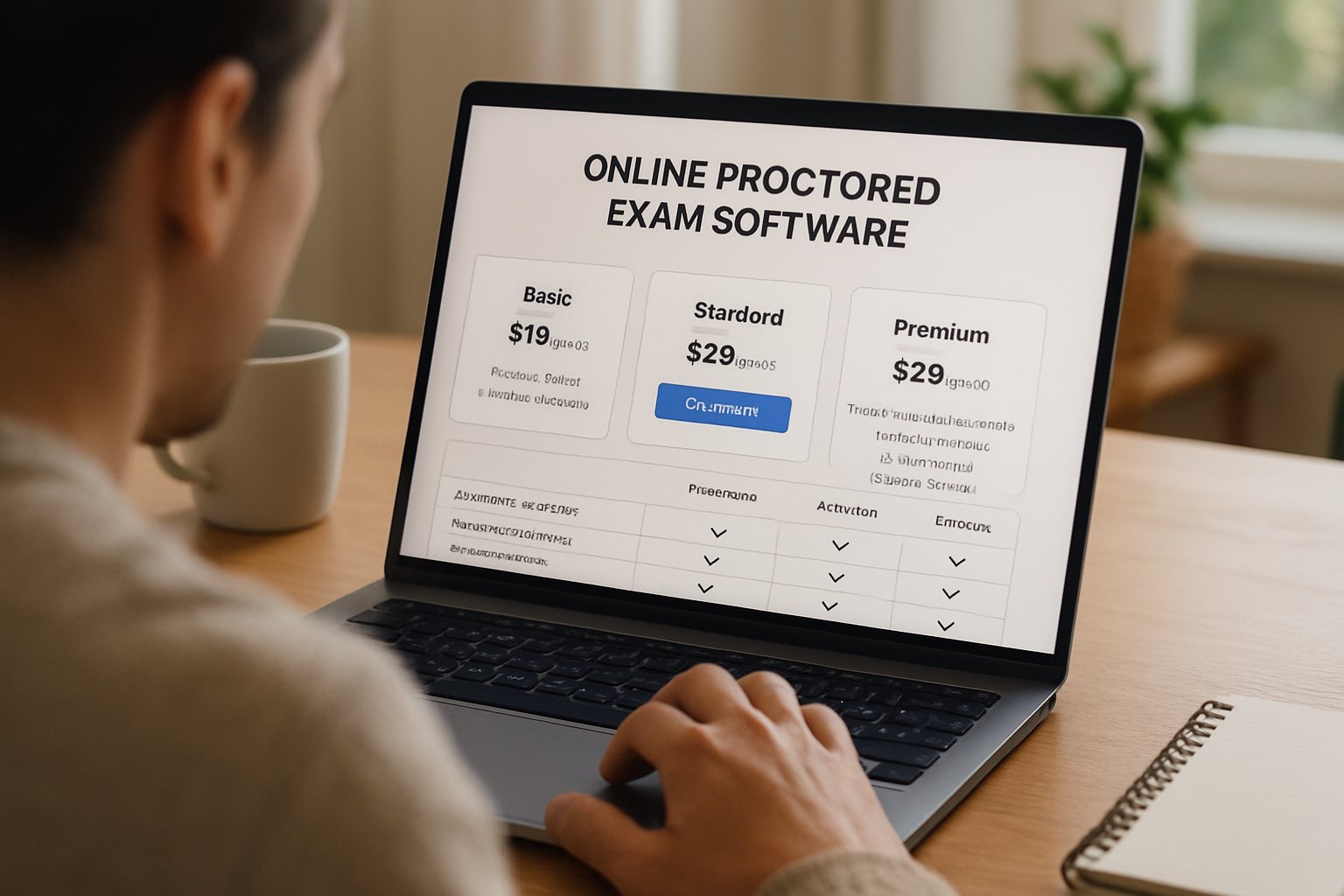
Faculty Checklist for Secure Online Test Monitoring

Remote assessment is now routine across higher education, certification, and corporate learning. Yet stakes rise when online test monitoring drives decisions about grades, credentials, and careers.

Faculty therefore need a clear, research-informed playbook to protect integrity while respecting privacy and accessibility.
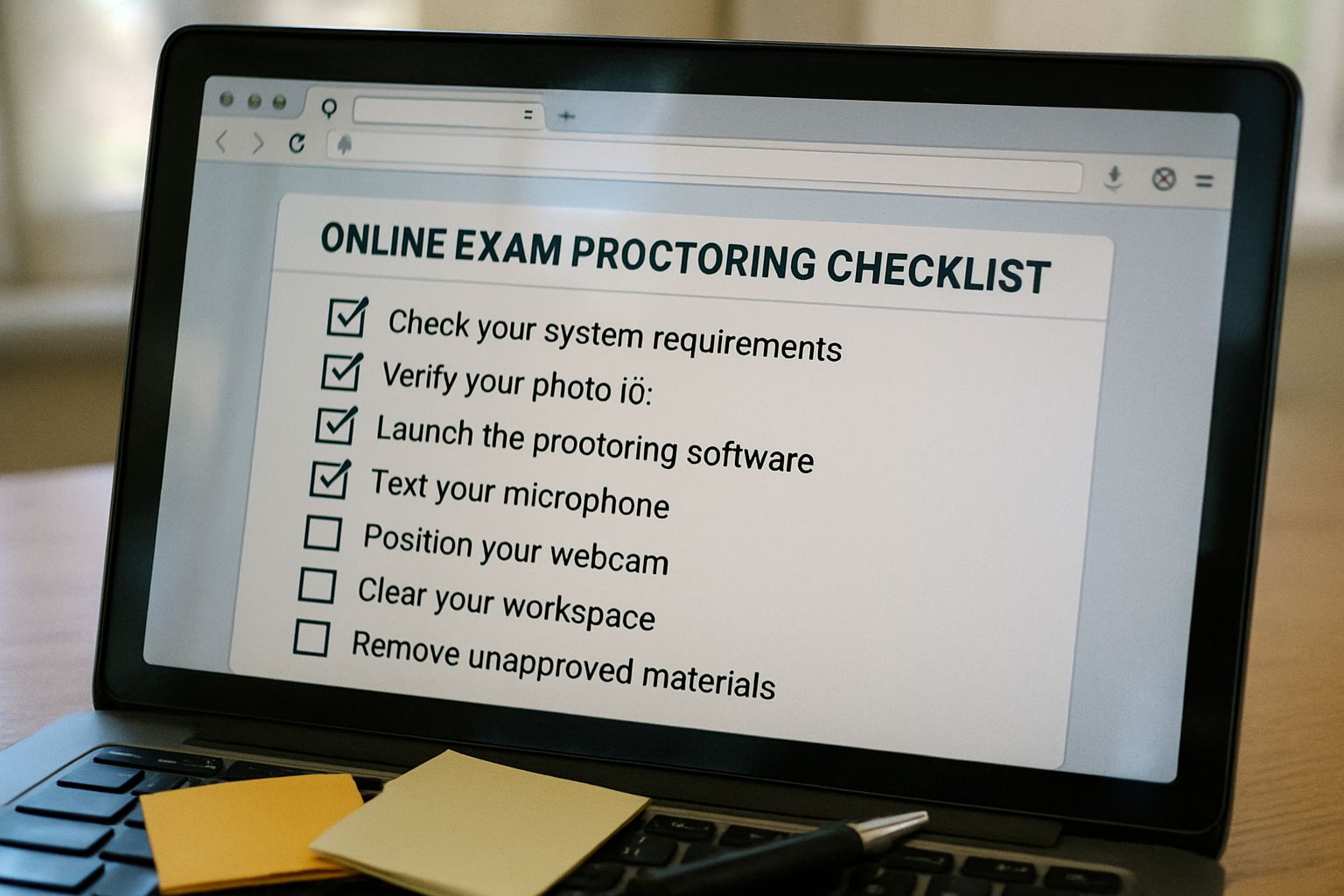
Online test monitoring checklist on computer screen with study materials
A digital checklist for online test monitoring keeps exam processes organized.

This article distills the latest market data, legal signals, and expert advice into an actionable checklist. Use it to configure every remotely proctored exam with confidence, transparency, and student support.

Global spending on proctoring software already exceeds US$800 million and analysts forecast near-double growth by 2029. Meanwhile, court decisions such as Ogletree v. Cleveland State caution campuses against intrusive room scans.

You must steer between opportunity and risk. Let’s dive in and build a proctoring plan that stands up to legal scrutiny and academic review.

Throughout, the term online test monitoring appears in context to reinforce search relevance without sacrificing clarity. Let’s dive in and build a proctoring plan that stands up to legal scrutiny and academic review.

Remote Proctoring Market Trends

Industry analysts project the global market to reach nearly US$2 billion by 2029, with 10-17% compound growth. Advanced AI, cloud delivery, and flexible licensing make online test monitoring attractive for universities and certification boards. Educational institutions remain the dominant customer segment, though corporate L&D programs are expanding usage. However, many campuses negotiate shorter contracts and broaden alternatives to control risk. Institutions monitor search trends and see online test monitoring mentioned in most ed-tech RFPs.

Growth continues, but scrutiny grows even faster. Next, we examine the legal context shaping configuration choices.

Legal And Privacy Shifts

The 2022 Ogletree ruling declared mandatory room scans an unreasonable search under the Fourth Amendment. Consequently, several universities disabled that feature or require explicit student consent. Privacy advocates, ACLU among them, demand limits on biometric processing and long data retention. FERPA adds another compliance layer, mandating clear access controls and timely deletion. Meanwhile, accessibility offices warn of algorithmic bias and false flags against disabled students. Sound policies turn online test monitoring from liability into trusted practice.

Legal and civil-rights pressures are real and rising. Therefore, faculty must configure each remotely proctored exam with precision, as the next checklist shows.

Faculty Setup Checklist Guide

Begin planning weeks before the test window opens. The following steps align with top campus guides and vendor best practice.

One Page Quick List

  • Post a detailed syllabus notice covering tool, data use, fees, and accommodation contacts.
  • Create an ungraded practice quiz to test cameras, microphones, and lockdown settings.
  • Coordinate with Disability Services to confirm extended time and alternative workflows.
  • Disable invasive room scans unless legal counsel grants written approval.
  • Randomize questions and apply reasonable time limits tied to cognitive difficulty.
  • Publish a clear appeals process and a two-step flag review protocol.

Together, these items build transparency and reduce disputes. Effective online test monitoring depends on that groundwork. Now, let’s move to operational tips for exam day.

Exam Day Execution Tips

Remind students 48 hours ahead to retest equipment and internet stability. Ask them to start early to avoid authentication eating into response time. Furthermore, keep the launch window narrow yet flexible to respect global time zones. During the session, online test monitoring tools log every action for later analysis. Select one consistent proctoring mode to prevent software conflicts. Meanwhile, have IT or vendor chat standing by for live triage. A calm student starts a remotely proctored exam with clearer focus and fewer technical surprises.

Smooth operations lower student stress and flag volume. Subsequently, attention shifts to reviewing what the system records.

Post Exam Review Protocols

Never treat automated alerts as definitive proof. Online test monitoring generates many data points that require human interpretation. First, instructors examine flagged segments alongside metadata such as eye-gaze charts. Second, they interview the student before pursuing discipline. Consequently, false positives get cleared while true violations proceed through formal policy. Store recordings only as long as retention rules allow, then delete securely.

A documented workflow protects fairness and privacy. Before closing, consider broader risk-mitigation tactics.

Key Risk Mitigation Tactics

Start with an honest needs analysis; some courses thrive with open-book alternatives instead. Moreover, offer an on-campus option for students lacking private space or stable bandwidth. Use moderate flag sensitivity to reduce bias against darker skin tones or neurodivergent behaviors. When configured wisely, online test monitoring supports equity rather than threatens it. Finally, run periodic vendor audits covering security, uptime, and data handling.

Proactive safeguards keep reputation intact. We can now summarize the full strategy.

Across the full cycle—planning, delivery, and review—you now have a repeatable blueprint. Follow it and online test monitoring becomes a transparent, defensible part of your assessment toolkit. Consistent preparation, conservative settings, and fair review neutralize most technical, legal, and equity risks. Choosing a reliable partner makes every remotely proctored exam smoother for faculty and students.

Why Proctor365? Our AI-powered proctoring engine pairs advanced identity verification with scalable exam monitoring trusted by global exam bodies. The platform delivers real-time analytics, low-latency video, and robust data protection. Setup typically completes in minutes and integrates smoothly with major LMS platforms. Therefore, your staff stay focused on teaching while integrity stays intact. Experience streamlined online test monitoring today by visiting Proctor365.

Frequently Asked Questions

  1. What is online test monitoring and how does it ensure exam integrity?
    Online test monitoring employs AI and real-time analytics to secure exam integrity. It uses robust identity verification and fraud prevention measures, ensuring transparent and fair assessments while upholding high academic standards.
  2. What best practices help configure a secure online proctored exam?
    Best practices include detailed pre-exam notices, ungraded system checks, disabling intrusive scans, and clear appeal protocols. These measures leverage AI proctoring and identity verification to ensure compliance and reduce false flags.
  3. How does Proctor365 address legal concerns and privacy in remote proctoring?
    Proctor365 follows strict legal and privacy standards by employing secure data handling, limited recording retention, and non-intrusive identity checks. This ensures compliance with regulations while minimizing student privacy intrusions.
  4. How does AI proctoring by Proctor365 enhance exam security and fairness?
    Proctor365’s AI proctoring offers real-time analytics, secure identity verification, and advanced fraud prevention. These features ensure unbiased exam monitoring, reduce technical risks, and create a secure, efficient testing environment for all.
GDPR Guide to Online Test Monitoring

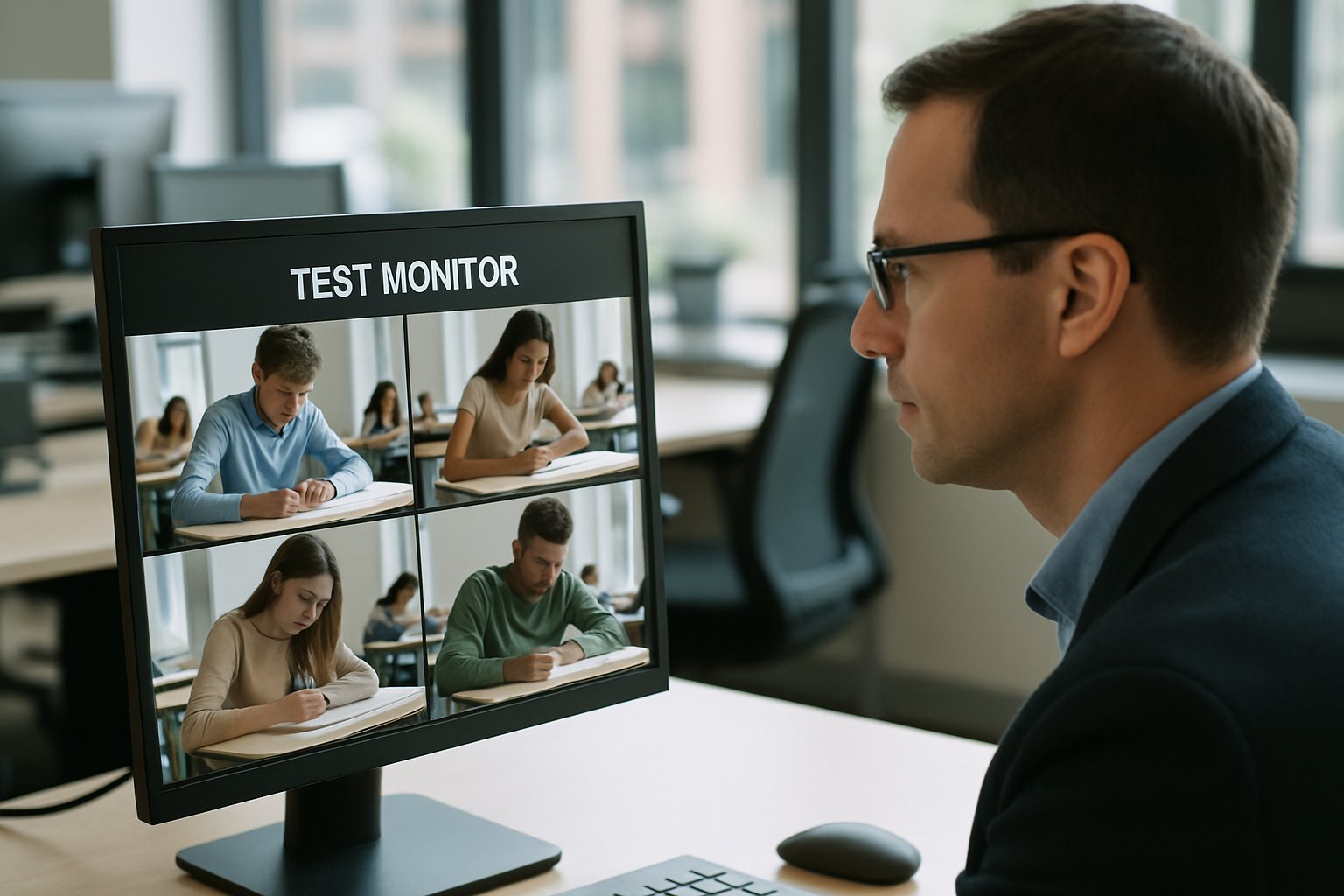
Educators love digital flexibility, but European privacy law raises hard questions. Institutions that adopt online test monitoring must meet strict GDPR rules or face fines. Recent French and Italian decisions highlight the stakes for every remotely proctored exam. Meanwhile, market demand grows quickly, reaching near-billion dollar levels this year. Consequently, universities, ed-tech platforms, and corporate trainers need a clear roadmap. This article offers practical guidance from regulator texts, enforcement cases, and security best practices. Moreover, students increasingly expect privacy assurance alongside academic fairness. Therefore, aligning innovation with compliance now defines institutional credibility. A EUR 200,000 fine against Bocconi University underlines the cost of mistakes. French regulator CNIL now issues detailed proctoring recommendations that stress proportionality and student choice. Consequently, strategic planning beats reactive fixes every time. This overview delivers that plan.

GDPR Pressure Intensifies Now

Regulators across Europe keep raising the bar. CNIL’s 2023 guidance demands proportionality, limited automation, and on-site alternatives. Similarly, the Italian Garante’s Bocconi decision banned biometric scans and rejected forced consent. Moreover, other data protection authorities review similar complaints, signalling more decisions soon.

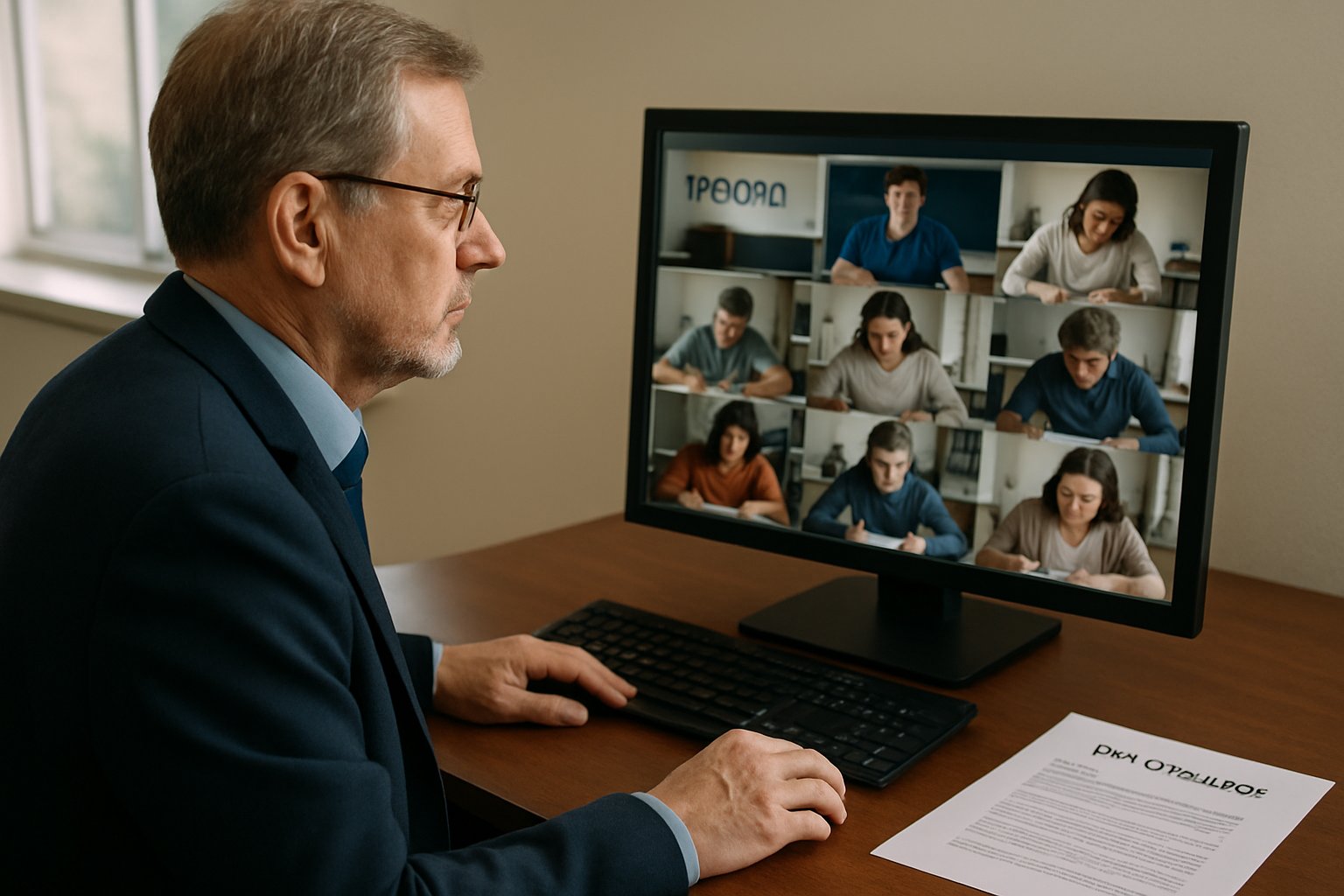
Exam proctor reviewing online test monitoring footage for compliance.
A university proctor monitors online exams, emphasizing compliance with regulations.

GDPR scrutiny is growing fast. Institutions should act before inspectors arrive. Next, consider specific risk areas.

Online Test Monitoring Risks

Online test monitoring technologies capture video, audio, screens, and keystrokes. These feeds often fuel AI flagging tools that may mislabel innocent behavior. Meanwhile, a remotely proctored exam exposes students’ private spaces, raising discrimination and equity worries.

  • EUR 200,000 fine issued to Bocconi University in 2021.
  • Global market estimated between USD 650M and 1.45B for 2024.
  • Leading vendors manage tens of millions of sessions annually.

The risks combine legal, financial, and reputational damage. Effective controls lower each exposure quickly. Understanding roles is the next step.

Defining Controller Role Duties

Under GDPR, the institution commissioning online test monitoring for a remotely proctored exam is the data controller. Therefore, it must pick the lawful basis, run due diligence, and oversee processors. Most vendors act only on instructions, yet some claim co-controller status. Clarify positions early and write robust Article 28 contracts covering security, audits, and sub-processors.

Clear contracts assign responsibility without ambiguity. Controllers remain accountable even after delegation. That accountability shapes your DPIA.

Risk Assessment Essentials Explained

A Data Protection Impact Assessment is mandatory for large-scale home surveillance. Start early, involve the DPO, and document mitigations like reduced recording time. If high residual risk persists, regulators expect prior consultation before launch. A detailed DPIA for online test monitoring shows where to remove unnecessary intrusions.

Automated Decision Limits Rule

Flagging algorithms should only suggest issues. Human reviewers must confirm any cheating allegation before penalties. Consequently, you avoid unlawful automated decisions under Article 22.

Thorough DPIAs uncover technical and human fixes. They protect both students and institutions. Transfers pose the next hurdle.

Data Transfer Safeguards Checklist

Many proctoring vendors host servers in the United States. Since July 2023, the EU-US Data Privacy Framework offers one lawful route. Alternatively, use Standard Contractual Clauses and complete a transfer impact assessment. Moreover, confirm vendor certification status and log annual reviews. Data exported during online test monitoring must travel with encryption and lawful agreements.

Solid transfer measures avoid sudden service disruption. They also reassure privacy officers and boards. Transparency for students matters just as much.

Student Rights Transparency Basics

GDPR demands clear, early notices. Explain what is collected, why, retention period, and appeal routes. Offer an on-site option for any remotely proctored exam when feasible. Additionally, provide equipment support to reduce digital inequality.

Respectful communication builds trust quickly. It also reduces complaints later. The checklist below consolidates actions.

Conclusion

Strong policies, rigorous DPIAs, and transparent notices are the pillars of safe online test monitoring. When each policy links directly to student rights, complaints fall and exam integrity rises. Moreover, regulators reward early adopters that document proportionality and offer fair alternatives.

Why Proctor365? The platform delivers AI-powered proctoring, advanced identity verification, and scalable monitoring trusted by global exam bodies. Consequently, institutions gain reliable online test monitoring without sacrificing privacy.

Therefore, your team can focus on teaching while our technology protects every assessment. Improve integrity today by booking a demo at Proctor365. Immediate deployment is ready for your next remotely proctored exam.

Frequently Asked Questions

  1. What GDPR risks are associated with online test monitoring?
    Online test monitoring raises GDPR concerns such as unauthorized video, audio, and keystroke recording, which may breach student privacy. Institutions must conduct thorough DPIAs and implement strict data safeguards, similar to Proctor365’s compliant approach.
  2. How does Proctor365 ensure exam integrity and data privacy?
    Proctor365 uses AI-powered proctoring, advanced identity verification, and robust fraud prevention to secure exams. Its compliance with GDPR standards and transparent policies make it a trusted choice for protecting student data and exam integrity.
  3. Why is a Data Protection Impact Assessment (DPIA) essential in remote proctoring?
    A DPIA identifies privacy risks associated with remote proctoring, ensuring institutions address areas like data collection and storage. This assessment helps comply with GDPR, reducing legal and reputational risks, while platforms like Proctor365 offer secure solutions.
  4. What best practices should institutions follow for secure online test monitoring?
    Institutions should adopt clear policies, transparent student notices, secure data transfers, and robust contractual safeguards. Leveraging platforms like Proctor365 ensures AI-driven proctoring, effective fraud prevention, and reliable identity verification in exam monitoring.

How online test monitoring secures language exams worldwide

Universities now recruit globally, yet language qualification logistics often slow admissions.

COVID disruptions accelerated permanent shifts toward computer-based delivery for TOEFL, IELTS, and newer tests.

Professional reviewing online test monitoring video feeds for language exams.
An expert reviews live video feeds to ensure secure online language testing.

However, expanded reach means new fraud risks that could erode institutional trust.

Therefore, online test monitoring emerged as a critical guardrail for high-stakes language assessments.

The approach layers identity checks, secure browsers, continuous video, and AI analytics to spot misconduct.

Consequently, candidates gain convenience while administrators keep defensible validity evidence.

This article unpacks current techniques, benefits, concerns, and best practices drawn from recent market data.

Readers will leave with a practical roadmap for safer, scalable language testing.

Real examples from TOEFL iBT Home Edition and Duolingo English Test illustrate evolving security models.

Meanwhile, privacy and equity remain central considerations that require balanced governance.

Online Test Monitoring Layers

High-stakes language exams rely on multiple defences rather than one barrier.

Firstly, candidates upload a government ID, complete liveness prompts, and match their face algorithmically.

Secondly, a locked browser blocks screen captures, plugins, and tab switching.

During the session, AI engines flag missing faces, extra voices, or unusual eye patterns for human review.

Finally, post-test analytics search for score spikes, answer synchrony, and other statistical anomalies.

Layered design raises the cost of cheating and reduces false negatives.

Consequently, institutions gain stronger confidence in reported proficiency scores.

Next, we examine the threats these layers address.

Threats Facing Language Exams

Impersonation remains the most lucrative threat for organised fraud rings.

Proxy testers can earn thousands by obtaining visas or scholarships for clients.

Moreover, collusion via messaging apps enables group answers during a remotely proctored exam.

Hidden earbuds or secondary phones supply unauthorized translation aids, distorting ability measures.

However, online test monitoring logs second-device audio and detects suspicious gaze shifts.

Modern language exams face sophisticated digital and human attacks.

Therefore, monitoring must evolve alongside threat creativity.

Accessible reach is the next critical angle.

Access And Equity Gains

Remote delivery slashes travel costs, enabling rural or mobility-restricted candidates to test sooner.

Duolingo reports acceptance by 5,500 programs, demonstrating institutional appetite for inclusive access.

Additionally, a remotely proctored exam can issue scores within 48 hours, expediting admissions cycles.

Yet equitable security demands bandwidth flexibility and clear accommodation pathways for disabilities.

Online test monitoring allows hybrid camera setups that tolerate lower resolutions without sacrificing flagging power.

Remote models widen participation without compromising rigour.

Still, privacy pressures intensify as home spaces become test centres.

Therefore, we explore balancing surveillance with candidate rights.

Balanced Privacy Approach Needed

Continuous video inside bedrooms raises legitimate concerns about biometric storage and surveillance creep.

EPIC and other groups urge strict data minimization and independent bias audits.

Furthermore, NIST research shows face algorithms can misread darker skin tones, risking false alerts.

Institutions should publish retention limits, allow appeal channels, and keep humans in the decision loop.

When online test monitoring pairs transparent rules with review committees, stress and legal exposure fall.

Privacy by design sustains candidate trust and regulatory compliance.

Consequently, best practice frameworks have emerged.

The next section distills those guidelines.

Best Practice Checklist Outline

Experts recommend a defence-in-depth checklist grounded in practical experience.

  1. Verify identity with ID, selfie, and liveness within 60 seconds.
  2. Lock browsers, disable virtual machines, and restrict copy-paste.
  3. Combine AI alerts with trained human auditors.
  4. Publish data retention, appeal procedures, and accessibility options.
  5. Rotate large item banks and run statistical forensics post-exam.

Moreover, practising these steps during a pilot remotely proctored exam surfaces technical issues early.

Online test monitoring should be audited annually against emerging threats and privacy statutes.

Structured checklists turn theory into repeatable operations.

Therefore, leaders can scale programmes without fear.

Finally, market data signal sustained adoption.

Market Trends And Stats

Analysts estimate the online proctoring market will exceed USD 2 billion before 2030.

Growth tracks rising cross-border enrolment, corporate upskilling, and continuous certification.

Meanwhile, vendors race to merge AI, biometrics, and cloud scalability across each remotely proctored exam segment.

Proctor365 and other hybrid platforms integrate LMS APIs, multi-camera support, and global reviewer pools.

As investment rises, standards bodies may codify fairness benchmarks for online test monitoring technology.

Market momentum confirms remote assessment is permanent.

Consequently, choosing reliable partners grows more important.

We conclude with actionable next steps.

Conclusion

High-stakes language tests now depend on layered controls, statistical forensics, and transparent governance.

Implemented well, these measures deter impersonation, protect item pools, and accelerate score delivery.

However, success requires technology that respects privacy and accommodates diverse candidates.

Proctor365 answers that challenge through AI-powered proctoring, advanced identity verification, and scalable exam monitoring.

The platform already supports universities, certification bodies, and corporate L&D teams on every continent.

Because online test monitoring is its core mission, Proctor365 continually updates detectors and reviewer training.

Visit Proctor365 today to safeguard your next remotely proctored exam.

Frequently Asked Questions

  1. What measures are used in online test monitoring to ensure exam integrity?
    Online test monitoring employs identity verification, secure browser lockdowns, and AI analytics paired with continuous video monitoring to flag suspicious behaviors. This layered approach enhances exam integrity and deters fraud.
  2. How does Proctor365 protect against fraud in remote language exams?
    Proctor365 protects remote language exams using AI-powered proctoring, advanced identity verification, and layered security measures. These features help detect impersonation, proxy testing, and collusion, ensuring robust fraud prevention.
  3. What benefits does remote test monitoring offer candidates and institutions?
    Remote test monitoring offers candidates convenience and reduced travel costs, while institutions benefit from expedited score delivery, effective fraud prevention, and reliable statistical forensics that uphold exam fairness.
  4. How does Proctor365 balance privacy and exam security?
    Proctor365 balances exam security and privacy by implementing AI proctoring with strict data minimization, transparent retention policies, and human oversight. This approach safeguards candidate rights while maintaining effective fraud detection.

Bathroom Break Rules in Online Test Monitoring

Your top student asks a familiar question minutes before a remote final: “Can I leave for the restroom?” Despite widespread online test monitoring, the answer still depends on who controls the exam. Institutions, vendors, and disability offices each shape bathroom break rules.

This article unpacks those policies for universities, ed-tech partners, and corporate L&D teams. We map the latest vendor guidance, legal obligations, and student welfare considerations. You will leave ready to craft consistent, defensible rules before your next remotely proctored exam.

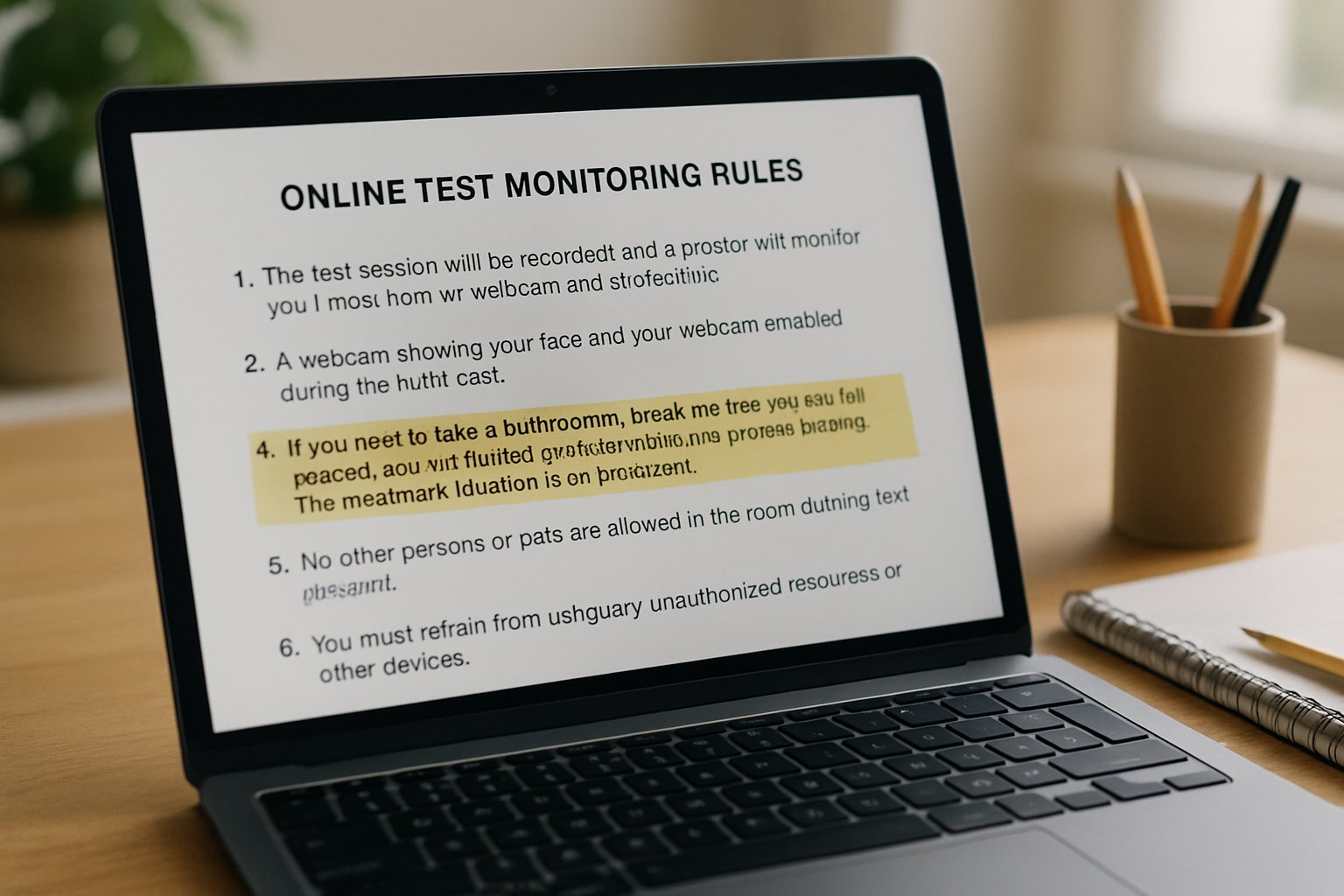
Laptop showing online test monitoring rules with bathroom break policy highlighted.
Bathroom break policies are clearly outlined in online test monitoring rules.

Remote bathroom guidance now appears in vendor FAQs, disability policies, and tech press headlines. Consequently, administrators must synthesize scattered information into one consistent rule set. This guide distills that material, referencing Pearson VUE, ProctorU, and LSAC policies. It also provides actionable checklists your team can deploy before the next testing window. Read on to protect exam integrity without sacrificing student health or legal compliance. Prepared leaders prevent panic.

Online Test Monitoring Rules

First, understand the hierarchy governing bathroom breaks. Most exams rely on online test monitoring settings defined by the exam owner.

Consequently, a university might forbid any camera departure, while a certification board allows timed breaks. The vendor platform only enforces what the administrator selects.

In short, policies differ because power sits with the test owner. Next, examine how major vendors translate those choices into rules.

Why Policies Often Vary

However, several forces shape break permissions. Academic integrity teams fear unsupervised minutes during a remotely proctored exam. Meanwhile, disability advocates highlight medical needs requiring flexible scheduling.

Therefore, institutions tread a line between online test monitoring security, accessibility, and reputation. Market research shows remote proctoring remains a multimillion-dollar fixture in higher education. Careful policy review helps prevent public controversy.

Policies vary because each stakeholder values risk differently. Now, see how platforms codify these preferences.

Common Vendor Break Rules

Vendor documents reveal stark contrasts. Pearson VUE OnVUE forbids any exit; leaving can automatically terminate the session. ProctorU defers to the exam owner, yet still records movement logs.

Proctorio encourages allowing bathroom breaks, provided re-authentication occurs on return. Consequently, two exams on the same platform may apply different break logic.

During a remotely proctored exam, leaving the camera view can trigger an auto-termination.

  • No-break mode: timer continues; session ends if camera empty.
  • Timed break mode: clock keeps running; re-scan required.
  • Accommodation break mode: extra time added; documentation filed.

These patterns help online test monitoring administrators predict candidate behavior. Next, weigh accessibility implications.

Accessibility And Fairness Needs

Equity demands break flexibility for some candidates. A remotely proctored exam must respect documented medical or disability needs under ADA guidelines. Moreover, many institutions grant extra time or scheduled pauses after reviewing accommodation letters.

However, last-minute requests often fail because settings are locked 48 hours before launch. Therefore, proactive communication protects both student welfare and exam integrity.

Fair policies blend compassion with verification. The next subsection outlines a clear request workflow.

Accommodation Request Steps Guide

  1. Submit documentation to disability office at least two weeks ahead.
  2. Confirm approval in writing.
  3. Notify the proctoring vendor through the exam owner.
  4. Test settings get updated; verify confirmation.

Following these steps minimizes confusion on exam day, consequently reducing incident reports. Effective online test monitoring must coexist with these accommodations without introducing bias.

Creating Clear Exam Instructions

Transparent messaging prevents surprise bathroom requests mid-session. Include break rules in the syllabus, the test invitation, and the launch chat.

Moreover, embed a quick reference inside the assessment platform banner. Students can glance up and confirm whether a restroom trip ends the attempt.

Consistent online test monitoring directions cut down live proctor interventions. Next, prepare your staff and learners.

Remind candidates that a remotely proctored exam often keeps the timer running during any departure.

Practical Exam Prep Checklist

Administrators need a repeatable routine before every assessment. Consequently, many teams run a dry-run session to validate webcams, ID scans, and break settings.

Use the following quick checklist:

  • Publish break rule summary 72 hours prior.
  • Verify online test monitoring configuration matches policy.
  • Confirm proctors understand re-authentication flow.
  • Post support contacts for technical issues.

A disciplined checklist prevents last-minute chaos. Finally, consider where policy trends appear headed.

Future Policy Outlook Trends

Remote assessment and online test monitoring are evolving alongside privacy regulations and AI analytics. Moreover, some campuses now pilot open-book formats that lower surveillance demands. Yet high-stakes certifications still lean on rigorous controls.

Industry experts expect hybrid human-plus-AI models to dominate. Therefore, flexible bathroom policies will likely stay configurable per exam.

Staying current requires periodic policy reviews with stakeholders. Let us end with actionable takeaways.

Bathroom break rules hinge on the exam owner, the vendor, and accommodation law. Know the hierarchy, document decisions, and clarify them early. Apply accessibility principles, maintain security logs, and test configurations well before launch.

Why Proctor365? Our AI-powered platform delivers reliable online test monitoring with advanced identity verification, scalable exam supervision, and global trust. Consequently, universities, certification boards, and corporations secure assessments without silencing candidate needs. Explore how Proctor365 fortifies exam integrity today. Visit Proctor365 to safeguard your next assessment.

Frequently Asked Questions

  1. What are the common vendor guidelines regarding bathroom breaks in remotely proctored exams?
    Vendor policies vary; some completely disallow breaks while others permit timed or accommodation breaks. Exam owners set these rules with re-authentication to maintain exam integrity.
  2. How does online test monitoring enhance exam security?
    Online test monitoring employs real-time AI proctoring, fraud prevention, and identity verification to safeguard exam integrity and ensure consistent, secure enforcement during remotely proctored assessments.
  3. How does Proctor365 ensure fair accommodation for exam break requests?
    Proctor365 integrates flexible settings for documented medical needs while maintaining strict online test monitoring, using AI proctoring and fraud prevention to comply with ADA guidelines and secure exam sessions effectively.
  4. What steps should institutions take to prepare for remotely proctored exams?
    Institutions should publish clear break rules, conduct dry runs to verify hardware and settings, update policies well in advance, and train proctor staff to ensure a seamless and secure remotely proctored exam environment.


10 Browser Security Musts for Online Test Monitoring

High-stakes exams have moved online, yet cheats still exploit weak browsers. Robust online test monitoring therefore depends on hardened browser security controls. This article explains the features every assessment leader must demand.

We draw on recent vendor policies, court rulings, and enterprise best practices. Our focus stays practical for universities, ed-tech, certification bodies, and corporate learning teams. Read on to defend integrity without sacrificing privacy or accessibility.

Test administrator monitoring online test sessions for security.
Proctors use robust browser security tools to monitor online exams in real time.

First, we map the market and its shift toward managed device strategies. Next, we dissect browser lockdown, identity assurance, and compliance implications. Finally, a checklist helps teams prepare for any remotely proctored exam scenario.

Along the way, we spotlight real risks such as room scans ruled unconstitutional. Concrete recommendations follow each section for quick adoption.

Because speed matters, each sentence remains concise and actionable. Let us begin by analyzing shifting market dynamics. Understanding those shifts sets the stage for stronger browser defenses.

Secure Online Test Monitoring

Effective monitoring begins with a clear threat model. Students can switch tabs, capture screens, or impersonate peers if controls lag. Therefore, security must lock down the browser, the device, and the network path.

Institutions also face legal scrutiny when policies overreach. Balancing integrity, privacy, and accessibility sets the foundation for every subsequent control.

Strong fundamentals guide every later decision. Next, we examine market trends shaping those fundamentals.

Shifting Market Landscape Trends

The proctoring market continues double-digit growth despite privacy headwinds. Analysts estimate 2024 revenues between USD 0.8 and 2.4 billion. Moreover, compound annual growth rates hover in the mid-teens through 2035.

  • Respondus serves over 2,000 institutions.
  • Room-scan litigation increases procurement scrutiny.
  • Managed device strategies gain traction in K-12.

Such figures prove that secure online test monitoring remains mission-critical during each remotely proctored exam cycle. Nevertheless, institutions now favor enterprise browser policies over heavy client installs.

Market data underscores rising demand and rising risk. With context set, we dive into browser lockdown specifics.

Browser Lockdown Basics Explained

Lockdown browsers restrict navigation, shortcuts, developer tools, and printing. Safe Exam Browser and Respondus are leading online test monitoring examples. They disable screen grabs, enforce full-screen, and detect virtual machines.

However, device-level kiosk modes in ChromeOS or Edge often yield similar protection without extra installs. When paired with online test monitoring policies, kiosk mode blocks tab switching during any remotely proctored exam.

Choose lockdown clients only when device policies fall short. Next, we explore those policies in depth.

Why Device Policies Matter

Enterprise browsers expose hundreds of granular controls. Admins can disable screenshots, extensions, devtools, and downloads with JSON policy files. Additionally, Edge kiosk can auto-launch the exam URL in single-app mode.

Such policies travel with managed devices, making support predictable during a remotely proctored exam. Consequently, fewer downloads mean fewer urgent help-desk tickets.

Device policies eliminate many classroom headaches. Now, attention shifts to verifying the test taker.

Key Identity Assurance Tactics

Identity checks must be strong yet respectful. WebAuthn passkeys bind the exam account to hardware, blocking credential sharing. Moreover, multifactor prompts reduce reliance on facial algorithms that can misfire.

Institutions should layer these steps into their online test monitoring workflow for every high-stakes attempt. During a remotely proctored exam, hardware keys prove cheaper and less biased than biometrics.

Strong identity boosts deterrence and audit confidence. Next, we balance these controls with privacy obligations.

Balancing Privacy And Compliance

Legal risk grows when surveillance feels excessive. Courts now reject blanket room scans, citing constitutional limits. Therefore, collect only necessary data and publish clear retention periods.

Privacy-by-design still allows effective online test monitoring without continuous audio or invasive video sweeps. Meanwhile, audit logs must stay tamper-resistant yet purge automatically after policy deadlines.

Transparent policies build student trust and regulator goodwill. Finally, we condense recommendations into a simple checklist.

Practical Implementation Checklist Guide

Use this quick list to verify readiness before each remotely proctored exam.

  • Enforce kiosk or lockdown mode on managed devices.
  • Disable screenshots and unapproved extensions via policy.
  • Integrate WebAuthn passkeys for identity confirmation.
  • Publish short, clear data retention schedules.
  • Document accessibility exceptions and manual review steps.

Together, these tasks strengthen the entire assessment lifecycle. Now, let us wrap with key insights and next steps.

Browser security, device management, identity checks, and privacy safeguards work best as one system. Follow the checklist to deploy reliable defences in every remotely proctored exam. When done right, online test monitoring deters cheating while respecting student rights.

Why Proctor365? Our AI-powered engine flags anomalies in real time and scales effortlessly from class quizzes to global certifications. Advanced identity verification with passkeys, face match, and document checks stops imposters cold. Moreover, granular privacy controls and short retention windows satisfy stringent compliance regimes. Trusted by universities and exam bodies worldwide, Proctor365 delivers secure, scalable oversight you can prove. Book a demo at Proctor365.ai and protect your next session.

Frequently Asked Questions

  1. How do lockdown browsers enhance online exam security?
    Lockdown browsers disable navigation, screenshots, and other unauthorized functions, ensuring exam integrity. They create a secure testing environment, which complements Proctor365’s robust monitoring features for reliable proctoring.
  2. How does Proctor365 utilize AI proctoring and identity verification for fraud prevention?
    Proctor365 combines AI-driven real-time monitoring with robust identity verification methods, including WebAuthn passkeys and face match, to detect anomalies and prevent cheating, ensuring secure and compliant remote exam environments.
  3. Why are device policies critical for remote proctoring?
    Enterprise-level device policies allow granular controls such as disabling screenshots and unapproved extensions. They enable consistent enforcement during exams, and when paired with Proctor365’s secure integrations, reduce support issues and enhance security.
  4. What privacy safeguards ensure exam integrity with Proctor365?
    Proctor365 emphasizes privacy by implementing short retention windows and transparent data policies. This compliance-focused approach balances effective exam monitoring with strict privacy controls, preventing unauthorized data collection while maintaining exam security.

Does online test monitoring lower or level student scores?

Universities now grapple with a clear question: does online test monitoring change how students score during high-stakes assessments? Administrators must balance integrity, privacy, and equity while the research base evolves rapidly. Updated evidence offers guidance yet still sparks debate.

Recent studies paint a mixed picture. A large PNAS study found strong score correlations across formats. Conversely, a randomized field experiment showed webcam proctoring cut average grades by one-third of a standard deviation.

Online test monitoring viewed from a proctor’s screen during a remote exam session.
An online exam proctor oversees a student’s test session remotely.

Meanwhile, legal scrutiny and student anxiety complicate adoption decisions. Nevertheless, global demand rises as institutions pursue scalable digital assessment. Evidence about online test monitoring remains nuanced.

For stakeholders, the stakes extend beyond grades to credential value and institutional reputation. Moreover, national regulators increasingly demand proof that digital assessments deter misconduct without harming equity. This article reviews the latest evidence and offers actionable guidance for decision-makers. Throughout, we highlight practical lessons for any scale, from a single remotely proctored exam to national licensing.

Current Evidence Landscape Review

Chan and colleagues analyzed 2,010 students across 18 courses. They compared in-person scores with unproctored exams, absent online test monitoring. Correlations remained substantial, implying limited widespread cheating.

These findings echo licensure data covering 14,097 professional candidates. Scores and pass rates stayed similar across test-center and live remote formats. Consequently, many experts call such parity reassuring.

  • PNAS within-student correlation: high across 18 courses.
  • Licensure mean effect size: Hedges g 0.19.
  • Global market: USD 0.6-1.2B mid-2020s.

Overall, large observational studies suggest format alone need not shift achievement. Next, we inspect randomized evidence for deeper causal insight.

Randomized Trial Score Insights

A Spanish field experiment randomly assigned 412 students to webcam-on or webcam-off conditions. Students under active monitoring scored around 0.25 standard deviations lower. Researchers attribute the gap to blocked cheating rather than test anxiety.

Importantly, the researchers labelled the webcam stream a form of online test monitoring. Thus, the causal link strengthens integrity claims.

Randomized data shows monitoring can deter dishonest boosts. However, results may differ in another remotely proctored exam setting.

Large Cohort Score Trends

Professional licensure testing offers another lens. In 14,097 cases, live remote proctoring mirrored test-center performance. Average differences favored remote candidates by only 0.19 effect size.

Similarly, many course-level comparisons during the pandemic found parallel grade distributions. These were sometimes minimally proctored, sometimes a fully remotely proctored exam. Yet score integrity largely persisted.

Large cohorts reveal stability across modalities. Consequently, context matters more than technology alone for online test monitoring outcomes.

Stress And Equity Concerns

Despite integrity gains, student wellbeing remains a pressing issue. Survey work shows some learners fear false flags and intrusive webcam demands. International Journal for Educational Integrity reported heightened distress during a remotely proctored exam.

Privacy groups cite bias in facial detection and unconstitutional room scans. Moreover, unequal internet access can magnify disadvantage.

Equity gaps could erode trust if ignored. Therefore, institutions must align online test monitoring with humane, transparent safeguards.

Practical Implementation Guidance Steps

Stakeholders can mitigate risks through deliberate design.

  • Choose an online test monitoring mode matching exam stakes and learner needs.
  • Provide clear consent forms detailing data practices.
  • Offer alternative testing for students lacking private spaces.
  • Review AI flags quickly to avoid unfair delays.
  • Continuously audit accuracy during each remotely proctored exam cycle.

Additionally, publish summary statistics on breaches and resolutions. Such openness reinforces confidence in online test monitoring policies.

Good governance turns surveillance into assurance. Next, let us examine the expanding commercial landscape.

Industry Market Growth Outlook

Market research foresees double-digit growth for proctoring services through 2031. Insight Partners projects revenues reaching USD 2.34 billion with 15.5% CAGR. Drivers include flexible scheduling, cost savings, and rising acceptance of online test monitoring worldwide.

Vendors now tout AI that detects AI-generated answers. However, independent audits remain scarce.

Commercial momentum ensures rapid feature rollout. Consequently, buyers must demand verifiable evidence before adopting another proctored platform.

Legal And Policy Shifts

Courts increasingly scrutinize proctoring demands. In Ogletree v. Cleveland State, a judge ruled mandatory room scans unconstitutional. Meanwhile, universities shift vendors to reduce legal exposure.

Advocacy groups urge minimal intrusion and strong disability accommodations. Therefore, policy clarity should precede technology purchases.

Regulators will keep shaping acceptable surveillance limits. Thus, compliance teams must watch new rulings before scaling any remotely proctored exam initiative.

Conclusion And Next Steps

Research shows no single verdict on score impact. Observational studies suggest stability, while randomized studies reveal cheating deterrence and occasional stress declines. Equity, privacy, and legal challenges remain central. Accordingly, thoughtful design, transparent policy, and continuous evaluation are essential. Market trends indicate adoption will only accelerate.

Proctor365 meets these needs with AI-powered identity checks and scalable online test monitoring. Our platform verifies test-takers instantly, flags risks in real time, and protects data with robust encryption. Global universities and certification bodies already trust our secure, remotely proctored exam solution. Furthermore, customizable flag thresholds reduce false positives and administrative load. Discover how we elevate exam integrity at Proctor365.ai today.

Frequently Asked Questions

  1. How does online test monitoring impact student scores on high-stakes exams?
    Research shows remote proctoring causes only minor score shifts, deterring dishonest behavior while sustaining overall performance. This balance ensures exam integrity without drastically influencing student results.
  2. What are the key benefits of AI-powered proctoring systems?
    AI-powered proctoring, such as Proctor365, offers real-time identity verification, fraud prevention, and efficient flagging of suspicious behavior, enhancing exam integrity and ensuring secure, scalable assessment practices.
  3. How do modern proctoring solutions address privacy and equity concerns?
    Advanced online proctoring integrates transparent data practices, alternative testing options, and bias mitigation strategies. This approach protects privacy while ensuring equity, aligning with legal standards and student well-being.
  4. Why is continuous evaluation important in remote proctoring?
    Regular audits and swift reviews of AI flags improve monitoring accuracy and fairness. Continuous evaluation helps proctoring systems adapt to evolving research, compliance demands, and security enhancements.

Security Audit Checklist For Online Test Monitoring

Higher education and certification markets rely on online test monitoring to protect exam integrity. Yet privacy watchdogs, new biometrics rules, and student protests amplify risk. Stakeholders now demand proof that platforms stay secure, fair, and compliant.

This article offers a security audit checklist built for buyers of remotely proctored exam solutions. It distills recent NIST drafts, EU rulings, and EDUCAUSE guidance into practical steps. Use it to ask tough questions before signing any contract.

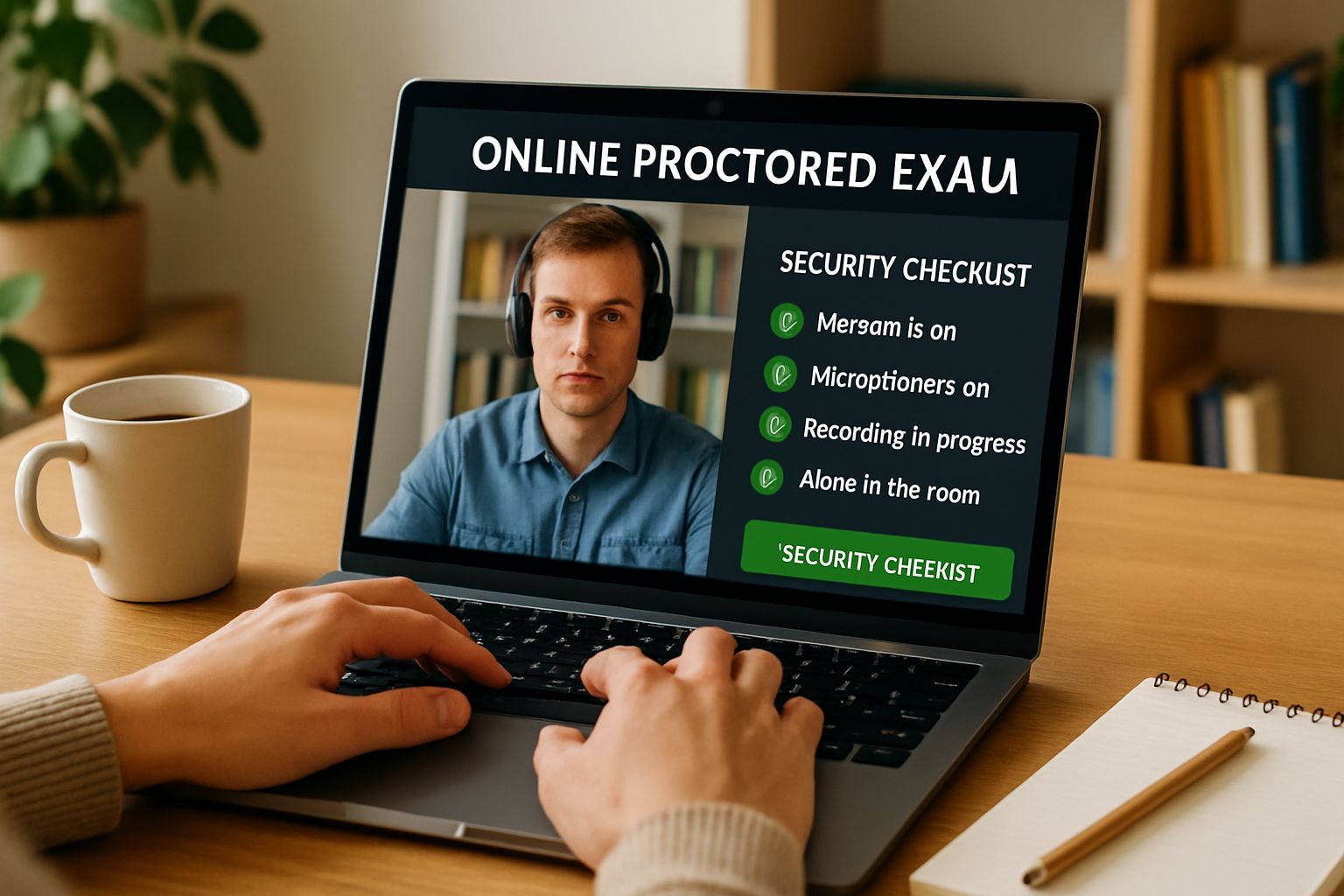
Online test monitoring security checklist during remote proctored exam
Ensuring every remote exam is secure with thorough online test monitoring checklists.

We also spotlight key market numbers and bias concerns shaping the conversation. Finally, we map operational metrics that verify ongoing vigilance. Let us start with the regulatory headwinds.

Regulatory Landscape Rapidly Shifts

NIST’s August 2024 draft tightens biometric safeguards and stresses liveness detection alternatives. Meanwhile, Spain’s AEPD ruled in 2025 that mandatory facial recognition lacks lawful basis under GDPR.

Privacy NGOs press vendors for algorithmic transparency and data minimization. Consequently, institutions must map each biometric field to a defensible legal ground. Failure invites fines and reputational damage.

Regulators now expect explicit consent, alternatives, and documented risk assessments. Align early to avoid surprise enforcement.

We next examine market drivers reinforcing these demands.

High Stakes Market Numbers

Market reports peg global proctoring revenue near one billion dollars in 2024 with 15-25% growth ahead. EDUCAUSE research found about 60% of North American colleges reference proctoring services.

However, student surveys reveal high discomfort and racial bias risks for automated facial analysis. Institutions cannot ignore these numbers when budgeting for a remotely proctored exam rollout.

Revenue may soar yet liability may follow. Balanced investment demands clear audit evidence.

That evidence comes from a structured checklist.

Online Test Monitoring Checklist

The following control families frame a rapid but thorough review. Auditors should rate online test monitoring against governance, data, and AI fairness.

Begin with contracts, DPAs, and proof of a named CISO. Then inspect data inventories that classify biometric templates as special category information.

  • Governance and legal alignment.
  • Identity proofing and liveness.
  • AI bias testing and appeals.
  • Encryption and retention limits.
  • Incident response and uptime.

Without tight controls, online test monitoring can expose institutions to GDPR fines and student backlash. Proactive vendors treat online test monitoring as a continuous security program, not a one-off.

Identity Proofing Key Controls

Verify photo ID match, liveness detection, and fallback methods for accessibility. Request vendor reports that follow NIST alignment and show spoofing resistance.

During a pilot remotely proctored exam, test uninstall scripts to ensure no background agents linger.

Strong identity controls block impersonation and deepfakes. They also support legal defensibility moving forward.

Next, check AI fairness rigor.

AI Fairness Verification Steps

Request model cards showing false positive rates by gender and skin tone. Moreover, demand human-in-the-loop review with documented overrides.

Ask for an appeals workflow and statistics on overturned flags during each remotely proctored exam cycle.

Fairness metrics expose hidden bias early. Transparent numbers inspire stakeholder confidence.

We still need airtight data protection.

Data Protection Best Practices

Confirm TLS 1.3 in transit and AES-256 at rest with keys held in HSM zones. Consequently, mandate automated deletion after retention periods and region locking for EU citizens.

Encryption and deletion shrink breach blast radius. Region controls satisfy cross-border rules.

Finally, track live operational health.

Operational Metrics That Matter

Institutions should monitor uptime above 99.9% during high-stakes windows. They must also review mean time to remediate critical vulnerabilities under 90 days.

Track false positive rates and reviewer override percentages by cohort. Therefore, you can show continuous improvement to governing boards.

Metrics transform checkbox audits into living programs. Consistent tracking sustains trust.

We close with practical next steps and a trusted partner.

Conclusion

Strong online test monitoring demands tested contracts, fair AI, and ironclad data protection. Following this checklist equips universities, ed-tech firms, and corporate L&D teams to defend integrity and reputation.

Why Proctor365? Our AI-powered platform delivers advanced identity verification, scalable exam monitoring, and analytics trusted by global exam bodies. Choose Proctor365 for online test monitoring you can trust, and protect every remotely proctored exam with confidence. Book a demo now at Proctor365.ai.

Frequently Asked Questions

  1. How does Proctor365 safeguard exam integrity and ensure regulatory compliance?
    Proctor365 uses AI proctoring with advanced identity verification, liveness detection, and fraud prevention measures to maintain exam integrity while aligning with NIST, GDPR, and other compliance requirements.
  2. What identity verification features does Proctor365 offer?
    Proctor365 integrates robust identity checks including photo ID matching, liveness detection, and fallback accessibility options to prevent impersonation and deepfakes, ensuring secure and reliable exam monitoring.
  3. How does Proctor365 address AI fairness and minimize bias?
    The platform employs AI fairness measures by testing for bias through model cards, monitoring false positive rates by gender and skin tone, and including human-in-the-loop reviews to ensure transparent and equitable exam processes.
  4. What data protection measures are incorporated in Proctor365?
    Proctor365 secures data using TLS 1.3 for transit and AES-256 for storage, with automated deletion policies and region-specific controls, ensuring robust data protection and compliance with international privacy regulations.

Live vs AI: Online Test Monitoring Cost-Benefit Breakdown

Campus budgets face fresh pressure as assessment moves online. Consequently, leaders must weigh cost, risk, and student trust. Online test monitoring now sits at the center of that debate. Automated cameras and algorithms promise cheap scale, yet critics point to privacy and bias. Meanwhile, live proctors offer human judgement but drain resources quickly. Recent procurement data show automated seats as low as four dollars, while live sessions reach fifty. Furthermore, regulators in California and Europe are tightening data rules, adding hidden liabilities. Universities, ed-tech firms, and certification bodies therefore need a crisp cost-benefit model before renewing contracts. Moreover, hybrid approaches emerge as a middle path. Their true cost advantage still needs rigorous evidence. The following analysis supplies that context.

Online Test Monitoring Costs

Automated vendors publish aggressive price points. Respondus Monitor institutional licenses translate to cents per assessment at scale. In contrast, live proctors command between fifteen and fifty dollars per session. Therefore, online test monitoring budgets stretch much further with automation.

Team monitoring online test monitoring dashboard for security and compliance
Live and AI proctors oversee online test monitoring for exam integrity.
  • Automated average: USD 4 per exam (Examity examples).
  • Live online average: USD 20–35 per exam (multiple campus contracts).
  • In-person proctoring: USD 30–100 when space costs included.

Automated options slash unit cost but not every hidden expense. Next, we examine those often overlooked drains.

Major Hidden Budgetary Drains

Flagged sessions still require human eyes. Caveon reports reviews can consume ten minutes per flag, adding labor fees. Moreover, student appeals create instructor workload and possible legal counsel. These indirect costs narrow the advertised savings.

Hidden drains turn some cheap tools expensive in practice. Scalability pressures amplify that effect, as the following section shows.

Scalability And Staffing Pressures

Campus-wide semesters involve thousands of sittings. Automated pipelines scale elastically in the cloud, while live services must recruit and schedule staff. Consequently, live models face bottlenecks during finals week, risking delays. Online test monitoring again wins on throughput, yet security effectiveness must keep pace.

Scalability favors machines, but security demands nuance. The next section compares detection strength with emerging threats.

Security Versus Cheating Sophistication

AI detectors flag missing faces, second screens, and unusual movement. However, advanced contract cheaters now sell deepfake webcams and proxy logins for any remotely proctored exam. Live proctors can notice contextual cues, yet they still miss well-orchestrated schemes. Independent firm Caveon argues redesigned questions plus risk-based monitoring outperform both models per dollar.

Neither approach stops every threat, especially content theft. Equity and privacy therefore become deciding factors.

Equity And Privacy Concerns

Peer-reviewed studies reveal higher false-positive rates for darker skin tones in automated webcams. Meanwhile, advocacy groups challenge biometric collection in court. Live proctors reduce algorithmic bias yet still surveil personal spaces during a remotely proctored exam. Institutions must balance fairness against the surveillance footprint when choosing online test monitoring tools.

Equity lapses carry heavy reputational risk and compliance exposure. Hybrid innovations try to bridge that gap, as we explore next.

Hybrid Models Gain Ground

Leading vendors now pair AI flagging with on-demand human reviewers. Consequently, they reduce false alerts while keeping unit prices near automated ranges. Universities deploy hybrids for mid-stakes courses, reserving full live coverage for capstone exams. Early case studies report up to 60% review time reduction.

Hybrids soften trade-offs yet still need rigorous cost modeling. Decision frameworks clarify that process.

Practical Decision Framework Essentials

A robust model tracks six variables: volume, price, flag rate, review time, legal risk, sentiment. Administrators should request vendor data on flags per thousand sittings for each remotely proctored exam. Furthermore, they must assign dollar values to appeals and potential litigation. Without those inputs, online test monitoring budgets remain guesswork.

  • Capture direct fees from invoices.
  • Measure instructor hours per flag.
  • Quantify data-retention compliance costs.
  • Compare redesign options like open-book assessments.

Structured data turns debate into numbers. We can now summarize the strategic takeaways.

Conclusion

Automated tools cut costs, live teams add nuance, and hybrids merge strengths. Decision makers should quantify hidden labor, legal exposure, and student equity before signing renewals. Effective online test monitoring therefore demands both rigorous math and clear values.

Why Proctor365? Proctor365 delivers AI-powered online test monitoring with face-match identity verification. Its scalable cloud platform provides real-time analytics trusted by global credentialing bodies. Moreover, the service adapts workflows to reduce false flags for every remotely proctored exam format. Experience integrity at Proctor365.ai today.

Frequently Asked Questions

  1. What are the cost benefits of automated online test monitoring?
    Automated proctoring reduces per-exam costs by scaling easily and lowering labor fees. Proctor365 leverages AI and cloud analytics to maintain exam integrity while effectively balancing hidden expenses.
  2. How does Proctor365 ensure exam integrity and fraud prevention?
    Proctor365 uses AI-powered proctoring with real-time analytics and face-match identity verification to prevent cheating and fraud. Its hybrid approach minimizes false flags, ensuring secure and compliant exam monitoring.
  3. What hidden costs should institutions consider with online test monitoring?
    Hidden costs include human review time for flagged sessions, appeals management, and potential legal risks. Proctor365 minimizes these challenges with efficient AI monitoring and streamlined workflows for overall cost-effectiveness.
  4. What makes hybrid proctoring models effective for online exams?
    Hybrid proctoring combines automated AI flagging with expert human review, reducing false alerts and enhancing security. Proctor365’s model offers cost efficiency along with robust fraud detection and identity verification.

Seamless LMS Integration For Online Test Monitoring

Institutions shifted assessment online faster than any earlier period.

Many teams now want durable, secure online test monitoring directly inside their campus LMS.

LMS with online test monitoring integration displaying real-time proctoring tools and privacy controls.
An LMS interface integrates online test monitoring features directly for educators.

However, integration success depends on clear standards and disciplined rollout.

Consequently, this guide maps every critical decision, from technical specs to privacy rules.

Readers include universities, ed-tech leaders, and certification providers planning the next remotely proctored exam cycle.

Each paragraph will outline practical steps, supported by industry standards like LTI 1.3.

Moreover, we spotlight market trends, adoption data, and student sentiment to inform balanced decisions.

Finally, you will leave with a concise checklist ready for immediate pilot deployment.

Forecasts place the global proctoring market above USD two billion by 2024, with rapid growth ahead.

Yet, privacy litigation and accessibility gaps still shape procurement timelines.

Online Test Monitoring Benefits

Institutions adopt the practice to safeguard academic integrity at scale without overcrowded testing centers.

With LTI, launch and grade passback happen inside the familiar LMS flow, reducing user confusion.

  • Scales to cohorts exceeding 10,000 candidates without extra rooms.
  • Provides timestamped video, screen, and audio evidence for hearings.
  • Supports hybrid models, blending campus labs and remotely proctored exam sessions.
  • Delivers consistent online test monitoring across every course instance.

These benefits boost instructor confidence and streamline support.

Next, we explore the standards powering this experience.

Standards Enable Smooth Integration

The IMS/1EdTech Proctoring Services profile extends LTI 1.3 for exam control messages.

Therefore, modern LMSs such as Canvas, Blackboard, and Brightspace connect with certified proctoring vendors quickly.

A single sign-on launch passes identity and role data, ensuring accurate roster alignment.

This handshake triggers online test monitoring without extra passwords.

Additionally, Assignment and Grade Services return scores automatically, saving faculty countless clicks.

Standards remove brittle custom code.

The following section compares available paths.

Integration Paths Explained Clearly

Teams usually pick between LTI deployment or direct API stitching.

LTI remains fastest for any mainstream LMS because configuration needs no engineering sprints.

In contrast, custom REST webhooks fit proprietary training portals where LTI is unavailable.

However, custom work increases security review and ongoing maintenance costs.

Each approach still supports a securely remotely proctored exam when policies are aligned.

Choose LTI for speed and support.

This choice influences the checklist ahead.

Technical Checklist Summary Guide

Successful rollouts follow a disciplined seven-step playbook.

Firstly, verify vendor LTI and Proctoring spec certificates.

Secondly, register tool credentials, then deep link exams within course shells.

Thirdly, exercise sandbox tests that trigger start, flag, and finish events.

  1. Confirm data residency and encryption settings.
  2. Map accommodations to proctoring time multipliers.
  3. Establish 24/7 support escalation contacts.
  4. Document retention windows for recorded sessions.

Moreover, always pilot one remotely proctored exam before scaling campus-wide.

This pilot identifies network quirks and accessibility blockers early.

During the pilot, monitor logs to prove online test monitoring accuracy and responsiveness.

A checklist protects both candidates and staff.

Next, we tackle policy obligations.

Policy And Compliance Essentials

Legal exposure rises when biometric data crosses state or national borders.

Therefore, sign a detailed data processing addendum covering consent, retention, and deletion.

Illinois BIPA lawsuits against Respondus remind leaders to obtain explicit, written consent from affected students.

Meanwhile, accessibility offices expect WCAG-aligned workflows and clear accommodation toggles.

A privacy impact assessment should reference every online test monitoring feature captured in the platform.

Consequently, auditors gain line-of-sight into evidence chains during disputes.

Strong policy reduces headline risk.

The next section balances benefits and criticism.

Pros Risks Balanced View

Automated AI supervision scales far beyond human invigilators for large cohorts.

Moreover, detailed session logs deter casual cheating and support academic hearings.

Nevertheless, false positives and student stress can erode trust if reviews are slow.

Inside Higher Ed reported a sting where a service fooled AI checks during a remotely proctored exam.

Therefore, pair algorithms with transparent human review to keep credibility intact.

Balanced communication positions online test monitoring as a safeguard, not a surveillance scheme.

Every solution carries trade-offs.

Your governance model must address each one.

Finally, we close with actionable next steps.

Conclusion And Next Steps

Integrating standards-based online test monitoring into your LMS need not feel daunting. Follow the technical checklist, anchor policy in law, and communicate benefits clearly. Together, these steps build a trusted assessment environment.

Why Proctor365? Our AI-powered platform delivers live, automated, and record-review options, backed by advanced identity verification. We provide scalable exam monitoring that global universities and certification bodies already trust.

Consequently, support teams gain actionable dashboards while candidates face minimal friction. Moreover, integrations align with LTI 1.3 and the Proctoring Services profile out of the box. Choose confidence; choose Proctor365 today.

Visit Proctor365 to schedule a demo and enhance integrity before your next remotely proctored exam.

Frequently Asked Questions

  1. What are the benefits of integrating online test monitoring into a campus LMS?
    Integrating online test monitoring reduces user confusion and scaling issues by capturing detailed video, screen, and audio evidence. This supports academic integrity and fraud prevention for secure, scalable exam processes.
  2. How does LTI integration enhance exam proctoring?
    LTI integration streamlines exam proctoring with single sign-on, automated grade passback, and accurate roster alignment. It enables seamless identity verification and supports well-known LMS platforms for a smooth exam launch.
  3. How does Proctor365 ensure exam integrity with advanced AI proctoring?
    Proctor365 utilizes AI proctoring and fraud prevention techniques to record detailed session logs, including video and audio. This real-time monitoring with robust identity verification safeguards exam integrity and minimizes cheating.
  4. What technical steps are recommended for a secure online testing environment?
    Follow a disciplined checklist that includes vendor certification, sandbox testing, data encryption, and comprehensive privacy policies. These steps ensure robust identity verification and seamless integration using LTI standards.

Affordable Pricing Guide for Online Proctored Exam Software

Small and midsize educators increasingly rely on online proctored exam software to scale assessments without test centers. However, many teams still fear runaway costs. This guide demystifies pricing and shows practical savings paths.

The market now offers automated, hybrid, and live options. Consequently, pricing spans a wide range. Moreover, buyer confusion grows when vendors hide fees. Therefore, we unpack real numbers, vendor models, and negotiating tactics. By the end, you will outline an affordable plan that preserves exam integrity.

Laptop displaying online proctored exam software pricing tiers and features
User exploring pricing options in an online proctored exam software dashboard.

Additionally, this analysis highlights proctoring site license alternatives, low-cost proctoring solutions, and volume discounts that fit tight budgets. Institutions, ed-tech platforms, certification boards, and corporate L&D units will find actionable numbers grounded in recent market data.

Finally, we review security and equity factors that influence true cost. Because hidden compliance gaps can inflate budgets later, proactive due diligence remains vital. Meanwhile, competitive pressure has pushed vendors to release streamlined packages for proctoring software for small businesses.

Online Proctored Exam Software

Online proctored exam software relies on webcams, microphones, and AI to deter cheating. Moreover, it creates searchable audit trails for disputes. Institutions choose between automated, hybrid, or live models based on risk and budget.

Additionally, many buyers now demand secure online exam software that meets SOC 2 or ISO 27001 standards. Consequently, vendors have strengthened encryption, data residency choices, and breach notification SLAs.

In summary, function and compliance requirements shape the final price. Next, examine how overall market trends influence listed fees.

Recent Market Pricing Trends

Market analysts project remote proctoring software revenue to rise roughly 15% annually through 2031. Moreover, heightened corporate certification demand fuels steady expansion. Meanwhile, security incidents have pressured vendors to invest in safer code, slightly nudging prices upward.

Automated services average $3–$15 per attempt, while live or hybrid supervision often sits between $15 and $35. Additionally, small SaaS credit packs range from $20 to $500 monthly depending on included monitoring credits.

Additionally, state purchasing cooperatives, such as California’s STAC program, now list several providers. Consequently, community colleges can access pre-negotiated discounts more easily. This trend often sets a regional price floor that private buyers can reference during negotiations.

Therefore, headline rates for online proctored exam software remain stable but security overhead grows. Let us explore how billing models translate those headlines into real invoices.

Popular Billing Models Explained

Vendors use four dominant schemes. First, per-exam pricing offers pay-as-you-go flexibility. Second, a proctoring site license charges an annual fee per student or employee. Third, monthly SaaS plans bundle credits and features. Finally, custom enterprise contracts deliver integrations and SLAs for committed volume.

Moreover, proctoring software for small businesses often pairs credit packs with automated AI monitoring to control spend. Consequently, administrators can run occasional secure online exam software sessions without long commitments.

Online proctored exam software can appear cheap in ads, yet billing details change the story.

For universities, a campus-wide proctoring site license often aligns costs with enrollment cycles. However, midsize enterprises may bleed cash if they overestimate volume. Accordingly, request quarterly true-up clauses.

Each scheme suits different risk, volume, and cash-flow profiles. Next, compare publicly reported vendor numbers.

Vendor Cost Benchmarks Guide

Public data shows affordable proctoring software such as Proctorio charging near $5 per attempt. In contrast, Honorlock hybrid service averages roughly $12, while ProctorU live supervision starts near $20 for the first hour.

Respondus Monitor sells a student-paid proctoring site license at $15 yearly. Meanwhile, ClassMarker’s $39 plan plus credit packs targets proctoring software for small businesses needing under 100 exams monthly. Moreover, low-cost proctoring solutions like TestInvite advertise transparent tables with per-session fees visible online.

Remember, data breaches erase savings faster than any discount. Therefore, ask vendors how the recent Proctortrack leak reshaped their security roadmap. Moreover, insist on breach-notification penalties within the contract.

Therefore, automated online proctored exam software offers the lowest sticker price, yet hybrid models balance assurance and price. Let us model concrete budgets.

Budgeting Scenario Examples Explained

Consider a training firm running 50 exams monthly. If it chooses affordable proctoring software at $5 per attempt, yearly cost sits near $3,000. Alternatively, selecting ClassMarker credit packs may drop the figure to $2,400, because low-cost proctoring solutions reward bulk credit usage.

Next, imagine 200 annual certification tests. Hybrid remote proctoring software around $12 per session totals $2,400. However, live add-ons for 20 regulated exams at $25 add another $500.

Finally, a midsize platform expecting 1,000 exams can negotiate a proctoring site license sliding to $4 per session. Consequently, total spend lands near $4,000 while retaining secure online exam software integrations and SLAs.

These calculations reveal how online proctored exam software costs scale with volume and assurance requirements. Next, secure savings by following a procurement checklist.

Smart Procurement Checklist Guide

Use this quick list before signing any contract:

  • Request full TCO: per session, review, storage, and integration fees.
  • Demand encryption proof and data-retention limits for secure online exam software compliance.
  • Run a 90-day pilot to measure false positives in remote proctoring software environments.
  • Check disability accommodations to ensure equity in affordable proctoring software deployments.
  • Negotiate refunds for outages and include flexible volume bands for proctoring software for small businesses.

Moreover, always ask for SOC 2 or ISO certificates. Consequently, you avoid future breaches that could erase any savings.

In short, disciplined questioning drives discounts and reduces risk. The final section ties all threads together.

Conclusion And Action CTA

Online proctored exam software can fit tight budgets when buyers match risk, volume, and billing model. Moreover, credit-pack SaaS, proctoring site license deals, and low-cost proctoring solutions give small teams immediate options.

Why Proctor365? Our AI-powered platform delivers affordable proctoring software with advanced identity verification, scalable exam monitoring, and global trust. Consequently, universities, certification bodies, and corporate L&D groups rely on us to safeguard integrity while ensuring a seamless candidate experience. Visit Proctor365 today and secure every assessment.

Additionally, our remote proctoring software integrates smoothly with LMS and HR platforms, delivers secure online exam software analytics, and supports proctoring software for small businesses as they grow. Therefore, schedule a demo and experience worry-free testing now.

Meanwhile, competitors already modernize assessment workflows. Do not fall behind.

Frequently Asked Questions

  1. What is online proctored exam software?
    Online proctored exam software uses AI and live monitoring to maintain exam integrity. It employs webcams, microphones, and secure analytics to deter cheating and support robust identity verification.
  2. How do pricing models for online proctoring work?
    Pricing ranges from per-exam fees to proctoring site licenses and monthly SaaS plans. These models offer flexibility, volume discounts, and tailored billing options for different risk and budget profiles.
  3. What security measures ensure compliance in proctored exams?
    Robust security features include encryption, data residency controls, and adherence to SOC 2 or ISO 27001 standards. These measures, along with breach notifications, safeguard exam integrity and prevent fraud.
  4. Why should I choose Proctor365 for my proctoring needs?
    Proctor365 offers an AI-powered proctoring platform with advanced identity verification, seamless LMS integrations, and cost-effective solutions, ensuring secure, reliable testing and efficient fraud prevention.