Scaling Online Test Proctoring In Higher Education

Cheating fears now dominate digital assessment discussions. Consequently, leadership teams demand proven safeguards. Online test proctoring empowers institutions to protect credibility while expanding access. However, success at scale requires careful strategy, solid technology, and transparent policy.

This article reviews market shifts, technical foundations, and governance practices that matter most to higher-education decision makers.
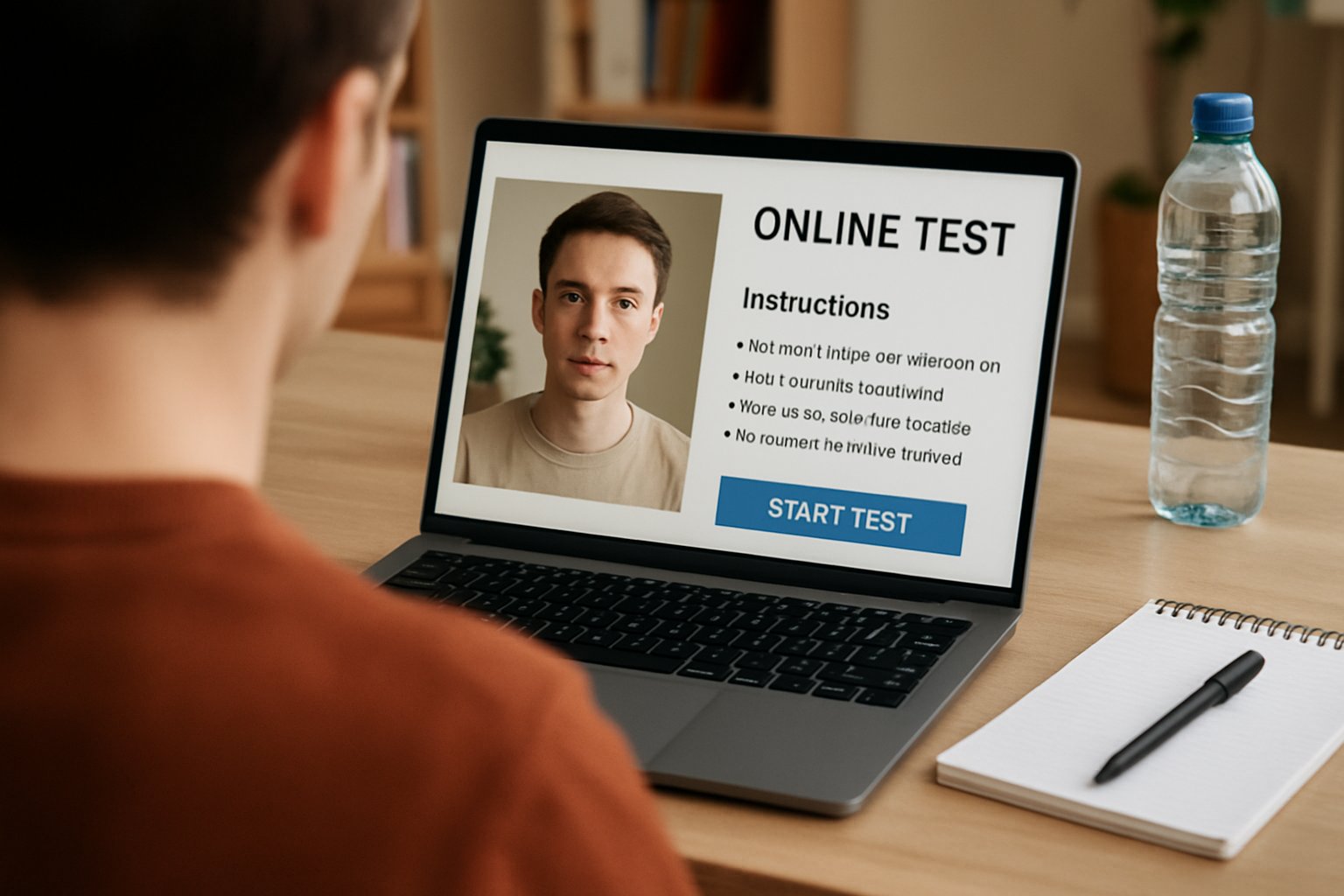
Home exam setup with online test proctoring interface visible on laptop.
A secure home exam environment with online test proctoring on a student’s laptop.

Online Test Proctoring Evolution

Pandemic lockdowns forced emergency adoption. Moreover, 2025 market reports show momentum continues, with projections near US$1 billion. Vendors now blend AI exam monitoring with optional human review to balance scale and fairness.

Meanwhile, generative AI tools raised fresh integrity threats. Faculty surveys reveal rising anxiety about automated plagiarism and impersonation. Therefore, modern solutions must flag multi-device collusion, suspicious gaze shifts, and identity fraud in real time.

Key takeaway: Evolution favors flexible, hybrid models that adapt as cheating tactics change. Institutions should track feature roadmaps and bias-testing disclosures before signing multiyear deals.

Global Market Momentum Snapshot

Industry analysts predict compound annual growth rates above 10%. Additionally, 60–65% of North American colleges mention proctoring on public sites. In contrast, UK Freedom of Information data shows inconsistent supervision despite 78% still running online exams.

  • Market size 2023–2024: US$0.8–1.0 billion.
  • Student discomfort with webcams: 30–55% across surveys.
  • Self-reported cheating during remote tests: often exceeds 50%.

Key takeaway: Demand rises, yet skepticism persists. Procurement teams must weigh growth promises against student trust metrics. Proper communication bridges that gap.

Integrity Risks Intensify Online

Philip Newton warns that unsupervised digital exams threaten degree validity. Furthermore, Lyssa Vanderbeek notes generative AI accelerates dishonest behavior. Therefore, institutions require multilayer defenses.

Remote proctored exam workflows deter impersonation, but privacy missteps invite lawsuits. Regulators recently rejected invasive room scans, pressuring campuses to refine practice. Consequently, leaders must pair policy with technology, not rely on gadgetry alone.

Key takeaway: Strong integrity demands a triad—robust design, adaptive monitoring, and clear student rights. Transitioning with this mindset prevents backlash.

Scalable Architecture Essentials Explained

Three proctoring modes dominate today. Live human oversight suits high-stakes sessions but strains budgets. Recorded sessions reduce staffing while retaining human judgment. Automated AI exam monitoring maximizes volume yet risks false positives.

Most universities now deploy remote proctoring solutions that combine AI triage with targeted human review. Additionally, online proctoring software often embeds browser lockdown, multi-factor identity checks, and analytics dashboards.

Secure online exam proctoring also depends on resilient cloud infrastructure, regional data centers, and LMS-native plugins. Moreover, best proctoring solutions 2026 advertise mobile camera support and real-time network diagnostics.

Key takeaway: Scale emerges from modular stacks—lockdown, detection, verification, and appeals portals. Integration beats standalone tools.

Policy And Privacy Pressures

Court challenges citing biometric laws shaped vendor contracts. Therefore, data governance clauses now demand minimal retention windows and explicit deletion triggers. Institutions also publish alternative assessment paths to respect equity concerns.

Civil-liberties groups continue to monitor online exam proctoring vendors. Consequently, transparent algorithm explainability and accessibility testing become deal breakers. Remote proctored exam pilots should document false-positive rates and student feedback before expansion.

Key takeaway: Legal clarity builds trust. Proactive privacy impact assessments streamline adoption and reduce surprise headlines.

Equitable Student Experience Practices

Bandwidth constraints and crowded housing still hamper test-takers. Moreover, neurodiverse learners may trigger AI flags unintentionally. Jisc guidance recommends multiple accommodations.

Leading remote proctoring solutions now offer offline uploads, captioned instructions, and device loan programs. Additionally, assessment redesign—such as randomized question pools—minimizes surveillance demands.

Secure online exam proctoring must include clear appeals. Meanwhile, online proctoring software should surface context so reviewers understand behaviors before sanctioning.

Key takeaway: Equity thrives when technology, pedagogy, and support services align. Continuous audits maintain that balance.

Procurement Playbook For Leaders

Successful buyers follow structured steps:

  1. Define stakes and scalability goals first.
  2. Shortlist vendors offering AI exam monitoring with human escalation.
  3. Demand bias audits, retention limits, and accessibility certifications.
  4. Pilot remote proctored exam scenarios across bandwidth tiers.
  5. Publish policies, opt-outs, and transparent incident workflows.

Additionally, track vendor mergers to avoid sudden roadmap shifts. Best proctoring solutions 2026 will likely bundle identity verification, analytics, and plagiarism detection under unified dashboards.

Key takeaway: Due diligence protects budgets and reputations. Continuous vendor review sustains alignment as laws evolve.

Conclusion: Digital assessment will keep expanding. However, sustainable integrity demands technology, policy, and empathy working together. Online test proctoring, when paired with equitable design, helps universities maintain trust and credential value.

Why Proctor365? Proctor365 delivers AI-powered online test proctoring with advanced identity verification and elastic cloud scaling. Global exam bodies trust our secure online exam proctoring to monitor thousands concurrently without compromising privacy. Therefore, elevate your assessment strategy today by visiting Proctor365.ai.

Frequently Asked Questions

  1. What makes modern online test proctoring effective against cheating?
    Modern online test proctoring combines AI monitoring with human review, robust identity verification, and fraud prevention measures. This multi-layered approach detects suspicious behaviors and improves exam integrity during digital assessments.
  2. How does AI-powered monitoring improve exam security?
    AI-powered monitoring uses advanced algorithms to detect anomalies like multi-device collusion and unusual gaze shifts. Real-time alerts and human escalation enhance exam security and fraud prevention in online testing environments.
  3. What critical policies should institutions consider when adopting online proctoring?
    Institutions must enforce transparent data governance, minimal retention policies, and clear escalation procedures. These policies balance student privacy with robust fraud detection, ensuring legal compliance and trust in digital assessments.
  4. How does Proctor365 ensure a secure and equitable exam experience?
    Proctor365 delivers AI-powered online test proctoring with advanced identity verification and scalable cloud solutions. Its fair policies and real-time analytics maintain exam integrity, improve fraud prevention, and support an equitable student experience.
Corporate Online Examination System: Security, Compliance, Growth

Hiring and upskilling now happen everywhere, not just inside headquarters. Consequently, organizations need an online examination system that handles scale, security, and fairness. Market analysts predict assessment services will triple in value before 2032. Moreover, hybrid workforces push talent teams toward remote, data-rich testing experiences. Vendors respond with AI scoring, integrated proctoring, and effortless integrations to ATS or LMS stacks. However, new regulations warn employers about bias, biometric privacy, and accessibility gaps. Universities, certification bodies, and corporate L&D leaders must balance opportunity with compliance. This article unpacks the corporate testing landscape and outlines practical guardrails for trustworthy deployment. Examples, statistics, and expert guidance appear throughout. Read on to learn how secure assessment builds stronger, fairer talent pipelines.

Online Examination System Value

An online examination system anchors modern assessment workflows for recruiters and trainers. It centralizes test creation, delivery, and analytics across every learning or hiring program. Furthermore, unified dashboards let managers compare campus cohorts against experienced hires within minutes. Such visibility shortens decision cycles and reduces unconscious resume bias. Selecting the right online examination platform therefore becomes a strategic priority.

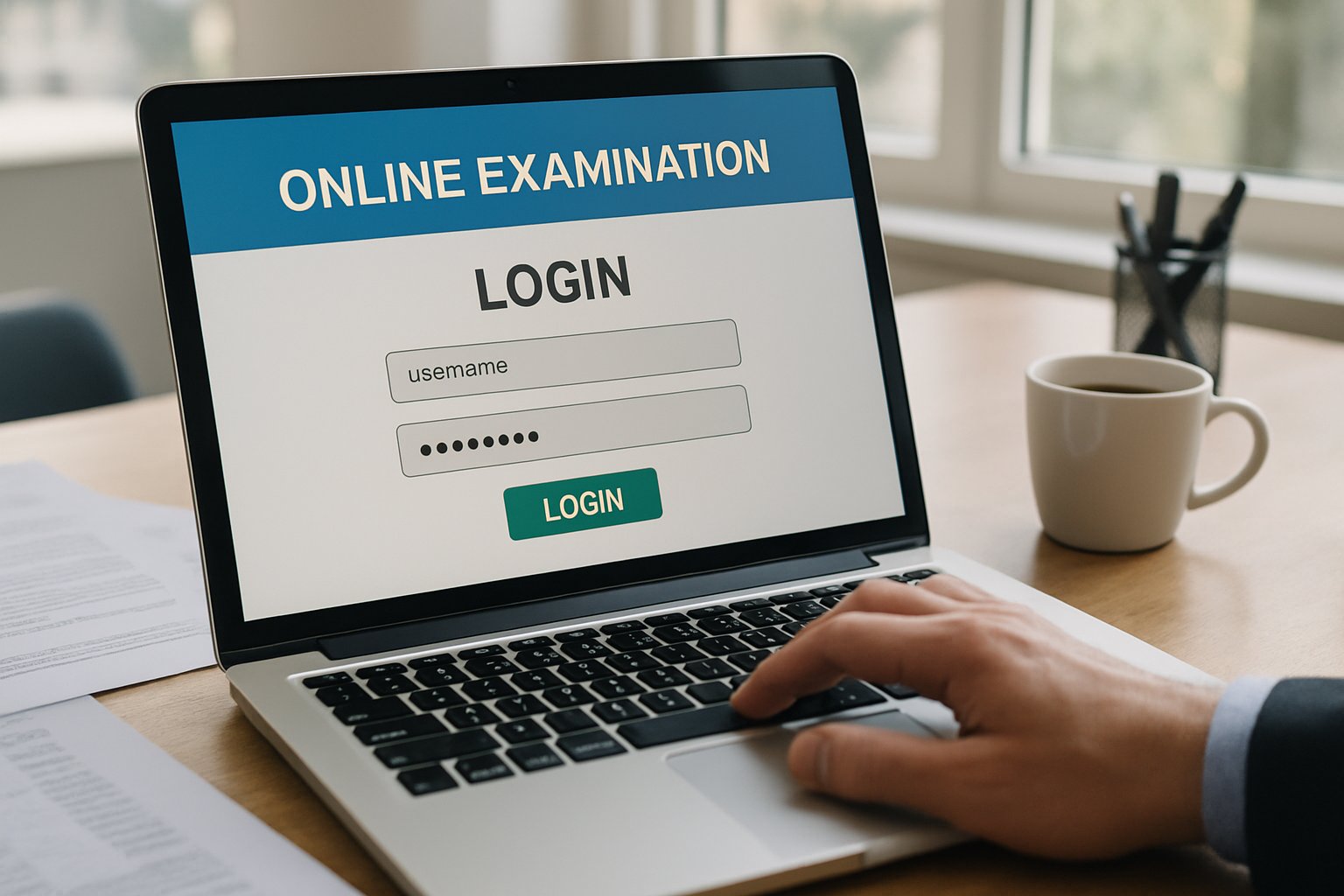
User logging into an online examination system on a laptop.
A user initiates the secure login process for an online examination system.

Key Market Growth Statistics

  • Credence Research projects USD 24.6B assessment spend by 2032, CAGR 12.6%.
  • Mercer Mettl counts 32M remote proctored test sessions to date.
  • Several vendors market 95% AI flagging accuracy, yet public audits remain limited.
  • EU, US, and APAC regulators label many HR AI tools as high-risk systems.

These numbers confirm explosive adoption across sectors. Consequently, decision makers must prioritize robust controls early.

Corporate Market Growth Drivers

Multiple forces fuel demand for every corporate testing platform. Firstly, hybrid recruitment demands scalable, location-agnostic assessments. Secondly, skills-first hiring strategies depend on objective, psychometrically validated tasks. Moreover, CFOs welcome the cost reduction delivered by automated scoring versus travel-heavy assessment centers.

An online examination platform integrates easily with ATS, LMS, and HRIS stacks, streamlining data flow. Therefore, recruiters gain real-time dashboards that rank candidates by competence, not vanity metrics. That shift shortens time-to-hire and improves retention. Companies using online exam software report recruiter hours saved and candidate satisfaction gains. An online examination system also eliminates email-based test sharing risks.

Efficient, data-driven assessment now differentiates winning employers. Next, we explore the security bedrock that protects these gains.

Essential Security Integrity Measures

Security sits at the core of any corporate testing platform deployment. Organizations deploy locked browsers, screen capture, and multi-factor ID verification to prevent cheating. Additionally, AI monitors microphones and webcams for voice prompts or secondary devices. However, human review still validates all high-stakes flags to avoid false positives.

A mature online exam management system logs every action, encrypts recordings, and stores them in SOC-2 clouds. Moreover, tamper-evident audit trails help legal teams defend assessment outcomes if challenged. These layers maintain the integrity that regulators and universities demand. Layered security ensures credible scoring for secure online exams.

Yet privacy obligations require equal attention, as the next section shows.

Emerging Privacy Legal Pressures

Camera, audio, and biometric data trigger strict GDPR and BIPA compliance duties. Meanwhile, the EU AI Act classifies proctoring AI as high-risk, demanding transparency and bias audits. Consequently, every online examination system vendor must provide clear data retention and transfer explanations. Proactive employers conduct Data Protection Impact Assessments and offer webcam-free accommodations where reasonable.

Practical Regulation Compliance Checklist

  • Publish privacy notices describing collected media and retention timelines.
  • Seek explicit consent or validated legal bases for biometric processing.
  • Enable disabled candidates to request alternative assessment formats.
  • Audit AI models annually for disparate impact across demographics.

Strong privacy practice protects candidates and brand alike. However, bias and accessibility still threaten fairness.

Bias And Accessibility Risks

Automated facial or speech analysis can misinterpret deaf or darker-skinned candidates. The 2025 ACLU complaint against HireVue illustrates growing legal exposure. Moreover, neurodivergent test-takers may struggle with strict gaze monitoring expectations. Employers mitigate these issues by disabling unreliable features and validating models with diverse samples.

An online examination platform should include human review overrides, appeal workflows, and WCAG-aligned interface design. Furthermore, timed sections require reasonable adjustments to avoid indirect discrimination. A centralized online exam management system also simplifies accommodation logging and follow-up.

Inclusive design broadens legitimate talent pools. Next, we highlight frameworks for operationalizing these safeguards.

Proven Best Practice Frameworks

Experts recommend merging psychometric validation with ISO 27001 security processes. Additionally, I-O psychologists should confirm predictive validity before live rollout. Without a validated online examination system, even great questions fail to protect hiring decisions. A structured online exam management system automates version control, randomization, and scoring key rotation. Consequently, question banks stay fresh, and leaked items become useless to cheaters.

Advanced Proctoring Technology Stack

Leading corporate testing platform vendors assemble micro-services that plug into existing HR cloud ecosystems. Typical stack components include identity services, proctor gateways, analytics engines, and developer APIs.

  • Identity verification: OCR, selfie, government ID match.
  • Session monitoring: dual-camera feed, keystroke analytics.
  • Content protection: secure browser, clipboard lockdown.
  • Reporting: real-time risk scoring dashboards.

Reliable online exam software must publish uptime dashboards for enterprise buyers. These frameworks convert policy into consistent daily practice. Finally, let us glance at future trends shaping the landscape.

Future Platform Roadmap Trends

Vendors now sunset emotion detection and invest in explainable AI dashboards. Moreover, secure online exams will soon leverage federated learning to protect raw candidate data. Edge devices will locally process video, sending only metadata for central review. In contrast, blockchain timestamping promises tamper-proof audit chains.

An adaptive online exam software module will personalize difficulty, improving engagement while preserving comparability. Tomorrow’s corporate testing platform must also integrate generative AI content defenses. Ultimately, each online examination system will converge toward open standards and real-time bias dashboards.

Roadmap innovations prioritize privacy, transparency, and resilience.

Conclusion

Secure talent assessment demands more than slick interfaces. Organizations must align market growth ambitions with rigorous security, privacy, and inclusion standards. Throughout this guide, we showed how an online examination system scales without sacrificing integrity. Key takeaways include layered proctoring, bias audits, and transparent data practices. Why choose Proctor365? Our AI-powered proctoring, advanced identity checks, and scalable monitoring safeguard secure online exams worldwide. Moreover, universities, certification providers, and enterprises trust our platform to uphold exam integrity every day. Visit Proctor365 to safeguard every assessment today.

Frequently Asked Questions

  1. How does an online examination system maintain exam integrity?
    It uses layered security measures—locked browsers, AI proctoring, multi-factor authentication, and tamper-evident audit trails—to ensure exam integrity and fairness while meeting compliance standards.
  2. How does Proctor365 ensure privacy and security for remote test-takers?
    Proctor365 employs AI-powered proctoring, biometric checks, encrypted data storage, and regular bias audits to protect candidate privacy and secure results, ensuring compliance with global standards.
  3. What role does AI proctoring play in modern online assessments?
    AI proctoring automates monitoring by flagging suspicious behavior in real-time, while human oversight confirms alerts, ensuring efficient fraud prevention and fair candidate evaluation.

Mitigating Risk in Remote Proctored Exam Delivery

High-stakes credentials fuel global mobility and pay growth. After pandemic disruption, many programs still rely on at-home testing. The remote proctored exam now underpins licensure for accountants, coders, and engineers.

Market analysts estimate remote proctoring revenue will exceed USD 1 billion this year. However, dramatic headlines about cheating rings and platform failures erode public confidence. Consequently, boards want data-driven guidance before renewing contracts.

Hands using a laptop for secure remote proctored exam delivery.
Hands-on-closeup of remote proctored exam security, underlining digital safeguards.

This news-style briefing summarizes evidence, expert opinions, and best practices. Moreover, it explains how certification testing teams can balance integrity, privacy, and learner experience. Read on for actionable steps you can apply immediately.

Remote Proctored Exam Outlook

Analyst snapshots place the online exam proctoring market between USD 0.8 billion and USD 9.3 billion. Differences stem from whether platforms, identity tools, and services bundle together.

Despite varied estimates, growth rates often exceed 15 percent annually. Furthermore, surveys show over 40 percent of institutions still use remote proctoring software in some form. Millions of remote proctored exams are completed each month across sectors.

Each remote proctored exam session records multi-stream telemetry for audits. Adoption therefore remains significant, yet far from universal. Certification leaders must watch emerging signals closely.

The next section details specific integrity threats.

Market Momentum Shifts Continue

December 2025 delivered a wake-up call when ACCA announced plans to retire most remote proctored exams. CEO Helen Brand warned that organized fraud had reached a tipping point.

Meanwhile, the California bar sued Meazure Learning after platform outages derailed thousands of candidates. Consequently, boards are questioning vendor scalability, incident response, and contractual liability. Vendors must prove every remote proctored exam remains tamper-evident.

These cases show reputational damage arrives fast. Stakeholders want stronger guardrails before committing long term.

The next section explains rising integrity risks.

Integrity Risks Escalate Quickly

Cheating-as-a-service groups now advertise real-time answers fed through hidden earbuds. Additionally, large language models can draft essays faster than humans detect.

Remote proctoring algorithms catch many anomalies, yet false positives remain a concern. Furthermore, webcam monitoring during exams struggles when candidates use second devices beyond camera view.

In contrast, live remote proctoring adds human judgement but increases cost. Attackers attempt to spoof a remote proctored exam feed with synthetic video.

The threat landscape evolves monthly. Programs need layered defences, not silver bullets.

Let’s review a proven safeguard checklist.

Proven Safeguard Checklist Guide

Certification testing teams can follow a structured playbook aligned to NIST identity guidance.

  • Classify stakes and map to IAL2 or IAL3 identity proofing.
  • Deploy hybrid live remote proctoring plus AI flagging to reduce false alerts.
  • Mandate SOC 2, ISO, and penetration tests for every vendor.
  • Evaluate remote proctoring software against accessibility benchmarks.
  • Limit webcam monitoring during exams to necessary viewing angles.
  • Calibrate item pools to curb content exposure between remote proctored exams.
  • Encrypt recordings immediately after each remote proctored exam.

These steps create defence-in-depth. Consequently, integrity improves without crushing accessibility.

Yet safeguards mean little if candidates feel mistrusted.

Candidate Experience Balance Imperative

Surveys reveal 50 percent of learners dislike continuous webcam monitoring during exams. Moreover, some biometric checks misread darker skin tones or neurodivergent behaviours.

Design choices therefore must respect privacy while preserving rigor. Online proctored exams improve when policies state data collected and deletion timelines.

Transparent appeals and human reviews also build trust. Fairness drives compliance and reputation alike.

Balanced design can even raise completion rates. Procurement teams should encode these values in contracts.

Robust Procurement Due Diligence

Smart buyers ask vendors for remote proctoring software architecture diagrams, uptime statistics, and breach history. Additionally, they insist on regional data residency and audit rights.

Certification testing boards also benchmark live remote proctoring staffing ratios and language coverage. Effective certification testing committees also verify data deletion evidence.

Therefore, they avoid hidden costs and unexpected service gaps. Diligence today prevents litigation tomorrow.

Contracts should align incentives with reliability metrics. Finally, choose the right delivery model.

Strategic Delivery Models Today

Professional programs usually select test-center, fully online proctored exams, or hybrid routes. In many settings, hybrid ensures flexibility without abandoning controlled environments.

Hybrid Oversight Advantage Explained

Under this model, candidates sit at home while a live remote proctoring team monitors enhanced AI dashboards. Alerts route instantly to supervisors who can pause sessions or escalate.

As a result, security scales and candidate stress stays manageable. Hybrid models offer adaptable resilience.

They merge convenience with quick human judgement. We now summarize key lessons and explain Proctor365’s role.

Conclusion

High-stakes programs need layered security, responsive operations, and empathetic design. Market upheavals, like ACCA’s reversal, prove complacency is costly. By mapping risk, enforcing audits, and refining communication, certification testing leaders can protect brand value.

Why Proctor365? Our platform safeguards every remote proctored exam through AI facial matching, document verification, and adaptive analytics. Advanced identity verification stops impostors before launch, while live remote proctoring and automated alerts deter evolving threats. Scalable exam monitoring supports surges without outages and is trusted by global exam bodies. Visit Proctor365.ai to schedule a demo and elevate integrity today.

Frequently Asked Questions

  1. How does Proctor365 ensure exam integrity?
    Proctor365 uses AI proctoring, facial matching, and adaptive analytics to secure exams. Our robust identity verification and real-time fraud prevention techniques detect anomalies and maintain tamper-evident exam sessions, ensuring high-stakes integrity.
  2. What benefits does hybrid proctoring offer in remote exams?
    Hybrid proctoring blends live oversight with AI flagging to enhance fraud prevention and candidate support. This model offers flexible, scalable exam monitoring while balancing security and user experience for diverse testing environments.
  3. How do certification bodies benefit from Proctor365’s approach?
    Certification bodies gain reliable insights, layered security, and comprehensive audits with Proctor365. Our platform ensures tamper-evident exam sessions, reinforces compliance, and protects brand reputation through effective AI proctoring and proactive fraud prevention.
  4. How does Proctor365 balance exam security with candidate privacy?
    Proctor365 safeguards exams using adaptive AI and live proctoring while upholding candidate privacy. Transparent data policies, ethical biometric checks, and controlled webcam monitoring ensure secure, fair, and respectful exam environments.

Online Test Proctoring Security Showdown

Introduction

Institutions face rising stakes when selecting online test proctoring strategies. Cheating reports soared during pandemic-era remote exams. Consequently, universities, certification bodies, and L&D teams now scrutinize every monitoring approach.

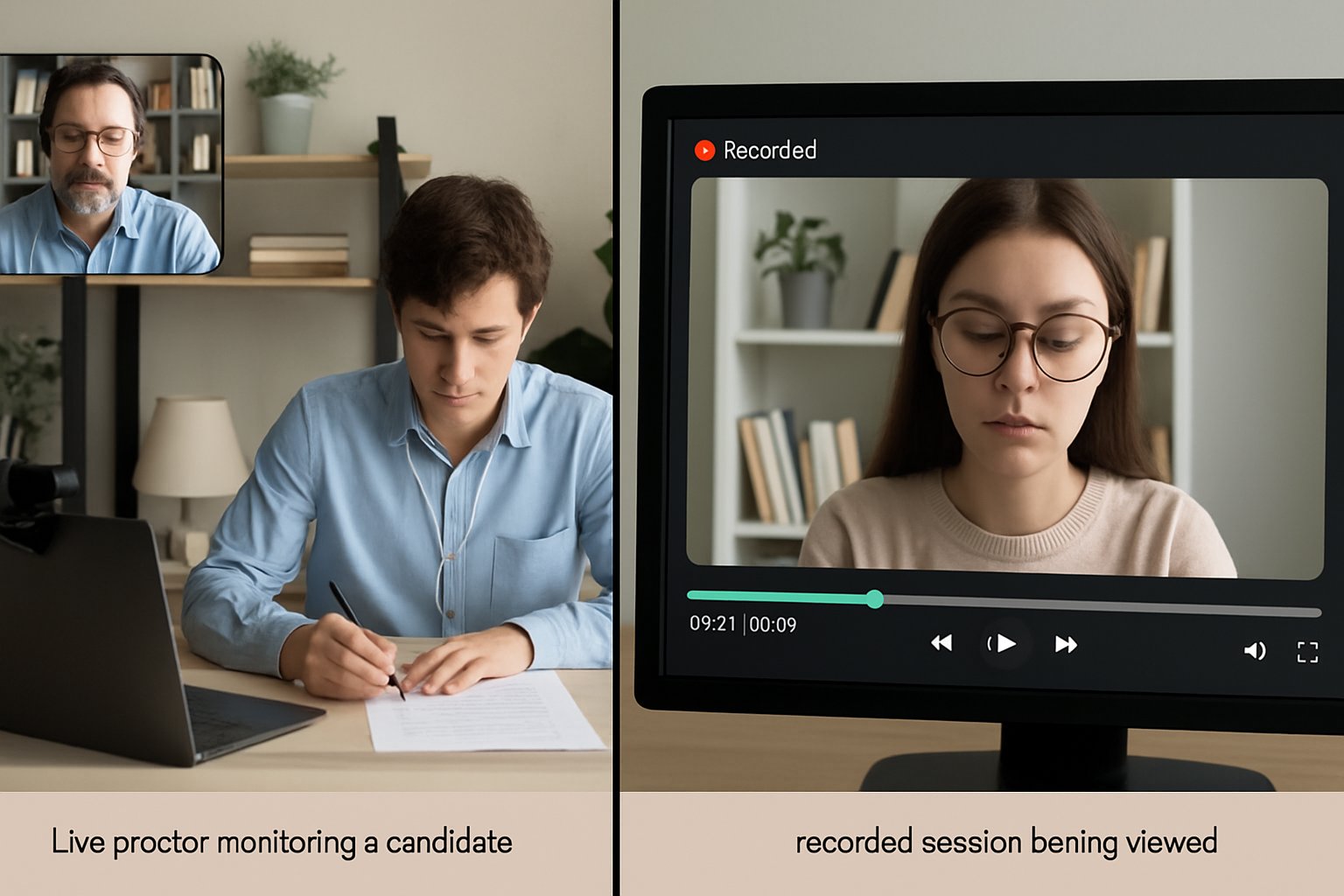
Split screen comparison of online test proctoring methods live and record-and-review.
Compare live and record-and-review online test proctoring setups.

Two dominant models compete for attention: live vs recorded proctoring and record-and-review. Each promises security, yet each carries unique risks, costs, and privacy impacts. This article compares both, leverages fresh research, and guides decision makers.

Moreover, we place the showdown in context of booming online exam proctoring adoption, rapid AI innovation, and intensifying legal scrutiny. Read on to learn which option truly strengthens academic integrity.

Finally, we assess how behavior detection in online exams evolves as algorithms mature and hybrid models emerge. Armed with evidence, leaders can align policy, budget, and learner trust.

Why Exam Security Matters

Cheating undermines learning outcomes, accreditation, and public confidence. Systematic reviews reveal self-reported dishonesty near 45% in unmonitored settings.

Remote monitoring, whether live proctoring or asynchronous review, consistently lowers that figure. Yet, without robust online test proctoring processes, score inflation may still grant unearned credentials.

Therefore, security equals deterrence plus enforceability. Both require clear evidence chains and fair escalation procedures.

Live Proctoring Core Basics

Live proctoring connects candidates to human invigilators in real time. The proctor watches video, audio, and screen feeds and can intervene instantly.

Consequently, live online proctoring creates strong psychological deterrence because students know someone is watching. This form of online test proctoring provides synchronous oversight.

  • Immediate intervention during suspicious actions.
  • Higher deterrence than record review in live vs recorded proctoring comparisons.
  • Operational expenses exceed options in live proctoring vs automated proctoring studies.

However, costs soar as sessions scale. Bandwidth, scheduling, and proctor-to-candidate ratios limit efficiency.

In summary, live proctoring offers speed and deterrence, yet budget and scale constraints remain. Next, we examine its asynchronous rival.

Record Review Model Explained

Record-and-review captures the entire session for later human evaluation, often guided by AI-based proctoring. This asynchronous online test proctoring option scales well because reviewers scan flagged clips instead of watching full-length tests.

Nevertheless, candidates can finish cheating before analysts intervene. This limitation features prominently in live vs recorded proctoring debates.

  • Lower cost per attempt.
  • Creates auditable evidence for appeals.
  • Cannot stop real-time collusion.

To conclude, record review boosts scale and documentation, yet response speed suffers. We now explore emerging hybrids.

Hybrid Models Gain Traction

Vendors increasingly blend AI-based proctoring with human pop-in capability. Automated algorithms execute behavior detection in online exams and raise alerts within seconds.

When risks escalate, a live proctoring agent joins the session, merging deterrence with efficiency.

  • AI triages thousands simultaneously.
  • Humans focus on high-risk alerts.
  • Costs fall versus full live proctoring vs automated proctoring extremes.

Thus, hybrid online test proctoring platforms promise balance between cost and control. Yet, their success depends on transparent hand-off rules.

Comparative Evidence Still Sparse

Academic meta-analyses confirm online exam proctoring generally cuts cheating. However, researchers note few randomized trials directly pit live proctoring vs automated proctoring or record review head-to-head.

Researchers agree that any online test proctoring beats unmonitored conditions, but precision metrics remain contested.

False positives, privacy disputes, and accessibility gaps complicate any simple security scorecard. Therefore, institutions should demand independent audits, transparent flag data, and published false-positive rates.

In short, evidence favors monitoring overall, but clarity on best mode remains limited. Procurement teams must fill the gap with data.

Legal And Ethical Concerns

Privacy advocates challenge remote surveillance in courts and media. EFF and ACLU highlight data retention and bias.

Moreover, differential impacts emerge when online proctoring software mandates webcams, quiet rooms, or high bandwidth.

Accessibility offices report that behavior detection in online exams sometimes misreads disability-related movements. Policy frameworks around online test proctoring must balance security with fairness.

Therefore, clear consent notices, opt-out paths, and robust appeals are essential.

Choosing The Best Fit

Selecting technology starts with exam stakes, cohort size, and risk tolerance. For high-stakes credentials, many experts still favor live online proctoring.

Conversely, large survey courses or corporate certifications may prioritize scale, choosing record review or hybrid online proctoring software solutions.

  • Compare total cost of ownership.
  • Inspect vendor ISO and SOC2 claims.
  • Request behavior detection in online exams accuracy reports.
  • Run pilot tests with diverse candidates.

Ultimately, secure online test proctoring depends on aligning policy, people, and platform.

Conclusion

Live, record-and-review, and hybrid models each improve integrity when compared to no monitoring. Live options deter through oversight, record review scales economically, and hybrids blend the strengths. Decision makers should weigh stakes, budgets, evidence gaps, and learner equity.

Why Proctor365? Proctor365 delivers AI-powered online test proctoring with advanced identity verification, behavior analytics, and scalable exam monitoring. Global exam bodies trust our platform to protect credentials without sacrificing candidate experience. Discover how Proctor365 boosts integrity, lowers costs, and simplifies compliance today.

Frequently Asked Questions

  1. What is the difference between live proctoring and record review proctoring?
    Live proctoring uses real-time human oversight, while record review captures sessions for later analysis with AI. Proctor365 blends these methods to quickly detect and respond to suspicious behavior, ensuring exam integrity.
  2. How does hybrid proctoring enhance exam security?
    Hybrid proctoring combines AI behavior detection with human intervention, offering rapid alerts and cost-effective monitoring. Proctor365’s hybrid approach ensures efficient and reliable exam security while maintaining candidate trust.
  3. How does Proctor365 ensure exam integrity and fraud prevention?
    Proctor365 delivers AI-powered proctoring with advanced identity verification and behavior analytics. These features work together to prevent fraud, reduce cheating risks, and improve overall exam integrity for high-stakes tests.
  4. What privacy measures are taken during online exam proctoring?
    Effective proctoring includes clear consent, opt-out options, and strict data handling policies. Proctor365 prioritizes candidate privacy while implementing robust monitoring and compliance standards for secure, fair testing.

15 Advanced Tactics Against Remote Proctor Cheating

Remote proctor cheating is the single biggest headache for digital assessment teams moving into 2026. Consequently, stakes are soaring. The latest Journal of Academic Ethics review found 44.7% of students admitted online dishonesty. Meanwhile, market reports predict online proctoring revenues will triple by 2029, showing institutions will not retreat. However, recent California Bar litigation proved that scale without resilience invites disaster. As adoption accelerates, leaders need evidence-based, student-centred defence plans. This article distills fifteen advanced techniques that universities, ed-tech firms, and corporate teams can deploy today. We balance technology, policy, and pedagogy, highlighting lessons from frontline incidents and research labs. Furthermore, we align each tactic with emerging privacy standards and accessibility obligations. By the end, you will hold a practical roadmap for resilient online exam security next year. Let us begin by examining the cheating landscape.

Remote Proctor Cheating Data

Research still paints a worrying picture. During COVID-19, self-reported remote proctor cheating almost doubled compared with pre-pandemic levels. Moreover, civil-liberties groups argue excessive surveillance harms trust and participation. Institutions therefore need solid evidence before investing in new controls.

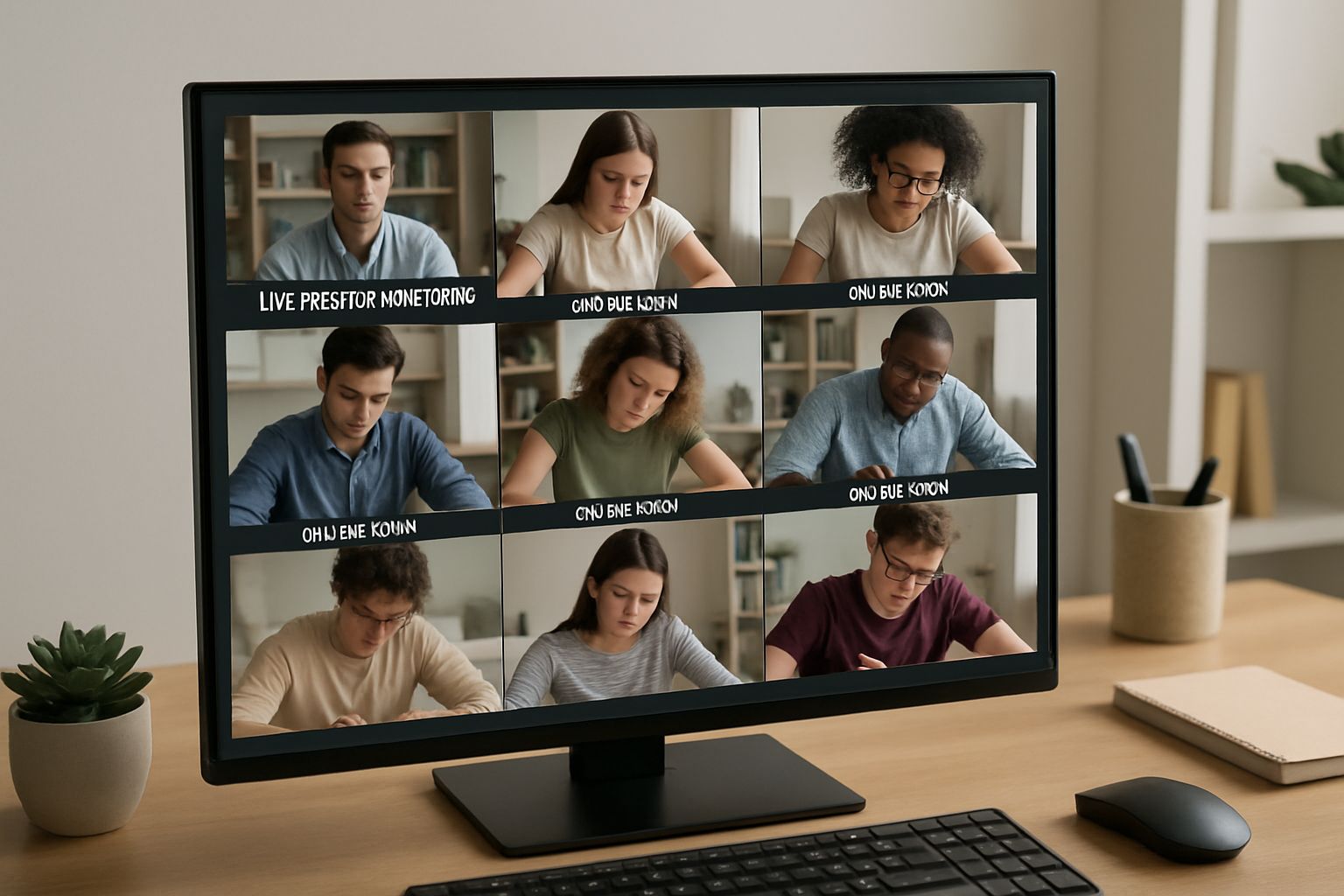
Proctor monitoring students to counter remote proctor cheating attempts
Proctor monitors several students in real time to uphold academic honesty online.
  • 44.7% of students admit online cheating (Newton & Essex, 2024).
  • Online proctoring market forecast to triple by 2029.
  • California Bar meltdown shows operational risk in high-stakes exams.

These data points confirm that robust online exam security remains non-negotiable, and proactive online exam monitoring should start immediately. Consequently, leaders must adopt layered defences before attackers evolve further.

Layered Exam Security Framework

Layered defence outperforms single tools. Firstly, start with assessment design that can prevent cheating in online exams by reducing lookup value. Secondly, add secure infrastructure, including a well-audited lockdown browser and attested virtual machines. Thirdly, overlay continuous identity checks and AI-based cheating detection, supported by trained human reviewers. Finally, publish transparent policies and accessible appeal routes.

This stack shields high-stakes tests without overwhelming students. Moreover, it aligns with EDUCAUSE ethical guidance and upcoming regulations.

When the layers integrate within certified online proctoring software, institutions gain scalable control while maintaining student dignity.

In short, a layered framework delivers durable online exam security across varied assessment contexts. Next, we unpack each advanced tactic.

Fifteen Advanced Control Tactics

The table below groups fifteen frontier tactics into identity, environment, behaviour, content, and governance domains. Each tactic targets a specific remote proctor cheating vector.

  1. Continuous multimodal authentication for unbroken identity assurance.
  2. Dual-camera sweeps that expose hidden devices.
  3. Lockdown browser tools paired with secure containers.
  4. Behaviour analytics plus AI-based cheating detection for subtle anomalies.
  5. Authentic assessment design that can prevent cheating in online exams naturally.

Each control offers unique strengths. Nevertheless, they work best together. For example, behavioural analytics may flag suspicious pauses, while real-time online exam monitoring verifies the alert visually. In contrast, item bank randomisation blocks answer sharing without extra surveillance.

Leading online proctoring software now bundles these features with configurable privacy settings, giving administrators granular choice.

Deploying multiple controls forces would-be offenders to juggle several obstacles, dramatically lowering remote proctor cheating success rates.

Collectively, these tactics modernise online exam security without excessive invasiveness. Next, we examine cautionary vendor failures.

Vendor Failures Teach Lessons

The February 2025 California Bar disaster shows technology alone cannot guarantee success. Meazure Learning’s platform crashed, leaving thousands unable to submit. Lawsuits followed within weeks. Consequently, regulators now demand stress testing, backup plans, and independent audits.

Without such safeguards, even minor bugs can cascade into large-scale remote proctor cheating opportunities and reputational harm.

Before signing contracts, request uptime logs, SOC2 reports, and clear escalation paths from every online proctoring software vendor.

Moreover, insist on hybrid human-AI online exam monitoring during peak load to reduce false positives.

The case proves that resilience, transparency, and capacity planning must accompany technology promises. Moving forward, governance completes the defence.

Governance Transparency And Fairness

Technical tools fail if policies lag. Therefore, publish data maps, retention periods, and appeal workflows well before exam day. Transparent communication lowers anxiety and helps prevent cheating in online exams by boosting perceived fairness.

Additionally, track false-positive and appeal rates by demographic group. This practice detects bias within AI-based cheating detection pipelines.

Regular policy reviews keep online exam monitoring aligned with evolving privacy legislation.

Clear policies also clarify consequences, further deterring remote proctor cheating attempts.

Strong governance elevates trust and resilience in equal measure. Finally, let us translate strategy into a purchase checklist.

Smart Procurement Checklist Guide

A concise checklist empowers teams to vet potential partners efficiently.

  • Demand independent SOC2 plus HECVAT responses.
  • Check documented false-positive rates and linked online proctoring software versions.
  • Require accessible lockdown browser alternatives for assistive technology users.
  • Review disaster recovery tests and sustained online exam monitoring capacity.
  • Insert liability clauses referencing recent litigation and remote proctor cheating failures.

Following this checklist reduces surprises and protects long-term online exam security investments.

Moreover, suppliers should offer instructional resources that teach faculty how to prevent cheating in online exams proactively.

With procurement covered, we conclude by outlining next steps and highlighting a trusted partner.

Conclusion And Next Steps

Remote proctor cheating evolves fast, yet institutions can stay ahead by combining layered technology, thoughtful pedagogy, and transparent governance. By applying the fifteen tactics above, you fortify online exam security while respecting student rights. Why Proctor365? Our AI-powered platform offers real-time identity checks, scalable online exam monitoring, and adaptive AI-based cheating detection. Additionally, our audited lockdown browser and multimodal analytics deliver industry-leading protection against remote proctor cheating exploits. Trusted by universities, certification bodies, and global corporates, Proctor365 simplifies deployment and keeps compliance effortless. Discover how our online proctoring software elevates integrity—visit Proctor365.ai to schedule a strategy session today.

Frequently Asked Questions

  1. How does Proctor365 enhance online exam integrity using AI proctoring?
    Proctor365 leverages AI proctoring with continuous identity verification and behavioral analytics. This layered security approach effectively detects anomalies and prevents remote proctor cheating, ensuring exam integrity and robust fraud prevention.
  2. What advanced tactics does Proctor365 use to prevent online exam cheating?
    Proctor365 employs multimodal authentication, dual-camera verification, a secure lockdown browser, and AI-based behavioral analytics. These tactics form a layered defence system that minimizes cheating opportunities and strengthens exam security.
  3. How does Proctor365 maintain transparency and fairness in online testing?
    Proctor365 ensures transparency by publishing data maps, retention policies, and appeal processes. This openness reduces false positives, supports accessible online exam monitoring, and upholds fairness and compliance with privacy standards.
  4. Why is vendor reliability crucial for secure online proctoring?
    Reliable vendors, like Proctor365, provide stress-tested systems, independent audits, and hybrid human-AI monitoring. This operational stability helps prevent exam failures and reinforces digital assessment security against evolving cheating tactics.

Choosing Proctor Exam Software With Browser Lockdown

Online testing has become routine across universities, enterprises, and certification bodies. Yet maintaining integrity in unsupervised settings remains difficult. Consequently, many institutions deploy proctor exam software to watch over digital assessments. A critical layer inside those platforms is browser lockdown technology. It freezes the test environment, blocks shortcuts, and reports suspicious behaviour in real time. However, choosing, configuring, and governing a lockdown browser is not trivial. This guide unpacks current tools, recent market moves, and practical policy steps. Readers will gain evidence-based insights for safer, fairer, and scalable online assessments. Examples draw from higher-education, ed-tech, and corporate learning deployments worldwide. Let’s start by examining how proctoring stacks fit together. Throughout, we will reference market leaders like Respondus, Honorlock, and open-source Safe Exam Browser. We also note privacy rulings and student experience research shaping adoption decisions. By the end, you will know which questions to ask vendors and your legal team. Most importantly, you’ll understand when proctor exam software is worth the trade-offs. Academic integrity software now underpins credentialing at scale.

Proctor Exam Software Role

Proctor exam software orchestrates several defence layers around an online test. Identity checks confirm the candidate, while AI flags eye-gaze or extra faces. Browser lockdown tools then freeze the desktop, stop screen sharing, and prevent copy-paste. Consequently, the software delivers layered, scalable exam integrity solutions across locations and devices.

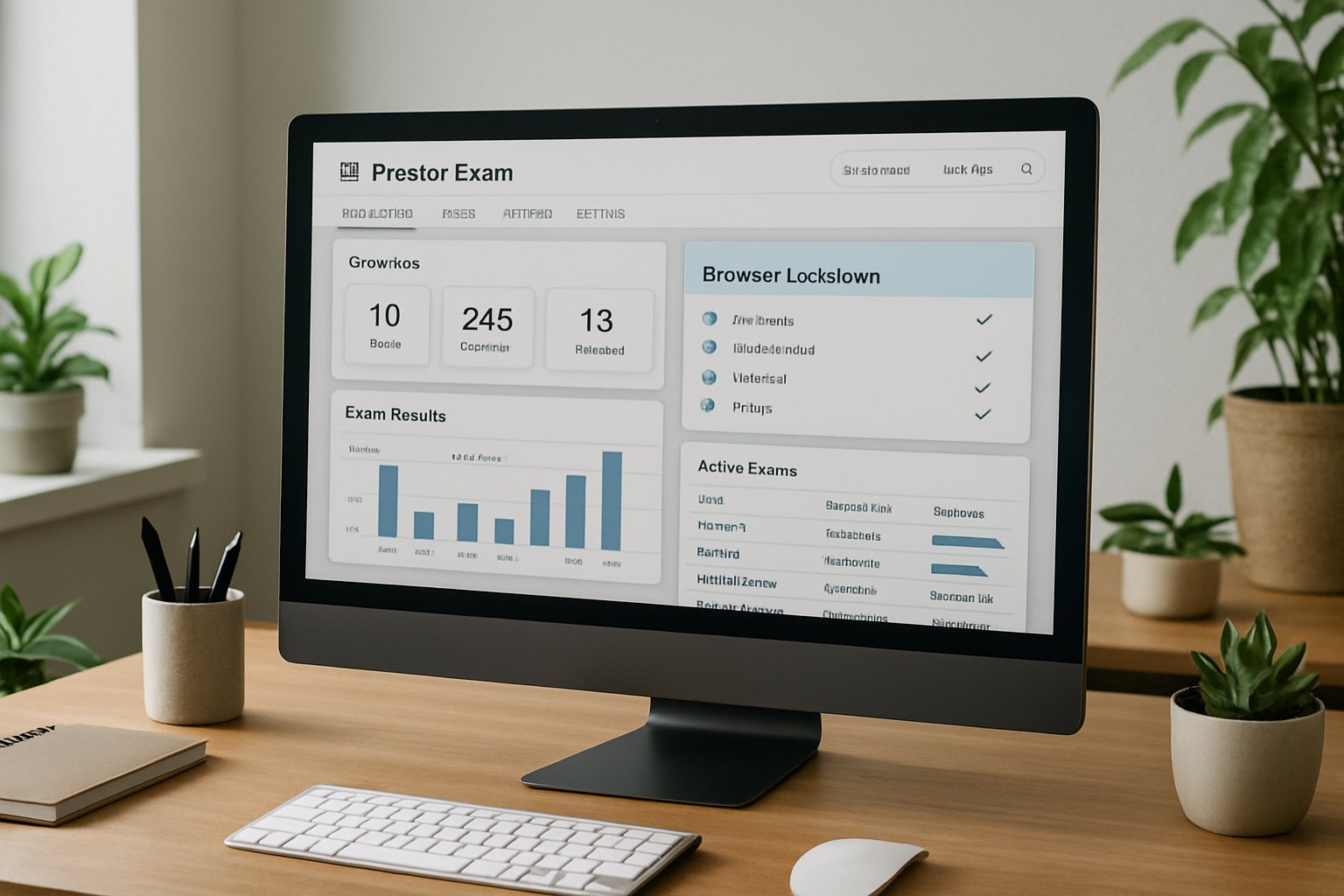
Monitor screen displaying proctor exam software dashboard with browser lockdown controls.
Browser lockdown controls highlighted in a realistic proctor exam software dashboard.

Layered defence reduces opportunistic cheating and supports mass deployment. Next, we explore how the lockdown component achieves that control.

Lockdown Browser Basics Explained

What Is Lockdown Browser

A lockdown browser is a customised client or extension that restricts operating-system and browser functions during an exam. For anyone asking what is lockdown browser during orientation, this definition provides a quick answer. Some LMS vendors embed an online exam lockdown browser directly into the quiz flow. It forces full-screen mode, disables new tabs, deactivates shortcuts, and blocks unapproved applications. Some variants run as kiosk apps, others as browser extensions within online proctoring software. Vendors embed tamper detection to flag virtual machines or screen-mirroring attempts.

In short, browser lockdown enforces a single-purpose workspace. Understanding its mechanics helps stakeholders judge security claims later.

Open Source Alternative SEB

Safe Exam Browser, the open-source option, enjoyed major releases through 2025. Institutions can self-host SEB Server, keeping sensitive recordings inside their own perimeter. Moreover, open code enables independent audits, a frequent privacy demand.

SEB proves lockdown does not require vendor lock-in. Users still need monitoring layers for robust protection, as we discuss next.

Core Exam Security Features

Beyond the locked browser, proctor exam software combines live or recorded webcam feeds and AI flagging. Audio analysis detects unexpected voices; network telemetry warns staff when connections drop. Additionally, exam lockdown software blocks screen capture utilities and terminates blacklisted processes.

  • Full-screen enforcement prevents tab or window switching.
  • Clipboard blocking stops copy-paste leaks.
  • Process monitoring shuts down screen-sharing, VPN, or VM tools.
  • Real-time alerts escalate high-risk behaviour for human review.

Together, these layers form academic integrity software that scales far beyond traditional test centres. However, security strength depends on adoption metrics, which we examine now.

Equity And Privacy Impacts

Technology brings trade-offs. Peer-reviewed studies cite higher anxiety among students forced into webcam surveillance and browser lockdown. Moreover, facial-recognition accuracy drops for darker skin tones, risking unfair flags. Disability advocates report compatibility issues between screen readers and lockdown browser interfaces. Legal pressure also mounts; US judges have limited intrusive room scans, and states pass new data laws. Consequently, institutions must offer alternatives and document transparent consent flows.

Ignoring these signals can erode trust faster than any technical failure. Next, we outline governance tactics that respect users while safeguarding exams.

Implementation Best Practice Guide

Deploying proctor exam software successfully requires planning. Effective roll-outs start with a privacy-impact assessment and legal review. Then, cross-functional teams pilot the online exam lockdown browser in a low-stakes course. Provide an FAQ that explains what is lockdown browser and how to install it. Collect student feedback, accessibility reports, and technical logs before scaling institution-wide. Additionally, publish clear accommodation pathways for those who cannot run exam lockdown software. Finally, blend design strategies like randomised questions and open-resource prompts.

  • Document data retention periods and deletion triggers.
  • Train graders to interpret AI flags cautiously.
  • Offer on-campus test centres for opt-out cases.
  • Review exam lockdown software logs after every term.

These steps balance security, fairness, and compliance. Looking ahead, market forces will refine the toolset further.

Future Outlook For Lockdown

Market forecasts place the online proctoring software sector above US$2 billion by 2031. Private-equity deals and LMS integrations continue, as seen in Respondus and Infinite Campus news. Meanwhile, open-source communities expand Safe Exam Browser capabilities each quarter. Nevertheless, advocacy groups will push for stricter transparency and algorithm audits. Proctor exam software vendors must therefore innovate while demonstrating responsible data stewardship.

Expect smarter detection, lighter installs, and richer analytics within two years. Our final section summarises action points and presents a trusted partner.

Key Takeaways And CTA

Browser lockdown can deter quick cheats but never guarantees perfection. Therefore, institutions should pair pedagogy redesign with reliable proctor exam software. Select tools that integrate AI, identity checks, and clear exam integrity solutions. Moreover, demand transparent audits and student-friendly policies.

Proctor365 delivers AI-powered proctor exam software trusted by global exam bodies. Its advanced identity verification, scalable monitoring, and smart browser lockdown keep assessments secure. Additionally, the platform offers real-time dashboards and automatic incident reports. Schedule a demo to see academic integrity software in action at Proctor365. Visit Proctor365 and upgrade your remote testing workflow today. Secure success with proctor exam software that respects privacy and scales effortlessly.

Frequently Asked Questions

  1. What is a lockdown browser and how does it secure online assessments?
    A lockdown browser is a specialized tool that enforces full-screen mode and disables shortcuts to prevent cheating. Proctor365 integrates AI proctoring to offer robust exam security and fraud prevention.
  2. How does AI proctoring enhance exam integrity in online assessments?
    AI proctoring detects suspicious behavior like atypical eye-gaze, extra faces, and network drops. Proctor365 leverages AI and identity verification to promptly flag potential fraud, ensuring a fair testing environment.
  3. What measures can institutions take to balance security with student privacy?
    Institutions can perform privacy impact assessments, offer exam alternatives, and document consent processes. Proctor365 emphasizes secure, transparent proctor exam software that respects privacy while delivering comprehensive fraud prevention.
  4. How does Proctor365 support scalable and secure online testing environments?
    Proctor365 delivers advanced identity checks, real-time dashboards, and automated incident reporting. Its AI-powered proctor exam software combines layered security with user-friendly, privacy-sensitive browser lockdown to scale with institutional needs.

White-Label Proctor Exam Software Opportunities

Educational consultants face mounting pressure to deliver secure assessments at scale. Therefore, many now turn to proctor exam software to protect integrity without building tools from scratch. The market’s double-digit growth, privacy rulings, and partner programs create both promise and pitfalls.

Market Demand Snapshot Today

Forecasts place the remote proctoring market near USD 2.1 billion in 2024. Moreover, reports predict a 13% CAGR through 2035. Universities, certification bodies, and corporate L&D teams drive this surge with expanding remote programs. However, advocacy groups push for privacy limits, forcing vendors to add transparency and opt-outs.

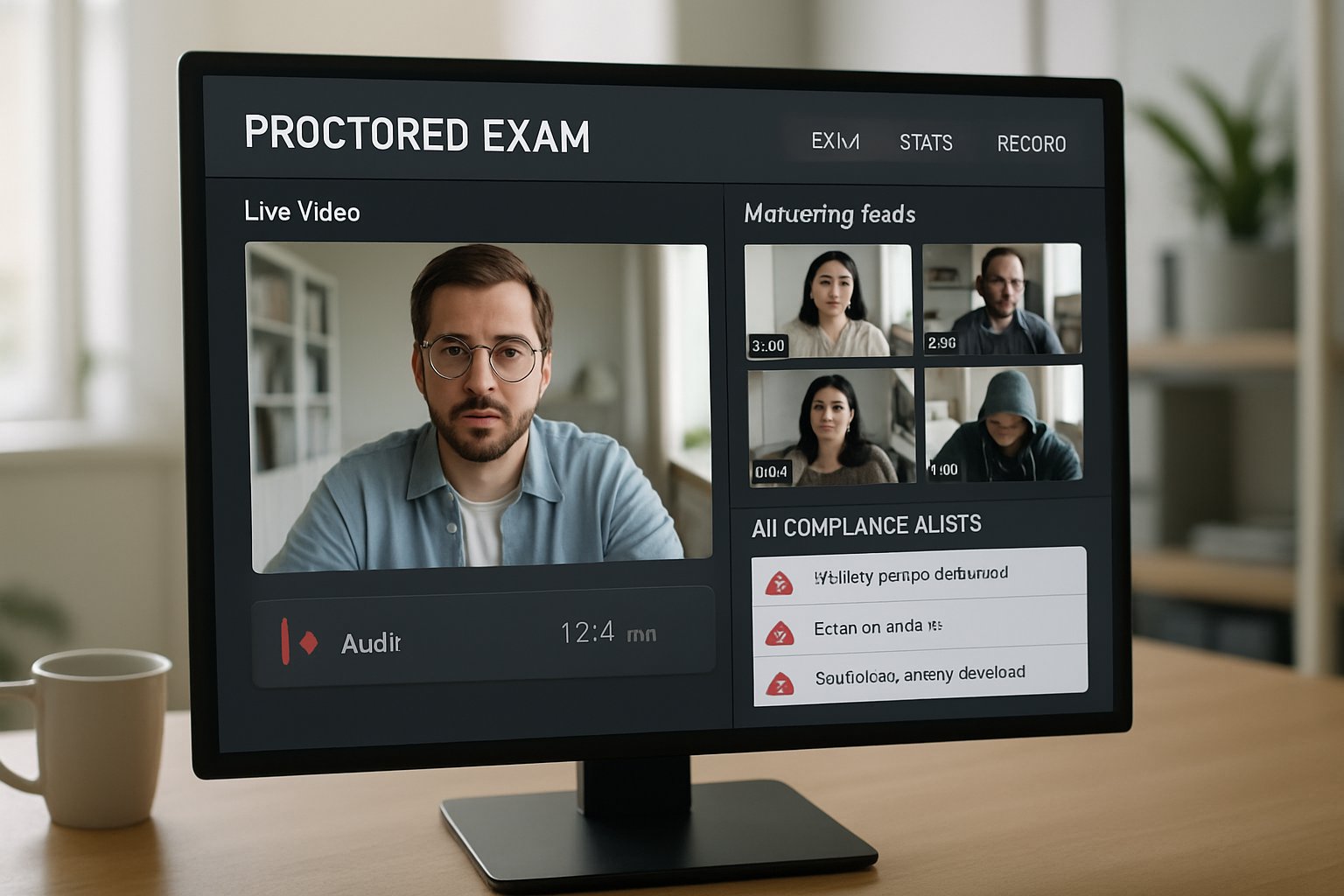
Proctor exam software with live AI monitoring and compliance dashboard on screen.
Proctor exam software dashboard showcasing advanced AI monitoring and compliance features.

The data proves rising demand yet stricter scrutiny. Consultants who master both themes stand out. Consequently, opportunity sits alongside responsibility.

Choosing Proctor Exam Software

Consultants should start with need analysis. First, match exam stakes to live, automated, or record-and-review modes. Additionally, ensure the tool integrates with the target online examination platform via LTI or REST APIs. Compare vendors like Talview, OctoProctor, and ThinkExam that advertise white-label branding.

Remember to validate screen recording in online exams because some courts restrict intrusive room scans. Likewise, ask vendors for SOC 2 or ISO 27001 reports. Finally, request pilot access to measure false positives before a full launch.

Clear alignment of mode, risk, and compliance delivers smoother deployments. Therefore, deliberate selection mitigates downstream headaches.

White-Label Business Case

White-label proctoring turns a complex stack into a branded service within days. Consequently, consultants gain recurring revenue on each session. Many vendors offer bulk pricing tiers that drop below public $10–$80 per-exam fees.

Typical partner models include:

  • Full white-label: your brand fronts the service.
  • Reseller: vendor branding remains visible yet you earn margins.
  • Referral: you pass leads and collect commission.

Fast market entry meets steady cash flow. Nevertheless, liability shifts toward the consultant’s name. Thus, robust contracts are essential.

The model scales profit quickly yet widens legal exposure. Therefore, balanced agreements guard your reputation.

Key Compliance Checklist Points

Privacy laws grow stricter each quarter. Consequently, every agreement needs a strong Data Processing Addendum. Specify retention limits, deletion rights, and breach notifications. Furthermore, require accessibility statements that confirm WCAG alignment.

Because students fear biometric misuse, mandate explicit consent flows and clear appeal steps for AI flags. Meanwhile, maintain alternatives for learners who cannot share private spaces.

A tight checklist shrinks risk while boosting institutional trust. In contrast, vague terms invite costly disputes.

Feature Set Essentials Explained

Clients expect more than a webcam feed. Modern proctoring software should include identity verification, lockdown browser, and AI flagging. Additionally, it must support online exam software integration and real-time dashboards.

Many institutions also request screen recording in online exams to validate technical skills tests. Moreover, cloud scale enables tens of thousands of concurrent sessions on an online exam platform for education and recruitment.

An enriched feature stack enhances value perception. Consequently, consultants can justify premium pricing tiers.

Pricing Models Compared Clearly

Vendors offer per-exam, seat-license, or concurrent bundles. Per-exam suits certification events, while seat licensing aligns with semester calendars. Furthermore, setup fees cover domain mapping, logos, and support scripts.

Always factor human proctor wages when mixing live monitoring. Meanwhile, automated or AI-based proctoring lowers marginal costs but needs human review for flagged clips.

Transparent pricing builds client confidence and protects your margin. Therefore, model scenarios before quoting.

Implementation Best Practices Guide

Begin with a two-week pilot on the chosen online examination platform. Subsequently, train faculty on reviewing AI flags. Provide students with hardware checklists and practice exams because preparation reduces support calls.

Use transition APIs to push results back into the learning system. Additionally, enable white-label proctoring branding across email templates for seamless user experience.

Finally, monitor analytics to refine rules and cut false positives. Continual tuning maintains fairness and scalability.

Structured rollout minimizes disruption and proves ROI quickly. Consequently, satisfied clients renew and refer.

Conclusion And Next Steps

White-label proctoring unlocks rapid growth for consultants who balance technology, compliance, and experience. Select vendors carefully, embed privacy-by-design, and price transparently to thrive.

Why Proctor365? Our proctor exam software delivers AI-powered proctoring, advanced identity checks, and elastic cloud monitoring trusted by global exam bodies. Schedule a demo and see how Proctor365 boosts exam integrity today at Proctor365.ai.

Frequently Asked Questions

  1. How does AI proctoring enhance exam integrity?
    AI proctoring monitors exam sessions in real time, identifying suspicious behavior and reducing cheating. Proctor365 uses advanced algorithms and identity verification to ensure robust fraud prevention and uphold exam integrity.
  2. What key features should I look for in proctor exam software?
    Essential features include identity verification, lockdown browser, AI flagging, and seamless LMS integration via LTI or REST APIs. Proctor365 offers these capabilities to improve security and streamline exam management.
  3. How does white-label proctoring benefit educational consultants?
    White-label proctoring enables consultants to brand the service, accelerate market entry, and generate recurring revenue. Proctor365’s customizable solutions support rapid deployment and consistent exam integrity.
  4. What compliance measures ensure exam security and privacy?
    Key measures include SOC 2 and ISO 27001 certifications, data processing agreements, and explicit consent protocols. Proctor365 adheres to strict privacy laws, enhancing both security and trust in exam environments.

Mitigating Risk With Remote Test Proctoring

Pressure on firms to prove training integrity has never been higher. Consequently, many leaders now adopt remote test proctoring for mandated programs. They hope technology reduces cheating in corporate compliance testing without delaying launch schedules.

However, employees complain about cumbersome remote proctoring software and potential privacy intrusion. This article explores practical, balanced strategies that satisfy regulators, respect users, and keep budgets realistic. By the end, you will know how to deploy solutions that withstand audits and user scrutiny.

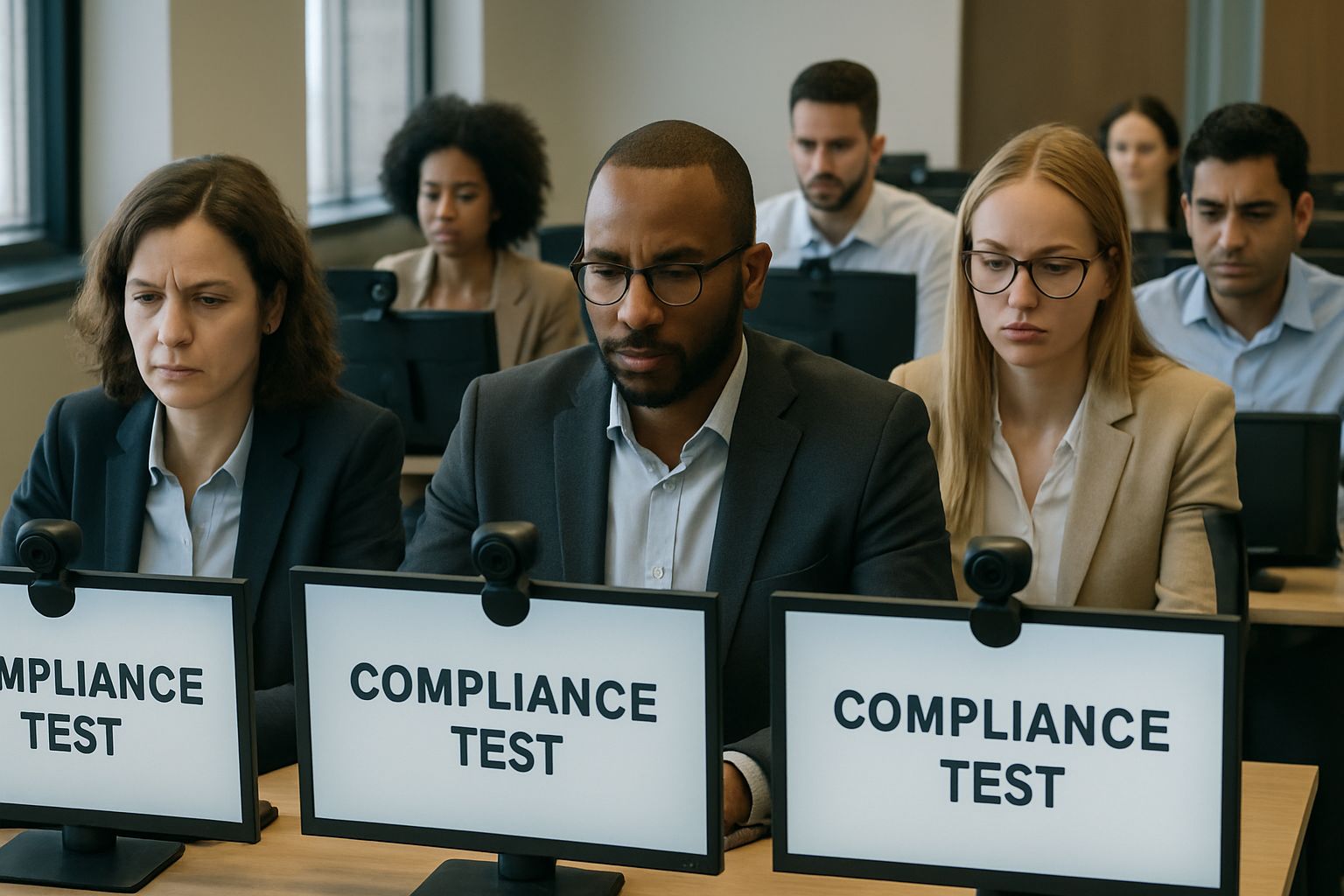
Diverse professionals using remote test proctoring in office setting.
Professionals utilize remote test proctoring for secure compliance testing in the workplace.

Compliance Risk Drivers Explained

First, regulators expect objective proof that every learner completed corporate compliance testing unaided. Moreover, hybrid workforces make in-person invigilation impossible at scale.

Remote online proctoring fills that gap, yet decision makers must weigh risk tiers. High-stakes exams demand secure remote proctoring with layered controls, while simple surveys may not.

Identity fraud, content leakage, and reputational fallout create tangible financial exposure. Therefore, remote test proctoring sits near the top of most audit checklists.

Rigorous risk analysis drives tool selection and policy depth. Next, we examine trend data that shapes those selections.

Remote Test Proctoring Trends

MarketResearchFuture values the segment above two billion dollars for 2024. Furthermore, double-digit growth remains likely through 2030 across industries.

Vendors now package remote exam proctoring software with edge processing that keeps raw video local. Simultaneously, online proctoring software offers blockchain logging for immutable audits. Live remote proctoring still attracts high-stakes clients who want immediate human judgment.

However, the California Bar lawsuit shows infrastructure failures can cripple remote test proctoring deployments overnight. Consequently, buyers scrutinize uptime statistics and incident histories before signing contracts.

Trend data highlights innovation yet exposes reliability gaps. Our next section tackles privacy and fairness questions that overshadow technology claims.

Privacy And Fairness Concerns

Privacy groups attack remote proctoring software for capturing room images, keystrokes, and biometrics. Moreover, researchers document algorithmic bias that misflags darker skin tones.

Secure remote proctoring must therefore minimize data and guarantee transparent appeal paths. Live remote proctoring also risks inconsistent human judgments, yet offers empathy for accommodations.

Employees disciplined after false positives may litigate under discrimination statutes. Additionally, corporate compliance testing violations can trigger costly regulatory penalties.

Hence, remote test proctoring programs need privacy-by-design and fairness audits before launch. Addressing bias early prevents reputational damage and workforce distrust. Next, we outline a concise implementation checklist.

Best Practice Implementation Checklist

Begin with a pilot covering diverse roles and device types. Subsequently, measure false-positive rates and learner sentiment.

  1. Classify assessments by risk and match secure remote proctoring level accordingly.
  2. Demand SOC 2, ISO 27001, and clear DPAs from remote exam proctoring software vendors.
  3. Enable edge processing within online proctoring software to reduce data transfer.
  4. Provide accessibility workflows and human review in live remote proctoring environments.
  5. Rotate item pools and proctor exam online with locked browsers for layered security.

Moreover, maintain recordings only for legally mandated retention periods. Therefore, remote test proctoring remains defensible during audits and disputes.

Following this checklist curbs risk without crushing budgets. We now review legal expectations across regions.

Legal Landscape Across Jurisdictions

In the United States, no single law targets remote online proctoring. However, CCPA, ADA, and biometric statutes still apply.

European GDPR treats facial identity matching as sensitive, requiring explicit purpose limitation. Consequently, firms must proctor exam online only with clear legal bases and documented consent.

Data transfers to non-EU servers invite regulatory scrutiny and possible fines. Therefore, remote test proctoring contracts must specify residency options and deletion timelines.

Aligning policies with law protects organizations and learners alike. Next, we explore evaluating technology partners.

Vendor Selection Due Diligence

Not all remote proctoring software offers equal uptime or transparency. Thus, request breach histories and SLA metrics during procurement.

Compare remote exam proctoring software based on false-positive rates and demographic audit results. Additionally, benchmark online proctoring software for latency, bandwidth use, and device compatibility.

High-stakes clients still favor live remote proctoring with human escalation buttons. Finally, ensure remote test proctoring vendors allow your team direct access to raw evidence files.

Robust due diligence prevents costly contract disputes later. Let us conclude with the industry outlook.

Future Outlook And Recommendations

AI models will improve anomaly detection while privacy engineering hardens edge workflows. Meanwhile, secure remote proctoring will integrate differential privacy to mask non-essential background pixels.

Expect better user analytics as vendors proctor exam online using federated learning patterns. However, regulators will demand proof that automated flags receive fair human review.

Therefore, remote test proctoring roadmaps must fund continuous fairness audits and disaster recovery drills. Leaders who plan now will deliver resilient, trusted assessment programs.

We wrap up with practical next steps.

Conclusion

Remote test proctoring secures corporate compliance testing when risk analysis, privacy design, and strict vendor checks align. Trend data shows rising remote online proctoring adoption, yet legal scrutiny and bias concerns persist.

Consequently, leaders must pair secure remote proctoring with layered item security and clear appeals. Proctor365 delivers AI-powered monitoring, advanced identity verification, and elastic cloud scale trusted by global exam bodies.

Moreover, our platform lets you proctor exam online with configurable privacy controls and real-time analytics. Explore how remote test proctoring through Proctor365 can strengthen your next assessment cycle today.

Visit Proctor365.ai and schedule a live remote proctoring demo now.

Frequently Asked Questions

  1. How does remote test proctoring enhance exam integrity?
    Remote test proctoring deters cheating by using layered security measures. Proctor365 leverages AI-powered monitoring, identity verification, and real-time analytics to ensure secure, trusted exam environments.
  2. What strategies minimize privacy intrusion during remote proctoring?
    Proctor365 prioritizes privacy with edge processing and configurable data controls. Our solution minimizes data capture while ensuring compliance with regulations to maintain transparent, secure proctoring.
  3. How does Proctor365 support exam compliance and fraud prevention?
    Proctor365 enables exam compliance and fraud prevention through robust identity checks, blockchain logging, and AI-driven monitoring. These features work together to meet regulatory standards and reduce fraudulent activities.
  4. What should organizations consider when selecting a remote proctoring solution?
    Organizations should assess uptime, false-positive rates, privacy controls, and scalability. Proctor365 offers reliability, advanced security features, and transparent audit trails to support secure remote proctoring.

Enterprise remote test proctoring strategies for 2025

Remote test proctoring has moved from niche pilot to enterprise backbone for digital assessment. Universities now run millions of high-stakes exams without physical halls. However, escalating privacy debates and vendor consolidation demand careful strategy.

Stakeholders seek platforms that balance scale, trust, and student experience. Consequently, virtual exam supervision and online proctoring software promise 24/7 flexibility and data-rich audit trails. Yet the market’s rapid shift leaves leaders sifting through competing remote proctoring software for universities with limited guidance. This article unpacks trends, technology, risks, and procurement playbooks to help institutions deploy remote test proctoring responsibly.

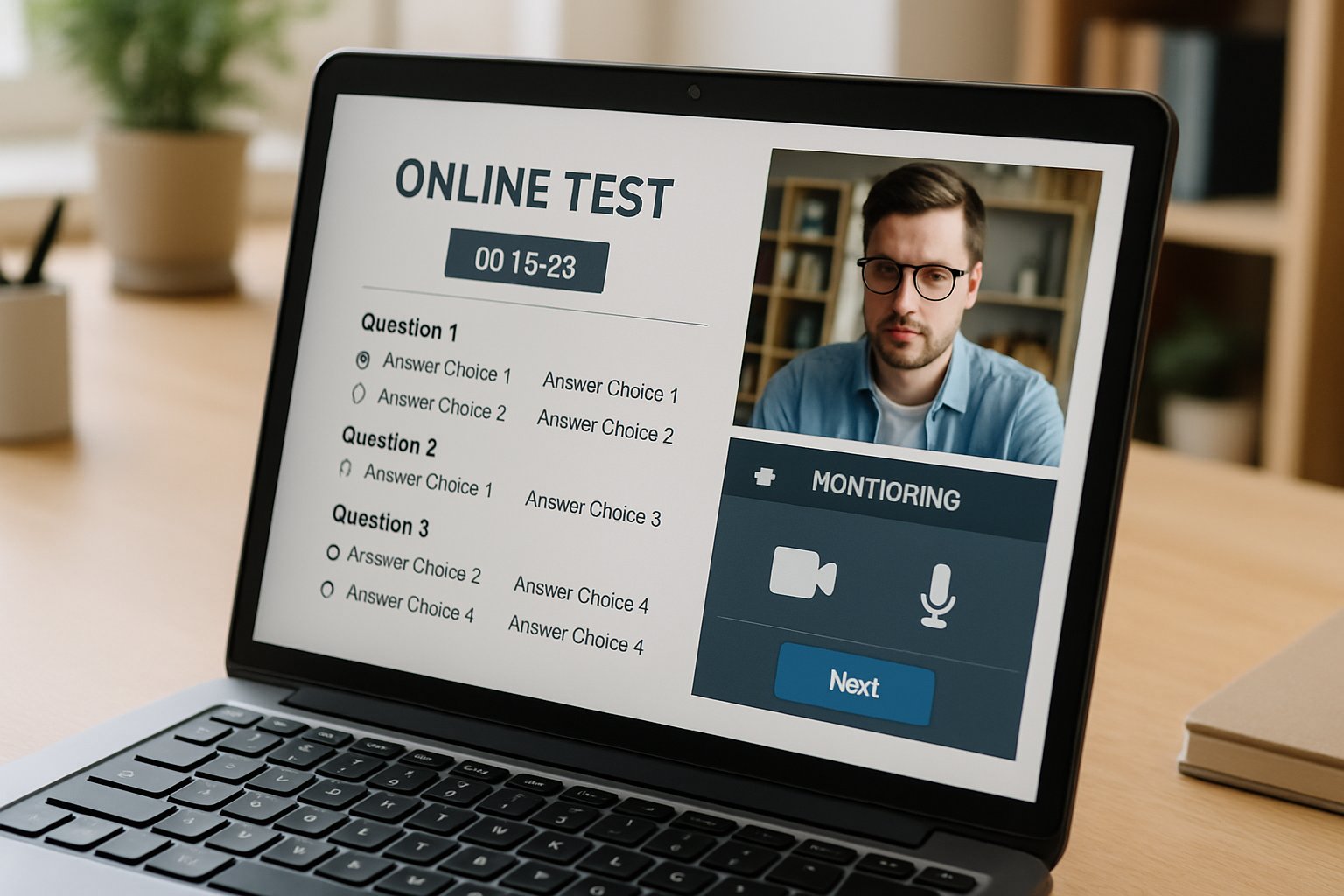
Remote test proctoring interface on a laptop during a student's online exam.
A student completes a secure online exam using advanced remote test proctoring tools.

Market analysts project double-digit growth beyond 2030, with estimates reaching USD 2.38 billion next year. Moreover, 63 percent of North American campuses already mention proctoring tools on their websites. Therefore, decision-makers must separate marketing hype from proven, student-centered design.

Remote Test Proctoring Trends

The market continues double-digit expansion, driven by hybrid learning and credential demand. MarketResearchFuture pegs 2024 revenue at USD 2.10 billion, rising to USD 2.38 billion in 2025. Meanwhile, vendor consolidation accelerates as Meazure Learning absorbs Examity and migrates customers onto ProctorU. Large public universities, including Ohio State and UC Davis, have switched suppliers after rigorous RFPs.

Procurement cooperatives, like California’s STAC, now streamline online proctoring tools for universities across hundreds of campuses. However, privacy legislation such as California SB-1172 forces platforms to publish transparent data-governance clauses. Institutions increasingly demand human-in-the-loop review to curb false flags and protect equity. Consequently, remote test proctoring vendors tout both AI speed and live auditor backup.

Adoption grows, yet oversight strengthens. Hybrid AI-human models now dominate enterprise deals. Next, we explore the core technology powering this growth.

Core Technology Stack Overview

Modern platforms blend camera, audio, and screen telemetry with machine learning heuristics. Additionally, identity validation combines document capture and facial matching within seconds. Browser lockdown for exams prevents tab switching, virtual machines, and copy-paste exploits. Online exam proctoring tools integrate deeply with LMS systems using secure LTI connectors.

  • Live streaming with trained human proctors
  • Automated flagging of anomalies for later review
  • Recorded sessions stored under SOC-certified encryption
  • Multi-camera support for larger workspaces

Colleges prefer online proctoring software that delivers in-dashboard analytics for instructors. Moreover, cheating prevention software now includes keystroke dynamics and background process detection. Proctoring software for higher education must also surface accommodation overrides inside accessibility workflows. Leading remote test proctoring suites now offer API triggers for adaptive assessments.

Technology blends automation with secure integrations. Lockdowns, analytics, and identity proof anchor integrity. Understanding features matters, yet outcomes matter more; benefits appear next.

Key Institutional Benefit Highlights

Institutions first cite scalability. One Respondus claim mentions tens of millions of annual exams, impossible in physical centers. Similarly, remote proctoring software for universities allows asynchronous scheduling, aiding part-time learners. Furthermore, virtual exam supervision produces searchable video evidence to support integrity hearings.

Faculty value analytics dashboards showing flag density by question. Additionally, online proctoring tools for universities often bundle 24/7 chat support, easing help-desk loads. Students appreciate flexible locations when online exam proctoring tools reduce travel costs. Consequently, proctoring software for higher education can boost retention in distance programs.

Benefits revolve around reach and flexibility. Evidence trails also streamline honor processes. Yet every upside has a counterpart, as the next section explains.

Persistent Risks And Criticisms

Privacy advocates warn about biometric overreach and indefinite data retention. EPIC complaints highlight opaque algorithms inside cheating prevention software. Moreover, facial recognition misfires can disproportionately flag students of color. False positives escalate stress, with studies showing mixed score impacts.

Technical failures during high-stakes exams can erode trust within minutes. Additionally, browser lockdown for exams sometimes conflicts with assistive technologies, harming accessibility. Market consolidation also heightens vendor-lock risks when migration plans falter. Therefore, remote test proctoring must stay transparent, auditable, and inclusive.

Risks span privacy, bias, and reliability. Stakeholders need safeguards before large-scale deployments. The following playbook outlines practical safeguards for enterprise buyers.

Enterprise Procurement Playbook Steps

Successful RFPs include students, faculty, legal, and disability services from inception. Ohio State’s process demonstrates cross-functional pilots before contract signatures. Moreover, institutions request service-level agreements covering uptime, support, and false-flag rates. Data governance clauses should cap retention and forbid sale of recordings.

  • Audit AI logic and bias testing reports
  • Verify SOC or ISO security certificates
  • Review accommodation workflows with DSS leaders
  • Mandate accessible browser lockdown for exams
  • Run controlled load tests with virtual exam supervision in live courses

Online proctoring software vendors cooperating on these points usually win long contracts. Consequently, remote proctoring software for universities gains campus-wide adoption with fewer escalations.

A structured playbook mitigates most operational shocks. Transparent contracts protect both students and institutions. With safeguards in place, leaders can look toward future developments.

Forward Looking Outlook Notes

Expect AI to detect contextual anomalies, not just rule violations. Additionally, privacy dashboards will grant students visibility and control over recordings. Open-standard APIs may let online exam proctoring tools interoperate across LMS and assessment apps. Meanwhile, competition persists despite consolidation, as startups refine niche cheating prevention software.

Market forecasts predict sustained growth driven by global certification uptake. Consequently, proctoring software for higher education must maintain agile roadmaps and community partnerships.

Innovation will prioritize privacy and fairness. Regulatory alignment will shape platform success. The conclusion summarizes why strategic choices now matter.

Conclusion

Remote test proctoring now sits at the intersection of scale, privacy, and pedagogical change. Institutions that align technology, policy, and student support secure flexible assessment without sacrificing trust. Clear procurement steps ensure benefits outweigh risks.

Why Proctor365? Our AI-powered remote test proctoring platform pairs advanced identity verification with scalable, human-reviewed monitoring. Trusted by global exam bodies, Proctor365 delivers secure browser lockdown for exams and real-time analytics. Consequently, institutions deploy online proctoring tools for universities faster and cut investigation time. Explore how Proctor365 boosts exam integrity today at Proctor365.ai.

Frequently Asked Questions

  1. What are the key benefits of remote test proctoring for universities?
    Remote test proctoring enables institutions to scale assessments, offer flexible scheduling, and generate data-rich audit trails. Proctor365 leverages AI proctoring and fraud prevention to enhance exam integrity and security.
  2. How does hybrid AI-human monitoring improve exam integrity?
    Hybrid AI-human monitoring blends rapid automated anomaly detection with live proctor support to resolve false flags. Proctor365 integrates machine learning with human review, ensuring reliable oversight and secure exam environments.
  3. What role does identity verification play in securing online exams?
    Identity verification is critical for preventing fraud and ensuring genuine test-taker participation. Proctor365 employs document capture, facial matching, and secure browser lockdown to strengthen exam security.
  4. What should institutions consider during the procurement of remote proctoring solutions?
    Institutions should prioritize platforms that provide scalability, privacy compliance, and robust fraud prevention. Proctor365 meets these needs with AI-powered monitoring, human oversight, and secure integrations.

Remote Proctored Exam Security: Mobile vs Desktop

Students now sit high-stakes tests from bedrooms, campus labs, and commuter trains.

Consequently, universities and training firms rely on every remote proctored exam to certify knowledge.

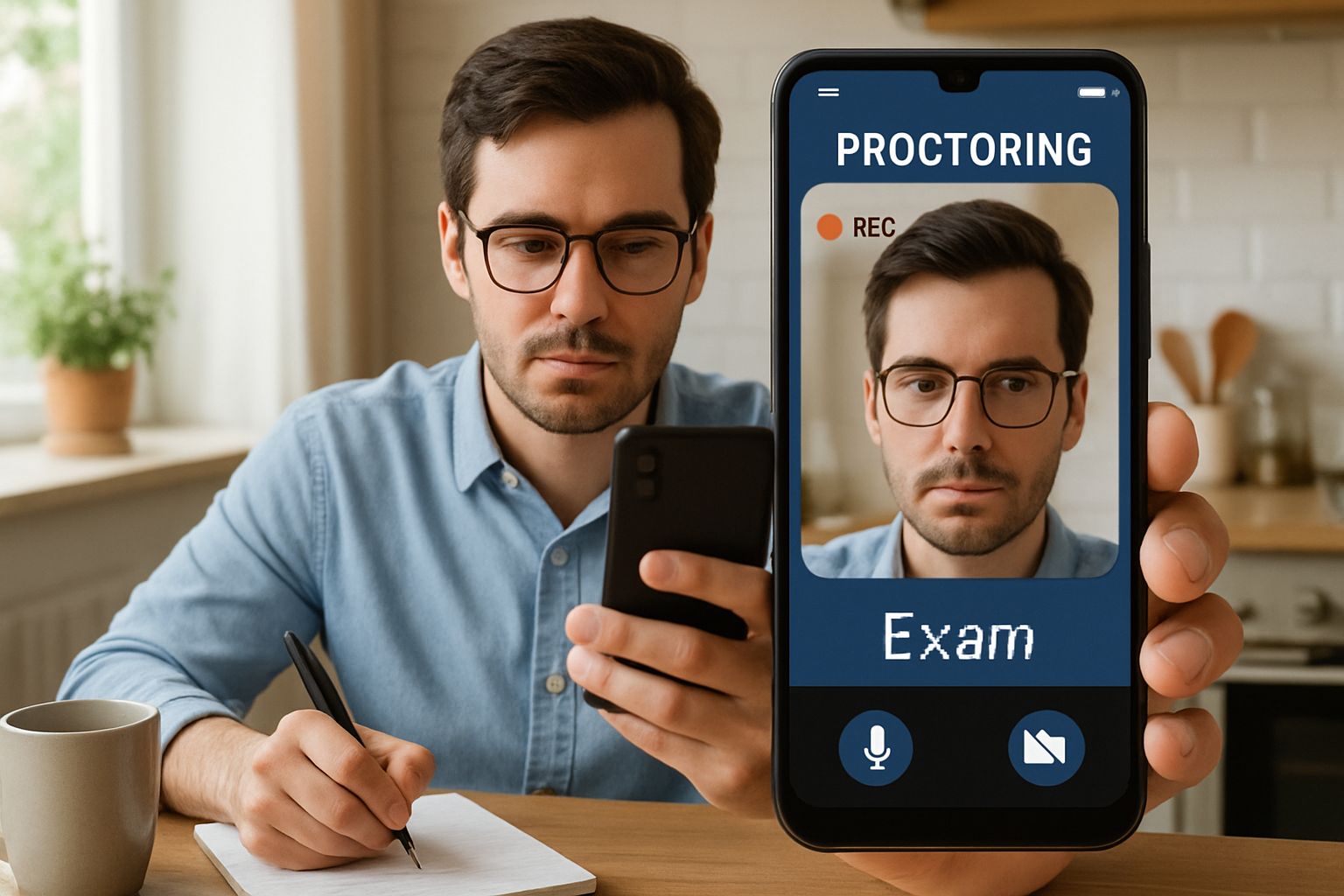
Candidate using mobile phone for remote proctored exam in kitchen
A test-taker completes a remote proctored exam on their mobile device at home.

However, choosing between mobile vs desktop proctoring presents thorny security and privacy trade-offs.

This article compares risks, market shifts, and actionable safeguards.

Moreover, we outline best practices that keep mobile proctored exams fair, accessible, and legally defensible.

Read on to strengthen your assessment programs before the next testing cycle.

Global analysts predict the proctoring market could top one billion dollars within three years.

Meanwhile, regulators scrutinize data retention and algorithmic bias with new statutes like California’s Student Test Taker Privacy Act.

Therefore, decision makers must weigh convenience against exposure.

Our guide delivers that balanced analysis.

We draw on vendor claims, watchdog reports, and frontline campus experiences.

Subsequently, you will leave with a clear checklist for compliant, scalable, and resilient assessment delivery.

Security Stakes Keep Rising

Every assessment captures video, audio, and identity documents.

Consequently, a single breach exposes sensitive biometric data for years.

Consumer Reports uncovered leaked source code at one vendor, highlighting live credential storage.

Meanwhile, privacy groups accuse platforms of over-collecting beyond legitimate test surveillance.

Therefore, secure mobile exam proctoring must balance detection with least-privilege design.

The same rule applies to each remote proctored exam deployed on desktops.

Institutions adopting mobile proctored exams must enforce strong encryption keys.

Key point: security failures damage institutional trust fast.

Next, we examine the broader market landscape.

Remote Proctored Exam Landscape

Market forecasts show compound growth between eight and twelve percent annually.

Moreover, mobile vs desktop proctoring capability now appears in almost every vendor pitch.

EDUCAUSE surveys found over sixty percent of universities referencing online proctoring tools on public sites.

  • Global market value: USD 1.1B forecast by 2025 (IntelMarketResearch).
  • Independent accuracy studies remain limited; vendor claims exceed 95% after human review.
  • California law restricts data collection to what is strictly necessary for monitoring.
  • Adoption of remote proctored exams on mobile is rising, especially in corporate training.

Consequently, online proctored exams on mobile phones drive new revenue streams for vendors that refine AI analytics.

However, purchasing teams should note that AI-powered mobile proctoring still lacks independent certification.

The landscape shows brisk growth but uneven transparency.

Next, we explore mobile detection limits.

Mobile Detection Limitations Explained

Native apps tap front and back cameras, microphones, and accelerometers.

In contrast, iOS restricts screen capture APIs, hindering complete session recording.

Consequently, some test takers exploit notification overlays or quick-switch gestures during mobile exam proctoring.

Vendors respond with Bluetooth scans and voice keyword triggers like “Hey Siri”.

However, false positives rise when ambient conversations mimic forbidden phrases.

Remote proctored exams on mobile produce higher variance in detection accuracy, according to limited campus pilots.

Therefore, secure mobile exam proctoring demands rigorous permission audits and human review of AI flags.

Faculty pilots of mobile proctored exams report mixed student comfort levels.

Mobile sensors expand coverage yet introduce fresh evasion paths.

We now compare ongoing desktop challenges.

Desktop Lockdown Challenges Persist

Lockdown browsers monitor window focus, keyboard events, and screen sharing.

However, virtual machines and secondary smartphones still bypass many controls.

AI-powered mobile proctoring often supplements desktops as a 360-degree room camera.

Robust mobile exam proctoring remains essential when desktops malfunction.

This hybrid raises privacy concerns because two devices stream simultaneously.

Moreover, mobile vs desktop proctoring means different encryption models and patch cycles for IT staff.

Each remote proctored exam therefore needs layered threat modeling across operating systems.

Desktop tools remain powerful yet imperfect.

Next, we present an implementation checklist.

Practical Proctoring Implementation Checklist

Administrators can mitigate risk by following a structured procurement template.

Key Action Items List

  1. Demand third-party audits before approving any remote proctored exam platform.
  2. Limit data retention to 30 days for secure mobile exam proctoring recordings.
  3. Publish false-flag rates for AI-powered mobile proctoring each semester.
  4. Offer on-campus alternatives for online proctored exams on mobile phones.
  5. Train staff on emerging mobile vs desktop proctoring exploits annually.

Moreover, institutions should document appeals workflows and accessibility accommodations.

These steps build transparency and student confidence.

A precise checklist keeps projects aligned with policy.

Finally, we look ahead to resilient strategies.

Future Proofing Assessment Integrity

Assessment redesign reduces surveillance pressure while preserving rigor.

For instance, open-book tasks and oral defenses curb cheating incentives.

Nevertheless, many programs will still require at least one remote proctored exam each term.

Therefore, AI-powered mobile proctoring must evolve with transparent models and demographic performance reporting.

Vendors already pilot computer-vision updates that detect secondary screens during remote proctored exams on mobile.

Moreover, secure mobile exam proctoring will benefit from stronger OS permission granularity.

Continual testing of mobile exam proctoring heuristics will refine sensitivity thresholds.

Research labs test accessibility features for online proctored exams on mobile phones.

Future models promise better balance between fairness and deterrence.

Next, we summarize key lessons and introduce Proctor365.

Conclusion

Effective exam integrity demands nuanced choices across devices, policies, and pedagogy.

By aligning audits, data minimization, and human review, institutions can administer each remote proctored exam with confidence.

Mobile vs desktop proctoring tools must integrate transparent AI, accessible workflows, and secure storage to remain credible.

Why Proctor365? Our AI-powered platform delivers secure mobile exam proctoring and desktop oversight in one unified console.

Advanced biometric verification confirms identity before every remote proctored exam begins.

Scalable cloud monitoring flags anomalies in real time, yet human auditors validate results for fairness.

Trusted by global universities and certification bodies, Proctor365 safeguards credentials at scale.

Book a demo today at Proctor365.ai and future-proof your assessments.

Frequently Asked Questions

  1. How do mobile and desktop proctoring differ in maintaining exam integrity?
    Mobile proctoring leverages AI and sensor data for real-time identity verification, while desktop proctoring uses lockdown browsers. Proctor365 integrates both methods to ensure robust exam integrity and fraud prevention.
  2. What security measures support remote proctored exams on Proctor365?
    Proctor365 employs advanced encryption, biometric checks, and AI-driven threat detection during remote proctoring. These layers safeguard sensitive data and secure exam sessions against breaches.
  3. How does Proctor365 balance privacy with effective exam monitoring?
    Proctor365 balances privacy and monitoring by collecting only essential data, enforcing strict encryption, and combining AI analytics with human review to ensure exam fairness and legal compliance.
  4. What role does AI play in Proctor365’s proctoring solutions?
    AI in Proctor365 streamlines identity verification and fraud detection in real time while minimizing false positives. Human auditors then validate AI flags, ensuring secure, compliant, and fair remote proctoring.