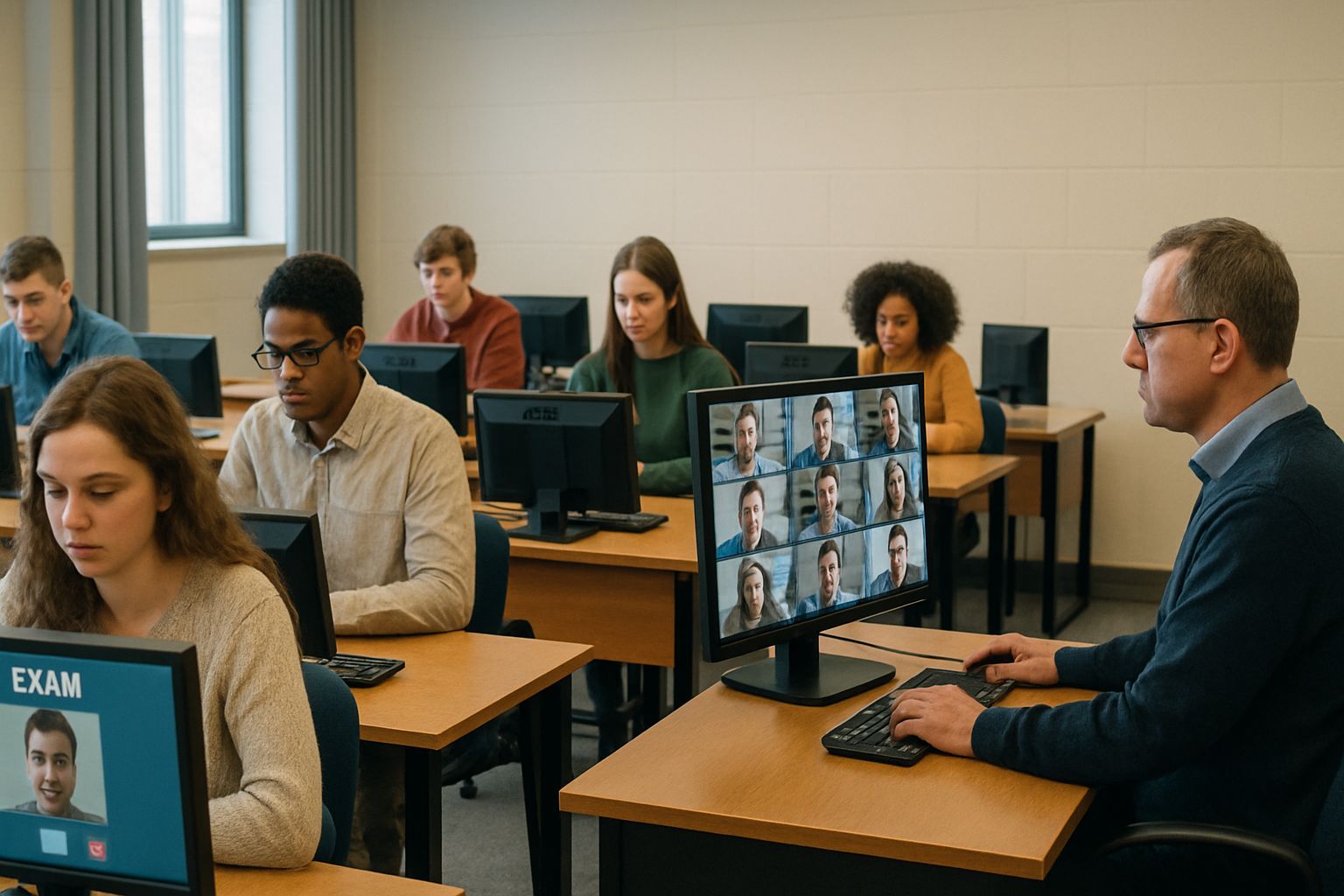
Browser Lockdown Software for Online Exam Security Closes Gaps

Remote testing exploded after 2020. Consequently, institutions scrambled to plug new cheating avenues. Browser lockdown software for online exam security emerged as the first defense line. The tool forces tests to run inside a restricted environment. Moreover, it disables shortcuts, copy-paste, and navigation. Many universities pair it with a lockdown browser for online exams like Respondus or SEB. These platforms promise a secure exam browser experience with minimal instructor setup. However, critics stress that academic integrity in online exams needs more than one tool. Market analysts forecast double-digit growth for exam lockdown software over this decade. Therefore, stakeholders must understand both strengths and gaps before investing.

Global Lockdown Browser Adoption

Current Market Growth Statistics

Adoption numbers show rapid scaling across education and certification sectors. Market Research Future estimates the proctoring market will hit USD 2.1 billion in 2024. Moreover, other reports cite compound annual growth above 15%.
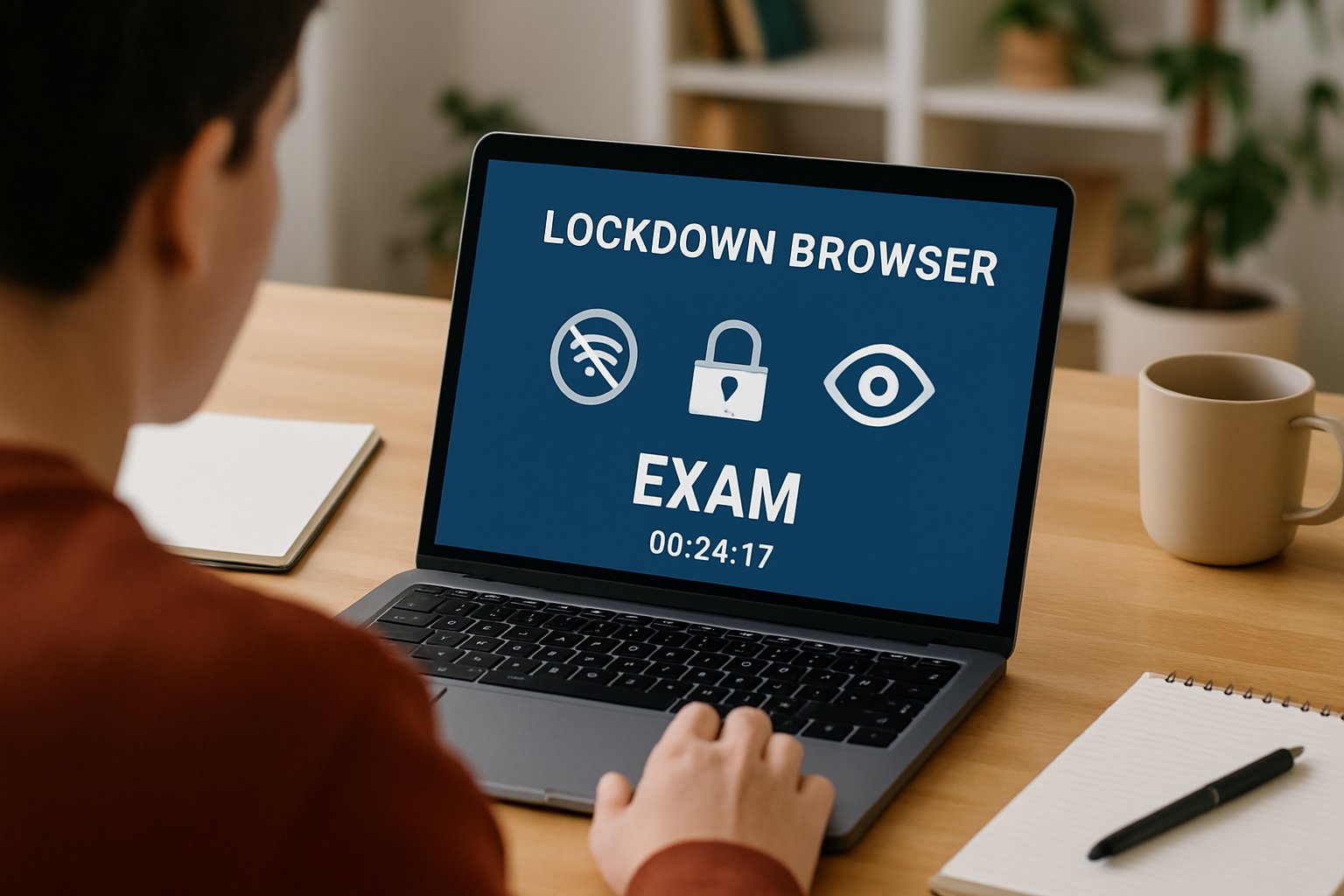
Remote student using browser lockdown software for online exam security at home.
A student completes an online exam at home, safeguarded by browser lockdown software.

North American surveys found a lockdown browser for online exams on nearly two-thirds of higher-education websites. Consequently, vendors integrate deeply with Canvas, Moodle, and Blackboard. Exam lockdown software also spreads within corporate training platforms that must certify skills remotely.

The drivers include:

  • Expanding online enrolments after pandemic disruptions.
  • Demand for flexible scheduling by working professionals.
  • Regulatory pressure to document academic integrity in online exams.
  • Cost savings compared with test centres.

However, analysts warn that browser lockdown software for online exam security faces scrutiny over privacy and outage incidents. Therefore, institutions must weigh reputational risk alongside adoption benefits.

Adoption is high and still growing. Nevertheless, security gaps require closer inspection as we explore next.

Key Core Security Mechanisms

Device Lockdown Controls Explained

The secure exam browser concept relies on strict device controls. It forces fullscreen mode, blocks print commands, and disables screen capture. Furthermore, it ends prohibited processes such as TeamViewer or Zoom.

Unlike traditional browsers, exam lockdown software alters the operating system shell during the session. Consequently, students cannot switch to notes, code editors, or messaging apps.

Advanced builds now include multi-monitor detection exams capability. The software checks connected displays and refuses launch if external monitors are found. Moreover, some variants inject low-level drivers that block virtual machine artifacts.

Core mechanisms include:

  • Clipboard sanitization to stop copy-paste leaks.
  • URL whitelists preventing resource browsing.
  • Real-time protocol blocking for remote desktops.
  • Hash checks that detect unauthorized browser extensions.

Browser lockdown software for online exam security still needs webcam and microphone feeds for stronger deterrence. Therefore, vendors bundle AI flagging modules that highlight unusual head movement or gaze.

These controls shrink digital attack surfaces. However, motivated cheaters continue to search for cracks, as the next section shows.

Most Common Bypass Tactics

Second Device Vulnerability Explained

Cheaters continually publish bypass guides on GitHub. Consequently, institutions face an arms race. The most consistent weakness remains second-device use. Students can consult a phone, tablet, or another laptop without triggering the secure exam browser restrictions.

Public scripts also spoof VM indicators, letting a lockdown browser for online exams run inside a sandbox. Moreover, researchers demonstrate toolkits that simulate keyboard activity while screen recording stays hidden.

Multi-monitor detection exams features stop extra displays yet cannot view the room perimeter. Therefore, an off-camera collaborator can still whisper answers.

Browser lockdown software for online exam security reduces low-skill cheating. However, evidence from Caveon audits shows sophisticated actors loom larger every year.

Bypass tactics evolve quickly. Consequently, a single control cannot guarantee integrity across diverse cohorts.

Layered Exam Defense Strategy

Human Review Layer Importance

Security teams recommend layered protection rather than reliance on exam lockdown software alone. Therefore, they combine item randomization, tight timing, and identity verification.

Live or recorded proctors add a human lens that automated flags may miss. Moreover, they can confirm context when multi-monitor detection exams raise alerts.

Assessment redesign also matters. Open-book questions that demand applied reasoning reduce the payoff from second devices. Consequently, academic integrity in online exams improves without excessive surveillance.

Effective layers include:

  1. Dynamic question pools per attempt.
  2. AI face matching before every section.
  3. Immediate forensic review of flagged clips.
  4. Honor codes and clear appeal channels.

Browser lockdown software for online exam security stays valuable in this mix. However, its role shifts to a containment measure rather than the entire wall.

A balanced stack cuts fraud while respecting privacy. Consequently, institutions build trust among students and faculty alike.

Essential Operational Best Practices

Ensuring Accessibility And Equity

Operational reliability often decides the user experience. Therefore, institutions must test every secure exam browser update before live deployment.

Clear communication helps students prepare devices early. Moreover, support lines should remain staffed during peak exam windows.

Equity ranks alongside security. Accessibility testing under varied lighting, screen readers, and bandwidth ensures equity for all groups.

Key operational steps:

  • Create sandbox exams for browser lockdown software for online exam security compatibility checks.
  • Offer alternative centres for students who refuse a lockdown browser for online exams.
  • Publish false-flag statistics each term to build transparency.
  • Run drills that verify multi-monitor detection exams configurations after OS patches.

Exam lockdown software remains effective when paired with service-level agreements that demand 99% uptime and rapid patch delivery. Consequently, vendor accountability aligns with institutional reputations.

Proactive operations prevent crises and lawsuits. Therefore, leadership should fund dedicated exam technology teams.

Upcoming Exam Security Outlook

AI Detection Advances Ahead

Researchers push toward behavioural biometrics and keystroke analytics. Consequently, future secure exam browser builds may detect context switching through typing rhythm anomalies.

Moreover, vendors prototype eye-gaze triangulation to complement multi-monitor detection exams modules. These analytics could flag subtle side glances without privacy-intrusive room scans.

Browser lockdown software for online exam security will likely integrate local machine-learning models. Therefore, alerts happen in real time even with poor bandwidth.

Regulators simultaneously demand transparency. Academic consortia call for published false-positive rates and open audit APIs for exam lockdown software.

Innovation promises sharper detection. Nevertheless, success depends on ethical deployment and continuous human oversight.

Browser lockdown software for online exam security remains crucial, yet it thrives only inside broader integrity frameworks. Institutions that pair secure exam browser controls with layered design and vigilant operations report fewer incidents. Transparent policies further raise student confidence. Why Proctor365? The platform fuses AI-powered proctoring, advanced identity verification, and scalable monitoring into one seamless cloud service. Moreover, its multi-monitor detection exams engine and real-time analytics exceed industry benchmarks. Trusted by global exam bodies, Proctor365 elevates academic integrity in online exams while safeguarding privacy. Consequently, organizations can focus on teaching, not policing. Experience the difference at Proctor365.ai.

Frequently Asked Questions

  1. How does exam lockdown software ensure exam security?
    Exam lockdown software restricts device functions such as copy-paste, screen capture, and unauthorized apps, creating a secure environment. With Proctor365’s AI proctoring and identity verification, exam integrity is strongly maintained.
  2. What are common techniques used to bypass lockdown browsers?
    Common bypass tactics include using second devices, virtual machines, or external monitors. Proctor365’s multi-monitor detection and real-time analytics help mitigate these risks and uphold secure exam standards.
  3. Why is human proctoring essential in online exam integrity?
    Human proctoring verifies suspicious behavior that automated systems might miss. Proctor365 integrates live reviews with AI flagging and identity verification to ensure fair, secure exam conditions.
  4. How do operational best practices improve exam proctoring reliability?
    Operational strategies, including sandbox testing, robust support, and equipment checks, optimize reliability. Proctor365’s strict SLA standards and rapid patch delivery ensure minimal downtime and equitable exam conditions.

How to Secure Online Exams with Browser Lockdown

Cheating moved online as exams left the classroom. Consequently, institutions now race to secure online exams with browser lockdown. The stakes are huge: a market worth up to $2 billion and reputations on the line. Moreover, students, regulators, and faculty demand privacy, accessibility, and fairness. This ultimate guide offers clear, step-by-step advice for universities, ed-tech firms, and corporate L&D teams.

Why Browser Lockdown Matters

Cheating rates during remote exams reached 44.7% in one 2023 review. However, lockdown browsers curb quick window switching, copy-paste, and unauthorized web access. EDUCAUSE polls show roughly 60% of campuses rely on lockdown technology. Meanwhile, states like California now limit data collection, forcing policy updates.

Close-up of browser lockdown software securing online exams on laptop.
Browser lockdown software in action to secure online exams from cheating.

Respondus, Honorlock, and Safe Exam Browser lead adoption. Each promises hardened clients and live or AI review. Yet, security researchers found clipboard and path-traversal exploits in 2024. Therefore, staying patched remains essential.

Key takeaway: Browser lockdown blocks low-effort cheats, but only if the client stays current. Next, we explore the core technology.

Core Lockdown Technology Explained

A secure exam browser launches the test site in kiosk mode. It disables shortcuts, printing, screen sharing, and unauthorized URLs. Additionally, vendors integrate room video and multi-monitor detection exams features that flag secondary screens.

Commercial suites bundle AI proctoring, while Safe Exam Browser offers open-source control. Institutions can embed configuration files or rely on LMS plug-ins. Furthermore, modern clients verify checksums to block tampered builds. Respondus now publishes a privacy supplement clarifying minimal data collection.

Secondary keywords appear naturally here: browser lockdown software, lockdown browser for online exams, and online exam security. Each technology layer prevents, then detects suspicious activity.

Key takeaway: Understanding how each layer restricts devices guides better configuration. The next section reviews benefits and market data.

Benefits And Market Data

Lockdown solutions deliver three primary wins:

  • Prevention: Blocks switching, copying, and printing.
  • Integration: Links directly with LMS gradebooks and analytics.
  • Scalability: From free SEB to enterprise AI suites.

Market forecasts project high-teens CAGR through 2030. Moreover, vendors tout millions of exam sessions monthly. Consequently, IT leaders see lockdown as a quick integrity boost. Pairing it with online exam security analytics further deters misconduct.

Key takeaway: Adoption grows because lockdown raises barriers quickly. Yet, risks remain, as the next section shows.

Risks And Privacy Concerns

No tool stops every cheat. Clever students still exploit virtual machines or outdated clients. In 2024, CVE-2024-37742 let users share clipboards in SEB until a patch landed. Additionally, false AI flags can stress students and overload faculty review queues.

Privacy advocates, including EFF, warn that webcams and biometric checks may be intrusive. Laws now demand clear opt-outs and limited retention. Accessibility complaints also grow when proctoring fails to support assistive tech.

Therefore, institutions must balance online exam security with rights. Implement robust policies and transparency to win trust.

Key takeaway: Risks underscore the need for policy, patching, and communication. Implementation steps follow next.

Implementation Checklist Steps Guide

The following seven steps create a defensible program:

  1. Draft policy first—define allowed tools and student alternatives.
  2. Run privacy, security, and accessibility reviews before purchase.
  3. Enforce updates for every secure exam browser version.
  4. Choose least-intrusive settings to honor privacy laws.
  5. Require human review of AI flags with clear appeals.
  6. Train faculty and students using sandbox tests.
  7. Design assessments that limit answer sharing.

Best Practice Lockdown Settings

For every exam, lock the URL, disable clipboard, and enable multi-monitor detection exams. Additionally, force version checks to stop tampered clients. Combine lockdown with screen recording when stakes justify.

Key takeaway: A structured checklist converts theory into routine practice. We now look ahead.

Future Trends And Research

Vendors now add keystroke analysis, real-time threat feeds, and adaptive analytics. Moreover, open standards like LTI Advantage simplify cross-platform lockdown. Researchers also push for stronger evidence on effectiveness beyond self-reports.

Meanwhile, regulators tighten privacy controls. Consequently, expect shorter retention periods and on-device processing. Institutions will demand transparent AI to reduce bias.

Key takeaway: The landscape evolves fast, so governance and continuous review stay critical. We close with a summary and solution.

Conclusion

Lockdown browsers raise the bar against opportunistic cheating. However, lasting success blends current software, thoughtful policy, human oversight, and resilient assessment design. Institutions that consistently update, communicate, and review settings achieve measurable gains.

Why Proctor365? Our platform helps secure online exams with browser lockdown while adding AI-powered proctoring, advanced identity verification, and scalable monitoring trusted by global exam bodies. Explore Proctor365 today and protect academic integrity with confidence.

Frequently Asked Questions

  1. How does browser lockdown improve online exam security?
    Browser lockdown prevents cheating by disabling copy-paste, window switching, and unauthorized web access. With AI proctoring and advanced identity verification, Proctor365 ensures secure exam sessions and real-time fraud prevention.
  2. What should institutions consider when implementing browser lockdown solutions?
    Institutions should enforce update protocols, integrate LMS seamlessly, and enable human review of AI alerts. These measures, paired with robust identity verification, enhance exam integrity while maintaining privacy.
  3. How does Proctor365 balance exam integrity with privacy concerns?
    Proctor365 minimizes data collection, offers clear opt-out options, and leverages secure AI monitoring alongside advanced identity checks to balance exam integrity with stringent privacy requirements.
  4. What future trends could impact browser lockdown for online exams?
    Emerging trends like AI-driven threat analysis, adaptive proctoring, and transparent biometric processing, combined with continuous software updates, enhance browser lockdown effectiveness and exam security.

Browser Lockdown Software Compatibility for Mac & Chromebook

High-stakes exams are moving online at record speed. Universities, certifiers, and enterprises need resilient test controls. However, platform differences raise hard questions about browser lockdown software compatibility. Mac computers and Chromebooks dominate many classrooms yet behave very differently under lockdown. This article offers clear answers for decision makers. We examine technical defenses, real exploit trends, and practical deployment choices. Consequently, you can decide which strategy protects integrity without blocking legitimate learners.

Browser Lockdown Software Compatibility

Vendors promise universal protection, yet fine print matters. Macs rely on native apps such as Respondus LockDown Browser and Safe Exam Browser. Chromebooks depend on kiosk apps or progressive web apps controlled by Google policies.

Group studies browser lockdown software compatibility on Chromebooks during class.
Students in a classroom ensure browser lockdown software compatibility on their Chromebooks for secure testing.

Furthermore, the strongest controls require managed devices. Unmanaged student hardware often slips past restrictions. Consequently, administrators must map threat models to each operating system. The next sections break down strengths and gaps.

  • lockdown browser for Mac delivers deep OS access and blocks external applications under macOS Sonoma.
  • lockdown browser for Chromebook activates in kiosk mode and enforces single-app use on managed devices.
  • Chrome OS lockdown browser extensions add optional webcam monitoring through Respondus Monitor or similar tools.
  • lockdown browser installation requirements include minimum OS versions, administrator rights, and stable network connections.
  • lockdown browser LMS compatibility depends on APIs from Canvas, Moodle, Blackboard, and other platforms.

In short, compatibility starts with the operating system and management layer. Next, we explore Mac strengths in depth.

Mac Lockdown Strengths Explained

Macs run native clients that integrate tightly with system processes. Therefore, a lockdown browser for Mac can disable screenshots, virtual machines, and external displays during testing.

Respondus, Examplify, and Safe Exam Browser push frequent macOS updates. Moreover, kernel-level hooks detect prohibited shortcuts instantly. Independent penetration tests show high success blocking casual software cheats.

However, physical devices still circumvent controls. USB keystroke injectors and covert smartphones remain effective. Consequently, institutions pair software with live or AI proctoring for stronger assurance.

Importantly, browser lockdown software compatibility holds steady across recent macOS versions because Apple maintains stable security APIs. Administrators should still enforce latest client builds to patch exploits.

  1. Verify lockdown browser installation requirements before each term.
  2. Push automatic updates through MDM profiles.
  3. Run pilot exams to test assistive-technology conflicts.
  4. Collect feedback and adjust accessibility settings.

Mac devices offer robust in-app restrictions and predictable update cycles. Nevertheless, hardware cheats force layered defenses, which we address next for Chromebooks.

Chromebook Challenges And Fixes

Chromebooks dominate K-12 fleets, yet securing them is harder. A lockdown browser for Chromebook often runs as a managed kiosk app.

However, students can unenroll devices using community exploits like SH1MMER if firmware remains outdated. Consequently, IT teams must enforce enterprise enrollment and firmware updates.

Chrome OS lockdown browser solutions now ship as progressive web apps because Google deprecates classic kiosk apps. This shift simplifies deployment but increases reliance on stable internet.

Moreover, state programs such as CAASPP mandate current secure-browser versions. Institutions should schedule nightly policy pushes and audit device posture before exam windows.

  • Pro: Rapid boot times minimise setup stress.
  • Pro: Google Admin console scales across thousands of laptops.
  • Con: Unmanaged units bypass restrictions easily.
  • Con: Network outages break the PWA session.

Despite challenges, browser lockdown software compatibility remains possible on Chromebook fleets when policies stay active and firmware stays patched.

Chromebook security depends on management status and OS version coherence. Up next, we cover deployment steps that bridge both platforms.

Deployment Best Practice Steps

Successful rollouts follow a repeatable checklist. Firstly, document all lockdown browser installation requirements for each platform.

Secondly, create configuration baselines inside your mobile-device-management or Google Admin console. Moreover, align these baselines with accessibility accommodations.

Thirdly, test every update during a low-stakes quiz. Doing so verifies browser lockdown software compatibility before high-stakes sessions.

Finally, train instructors and learners. Provide quick reference guides that explain how a lockdown browser for Mac differs from a lockdown browser for Chromebook.

Additionally, integrate multi-camera or room-scan protocols when stakes warrant. Physical proctoring complements software and answers privacy critics through transparent review processes.

A disciplined deployment sequence reduces last-minute surprises. Next, we evaluate how learning platforms impact the equation.

LMS Integration Considerations Guide

Assessment platforms embed their own checks. Nevertheless, lockdown browser LMS compatibility can vary across Canvas, Moodle, Blackboard, and D2L.

Consequently, administrators should run vendor-supplied diagnostic exams inside each course shell. These tests log API calls and catch permission errors early.

A browser lockdown software compatibility matrix simplifies support calls. Maintain one sheet that lists minimum versions for every plugin and extension.

Moreover, some LMSs restrict external pop-ups. Ensure the Chrome OS lockdown browser PWA launches inside the allowed iframe.

Finally, if you require remote ID verification, confirm the lockdown browser for Chromebook passes webcam permission prompts, and that the lockdown browser for Mac supports Touch ID.

Proper LMS alignment prevents exam interruptions and grade disputes. Finally, we look ahead at emerging trends driving continuous change.

Future Trends And Recommendations

Platform owners evolve security APIs yearly. Therefore, institutions must treat lockdown strategies as living programs rather than one-off projects.

Experts predict more biometric signals, such as keystroke dynamics, will integrate directly into Chrome OS lockdown browser offerings.

Meanwhile, open-standard attestations may allow automated proof of device enrollment, strengthening browser lockdown software compatibility for remote candidates.

Nevertheless, privacy expectations will keep rising. Transparent data policies and appeal processes remain essential alongside technology.

Accordingly, we recommend six concrete actions for the next fiscal year.

  1. Audit firmware against unenrollment exploits quarterly.
  2. Retire unsupported SEB or Respondus builds within 30 days.
  3. Publish updated lockdown browser LMS compatibility charts every semester.
  4. Require dual-camera proctoring for capstone exams.
  5. Conduct surprise drills to test staff readiness.
  6. Share lessons learned with peer institutions.

Continuous improvement keeps defences ahead of attackers. The conclusion summarises why layered proctoring with trusted partners matters.

Effective exam integrity requires technology, policy, and people working together. This article showed how macOS and ChromeOS handle browser lockdown software compatibility differently, yet both platforms succeed when deployments follow best practice.

Why Proctor365? Our AI-powered engine pairs advanced identity verification with scalable monitoring across any device. Furthermore, live analysts review AI flags in real time, reducing false positives. Global universities trust Proctor365 to protect certifications and corporate learning.

Therefore, strengthen your next assessment with Proctor365. Visit Proctor365.ai to schedule a demo and elevate exam integrity today.

Frequently Asked Questions

  1. How do lockdown browsers for Mac and Chromebooks differ in functionality?
    Lockdown browsers on Mac use native applications for deep OS integration, blocking unauthorized actions, while Chromebooks rely on kiosk mode or progressive web apps. Proctor365 enhances security with AI-driven identity verification and real-time fraud prevention.
  2. Why is proper deployment of browser lockdown software crucial?
    Proper deployment—including firmware updates, MDM configurations, and pilot tests—ensures compatibility across devices. Proctor365 complements these measures with scalable monitoring and advanced proctoring, supporting overall exam integrity and preventing academic fraud.
  3. How does AI proctoring enhance exam security in online assessments?
    AI proctoring continuously analyzes exam behavior, flags suspicious activities, and verifies candidate identity. Proctor365’s AI engine works alongside browser lockdown software to reduce false positives and ensure robust fraud prevention during high-stakes assessments.
  4. How does LMS integration support successful exam administration?
    Integrating lockdown browsers with LMS platforms like Canvas, Blackboard, and Moodle streamlines exam delivery and monitoring. Proctor365’s real-time analytics and compatibility with multiple systems ensure seamless, secure exam environments.

Mastering Browser Lockdown LMS Integration for Secure Exams

Browser Lockdown LMS Integration

The phrase defines a direct link between the secure browser client and the LMS quiz.

With secure exam browser integration, students face a locked environment seconds after clicking their quiz link.

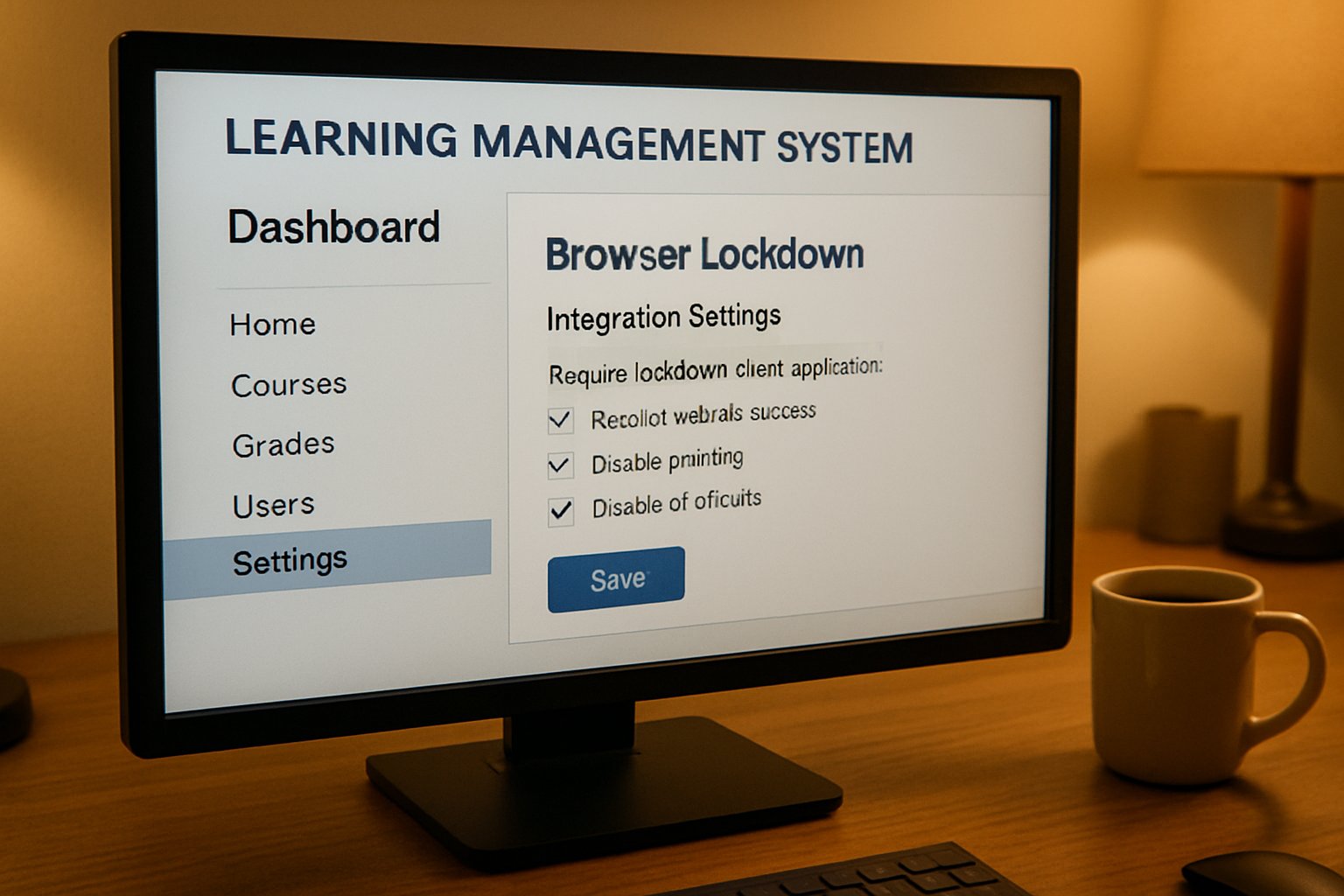
LMS dashboard showing browser lockdown LMS integration settings on administrator’s workstation.
An administrator configures browser lockdown LMS integration to protect academic integrity.

Meanwhile, instructors stay inside familiar course pages, activating restrictions through a simple settings panel.

Most vendors rely on IMS Global’s LTI 1.3 standard.

Therefore, identity, roster information, and grade passback travel through OAuth-secured messages.

This standardization improves LMS compatibility with lockdown browser implementations campus wide.

Universities also gain a single sign-on workflow, trimming support tickets during finals week.

Consequently, both students and staff view the tool as part of normal LMS navigation.

That perception reduces resistance and supports long-term adoption.

Respondus, Safe Exam Browser, and Honorlock all publish out-of-the-box LMS guides. Moreover, these guides illustrate identical checklist steps despite differing clients. This convergence signals industry maturity.

Case Study: University of Melbourne integrated Safe Exam Browser via LTI within Moodle 5.0. After two semesters, help-desk tickets dropped by 38%. Average setup time per quiz fell to four minutes.

To summarise, standards-driven launches link security and convenience. Furthermore, the approach keeps governance inside institutional systems.

Next, we explore why these controls matter in high-stakes settings.

Why Lockdown Tools Matter

Academic misconduct can erode public trust fast.

Moreover, research shows simple browser switching enables easy answer hunting.

Lockdown browser for LMS solutions block that pathway by disabling navigation, copy, and screenshots.

Market reports estimate remote proctoring revenues between USD 0.65B and USD 9.6B yearly.

However, not every assessment requires webcams or biometric analytics.

Consequently, many campuses keep lockdown technology while retiring camera monitoring, as McMaster University did in 2025.

This hybrid stance balances exam integrity, privacy, and accessibility.

It also aligns with student surveys that favour device restrictions over intrusive surveillance.

Therefore, decision makers should evaluate risk, course stakes, and learner demographics before selecting secure exam browser integration features.

Browser lockdown LMS integration underpins that balanced strategy by embedding restrictions directly inside existing courses.

Peer-reviewed studies from 2025 confirm that open-book questions plus lockdown reduce cheating attempts by 43%. Nevertheless, researchers warn that multi-device collusion still persists. Therefore, instructors should mix design and monitoring.

Canvas analytics from a 10,000-student psychology course showed 27% fewer flagged incidents post-lockdown. Moreover, student survey scores on fairness improved by 19 points.

Effective lockdown addresses device-based cheating without escalating privacy concerns. Moreover, it preserves institutional reputation.

Now, let us examine the technical launch sequence.

Standard LTI Launch Flow

LTI 1.3 starts with a signed JWT and OAuth handshake.

Immediately, the LMS sends course, user, and role data to the lockdown provider.

The provider validates the token and redirects the student to the locked client.

During that redirect, deep links point to the right quiz.

Consequently, no manual URL distribution is needed.

Grade passback occurs through Assignment and Grade Services once the attempt closes.

Thus, this orchestration achieves browser lockdown LMS integration with minimal support overhead.

Moreover, it ensures LMS compatibility with lockdown browser extensions released on short notice.

Institutions adopting Chromebooks, for instance, benefited from Respondus updates in 2025.

Institutions seeking secure exam browser integration should enable AGS endpoints during pilot rolls.

Names and Roles services also power dynamic seating analytics. Consequently, staff can see which lab stations will be occupied. That insight aids resource planning during concurrent exams.

Grade passback deserves special attention during pilot phases. Institutions sometimes miss LTI “lineitem” creation because of restricted scopes. Therefore, always confirm that a test grade appears in the sandbox gradebook. If not, validate the deployment ID and tool URL promptly.

In short, LTI 1.3 secures launch context and grade flow. Furthermore, it future-proofs tool connectivity.

Next, we compare alternative integration routes.

Plugin And SDK Paths

Some LMS versions still lack full LTI Advantage features.

Therefore, vendors offer native plugins or OEM lockdown browser for LMS packages.

Plugins modify menu items, create dashboards, and enforce tighter UI locks.

SDKs, by contrast, embed lockdown code directly into third-party assessment engines.

This path delivers secure exam browser integration to publishers that lack LMS modules.

However, maintenance responsibility shifts toward the licensee, including patch delivery.

Regardless of method, administrators should map feature parity against compliance needs.

Consequently, a plugin might suffice for quizzes, while high-stakes exams require the full client.

Many ed-tech startups license SDKs to deliver browser lockdown LMS integration without reinventing security stacks.

OEM lockdown kits find traction with niche certification vendors lacking full LMS backends. Furthermore, the vendor handles code signing, reducing auditing overhead. However, updates still depend on the OEM roadmap.

Safe Exam Browser devotees praise the encrypted configuration files shipped with each exam. Therefore, instructors lock calculators yet allow an offline formula sheet when needed.

Commercial proctoring suites often bundle live observation with lockdown, yet pricing doubles. In contrast, a standalone lockdown browser for LMS usually bills per institution, not per attempt. Consequently, budget owners weigh scalability against per-exam fees.

Plugins and SDKs widen deployment options. Moreover, they demand stronger change-management processes.

Now let us address device logistics.

Key Device Support Considerations

Students bring Windows, macOS, iPadOS, and ChromeOS devices to exams.

Safe Exam Browser unifies clients, while Respondus ships separate installers and a Chromebook extension.

Hence, IT teams must publish clear installation guides.

Provide a practice test that confirms the lockdown browser for LMS runs smoothly on each platform.

Accessibility adds another layer.

However, some lockdown clients conflict with screen readers or magnifiers.

Request current VPAT documentation and run pilot tests with disabled learners.

Network stability also matters.

Consequently, provide offline startup files or low-bandwidth modes where possible.

Failing to plan for edge cases will spike help-desk calls.

Chromebook extensions rely on Google administration policies for enterprise rollout. Meanwhile, iPad apps must pass Apple’s managed distribution approval. These extra stores add approval lead time.

Bandwidth constraints pain remote testing centers in rural regions. However, Safe Exam Browser offers an offline exam package that syncs once connectivity returns. This feature, though optional, reduces failure rates by 12% according to a Swiss pilot.

Device diversity challenges smooth rollouts. Therefore, proactive testing reduces last-minute disruption.

We now consider policy and privacy hurdles.

Policy And Privacy Hurdles

Legal scrutiny around biometrics intensified after the Illinois BIPA settlement with Respondus.

Although lockdown alone captures no video, data still flows between browser and servers.

Therefore, contracts must specify storage regions, retention windows, and deletion triggers.

Universities like McMaster split webcam monitoring from lockdown functionality to reduce privacy risk.

Consequently, their policy pages reference lockdown browser for LMS but disable Respondus Monitor.

Similar patterns appear across Europe following GDPR guidance.

Administrators should follow a checklist before production rollout:

  • Document assessment scope and stakes.
  • Secure data-processing agreements with vendors.
  • Verify LMS compatibility with lockdown browser updates.
  • Run accessibility and network stress tests.
  • Publish student orientation materials and practice quizzes.

Completing this list reduces audit surprises. Moreover, it supports transparent communication with stakeholders.

Policy clarity combined with browser lockdown LMS integration establishes defensible audit trails for every attempt.

Disability offices recommend alternative assessment windows for learners using screen readers. In contrast, some institutions allow a secondary, non-locked device solely for assistive software. Clear protocols avoid academic appeals.

Campus counsel increasingly inserts biometric indemnity clauses following the Respondus settlement. Moreover, procurement checklists now require explicit refusal of undisclosed facial recognition.

With governance addressed, we can close with final lessons and next steps.

Conclusion

Browser lockdown LMS integration, when guided by clear policy and robust LTI standards, secures high-stakes assessments without disrupting teaching. Moreover, practical planning around devices, privacy, and support transforms deployment into a predictable routine.

Why Proctor365? Our AI-powered platform pairs advanced identity verification with real-time analytics to monitor exams at massive scale. Consequently, universities, certification bodies, and corporations trust Proctor365 to protect integrity worldwide. Additionally, our 24/7 support team accelerates onboarding and resolves incidents within minutes. Join the leaders already redefining assessment security with data-driven insights. Schedule a personalized demo and witness seamless scalability in action. Experience frictionless exam security today by visiting Proctor365.

Frequently Asked Questions

  1. How does browser lockdown LMS integration secure high-stakes exams?
    Lockdown integration creates a secure testing environment by disabling navigation, copy, and screenshots. Coupled with Proctor365’s AI-powered identity verification and real-time analytics, it minimizes cheating and enhances exam integrity.
  2. What advantages does the LTI 1.3 standard offer for exam proctoring?
    LTI 1.3 enables secure token-based launches, seamless grade passback, and instant exam access. This standardized protocol simplifies LMS integration and supports robust proctoring solutions, including Proctor365, for improved exam security.
  3. How does Proctor365 address device diversity and privacy concerns during exams?
    Proctor365 supports multiple devices, including Windows, macOS, iPadOS, and ChromeOS, with offline exam packages. Its privacy-focused approach ensures secure data retention and uses AI-driven fraud prevention for compliant testing.
  4. What key steps are recommended for ensuring compliance and accessibility with lockdown tools?
    Implement detailed installation guides, practice tests, and accessibility checks. Clear user orientation, secure data handling, and adherence to compliance policies guarantee a safe, accessible exam environment with Proctor365.

Balancing Identity Verification With Student Trust

A webcam light blinks, and the exam clock starts. However, many learners immediately worry about what the camera records. Their concern centers on identity verification powered by algorithms few can inspect. Market forecasts predict billions for proctoring software, yet acceptance remains fragile. Meanwhile, universities tout seamless online assessments that respect academic integrity and convenience. Nevertheless, recent studies show privacy, bias, and technical glitches still dominate student narratives. This article unpacks fresh research, vendor dynamics, and policy debates shaping remote exam surveillance. Readers will gain actionable insights for balancing risk, trust, and educational fairness in 2025. Additionally, we spotlight practical steps institutions can take before renewing proctoring contracts. Consequently, stakeholders can foster transparent learning environments instead of adversarial testing battlegrounds.

Rising Market Growth Pressures

Moreover, the remote proctoring market is expanding at a striking pace. Insight Partners pegs 2024 revenues near US$869 million, rising to US$2.35 billion by 2031. Comparable trackers echo a mid-teens compound growth rate despite economic headwinds. This surge keeps identity verification features at the centre of vendor marketing decks. Consequently, facial matching demos now headline virtually every conference sales pitch. Meanwhile, established testing giants integrate start-up algorithms to maintain competitive parity. Institutions face mounting pressure to scale online assessments without ballooning travel or staffing costs.

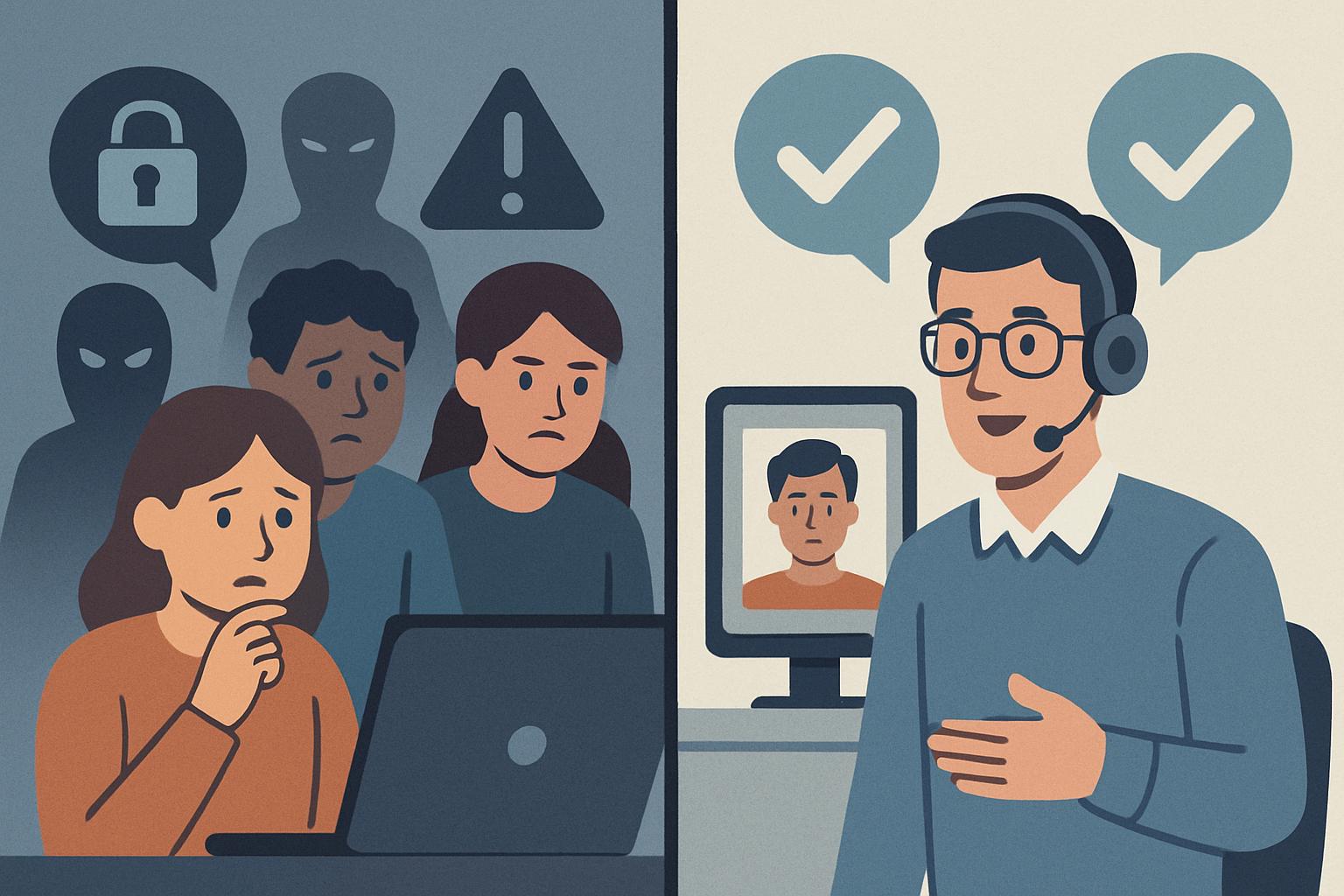
Visualizing student concerns and transparency in identity verification.
Acknowledging privacy and bias concerns in identity verification processes.

The money tells a clear story of demand. However, fiscal enthusiasm often overlooks student experience, leading to potential backlash. These overlooked perspectives drive the sentiment patterns discussed next.

Student Sentiment Split Views

Recent qualitative work paints a nuanced picture of learner attitudes. In a 2025 U.S study, 64% favoured automated monitoring for sheer convenience. However, 43% simultaneously reported dissatisfaction, citing privacy and accuracy lapses. Additionally, respondents voiced uncertainty about how identity verification footage might be reused or breached. In contrast, medical students surveyed earlier flagged an 89% privacy concern rate.

  • 62.1% feared invalid flags for looking away during identity verification.
  • 64% ranked AI proctoring first for flexible online assessments.
  • 89.6% cited webcam privacy as the top stressor with proctoring software.

Collectively, these numbers confirm diverging comfort levels across demographics and disciplines. Nevertheless, transparent communication can soften anxieties, as the 2025 Scandinavian interviews suggest. The privacy dimension deserves a closer lens in the following section.

Privacy And Legal Tensions

Room scans often feel like virtual warrantless searches, critics argue. Consequently, cases such as Ogletree challenged their constitutionality in U.S courts. European regulators also flagged biometric storage under GDPR risk categories. Identity verification data can become sensitive biometric material if templates persist beyond an exam window. Meanwhile, the ACLU warns of chilling effects on academic freedom and student mental health. Protracted litigation against Proctorio, settled in 2025, exemplifies reputational hazards for vendors.

Legal landscapes remain fluid and largely reactive. However, institutions can pre-empt disputes by adopting privacy-first procurement frameworks. Accuracy questions illustrate another layer of complexity.

Accuracy And Bias Questions

Even top algorithms misfire at non-trivial rates for certain demographics. NIST reports show higher false match rates among women and darker-skinned subjects. Therefore, students already marginalized bear disproportionate verification burdens. False positives during identity verification can trigger stress and grade appeals. Furthermore, poor lighting or head coverings exacerbate detection errors, forcing multiple retakes. Proctoring software rarely discloses actual confidence thresholds, limiting informed consent.

Bias harms undermine identity verification integrity claims. Consequently, accuracy audits and public benchmarks are essential procurement prerequisites. Institutions must translate technical nuance into practical policy next.

Institutional Policy Roadmap

Universities cannot outsource responsibility to vendors and hope for goodwill. Instead, procurement teams should map data flows before signing. Moreover, contracts must specify identity verification methods, deletion timelines, and appeal channels. Student unions, disability offices, and faculty senates deserve meaningful consultation periods. Additionally, offering alternative online assessments like oral exams or in-person centers respects diverse circumstances. Choice reduces opposition without sacrificing academic standards.

  • Conduct annual audits of proctoring software accuracy and demographic impact.
  • Publish plain-language guides explaining identity verification data retention.
  • Enable opt-out paths for high-risk students during online assessments.

Transparent governance rebuilds student trust quickly. Nevertheless, future acceptance also hinges on forward-looking innovation. Our final section explores that horizon.

Looking Ahead For Trust

Emerging approaches aim to minimise data collection while safeguarding exam legitimacy. For example, cryptographic face hashes allow on-device matching without central storage. Meanwhile, behavioural signals like keystroke cadence avoid biometric extraction altogether. Researchers test federated identity verification that deletes images immediately after local authentication. Moreover, independent standards bodies push for open metrics and voluntary certification. Consequently, vendors embracing transparency may secure a durable competitive edge.

Privacy-preserving advances signal optimism. However, implementation speed will define whether skepticism fades or intensifies. The concluding section synthesizes practical implications.

Key Takeaways Recap Points

Student trust stands on three pillars: privacy, accuracy, and meaningful choice. Recent research confirms attitudes shift when institutions prioritize those pillars during online assessments. However, unchecked market growth can tempt shortcuts that erode confidence. Therefore, leadership should contract only vendors that publish detailed audits and permit real-time appeals. Consequently, bias errors and unnecessary surveillance drop, while learning outcomes remain safeguarded. Looking forward, privacy-preserving methods and independent benchmarking offer a sustainable course. Professionals reviewing proctoring software policies should schedule transparent stakeholder workshops this semester. Take action now: examine your next exam contract, demand clarity, and champion student-centric digital testing.

Frequently Asked Questions

  1. What is remote proctoring and why is its market growing?
    Remote proctoring uses webcam monitoring and algorithm-based identity verification to oversee exams. Its market is expanding rapidly as institutions seek scalable, cost-effective solutions despite ongoing concerns over privacy and technical glitches.
  2. How do identity verification algorithms function in online assessments?
    These algorithms use facial matching and behavioral cues to confirm a student’s identity. However, critics note that the opaque nature of these systems can lead to misinterpretation and potential bias, affecting fairness.
  3. What privacy challenges arise with remote exam surveillance?
    Remote exam surveillance often involves room scans and biometric data capture, which raises concerns about data retention, unauthorized usage, and GDPR compliance, ultimately impacting student trust and academic freedom.
  4. How can algorithm inaccuracies and bias affect student experiences?
    Inaccurate identity verification can trigger false flags and increase stress, particularly for marginalized groups. These errors may lead to repeated monitoring and grade appeals, undermining a fair assessment environment.
  5. What policy measures should institutions consider for proctoring software?
    Institutions should ensure transparent data flows, conduct regular accuracy audits, and include clear consent and deletion terms in contracts. Engaging stakeholders like student unions helps address privacy and fairness concerns.
  6. What alternative verification methods are emerging in remote proctoring?
    Emerging methods such as cryptographic face hashes and behavioral analysis minimize data collection by performing on-device matching. These techniques offer privacy-preserving alternatives while maintaining exam integrity.
  7. How does transparent governance improve trust in online assessments?
    By adopting clear audit trails, stakeholder consultations, and plain-language privacy guides, institutions can rebuild student trust. Transparent governance reduces bias errors and reinforces the commitment to academic fairness.

UX Strategies To Make AI Proctoring Less Invasive

Remote testing exploded during the pandemic. Consequently, many institutions rushed to deploy AI proctoring to curb cheating. However, students soon argued that webcams and room scans felt intrusive. Meanwhile, regulators began scrutinizing data practices. This article examines why discomfort persists and how thoughtful user-experience decisions can help AI proctoring feel less invasive without sacrificing integrity.

Proctoring Debate Intensifies Worldwide

AI proctoring adoption peaked in 2021 when 63 % of North American college sites mentioned such tools. Nevertheless, several campuses now report steep declines. At CU Boulder, only 6 % of instructors used Proctorio during 2023–24. Moreover, high-profile court cases and privacy rulings keep pressure on universities.

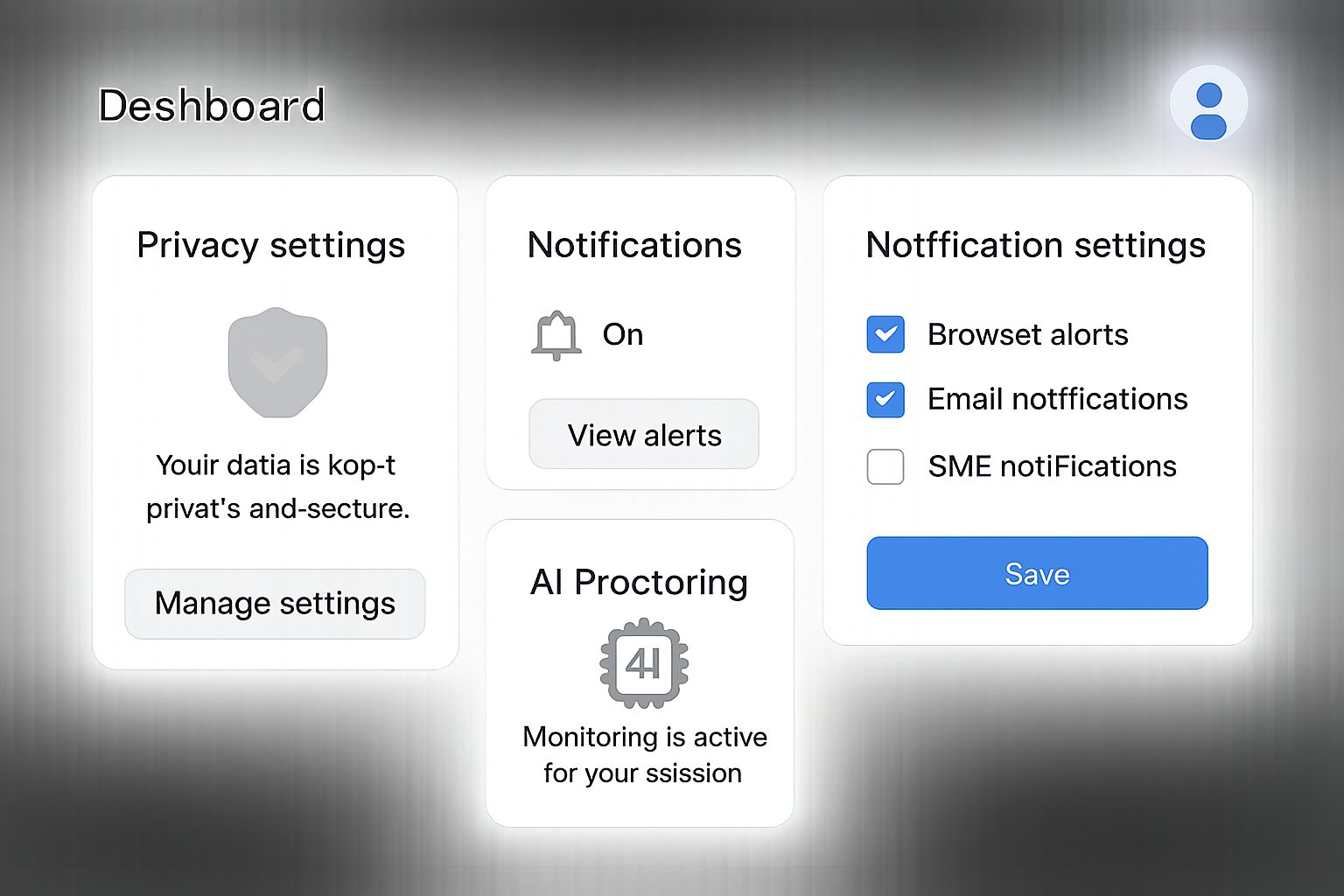
User-focused AI proctoring dashboard with enhanced privacy controls.
A transparent dashboard gives students more control and reduces invasiveness.

Key recent developments include:

  • Ontario’s privacy commissioner ordered tighter limits on Respondus recordings in 2024.
  • Ogletree v. Cleveland State ruled mandatory room scans unconstitutional.
  • EFF lawsuits alleged vendor intimidation of critics.

These events reveal shifting expectations. Institutions crave scalable monitoring; regulators insist on restraint. The tension sets the stage for stronger design solutions. Therefore, understanding the evolving legal climate is essential before tackling UX fixes.

Growing oversight highlights urgency. Meanwhile, policy shifts directly influence product requirements for the next generation of AI proctoring platforms.

Regulators Demand Privacy Controls

Legal opinions now emphasize proportionality. For example, Ontario’s report criticized McMaster University for vague notices and broad data reuse. Similarly, U.S. courts liken forced room scans to warrantless searches. Consequently, universities must demonstrate necessity, minimize collection, and offer alternatives.

Regulators consistently ask for five safeguards:

1. Clear consent flows
2. Narrow data scopes
3. Short retention windows
4. Human review of flags
5. Accessible appeal processes

Ignoring these demands can invite lawsuits or enrollment pushback. Nevertheless, compliance alone will not rebuild student trust. Institutions must translate legal language into transparent, supportive interfaces.

Robust governance sets boundaries. However, real acceptance hinges on addressing emotional and cultural concerns detailed in the next section.

Student Concerns Undermine Trust

Empirical studies show 70–90 % of surveyed learners feel anxious about webcams. AI proctoring also raises equity issues because low-income students lack private spaces or reliable bandwidth. Furthermore, false positives disproportionately hurt neurodiverse or disabled testers.

Common student objections include:

  • “My home is my sanctuary; cameras invade it.”
  • “Algorithms may misinterpret my tics as cheating.”
  • “I cannot control roommates entering unexpectedly.”

Moreover, mystery around data storage fuels suspicion. Many candidates assume recordings live forever in vendor clouds. In contrast, transparent deletion policies markedly improve comfort levels.

These insights confirm that emotional safety equals academic performance. Consequently, UX teams must design for empathy as well as compliance.

Understanding learner fears clarifies priorities. Subsequently, the article turns to specific design levers that mitigate those fears.

UX Levers Reduce Intrusion

Minimize Data Collection

Edge inference keeps raw video on the device and transmits only short clips when a flag triggers. Additionally, default settings should disable microphone capture unless an instructor explicitly requires audio.

Explainable Flag Feedback

A calm, sidebar indicator can show, “Face not detected, please adjust camera.” Consequently, students stay informed and can self-correct before flags escalate.

Human-In-The-Loop Review

AI proctoring should alert trained reviewers, not automatically fail exams. Therefore, final judgments gain context and fairness.

Offer Authentic Alternatives

Open-book exams, randomized problem banks, or project submissions often remove surveillance needs entirely. Nevertheless, where high-stakes identities matter, in-person centers or live human proctors should remain available.

Thoughtful UX choices transform perceptions. Therefore, the next checklist ties these concepts to operational steps.

Implementation Checklist For Teams

Product managers and academic technologists can follow this staged roadmap:

  1. Run necessity and equity assessments before deploying AI proctoring.
  2. Configure local inference and 14-day deletion by default.
  3. Build a sandbox practice exam that mirrors real monitoring.
  4. Draft plain-language consent screens citing purpose, access, and retention.
  5. Ensure every flag funnels to a human reviewer within 24 hours.
  6. Publish appeal procedures in course syllabi.
  7. Create accommodations such as campus labs or oral assessments.

Each item aligns with regulator guidance and student feedback. Consequently, institutions can reduce risk while enhancing user confidence.

Structured processes accelerate adoption. Meanwhile, strategic foresight prepares teams for future regulatory shifts.

Future Outlook And Recommendations

Vendor roadmaps increasingly tout privacy-by-design. Moreover, academics predict remote assessment will persist for continuing education and global programs. Therefore, competition will favor platforms that combine rigorous security with respectful UX.

Key trends to monitor include biometric legislation expansions, cross-border data flow restrictions, and AI transparency mandates. Consequently, institutions should negotiate vendor contracts with deletion triggers and audit rights.

Adopting flexible assessment models also future-proofs pedagogy. In contrast, clinging to surveillance may deter enrollment in privacy-sensitive regions.

Preparing for emerging norms ensures resilience. Subsequently, the conclusion distills the article’s main insights.

Conclusion And Next Steps

AI proctoring remains valuable for scale and deterrence. However, unchecked surveillance erodes trust. Regulators now demand proportionate monitoring, while students expect respect and choice. By minimizing data, explaining flags, integrating human reviewers, and offering authentic alternatives, universities can safeguard integrity without invading privacy.

Industry professionals should audit current workflows, pilot edge-based solutions, and revise policy language this semester. Furthermore, continuous user research will reveal evolving expectations. Take action now to transform remote testing from a legal headache into a distinguished service advantage.

Frequently Asked Questions

  1. What factors drove the rapid adoption of AI proctoring during the pandemic?
    The surge in remote testing to maintain academic integrity led institutions to quickly deploy AI proctoring, despite concerns over privacy, as they sought scalable solutions to prevent cheating.
  2. How have privacy and regulatory concerns impacted AI proctoring practices?
    Heightened regulatory scrutiny, court rulings, and privacy commissioner actions have forced institutions to re-evaluate intrusive practices like room scans, demanding clearer consent and minimized data collection.
  3. What common concerns do students have about AI proctoring?
    Students express anxiety over constant surveillance, feel that room scans invade personal space, and worry about false positives—especially for neurodiverse or disabled individuals—impacting their academic performance.
  4. How do UX improvements help reduce the intrusiveness of AI proctoring?
    Implementing UX strategies such as edge inference, explicit flag feedback, and human review reduces data collection and enhances transparency, thereby mitigating the intrusive nature of automated proctoring.
  5. Which regulatory safeguards are critical for fair AI proctoring?
    Key safeguards include clear consent flows, narrowly scoped data collection, short retention times, human review of flags, and accessible appeal processes to ensure both compliance and respect for student privacy.
  6. How can institutions provide viable alternatives to conventional AI proctoring?
    Institutions can offer alternatives such as open-book exams, randomized problem banks, in-person proctoring, or dedicated testing labs, helping address ethical concerns and reduce reliance on constant surveillance.
  7. What future trends might influence the development of AI proctoring platforms?
    Emerging biometric legislation, cross-border data flow restrictions, and AI transparency mandates are likely to drive vendors toward privacy-by-design and more user-centered approaches in remote testing environments.

Redesigning Online Assessments To Reduce Proctoring Intrusion

Remote testing accelerated after campus lockdowns, and demand has not faded. Institutions now deploy AI tools at scale. Consequently, many students describe webcam monitoring as continuous surveillance. Civil-rights groups echo that concern. Vendors, in contrast, argue that encrypted platforms deter cheating and protect credentials. Market researchers forecast rapid expansion, yet mistrust threatens adoption. Therefore, leaders must ask a hard question: can online assessments feel fair without abandoning integrity?

Remote Proctoring Market Tension

Growth metrics show strong momentum. Estimates place the global proctoring market in the low billions by 2026. Furthermore, EDUCAUSE surveys found over half of universities used remote monitoring during peak pandemic semesters. However, follow-up polls reveal selective rollbacks amid backlash.

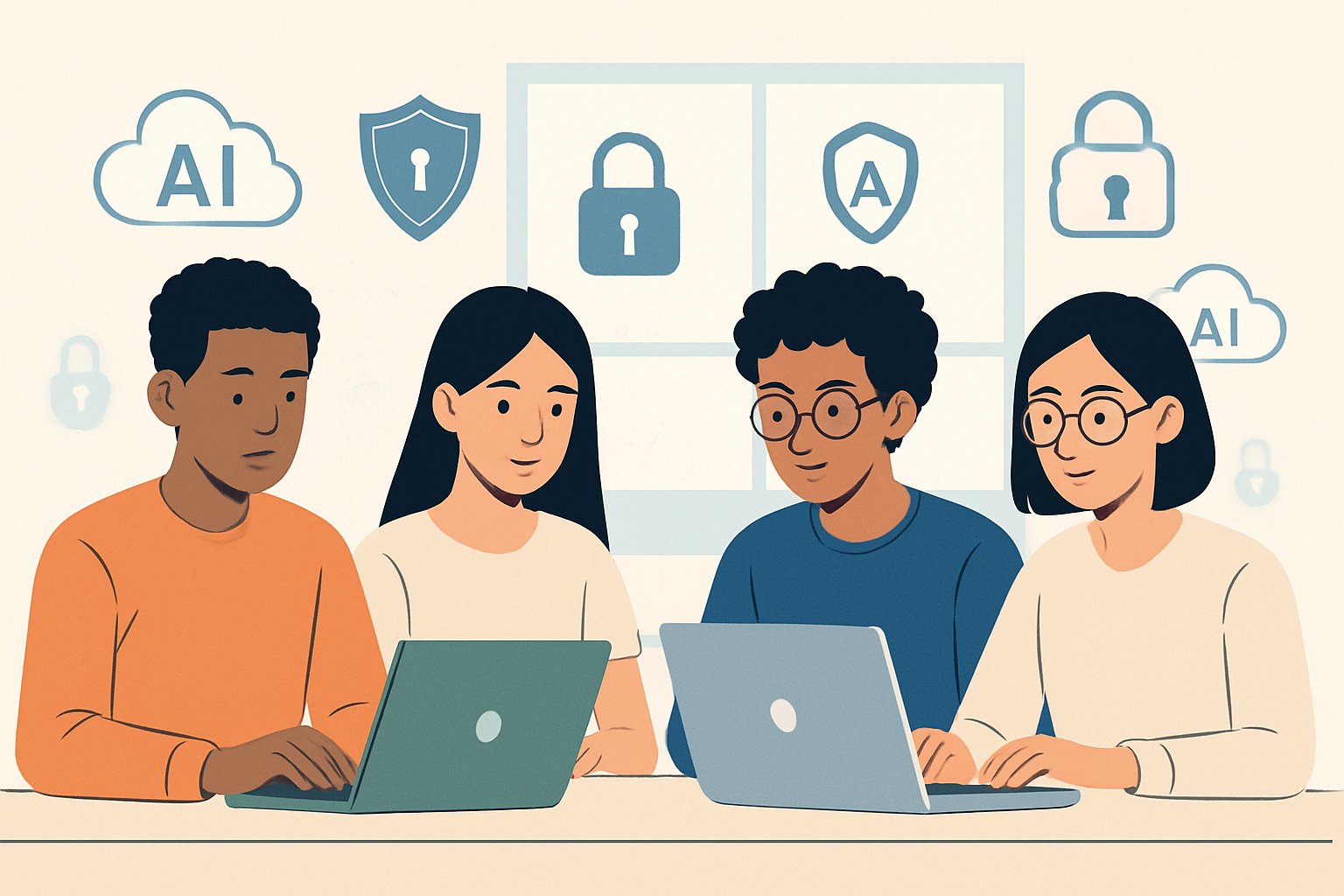
Diverse students participating in secure online assessments with visible privacy and AI balance.
Balanced AI and privacy in online assessments create a fair examination environment.

Several established players drive the surge. Proctorio touts zero-knowledge encryption and institution-controlled keys. Honorlock promotes hybrid monitoring with live agents and AI flags. Consequently, each vendor highlights privacy features to counter skepticism. Nevertheless, student petitions and media investigations continue to challenge adoption rates.

Key takeaway: Revenue climbs, yet reputational risk grows. Therefore, institutions weigh expansion against potential backlash.

Next, we examine why students push back so forcefully.

Student Privacy Concerns Backlash

Surveys report 25–55% of learners feel uncomfortable showing living spaces on camera. Additionally, disability advocates cite mismatches between facial detection and assistive devices. In contrast, many instructors still believe monitoring deters misconduct. This mismatch fuels tension.

High-profile complaints illustrate lived harms. One law student was flagged for looking away to read notes in Braille. Meanwhile, another case involved a roommate entering frame, triggering an automatic incident report. Consequently, trust eroded, and legal actions followed.

Key takeaway: Perceived surveillance and algorithmic errors undermine legitimacy. However, technical bias also exacerbates the problem, as seen next.

Technical Bias Factors Explained

Algorithmic models often struggle with diverse lighting, skin tones, and accessibility tools. Moreover, training datasets rarely include sufficient disabled representation. Therefore, false positives hit marginalized groups hardest.

Recent studies show facial recognition error rates doubling for darker skin. Additionally, pose detection struggles with low-resolution webcams. These gaps translate into anxiety and grade disputes. Consequently, critics argue that automated scoring cannot remain the sole arbiter.

Key takeaway: Bias is both technical and systemic. Subsequently, designers must embed fairness from the outset.

Online Assessments Design Levers

Several privacy-first options can reduce intrusiveness.

  • Data minimization: record only necessary clips, not entire sessions.
  • Edge processing: analyze video locally and transmit metadata.
  • Short retention: delete footage after appeal windows expire.
  • Human review: always confirm algorithmic flags manually.
  • Alternative formats: shift some exams to open-book or project work.

Additionally, adaptive sensitivity settings let instructors disable continuous gaze tracking. Consequently, stress drops while security remains. Moreover, research prototypes now test federated learning for anomaly models, reducing central data pools.

Key takeaway: Thoughtful configuration can balance surveillance and privacy. Therefore, policy frameworks must reinforce these levers.

Policy Oversight And Audits

Procurement contracts shape daily realities. Institutions should mandate independent privacy impact assessments before deployment. Furthermore, agreements must restrict footage to assessment integrity only. The ACLU recommends forbidding marketing uses entirely. Moreover, audit clauses enable external experts to test demographic bias and security posture.

Transparent student notices also matter. Plain-language disclosures must describe data flows, retention periods, and appeal steps. Consequently, learners understand risks and rights. Meanwhile, offering in-person alternatives protects those lacking reliable bandwidth.

Key takeaway: Strong governance builds trust. Subsequently, the conversation shifts from fear to informed choice.

Balancing Integrity Trade Offs

Institutions still need deterrence mechanisms. Nevertheless, every added sensor can raise legal exposure. Therefore, leaders weigh benefits against harms.

Proctoring deters contract cheating and impersonation, yet lockdown browsers can hinder assistive technologies. Additionally, identity verification via biometrics may exclude students without webcams. An online exam maker might simplify test authoring but still inherit these surveillance tensions. Consequently, hybrid models often emerge: formative quizzes leverage honor codes, while capstone exams use moderated AI monitoring plus human review.

Key takeaway: Nuanced strategies outperform blanket surveillance. Therefore, practical guidance becomes essential.

Practical Checklist Steps Overview

The following condensed roadmap supports responsible deployment:

  1. Run privacy and accessibility impact assessments.
  2. Specify data minimization and deletion schedules.
  3. Require documented human review for algorithmic flags.
  4. Offer opt-out paths, including alternative assessment formats.
  5. Publish audit summaries and student-friendly guides.
  6. Monitor experience surveys each term and iterate.

Adhering to this checklist reduces intrusiveness, maintains fairness, and preserves confidence in online assessments.

Key takeaway: Actionable steps exist today. Consequently, stakeholders can move from debate to implementation.

These layered insights outline why skepticism persists and how targeted fixes help. However, successful change demands continuous evaluation and transparent dialogue.

Conclusion

AI proctoring will remain part of digital education. Nevertheless, its future hinges on empathy-driven design, robust oversight, and adaptable pedagogy. Market growth proves demand, yet trust determines sustainability. Therefore, institutions should combine privacy-centric engineering, clear policy, and inclusive assessment redesign. Implement the checklist above and monitor outcomes rigorously. Take these steps now to deliver secure, respectful online assessments that serve every learner.

Frequently Asked Questions

  1. How has remote proctoring evolved since the campus lockdowns?
    Remote proctoring surged during lockdowns with increased use of AI and webcam monitoring, raising privacy debates and prompting institutions to seek a balance between secure assessments and respectful surveillance.
  2. What are the main privacy concerns associated with continuous webcam monitoring?
    Students feel exposed by sharing personal living spaces and encounter issues when assistive devices trigger false flags. Such concerns have led to petitions and calls for reassessment of invasive monitoring techniques.
  3. How do technical biases affect AI-based proctoring?
    Algorithmic struggles with diverse lighting, skin tones, and assistive technologies result in higher false positive rates, particularly impacting marginalized and disabled students and questioning the fairness of automated assessments.
  4. What innovations can make remote proctoring less intrusive?
    Institutions can use data minimization, edge processing, and short retention policies along with human reviews, reducing unnecessary recording while maintaining security and exam integrity.
  5. Why is policy oversight critical in the deployment of remote proctoring systems?
    Robust policies, independent privacy impact assessments, and transparent audit clauses ensure that data is used only for assessing integrity, thereby building trust and safeguarding against misuse.
  6. How can institutions balance cheating deterrence with inclusivity in online assessments?
    By implementing hybrid models that combine AI, human oversight, and alternative testing formats, institutions can deter misconduct while accommodating diverse student needs and technological limitations.

Why Remote Proctoring Software Matters Now

Remote proctoring software has shifted high-stakes testing far beyond campus walls. Consequently, universities, certification bodies, and corporate L&D teams can now examine learners anytime, anywhere. However, the shift also intensifies scrutiny over privacy, bias, and accessibility. This article explores why the technology remains essential, how institutions can use it responsibly, and what comes next.

Digital Assessment Boom Today

Online learning enrollment keeps growing after the pandemic surge. Moreover, ed-tech platforms push organizations to deliver rapid, skills-based credentials. Market studies value the global online proctoring market between USD 0.8 billion and several billions, with double-digit CAGR forecasts.

Professional in office setting using remote proctoring software for certification exam
Remote proctoring software helps professionals take secure certification assessments.

Because learners sit across time zones, online proctoring software offers scale and speed that test centers cannot match. Corporate trainers also prefer flexible scheduling to minimize operational downtime. Therefore, demand continues to rise across sectors.

Key takeaway: Remote assessment growth fuels demand for secure monitoring. Next, we examine the threats challenging exam integrity.

Integrity Risks Intensify Online

Unauthorized collaboration, contract cheating, and generative AI answer-bots threaten credential value. Consequently, institutions must strengthen defenses. Online exam proctoring software supplies deterrence through continuous video, screen, and audio surveillance. Furthermore, AI alerts for suspicious activity flag anomalies within seconds, enabling rapid intervention.

Studies in the Journal of Computing in Higher Education show webcam monitoring reduces average cheating rates. Nevertheless, risk persists when exams move unproctored. Therefore, multi-layer safeguards remain critical.

Key takeaway: Digital cheating tactics evolve quickly. Robust oversight counters these tactics. The following section explains how.

Remote Proctoring Software Role

Comprehensive platforms combine several protective layers. Live human supervisors can intervene in real time. Meanwhile, recorded sessions allow post-exam audits when alerts arise. Additionally, AI proctoring software analyzes gaze, keystrokes, and room audio.

Modern suites embed lockdown browsers, motion detection exam software, and voice detection in online exams for extra control. Furthermore, identity verification compares photo IDs with real-time facial biometrics, blocking impostors instantly.

  • Live human oversight for high-stakes tests.
  • Automated AI alerts for suspicious activity at scale.
  • Lockdown browsers and device control.
  • Detailed video and log archives for forensics.

Key takeaway: Layered features combine human judgment with automation. Next, we outline each model in detail.

Proctoring Models Explained Clearly

Institutions choose among three main approaches.

First, live online proctoring software connects test-takers to trained hosts through secure video. Consequently, interventions happen instantly, yet staffing costs remain higher.

Second, recorded online exam proctoring software captures sessions for later review. AI triage reduces human workload while preserving evidence.

Third, fully automated AI proctoring software relies on algorithms alone, cutting cost but increasing false-flag risk. Therefore, many programs blend recorded sessions with selective human audits.

Key takeaway: Each model offers trade-offs in cost, speed, and accuracy. Privacy becomes the next critical consideration.

Balancing Privacy And Equity

California’s Student Test Taker Privacy Protection Act limits data collection and mandates minimization. Consequently, vendors now disclose retention timelines and deletion workflows.

Nevertheless, critics warn that motion detection exam software may misinterpret neurodivergent behaviors. Moreover, research finds facial analysis less accurate for darker skin tones, amplifying bias concerns. To mitigate harm, institutions should:

  • Conduct impact assessments before deployment.
  • Offer alternative testing venues upon request.
  • Publicly post model performance by demographic group.
  • Enable consent-based voice detection in online exams.

Key takeaway: Transparent governance builds student trust. We now turn to selecting the right solution.

Selecting Robust Proctoring Tools

Procurement teams must align features with risk profiles. Firstly, verify that the platform integrates AI alerts for suspicious activity with clear escalation paths. Secondly, prioritize vendors audited for accessibility and security. Thirdly, ensure motion detection exam software functions under low bandwidth. Additionally, evaluate how often the system updates its voice detection in online exams module.

When piloting, gather feedback from disability services and student unions. Consequently, early adjustments prevent large-scale issues later.

Key takeaway: A rigorous, inclusive selection process safeguards reputation. Finally, we explore future developments.

Future Trends And Regulations

The next wave will emphasize privacy-preserving machine learning. Federated models will keep personal data on local devices. Furthermore, regulators worldwide consider frameworks similar to California’s statute. Therefore, compliance stakes will climb.

Simultaneously, AI proctoring software will add explainable flagging dashboards, clarifying why alerts fire. Moreover, integration with learning analytics will help educators redesign assessments that naturally deter misconduct.

Key takeaway: Innovation and regulation will advance in tandem. Institutions must stay agile.

With the landscape mapped, we conclude with action steps and the Proctor365 advantage.

Conclusion: Secure, fair, and scalable assessment now depends on thoughtful use of remote proctoring software. Institutions should match risk with monitoring depth, adopt transparent policies, and demand accountable AI. By combining human oversight, AI alerts for suspicious activity, motion detection exam software, and voice detection in online exams, they protect credential value without sacrificing student rights.

Why Proctor365? Proctor365 delivers enterprise-grade remote proctoring software powered by adaptive AI. The platform offers advanced identity verification, smart voice detection in online exams, and responsive motion detection exam software. Its AI proctoring software scales effortlessly to millions of sessions while maintaining less than 1% false-alert rates. Trusted by global exam bodies, Proctor365 lets your organization focus on learning outcomes, not logistics. Elevate exam integrity today at Proctor365.ai.

Frequently Asked Questions

  1. How does remote proctoring software ensure exam integrity?
    Remote proctoring software safeguards exam integrity with continuous video, audio, and screen monitoring, integrated AI alerts, and robust identity verification methods. These measures deter cheating and unauthorized collaboration, ensuring valid, secure assessments.
  2. What features distinguish Proctor365’s remote proctoring platform?
    Proctor365 integrates advanced AI proctoring, smart voice detection, responsive motion detection, and real-time human oversight with secure identity verification. Its adaptive system scales to millions of sessions while minimizing false alerts and ensuring robust fraud prevention.
  3. How does Proctor365 address privacy, bias, and accessibility in online exams?
    Proctor365 adheres to stringent privacy standards and regulatory guidelines by implementing minimal data collection, transparent storage policies, and alternative testing options. Their system optimizes identity verification and AI algorithms to reduce bias, ensuring equitable online assessments.
  4. What should institutions consider when selecting a remote proctoring tool?
    Institutions should evaluate proctoring tools based on robust AI integration, fraud prevention capabilities, regulatory compliance, and adaptability to differing network conditions. User feedback, accessibility support, and transparent data practices are vital for informed decision-making.


Remote proctoring software curbs online exam cheating

Cheating surged once exams moved online. Consequently, institutions now rely on remote proctoring software to preserve credibility. The technology combines webcam feeds, screen capture, AI analytics, and trained reviewers. Moreover, vendors promise rapid threat response as new cheating tools appear.

This article explores recent evidence, privacy trade-offs, and procurement guidance for universities, certification bodies, and enterprise L&D leaders.

Students in a university lab using remote proctoring software for online exams.
University students take exams under digital surveillance with remote proctoring software.

Cheating Threats Rapidly Escalate

Organized cheating markets advertise real-time answer services. Furthermore, LSAC will halt the remote LSAT in mainland China after October 2025 because rings compromised earlier sittings. A systematic review found pandemic-era self-reported cheating reached 54.7%, compared with 29.9% pre-COVID.

Meanwhile, AI chatbots offer on-demand essay generation. Screen-sharing apps let outsiders sit hidden behind monitors. Therefore, attackers now outpace classic controls like timed multiple-choice banks.

Key Takeaway: Online threats multiply quickly; static controls fail. Transitioning, stronger surveillance becomes essential.

Remote Proctoring Software Impact

Randomized experiments show webcam monitoring lowers average scores, suggesting deterrence. Vendors blend facial matching, gaze tracking, and browser lockdowns, creating layers. Additionally, multi-modal analytics flag suspicious audio spikes and extra device usage.

Major providers—Proctorio, Honorlock, Examity—report double-digit client growth. Market studies place global revenue between $650 million and $1.2 billion in 2025, with teens-level CAGR projected. Consequently, investment fuels faster innovation cycles.

Key Takeaway: Evidence confirms meaningful cheating reduction, yet efficacy varies. Transitioning, decision-makers must evaluate context.

Evidence Backing Cheating Deterrence

Researchers compared 800 students across webcam-monitored and unmonitored groups. Scores dropped significantly when oversight existed, implying many unmonitored students cheated. Moreover, comparative studies report 20-40% fewer plagiarism incidents under AI review.

However, systematic reviews still label the dataset limited. Many papers use self-report surveys or narrow course samples, making broad generalization risky.

  • 44.7% overall online cheating prevalence (Newton & Essex, 2023).
  • Statistically significant score drops under live surveillance (Alguacil et al., 2023).
  • 40-55% student discomfort with invasive webcams.

Key Takeaway: Quantitative studies favor proctoring, though more rigorous trials remain necessary. Transitioning, institutions should combine data with internal pilots.

Balancing Key Privacy Concerns

Cleveland State’s 2022 ruling deemed mandatory room scans unconstitutional. Similarly, European regulators investigated algorithmic bias after darker-skinned candidates failed identity checks. Consequently, privacy groups urge data minimization and optionality.

Institutions can lower risk through shorter retention periods, encrypted storage, and clear student consent flows. Furthermore, transparent appeal pathways alleviate stress when AI flags innocent behavior.

Key Takeaway: Privacy protections build trust and reduce litigation. Transitioning, include legal counsel early.

Choosing Optimal Proctoring Models

Decision-makers can combine several tactics:

  1. Live online proctoring: Human observers intervene instantly; best for critical licensing exams.
  2. Recorded review: Sessions store video, later sampled by auditors; suitable when budgets limit live staffing.
  3. Automated AI: Scalable and low-cost for large cohorts; human escalation handles edge cases.
  4. Assessment redesign: Open-book formats plus secure online exam software reduce reliance on surveillance.

Blended approaches often yield superior equity and cost profiles. Moreover, integrating lockdown browsers with randomized questions further deters collaboration.

Key Takeaway: No single model fits every exam. Transitioning, align risk, stakes, and learner needs.

Procurement Best Practice Steps

Stakeholders must probe vendor claims. Firstly, request independent false-positive metrics and demographic breakdowns. Secondly, demand plain-language privacy policies describing biometric template handling. Additionally, schedule user-experience tests under low-bandwidth conditions.

Checklist for evaluation of Exam Proctoring Software, Online exam proctoring software, and Secure remote assessments:

  • Transparency reports detailing algorithm accuracy.
  • Compliance with regional data-protection laws.
  • Integration ease with LMS and HR systems.
  • 24/7 multilingual support for live online proctoring.

Key Takeaway: Thorough due diligence prevents costly surprises. Transitioning, codify requirements before RFP release.

Future Proctoring Trends Forecast

Vendors now train models to detect ChatGPT access, phone vibrations, and abnormal keystroke pauses. Moreover, blockchain certificates may soon embed identity-verified results, reducing forgery. Research also explores privacy-preserving gaze estimators that avoid full video streams.

Meanwhile, some educators pivot toward authentic project-based tasks that minimize cheating incentives. Nonetheless, online proctoring for certification exams will stay crucial where psychometric comparability matters.

Key Takeaway: Expect an arms race between cheaters and defenders. Transitioning, budget for continual upgrades.

Conclusion

Online testing remains vital for scale, flexibility, and access. Evidence shows remote proctoring software meaningfully deters dishonest conduct when implemented thoughtfully. Yet privacy, equity, and accuracy require vigilant management.

Why Proctor365? The platform pairs AI-powered proctoring, advanced identity verification, and scalable monitoring into one secure solution. Trusted by global exam bodies, Proctor365 delivers secure online exam software that supports secure remote assessments across all formats. Experience seamless live online proctoring and robust analytics today. Visit Proctor365 to elevate exam integrity with industry-leading remote proctoring software.

Frequently Asked Questions

  1. How does remote proctoring software deter online cheating?
    Remote proctoring uses AI analysis, facial recognition, browser lockdowns, and human observation to deter cheating. It detects suspicious activity and verifies identity, ensuring exam integrity with features aligned to Proctor365’s advanced fraud prevention and identity verification capabilities.
  2. What measures does Proctor365 offer to balance privacy and security?
    Proctor365 ensures secure online assessments by combining AI-powered proctoring with encrypted data practices and clear consent processes. It balances privacy and accuracy while implementing effective fraud prevention and identity verification strategies.
  3. Why is AI-powered proctoring essential for modern exams?
    AI-powered proctoring quickly identifies unusual behaviors using advanced analytics and facial matching, ensuring real-time fraud prevention. This technology, as employed by Proctor365, supports efficient identity verification and secure online testing environments.
  4. What procurement best practices should institutions consider?
    Institutions must request transparency reports, validate false-positive metrics, and ensure compliance with data-protection laws. Evaluating vendors with comprehensive user experience tests safeguards exam integrity, matching Proctor365’s standards in advanced proctoring solutions.

Why Institutions Trust Online Proctoring Software From Proctor365

The pandemic pushed assessments online at warp speed. Consequently, universities and certification bodies needed reliable online proctoring software overnight. Security teams feared soaring misconduct, while candidates demanded easy access. Proctor365 entered this pressure cooker with an AI-first platform that now supports thousands of secure online exams every week.

Today, remote delivery remains the norm for distance programs and corporate certifications. Moreover, analyst studies predict the global proctoring market will triple before 2030. Institutions therefore face a strategic choice: continue patching together stop-gap tools or adopt purpose-built, integrated solutions that scale without sacrificing trust.

Online proctoring software dashboard with live ID verification and monitoring features.
Online proctoring software dashboards provide educators with real-time monitoring tools.

Market Momentum Snapshot

Research firm MarketResearchIntellect pegs 2025 remote-proctoring revenue near USD 1.2 billion. Additionally, growth forecasts run 15-25 percent annually. Surveys show 60 percent of colleges have trialed remote proctoring software since 2020. Automated monitoring now outnumbers live proctor sessions in many deployments.

Several forces drive adoption:

  • Expanding global learner pools require anytime testing.
  • Budgets favor AI oversight instead of one-to-one live staff.
  • Accrediting bodies demand verifiable audit trails.

Consequently, procurement teams prioritize platforms that combine efficiency, privacy controls, and credible exam behavior reports.

Key takeaway: market demand is robust and rising. Institutions must evaluate solutions quickly yet carefully.

Next, we examine integrity threats that fuel this demand.

Key Integrity Challenges

Cheating methods evolve as fast as assessment technology. Students now hide phones, use remote desktops, or pay impersonators. Meanwhile, social channels broadcast answer keys in minutes. Therefore, maintaining fairness requires layered defenses.

Common threat categories include:

  • Unauthorized resources via hidden devices or extra monitors.
  • Impersonation attempts that fool basic webcam checks.
  • Collusion through chat apps and screen sharing.
  • Post-exam leaks that undermine future sessions.

Traditional lockdown browsers block some tactics yet miss nuanced behaviors. Anti-cheating exam software must capture video, audio, and system telemetry, then flag anomalies in real time.

Summary: cheating pressures escalate each semester. Integrated countermeasures are now indispensable. Transitioning forward, let’s explore how Proctor365 meets these needs.

Core Platform Advantages

Proctor365 combines AI analytics with optional human review. Furthermore, it integrates directly with Canvas, Moodle, and TalentLMS to streamline setup. The platform excels across five performance pillars:

  1. Scalability: cloud infrastructure handles large concurrent sessions without queue delays.
  2. Continuous online exam ID verification through document capture and live selfies.
  3. Real-time anomaly detection covering face presence, tab switching, and ambient sound.
  4. Configurable privacy tiers to honor local regulations.
  5. Actionable exam behavior reports for faculty and quality auditors.

Hybrid Monitoring Workflow

AI flags suspicious patterns within seconds. Subsequently, trained proctors review edge cases, reducing false positives. This hybrid loop improves accuracy and candidate confidence.

Detailed Exam Analytics

The dashboard groups incidents by severity, attempt, and timestamp. Moreover, exports feed accreditation evidence or HR compliance checks.

Takeaway: Proctor365 delivers layered security without excessive human labor. The next section addresses privacy and equity.

Privacy And Fairness

AI oversight invites scrutiny. Wired chronicled facial-detection bias cases where darker-skinned students struggled with recognition. Therefore, any facial recognition proctoring must publish audit results and allow accommodation overrides.

Proctor365 claims SOC 2 alignment and GDPR-ready workflows. Data retention defaults to 30 days, with deletion on request. Importantly, institutions may select EU, US, or India hosting to meet residency laws.

For accessibility, learners can request human-only proctoring or alternate verification steps. Consequently, stress drops and legal exposure shrinks.

Key takeaway: privacy governance remains vital. Transparent metrics and flexible policies build trust. Next, we outline proven rollout tactics.

Implementation Best Practices

Successful deployments follow a structured checklist:

  • Request third-party bias and accuracy audits.
  • Define clear secure online exams policies in syllabi.
  • Map data-flow diagrams for GDPR or FERPA reviews.
  • Run pilot exams and survey student experience.
  • Train faculty on interpreting exam behavior reports.

Additionally, establish an appeal workflow so students contest flags quickly. Meanwhile, accessibility teams should pre-approve webcam exceptions and quiet-room requirements.

Summary: proactive governance prevents surprises. Our next section guides vendor selection.

Selecting Online Proctoring Software

Procurement teams juggle features, cost, and reputation. However, the following criteria cut through noise:

  1. Comprehensive online exam ID verification integrated into the exam flow.
  2. Adaptive AI tuned to limit bias while detecting advanced hacks.
  3. Rich analytics plus exportable dashboards for regulators.
  4. Demonstrated uptime and responsive support for remote proctoring software outages.
  5. Transparent contracts that cap data retention.

Moreover, insist on client references and direct student feedback. Cost savings evaporate if false allegations rise.

Takeaway: a disciplined scorecard uncovers hidden trade-offs. Finally, we look ahead to future innovations.

Future Landscape Outlook

Generative AI will soon craft adaptive questions that change per candidate. Consequently, proctoring engines must analyze context, not only clicks. Voice biometrics and keystroke rhythms will enrich anti-cheating exam software toolkits. At the same time, privacy activists push for stronger opt-outs and local processing.

Industry partnerships also expand. Honorlock joined Intellum recently, and analysts expect more LMS-proctor mergers. Therefore, platforms like Proctor365 invest heavily in open APIs to stay interoperable.

Key takeaway: innovation marches forward. Institutions that demand openness and accountability will gain the most flexibility. We conclude with practical next steps.

Conclusion

Robust assessment now depends on balanced technology. The sections above showed how AI detection, live oversight, and transparent analytics combine to keep exams fair. Privacy, accommodation, and governance practices are equally critical.

Why Proctor365? The platform delivers industry-leading AI-powered proctoring capabilities, advanced identity verification, and scalable exam monitoring trusted by global exam bodies. Its online proctoring software integrates quickly, reduces costs, and preserves academic integrity. Discover how Proctor365 elevates every test experience at Proctor365.ai.

Frequently Asked Questions

  1. What is online proctoring software?
    Online proctoring software provides secure remote exam monitoring by leveraging AI proctoring and advanced fraud prevention techniques. It ensures exam integrity with features like identity verification and real-time exam behavior reports.
  2. How does Proctor365 ensure exam integrity?
    Proctor365 ensures exam integrity using scalable AI-powered proctoring that detects suspicious behavior, flags anomalies in real-time, and incorporates human review for accuracy. Its robust fraud prevention, identity verification, and exam behavior reports keep assessments secure.
  3. How does Proctor365 protect privacy and ensure fairness in remote exams?
    Proctor365 protects candidate privacy with GDPR-ready workflows, configurable privacy tier options, and bias audits. Its transparent policies and accommodation alternatives work together with secure online exam ID verification to ensure fairness and trust.
  4. What are the deployment benefits of Proctor365 for educational institutions?
    Proctor365 integrates seamlessly with LMS platforms like Canvas and Moodle, scales easily for large cohorts, streamlines exam setup, and provides real-time analytics. This integration reduces costs, enhances fraud prevention, and improves overall exam performance.