6 Benefits of Automated Online Exam Proctoring

Exams now move online at record speed. Consequently, universities and training teams must protect integrity at scale. Automated online exam proctoring [P] offers that shield. The global market already tops $0.7-1.2 billion and grows 15% yearly. Meanwhile, privacy rules tighten, and candidate expectations rise. Institutions that adapt early stay competitive and fair. Aspirants who become an online exam proctor also find fast-growing careers. However, leaders first need a clear benefit map. This article explains six proven gains.

Automated Online Exam Proctoring

The term covers AI-driven, recorded, or hybrid systems that watch webcams, microphones, and screens. Vendors include Proctorio, Honorlock, and Respondus. Features now span multi-layer AI, live human review, ISO audits, and ADA tools. Adoption surveys show 40-60% institutional use. Recent regulation, like California’s SB-1172, limits data overreach, pushing vendors to improve transparency.
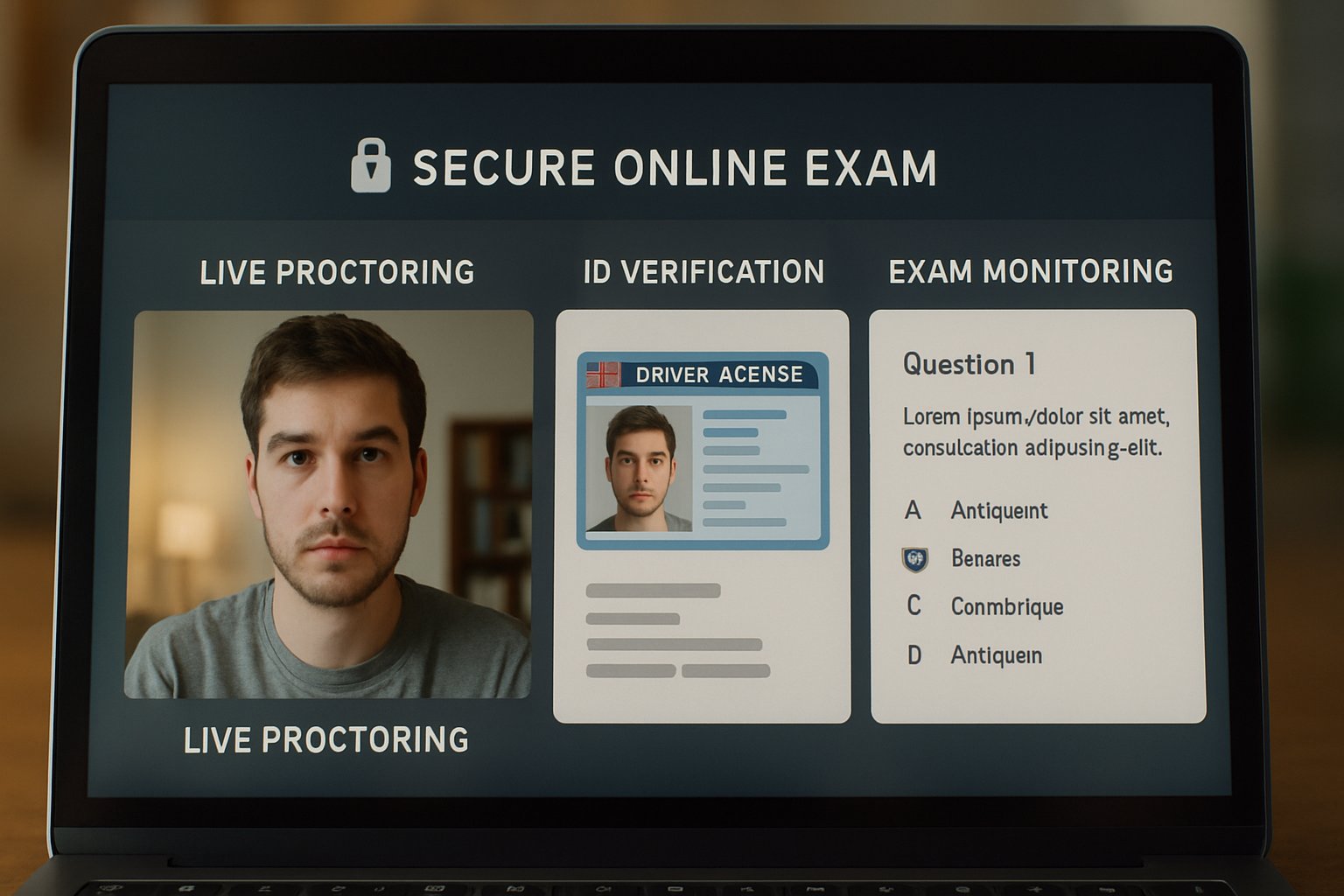
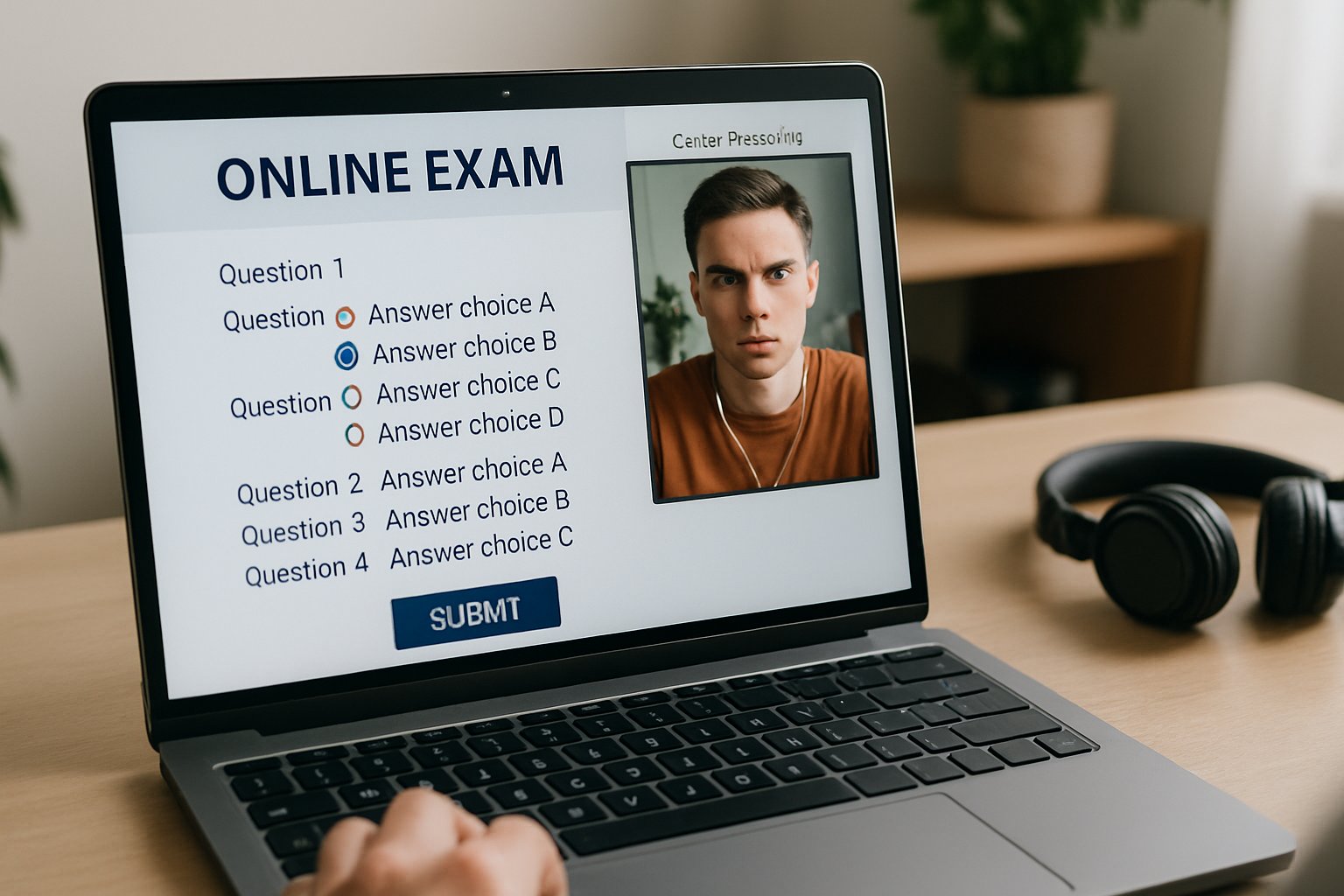
Automated online exam proctoring software interface with security features
Automated online exam proctoring interfaces ensure secure, monitored testing experiences.
  • Market forecast: $2 billion+ by early 2030s.
  • Measured cheating drops in proctored settings.
  • Up to 30% per-exam cost savings reported.

These facts frame the six benefits below. Therefore, decision-makers can benchmark value quickly.

Lower Cost And Scale

Traditional test centers demand real estate and staff. Automated online exam proctoring [P] removes those limits. Institutions can run thousands of concurrent exams worldwide. Several case studies cite 30-40% lower per-exam costs after migration. Additionally, hybrid AI workflows let one supervisor oversee many candidates. That efficiency frees budget for teaching innovation.

Key takeaway: scale grows without headcount spikes. Next, we explore integrity gains.

Integrity And Cheating Deterrence

Eye tracking, multi-face detection, and secure browsers catch common fraud tactics. Studies between 2023-2025 show lower cheating rates in monitored exams versus unmonitored ones. Furthermore, visible monitoring acts as a psychological deterrent. Institutions still keep humans for final review, reducing false positives. People who become an online exam proctor provide that final fairness layer.

Summary: stronger, data-backed deterrence protects grades. Let us turn to operational speed.

Efficiency And Audit Trails

Systems log every action with timestamps. Dashboards deliver reports within 24-72 hours. Consequently, faculty resolve misconduct cases faster and with transparent evidence. Accreditors also appreciate immutable audit trails. Moreover, identity verification now blends biometrics with government ID scans for extra assurance.

Takeaway: faster, documented workflows save staff time. The next benefit concerns candidate access.

Access Flexibility Continuity Gains

Remote proctoring removes travel, venue, and timezone barriers. Candidates test from home or office, even during crises like pandemics. Rolling windows support working professionals. Corporate L&D divisions therefore keep compliance programs running. Aspirants who wish to become an online exam proctor can also work from anywhere.

Summary: flexibility boosts participation and resilience. We now assess policy consistency.

Consistent Policy Enforcement Wins

Algorithms apply identical rules to every test taker. Consequently, subjective human variation shrinks. Institutions can fine-tune thresholds per assessment type while keeping a common baseline. Regular bias audits remain vital to protect marginalized learners; yet uniform starting points help fairness.

Key point: consistent enforcement builds trust. Finally, analytics close the feedback loop.

Data Driven Assessment Improvement

Beyond security, platforms collect metadata like time-on-question and distraction hotspots. Educators use those insights to rewrite confusing items and balance difficulty. Therefore, assessment quality rises while misconduct drops. Automated online exam proctoring [P] shifts from policing to pedagogy.

Recap: actionable analytics refine exams continuously. We now conclude with strategic guidance.

Conclusion

Automated online exam proctoring [P] delivers six clear benefits: lower costs, stronger deterrence, faster audits, greater access, consistent enforcement, and richer analytics. Institutions that deploy it thoughtfully, respect privacy, and pair AI with human oversight gain a decisive edge.

Why Proctor365? Our AI-powered proctoring combines face, voice, and behavioral analytics for unmatched accuracy. Advanced identity verification prevents impersonation. Scalable exam monitoring handles thousands of candidates with ease. Global exam bodies already trust our platform. Consequently, automated online exam proctoring [P] with Proctor365 safeguards integrity and confidence. Explore the difference at Proctor365.ai today.

Frequently Asked Questions

  1. What is automated online exam proctoring?
    Automated online exam proctoring uses advanced AI and hybrid human oversight to monitor webcams, microphones, and screens. This system enhances exam integrity while reducing fraud and ensuring a fair testing environment.
  2. How does Proctor365 ensure exam integrity and fraud prevention?
    Proctor365’s solution employs AI-powered face, voice, and behavioral analytics alongside robust identity verification to detect and prevent fraudulent activity, ensuring a secure and transparent examination process.
  3. What are the key benefits of adopting automated online exam proctoring?
    Institutions enjoy lower costs, scalable monitoring, and faster audit trails. With consistent policy enforcement and detailed data analytics, automated proctoring enhances exam fairness and overall operational efficiency.

Automated Online Exam Proctoring: A Definitive Guide

Universities face rising cheating pressure in online testing. Consequently, many teams now evaluate automated online exam proctoring as a safeguard. The technology promises scalable integrity without travel. However, new data shows benefits mixed with serious risk.

This guide delivers an evidence-based roadmap for selecting, deploying, and governing automated online exam proctoring effectively. We draw on market research, legal rulings, and university practice. Readers include exam bodies, ed-tech leaders, and corporate trainers. Moreover, secondary concerns like accessibility and equity receive equal attention. Meanwhile, we spotlight real policy changes such as the 2026 ACCA reversal. Therefore, decision makers gain current, practical insight.

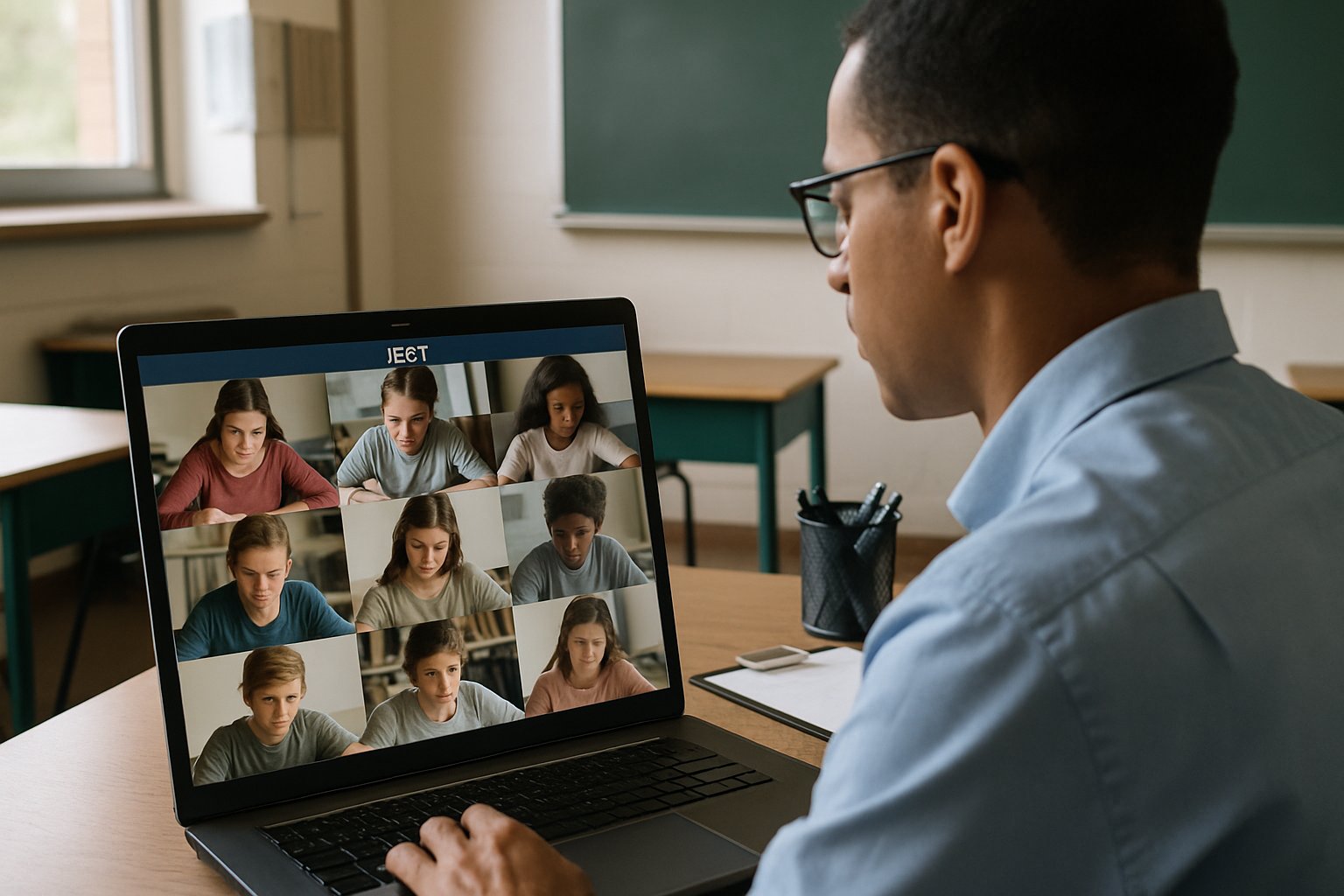
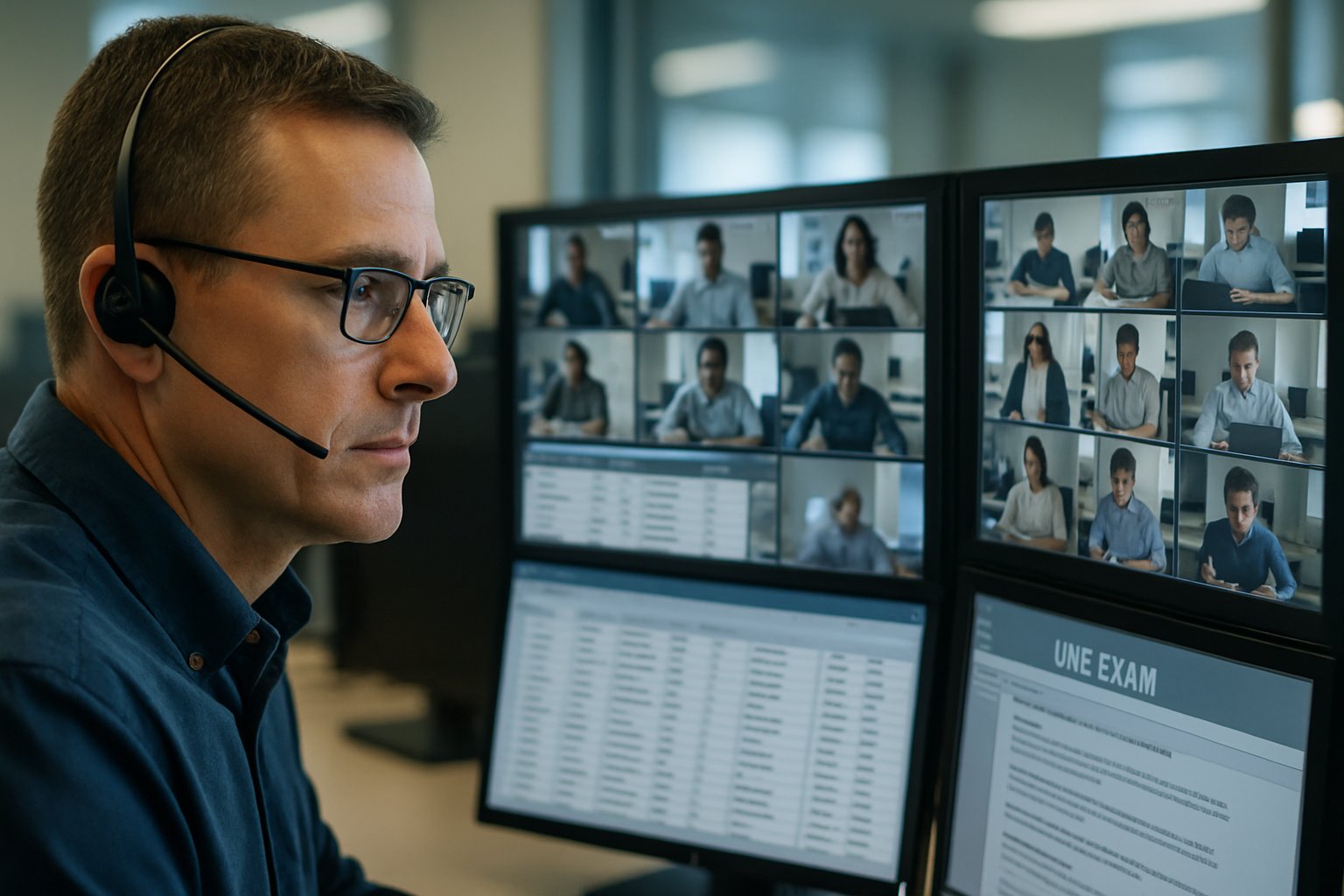
Proctor overseeing automated online exam proctoring in a control room.
A proctor supervises online exams via advanced automated proctoring tools.

Market Momentum And Reality

Market research shows demand still climbing. Business Research Insights values 2026 revenue near USD 1.06 billion with 25 % projected CAGR. ResearchAndMarkets estimates USD 1.49 billion and predicts 10 % annual growth. Nevertheless, the narrative is not purely expansion.

  • Lockdown-era adoption persists across higher-education, certification, and corporate L&D.
  • Vendors promote lower per-exam cost compared with live proctors.

Many boards still perceive automated online exam proctoring as the default digital invigilation standard. ACCA will end remote delivery where centres exist, citing AI-enabled cheating threats. Student privacy campaigns and legal wins, such as Ogletree, fuel additional scrutiny. Consequently, institutions weigh reputation risk against convenience.

In summary, growth continues, yet resistance grows in parallel. Leaders must understand both trajectories before investing. Next, we unpack how the core technology functions.

Core Technology Explained Simply

Automated systems employ webcams, microphones, and browser controls to detect anomalies. Computer vision models flag multiple faces, off-screen gaze, or suspicious devices in milliseconds. Audio analytics capture whispers or device clicks.

Three dominant models exist. Live proctoring streams sessions to human agents for immediate intervention. Record-and-review stores footage, then AI triages suspicious segments for later inspection. Finally, fully automated online exam proctoring interrupts exams automatically when risk thresholds trigger.

Identity verification layers include ID scans, live face matching, and keystroke dynamics. However, browser lockdown tools often conflict with assistive technology or corporate security policies.

Understanding component options enables tailored, defensible solutions. With basics covered, we explore rising risk factors.

Emerging Risks And Bias

Peer-reviewed research reveals algorithmic bias harming darker-skinned and female candidates. Frontiers 2022 data showed higher false-flag rates among Black women by significant margins. Moreover, privacy groups criticize broad biometric collection and long retention windows.

Legal winds also shift. Ogletree ruled forced room scans unconstitutional, pushing universities to revise policies quickly. State biometric laws like Illinois BIPA heighten monetary risk for non-compliant vendors.

Equity advocates stress that an at home proctored exam demands bandwidth, quiet space, and modern hardware. Consequently, low-income or disabled learners face disproportionate hurdles.

Bias, privacy, and access risks now drive due-diligence conversations. Hence, implementation strategy must prioritize fairness protections. Our next section examines practical deployment guidance.

Implementation Best Practice Tips

Successful rollouts balance security, legality, and user experience. Begin with a pilot covering diverse demographics and disability accommodations. Collect flag rates, appeal outcomes, and student sentiment before scaling.

  • Publish transparent data policies detailing collection, retention, and deletion.
  • Offer live chat support during every at home proctored exam session.
  • Run accessibility audits against WCAG guidelines and assistive tech.

Additionally, document system requirements for ai proctoring on enrollment pages and reminder emails. Clear requirements cut last-minute technical failures and panic. During training, demonstrate how automated online exam proctoring flags behaviors, so instructors trust the dashboard.

Thoughtful governance builds trust and reduces dispute workload. With operational tactics set, technology compatibility deserves further focus.

Preparing Your Tech Stack

Technical readiness often dictates exam day success. Therefore, map minimum and recommended device capabilities early. Most vendors publish RAM, CPU, OS, and bandwidth thresholds. List these system requirements for ai proctoring directly inside LMS dashboards.

Publish clear PDFs outlining system requirements for ai proctoring for offline reference. Include quick diagnostic tools that test webcam, microphone, and network latency. Meanwhile, institutions should whitelist vendor domains to prevent firewall clashes. Corporate learners completing an at home proctored exam may need VPN exceptions.

Compatibility checks guarantee that automated online exam proctoring modules run smoothly across diverse devices. Update help-desk scripts with clear escalation paths and impact metrics.

Precise technical preparation minimizes session terminations and support tickets. Next, we scan forthcoming regulatory and market shifts.

Future Policy Shifts Ahead

ACCA’s 2026 reversal signals that remote delivery privileges can vanish quickly. Analysts predict other professional bodies may follow, especially for high-stakes papers. Simultaneously, regulators push vendors toward independent audits and demographic accuracy reports.

Consequently, procurement contracts should require fairness metrics, breach notifications, and rapid patch timelines. Market competition will favor platforms proving automated online exam proctoring remains trustworthy despite advanced cheating.

Institutions also explore assessment redesign, embracing open-resource formats and frequent, low-stakes tasks.

Staying agile protects academic reputation and learner confidence. Finally, we recap key insights and present the Proctor365 advantage.

Conclusion And CTA

This article covered market growth, core technology, risk realities, implementation governance, technical readiness, and policy direction. Together, these insights help institutions deploy automated online exam proctoring responsibly.

Why Proctor365? Our platform delivers AI-powered proctoring, advanced identity verification, and scalable exam monitoring trusted by global exam bodies. Proctor365 ensures that automated online exam proctoring protects integrity without compromising fairness. Experience secure exams today at Proctor365.ai.

Frequently Asked Questions

  1. What is automated online exam proctoring and how does it work?
    Automated online exam proctoring uses AI-powered tools, such as webcams, microphones, and browser lockdown, to monitor exam sessions in real-time. Proctor365 leverages these features to ensure secure exam integrity.
  2. How does Proctor365 ensure exam integrity and prevent cheating?
    Proctor365 combines AI proctoring, advanced identity verification, and fraud prevention measures to monitor exams. Our system detects suspicious behavior and verifies candidate identities, maintaining high standards of exam integrity.
  3. What system requirements should candidates meet for AI proctoring?
    Candidates must have modern hardware, a stable internet connection, and enabled webcams and microphones. Proctor365 clearly lists system requirements such as RAM, CPU, and OS compatibility for seamless exam experiences.
  4. How does Proctor365 address privacy and equity concerns?
    Proctor365 prioritizes privacy with transparent data practices and adherence to biometric regulations. Our platform incorporates bias mitigation, accessibility features, and reliable support, ensuring fair and compliant exam proctoring.

Top Skills to become an online exam proctor

Online testing continues to surge across higher education, certification boards, and corporate training. Consequently, institutions need skilled professionals who can become an online exam proctor and protect assessment integrity. Recent vendor consolidation, AI adoption, and privacy debates reshape daily workflows. Universities switch platforms, while tools blend AI detection with human review to avoid bias. Meanwhile, students voice concern about surveillance and fairness. In this fluid environment, proctors must master more than simple invigilation. They juggle live dashboards, identity checks, support tickets, and strict compliance mandates. Moreover, hiring teams now focus on a compact yet robust skillset. This article outlines five essential abilities that separate good monitors from great ones. It draws on EDUCAUSE data, vendor updates, and frontline experience from large-scale testing operations. By the end, you will know which skills to prioritize, how to cultivate them, and why recruiters value them.

Industry Shifts Driving Demand

Hybrid learning has normalized remote assessment across sectors. Moreover, Meazure Learning merged ProctorU with Examity, signaling fierce platform consolidation. CUNY’s recent Yuja contract shows ongoing vendor churn. Privacy pressure remains intense as ACLU and student groups critique bias in automated online exam proctoring. Therefore, institutions pivot toward hybrid AI + human models that lower false alerts.

People in online training session to become an online exam proctor learning skills together.
Online training prepares you with essential skills to become an online exam proctor.
  • 50-65% of campuses now deploy some form of online proctoring (EDUCAUSE).
  • The remote proctoring market ranges between $0.6-$2.4 billion, depending on scope.
  • Student surveys reveal rising anxiety about always-on video surveillance.

Proctor roles now demand sharper technical, ethical, and communication skills than traditional test center jobs.

Summary: Consolidation, AI, and privacy scrutiny transform expectations. Next, we unpack the exact skills you need.

Essential Skill Overview

Successful monitors combine five core abilities. Each skill supports both live and automated online exam proctoring workflows. Master these, and you will quickly stand out in hiring pipelines.

Summary: The following sections explain each competency with practical indicators. Let’s explore them one by one.

Technical Mastery Matters

Proctors must command dashboards, lockdown browsers, LMS plug-ins, and network checks. Furthermore, they need to resolve webcam or audio failures within minutes. Seasoned staff can complete device checks under five minutes and escalate with precise logs. They also understand identity workflows, including biometric capture and storage rules.

Practical indicators include:

  1. Quickly resetting locked sessions without data loss.
  2. Documenting errors with exact timestamps and screenshots.
  3. Verifying encryption and retention settings for recorded sessions.

Summary: Tech fluency underpins every other skill. Up next is the art of spotting subtle misconduct.

Detail Vigilance Crucial

Sustained attention lets proctors track multiple video streams and AI flags simultaneously. However, they must also recognize normal test anxiety. Accurate pattern recognition reduces false positives in automated online exam proctoring. Clear, concise incident notes—who, what, and when—ensure consistent rule enforcement.

Summary: Vigilance cuts noise and upholds fairness. Communication skill now steps into view.

Communication Builds Trust

Calm, clear instructions ease candidate nerves and prevent disputes. Moreover, proctors should deploy polite but firm scripts during identity checks. Effective de-escalation keeps sessions running and protects institutional reputation. Written reports must stay precise, because legal reviews rely on them.

Summary: Strong dialogue supports smooth testing. Ethical judgment provides the next critical layer.

Ethics Guide Decisions

Integrity means applying rules evenly and challenging biased AI flags. Consequently, top monitors request human review for ambiguous events before penalties. They log rationales transparently, supporting appeals and audits.

Summary: Ethics ensures equity. Finally, we address privacy and compliance mastery.

Privacy Compliance Knowledge

Proctors become front-line stewards of GDPR, ADA, and biometric laws. They must articulate data-retention terms and offer alternative accommodations when required. Furthermore, they instantly report any privacy breach to supervisors.

Summary: Compliance protects both candidates and institutions. You are now ready to pursue the role.

Conclusion And Next Steps

Technical fluency, vigilance, clear communication, ethical judgment, and policy knowledge define modern proctor excellence. Together, these skills help you become an online exam proctor who adapts to AI advances and rising privacy standards.

Why Proctor365? Institutions that want scalable integrity choose Proctor365. Our AI-powered monitoring pairs human review to cut bias. Advanced identity verification stops impersonation fast. Moreover, elastic cloud architecture supports global exam bodies at any scale. Ready to become an online exam proctor with best-in-class tools? Visit Proctor365.ai and safeguard every assessment today.

Frequently Asked Questions

  1. What are the essential skills for an online exam proctor?
    Proctors need technical mastery, vigilance, clear communication, ethical judgment, and privacy compliance to ensure efficient troubleshooting, accurate reporting, and adherence to legal standards.
  2. How does Proctor365 enhance exam integrity?
    Proctor365 uses AI-powered monitoring paired with human review to ensure real-time fraud prevention, precise identity verification, and secure compliance, thereby maintaining high exam integrity.
  3. Why is privacy compliance important in online proctoring?
    Privacy compliance protects candidate rights and meets standards like GDPR and ADA. It ensures proper data handling and secure biometric workflows, which are crucial for institutional trust.
  4. How do AI and human review work together in modern proctoring?
    A hybrid approach blends AI-driven detection with human oversight to reduce bias and false alerts, ensuring fair and accurate evaluations during online assessments.

How to Become an Online Exam Proctor: Requirements Checklist

Remote assessment has exploded across universities, certification boards, and corporate training programs. Therefore, institutions need reliable guardians who protect exam integrity from anywhere. Thousands of educators and technologists now choose to become an online exam proctor each year. The role blends live vigilance with deep technical awareness. Moreover, it offers flexible hours and a clear growth path in the expanding assessment-security sector. This article explains the exact requirements recruiters demand. They must trust you with candidate data and high-stakes testing. You will learn about market demand, essential skills, technology expectations, daily duties, ethical minefields, and realistic pay ranges. Consequently, hiring managers can fine-tune job posts while aspiring proctors can benchmark their readiness. Let us dive into the checklist that separates credible professionals from casual gig seekers.

Remote Proctoring Market Demand

Industry analysts project the online proctoring market to top US$2.35 billion by 2031. Growth sits near 15% annually as blended learning surges worldwide. Institutions therefore hunt for staff who can quickly become an online exam proctor and scale secure testing sessions. Additionally, automated online exam proctoring tools reduce manual workload yet still require human oversight. Major vendors are hiring globally to support hybrid AI-plus-human models.

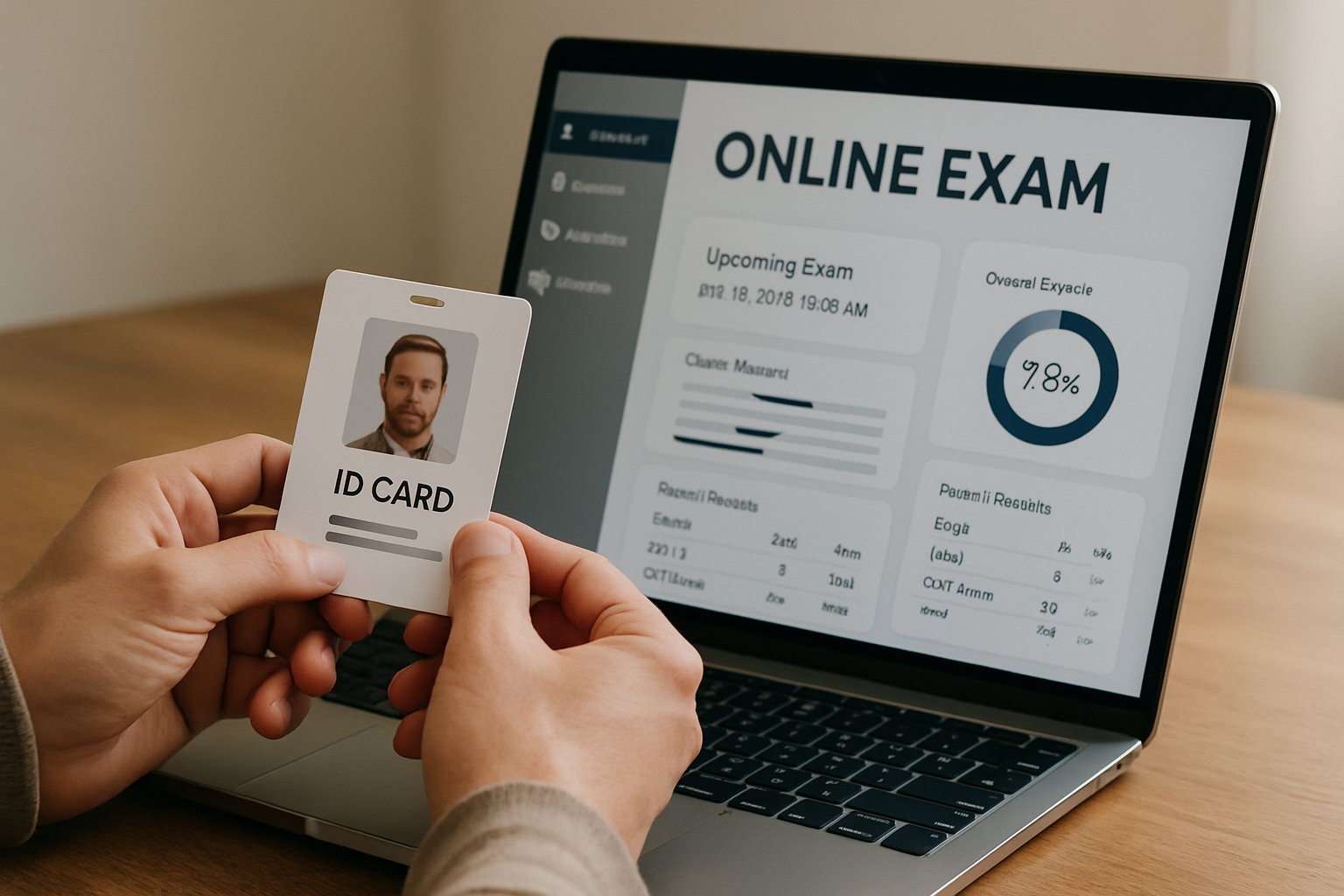
Identity verification step to become an online exam proctor for secure exams.
Identity checks are a key part of becoming an online exam proctor.

Demand shows no sign of slowing and spans education, certification, and corporate L&D. Next, examine what recruiters list as non-negotiable skills.

Become An Online Exam Proctor

You need more than a webcam and goodwill to hold this title. Recruiters first ask for legal work authorization, background clearance, and strict confidentiality agreements. Furthermore, flexible scheduling remains critical because peak testing often happens on weekends and across time zones. Many entrants study vendor playbooks and practice incident logging before they formally become an online exam proctor.

  • Typical hourly pay: US$10–$30 depending on exam stakes.
  • Flagged event rate: roughly 12% of sessions require manual review.
  • Over 60% of US colleges reference proctoring tools on their websites.

Meeting these baseline HR hurdles positions you for technical screening. Subsequently, sharpen the skill set that drives day-to-day excellence.

Core Skills Needed Now

Attention to detail tops every posting. Proctors must track multiple video feeds, chats, and timers without missing subtle cues. Strong communication follows closely because you will redirect nervous candidates and document violations precisely. Moreover, basic troubleshooting skills keep sessions alive when microphones fail or bandwidth drops. Practicing these talents before you become an online exam proctor speeds onboarding and builds client trust.

Soft skills amplify technology proficiency and reduce incident escalations. The next section details the hardware and network essentials you must secure.

Technology And Setup

Employers mandate a modern laptop or desktop, current Chrome browser, and broadband above 2 Mbps. Additionally, many platforms require installation of secure browsers that lock down the candidate machine. Dual monitors, noise-canceling headsets, and stable lighting boost efficiency but stay optional. Automated online exam proctoring relies on clean audio and video streams. Any lag can trigger false flags and extra review. Secure your workspace early so you confidently become an online exam proctor on day one.

Proper equipment prevents technical chaos and protects exam data. After tools are ready, focus on the real-time responsibilities that define the shift.

Daily Proctor Duties

The shift begins with system checks, ID verification, and a room scan if policy requires. Proctors then monitor live feeds, annotate suspicious behavior, and escalate serious breaches instantly. Furthermore, they guide candidates through minor glitches while logging every action for audit trails. Even with automated online exam proctoring flagging anomalies, humans decide final outcomes. Performing these tasks consistently proves you have genuinely become an online exam proctor who upholds integrity.

Clear protocols and calm interaction keep sessions fair and secure. Yet integrity work always involves ethical and legal considerations.

Risks And Ethics

Student privacy remains the loudest concern. Civil-liberty groups challenge invasive data collection and indefinite video storage. Consequently, proctors must follow strict retention rules and respect accommodation requests for disabilities. Bias within automated online exam proctoring also demands vigilance; false positives hit certain demographics harder. When you become an online exam proctor, you must know escalation paths. Transparent processes protect learners and the institution.

Ethical awareness builds institutional trust and shields you from liability. Finally, confirm whether the compensation matches the responsibility.

Pay And Growth Outlook

Entry rates hover near US$15 per hour for contractor roles, while experienced leads earn US$25 or more. Hybrid AI models generate new analyst positions that review automated online exam proctoring flags at scale. Moreover, universities increasingly convert skilled contractors into permanent testing-center staff. Those who strategically become an online exam proctor now can ride the market expansion into supervisory or compliance careers.

Competitive pay rewards expertise and accountability. The concluding section distills your next steps and highlights a platform built for future success.

Remote testing continues to grow, and institutions need vigilant, tech-savvy professionals. Follow the checklist, secure the right gear, and practice incident workflows until they feel natural. When you diligently become an online exam proctor, you join a global network safeguarding academic and professional credentials.

Why Proctor365? Our AI-powered platform blends live monitoring with advanced identity verification and real-time analytics. Consequently, teams scale secure exams without sacrificing user experience. Universities, certification bodies, and enterprises worldwide already trust Proctor365. The platform helps you become an online exam proctor while raising integrity standards. Explore how our solution strengthens every assessment today at Proctor365.ai.

Frequently Asked Questions

  1. What qualifications are necessary to become an online exam proctor?
    Aspiring online proctors must have legal work authorization, background clearance, and strong communication skills. Proctor365-trained proctors also excel in tech setup to ensure secure and compliant remote exam environments.
  2. What technology setup is required for remote exam proctoring?
    A modern computer with the latest Chrome browser, stable broadband, and optionally dual monitors and noise-canceling headsets are required. Proctor365 emphasizes secure browsers and reliable connectivity for robust fraud prevention and identity verification.
  3. How does Proctor365 ensure exam integrity?
    Proctor365 uses a hybrid AI-plus-human model featuring real-time analytics, advanced identity verification, and incident logging. This combination supports secure exams by effectively preventing cheating and ensuring data integrity.
  4. What ethical considerations are crucial in online exam proctoring?
    Proctors must balance strict identity verification with student privacy, following data retention policies and accommodating diverse needs. This ethical framework builds trust and maintains the high integrity standards expected in secure assessments.

Strategic Guide to Automated Online Exam Proctoring

Universities raced online during the pandemic. Consequently, assessment teams faced unprecedented scale and fraud risk. Automated online exam proctoring emerged as a rapid safeguard and soon dominated ed-tech discussions. EDUCAUSE surveys show over half of North American campuses now mention proctoring tools. However, strong growth also triggered privacy, equity, and legal pushback.

Stakeholders therefore need a clear, evidence-based roadmap before expanding deployments. This article explores automated online exam proctoring adoption trends, market growth, legal risks, technical models, benefits, and practical next steps. Moreover, professionals seeking to deepen skills or even become an online exam proctor will gain insight into current best practices. Each section ends with concise takeaways, guiding universities, ed-tech platforms, and corporate L&D teams toward secure, student-centric implementation.

Automated online exam proctoring in use during a remote exam at home.
Home-based remote exams made secure through automated online exam proctoring.

Automated Online Exam Proctoring

Adoption accelerated after 2020. EDUCAUSE polls indicate 60% of U.S. institutions now reference proctoring software. Furthermore, multiple market studies estimate 15%–17% compound growth through 2030, pushing valuations near one billion dollars.

  • 60% institutional mention rate (EDUCAUSE)
  • $0.8–1.2 B global market in 2024
  • 15–17% projected CAGR through 2030

These numbers confirm mainstream traction. Nevertheless, adoption patterns vary by discipline, stakes, and regional regulation.

Takeaway: Automated online exam proctoring is already common and will keep growing. Next, explore why the market expands.

Market Growth Drivers Now

First, scalability pressures remain intense. Large introductory courses demand cheaper oversight than live invigilation. Second, AI flagging advances promise reduced human labor. Moreover, tighter LMS integrations simplify faculty workflows. Finally, corporate certification brands want uniform global delivery.

Takeaway: Efficiency, AI progress, and global reach fuel demand. The legal context, however, complicates planning.

Evolving Legal Risk Landscape

Ogletree v. Cleveland State restricted mandatory room scans for public universities, citing Fourth Amendment concerns. Additionally, biometric laws such as Illinois BIPA trigger lawsuits over facial data retention. Advocacy groups therefore push for transparency, data minimization, and human review.

Institutions must consult counsel, draft privacy impact assessments, and negotiate vendor liability clauses. Prospective staff hoping to become an online exam proctor also need training on lawful data handling.

Takeaway: Legal missteps can derail programs. Understanding the technology stack comes next.

Core Technical Models Explained

Automated systems analyze webcam, screen, and audio streams in real time. Record-and-review models store sessions for later human analysis. Lockdown browsers restrict application switching. Meanwhile, biometric checks match IDs to live faces.

False positives decrease when humans review AI flags. Therefore, many providers combine automation with manual oversight, creating hybrid workflows.

Takeaway: Each model balances cost, speed, and accuracy. Stakeholders must weigh benefits against risks.

Key Pros And Limitations

Benefits include deterrence, analytics, and cost efficiency. Nevertheless, privacy, algorithmic bias, and bandwidth inequities persist.

  • Pro: Scales large cohorts cheaply.
  • Pro: Deterrent effect lowers cheating.
  • Con: Video surveillance feels intrusive.
  • Con: Algorithms mis-flag darker skin tones.
  • Con: Poor internet increases stress.

Aspiring professionals who want to become an online exam proctor must understand both sides to advise fairly.

Takeaway: No tool is perfect; balanced policy is essential. The next section outlines that policy.

Implementation Best Practices Roadmap

  1. Justify necessity and document alternatives.
  2. Publish transparent policies and appeal routes.
  3. Conduct privacy impact assessments and limit retention.
  4. Offer on-campus or alternative assessments.
  5. Keep humans in the review loop.
  6. Test accessibility and provide device loans.
  7. Pilot, audit, and disclose metrics.
  8. Negotiate contracts for algorithmic transparency.
  9. Train faculty, students, and anyone aiming to become an online exam proctor.

Takeaway: Structured governance reduces risk and builds trust. Finally, where is the field heading?

Future Outlook Insights Ahead

Market analysts expect deeper AI features, such as multimodal behavior mapping and instant text recognition. Consequently, privacy law will evolve, requiring more granular consent and audit trails. Moreover, institutions will likely pair proctoring with alternative assessments like open-book and project work.

Takeaway: Success hinges on adaptive policy and transparent technology. The conclusion summarizes key actions.

Conclusion: Automated online exam proctoring now underpins many digital assessment strategies. Institutions gain scalable monitoring, yet they must address legal challenges, ethical concerns, and technical equity. Professionals who plan to become an online exam proctor should master policy, technology, and student support.

Why Proctor365? Proctor365 delivers automated online exam proctoring with AI-powered anomaly detection, advanced identity verification, and cloud scalability. Trusted by global exam bodies, the platform safeguards integrity without sacrificing user experience. Therefore, organizations can launch secure, high-stakes assessments worldwide with confidence. Explore the full solution at Proctor365.ai.

Frequently Asked Questions

  1. How does automated online exam proctoring help maintain exam integrity?
    Automated online exam proctoring leverages AI for real-time monitoring, robust fraud prevention, and efficient identity verification. Proctor365 ensures secure assessments while protecting user privacy with advanced anomaly detection.
  2. What benefits does AI-driven online proctoring offer?
    AI-driven proctoring scales exam monitoring, deters cheating, and delivers valuable analytics. Proctor365’s automated tools enable cost-effective fraud prevention and accurate identity verification, enhancing exam security.
  3. What legal challenges are associated with online proctoring?
    Online exam proctoring faces legal challenges such as privacy concerns and biometric data handling. Institutions must conduct privacy impact assessments, ensure transparency, and maintain human oversight to meet legal standards.
  4. How does Proctor365 support secure and scalable assessments?
    Proctor365 integrates AI-powered anomaly detection, fraud prevention techniques, and strict identity verification. Its advanced technology and transparent policies deliver scalable, secure monitoring that upholds exam integrity.

Continue Reading

For more insights and related articles, check out:

Read more →

7 Steps to Become an Online Exam Proctor in 2026

If you plan to become an online exam proctor in 2026, now is the moment to prepare. Demand remains strong, yet institutions face fast changes as AI bolsters security and also fuels new cheating tools. Consequently, universities, certification bodies, and corporate training teams all need skilled proctors who understand both technology and policy. This article delivers a clear seven-step roadmap grounded in current market data, legal shifts, and vendor trends.

However, prospective proctors face stricter privacy rules and shifting client policies. Intense scrutiny now surrounds at home proctored exam reliability. Moreover, they should master how ai proctoring detects cheating, from side-angle cameras to real-time flagging dashboards. The following guide explains required equipment, platform training, and the soft skills needed for calm sessions. Each step ends with a takeaway, helping hiring managers and applicants align expectations.

Proctor overseeing students online to become an online exam proctor in a digital classroom setup.
Virtual monitoring is a key skill for those who want to become an online exam proctor.

Remote Proctoring Market Shift

Online proctoring revenue sits near one billion dollars worldwide, according to multiple vendor reports. Moreover, forecasts suggest single-digit yearly growth through 2028, although estimates vary widely. However, policy moves like the ACCA withdrawal from remote exams show the landscape can pivot fast. Consequently, any career plan must track demand, privacy rules, and AI feature rollouts.

Key market facts appear below.

  • 50–65% of North American universities already use some proctoring solution.
  • Vendor pay models range from $14 to $25 per hour for live roles.
  • BIPA lawsuits continue to challenge biometric data collection practices.

These numbers confirm steady opportunity but highlight evolving risk. Therefore, anyone who hopes to become an online exam proctor should review growth data and legal headlines first.

The next section maps the role choices available.

Become An Online Exam Proctor

The first decision involves role type. Live monitoring demands constant attention, yet automated review focuses on dashboard analysis. Furthermore, hybrid AI plus human modes appear in most vendor catalogs for 2026. Decide early, then match your availability to peak testing windows. This clarity streamlines later applications.

When this choice aligns with employer needs, candidates move smoothly to prerequisites.

Meet Core Role Prerequisites

To become an online exam proctor, you must clear background checks and sign confidentiality agreements. Additionally, institutions verify identity documents and sometimes require fingerprinting. Prospective hires should gather government ID, references, and a recent resume before opening any application portal. Many vendors also test basic computer literacy.

Some bodies also check the suitability of your space for an at home proctored exam before final approval. Finishing these steps proves reliability and speeds onboarding. Consequently, you can focus on equipment preparation next.

Prepare Gear And Workspace

Reliable hardware underpins every at home proctored exam session. Therefore, secure a wired internet connection, HD webcam, and noise-cancelling headset. Most platforms now ask for a second camera that shows a side angle. Moreover, lockdown browsers restrict other applications, so ensure your device passes compatibility tests.

To become an online exam proctor, invest in good lighting and a private room that blocks interruptions. These details prevent incident flags and build candidate trust.

With equipment sorted, attention shifts to platform training.

Complete Platform Training Modules

Vendor tutorials explain registration flows, ID verification scripts, and how ai proctoring detects cheating. Courses often include practice sessions that simulate suspicious movements. Consequently, trainees learn to distinguish genuine misconduct from false positives. Several bodies mandate annual re-certification, so schedule reminders.

Completing these modules helps you become an online exam proctor ready for real exams. Moreover, you gain familiarity with escalation paths and report templates.

Now, convert training into paid work.

Apply Practice Communicate Skills

Submit applications to Examity, Meazure Learning, PSI, or local test centers once training ends. Set clear availability blocks; overnight slots remain underserved. Then, run mock exams with friends to sharpen response times.

Essential Soft Skills List

  • Calm, concise communication during outages.
  • Fast judgment when dashboards flag issues.
  • Empathy for anxious candidates.
  • Accurate, time-stamped incident notes.

These traits, combined with technical knowledge of how ai proctoring detects cheating, impress hiring managers. Importantly, they also help you become an online exam proctor who maintains fairness.

Success here leads to long-term relevance, yet only if you stay informed.

Stay Current Reduce Risk

Market rules evolve quickly. For example, privacy litigation around at home proctored exam technology prompts contract rewrites every quarter. Therefore, follow vendor bulletins, subscribe to regulatory feeds, and join professional forums.

Regular updates on how ai proctoring detects cheating reveal new camera angles, biometric checks, and analytics dashboards. Incorporate these insights to remain a trusted remote proctor who anticipates change, not one who reacts late.

We now close with key lessons and a proven platform option.

Conclusion: The seven steps above provide a practical roadmap. They cover prerequisites, hardware, training, applications, and ongoing learning. Each part hinges on strong ethics, legal awareness, and tech fluency.

Why Proctor365? Professionals who aim to become an online exam proctor choose Proctor365 for good reason. The platform offers AI-powered proctoring, advanced identity verification, and scalable monitoring trusted by global exam bodies. Consequently, institutions secure exam integrity while candidates enjoy seamless sessions. Explore Proctor365 now at proctor365.ai and elevate your remote testing strategy.

Frequently Asked Questions

  1. What prerequisites are needed to become an online exam proctor?
    Prospective proctors must clear background checks, secure government IDs, pass computer literacy tests, and provide workspace details. Proctor365 leverages advanced identity verification to ensure exam integrity.
  2. How does AI proctoring help in detecting cheating?
    AI proctoring monitors suspicious behaviors using side-angle cameras, real-time flagging dashboards, and biometric checks. This technology reduces fraud risks and enhances exam security with platforms like Proctor365.
  3. What essential equipment is required for robust remote proctoring?
    A wired internet connection, HD webcam, noise-cancelling headset, and a secondary camera are vital. Reliable hardware and lockdown browsers secure the exam environment as recommended by Proctor365.
  4. How does Proctor365 maintain exam integrity in an evolving market?
    Proctor365 uses AI-powered proctoring, advanced identity verification, and scalable monitoring with regular updates on regulatory changes to prevent fraud and secure exam outcomes effectively.

Inside automated online exam proctoring: AI methods exposed

Remote exams exploded after the pandemic. Consequently, automated online exam proctoring emerged as the backbone of digital assessment integrity. Universities, businesses, and certification boards now rely on AI to watch for rule breaches. However, many leaders still ask how these invisible invigilators actually detect misconduct.

This article demystifies the algorithms, sensors, and policies behind modern AI proctoring platforms. Moreover, it highlights practical concerns, emerging regulations, and ways to become an online exam proctor responsibly. Readers will gain a concise yet comprehensive overview grounded in recent research and field experience. Therefore, decision makers can select, audit, or even build solutions with greater confidence.

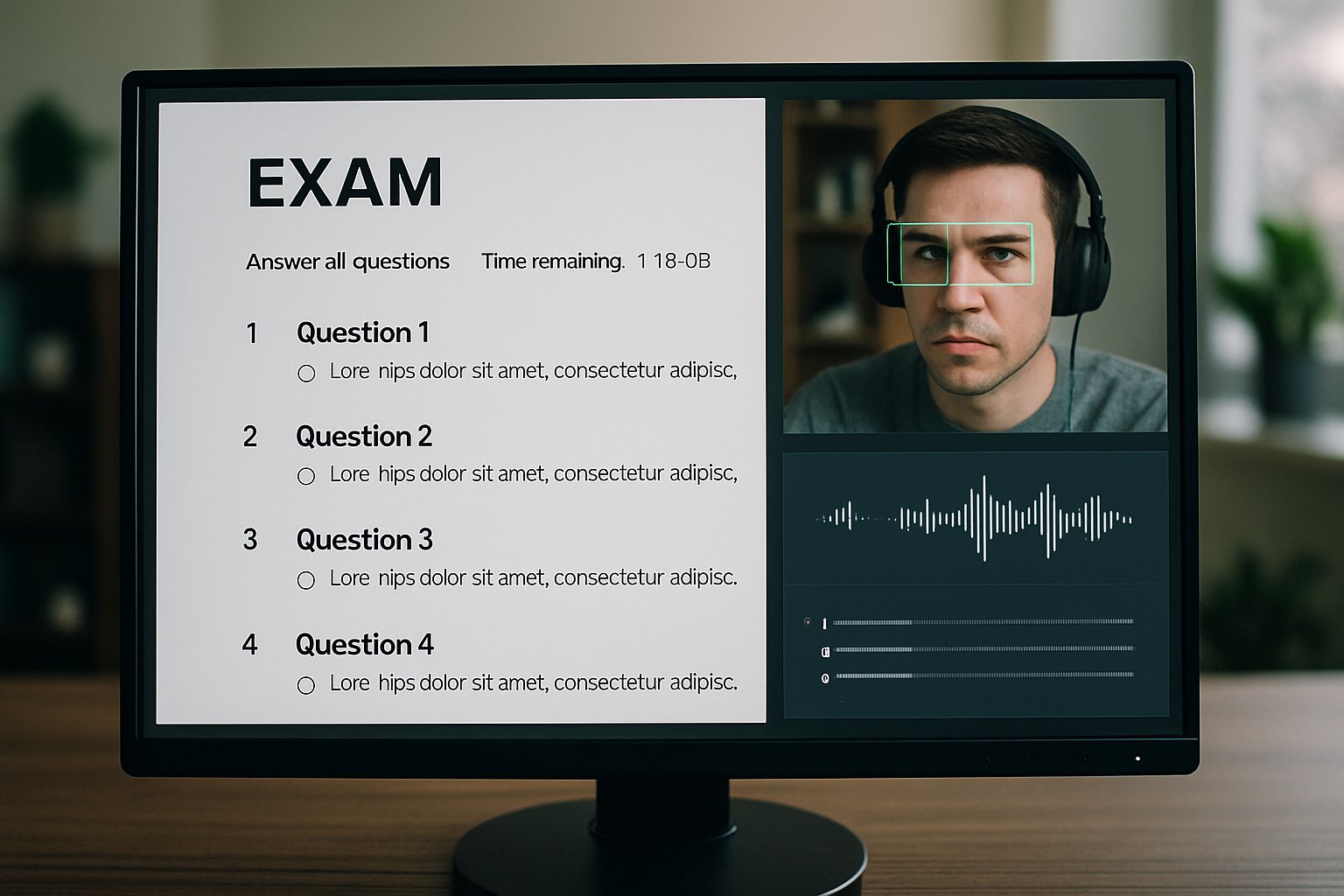
AI monitoring during automated online exam proctoring interface
The user interface shows AI monitoring features for automated online exam proctoring.

Finally, we show how Proctor365 leverages these techniques at scale without compromising user trust. Keep reading to see why global exam bodies embrace our platform for secure growth. The answers start with the next section. Meanwhile, aspiring professionals can learn how to become an online exam proctor within evolving guidelines.

Automated Online Exam Proctoring

Institutions moved millions of assessments online within months. As numbers grew, manual invigilation proved costly and inconsistent. AI offered scalable monitoring while keeping human reviewers for critical decisions.

Furthermore, leading vendors combine lockdown browsers with camera, microphone, and network feeds. Those feeds create rich, synchronized evidence streams for later review. Consequently, reviewers see only minutes of flagged footage instead of full sessions.

AI reduces tedium yet preserves human judgment. Next, we examine why misconduct still challenges educators.

Why Exam Misconduct Persists

Cheating evolves whenever stakes, technology, and opportunity align. Smartphones, generative AI, and side-channel chats create fresh loopholes. Meanwhile, pressure for credentials remains intense across industries.

Therefore, automated online exam proctoring must adapt faster than emerging tools. Prospective invigilators who aim to become an online exam proctor need continual upskilling. Consequently, vendors invest in multi-modal detection pipelines, which we detail next.

In short, cheating persists because incentives stay high and defences lag. The following section unpacks the technical countermeasures.

Core Detection Methods Explained

Research confirms that single sensors miss subtle violations. Moreover, combining streams improves coverage and confidence scores.

  • Camera vision: face, object, gaze.
  • Audio capture: background voices, keywords.
  • Screen logging: tab switches, copy actions.
  • Process tracking: virtual machines, forbidden apps.
  • Network signals: extra devices, abnormal routes.

Each channel feeds time-stamped events into a unified timeline. Subsequently, machine models rank events by cheating probability for human review.

Multi-modal fusion forms the monitoring backbone. Yet vision remains the most visible layer, so we examine it now. Effective automated online exam proctoring relies on this layered stack, not on any single trick.

Visual And Identity Checks

Vision models detect faces, phones, papers, and reflections within milliseconds. Additionally, liveness prompts ask candidates to blink or turn, blocking static photo attacks. Continuous face verification matches the test taker against enrollment images.

However, lighting, skin tone, and camera quality still influence accuracy. Keeping illumination consistent and using high-resolution webcams reduces missed detections. Those who become an online exam proctor learn to instruct candidates on these basics.

Visual signals start the integrity chain. Yet audio and system channels catch what cameras cannot.

Audio, Screen, Network Watch

Microphones flag multiple voices and suspicious keywords. Moreover, screen recorders spot forbidden websites or AI chat overlays instantly. Device fingerprints reveal hidden phones, extra monitors, or virtual machines.

Consequently, automated online exam proctoring now markets “search-and-destroy” phone detection as a core feature. Operators who become an online exam proctor must interpret these logs without jumping to conclusions.

Audio and screen analytics close several loopholes. However, subtle behavioural cues offer another defense layer.

Behavioral Analytics And Scoring

Sequence models process gaze shifts, head turns, and keystroke rhythms across the session. Moreover, anomaly detectors compare each candidate against population baselines in real time. The resulting scores help triage vast footage for human escalation.

Importantly, automated online exam proctoring treats scores as hints, not verdicts. Live proctors retain final authority, protecting due process.

Behavioural analytics raise efficiency without removing accountability. Yet risks and regulations demand constant scrutiny.

Risks, Bias, And Regulations

Privacy advocates warn about room scans and biometric storage. Meanwhile, reports show facial algorithms fail more on darker skin tones. False accusations damage trust faster than any leak.

Therefore, automated online exam proctoring must include clear appeals and human oversight to stay compliant. The EU AI Act labels many proctoring functions high-risk and mandates auditing. Institutions should publish data-retention timelines and offer proctoring alternatives for disabled students.

  • Transparent student notices
  • Data minimization policies
  • Independent algorithm audits
  • Accessible accommodation options

Following these steps mitigates most legal and reputational threats. Finally, let’s review the key insights and Proctor365 advantages.

AI-driven proctoring blends vision, audio, system signals, and behavioral models into a layered defense. When skilled humans review the flags, detection improves while fairness remains possible. Yet success depends on transparent policies, regular audits, and trained staff who may become an online exam proctor.

Proctor365 delivers automated online exam proctoring with advanced identity verification, multi-modal AI, and real-time analytics. Our cloud architecture scales from small cohorts to global certifications while meeting strict privacy laws. Trusted by universities and exam bodies worldwide, we raise integrity and cut review time by 90%. Visit Proctor365.ai to book a demo and secure future assessments.

Frequently Asked Questions

  1. How does AI-driven proctoring preserve exam integrity?
    Proctor365 uses multi-modal AI proctoring by combining live camera, audio, and screen feed analytics to detect potential fraud. Its advanced identity verification and real-time alerts ensure exam integrity and regulatory compliance.
  2. What detection methods do automated proctoring systems use?
    Modern online proctoring platforms employ an array of detection methods such as camera vision, audio capture, screen logging, and behavioral analytics to identify suspicious activity and prevent exam misconduct effectively with Proctor365.
  3. How does Proctor365 ensure user privacy during remote exams?
    Proctor365 integrates strict privacy protections, including data minimization, clear student notices, and independent audits. This ensures robust fraud prevention and identity verification while safeguarding personal information during online assessments.
  4. How do proctors handle ethical dilemmas in automated exam monitoring?
    Proctors review AI-generated flags with human judgment, ensuring fairness and due process. Continuous upskilling and transparent policies help evaluate suspicious behavior accurately, aligning with Proctor365’s focus on integrity and security.

10 Legal Answers For AI Based Proctoring Exam Teams

Universities and certification bodies increasingly rely on the ai based proctoring exam model to keep assessments honest. However, myths around how ai proctoring works remotely still confuse decision makers. Consequently, we gathered the ten most frequent queries we hear from campuses and training teams worldwide. Each answer cites authoritative research, recent court rulings, and practical guidance. By the end, you can confidently choose, deploy, and regulate remote monitoring technology.

AI Based Proctoring Exam

The ai based proctoring exam combines identity verification, lockdown controls, and automated behavior analysis. Meanwhile, human reviewers still audit flagged events to reduce false accusations.

Student participating in ai based proctoring exam from home with realistic background.
A student at home taking an AI based proctoring exam in a natural, familiar environment.

Therefore, institutions can scale to thousands of candidates without scheduling live staff. Global Growth Insights reports that automated sessions grew 28% between 2020 and 2022.

Scalability and deterrence drive adoption. Yet legal and reputational stakes remain significant. Next, consider the market forces behind this momentum.

Market Growth Snapshot Today

Investment flows toward the ai based proctoring exam ecosystem from ed-tech investors. Market researchers disagree on absolute numbers, yet the trajectory is consistent. Global Industry Analysts valued online proctoring between USD 0.8 and 1.2 billion for 2024.

Moreover, Insight Partners predicts a 15.5% CAGR through 2031. That forecast aligns with vendor statements about double digit volume increases.

In short, demand appears durable. Budget holders still expect efficiency gains from automation. Legal pressure, however, shapes how spending unfolds next.

Key Legal Landscape Now

Courts increasingly ask whether remote surveillance exceeds reasonable search limits. In Ogletree v. Cleveland State, the court ruled many room scans unreasonable.

Furthermore, Illinois’s BIPA allows biometric claimants statutory damages for every unconsented scan. Consequently, public and private campuses now rewrite contracts and policies.

Any ai based proctoring exam must therefore provide explicit notice and optional alternatives. Legal wins for students show claims can succeed. Clear governance minimizes exposure. Security incidents illustrate why such controls matter.

Recent Security Incidents Overview

Security Magazine chronicled the 2020 Proctortrack breach that leaked source code and personal data. Similarly, researchers found vulnerabilities in lockdown browsers that attackers exploited within hours.

However, no ai based proctoring exam can survive market scrutiny without transparent audits. SOC 2 reports and HECVAT responses now appear in many RFPs.

Breach history drives vendor selection. Stakeholders demand proof of encryption and deletion. Bias concerns present the next critical lens.

Bias And Accessibility Issues

Academic studies reveal higher false-positive flags for darker skin tones and neurodivergent behaviors. EFF argues these disparities make remote surveillance discriminatory.

Moreover, bandwidth drops can trigger face-absence warnings, even when students understand how ai proctoring works remotely. An inclusive ai based proctoring exam should allow lighting checks, extended time, and manual overrides.

Designing for equity protects integrity claims. Ignoring bias invites litigation and headlines. Institutions therefore seek strong mitigation playbooks.

Risk Mitigation Best Practices

EDUCAUSE advises running a HECVAT before signing any vendor. Additionally, contracts must state who owns data, retention length, and breach notification windows.

Leaders should publish alternative testing paths for students unwilling to join an ai based proctoring exam. They also pilot with disability services and IT security teams before launch.

Proactive strategy lowers legal and reputational risk. Transparent communication builds community trust. Procurement trends reflect these lessons.

Procurement Trend Shifts Today

Large systems like CUNY now renegotiate fees and shift costs to departments instead of students. Meanwhile, Meazure Learning’s purchase of Examity illustrates consolidation among major providers.

Therefore, buyers ask for multi-year price caps, exit clauses, and audit rights. How ai proctoring works remotely also influences network capacity planning and support staffing.

Below are concise answers to the most common queries.

  1. Is AI proctoring lawful? It depends on jurisdiction, Ogletree and BIPA show limits.
  2. Can institutions force software use? Often yes, yet alternatives remain essential.
  3. What data get collected? Video, audio, screen capture, and biometric metadata.
  4. Are breaches documented? Yes, Proctortrack and others suffered notable incidents.
  5. Do models discriminate? Studies reveal bias toward certain demographics.
  6. Which laws apply? FERPA, state privacy statutes, and accreditation rules.
  7. Can students sue? Successful claims show plausible exposure exists.
  8. Are lockdown browsers safe? Deep permissions raise compatibility and security worries.
  9. How can risks drop? Clear notice, short retention, and robust audits help.
  10. How should journalists verify? Request contracts, audits, and breach histories.

These succinct answers frame the discussion. Procurement teams can reference them during negotiations. We now wrap up with final recommendations.

Consequently, leaders must vet every ai based proctoring exam for legality, security, and fairness. Why Proctor365? Our platform offers real-time AI analysis, facial match identity checks, and scalable cloud monitoring. Moreover, global exam bodies trust our encrypted architecture and responsive human reviewers. Switch today to protect academic value and candidate trust. Visit Proctor365 to schedule a personalized demo.

Frequently Asked Questions

  1. What is an AI based proctoring exam?
    An AI based proctoring exam uses automated monitoring, identity verification, and lockdown controls to secure assessments. Proctor365 enhances this with real-time facial matching and cloud monitoring to ensure exam integrity and fairness.
  2. How does AI proctoring maintain exam integrity?
    AI proctoring monitors candidate behavior with automated alerts and fraud prevention algorithms. Proctor365 combines real-time analysis, encrypted video capture, and human review to minimize errors and uphold a secure, fair testing environment.
  3. How does Proctor365 protect against data breaches and fraud?
    Proctor365 employs robust fraud prevention with encrypted data capture and proactive security audits. Our system adheres to SOC 2 standards, ensuring reliable identity verification and minimizing data breach risks.
  4. How is fairness and bias addressed in remote proctoring?
    Proctor365 tackles bias by using manual overrides, inclusive settings, and clear notice policies. Our AI continually learns to reduce false positives, ensuring fair treatment and equal access during remote assessments.

Hardware Checklist For Remotely Proctored Exam

Internet glitches, outdated webcams, and blocked microphones derail thousands of online tests every semester.

However, a concise hardware plan prevents most disasters and keeps every remotely proctored exam on track.

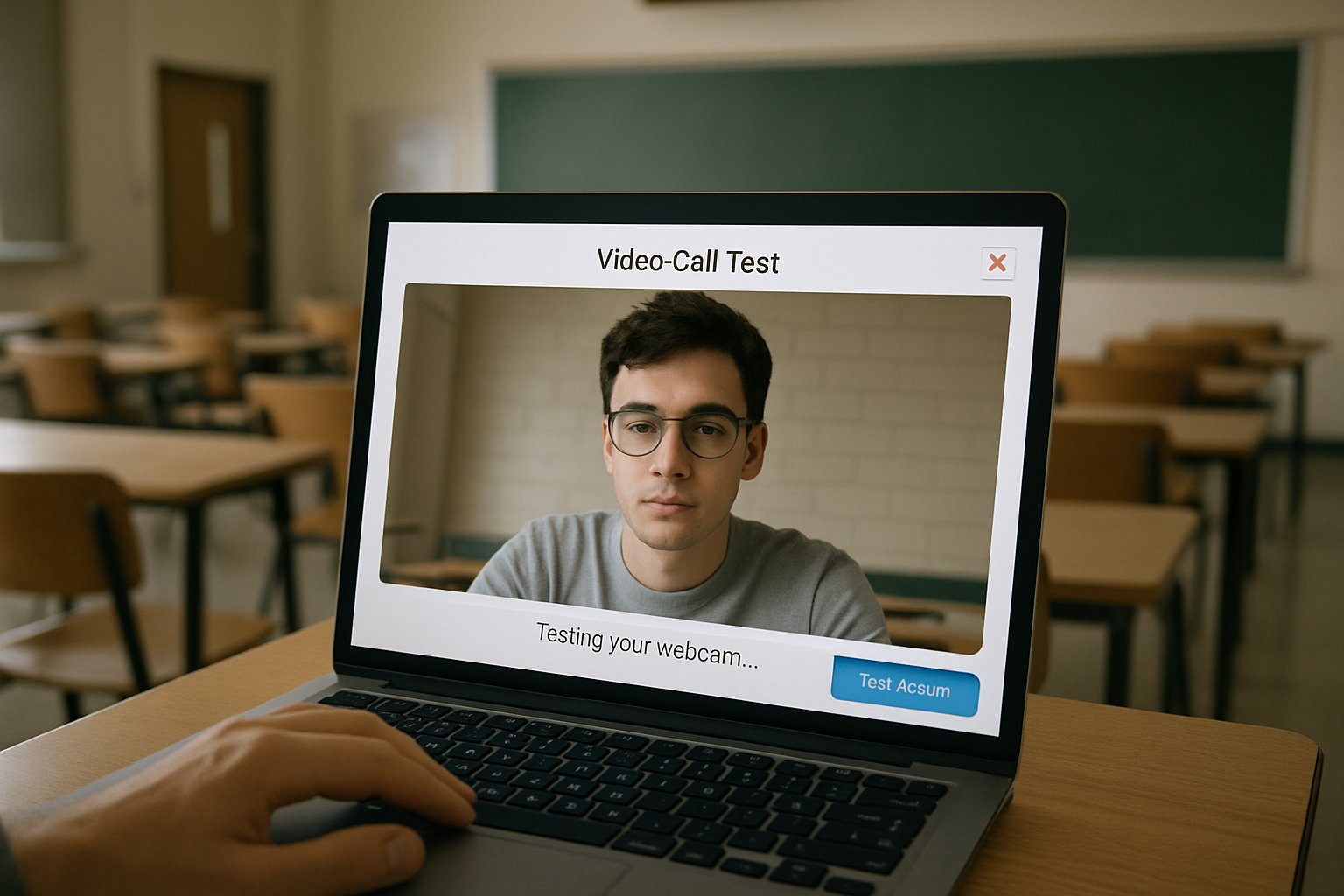
Student testing webcam before remotely proctored exam in university setting
Test your webcam and audio in advance before the remotely proctored exam.

This article distills vendor guidance, campus IT checklists, and market data into a single, step-by-step playbook.

Universities, ed-tech platforms, and corporate L&D teams can share it directly with candidates.

Follow the timeline, verify each device, and start your test with confidence.

Furthermore, we highlight bandwidth numbers, common support mistakes, and emerging AI features now shaping the ai proctored exam landscape.

Consequently, stakeholders will anticipate issues, allocate resources, and protect both integrity and privacy.

Let us begin with the market context before diving into cables, cameras, and contingency steps.

Market Growth Drivers

Global spending on online supervision tools reached an estimated $1 billion in 2024 and continues to climb.

Moreover, analysts project the market to exceed $2 billion by 2030, fueled by university expansion and corporate reskilling.

This wave presses vendors to streamline system checks and refine AI analytics inside every ai proctored exam platform.

Therefore, institutions now publish detailed hardware requirements early in each remotely proctored exam syllabus.

Market momentum demands solid preparation. Next, we unpack the specific device essentials.

Core Hardware Essentials

A stable computer beats flashy specs for any remotely proctored exam.

Most vendors accept Windows, macOS, or ChromeOS, yet block tablets unless used as secondary cameras.

Respondus advises 640×480 webcams at 15 fps minimum, while HD improves identity clarity.

Additionally, microphones must record clearly; background hum triggers false flags within an ai proctored exam.

Internet speed earns top priority.

ProctorU lists 3 Mbps download, whereas Inspera recommends 5 Mbps; experts urge wired ethernet whenever possible.

Consequently, candidates should test bandwidth during peak household usage to catch fluctuations.

Meeting these baselines prevents 80% of support tickets. Now, align them with a practical timeline.

Comprehensive Pre-Exam Timeline Steps

Seven days out, confirm your platform, read institution rules, and install required extensions.

Then, run the vendor system check and a low-stakes practice assessment.

Moreover, request accommodations early if lighting or mobility differs from standard expectations.

  • Day-1: Update OS and browser; restart the machine.
  • 2-4 hours: Plug into power; connect ethernet; retest webcam.
  • 15 minutes: Join early, show ID, complete room scan.

Following this countdown keeps every remotely proctored exam session smooth and stress-free.

Subsequently, focus shifts to network and environment tuning.

Timeline discipline reduces last-minute chaos. Next, secure your connection and space.

Connectivity And Environment Prep

Noise and packet loss sabotage concentration and recording quality alike.

Therefore, select a private room, disable streaming, and position the router within clear line-of-sight.

Bright, even lighting prevents silhouette effects that confuse both live proctors and ai proctored exam algorithms.

Moreover, angle the webcam to show head, shoulders, and desk without exposing private walls.

To protect bandwidth, pause cloud backups and gaming consoles before logging in.

A controlled setting reassures proctors and candidates alike. Yet, technical gaps still appear.

Without preparation, a remotely proctored exam can freeze mid-upload.

Common Pitfalls To Avoid

First, outdated browser versions block proctoring extensions.

Second, corporate VPNs throttle video streams and violate security policies.

Nevertheless, test drives uncover these problems well ahead of a remotely proctored exam.

Another trap is low laptop battery; always plug into AC power.

Finally, forgetting to close Slack or Teams produces distracting pop-ups and potential integrity flags.

  • Stale OS patches
  • Blocked microphone permissions
  • Slow upload speeds under 1 Mbps

Avoiding these errors saves support calls. The final concern involves ethics and privacy.

Balancing Integrity And Privacy

Students increasingly worry about surveillance creep and algorithmic bias.

Meanwhile, institutions must uphold fairness and accessibility under disability law.

Consequently, campuses publish data retention policies and offer alternatives such as oral exams or on-site rooms.

Running an ai proctored exam does not remove this duty; transparency remains essential.

Institutions should publish how long footage from each remotely proctored exam is stored.

Offer practice rooms, disclose flagging criteria, and store footage only for approved periods.

Integrity thrives when privacy is respected. With this balance, technology serves learning.

Finally, combine the checklist and cultural safeguards for sustainable success.

Conclusion And Next Steps

A flawless remotely proctored exam begins long before the timer starts.

Confirm devices, test speeds, secure lighting, and rehearse the process to eliminate surprises.

Moreover, respect student privacy by communicating policies, offering practice runs, and archiving data responsibly.

Why Proctor365?

Our AI-powered platform unites live and automated monitoring with advanced identity verification.

Consequently, elastic cloud scaling supports universities, certification boards, and corporate programs worldwide.

Additionally, real-time analytics surface anomalies immediately, allowing swift, fair interventions.

Therefore, stakeholders save time, preserve trust, and scale assessments effortlessly.

Start elevating exam integrity today at Proctor365.ai.

Frequently Asked Questions

  1. What hardware requirements should be met for remotely proctored exams?
    Candidates must use a stable computer, an HD webcam (640×480 minimum), a clear microphone, and reliable internet (3-5 Mbps) to prevent interruptions during AI proctoring with Proctor365.
  2. How can I best prepare for my remotely proctored exam?
    Follow a pre-exam timeline by updating your software, installing extensions, testing bandwidth, and setting up a quiet, well-lit space to ensure smooth AI monitoring.
  3. What common pitfalls should be avoided during online exams?
    Avoid outdated browsers, blocked microphone permissions, and slow internet. Addressing these issues minimizes support calls and enhances fraud prevention and AI proctoring effectiveness.
  4. How does Proctor365 balance exam integrity with privacy?
    Proctor365 employs AI proctoring, real-time analytics, and strict identity verification while transparently managing data retention to protect both exam integrity and candidate privacy.

How a Remotely Proctored Exam Protects Academic Integrity

Academic misconduct evolves as fast as digital learning. Therefore, universities, certification bodies, and employers need stronger defenses. A remotely proctored exam promises real-time oversight without a classroom wall. The approach blends computer vision, audio analysis, and secure browsers to protect grade value. However, myths, doubts, and legal questions still swirl. This article unpacks the layered technology, its effectiveness, and its risks. Additionally, we explore safeguards that keep integrity and student rights in balance. Whether you manage a high-stakes certification or run corporate training, these insights matter. Consequently, decision-makers can shape fair, trusted assessments for an online future. Meanwhile, generative AI tools make answer sharing easier than ever. Stakeholders must act quickly yet thoughtfully. Read on to see how today’s solutions meet tomorrow’s threats. An ai proctored exam sounds futuristic, yet thousands already rely on it each semester.

Robust Identity Checks Explained

Before any question appears, the platform confirms who is sitting the test. Candidates upload a photo ID, then perform a live face match. Moreover, some systems run liveness prompts to stop deepfake tricks. Real-time mismatch alerts help institutions deny impostor attempts.

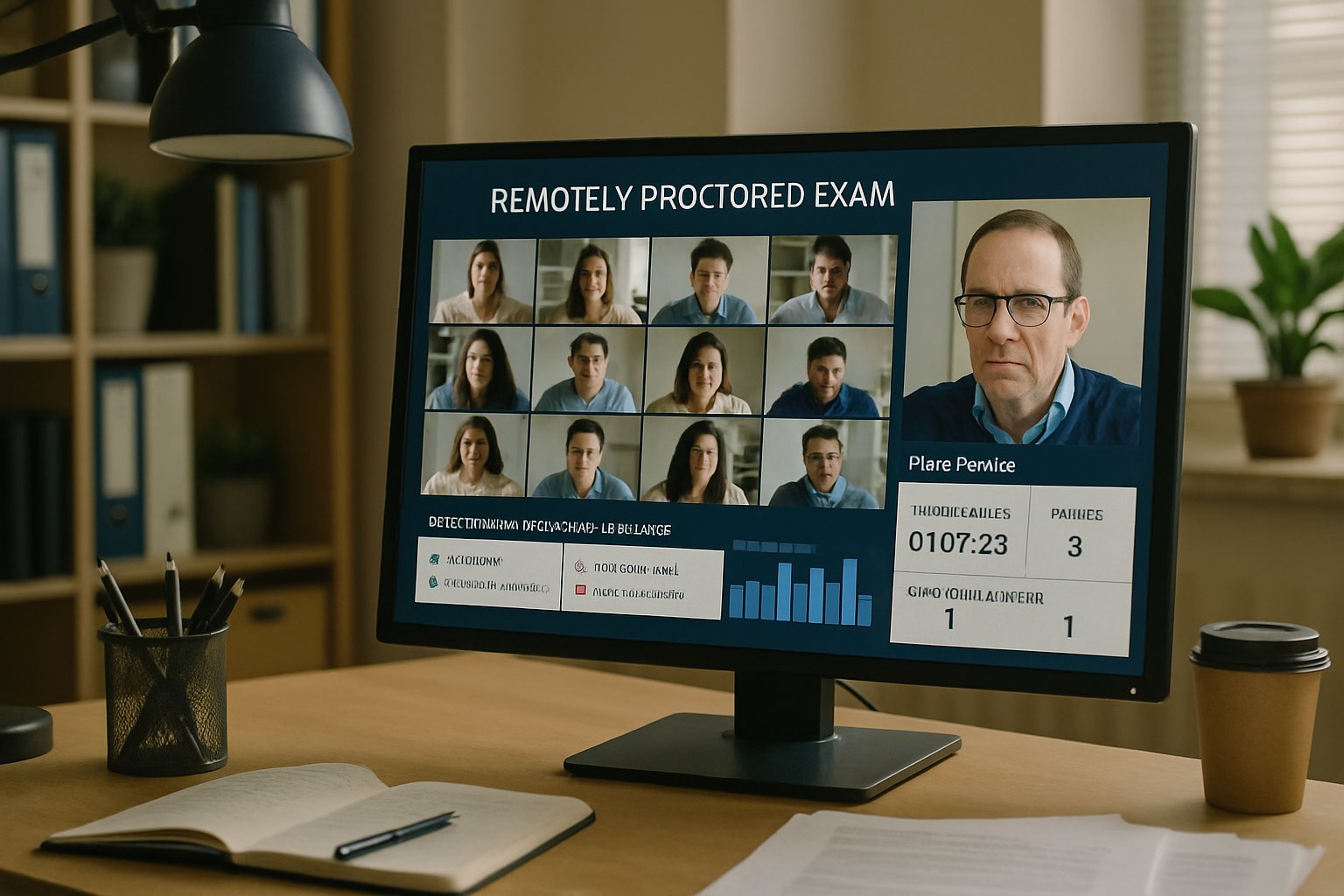
Proctor monitors multiple remotely proctored exam sessions on office computer.
Proctors use specialized dashboards to monitor exam integrity in real time.

Consequently, identity verification deters proxy test-takers and delivers an auditable trail. The layer is not foolproof; sophisticated actors still try work-arounds. However, strong contracts, encryption, and human spot-checks raise the bar sharply.

In short, verified identity builds the foundation for trust. Next, we examine how that trust extends through the entire remotely proctored exam workflow.

Remotely Proctored Exam Workflow

The sequence starts with system checks for camera, microphone, and bandwidth. After confirmation, the locked browser launches and prevents copy, paste, or tab switches. Meanwhile, continuous video, audio, and screen feeds stream to the analytics engine. Each data point receives a risk score in real time.

Additionally, the engine flags anomalies such as multiple faces or sudden answer bursts. Live or post-exam reviewers view time-stamped clips and decide on intent. Therefore, machines triage while humans judge, reducing review hours dramatically.

Overall, this workflow gives supervisors fast, actionable evidence without overwhelming footage. Next, let’s inspect the physical and digital environment protections that complement the process.

Environment And Device Security

Examinees must show their workspace with a webcam sweep. Moreover, object-detection models search for phones, notes, or extra screens. A lockdown browser blocks screen sharing, printing, and unauthorized apps. During a remotely proctored exam, these checks run continuously with minimal lag. Consequently, candidates have fewer avenues to consult outside help.

However, determined cheaters may hide a second device just outside the frame. Dual-camera setups and phone detectors raise detection odds but never guarantee success. Institutions should state consequences clearly to reinforce technical controls.

To sum up, environment controls shrink opportunity without claiming perfection. The next layer, behavioral analytics, monitors patterns that signal hidden collaboration.

Behavior Analytics Flags Cheating

Computer-vision algorithms track gaze direction, head position, and the presence of extra faces. Meanwhile, audio models detect background speech or coaching whispers. When risk thresholds trigger, the system highlights the exact timestamp for later review.

An ai proctored exam also compares typing cadence and answer timing across cohorts. Consequently, unusual bursts or copied patterns become clear. Human reviewers then decide whether context explains the spike or sanctions are needed. Without such analytics, a remotely proctored exam would rely only on visible deterrence.

Thus, behavioral analytics shift focus from simple surveillance to rich pattern recognition. We now turn to evidence that shows how well these layers work in practice.

Effectiveness And Current Evidence

Do these tools actually reduce cheating? A 2023 randomized field experiment says yes, at least partly. Students under webcam monitoring scored lower than unmonitored peers, suggesting deterrence. Nevertheless, effect sizes varied by cohort and stakes.

Systematic reviews paint a mixed picture. Some studies report low violation rates even without surveillance, while others highlight false positives. Moreover, equity studies reveal higher flagging rates for darker skin tones.

During a remotely proctored exam, model errors can mislabel legitimate behavior. Consequently, institutions must combine automation with thorough human review and clear appeal channels. For an ai proctored exam, these findings influence design decisions.

Key figures to remember:

  • 47% of surveyed students expect cheating to rise with generative AI.
  • Market analysts estimate online proctoring revenue exceeding USD 1 billion by mid-decade.
  • Bias studies show disproportionate flagging for certain demographic groups.

In brief, evidence supports deterrence but warns of equity and accuracy gaps. Our next section explores those risk dimensions more deeply.

Risks Privacy And Equity

Continuous video inside private homes raises serious privacy objections. Civil-liberties groups call room scans excessive surveillance. Courts in France and the United States have already limited certain practices.

Algorithmic bias compounds the issue. Studies in Frontiers in Education show higher false alerts for darker skin tones and some disabilities. Moreover, elevated stress and bandwidth demands hit disadvantaged learners hardest.

A remotely proctored exam must therefore respect data minimization, encryption, and retention limits. Additionally, clear opt-out pathways and accessible alternatives reduce equity gaps.

Ultimately, transparent governance balances risk against academic benefits. Next, we review safeguards that deliver that balance.

Best Practice Safeguards Today

Best practice starts with assessment design. Educators should mix secure in-person tasks and open assignments that allow AI usage. Consequently, high stakes shift to contexts where surveillance is less controversial.

For remote tests, combine automation with human review and appeals. Publish policies that explain data retention, flag evaluation, and student rights. Moreover, pilot audits for algorithmic bias each semester.

An ai proctored exam also benefits from multi-camera angles, active liveness checks, and behavioral biometrics. However, every added sensor increases privacy overhead. Therefore, risk assessments must precede deployment.

During any remotely proctored exam, institutions should communicate expectations early and often. Clear messaging deters misconduct more than silent monitoring.

Together, these safeguards align technology with pedagogy and policy. They set the stage for trusted online assessment at scale.

Conclusion

A remotely proctored exam can deter many modern cheating tactics when used within a balanced framework. Layered identity checks, environment controls, behavioral analytics, and vigilant human review deliver credible oversight. However, privacy, bias, and stress risks demand transparent policies and regular audits. By pairing robust design with clear communication, institutions safeguard both academic integrity and student trust.

Why Proctor365? Proctor365’s AI-powered platform elevates every remotely proctored exam with advanced identity verification, scalable monitoring, and adaptive analytics. Moreover, our cloud architecture supports thousands of concurrent sessions and is trusted by global exam bodies. Ready to protect your assessments? Discover Proctor365 now and experience secure testing without compromise.

Frequently Asked Questions

  1. How does AI proctoring ensure exam integrity?
    AI proctoring uses computer vision, audio analysis, and behavioral analytics to monitor exams. Robust identity verification and real-time risk scoring work together to detect cheating and preserve academic integrity.
  2. What does a remotely proctored exam workflow involve?
    The workflow begins with system checks for camera and microphone, followed by a locked browser session and continuous monitoring through video, audio, and screen feeds, ensuring a secure and fair assessment.
  3. What measures does Proctor365 use to prevent exam fraud?
    Proctor365 leverages advanced AI proctoring with multi-layer identity checks, fraud prevention strategies, and adaptive behavioral analytics to secure exams and minimize cheating opportunities.
  4. How are privacy and bias concerns addressed in remote proctoring?
    Remote proctoring platforms implement data minimization, clear policies, and human reviews while conducting regular audits. This approach helps mitigate algorithmic bias and respects candidate privacy.