Beyond 2026: The ai proctored exam’s next chapter

Students no longer sit quietly in crowded halls. Instead, screens, cameras, and algorithms watch every click. However, trust in that vigilancia is under strain. The ai proctored exam now sits at the center of a three-way contest. Regulators press for transparency, educators redesign assessment, and vendors race to improve detection. Moreover, the EU AI Act’s high-risk deadline of 2 August 2026 looms, forcing institutions to rethink strategies quickly. Meanwhile, U.S. state rules add patchwork complexity. Consequently, universities, ed-tech platforms, and corporate L&D teams need a clear roadmap. This article traces developments, market data, technical shifts, and practical actions that will shape remote assessment beyond 2026.

ai proctored exam Landscape

Global adoption keeps climbing, yet figures vary. IndustryResearch estimates the 2026 market at USD 825 million, while other reports cite USD 1.06 billion. Furthermore, surveys claim 60-78 percent of higher-ed institutions now use some form of remotely proctored exam. Despite growth, buyers question reliability and fairness.

Educators discussing ai proctored exam compliance in a modern office
Educators collaborate on adapting ai proctored exam policies post-2026.

Leading vendors—Proctorio, Examity, Honorlock, Respondus, and others—cover most segments. Additionally, emerging specialists push privacy-preserving architectures and behavioral biometrics. Consequently, competition has intensified ahead of the EU deadline. This competitive heat frames every strategic decision.

In short, demand persists, but skepticism rises alongside it. Next, we examine looming compliance pressures.

Compliance Clock Is Ticking

August 2, 2026 is circled on every roadmap. The EU AI Act classifies automated exam monitoring as high-risk, triggering strict risk management, human oversight, and audit duties. Moreover, non-compliance can draw fines up to 7 percent of global turnover. Every ai proctored exam offered to EU learners will be classified high-risk.

Across the Atlantic, state bills in California, Illinois, and New York require algorithmic transparency and biometric consent. Consequently, multinational universities must navigate parallel regimes. Many already request vendor model cards and security attestations.

Regulators will not blink, so institutions must act. Market data, however, offer both caution and opportunity.

Market Numbers Still Diverge

Forecasts differ because analysts track platforms, services, and test-center hybrids differently. Nevertheless, consensus expects double-digit compound growth through 2030. Additionally, behavioral biometric sub-markets show some of the fastest gains, with research citing 95 percent fraud detection in controlled keystroke studies.

Investors still view the ai proctored exam segment as resilient despite lawsuits. Yet, investors watch litigation risk. EPIC and ACLU complaints highlight opaque algorithms and mass data collection. Therefore, boardrooms now weigh revenue potential against regulatory exposure.

Capital remains available, but only for resilient models. Technical innovation becomes the next decisive lens.

Tech Arms Race Intensifies

Vendors stack multiple signals—face, voice, keystroke, and secure-browser telemetry—to cut cheating avenues. However, adversaries answer with deepfake video, synthetic voices, and presentation attacks. Subsequently, researchers publish liveness detection and frequency-domain spoof defenses.

Meanwhile, privacy-first designs emerge. Client-side feature extraction keeps raw biometrics on the test device, reducing data transfer. Consequently, EU buyers increasingly request such architectures. Each ai proctored exam now generates multimodal risk scores.

  • Anti-spoofing models detect 90 percent of known deepfakes in lab tests.
  • Secure browsers block 25,000+ prohibited app launches during one large remotely proctored exam series.
  • On-device processing cuts cloud video storage by 70 percent, easing GDPR risk.

The arms race will continue, but design choices can tame risk. Privacy questions now dominate the conversation.

Privacy Equity Debate Deepens

Several peer-reviewed studies document higher false-positive rates for darker skin tones and disabled students. Moreover, room-scan requirements expose private living spaces, raising dignity concerns. Consequently, student unions demand alternatives or stronger appeal processes.

In contrast, vendors argue that hybrid review models reduce harm because humans verify AI flags. Independent benchmarks, however, remain scarce. Therefore, transparency dashboards and third-party audits are gaining traction.

When a remotely proctored exam flags an innocent candidate, resolution speed matters. Institutions now track appeal times as a key service-level metric.

Equity gaps threaten legitimacy if ignored. Future options extend beyond surveillance alone.

Future Scenario Paths Emerge

Analysts outline three plausible futures. First, a regulated high-road where privacy-first, auditable platforms dominate. Second, an escalating arms race that demands ever more intrusive sensors. Third, a pedagogical pivot toward authentic projects, oral defenses, and selective center-based testing.

Each pathway requires different investments. Furthermore, credential value depends on matching risk level to assessment design. Therefore, strategic foresight now beats reactive spending.

Whatever path wins, leaders need concrete tasks today. The next section lists immediate priorities.

Strategic Action Items Now

Universities and certification bodies can start with a focused checklist.

  1. Map every ai proctored exam currently scheduled against jurisdictional rules.
  2. Demand documented model cards, bias tests, and recent security audits from vendors.
  3. Pilot authentic alternatives alongside every remotely proctored exam.
  4. Update student policies to include clear appeal timelines and data retention limits.
  5. Budget for on-device processing upgrades before the EU deadline.

Additionally, corporate L&D teams should align with internal privacy officers and security leads. Consequently, cross-functional governance reduces future surprises.

Acting early saves cost and prevents rushed deployments. We close with final insights and a proven partner.

Conclusion

Remote assessment will not disappear. Instead, the ai proctored exam trend faces sharper scrutiny and smarter design. Leaders who balance compliance, privacy, and pedagogy will defend credential value.

Why Proctor365? Our platform delivers the ai proctored exam experience institutions can trust. We pair advanced identity verification, AI-powered monitoring, and real-time analytics with human oversight. Moreover, our cloud scales effortlessly from small cohorts to global certification campaigns. Top exam bodies worldwide already rely on Proctor365 to safeguard integrity. Visit Proctor365.ai and schedule a demo today.

Frequently Asked Questions

  1. What are the key challenges facing AI proctored exams?
    Key challenges include compliance with regulations like the EU AI Act, addressing privacy concerns, and preventing fraud, with evolving tactics such as deepfakes. Proctor365 addresses these with advanced AI monitoring and identity verification.
  2. How does Proctor365 ensure exam integrity and compliance?
    Proctor365 combines AI-powered monitoring with human oversight, on-device processing, and secure biometric verification. This ensures robust fraud prevention and meets strict regulatory requirements for exam integrity.
  3. How are educational institutions preparing for regulatory changes in remote assessments?
    Institutions are mapping exams against jurisdictional rules, demanding transparency in vendor practices, and upgrading systems. Proctor365 supports these efforts with clear model cards, audit processes, and compliance-friendly features.
  4. What role do advanced technologies play in modern remote proctoring?
    Advanced technologies like biometrics, behavioral analytics, and secure-browser telemetry improve fraud detection and privacy. Proctor365 leverages these tools to deliver reliable, scalable, and privacy-first proctoring solutions.
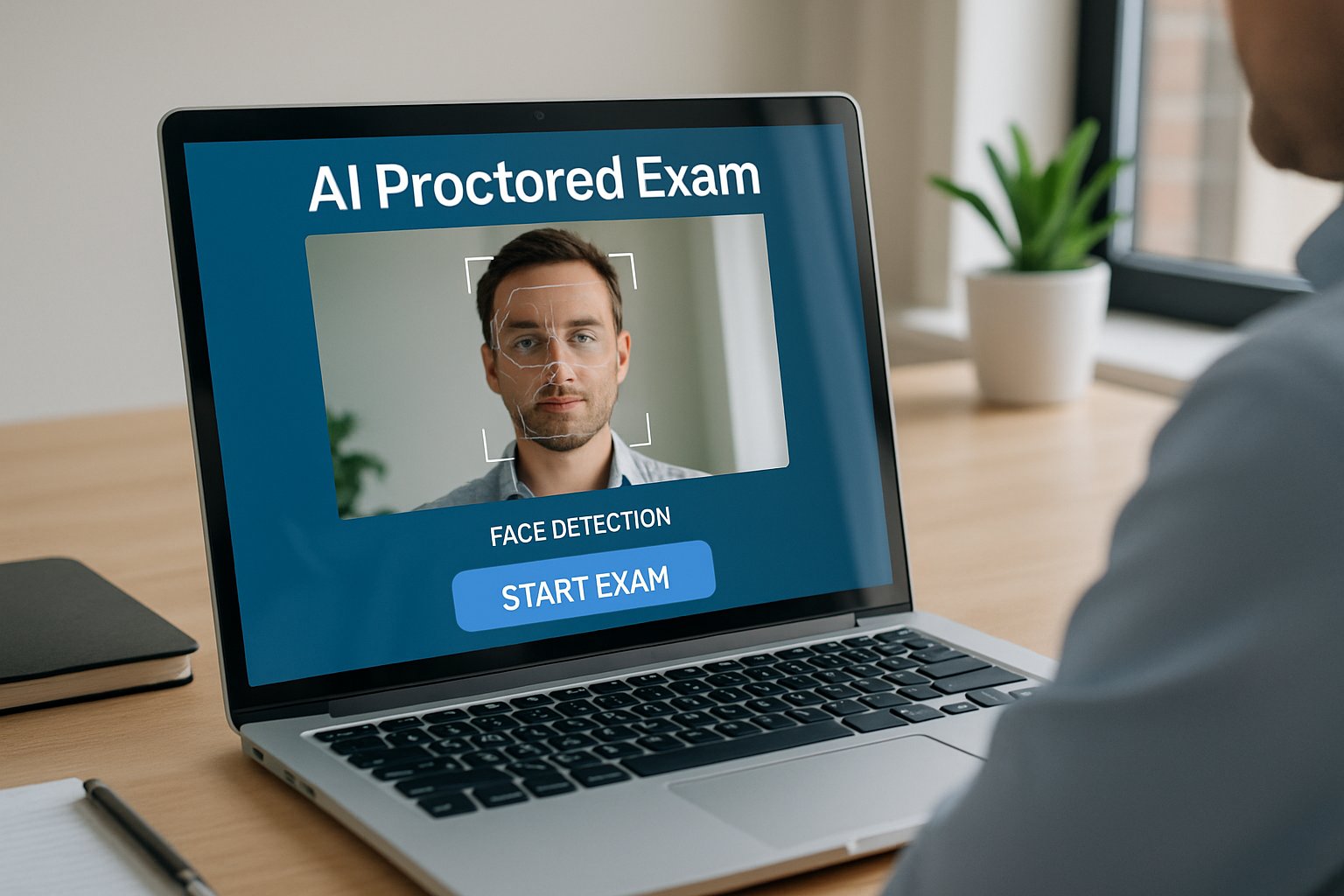
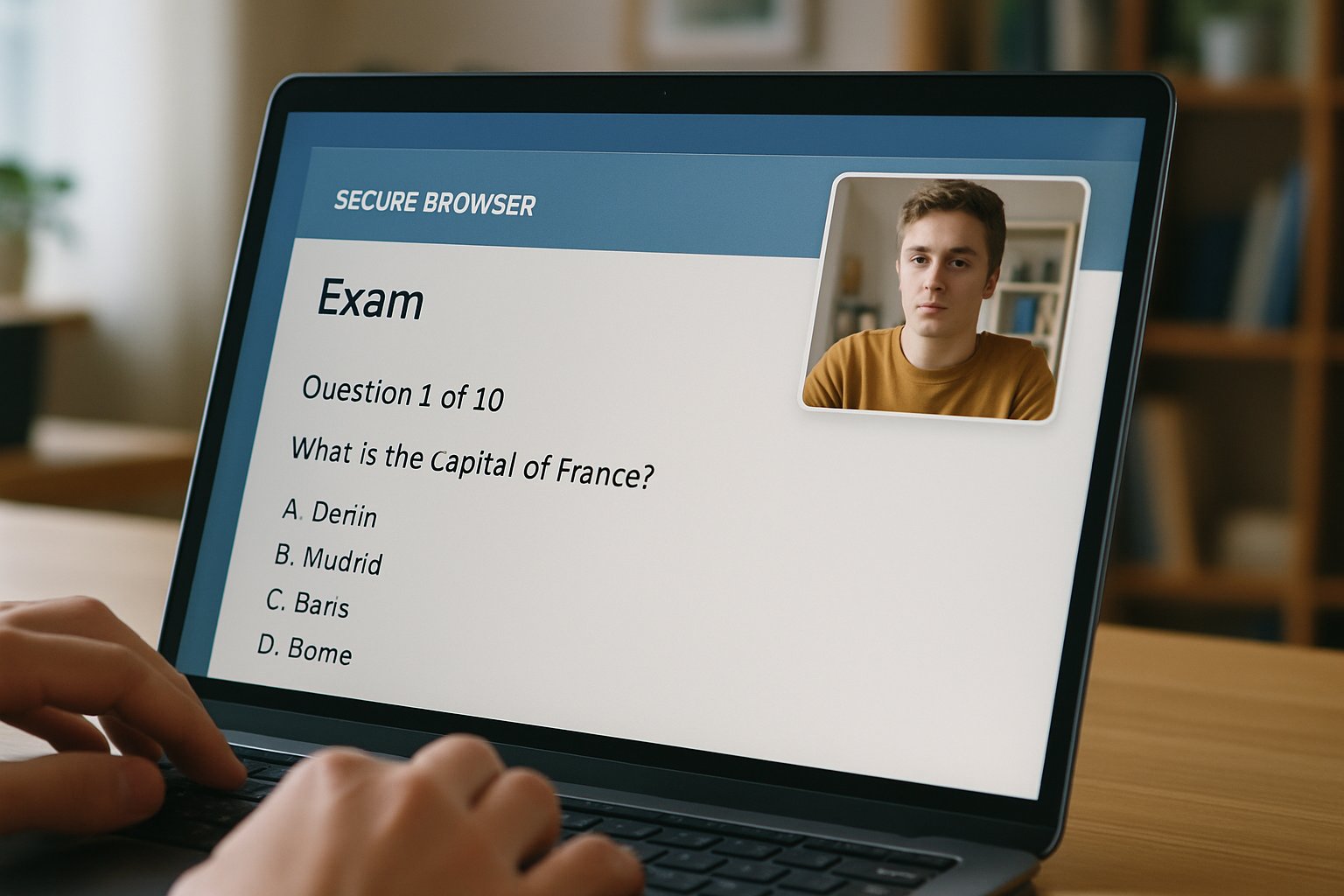
Cutting Overhead With AI Proctored Exam Technology

Universities now face rising test volumes, shrinking budgets and loud demands for flexible delivery. Consequently, many leaders consider the ai proctored exam model a fast route to relief. Automated monitoring claims to reduce staffing, venue and scheduling costs. However, decision makers still weigh privacy, bias and legal risks. This article distills two years of market evidence, industry case studies and legal developments. Readers will see where savings appear, where new overhead lurks and how to deploy technology responsibly.

Market analysts peg online proctoring for higher education at roughly USD 780 million in 2025, growing by double digits. Meanwhile, about sixty percent of colleges report at least one remotely proctored exam each term. Yet credentialing giants like ACCA plan to abandon most remote assessments by 2026, worried about sophisticated AI‐driven cheating. This mixed landscape forces institutions to examine total cost of ownership, not vendor pricing alone.

Person at desk using ai proctored exam software during online test.
A professional uses ai proctored exam software to securely complete an assessment.

This report offers an expert roadmap. It explains overhead drivers, showcases cost-saving evidence, flags hidden liabilities and lists proven governance models. The goal is clear: help assessment leaders cut expenditure without trading away integrity or trust.

Key Exam Overhead Drivers

Several cost centres vanish once assessments move online. Facility hire, travel payments and printed materials disappear first. Moreover, an ai proctored exam removes the need for dozens of hourly invigilators.

However, other drivers replace them. Each remotely proctored exam creates video storage, help-desk calls and possible appeals. Additionally, privacy compliance tasks demand lawyer and IT hours.

Overall, net savings depend on volume, risk tolerance and policy design. Institutions should calculate both direct and indirect workloads before signing any contract.

In short, cost shifts rather than vanishes. Next, we review concrete savings data.

AI Proctored Exam Gains

Vendor case studies provide early evidence. The University of Florida saved USD 1.14 million across three semesters after deploying an ai proctored exam platform at scale.

Similarly, market reports cite automated monitoring prices as low as USD 3 per attempt, contrasted with USD 50 for live proctoring. Moreover, faculty in the Florida study reclaimed eight hours each term because AI handled identity checks.

These numbers illustrate that staffing and facility reductions translate into cash. Nevertheless, institutions must validate results through independent audits.

Documented gains are real yet context-specific. The following section explores risks that erode those gains.

Hidden Overhead Risk Factors

Not every ai proctored exam ends in savings. False positives can soar when algorithms misread lighting, accents or disabilities.

Consequently, staff must investigate disputes, extend deadlines and schedule a new remotely proctored exam session, adding unseen hours.

Legal exposure also grows. The EFF lawsuit against Proctorio shows how privacy mishandling triggers court costs and reputational damage.

Unchecked risks convert predicted savings into unexpected bills. Therefore, governance strategies become crucial.

Legal And Privacy Pressures

Data retention, biometric consent and cross-border transfer rules vary by jurisdiction. Moreover, regulators can levy heavy fines for lapses.

Institutions must impose strict deletion schedules and demand breach notifications within vendor SLAs.

Strong contracts prevent many legal headaches. Next, let’s examine proven operational models.

Hybrid Best Practice Models

Experts increasingly endorse a hybrid approach. AI handles detection, while trained reviewers decide outcomes. This balance retains the speed of an ai proctored exam yet reduces false accusations.

  • AI triage only flags clear anomalies.
  • Humans review before penalties or grade changes.
  • Transparent rubrics guide every decision.
  • Short data retention limits privacy risk.

Moreover, clear communication reduces student anxiety and support tickets.

Hybrid designs cut both risk and workload. Next, we outline rollout steps.

Strategic Rollout Steps

Leaders should start small. Pilot one high-enrollment course with an ai proctored exam and gather total cost metrics.

Subsequently, compare results against an in-center control and another remotely proctored exam using legacy methods.

  1. Define success metrics: cost per attempt, appeals volume, completion rate.
  2. Negotiate SLAs covering uptime, human review times and breach reporting.
  3. Train faculty on evidence standards and escalation paths.
  4. Publish an accessible appeals policy.

Measured pilots expose hidden costs early. Finally, we look ahead to market trends.

Upcoming Market Outlook Trends

Market analysts forecast the online proctoring sector to top USD 940 million next year. Moreover, investments in adaptive AI promise faster and more accurate ai proctored exam workflows.

In contrast, high-stakes bodies like ACCA retreat to test centers, highlighting credibility concerns. Their move may steer some institutions toward limited remotely proctored exam usage and broader assessment redesign.

Consequently, demand will favor vendors offering audited bias metrics, open APIs and transparent pricing.

The market will keep growing yet maturing. Institutions prepared for transparency will capture sustainable savings.

Reducing institutional overhead requires balance. Thoughtful deployment of an ai proctored exam framework delivers facility and staffing savings. Pair that approach with hybrid review, strict policies and transparent appeals to sustain benefits. Conversely, ignored privacy, bias or technical pitfalls can erase gains.

Why Proctor365? Proctor365 combines advanced AI-powered proctoring, multi-factor identity verification and scalable exam monitoring in one secure cloud platform. Global exam bodies already trust our solution to protect integrity at volume. Therefore, your next ai proctored exam rollout can move faster and safer with Proctor365. Schedule a demo today at Proctor365.ai.

Frequently Asked Questions

  1. How do AI proctored exams help cut institutional costs?
    AI proctored exams reduce expenses by cutting staffing, facilities, and material costs. Proctor365’s advanced AI monitoring and identity verification streamline exam processes, offering a cost-effective and secure solution.
  2. What are the risks associated with AI proctoring?
    AI proctoring can lead to false positives, privacy concerns, and legal challenges if algorithms misinterpret data. Proctor365 mitigates these issues with a hybrid review, ensuring balanced exam integrity and compliance.
  3. What is a hybrid proctoring model and why is it important?
    A hybrid proctoring model combines automated AI detection with human oversight to reduce false flags and ensure exam fairness. Proctor365 employs this balanced approach for secure, reliable, and transparent exam processes.
  4. How does Proctor365 ensure exam security and fraud prevention?
    Proctor365 leverages advanced AI, multi-factor identity verification, and real-time monitoring to prevent fraud. Its secure platform maintains exam integrity, addresses privacy risks, and supports robust, scalable exam proctoring.

How a Remotely Proctored Exam Outsmarts Modern Cheaters

Universities, certification bodies, and corporate trainers face a growing dilemma. Cheating methods multiply every semester. Exams must stay online for flexibility and scale. Consequently, many institutions choose a remotely proctored exam model to preserve integrity. Several institutions already pilot an ai proctored exam to test new safeguards.

However, attackers keep innovating with hidden earpieces, remote desktops, and AI chat tools. Simple webcam observation no longer suffices. The next sections reveal how layered technology exposes even subtle misconduct.

Remotely proctored exam secure browser with webcam feed and student typing.
Secure browser technology ensures remotely proctored exam integrity.

Additionally, we share vendor advances, independent security data, and governance tips. Readers gain a clear roadmap to strengthen any online assessment program.

Market analysts already estimate remote proctoring revenue will cross one billion dollars by 2027. Therefore, decision makers must understand both capabilities and limitations before large scale investments.

This overview balances vendor claims with academic and forensic evidence. Trust grows when stakeholders see transparent data, not hype.

Cheating Threats Quickly Evolve

Mobile phones, smart watches, and miniature cameras now cost very little. Meanwhile, AI chatbots can write essays in seconds. Consequently, a remotely proctored exam must detect threats that did not exist five years ago.

Independent testers from Caveon secretly attempted 100 high-tech cheats in controlled trials. Over half bypassed basic proctoring setups. Such data proves the arms race is real.

In summary, threat sophistication keeps rising. The next section explores layered defenses.

Remotely Proctored Exam Layers

Effective proctoring never relies on a single sensor. Vendors combine six distinct layers for defense.

First, a secure browser locks down tabs, copy functions, and remote control software. Second, webcam video feeds computer-vision models that flag multiple faces or forbidden objects. Third, audio filters detect whispered assistance. Fourth, system telemetry uncovers virtual machines and remote sessions. Fifth, real-time identity checks deter impostors. Finally, post-exam forensics cluster answer patterns to find collusion.

When combined, these layers create a resilient shield for any remotely proctored exam session.

  • Secure browser lockdown
  • AI webcam and audio analysis
  • System and network telemetry
  • Continuous identity verification
  • Post-exam statistical forensics

Importantly, each ai proctored exam logs rich telemetry for later audit.

Together, these elements raise the bar for cheaters. Yet technology alone cannot stop everything, as we will see next.

Core Detection Toolset Guide

Modern tools rely heavily on computer vision and machine learning. YOLO models detect phones, notes, or extra faces within 50 milliseconds. Head-pose and gaze tracking highlight repeated glances away from the screen.

Keystroke dynamics build user profiles and expose a proxy during a remotely proctored exam. Process scanning stops hidden remote access tools before they launch. Furthermore, Apple Handoff signals can reveal a nearby iPhone even if unseen.

An ai proctored exam relies on these algorithms to act faster than human eyes.

AI flags pass instantly to trained human reviewers. Consequently, false positives drop while context improves.

These tools work best when aligned with policy and human judgement. Advanced tactics test those limits, as the following examples show.

Advanced Cheating Tactics Spotted

Cheaters hide micro-earpieces inside hairlines or collars. Vision models struggle when the device stays completely concealed. However, repeated ear touching and murmured answers can still flag a remotely proctored exam recording.

Remote desktop tools pose another threat. Secure clients monitor running processes and terminate known offenders. Skilled attackers sometimes hide traffic inside encrypted tunnels.

Colluding groups share item banks on social channels before the test. Post-exam statistical forensics like Q-SID catch improbable answer matches afterward.

In short, advanced cheats remain possible, yet detection odds grow when data is layered. Next, we weigh strengths and gaps.

Key Strengths And Gaps

Multi-layer approaches deter casual cheating effectively. Caveon secret tests still show determined actors succeeding about half the time.

  • Pros: scalable deterrence, evidence for appeals, post-exam collusion analytics
  • Cons: privacy concerns, fairness risks, ongoing evasion arms race

Moreover, algorithmic bias against darker skin tones remains under active study. Governance frameworks must address that issue before every remotely proctored exam rollout.

Balanced programs pair technology with transparent policy and assessment design. Our final section outlines practical steps.

Governance Best Practice Steps

Publish clear privacy notices and allow alternative settings when needed. Conduct algorithmic impact assessments annually. Track appeal rates to measure false positives.

Furthermore, rotate questions and randomize item order to limit answer sharing. Short time windows also reduce value of external help.

Institutions should demand vendor transparency reports and independent audits. Consequently, stakeholders trust the system and students feel treated fairly.

Good governance complements technical layers. We now conclude with actionable recommendations.

Closing Steps And Assurance

Layered secure browsers, AI vision, telemetry, and post-exam forensics together improve integrity. Still, policy, transparency, and assessment design remain essential. When those elements align, a remotely proctored exam delivers trusted results at scale. Selecting an ai proctored exam with audited accuracy protects both staff and candidates.

Why Proctor365? Our AI-powered platform blends object detection, gaze tracking, and continuous biometric verification. Advanced identity checks confirm the right person stays present. Scalable cloud monitoring handles classrooms or global certification cohorts without extra hardware. Trusted by universities, ed-tech leaders, and exam bodies worldwide, we safeguard every assessment. Explore how Proctor365 elevates your integrity programme at Proctor365.ai today.

Frequently Asked Questions

  1. What is a remotely proctored exam and how does it work?
    A remotely proctored exam uses multi-layer defenses such as secure browsers, AI-powered video analysis, system telemetry, and continuous identity verification to detect suspicious behavior and reduce cheating risks.
  2. How does AI proctoring help prevent advanced cheating tactics?
    AI proctoring leverages computer vision, gaze tracking, and keystroke dynamics to instantly flag irregular behavior. This approach supports fraud prevention and continuous identity verification against covert devices and remote collusion attempts.
  3. What layered approaches enhance exam security during proctored assessments?
    Layered approaches include secure browser lockdown, AI-powered video and audio analysis, system telemetry, and post-exam statistical forensics. Each layer strengthens exam integrity by detecting unauthorized devices and covert communication methods.
  4. How does Proctor365 ensure secure proctoring for institutions?
    Proctor365 combines AI proctoring, fraud prevention, and identity verification with scalable cloud monitoring. Its advanced platform uses object detection, gaze tracking, and real-time telemetry to secure online assessments for universities and certification bodies.

AI Proctored Exam vs Live Remote Monitoring

University leaders now face a new challenge: protecting digital assessments from sophisticated cheating.

Budgets tighten while misconduct tools flood social channels.

Comparing ai proctored exam and live remote proctor showing two online test environments.
Compare live human remote proctoring with AI proctored exam technology.

Consequently, many teams debate whether an ai proctored exam or live monitoring best serves learners.

Meanwhile, lawsuits and student protests add urgency to that decision.

The February 2025 California bar exam outage highlighted what is at stake.

Moreover, privacy advocates question biometric scans embedded in several platforms.

Vendors reply that advanced analytics deter misconduct at unprecedented scale.

In contrast, faculty groups highlight equity gaps revealed by recent research.

For ed-tech leaders, choosing a remotely proctored exam solution now carries financial and reputational risk.

Therefore, this article compares automated, live, and hybrid proctoring models.

Readers will gain market context, legal lessons, and practical evaluation tips.

Let’s begin by defining each method clearly.

Defining An AI Proctored Exam

An ai proctored exam relies on algorithms rather than humans.

Computer vision locks browsers, scans faces, and tags suspicious movements.

Furthermore, backend models assign confidence scores to every recorded event.

Institutions receive searchable dashboards within minutes.

Advantages appear clear.

Scalability supports thousands of candidates simultaneously, and scheduling friction disappears.

However, researchers documented false positives and demographic bias, especially for darker skin tones.

Regulatory scrutiny therefore continues across multiple jurisdictions.

In summary, software offers speed and reach.

Next, we examine live proctoring.

Live Proctoring Explained Clearly

Live remote proctoring assigns trained staff to watch candidate feeds in real time.

Consequently, proctors can ask clarifying questions and stop misconduct immediately.

This human layer improves context recognition where gestures appear ambiguous.

Nevertheless, costs rise because each proctor monitors limited screens.

When institutions switch from an ai proctored exam to live proctoring, they accept higher staffing needs.

A 2022 Frontiers study found human oversight reduced disproportionate flagging.

Yet operational errors still occur, as shown by the 2025 bar exam crash.

To sum up, humans add nuance but raise cost.

Now consider reliability data.

Operational Reliability Lessons Learned

The February 2025 California bar exam became a cautionary tale.

Meazure Learning’s hybrid service froze, causing submission failures for thousands.

Subsequently, the State Bar filed a fraud complaint citing unmet uptime guarantees.

Candidate careers paused, and public trust dipped quickly.

  • 4,500 examinees affected according to court filings.
  • Hours-long delays reported by 83% of surveyed candidates.
  • Potential class damages exceed USD 50 million.

The case showed that even an ai proctored exam can fail spectacularly without stress testing.

Market watchers therefore stress rigorous load testing before any remotely proctored exam rollout.

Reliability shapes both reputation and legal exposure.

Fairness issues deserve equal focus.

Fairness And Bias Concerns

Peer-reviewed evidence shows algorithmic bias in flagging rates.

The 2022 Frontiers paper recorded higher false alerts for women of color.

Moreover, privacy lawsuits under Illinois BIPA challenge biometric data retention.

Learners describe stressful room scans and constant surveillance.

Affected students flagged by an ai proctored exam often struggle to appeal vague algorithmic scores.

Policy committees therefore recommend transparent audits and alternative assessments when possible.

Policy And Transparency Steps

Institutions should demand third-party bias audits before procurement.

Additionally, publish clear flag appeal processes to protect students.

Addressing bias improves legitimacy.

Cost factors now enter the debate.

Cost Scalability Trade Offs

Market.us values the remote proctoring sector near USD 900 million in 2024.

Growth forecasts reach multi-billion levels by 2030, although estimates vary widely.

Automated models drive lower unit costs, while live services remain labor intensive.

Consequently, hybrids try balancing expense and accuracy.

  • AI-only: as low as USD 3 per seat.
  • Live: often USD 15-25 per seat.
  • Hybrid: median around USD 8 per seat.

Budget committees compare the price of each ai proctored exam against academic misconduct risk.

Nevertheless, hidden costs surface when false positives demand manual reviews or legal defense.

Hybrid Models In Practice

Honorlock and Examity combine AI alerts with on-demand pop-ins.

Therefore, institutions pay for human minutes only when needed, improving margins.

Selecting the right mix saves money and morale.

Next comes a practical checklist.

Decision Checklist For Institutions

Leaders should create a structured rubric before signing any contract.

Key questions include:

  • What documented false positive rate exists across demographics?
  • How will data be stored and deleted?
  • Is a service-level agreement enforceable with penalties?
  • Can paperless accommodations be provided quickly?

Furthermore, pilot every remotely proctored exam workflow with diverse volunteers.

Capture accessibility feedback early.

A disciplined process reduces surprises.

We now close with final thoughts.

Automated systems scale yet risk bias.

Live monitoring adds judgment yet strains budgets.

Hybrid models promise balance, but only careful vetting protects test integrity.

Why Proctor365? Our platform delivers AI-powered proctoring backed by live experts when needed.

Advanced identity verification confirms candidates within seconds.

Scalable exam monitoring supports universities, certification boards, and corporate L&D teams worldwide.

Consequently, institutions achieve fairness without sacrificing security.

Ready to launch your next ai proctored exam with confidence?

Visit Proctor365 and discover how our trusted solution safeguards every remotely proctored exam journey.

Frequently Asked Questions

  1. What is AI proctoring and how does it work?
    AI proctoring uses advanced algorithms to monitor candidate activity through browser lockdowns and facial scanning while generating confidence scores, ensuring secure, scalable exam environments with strong fraud prevention.
  2. How does live proctoring improve exam integrity?
    Live proctoring assigns trained experts to watch candidate feeds in real time, enabling immediate intervention for suspicious behavior and reducing false positives, thus enhancing exam reliability and fairness.
  3. What advantages does a hybrid proctoring model offer?
    Hybrid models blend automated monitoring with on-demand live reviews, balancing cost efficiency and accuracy while addressing potential biases and ensuring robust exam security.
  4. How does Proctor365 ensure fairness and security during exams?
    Proctor365 integrates AI proctoring with live expert oversight and advanced identity verification, safeguarding exam integrity and offering transparent fraud prevention while addressing demographic bias concerns.

Configure your first remotely proctored exam smoothly

Academic integrity feels fragile in the generative-AI era. Consequently, universities now leverage the remotely proctored exam to secure online assessments. However, successful adoption demands more than flipping a switch. This guide walks administrators through a proven, low-risk rollout. Along the way, it highlights why a short pilot, conservative settings, and transparent student communication matter. Moreover, it explains how an ai proctored exam can coexist with privacy, accessibility, and legal duties.

Plan Remotely Proctored Exam

Begin with a clear rationale linked to learning outcomes. Subsequently, draft a one-page justification that explains why remote monitoring is necessary. Include vendor choice, risk analysis, and alternatives offered. The Wiley 2024 survey found 96% of instructors suspect cheating, so deterrence is credible.

Laptop showing remotely proctored exam software with student taking an online test.
Exam software and webcam feed help maintain remotely proctored exam integrity.

Next, assemble stakeholders early. Invite faculty, disability services, legal counsel, and IT security. Their perspectives surface policy conflicts before launch.

Key takeaway: Cross-functional planning prevents last-minute blocks. Therefore, schedule the kickoff at least eight weeks before the remotely proctored exam date.

Verify Campus Policy Compliance

Check biometric, privacy, and data-retention rules first. Illinois BIPA and FERPA impose strict consent requirements. Moreover, many campuses now mandate student opt-out pathways.

Document the data lifecycle. State what is recorded, who reviews it, and when deletion occurs. Publish this notice inside the syllabus and LMS. Doing so builds trust and legal defensibility.

Key takeaway: Transparency reduces disputes. Consequently, policy clarity shields staff during misconduct hearings.

Configure Core Technical Settings

Create the quiz inside Canvas, Blackboard, or Moodle. Then enable the vendor LTI and select conservative presets. For a first ai proctored exam, use webcam, microphone, and screen capture only. Keep eye-tracking thresholds low, and disable room scans unless strictly required.

Avoid aggressive lockdown browser modes on day one. Instead, pilot “soft” restrictions that block copy-paste but allow multiple monitors if needed for accessibility. Additionally, require human confirmation for any automated high-severity flag.

Key takeaway: Conservative settings cut false positives. Therefore, technical simplicity fosters student confidence in the remotely proctored exam.

Prepare Student Readiness Guide

Students succeed when surprises disappear. Publish a readiness page at least one week before testing. Include hardware specs, installation links, and troubleshooting contacts. Provide a mandatory practice quiz that mirrors live settings.

Furthermore, detail accommodation procedures. Offer in-person or alternative assessments for learners without private spaces or adequate internet. EDUCAUSE stresses this equity step.

  • Checklist: webcam, microphone, stable bandwidth, photo ID.
  • Support: live chat link, phone hotline, email queue.

Key takeaway: Early practice reduces panic. Subsequently, help tickets drop on exam day.

Run Pilot And Review

Launch a pilot with 10–50 volunteers two weeks ahead. Collect flag logs, bandwidth failures, and feedback. Research shows automated indicators misfire under poor lighting, so empirical data guides threshold tuning.

Implement Human Review Workflow

Assign trained reviewers to inspect every medium or severe alert within 24 hours. Never penalize based solely on the algorithm. This safeguard satisfies civil-liberties guidance and boosts student fairness.

Key takeaway: Pilots surface technical gaps. Therefore, iterative tuning protects exam integrity for the main remotely proctored exam.

Iterate After First Session

Post-exam analytics matter. Compare flag counts to confirmed incidents, student complaints, and completion rates. Moreover, track device failures and accessibility issues.

Measure Flag Accuracy Rates

Calculate false positive percentages. If rates exceed 5%, lower sensitivity or adjust lighting guidelines. Repeat the cycle for the next ai proctored exam.

  1. Adjust settings in vendor dashboard.
  2. Update student guidance accordingly.
  3. Report findings to stakeholders.

Key takeaway: Data-driven tweaks sustain trust. Consequently, each successive remotely proctored exam runs smoother.

Frequently Asked Questions

  1. How does Proctor365’s AI proctoring technology prevent cheating during remotely proctored exams?
    Proctor365’s AI proctoring uses real-time monitoring, screen capture, and identity verification to detect suspicious behavior. This robust system enhances exam integrity and fraud prevention while reassuring stakeholders about exam security.
  2. Why is a pilot phase important in rolling out a remotely proctored exam?
    A pilot phase helps identify technical issues, calibrate AI thresholds, and gather feedback. This early testing ensures settings are optimized, reducing false positives and building trusted, seamless exam experiences.
  3. How does Proctor365 ensure accessibility and compliance during exams?
    Proctor365 aligns with legal and educational standards by incorporating privacy safeguards, clear student communication, and alternative assessment options, ensuring accommodation for accessibility and adherence to data retention and consent policies.
  4. What technical settings does Proctor365 recommend for initial AI proctored exams?
    For initial exams, Proctor365 advises conservative configurations including webcam, microphone, and screen capture. Settings are optimized to balance security with accessibility, reducing aggressive lockdown controls to minimize false flags and technical issues.

Fortune 500 Saves $2M With AI Proctored Exam Rollout

Two million dollars vanished from annual training costs at a Fortune 500 titan. The catalyst was an ai proctored exam program that replaced sprawling test-center operations.

Executives expected modest savings; however, results shattered projections within twelve months. Meanwhile, employees completed certifications faster, pleasing compliance auditors and impatient product teams.

Students taking ai proctored exam in a well-lit computer lab.
Students experience streamlined, secure testing with AI proctored exam technology.

This article unpacks how scalable technology, careful change management, and robust governance delivered the windfall. Additionally, it highlights market data, risk concerns, and guidance for institutions planning similar shifts. Whether you manage a university, an ed-tech platform, or a corporate L&D team, the playbook applies. A well-structured remotely proctored exam now reaches any employee with only a laptop.

Scaling AI Proctored Exam

First, scale matters. Consequently, the Fortune 500 firm migrated 25,000 annual assessments online, unlocking major volume economies.

Moreover, vendors continue investing in automation that halves per-exam human involvement.

Therefore, leaders should benchmark expected throughput before negotiating platform pricing. In summary, scale multiplies savings far faster than most finance teams predict. Next, examine which cost levers unlocked the record $2M reduction.

Core Cost Driver Insights

Previously, eight regional centers hosted every leadership assessment. However, each center demanded rent, security, and on-site staff. Switching to an ai proctored exam environment eliminated those fixed expenses instantly.

Additionally, travel reimbursements averaged $450 per manager per trip.

Together, venue and travel cuts formed the program’s financial backbone. Yet operational efficiencies delivered the next powerful boost.

Operational Savings Breakdown Plan

Live proctor wages once consumed $60 of every exam fee. After the ai proctored exam rollout, automated flagging reduced live oversight to five percent.

  • Retake rates fell by 30%, saving re-registration fees.
  • Live chat supported every remotely proctored exam, resolving issues in under two minutes.

Collectively, process automation trimmed another $600,000 from annual overhead. Cloud spending presented the remaining opportunity.

Cloud Spending Optimisation Wins

Exam sessions generate significant video and analytics traffic. Therefore, the company mirrored the Examity story, tuning instances and storage for the platform.

Cloud governance tools flagged idle servers, right-sizing them within hours.

Smart provisioning delivered quick technical wins without user disruption. Yet savings mean little if integrity erodes.

Managing Exam Integrity Risks

Critics worry about privacy, bias, and algorithmic errors. Nevertheless, the Fortune 500 team configured the ai proctored exam logs to enable transparent human review.

They also shortened retention periods and allowed candidates to request footage deletion. In contrast, a traditional remotely proctored exam without clear policies invites escalation.

Proactive governance protected both examinees and corporate reputation. Next, explore the execution blueprint that kept momentum high.

Implementation Success Blueprint Guide

Leadership began with a four-week pilot covering 500 staff certifications. During the ai proctored exam pilot, cross-functional observers documented issues in real time.

Subsequently, feedback drove interface tweaks and revised candidate communication templates.

Structured pilots de-risk large scale migration. Finally, what should leaders expect next?

Predicting Future Savings Outlook

Industry analysts expect remote assessment adoption to double by 2028. As volumes climb, every additional ai proctored exam compounds cumulative savings.

Consequently, human review costs should keep trending downward. Eventually, a fully remotely proctored exam may even integrate adaptive questioning.

Forward-looking leaders will reinvest the freed capital into new learning content. The story now turns to actionable next steps with a trusted partner.

Conclusion

The Fortune 500 case shows that disciplined execution can turn assessment budgets into strategic capital. Venue fees, travel, staff hours, and cloud waste all fell, yet exam integrity strengthened. Moreover, automation shortened result delivery from ten days to mere hours.

Proctor365 delivers the same ai proctored exam advantages through AI-powered surveillance, advanced identity verification, and elastic cloud scaling. Trusted by universities, certification bodies, and global enterprises, our platform safeguards results while slashing operational cost. Consequently, you can focus on learning outcomes, not logistics. Experience modern proctoring today by visiting Proctor365 and scheduling a personalised demo. Join the leaders who already trust Proctor365 to protect reputation and budgets.

Frequently Asked Questions

  1. How did the AI proctored exam program achieve significant cost savings?
    The AI proctored exam program reduced venue, travel, and staffing expenses by replacing traditional centers with scalable technology that optimizes live monitoring and cloud usage.
  2. What operational advantages does AI proctoring offer over conventional test centers?
    AI proctoring cuts overhead costs, decreases re-registration fees, and accelerates results with real-time issue resolution and automated oversight, ensuring efficient exam delivery and improved compliance.
  3. How does Proctor365 ensure exam integrity and security?
    Proctor365 employs AI-powered surveillance, transparent exam logs, and advanced identity verification to safeguard exam integrity and address privacy concerns, reinforcing robust fraud prevention measures.
  4. What steps should institutions take to transition to remote proctoring?
    Institutions should start with a pilot program, benchmark operational savings, and leverage elastic cloud scaling along with cross-functional feedback to ensure a smooth shift to AI-enhanced remote proctoring.

Canvas best practices for a remotely proctored exam

Demand for flexible assessment remains high. Consequently, many institutions now rely on a remotely proctored exam to protect academic integrity inside Canvas. However, headline-grabbing privacy cases and algorithm bias studies keep stakeholders cautious. This guide blends legal, technical, and pedagogical insights so universities, Ed-tech firms, and corporate L&D teams can deploy proctoring that works and respects learners.

Canvas has simplified external-tool management and New Quizzes proctoring. Moreover, market analysts forecast the online proctoring sector surpassing USD 8 billion by 2035. Yet student surveys still reveal around 45 percent discomfort with webcam monitoring. Therefore, leaders must balance security, transparency, and accessibility while meeting tight compliance rules.

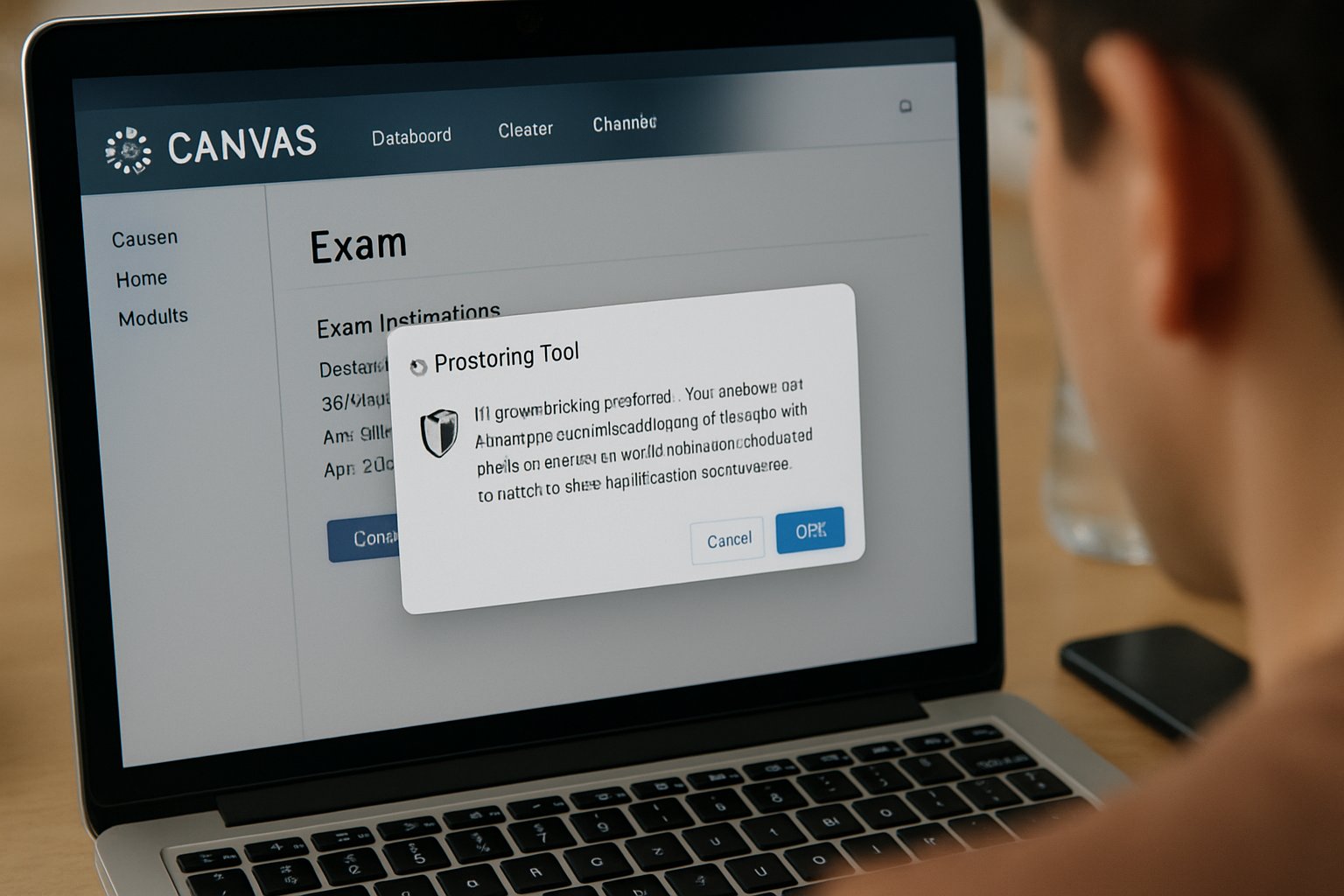
Canvas dashboard with remotely proctored exam interface visible
A detailed view of the Canvas platform during a remotely proctored exam session.

Remotely Proctored Exam Landscape

Recent Canvas updates enable smoother LTI connections and WCAG 2.2 AA alignment. Furthermore, EDUCAUSE advises cross-functional procurement that includes IT, legal, and disability services. Market reports suggest 30-60 percent of campuses already run at least one remotely proctored exam each term.

Key delivery modes include lockdown browsers, AI recording with post-exam review, and live human oversight. Additionally, the ai proctored exam model now supports “live pop-ins” when algorithms flag risk. Institutions must pick the right mix for stakes and budgets.

Notable figures to watch:

  1. Global revenue estimate: USD 2.1 billion in 2024.
  2. Projected CAGR: 16-25 percent through 2030.
  3. Student webcam concern: roughly 40-50 percent in multiple surveys.

These numbers signal opportunity and scrutiny. In summary, understanding trends helps teams justify investment and set realistic expectations. Next, tighten procurement guardrails.

Procurement And Privacy Steps

A solid contract prevents future crises. Therefore, require a Data Privacy Agreement that limits collection, sets deletion timelines, and bans marketing use. FERPA guidance also forbids forcing students to waive rights. Moreover, ask vendors for SOC 2 reports and a detailed subprocessors list.

Accessibility remains non-negotiable. Consequently, insist on a current VPAT plus remediation deadlines. Meanwhile, verify that vendor terms classify them as a school official or contractor, not a data owner.

During negotiation, security teams should demand 24-hour breach notifications and indemnity on privacy claims. Collect disability-office feedback before signing to avoid later revisions.

Effective procurement gives legal clarity and student trust. Subsequently, move to technical integration.

Technical Setup Essentials Guide

First, confirm the LTI version matches Canvas New Quizzes. Then, request a vendor sandbox for administrators. This space allows single sign-on, grade sync, and attempt-matching tests.

Run a pilot with diverse courses. Include large lecture, STEM, and certification prep sections. Track metrics such as setup failures, false flags, and ai proctored exam support tickets. Additionally, publish a permanent ungraded practice quiz so students can install software, test webcams, and resolve permissions early.

Configuration tips:

  • Low-stakes quizzes: lockdown browser only.
  • Mid-stakes: browser plus AI recording.
  • High-stakes: add live proctor or on-demand pop-in.

Document these recipes for instructors. In brief, rigorous testing minimizes exam-day chaos. The next task is preparing students.

Student Support Strategies Plan

Clear communication calms nerves. Place proctoring expectations in the syllabus, welcome module, and exam instructions. Moreover, remind learners one week and one day before each remotely proctored exam.

Offer alternative pathways such as on-site testing or oral assessments for those lacking hardware. Meanwhile, partner with disability services to streamline accommodation requests.

During exam windows, keep live chat and phone lines staffed by both vendor and campus IT. Publish a flowchart for interrupted sessions outlining reconnection steps and escalation rules. Careful support reduces complaints and builds confidence. Consequently, equity issues receive less resistance.

Accessibility And Bias Safeguards

Research shows facial-recognition accuracy varies across skin tones and lighting. Therefore, request vendor algorithmic-impact data, including false positives by demographic. Additionally, ask for evidence of screen-reader compatibility because an ai proctored exam should never block assistive tools.

Set a default time-extension buffer for students using screen readers. Furthermore, allow room-lighting checks during practice attempts. If the system struggles, offer alternative proctoring or local test centers.

Finally, train faculty to review AI flags manually before alleging misconduct. These controls foster fairness. With safeguards defined, focus on assessment design.

Designing Cheating Resistant Assessments

Better questions lower cheating incentives. Use open-book prompts, randomized banks, and application tasks instead of simple recall. Meanwhile, limit each question’s display time and prohibit backtracking when pedagogically appropriate.

Combine Canvas quiz analytics with plagiarism detection to cross-verify performance. Moreover, avoid relying on any single remotely proctored exam flag. Always gather multiple evidence points before disciplinary action.

Pedagogical strength complements technical barriers. In conclusion, layered strategies protect integrity without excessive surveillance. The article now summarizes key actions and introduces a proactive solution.

Conclusion

A robust Canvas rollout follows six pillars: landscape awareness, privacy-focused contracts, rigorous sandbox testing, proactive support, bias mitigation, and thoughtful assessment design. Each pillar ensures a secure yet respectful remotely proctored exam environment.

Why Proctor365? Our platform delivers AI-powered proctoring, advanced identity verification, and scalable monitoring trusted by global exam bodies. Consequently, institutions can launch every remotely proctored exam with confidence. Explore how Proctor365 elevates integrity while respecting learners at Proctor365.ai.

Frequently Asked Questions

  1. How does remote proctoring enhance exam security?
    Remote proctoring leverages AI-powered monitoring, fraud prevention, and identity verification to secure exam environments while maintaining compliance with privacy standards and ensuring academic integrity.
  2. What makes Proctor365’s solution unique for online examinations?
    Proctor365 stands out by combining AI proctoring, live monitoring, and advanced identity checks to deliver a scalable, fraud-preventive platform that meets privacy and accessibility standards for remote exams.
  3. How can institutions balance exam security and student privacy?
    Institutions can achieve balance by adopting privacy-focused contracts and robust technical measures. Proctor365 supports this with bias safeguards, seamless integration, and clear data policies to build trust and compliance.
  4. How does proctoring technology support various exam formats?
    Modern proctoring adapts to different exam stakes using tools like lockdown browsers, AI recording, and live proctoring. Proctor365’s flexible approach ensures secure setup, seamless integration, and dependable fraud prevention.

Choosing the right software for online exam delivery

Universities and training teams now run thousands of high-stakes tests remotely. Consequently, selecting the right software for online exam delivery feels urgent. Cheating tactics evolve weekly, yet budget and privacy pressures never relax. This guide breaks down current platforms, practical trade-offs, and proven decision steps.

Online Exam Market Landscape

Market forecasters place online proctoring revenues near USD 780 million for 2025, then several billion within a decade. Moreover, vendor consolidation continues while campuses, such as Ohio State, switch providers after strict RFPs. Meanwhile, privacy rulings like Ogletree v. Cleveland State push policy rewrites across North America.

Teacher reviewing software for online exam analytics dashboard
Exam managers review analytics from online exam software.

Key takeaway: demand keeps rising, but governance scrutiny rises even faster. Therefore, buyers must balance scale, legality, and trust.

Core Software Categories Explained

First, LMS-native quizzes cover low-stakes checks. Next, lockdown browsers lock the local operating system. Automated AI proctoring reviews recordings, whereas live proctors intervene in real time. Additionally, secure assessment engines power adaptive tests like GMAT. Autograders, plagiarism scanners, and coding sandboxes round out the toolbox. Each category intersects with remote proctor software add-ons for deeper integrity.

Key takeaway: no single tool solves every scenario. Thus, institutions layer multiple defenses.

Strengths And Limitations Compared

Lockdown browsers cost little but miss second devices. Automated monitoring scales globally yet suffers false positives. Live proctoring handles professional licensing yet strains budgets. Furthermore, coding assessment suites mirror real IDEs, improving authenticity, while similarity detectors deter AI text generators.

  • Scalable automation: AI flags thousands of sessions at low marginal cost.
  • Human oversight: live proctors de-escalate issues instantly.
  • Privacy risk tiers: webcam feeds and biometrics trigger strict compliance duties.

Key takeaway: evaluate risk, budget, and student comfort together. Consequently, hybrid models often win.

Implementation Best Practice Guide

Start with a formal risk assessment. Subsequently, match surveillance depth to assessment stakes. Provide clear consent notices detailing data retention, reviewers, and costs. Moreover, test accessibility claims through real accommodations before rollout.

Consider this five-point checklist:

  1. Stake mapping: instructors, IT, disability services, and legal.
  2. Policy alignment: FERPA, GDPR, and biometric state laws.
  3. Technology pilots: sandbox exams using chosen remote proctor software.
  4. Support workflows: 24/7 help lines and escalation plans.
  5. Continuous review: quarterly audits of flag accuracy and student feedback.

Key takeaway: strong governance prevents downstream crises. Therefore, never rush deployment.

Emerging Legal Considerations Now

Room scans face heightened scrutiny. Likewise, biometric storage attracts BIPA lawsuits. EDUCAUSE urges transparent disclosures plus opt-out pathways. Additionally, many academic senates demand authentic assessments that reduce surveillance. Vendors respond by adding AI-driven phone detection while minimizing data retention windows.

Key takeaway: legal trends favor minimal necessary data. Hence, adopt privacy-by-design principles.

Choosing Software For Online Exam

Decision teams should score options against cost, security, privacy, accessibility, and analytics. For example, combining a lockdown browser with remote proctor software covers basic cheats while avoiding live proctor fees. However, professional certifications may still require a human-in-the-loop.

When comparing, ask vendors to disclose:

  • False-positive rates under varied lighting and neurodiversity.
  • Third-party subprocessors and data deletion timelines.
  • Independent accessibility audit results.
  • Roadmaps for AI cheating countermeasures.

Key takeaway: informed questioning quickly separates marketing from provable capability. Consequently, procurement transparency protects both candidates and reputation.

Final Thoughts And Actions

The online assessment ecosystem now includes dozens of specialized tools. Institutions that align pedagogy, policy, and technology achieve the highest integrity. Ultimately, the right software for online exam environments boosts trust while respecting privacy.

Why Proctor365? Our AI-powered proctoring couples facial recognition with advanced behavioral analytics. Furthermore, robust identity verification stops impersonation before exams start. The platform scales from single classes to global certifications and remains trusted by leading exam bodies worldwide. Discover how Proctor365 elevates integrity, efficiency, and learner confidence today.

Frequently Asked Questions

  1. How does AI proctoring enhance online exam integrity?
    AI proctoring uses facial recognition and behavioral analytics to monitor exam sessions. This technology detects cheating patterns and helps maintain exam integrity while supporting a secure, scalable testing environment.
  2. What factors should institutions consider when selecting online exam software?
    Institutions should evaluate software based on cost, privacy, accessibility, and fraud prevention. Integrating lockdown browsers, AI monitoring, and live oversight creates a balanced defense against cheating.
  3. How does Proctor365 ensure robust exam security?
    Proctor365 employs AI proctoring paired with advanced identity verification and real-time fraud prevention. This comprehensive approach supports both secure remote assessments and compliance with privacy regulations.
  4. Why is a hybrid proctoring model recommended for online exams?
    A hybrid model combines automated AI proctoring with human oversight. This blend minimizes false positives, ensures accurate detection of suspicious behaviors, and maintains a reliable, accessible testing experience.

15-Point Security Checklist for Remote Proctor Software Success

Remote assessment now dominates higher education, certification, and corporate learning. Choosing reliable remote proctor software determines whether those exams stay credible or collapse. Institutions therefore need a proven roadmap that balances integrity, privacy, and student trust.

Market analysts predict double-digit growth for proctoring solutions through 2031. However, recent outages, lawsuits, and privacy rulings reveal significant operational and legal risks. Consequently, universities, training firms, and L&D leaders must adopt a structured security checklist before any rollout.

Student using remote proctor software for a secure online exam at home.
Remote proctor software supports secure, monitored online exams from any location.

This article delivers that checklist. You will see hard data, expert guidance, and clear next steps tailored for teams procuring software for online exam delivery.

Rising Industry Risk Landscape

California’s 2025 bar exam meltdown proved one outage can trigger litigation and retakes. Meanwhile, courts now limit invasive room scans, forcing policy changes at several universities. Furthermore, state privacy laws increase penalties for mishandled biometric data.

  • USD 2.1 B global market size in 2024 (Market Research Future).
  • 15.5 % projected CAGR through 2031 (The Insight Partners).
  • Tens of millions of proctored sessions each year.

These numbers show scale yet highlight exposure. Institutions must therefore treat vendor assessment as mission-critical.

Key takeaway: demand strong contracts and technical proof before deployment. Consequently, understanding core technology is the next step.

Key Remote Proctor Technologies

Lockdown browsers restrict local apps and prevent copy-paste. Automated AI monitoring flags gaze shifts, extra faces, or ambient noise. Live proctors add human judgment yet cost more. Additionally, identity proofing uses document checks and liveness detection. Finally, behavioral biometrics track keystroke patterns for continuous verification.

Takeaway one: each control tackles distinct threats. Takeaway two: layered use limits loopholes. Therefore, selecting suitable tools becomes essential.

Selecting Remote Proctor Software

Decision teams should start with risk tiering. High-stakes exams may require full identity proofing, while low-stakes quizzes can rely on honor codes. Next, request HECVAT, SOC 2, and penetration reports from every vendor. Moreover, insist on uptime and concurrency SLAs.

Always test the remote proctor software with a pilot group before large launches. During pilots, capture accessibility issues and false-positive rates. For balanced evaluations, compare at least two competing tools and benchmark software for online exam costs against redesign alternatives.

Summary: match controls to stakes and validate claims with evidence. Consequently, apply the following 15-point checklist.

Comprehensive 15-Point Checklist

The checklist covers risk tiering, MFA, algorithmic audits, capacity drills, and transparency reports. Each item carries a cited rationale and source. Institutions should embed these points into procurement documents and faculty policies.

  1. Tier exams by risk.
  2. Demand vendor due diligence packages.
  3. Adopt NIST-aligned identity proofing.
  4. Enforce MFA and SSO.
  5. Deploy secure exam environments.
  6. Layer AI with human review.
  7. Redesign questions to reduce lookup value.
  8. Run mandatory practice sessions.
  9. Publish clear privacy notices.
  10. Guarantee accessibility accommodations.
  11. Encrypt data and log access.
  12. Audit algorithms for fairness.
  13. Test capacity and incident playbooks.
  14. Train proctors and reviewers.
  15. Release transparency reports and appeals.

First, start with risk classification. Second, lock contractual protections early. Therefore, operational flow becomes smoother.

Operational Best Practice Flow

Begin every term with an orientation video that explains monitoring rules. Subsequently, schedule system-check practice exams two weeks before the first graded test. During live testing, provide a hotline staffed by trained personnel. Moreover, document incident response steps, including screenshot capture and evidence retention.

Two lessons stand out: proactive communication reduces anxiety, and rehearsed support limits downtime. Consequently, privacy management deserves equal focus.

Managing Student Privacy Concerns

Publish concise notices detailing data collected, retention periods, and opt-out routes. Offer alternative exam centers for students unwilling to use webcams. Additionally, ensure VPAT compliance so assistive technologies function properly. Communicating these safeguards builds trust and lowers resistance to software for online exam deployments.

Summary: transparency plus alternatives maintains legitimacy. Therefore, institutions must watch emerging gaps and trends.

Future Trends And Gaps

Algorithmic bias research pushes vendors toward independent audits. At the same time, behavioral biometrics mature yet still need multilingual accuracy validation. Furthermore, cost-benefit studies compare proctoring to assessment redesign, challenging blanket surveillance.

Key point: continuous evaluation remains vital. Additional point: vendor cooperation on raw logs will decide future legal outcomes. Consequently, final decisions should align with strategic goals.

Word Count: 805

Conclusion

A secure online assessment strategy demands layered controls, clear policies, and diligent oversight. Our 15-point guide helps you vet vendors, protect privacy, and operate at scale.

Why Proctor365? The platform blends AI-powered proctoring, advanced identity verification, and scalable monitoring into one trusted solution. Global exam bodies already depend on this remote proctor software for flawless delivery. Visit Proctor365 to elevate exam integrity today.

Frequently Asked Questions

  1. How does remote proctoring enhance exam integrity?
    Remote proctoring uses advanced AI monitoring, identity verification, and behavioral biometrics to detect suspicious activities. This layered approach prevents fraud and upholds exam credibility while ensuring student privacy.
  2. What features should one look for in remote proctor software?
    Effective solutions include AI-powered proctoring, secure lockdown browsers, identity verification, and fraud prevention tools. These features work together to provide continuous exam monitoring and protect against unauthorized actions.
  3. How does Proctor365 support secure online exams?
    Proctor365 integrates AI proctoring, advanced identity proofing, and fraud prevention to secure online exams. Its streamlined system offers real-time monitoring and robust privacy safeguards, ensuring reliable and compliant exam delivery.
  4. Why is vendor assessment crucial in selecting remote proctor software?
    Thorough vendor assessment ensures the platform meets strict security and compliance standards. Evaluating certifications, audit reports, and uptime guarantees that the chosen solution, like Proctor365, provides robust fraud prevention and identity verification.

How remote proctor software secures every online exam

Cheating threats rise whenever high-stakes assessments move online. Consequently, many institutions now rely on remote proctor software to protect academic integrity. This technology blends identity checks, environment controls, and AI surveillance into one seamless shield. Meanwhile, decision makers still compare it with other software for online exam delivery. Understanding how the tools work—and where pitfalls hide—helps leaders choose wisely.

Why Exam Security Matters

Degrees, licenses, and certifications drive careers. Therefore, exam fraud can erode brand value overnight. Surveys by EDUCAUSE show 63% of colleges reference online proctoring in policy documents. Moreover, market analysts forecast a double-digit CAGR for proctoring solutions through 2030. These numbers prove the stakes are real.

Secure online test interface protected by remote proctor software.
Remote proctor software locks browsers and secures exam screens.

In short, strong defenses protect credibility and safeguard learner trust. The next section details how those defenses function. Consequently, readers gain a solid technical baseline.

Role Of Remote Proctor Software

At its core, remote proctor software enforces three pillars: verify, monitor, and report. First, biometric or ID scans confirm the test-taker’s identity. Second, secure browsers block risky apps, tabs, and virtual machines. Third, AI models watch webcams, microphones, and screens for anomalies. Human reviewers then validate flagged events.

Many vendors integrate tightly with LMS platforms, reducing setup friction. Additionally, the same stack powers advanced software for online exam delivery outside higher education. Ultimately, the combined approach scales well for global cohorts. Thus, institutions can test thousands without opening physical centers.

These capabilities deter casual cheating, yet balanced governance remains vital. The following component breakdown explains why.

Core Security Components Explained

Every major solution bundles similar technical modules. However, performance and privacy controls differ.

  • Authentication: Face match, government ID scan, and optional MFA.
  • Lockdown browser: Prevents copy-paste, screen grabs, and process switching.
  • AI flagging: Detects multiple faces, phone use, or gaze shifts.
  • Evidence logging: Encrypts and stores video, screen, and telemetry.
  • Liveness detection: Confirms the face is real, not a photo.

Furthermore, multi-modal logging creates an auditable trail for appeals. Institutions should still require human review to avoid false accusations. That principle leads directly into a look at today’s marketplace.

These components work together, yet buyers must evaluate each vendor’s implementations. Consequently, due diligence prevents nasty surprises.

Remote Proctoring Market Landscape

Respondus, Proctorio, Honorlock, and Examity headline a crowded field. Meanwhile, ProctorU’s parent, Meazure Learning, focuses on certification sectors. ISO/IEC 42001 certifications, recently earned by Proctorio, signal a wider shift toward audited AI governance.

However, public universities sometimes swap providers after student pushback on privacy. California’s SB 1172 even limits data retention statewide. Therefore, market churn will likely continue until transparency improves.

Adoption still grows because distance programs boom. Additionally, corporate L&D teams now demand scalable software for online exam monitoring for compliance training. In short, the business outlook remains strong, yet complex.

Understanding these forces prepares leaders for the risk discussion that follows.

Key Risks And Criticisms

Critics highlight four recurring issues. First, privacy fears: webcams survey bedrooms, and data breaches remain possible. Second, algorithmic bias: NIST tests show face recognition errors vary across demographics. Third, accessibility gaps: unstable bandwidth or disabilities can trigger unfair flags. Fourth, security trade-offs: lockdown browsers sometimes require deep system permissions.

Nevertheless, well-designed policies minimize harm. Institutions should provide alternates, shorten data retention, and publish clear appeal paths. Consequently, trust improves, and legal exposure drops.

With risks mapped, the next section offers concrete mitigation steps.

Implementing Proctoring Best Practices

Leaders can adopt six proven safeguards:

  1. Run a privacy impact assessment before purchase.
  2. Collect only necessary data and delete quickly.
  3. Keep humans in the loop for all sanctions.
  4. Pilot with diverse students, devices, and bandwidth.
  5. Offer alternative assessments when justified.
  6. Communicate permissions, retention, and appeal rights clearly.

Moreover, vendors should expose retention settings and encryption details inside dashboards. When these measures align, software for online exam delivery becomes both robust and equitable.

The section ahead reviews future governance trends that will shape these practices.

Future Outlook And Governance

Regulators now draft guidelines that demand transparency and bias audits. Meanwhile, advocacy groups push for open accuracy benchmarks. Consequently, vendors race to publish third-party evaluations.

Expect more standards like ISO/IEC 42001 and stricter state laws beyond California. Additionally, emerging architectures will process sensitive biometrics on-device, reducing cloud exposure. Institutions that monitor these shifts will stay compliant while maintaining exam integrity.

Therefore, strategic planning today ensures smoother transitions tomorrow.

Remote proctoring continues to evolve rapidly. Yet the core mission stays constant: protect assessment credibility at scale. Selecting the right remote proctor software, applying focused policies, and insisting on transparency deliver the best outcomes.

Why Proctor365? Proctor365 pairs AI-powered proctoring with advanced identity verification, delivering scalable exam monitoring trusted by global exam bodies. Consequently, organizations gain airtight integrity without sacrificing user experience. Explore how Proctor365 remote proctor software elevates your next assessment.

Frequently Asked Questions

  1. What is remote proctoring and why is it important?
    Remote proctoring uses AI surveillance, identity verification, and secure browsers to protect exam integrity. It prevents fraud and maintains credibility in high-stakes assessments.
  2. How does AI-powered proctoring help prevent exam fraud?
    AI-powered proctoring detects unusual behaviors like multiple faces and unauthorized apps. Proctor365 utilizes AI alongside manual reviews to promptly flag and reduce potential fraud incidents.
  3. What are the key security components in online exam proctoring?
    Effective online exam security incorporates biometric identity checks, lockdown browsers, AI flagging, and evidence logging. These combined components ensure robust fraud prevention and reliable exam integrity.
  4. How does Proctor365 balance robust security with user privacy?
    Proctor365 offers advanced AI proctoring and identity verification while enforcing strict data retention policies and encryption. This balance enhances exam security and protects user privacy.