Online exam proctoring: K-12 best practices
Districts face rising pressure to deliver secure digital exams without harming student trust. Meanwhile, lawsuits and new state rules keep scrutiny high. Online exam proctoring offers one solution, yet success depends on thoughtful design, clear policy, and transparent communication.
AP exams will shift mostly online by 2025. Consequently, K-12 leaders must align their testing strategies soon. Market analysts value the global proctoring sector near USD 1.1 billion and still growing. However, privacy advocates warn about excessive surveillance, bias, and technical failures. The 2025 California bar outage showed how outages can upend high-stakes testing and spark litigation. Therefore, districts must balance integrity, equity, and reliability before any rollout. This article provides a concise roadmap rooted in recent research, policy moves, and district case studies. Readers will leave with an actionable checklist to deploy secure, proctored online test experiences that respect community values.

Start With Clear Policy
Every successful rollout begins with a board-approved policy that defines acceptable uses and limits. Additionally, list approved tools, data retention rules, and accommodation steps.
Include community voices early. Consequently, families feel respected and less anxious.
EDUCAUSE recommends publishing a summary on the district website. That transparency reduces misinformation. State the circumstances that require online exam proctoring to avoid mission creep.
Vendor Data Controls Checklist
- Retention capped at 30 days unless an online exam proctoring audit is ongoing.
- No biometric reuse beyond the proctored online test session.
- SOC 2 or ISO 27001 audit reports shared annually.
- Explicit breach notice within 72 hours.
These controls limit exposure and satisfy many state privacy laws. They also support vendor accountability.
Now, let us explore privacy safeguards.
Balancing Student Privacy Concerns
Privacy remains the loudest objection to online exam proctoring in schools. However, districts can mitigate risk with transparent notices and strong consent workflows.
Provide plain-language explainers, video walkthroughs, and an opt-out path that still enables a proctored online test on campus. Moreover, give students a chance to run system checks before day one.
Civil-liberty groups like EFF argue continuous webcam surveillance chills learning. Consequently, many districts now favor recorded review modes with human confirmation rather than aggressive live flagging.
Building Human Review Safeguards
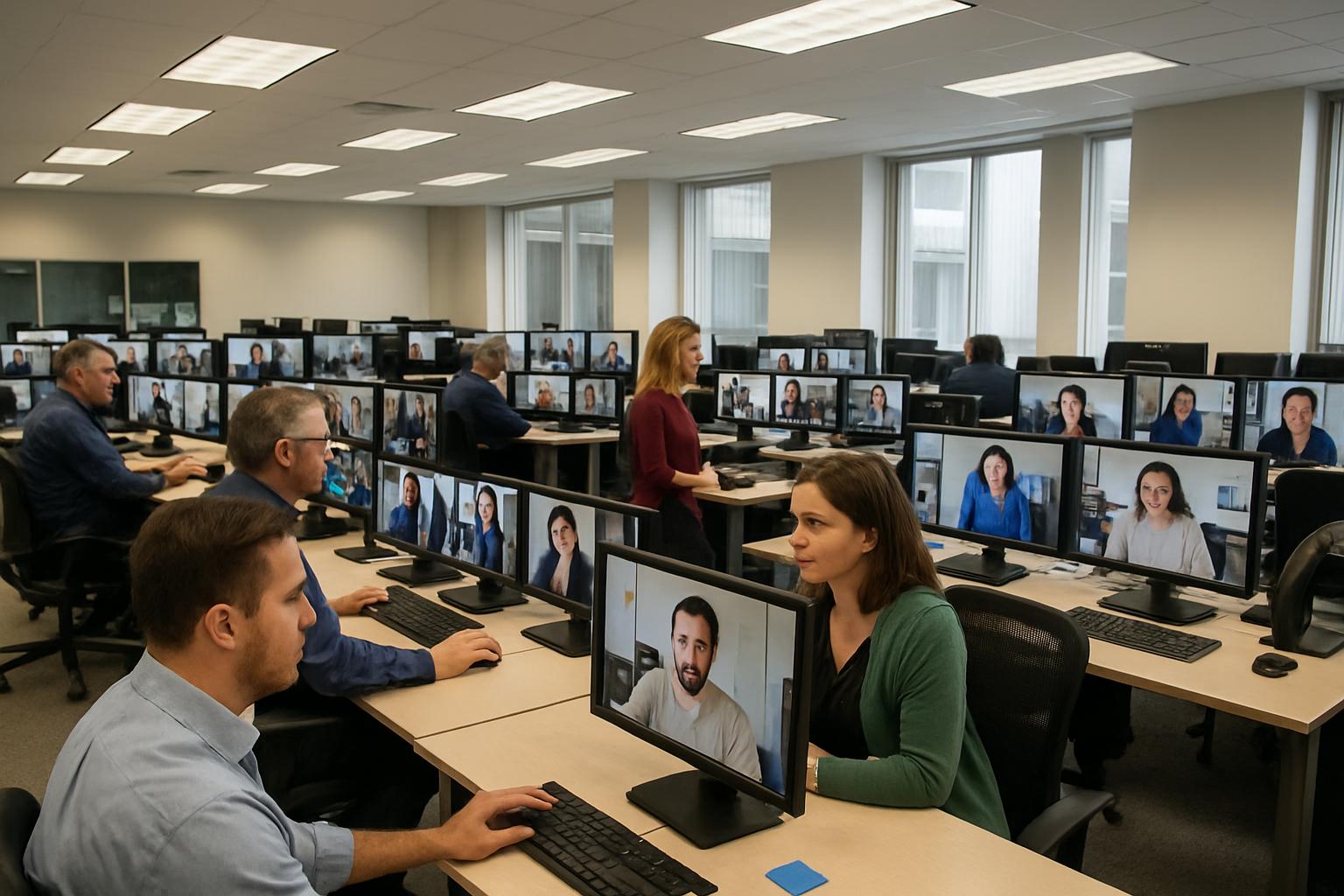
Do not let algorithms be the judge. Instead, route all AI flags to trained staff who evaluate context within 24 hours. Therefore, false positives drop, and appeals feel fair. This safeguard protects student rights and maintains exam confidence. Human oversight keeps online exam proctoring decisions accurate and defensible.
Strong privacy practices defuse community pushback and lower legal exposure. The next priority is equitable access.
Ensuring Equitable Student Access
Bandwidth gaps, device shortages, and shared living spaces can derail online exam proctoring efforts. Accordingly, districts should map student resources before imposing remote tests.
Create a survey that captures internet speed, hardware, and quiet space availability. Subsequently, allocate loaner laptops and hotspots where needed.
Offer on-campus labs for any learner requesting a proctored online test with stable conditions. Moreover, schedule make-up windows for students facing outages.
Proactive access planning transforms equity from slogan to reality. Next comes rigorous technical preparation.
Robust Technical Pilot Planning
Pilots reveal glitches before hundreds of students face a high-stakes online exam proctoring window. Start small, perhaps one grade and subject.
During the pilot, track false-flag rates, login times, and system crashes. Additionally, invite accessibility testers to verify screen reader support.
- Phase 0: Policy adoption and stakeholder alignment (60 days).
- Phase 1: Limited pilot with 50 students and one proctored online test.
- Phase 2: Multi-school expansion with SLA rehearsal.
- Phase 3: Outcome review, scale or pivot decision.
Training Communication Action Plan
Teachers need clear setup guides and coaching on report interpretation. Moreover, families deserve concise FAQs and helpline contacts.
Schedule live demonstrations two weeks before each big proctored online test. Consequently, technical support tickets fall sharply.
Effective pilots build confidence and expose hidden failures early. Let us conclude with key insights.
Secure digital testing in K-12 demands more than software. It requires policy, privacy safeguards, equitable access, and disciplined pilots. Follow the checklist above, test relentlessly, and keep families informed. Consequently, student confidence grows and legal risk drops. Nevertheless, continuous review is vital because threats evolve and technologies mature.
Why Proctor365? Proctor365 delivers AI-powered online exam proctoring that combines advanced identity verification, scalable monitoring, and real-time analytics. Trusted by global exam bodies, our platform helps institutions launch every proctored online test with confidence. Therefore, choose Proctor365 to strengthen integrity while respecting privacy at Proctor365.ai.
Frequently Asked Questions
- How does a board-approved exam proctoring policy contribute to secure digital tests?
A board-approved policy outlines guidelines, approved tools, and data retention rules that foster exam integrity and transparency, reducing fraud risk and aligning with Proctor365’s AI proctoring and identity verification features. - How are student privacy safeguards maintained during online proctoring?
Proctor365 employs clear, plain-language notices, robust consent workflows, and human review for AI flags, ensuring strong privacy safeguards that protect student data while enhancing the integrity of proctored exams. - How does Proctor365 ensure equitable access and smooth technical integration for online exams?
Proctor365’s rigorous technical pilots and real-time support identify issues early, while proactive planning for devices and bandwidth ensures equitable access and a seamless, secure online exam experience. - What role does human oversight play in maintaining exam integrity?
Human oversight reviews AI-generated flags within 24 hours, reducing false positives. This balanced approach enhances exam integrity by contextual evaluation and supports Proctor365’s commitment to fair, secure online proctoring.