Online test volumes exploded after 2020. Institutions now run millions of timed assessments each semester. Consequently, attention has turned to browser lockdown reliability for large exams.
Vendors promise airtight protection. However, independent researchers expose frequent bypasses. Decision-makers must weigh facts before trusting any lockdown browser for large-scale exams.
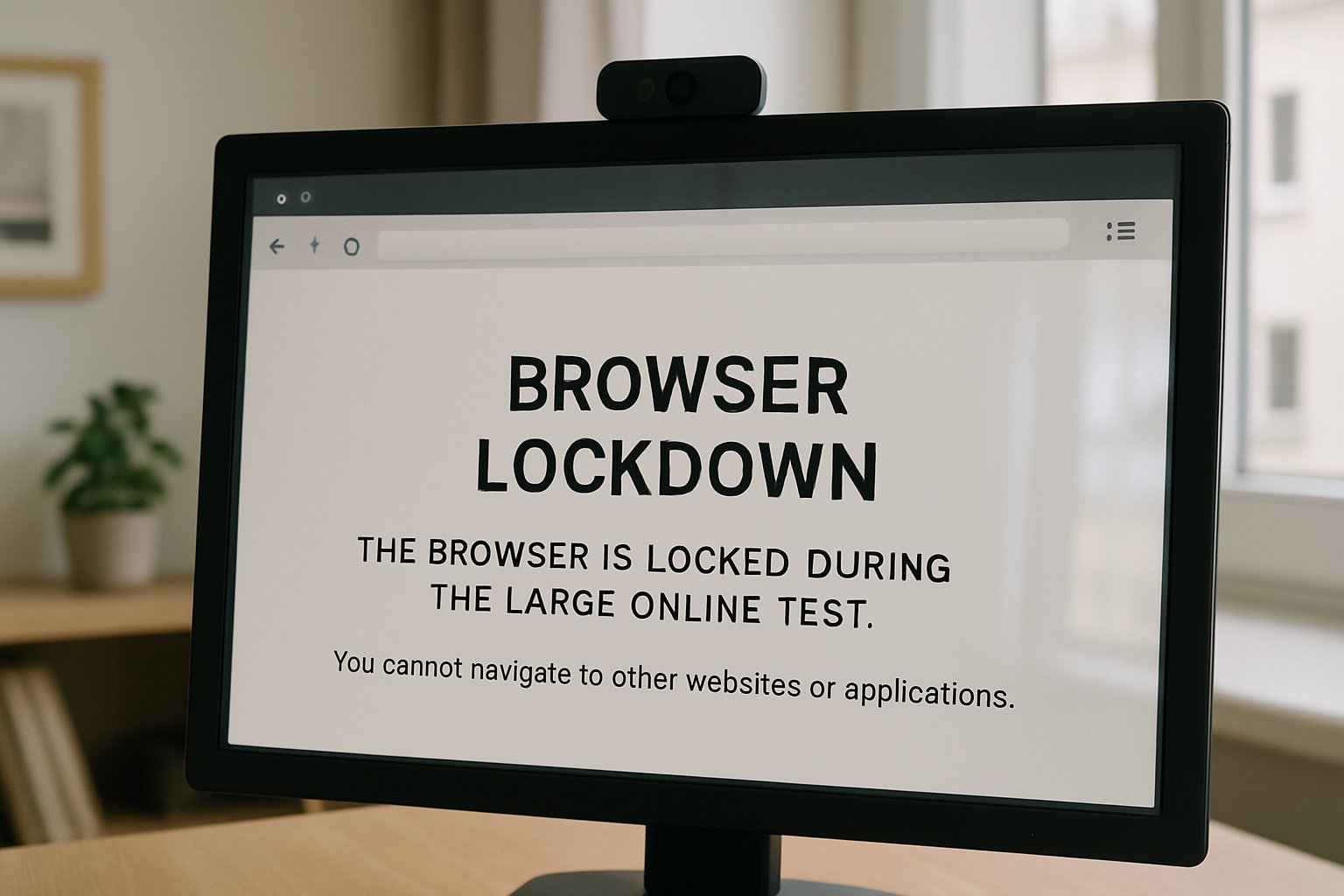
This article unpacks the technology, benefits, risks, and best practices. Readers gain clear guidance on building scalable exam security solutions without compromising fairness.
Scope Of The Challenge
Remote exams often involve thousands of candidates across continents. Network latency, device diversity, and accessibility needs complicate control. Moreover, skilled students share circumvention guides on social forums.
Universities need security that scales yet respects privacy rules. They also face public scrutiny over algorithmic bias. Therefore, leaders seek balanced, evidence-based strategies.
Key takeaway: scale magnifies every weakness. Robust planning must start early. Next, we explore how lockdown technology works.
Core Lockdown Browser Mechanics
A lockdown browser launches in kiosk mode. It blocks task switching, copy-paste, screen grabs, and printer access. Some vendors pair it with AI monitoring for extra oversight.
Popular platforms include Respondus, ExamSoft, and the open-source Safe Exam Browser. Each counts on in-device cheating prevention to stop low-effort misconduct.
Additionally, browser lockdown software integrates with LMS systems. That seamless workflow reduces instructor friction.
Summary: the technology guards the exam device. However, it cannot watch the entire environment. The next section reviews its large-scale advantages.
Benefits At Massive Scale
Despite limitations, lockdown browser for large-scale exams delivers measurable gains.
- Blocks quick web searches and local file access.
- Automates flagging, cutting human proctor hours.
- Generates audit trails for post-exam reviews.
- Fits into existing LMS and SSO stacks.
Market studies predict multi-billion growth for scalable exam security solutions. Consequently, universities adopt these tools to prevent cheating in online exams while containing costs.
Takeaway: low-effort cheating drops sharply when the device is sealed. Yet reliability hinges on deeper factors, explored next.
Browser Lockdown Reliability For Large Exams
Independent audits show mixed results. The USENIX “Watching the Watchers” paper demonstrated multiple bypasses. Testers used virtual machines and external devices, defeating in-device cheating prevention within minutes.
Furthermore, a 2023 Journal of Academic Ethics review found limited high-quality evidence. Only a few studies compared proctored and unproctored cohorts at scale.
Still, self-reported web searching fell in locked environments. Therefore, browser lockdown reliability for large exams reduces opportunistic misconduct but fails against determined attackers.
Key point: reliability exists on a spectrum. Stakeholders must layer defenses. We now examine weaknesses in detail.
Known Weakness And Risks
Technical gaps remain persistent.
- Second devices nullify browser lockdown software controls.
- Virtual machines spoof clean desktops.
- OS updates sometimes break security hooks.
- AI classifiers trigger biased false flags.
Additionally, privacy advocates challenge data collection. EPIC’s complaint highlights biometric overreach. Litigation creates reputational risk.
Consequently, institutions deploying a lockdown browser for large-scale exams must craft transparent policies. They must also maintain rapid patch cycles.
Summary: weaknesses are real but manageable with layered strategy. Next, we review fresh empirical evidence.
Evidence From Recent Studies
Respondus claims adoption in over 2,000 institutions. ExamSoft dominates professional testing niches. However, vendor reports lack independent validation.
Meanwhile, researchers call for randomized trials. Few measure how scalable exam security solutions affect grade distributions or long-term learning.
Reuters documented facial recognition failures that blocked access. Such incidents erode trust and undermine attempts to prevent cheating in online exams.
Takeaway: evidence is evolving. Decision makers should demand transparent metrics and third-party audits. Practical guidance follows.
Best Practice Defense Layers
Experts recommend a multilayer model.
First, redesign assessments. Open-book, higher-order questions reduce answer-key leaks. Next, deploy browser lockdown software to curb device switching.
Additionally, live or on-demand human review addresses nuanced behaviors. Clear appeal processes limit harm from false positives.
Finally, publish retention policies and perform accessibility testing. These steps reinforce browser lockdown reliability for large exams and support inclusivity.
Section summary: combine technology, pedagogy, and policy. Now, the final verdict.
Final Verdict And Solution
Browser lockdown reliability for large exams offers real, though limited, protection. It stops casual cheats and supplies evidence. However, it cannot alone guarantee integrity. Institutions need lockdown browser for large-scale exams, human oversight, and smart design to prevent cheating in online exams while meeting privacy expectations.
Why Proctor365? Proctor365 delivers AI-powered proctoring, advanced identity verification, and truly scalable exam security solutions. Its multi-layered platform combines in-device cheating prevention with live monitoring trusted by global exam bodies. Therefore, browser lockdown reliability for large exams improves dramatically when paired with Proctor365’s analytics engine. Visit Proctor365 to safeguard your next assessment.
Frequently Asked Questions
- What is browser lockdown reliability for large exams?
Browser lockdown reliability limits casual cheating by sealing the exam device. However, determined exam-takers may bypass these controls, which is why integrating AI proctoring from providers like Proctor365 is essential. - What are common weaknesses of lockdown browsers in online exams?
Lockdown browsers can be bypassed using second devices, virtual machines, or OS updates. Proctor365 addresses these vulnerabilities with advanced fraud prevention, AI monitoring, and robust identity verification. - How does Proctor365 enhance online exam security?
Proctor365 boosts exam security with AI-powered proctoring, live monitoring, and advanced identity verification, ensuring scalable and reliable exam integrity beyond basic browser lockdown measures. - Why is a layered approach important in preventing online exam cheating?
A layered strategy combining secure browser lockdown, AI proctoring, and live human oversight minimizes cheating risks, ensuring robust exam integrity that aligns with Proctor365’s comprehensive exam security solutions.