A silent webcam light can spark bigger nerves than the toughest calculus question. For many learners, online exam proctoring feels like surveillance, not support. Universities, ed-tech firms, and corporate trainers now search for ways to calm those nerves. Recent studies show up to 69% of students fear wrongful flagging during a proctored online test. However, evidence also reveals clear, practical fixes that cut anxiety without weakening integrity. This article unpacks the drivers, the data, and the most effective solutions. Consequently, your institution can deploy fair oversight while safeguarding student wellbeing. Moreover, you will see how policy tweaks, smarter assessments, and robust support work together. The following guide targets universities, certification bodies, training providers, and corporate L&D teams. Meanwhile, market forecasts predict continued growth for proctoring technologies through the decade. Therefore, tackling anxiety now is a strategic imperative. Early adopters already report higher satisfaction scores after implementing the tactics outlined below. Your learners deserve the same relief.
Why Exam Anxiety Spikes
Multiple stressors converge during a proctored online test. Students worry about sudden connection drops, ambient noise, or eye movements triggering algorithmic flags. A medical survey found 62% feared looking away, while 54% feared background sounds. Meanwhile, privacy concerns intensify when room scans expose personal spaces.
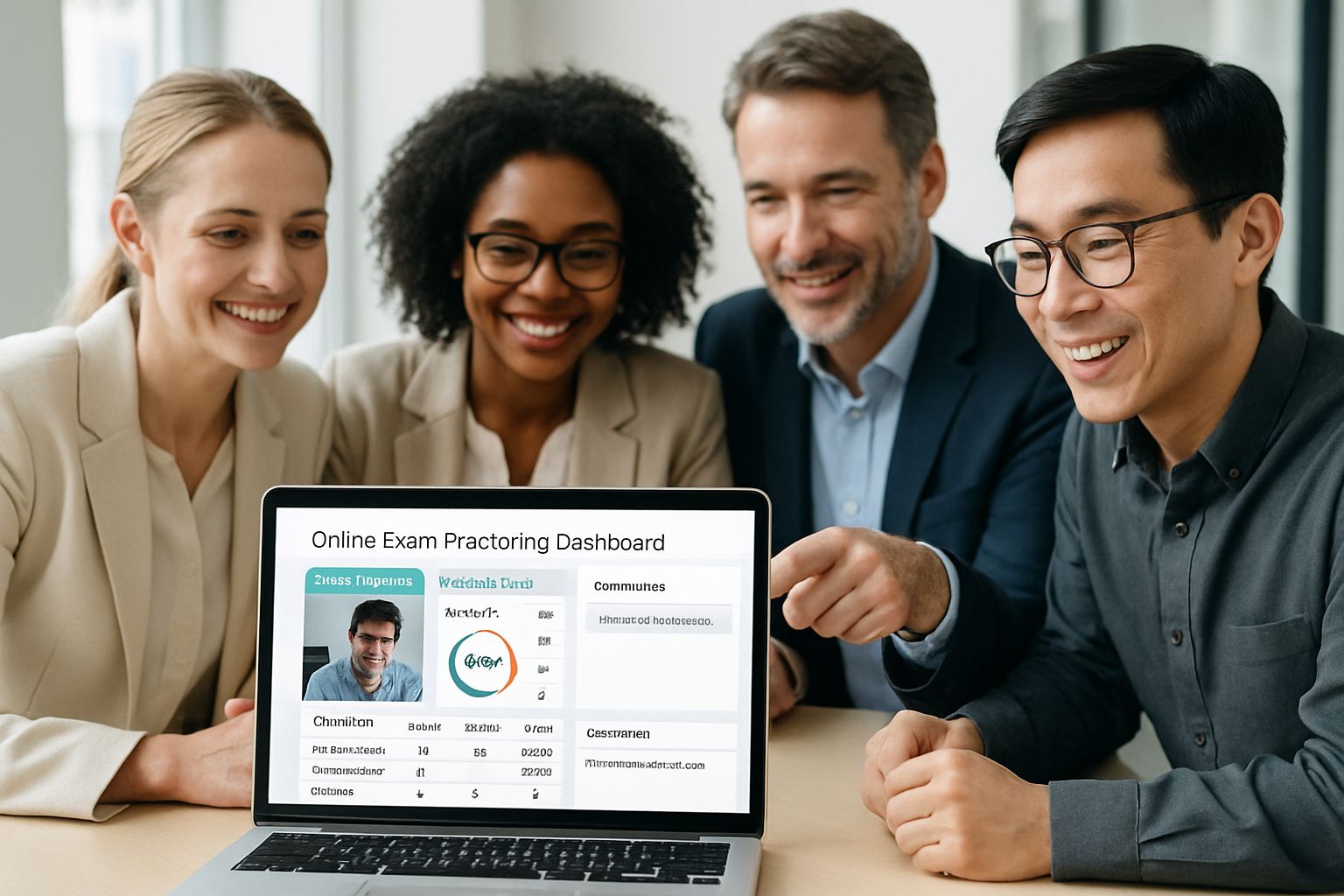
Vulnerable groups suffer more. Researchers document higher anxiety among learners with disabilities or prior mental-health conditions. Consequently, equity gaps widen if institutions ignore these effects. Addressing root causes, therefore, must sit atop any strategy.
High stakes, opaque algorithms, and invasive scans collectively drive exam stress. Next, we explore concrete relief steps.
Online Exam Proctoring Relief
Evidence highlights ten interventions that meaningfully lower anxiety in online exam proctoring. Firstly, mandatory practice runs familiarize students with workflows and reduce technical surprises. Secondly, human review of AI flags reassures examinees that false positives get fair scrutiny. Moreover, limiting room scans and collecting minimal data protects privacy without harming security.
Institutions should offer opt-outs plus on-campus alternatives, especially for disabled or low-bandwidth learners. Additionally, transparent communication about what behaviors trigger alerts removes guesswork. When students know appeal rights, fear drops further. Subsequently, survey respondents report lower heart rates when these measures are in place.
Together, these relief steps turn surveillance into supportive assurance. Policy clarity forms the bridge to our next theme.
Policy And Data Transparency
Clear online exam proctoring policies build trust faster than any technical feature. Therefore, publish data-retention periods, access controls, and flag adjudication timelines. Institutions should also include an explicit timeline for data deletion. Ohio State, for example, now shares vendor contracts and explains review processes openly. Consequently, student complaints declined after the update.
Legal pressures reinforce openness. EPIC’s consumer-protection complaints and recent court rulings challenge obscure room scans. By proactively disclosing practices, universities lower litigation risk and calm anxious minds.
Transparent policy transforms suspicion into informed consent. Next, we tackle assessment design.
Smarter Assessment Design Moves
Reducing surveillance works best when assessments themselves become less susceptible to cheating. Open-book exams, randomized question banks, and two-stage tests lower stakes yet retain rigor. Moreover, authentic projects assess applied knowledge beyond a single proctored online test.
Teaching centers report anxiety drops when quizzes occur frequently with lower points each. In contrast, single high-stakes events trigger peak stress. Consequently, misconduct attempts fall because answers require synthesis, not recall.
Design improvements cut cheating incentives and shrink monitoring load. However, support infrastructure must also evolve. When online exam proctoring pressure falls, learning gains surface.
Support And Tech Backup
Reliable online exam proctoring support prevents minor glitches from becoming panic attacks. Furthermore, documented fallback plans for outages ensure fairness during a proctored online test. Provide loaner devices or exam rescheduling when unavoidable failures occur.
Mental-health resources complement technical support. Counseling hotlines and breathing-exercise links appear in exam instructions at leading institutions. Consequently, students feel supported before, during, and after each session.
Comprehensive support reassures students that problems have solutions. Finally, leaders need an actionable checklist.
Implementation Checklist Summary
Use the following quick list to guide campus rollouts.
- Run privacy impact assessment before adoption.
- Publish clear retention and appeal policies.
- Mandate practice exams for every cohort.
- Ensure human review of algorithmic flags.
- Offer opt-outs and accessible alternatives.
- Provide live support and backup devices.
- Audit flagged cases and share statistics.
Regular reviews ensure the system evolves with changing learner needs.
Following this checklist embeds integrity and empathy together inside online exam proctoring. Consequently, institutions meet accreditation demands and student expectations alike.
Conclusion
Student anxiety is real, yet it is solvable with balanced policies, humane design, and strong support. Practice exams, transparent rules, opt-outs, and reliable help lines all curb stress during a proctored online test. Meanwhile, data minimization and human review preserve privacy and fairness.
Why Proctor365? Our AI-powered platform delivers online exam proctoring with advanced identity verification and scalable monitoring trusted worldwide. Moreover, flexible data controls and 24/7 human reviewers keep students calm and institutions compliant. Schedule a demo and strengthen exam integrity today at Proctor365.ai. Consequently, your organization gains peace of mind while learners gain confidence. Join the global shift toward fair, secure, future-ready assessments.
Frequently Asked Questions
- What are common causes of exam anxiety in online proctoring?
Exam anxiety is often triggered by technical glitches, intrusive room scans, algorithmic flagging, and opaque policies. These factors create uncertainty and stress among students while potentially jeopardizing exam integrity. - How can practice runs and clear policies reduce test anxiety?
Mandatory practice runs and transparent policies familiarize students with exam procedures and reduce unexpected technical or privacy concerns. These measures help build trust and support a fair exam environment. - How does Proctor365 balance exam integrity with student privacy?
Proctor365 employs AI proctoring with human review, robust identity verification, and minimal data collection to ensure exam integrity while safeguarding student privacy. This balanced approach lowers anxiety while complying with regulatory standards. - Why is technical support and backup essential in online exams?
Reliable technical support, backup devices, and clear contingency plans ensure that any glitches during exams are quickly resolved. This proactive approach reduces student stress and prevents disruptions, promoting a secure testing environment.