Professional certifications now travel at internet speed. Universities and exam bodies seek reliable scale without compromising integrity. Consequently, proctoring software for online exam delivery has become a strategic necessity. Moreover, AI-enabled monitoring reduces venue costs and widens candidate access worldwide.
However, global expansion introduces fraud, privacy, and fairness challenges. This article maps fresh market data, expert insights, and practical safeguards. Readers will leave with a clear roadmap for responsible, high-stakes remote testing. Meanwhile, examples from Pearson, PSI, and Meazure show both promise and pitfalls.
Proctoring Software for Online Exam
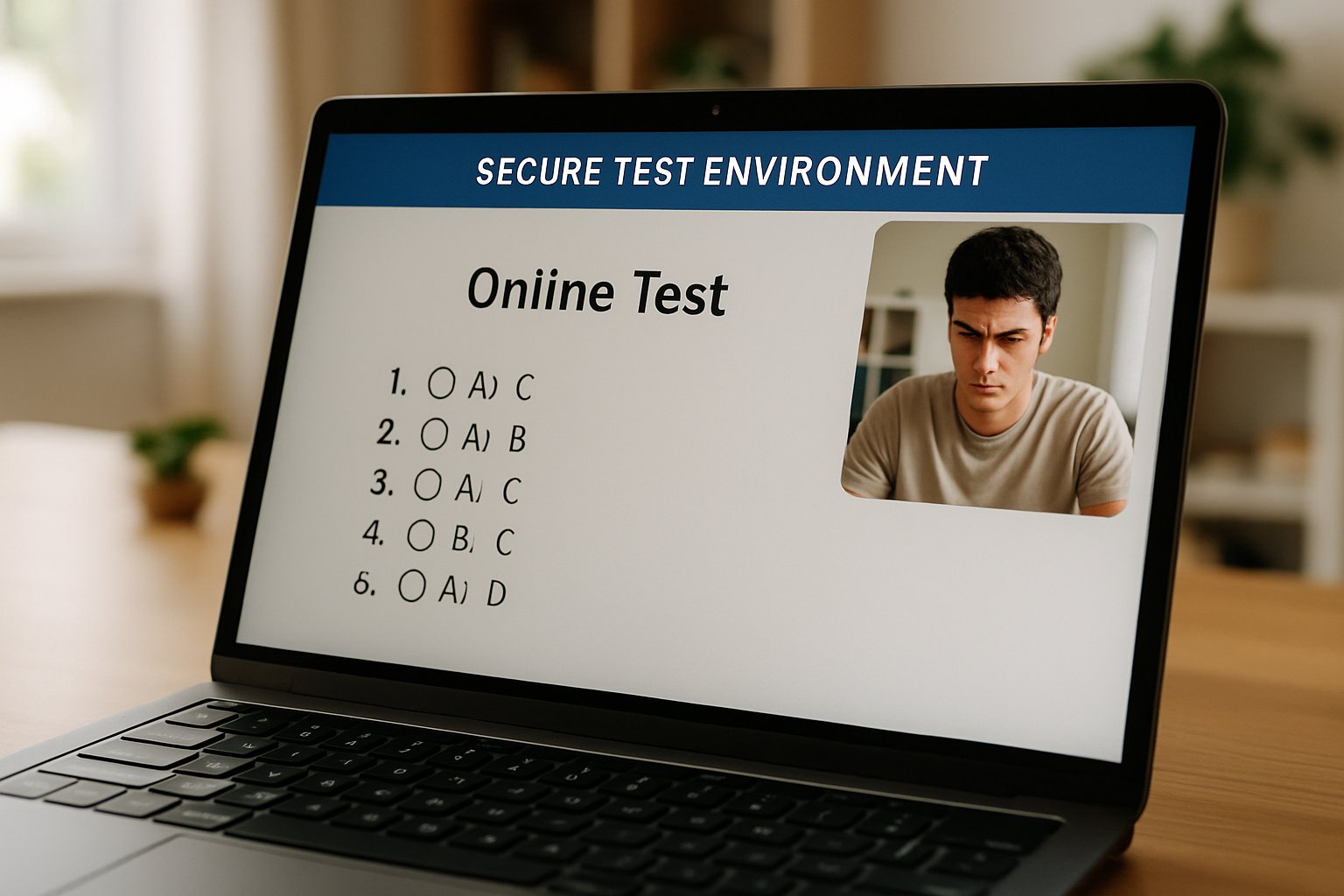
Proctoring software for online exam platforms merges identity checks, secure browsers, and AI video analysis. Furthermore, automated flagging escalates suspicious behavior to human reviewers within seconds. Hybrid oversight keeps costs low while preserving human judgment for contentious incidents.
Market analysts estimate the remote proctoring segment will surpass two billion dollars before 2030. Consequently, certification owners now budget for cloud bandwidth, rather than for distant testing halls.
In short, modern platforms blend scale, speed, and layered security. Next, we examine why demand is exploding.
Global Certification Boom
COVID-era disruption proved remote delivery could maintain psychometric rigor when executed carefully. Since then, Pearson reports delivering 21 million annual exams across centers and online. Meanwhile, PSI claims 22 million yearly sittings after its ETS partnership. Such volumes are impossible without 24/7 cloud infrastructure and distributed candidate devices.
Moreover, ed-tech platforms embed exam APIs directly into course modules, trimming scheduling friction. Corporate L&D teams appreciate instant credential issuance after staff pass on laptops at home. Many institutions adopted proctoring software for online exam sessions during the pandemic and kept it after.
Therefore, scale has shifted from rooms to resilient networks. Yet growing scale invites sophisticated cheating rings.
Threats Fuel Innovation
Fraud services now advertise deepfake masks and remote desktop proxies for hire. Consequently, vendors counter with multi-device detection and keystroke biometrics. Rosalyn’s StableSight claims to spot generative-AI misuse during an ai proctor exam session. Similarly, PSI promotes Test Security as a Service for rapid incident response.
However, independent audits lag behind marketing claims. The ACM urges encryption, bias testing, and minimal data retention before deployment.
Innovation accelerates, but evidence must keep pace. Choosing the right proctoring model is the next hurdle.
Selecting Right Model
Certification owners typically tier exams by stakes, risk, and candidate count. Live human monitoring suits licensure boards that cannot tolerate false negatives. Automated ai proctor exam options offer lower marginal costs for formative or mid-stakes assessments.
Hybrid workflows combine AI flagging with human final review, balancing efficiency and fairness. Moreover, transparent appeal windows ease candidate anxiety when technology misfires.
- Regulatory privacy obligations
- Bandwidth and device diversity
- Budget per candidate
- Fraud threat profile
Consequently, no single mode fits every credential or region. Properly deployed proctoring software for online exam environments should integrate seamlessly with learning records.
Smart allocation optimizes resources while preserving trust. Privacy debates now dominate board meetings.
Handling Privacy Risks
Illinois BIPA lawsuits against Respondus and others highlight biometric liability. European GDPR regulators question prolonged video retention and opaque algorithms. Therefore, many programs now adopt privacy-by-design contracts with strict deletion schedules.
Deborah Raji warns that face detection still struggles on darker skin, risking bias flags. Consequently, fair ai proctor exam deployment demands audited accuracy across demographics.
Accessible design also matters; low-bandwidth clients and disability accommodations reduce exclusion.
Responsible privacy practice protects institutions and candidates alike. Operational tactics turn policy into action.
Operational Best Practices
First, run rigorous system checks weeks before go-live. Next, publish clear candidate guides detailing camera setup and appeal channels. Moreover, monitor real-time dashboards to spot regional outages early. Consistently updated proctoring software for online exam infrastructure prevents attackers from exploiting new exploits.
Human reviewers should receive bias training and calibration sessions monthly. Independent penetration tests must verify lockdown browsers and network safeguards.
Finally, schedule annual third-party audits covering accuracy, bias, and security controls. These steps convert strategy into repeatable, compliant operations.
The market outlook underscores why diligence matters.
Future Market Outlook
Analysts project mid-teen CAGR for remote proctoring through the early 2030s. Consolidation will likely continue after Meazure’s Examity acquisition and PSI’s ETS integration. However, policy backlash could slow adoption if bias or privacy scandals persist.
Consequently, vendors that invest in transparent, fair ai proctor exam tooling will win trust. Vendors that fail to mature their proctoring software for online exam offerings will lose share.
Certification bodies must demand evidence, not slogans, before renewing multi-year contracts.
Trust, proof, and agility will decide tomorrow’s winners. We close with key takeaways and a proven partner.
Conclusion
Scaling credentials demands technology, governance, and empathy in equal measure. This article showed market growth, emerging threats, and concrete mitigation tactics. Leaders who apply hybrid oversight, privacy-by-design, and continuous audits can preserve exam credibility. Still, tool choice matters; proctoring software for online exam programs must prove fairness, security, and accessibility.
Why choose Proctor365? Our AI-powered platform delivers advanced identity verification, scalable monitoring, and real-time analytics. Consequently, global exam bodies trust Proctor365 to protect millions of credentials. Visit Proctor365 to safeguard your next testing cycle today.
Frequently Asked Questions
- How does AI proctoring enhance exam integrity?
AI proctoring leverages advanced video analysis and identity verification to detect suspicious behavior in real time. Proctor365 combines automated flagging with human oversight for robust exam integrity. - What security measures does Proctor365 offer for online exams?
Proctor365 integrates secure browsers, real-time analytics, and identity verification with AI-driven monitoring. These features work together to prevent fraud and ensure a secure and fair testing environment. - How does Proctor365 address privacy concerns in remote testing?
Proctor365 adopts a privacy-by-design approach with strict data deletion schedules and bias audits. This ensures compliance with GDPR and BIPA while maintaining secure, fair, and transparent exam monitoring. - What are the best practices for deploying online proctoring solutions?
Implementing best practices includes rigorous system checks, clear candidate guidelines, continuous human oversight with bias training, and regular independent audits, ensuring secure, fair, and compliant exam operations.