Online exams scaled fast after 2020. Consequently, threats to integrity multiplied. Selecting the right proctor for test now sits high on every assessment leader’s agenda. This article explains how modern systems detect misconduct, why hybrid AI-human models matter, and where privacy debates stand. Readers will see proven data, current trends, and clear next steps for effective cheating prevention.
Core Cheating Detection Methods
Effective platforms combine layered controls. First, a locked browser blocks tabs, screen sharing, and apps. Secondly, continuous webcam and microphone streams reveal extra people, whispers, or off-screen notes. Additionally, screen capture and browser telemetry log on-device searches.
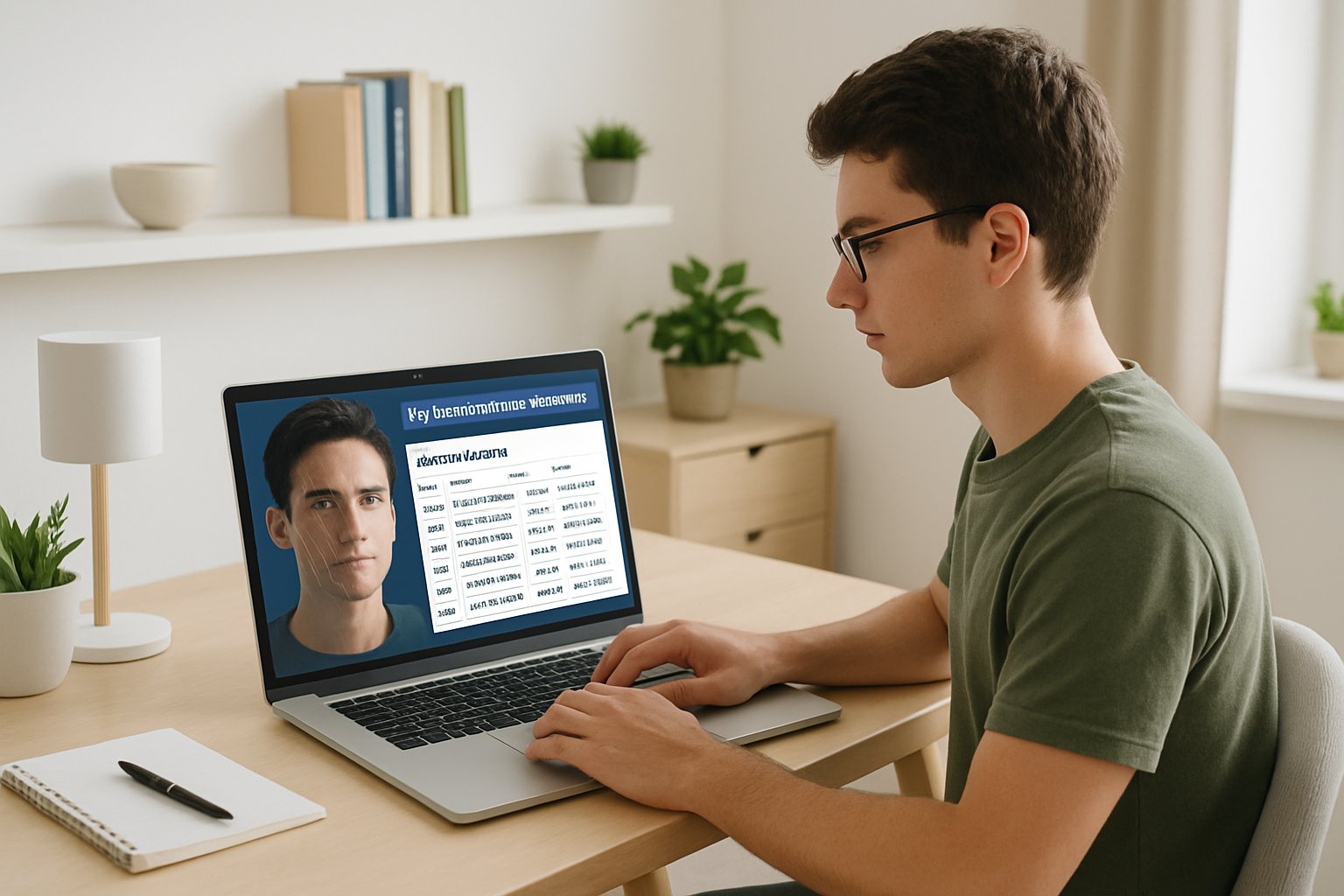
- AI anomaly detection scores gaze shifts, head pose, and phone signals.
- Biometric ID checks match faces before and during the exam.
- Room scans, though disputed, attempt to verify a clean workspace.
Furthermore, trained human proctors review flagged clips or pop in live when AI escalates. This layered mix deters misconduct and supplies strong evidence. Consequently, institutions gain faster, defensible decisions.
The section shows that technical depth plus human judgment delivers stronger cheating prevention. Next, we explore how the market evolved.
Recent Industry Shifts
Over the last year, vendors pushed “AI + human” hybrids. Honorlock markets Live Pop-In, while Proctortrack offers ProctorLive AI. Moreover, anti-ChatGPT features now block in-browser bots and detect second devices. Consolidation also rose; Turnitin bundles plagiarism, item banking, and proctoring in one suite.
Security incidents triggered scrutiny. Consumer Reports exposed credential leaks at a major vendor, pushing universities to vet code and audits. Meanwhile, immutable blockchain logs entered marketing pages, although adoption remains limited.
Institutions therefore ask harder questions when choosing a proctor for test. They now demand audited metrics, not glossy claims. This shift leads directly into privacy and equity debates.
Balancing Privacy Concerns
Privacy groups, including EPIC and the ACLU, warn about intrusive room scans and broad biometric capture. They argue algorithms flag darker skin tones more often, risking inequity. However, universities counter that verified identity and logs protect credential value.
Consequently, many schools adopt lighter settings: no mandatory room scan, lower gaze sensitivity, and shorter data retention. Transparent policies and student opt-in notices also build trust while supporting solid cheating prevention.
The takeaway: strong safeguards and user transparency can coexist. Next, we map the operational workflow end-to-end.
Detection Workflow From Start
The workflow begins with device checks and biometric ID verification. During the exam, a locked browser enforces restrictions. Meanwhile, AI monitors gaze, audio spikes, and tab activity. If anomalies spike, the system alerts a live proctor.
After submission, AI compiles an integrity score. Human reviewers examine top-risk clips, then forward findings to faculty. Some vendors also scan the web for leaked items and issue takedowns.
Therefore, a reliable proctor for test handles detection, context, and evidence seamlessly. Understanding this flow helps buyers ask precise questions, which the next section covers.
Practical Procurement Advice
Decision makers should request audited false-positive and demographic bias rates. Additionally, ask for SOC-2 or ISO certifications plus breach history. Institutions must verify deletion timelines for video and biometrics.
When comparing each proctor for test, insist on:
- Hybrid review that lets humans overrule AI.
- Flexible settings for accommodations and bandwidth limits.
- Detailed flag reports aligned with honor-code processes.
Moreover, explore assessment redesigns—randomized questions, open-book formats, or oral checks—to complement technological cheating prevention. Robust policy plus the right tools form a resilient integrity strategy.
Armed with these guidelines, institutions can select a proven proctor for test wisely. The following heading looks at future hurdles.
Choosing Proctor For Test
Stakeholders often ask which features matter most. Start with AI capability tuned by extensive training data. Equally, verify live proctor staffing ratios for high-stakes windows. Furthermore, ensure multi-language support, because global cohorts bring diverse accents and scripts.
Price models vary—per-exam, per-seat, or subscription. Therefore, calculate total cost across projected enrollments. Importantly, confirm LMS integration depth to avoid login friction.
Selecting the ideal proctor for test requires balancing budget, user experience, and rigorous cheating prevention. Next, we forecast emerging challenges.
Future Challenges Ahead
AI writers will grow more covert, and headset-like devices may hide in plain sight. Consequently, detection models need constant retraining. Simultaneously, regulators may tighten biometric rules, limiting data retention windows.
Thus, vendors must publish audited fairness metrics and support privacy-preserving analytics. Institutions, meanwhile, should diversify assessment types to reduce high surveillance reliance.
Facing these trends, any forward-looking proctor for test must evolve swiftly while remaining transparent. We close with actionable conclusions.
Conclusion And Next Steps
Online exam integrity demands layered technology, informed policy, and sustained vigilance. Hybrid AI-human monitoring, secure browsers, and biometric checks drive effective cheating prevention. Yet privacy, equity, and security must stay central to procurement and configuration choices.
Why Proctor365? The platform pairs advanced AI with live experts, delivers industry-leading identity verification, and scales monitoring to thousands instantly. Trusted by global exam bodies, the proctor for test capabilities exceed standard offerings. Experience higher integrity by visiting Proctor365.ai today.
Frequently Asked Questions
- How does AI proctoring improve online exam security?
AI proctoring monitors gaze, audio, and screen activity, using anomaly detection to flag suspicious behavior. Paired with live human intervention, it enhances exam integrity and fraud prevention while ensuring secure identity verification. - What are the key features of a robust proctoring platform?
Key features include a locked browser, continuous webcam and microphone monitoring, and biometric ID checks. These layers, combined with AI and human proctor reviews, create an effective shield against cheating and maintain exam integrity. - How does Proctor365 ensure secure and fair exam proctoring?
Proctor365 integrates advanced AI with live expert reviews for precise anomaly detection and verified identity checks. Its transparent privacy settings and flexible configurations ensure equity while supporting comprehensive cheating prevention strategies. - Why is a hybrid AI-human proctoring model important?
A hybrid AI-human model combines automated detection with live proctor intervention, reducing false positives and ensuring accurate fraud detection. This balance maintains exam integrity while offering a secure, responsive environment to deter cheating effectively.