Universities, certification bodies, and corporate trainers face a growing dilemma. Cheating methods multiply every semester. Exams must stay online for flexibility and scale. Consequently, many institutions choose a remotely proctored exam model to preserve integrity. Several institutions already pilot an ai proctored exam to test new safeguards.
However, attackers keep innovating with hidden earpieces, remote desktops, and AI chat tools. Simple webcam observation no longer suffices. The next sections reveal how layered technology exposes even subtle misconduct.
Additionally, we share vendor advances, independent security data, and governance tips. Readers gain a clear roadmap to strengthen any online assessment program.
Market analysts already estimate remote proctoring revenue will cross one billion dollars by 2027. Therefore, decision makers must understand both capabilities and limitations before large scale investments.
This overview balances vendor claims with academic and forensic evidence. Trust grows when stakeholders see transparent data, not hype.
Cheating Threats Quickly Evolve
Mobile phones, smart watches, and miniature cameras now cost very little. Meanwhile, AI chatbots can write essays in seconds. Consequently, a remotely proctored exam must detect threats that did not exist five years ago.
Independent testers from Caveon secretly attempted 100 high-tech cheats in controlled trials. Over half bypassed basic proctoring setups. Such data proves the arms race is real.
In summary, threat sophistication keeps rising. The next section explores layered defenses.
Remotely Proctored Exam Layers
Effective proctoring never relies on a single sensor. Vendors combine six distinct layers for defense.
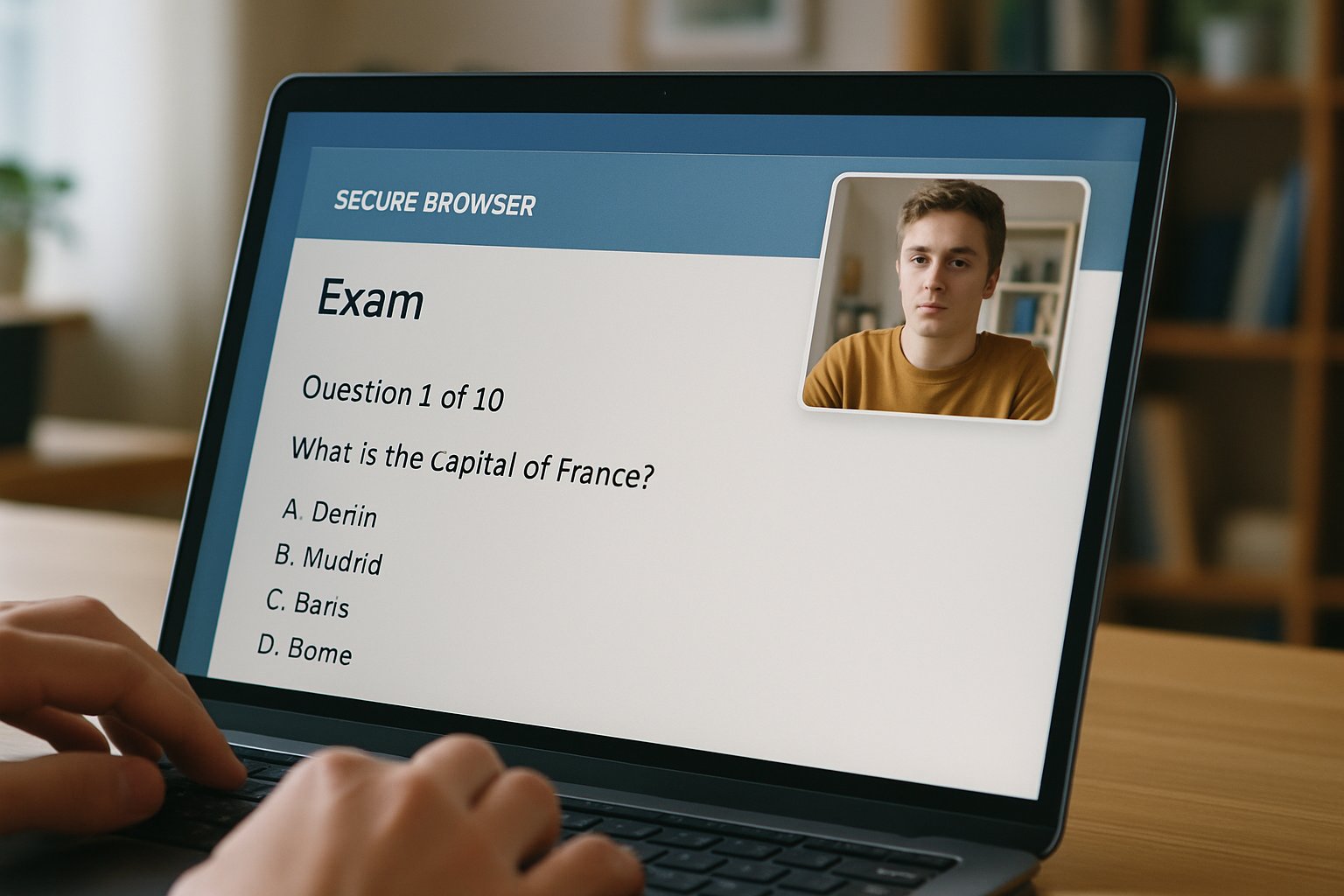
First, a secure browser locks down tabs, copy functions, and remote control software. Second, webcam video feeds computer-vision models that flag multiple faces or forbidden objects. Third, audio filters detect whispered assistance. Fourth, system telemetry uncovers virtual machines and remote sessions. Fifth, real-time identity checks deter impostors. Finally, post-exam forensics cluster answer patterns to find collusion.
When combined, these layers create a resilient shield for any remotely proctored exam session.
- Secure browser lockdown
- AI webcam and audio analysis
- System and network telemetry
- Continuous identity verification
- Post-exam statistical forensics
Importantly, each ai proctored exam logs rich telemetry for later audit.
Together, these elements raise the bar for cheaters. Yet technology alone cannot stop everything, as we will see next.
Core Detection Toolset Guide
Modern tools rely heavily on computer vision and machine learning. YOLO models detect phones, notes, or extra faces within 50 milliseconds. Head-pose and gaze tracking highlight repeated glances away from the screen.
Keystroke dynamics build user profiles and expose a proxy during a remotely proctored exam. Process scanning stops hidden remote access tools before they launch. Furthermore, Apple Handoff signals can reveal a nearby iPhone even if unseen.
An ai proctored exam relies on these algorithms to act faster than human eyes.
AI flags pass instantly to trained human reviewers. Consequently, false positives drop while context improves.
These tools work best when aligned with policy and human judgement. Advanced tactics test those limits, as the following examples show.
Advanced Cheating Tactics Spotted
Cheaters hide micro-earpieces inside hairlines or collars. Vision models struggle when the device stays completely concealed. However, repeated ear touching and murmured answers can still flag a remotely proctored exam recording.
Remote desktop tools pose another threat. Secure clients monitor running processes and terminate known offenders. Skilled attackers sometimes hide traffic inside encrypted tunnels.
Colluding groups share item banks on social channels before the test. Post-exam statistical forensics like Q-SID catch improbable answer matches afterward.
In short, advanced cheats remain possible, yet detection odds grow when data is layered. Next, we weigh strengths and gaps.
Key Strengths And Gaps
Multi-layer approaches deter casual cheating effectively. Caveon secret tests still show determined actors succeeding about half the time.
- Pros: scalable deterrence, evidence for appeals, post-exam collusion analytics
- Cons: privacy concerns, fairness risks, ongoing evasion arms race
Moreover, algorithmic bias against darker skin tones remains under active study. Governance frameworks must address that issue before every remotely proctored exam rollout.
Balanced programs pair technology with transparent policy and assessment design. Our final section outlines practical steps.
Governance Best Practice Steps
Publish clear privacy notices and allow alternative settings when needed. Conduct algorithmic impact assessments annually. Track appeal rates to measure false positives.
Furthermore, rotate questions and randomize item order to limit answer sharing. Short time windows also reduce value of external help.
Institutions should demand vendor transparency reports and independent audits. Consequently, stakeholders trust the system and students feel treated fairly.
Good governance complements technical layers. We now conclude with actionable recommendations.
Closing Steps And Assurance
Layered secure browsers, AI vision, telemetry, and post-exam forensics together improve integrity. Still, policy, transparency, and assessment design remain essential. When those elements align, a remotely proctored exam delivers trusted results at scale. Selecting an ai proctored exam with audited accuracy protects both staff and candidates.
Why Proctor365? Our AI-powered platform blends object detection, gaze tracking, and continuous biometric verification. Advanced identity checks confirm the right person stays present. Scalable cloud monitoring handles classrooms or global certification cohorts without extra hardware. Trusted by universities, ed-tech leaders, and exam bodies worldwide, we safeguard every assessment. Explore how Proctor365 elevates your integrity programme at Proctor365.ai today.
Frequently Asked Questions
- What is a remotely proctored exam and how does it work?
A remotely proctored exam uses multi-layer defenses such as secure browsers, AI-powered video analysis, system telemetry, and continuous identity verification to detect suspicious behavior and reduce cheating risks. - How does AI proctoring help prevent advanced cheating tactics?
AI proctoring leverages computer vision, gaze tracking, and keystroke dynamics to instantly flag irregular behavior. This approach supports fraud prevention and continuous identity verification against covert devices and remote collusion attempts. - What layered approaches enhance exam security during proctored assessments?
Layered approaches include secure browser lockdown, AI-powered video and audio analysis, system telemetry, and post-exam statistical forensics. Each layer strengthens exam integrity by detecting unauthorized devices and covert communication methods. - How does Proctor365 ensure secure proctoring for institutions?
Proctor365 combines AI proctoring, fraud prevention, and identity verification with scalable cloud monitoring. Its advanced platform uses object detection, gaze tracking, and real-time telemetry to secure online assessments for universities and certification bodies.