Academic misconduct evolves as fast as digital learning. Therefore, universities, certification bodies, and employers need stronger defenses. A remotely proctored exam promises real-time oversight without a classroom wall. The approach blends computer vision, audio analysis, and secure browsers to protect grade value. However, myths, doubts, and legal questions still swirl. This article unpacks the layered technology, its effectiveness, and its risks. Additionally, we explore safeguards that keep integrity and student rights in balance. Whether you manage a high-stakes certification or run corporate training, these insights matter. Consequently, decision-makers can shape fair, trusted assessments for an online future. Meanwhile, generative AI tools make answer sharing easier than ever. Stakeholders must act quickly yet thoughtfully. Read on to see how today’s solutions meet tomorrow’s threats. An ai proctored exam sounds futuristic, yet thousands already rely on it each semester.
Robust Identity Checks Explained
Before any question appears, the platform confirms who is sitting the test. Candidates upload a photo ID, then perform a live face match. Moreover, some systems run liveness prompts to stop deepfake tricks. Real-time mismatch alerts help institutions deny impostor attempts.
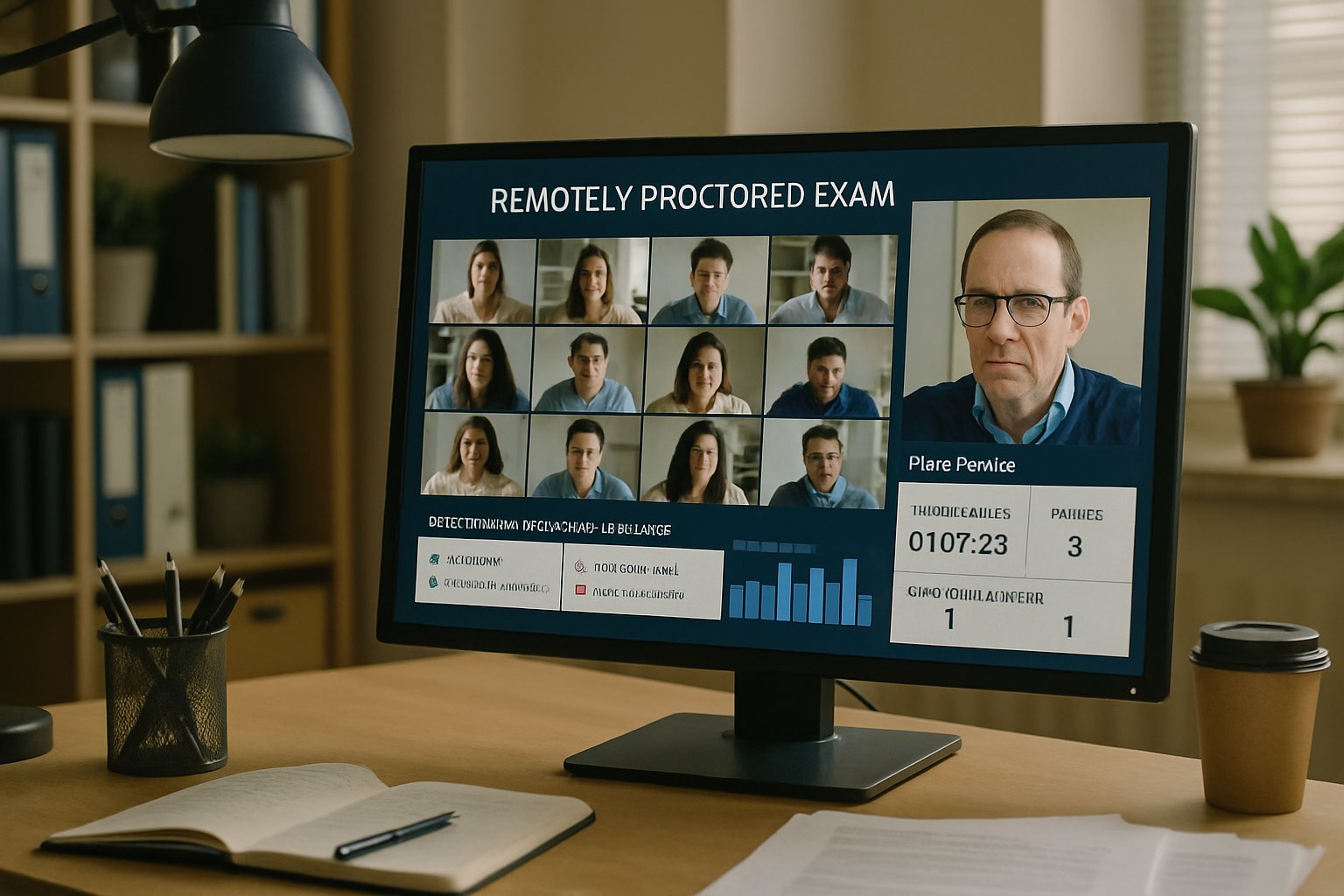
Consequently, identity verification deters proxy test-takers and delivers an auditable trail. The layer is not foolproof; sophisticated actors still try work-arounds. However, strong contracts, encryption, and human spot-checks raise the bar sharply.
In short, verified identity builds the foundation for trust. Next, we examine how that trust extends through the entire remotely proctored exam workflow.
Remotely Proctored Exam Workflow
The sequence starts with system checks for camera, microphone, and bandwidth. After confirmation, the locked browser launches and prevents copy, paste, or tab switches. Meanwhile, continuous video, audio, and screen feeds stream to the analytics engine. Each data point receives a risk score in real time.
Additionally, the engine flags anomalies such as multiple faces or sudden answer bursts. Live or post-exam reviewers view time-stamped clips and decide on intent. Therefore, machines triage while humans judge, reducing review hours dramatically.
Overall, this workflow gives supervisors fast, actionable evidence without overwhelming footage. Next, let’s inspect the physical and digital environment protections that complement the process.
Environment And Device Security
Examinees must show their workspace with a webcam sweep. Moreover, object-detection models search for phones, notes, or extra screens. A lockdown browser blocks screen sharing, printing, and unauthorized apps. During a remotely proctored exam, these checks run continuously with minimal lag. Consequently, candidates have fewer avenues to consult outside help.
However, determined cheaters may hide a second device just outside the frame. Dual-camera setups and phone detectors raise detection odds but never guarantee success. Institutions should state consequences clearly to reinforce technical controls.
To sum up, environment controls shrink opportunity without claiming perfection. The next layer, behavioral analytics, monitors patterns that signal hidden collaboration.
Behavior Analytics Flags Cheating
Computer-vision algorithms track gaze direction, head position, and the presence of extra faces. Meanwhile, audio models detect background speech or coaching whispers. When risk thresholds trigger, the system highlights the exact timestamp for later review.
An ai proctored exam also compares typing cadence and answer timing across cohorts. Consequently, unusual bursts or copied patterns become clear. Human reviewers then decide whether context explains the spike or sanctions are needed. Without such analytics, a remotely proctored exam would rely only on visible deterrence.
Thus, behavioral analytics shift focus from simple surveillance to rich pattern recognition. We now turn to evidence that shows how well these layers work in practice.
Effectiveness And Current Evidence
Do these tools actually reduce cheating? A 2023 randomized field experiment says yes, at least partly. Students under webcam monitoring scored lower than unmonitored peers, suggesting deterrence. Nevertheless, effect sizes varied by cohort and stakes.
Systematic reviews paint a mixed picture. Some studies report low violation rates even without surveillance, while others highlight false positives. Moreover, equity studies reveal higher flagging rates for darker skin tones.
During a remotely proctored exam, model errors can mislabel legitimate behavior. Consequently, institutions must combine automation with thorough human review and clear appeal channels. For an ai proctored exam, these findings influence design decisions.
Key figures to remember:
- 47% of surveyed students expect cheating to rise with generative AI.
- Market analysts estimate online proctoring revenue exceeding USD 1 billion by mid-decade.
- Bias studies show disproportionate flagging for certain demographic groups.
In brief, evidence supports deterrence but warns of equity and accuracy gaps. Our next section explores those risk dimensions more deeply.
Risks Privacy And Equity
Continuous video inside private homes raises serious privacy objections. Civil-liberties groups call room scans excessive surveillance. Courts in France and the United States have already limited certain practices.
Algorithmic bias compounds the issue. Studies in Frontiers in Education show higher false alerts for darker skin tones and some disabilities. Moreover, elevated stress and bandwidth demands hit disadvantaged learners hardest.
A remotely proctored exam must therefore respect data minimization, encryption, and retention limits. Additionally, clear opt-out pathways and accessible alternatives reduce equity gaps.
Ultimately, transparent governance balances risk against academic benefits. Next, we review safeguards that deliver that balance.
Best Practice Safeguards Today
Best practice starts with assessment design. Educators should mix secure in-person tasks and open assignments that allow AI usage. Consequently, high stakes shift to contexts where surveillance is less controversial.
For remote tests, combine automation with human review and appeals. Publish policies that explain data retention, flag evaluation, and student rights. Moreover, pilot audits for algorithmic bias each semester.
An ai proctored exam also benefits from multi-camera angles, active liveness checks, and behavioral biometrics. However, every added sensor increases privacy overhead. Therefore, risk assessments must precede deployment.
During any remotely proctored exam, institutions should communicate expectations early and often. Clear messaging deters misconduct more than silent monitoring.
Together, these safeguards align technology with pedagogy and policy. They set the stage for trusted online assessment at scale.
Conclusion
A remotely proctored exam can deter many modern cheating tactics when used within a balanced framework. Layered identity checks, environment controls, behavioral analytics, and vigilant human review deliver credible oversight. However, privacy, bias, and stress risks demand transparent policies and regular audits. By pairing robust design with clear communication, institutions safeguard both academic integrity and student trust.
Why Proctor365? Proctor365’s AI-powered platform elevates every remotely proctored exam with advanced identity verification, scalable monitoring, and adaptive analytics. Moreover, our cloud architecture supports thousands of concurrent sessions and is trusted by global exam bodies. Ready to protect your assessments? Discover Proctor365 now and experience secure testing without compromise.
Frequently Asked Questions
- How does AI proctoring ensure exam integrity?
AI proctoring uses computer vision, audio analysis, and behavioral analytics to monitor exams. Robust identity verification and real-time risk scoring work together to detect cheating and preserve academic integrity. - What does a remotely proctored exam workflow involve?
The workflow begins with system checks for camera and microphone, followed by a locked browser session and continuous monitoring through video, audio, and screen feeds, ensuring a secure and fair assessment. - What measures does Proctor365 use to prevent exam fraud?
Proctor365 leverages advanced AI proctoring with multi-layer identity checks, fraud prevention strategies, and adaptive behavioral analytics to secure exams and minimize cheating opportunities. - How are privacy and bias concerns addressed in remote proctoring?
Remote proctoring platforms implement data minimization, clear policies, and human reviews while conducting regular audits. This approach helps mitigate algorithmic bias and respects candidate privacy.