Online testing exploded after 2020, yet academic integrity threats grew just as fast. Universities, certification bodies, and corporations now rely on the ai based remote proctoring system to keep scores credible. However, many leaders still ask how the science really works.
In this article, we unpack the algorithms, performance evidence, and safeguards behind modern monitoring platforms. Additionally, we examine whether an at home proctored exam can reach the same trust level as a test center. Finally, we address the question many students raise: is ai remote proctoring safe and private?
AI Based Remote Proctoring System
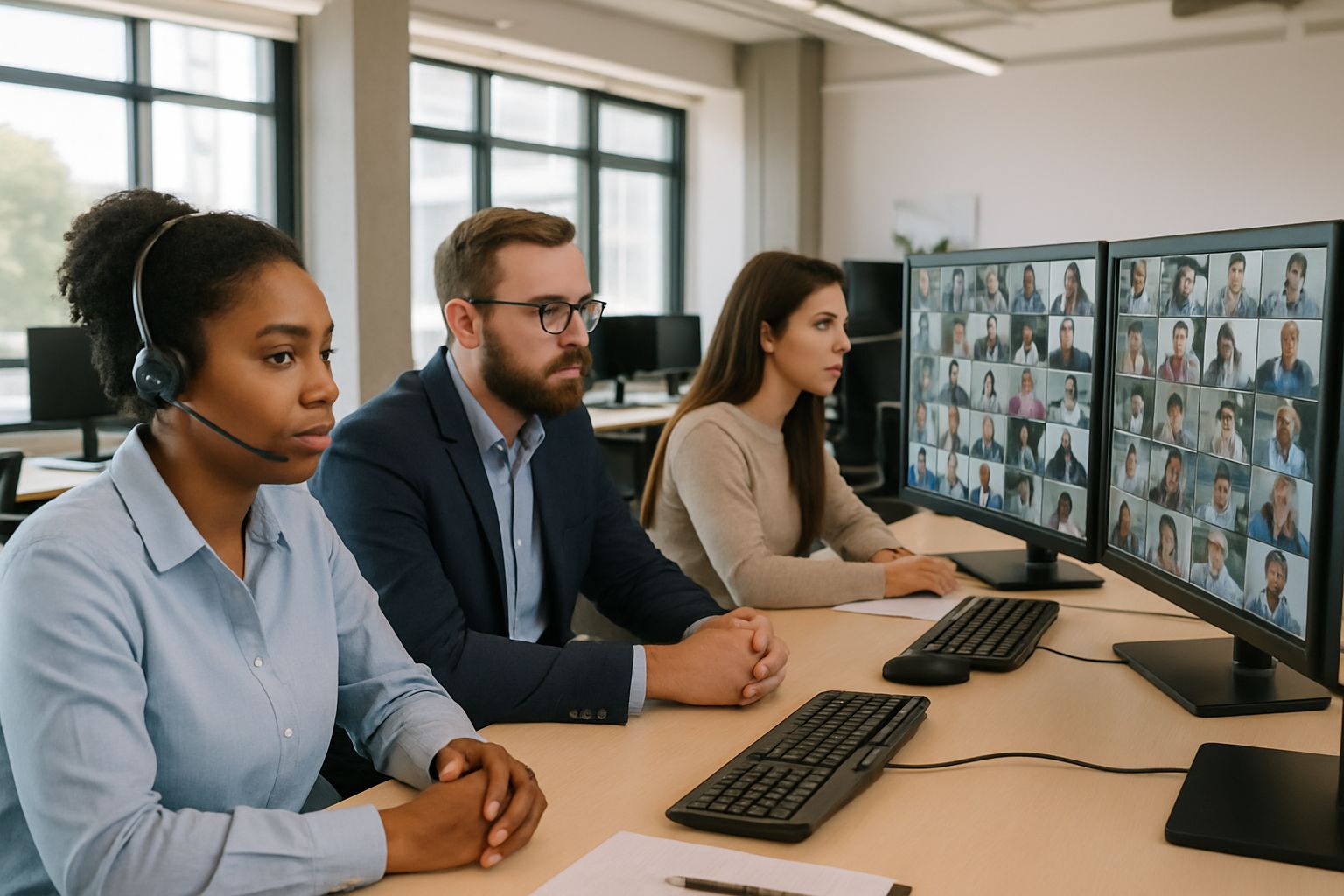
The ai based remote proctoring system captures synchronized streams from the webcam, microphone, and screen. Consequently, it builds a live behavioral profile for every candidate.
Machine learning models convert each signal into vectors that describe identity, gaze, sound events, and window focus. Moreover, the framework scores anomalies in near real time and forwards high-risk segments to human proctors.
Summary: The platform merges multi-sensor data and instant scoring to flag suspicious behavior. Institutions gain scalable, always-on exam oversight.
Next, we explore why cheating still threatens remote credentials.
Why Cheating Still Persists
Remote exams remove physical invigilators, so temptation rises. Candidates search online, message peers, or pay impersonators.
Consequently, institutions saw cheating spikes of 200% during 2021 remote sessions, according to university audits. Even after installing an ai based remote proctoring system, bad actors adapt with virtual cameras and covert earbuds. Moreover, an at home proctored exam can be attacked by overlay software that hides browser tabs.
Summary: Motivation, opportunity, and technology keep dishonest tactics evolving. Deterrence therefore demands adaptive AI tools that learn just as fast.
Our next section explains the sensors that provide that adaptability.
Core Detection AI Modalities
Multi Modal Signal Fusion
Modern suites fuse vision, audio, and telemetry to produce stronger evidence than any single signal. Researchers at MANIT showed that combining face, gaze, and object cues lifted F1 to 90% on a curated dataset.
- Face verification with liveness prompts prevents photo spoofing.
- Head-pose and gaze tracking catch repeated off-screen glances.
- Object detection models, often YOLO variants, spot phones or extra people.
- Audio classifiers flag whispered coaching and suspicious background noise.
- Secure browsers log tab switches and block unauthorized processes.
Additionally, behavioral biometrics compare typing rhythm and answer timing against historical baselines. Therefore, an ai based remote proctoring system amasses rich context before flagging a rule breach. Students still ask, is ai remote proctoring safe and private? Vendors answer with encryption and minimal data retention, yet independent audits remain limited.
Summary: Multi-modal fusion improves precision and cuts false alerts. Still, transparency about data handling remains critical.
Next, we see how temporal models stitch these signals into session-level risk scores.
Temporal Models Aggregate Risk
Frame-by-frame flags can overwhelm reviewers. Consequently, vendors apply LSTM or transformer models that learn suspicious patterns across minutes.
The MANIT study reported recall above 90% after temporal aggregation. However, results drop in uncontrolled lighting or when disabilities alter gaze.
An ai based remote proctoring system retrains models with new incidents to stay ahead of cheats. Nevertheless, critics repeat the question: is ai remote proctoring safe and private when continuous recording drives these updates?
Summary: Sequence learning raises detection power, yet data volume magnifies privacy stakes. Governance must balance both goals.
We now examine those privacy and fairness challenges.
Privacy And Fairness Concerns
USENIX researchers proved several suites misidentified darker skin tones and accepted spoofed faces. Moreover, the Italian regulator fined a university for biometric misuse.
Consequently, exam bodies must ask again, is ai remote proctoring safe and private for all demographics? Fair thresholds, accessible appeals, and clear data retention policies reduce risk.
Meanwhile, students taking an at home proctored exam may feel watched in their bedrooms, increasing stress. Transparent communication and optional room scans help regain trust.
Summary: Bias and privacy gaps persist, but policy, testing, and communication can mitigate them. Continuous review remains essential.
The final section outlines deployment best practices that prioritize both security and empathy.
Best Practice Deployment Steps
Stakeholders should pilot the ai based remote proctoring system with diverse volunteers before high-stakes rollout. Collect metrics on false alerts, network load, and accessibility impact.
Secondly, publish a model card that describes training data, fairness audits, and retention periods. Moreover, always pair AI with trained human reviewers during the first exam cycle.
- Issue clear exam rules and appeal workflows.
- Encrypt recordings at rest and in transit.
- Rotate algorithms to deter published bypass tricks.
Finally, compare live center metrics with an at home proctored exam using identical items. This evidence helps boards decide whether scale outweighs residual risk.
Summary: Careful pilots, transparency, and hybrid oversight deliver robust yet respectful monitoring. Implementation discipline therefore protects both grades and privacy.
With best practices defined, we close with key lessons and a trusted solution partner.
Conclusion
Remote proctoring now merges vision, audio, telemetry, and temporal AI to spot most cheating attempts. Nevertheless, evidence shows that privacy, bias, and performance gaps remain without transparency and human oversight.
Why Proctor365? Our ai based remote proctoring system delivers scalable monitoring and advanced identity verification. Real-time AI flagging is supported by experienced human reviewers for accurate final judgments. Moreover, global universities and certification boards trust Proctor365 for secure, at home proctored exam delivery. Visit Proctor365 to protect your next assessment.
Frequently Asked Questions
- How does AI based remote proctoring work?
AI based remote proctoring integrates webcam, microphone, and screen data to build behavioral profiles. Real-time risk scoring combined with human oversight ensures robust exam integrity and fraud prevention. - Is AI remote proctoring safe and private?
AI remote proctoring leverages encryption, minimal data retention, and transparent policies to protect privacy while detecting anomalies. Independent audits and clear communication further enhance its safety and trustworthiness. - How does Proctor365 maintain exam integrity?
Proctor365 uses advanced AI proctoring with identity verification and fraud prevention techniques. Its system combines real-time monitoring and human review to ensure secure and credible exam sessions. - What best practices should institutions follow for deploying AI proctoring?
Institutions should pilot systems with diverse volunteers, publish model cards, issue clear exam rules, and combine AI analysis with human oversight to optimize security and fairness during online assessments.