Remote exams exploded after the pandemic. Consequently, automated online exam proctoring emerged as the backbone of digital assessment integrity. Universities, businesses, and certification boards now rely on AI to watch for rule breaches. However, many leaders still ask how these invisible invigilators actually detect misconduct.
This article demystifies the algorithms, sensors, and policies behind modern AI proctoring platforms. Moreover, it highlights practical concerns, emerging regulations, and ways to become an online exam proctor responsibly. Readers will gain a concise yet comprehensive overview grounded in recent research and field experience. Therefore, decision makers can select, audit, or even build solutions with greater confidence.
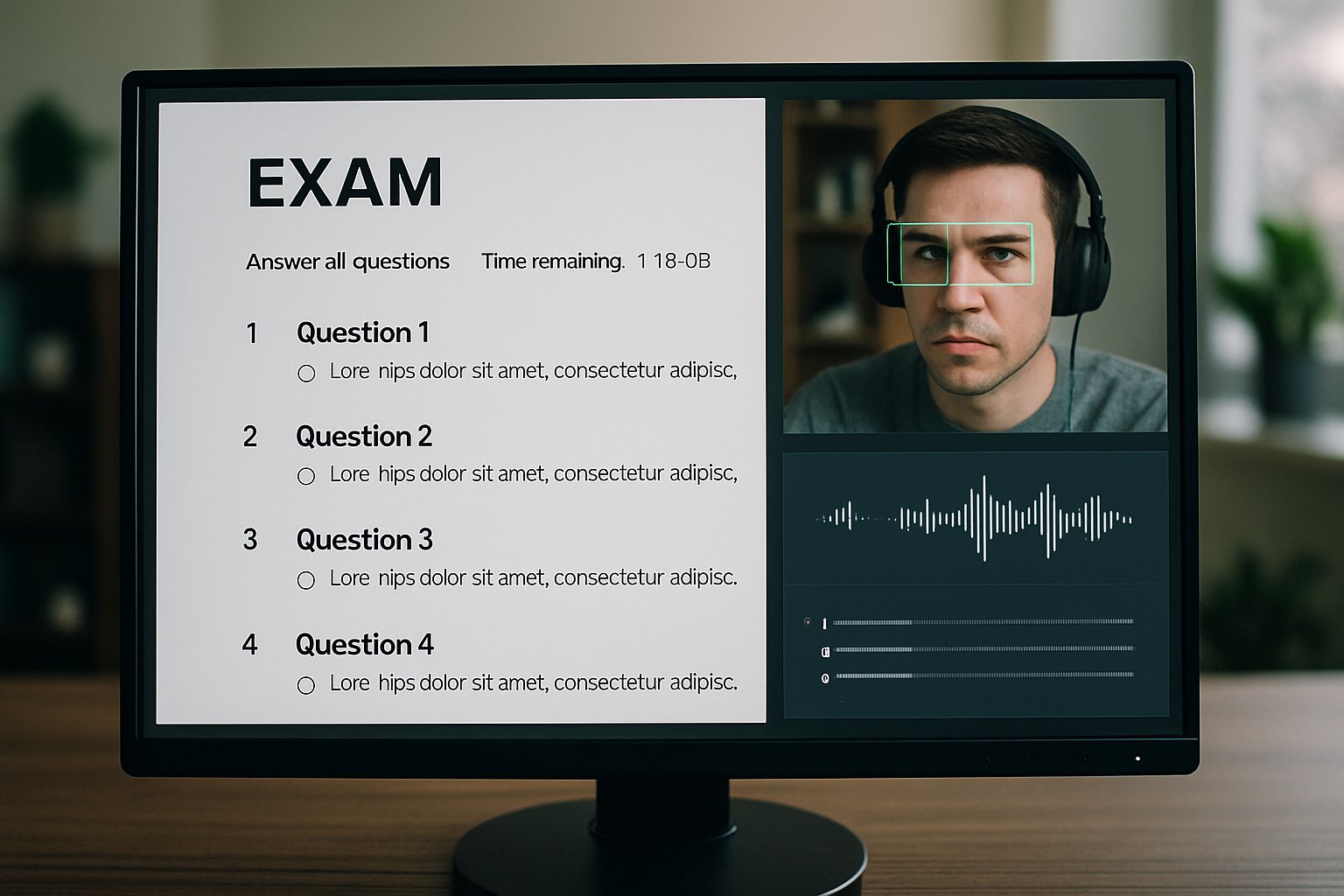
Finally, we show how Proctor365 leverages these techniques at scale without compromising user trust. Keep reading to see why global exam bodies embrace our platform for secure growth. The answers start with the next section. Meanwhile, aspiring professionals can learn how to become an online exam proctor within evolving guidelines.
Automated Online Exam Proctoring
Institutions moved millions of assessments online within months. As numbers grew, manual invigilation proved costly and inconsistent. AI offered scalable monitoring while keeping human reviewers for critical decisions.
Furthermore, leading vendors combine lockdown browsers with camera, microphone, and network feeds. Those feeds create rich, synchronized evidence streams for later review. Consequently, reviewers see only minutes of flagged footage instead of full sessions.
AI reduces tedium yet preserves human judgment. Next, we examine why misconduct still challenges educators.
Why Exam Misconduct Persists
Cheating evolves whenever stakes, technology, and opportunity align. Smartphones, generative AI, and side-channel chats create fresh loopholes. Meanwhile, pressure for credentials remains intense across industries.
Therefore, automated online exam proctoring must adapt faster than emerging tools. Prospective invigilators who aim to become an online exam proctor need continual upskilling. Consequently, vendors invest in multi-modal detection pipelines, which we detail next.
In short, cheating persists because incentives stay high and defences lag. The following section unpacks the technical countermeasures.
Core Detection Methods Explained
Research confirms that single sensors miss subtle violations. Moreover, combining streams improves coverage and confidence scores.
- Camera vision: face, object, gaze.
- Audio capture: background voices, keywords.
- Screen logging: tab switches, copy actions.
- Process tracking: virtual machines, forbidden apps.
- Network signals: extra devices, abnormal routes.
Each channel feeds time-stamped events into a unified timeline. Subsequently, machine models rank events by cheating probability for human review.
Multi-modal fusion forms the monitoring backbone. Yet vision remains the most visible layer, so we examine it now. Effective automated online exam proctoring relies on this layered stack, not on any single trick.
Visual And Identity Checks
Vision models detect faces, phones, papers, and reflections within milliseconds. Additionally, liveness prompts ask candidates to blink or turn, blocking static photo attacks. Continuous face verification matches the test taker against enrollment images.
However, lighting, skin tone, and camera quality still influence accuracy. Keeping illumination consistent and using high-resolution webcams reduces missed detections. Those who become an online exam proctor learn to instruct candidates on these basics.
Visual signals start the integrity chain. Yet audio and system channels catch what cameras cannot.
Audio, Screen, Network Watch
Microphones flag multiple voices and suspicious keywords. Moreover, screen recorders spot forbidden websites or AI chat overlays instantly. Device fingerprints reveal hidden phones, extra monitors, or virtual machines.
Consequently, automated online exam proctoring now markets “search-and-destroy” phone detection as a core feature. Operators who become an online exam proctor must interpret these logs without jumping to conclusions.
Audio and screen analytics close several loopholes. However, subtle behavioural cues offer another defense layer.
Behavioral Analytics And Scoring
Sequence models process gaze shifts, head turns, and keystroke rhythms across the session. Moreover, anomaly detectors compare each candidate against population baselines in real time. The resulting scores help triage vast footage for human escalation.
Importantly, automated online exam proctoring treats scores as hints, not verdicts. Live proctors retain final authority, protecting due process.
Behavioural analytics raise efficiency without removing accountability. Yet risks and regulations demand constant scrutiny.
Risks, Bias, And Regulations
Privacy advocates warn about room scans and biometric storage. Meanwhile, reports show facial algorithms fail more on darker skin tones. False accusations damage trust faster than any leak.
Therefore, automated online exam proctoring must include clear appeals and human oversight to stay compliant. The EU AI Act labels many proctoring functions high-risk and mandates auditing. Institutions should publish data-retention timelines and offer proctoring alternatives for disabled students.
- Transparent student notices
- Data minimization policies
- Independent algorithm audits
- Accessible accommodation options
Following these steps mitigates most legal and reputational threats. Finally, let’s review the key insights and Proctor365 advantages.
AI-driven proctoring blends vision, audio, system signals, and behavioral models into a layered defense. When skilled humans review the flags, detection improves while fairness remains possible. Yet success depends on transparent policies, regular audits, and trained staff who may become an online exam proctor.
Proctor365 delivers automated online exam proctoring with advanced identity verification, multi-modal AI, and real-time analytics. Our cloud architecture scales from small cohorts to global certifications while meeting strict privacy laws. Trusted by universities and exam bodies worldwide, we raise integrity and cut review time by 90%. Visit Proctor365.ai to book a demo and secure future assessments.
Frequently Asked Questions
- How does AI-driven proctoring preserve exam integrity?
Proctor365 uses multi-modal AI proctoring by combining live camera, audio, and screen feed analytics to detect potential fraud. Its advanced identity verification and real-time alerts ensure exam integrity and regulatory compliance. - What detection methods do automated proctoring systems use?
Modern online proctoring platforms employ an array of detection methods such as camera vision, audio capture, screen logging, and behavioral analytics to identify suspicious activity and prevent exam misconduct effectively with Proctor365. - How does Proctor365 ensure user privacy during remote exams?
Proctor365 integrates strict privacy protections, including data minimization, clear student notices, and independent audits. This ensures robust fraud prevention and identity verification while safeguarding personal information during online assessments. - How do proctors handle ethical dilemmas in automated exam monitoring?
Proctors review AI-generated flags with human judgment, ensuring fairness and due process. Continuous upskilling and transparent policies help evaluate suspicious behavior accurately, aligning with Proctor365’s focus on integrity and security.