Generative AI now challenges every certification exam. Consequently, leaders demand stronger deterrents against impersonation and content theft. Online proctoring software for remote exams has become their fastest route to scalable integrity. However, many boards dislike sending candidates to unknown portals.
Therefore, forward-thinking providers now license white-label testing stacks. These platforms hide vendor logos while offering AI-powered proctoring, flexible proctoring API hooks, and granular data residency. Moreover, the approach preserves brand trust and boosts candidate experience.
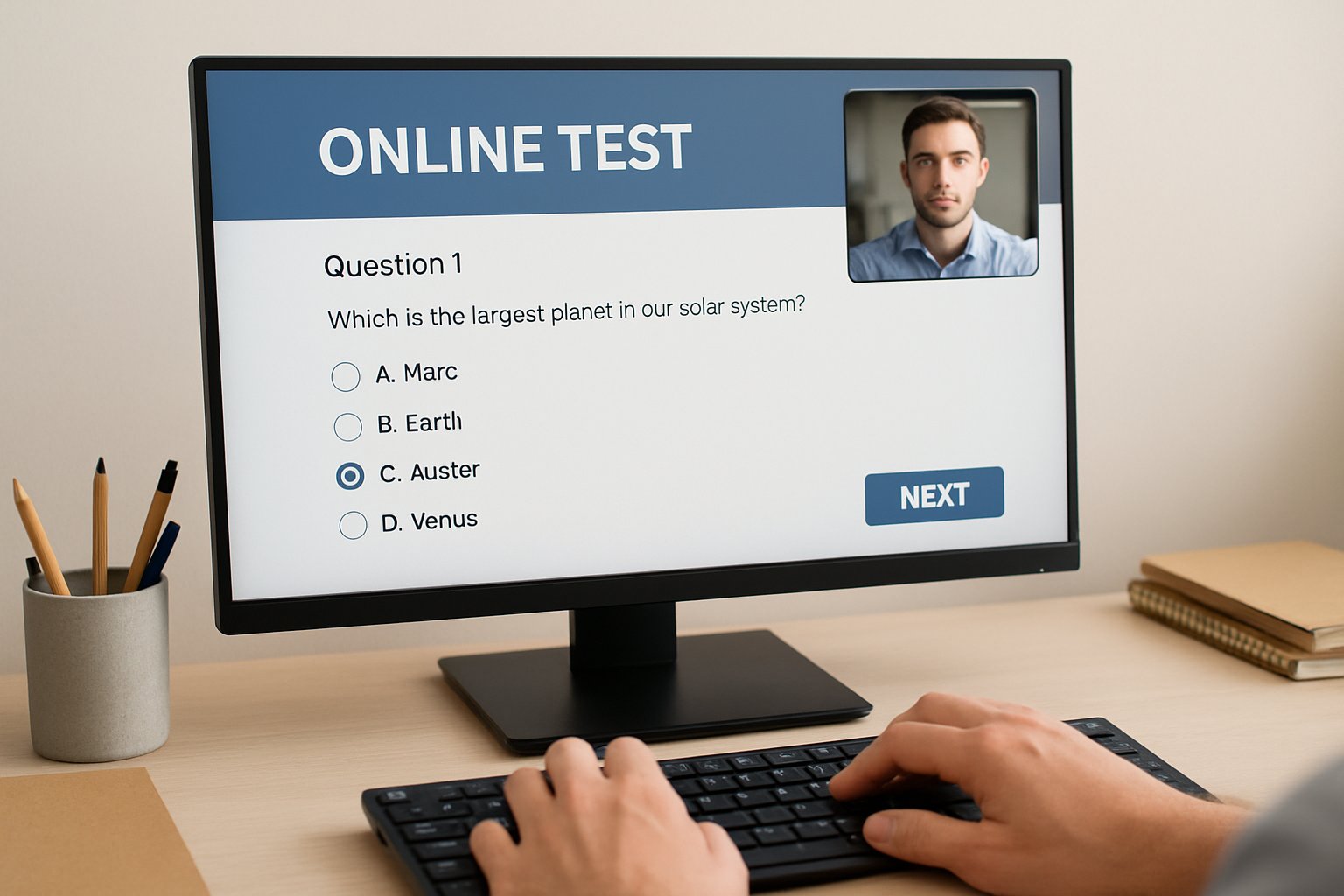
Certification directors see the difference. When online proctoring software for remote exams runs inside their domain, complaints drop and completion rates rise.
Online Proctoring Software For Remote Exams
Market analysts project the online exam security market to hit USD 2.35 billion by 2031. Furthermore, high-stakes certification drives the steepest growth curve. The Insight Partners cites a 15.5% CAGR, while other reports still show double-digit expansion.
This surge aligns with product shifts toward API-based proctoring. Vendors now expose robust online proctoring API endpoints that launch tests, retrieve incident flags, and trigger forensic exports. An open proctoring API layer shortens launch timelines.
- USD 0.869 billion market size in 2024 (Insight Partners).
- 99.5-99.9% uptime demanded in SLAs.
- Thousands of concurrent sessions expected during peak windows.
In short, demand is climbing and integrations matter most. Next, we examine benefits unique to white-label deployments.
Key White-Label Benefits Explained
White-label testing keeps candidates inside the issuing body’s trusted environment. Consequently, online proctoring software for remote exams reduces login confusion and improves completion rates.
Second, single sign-on plus exam proctoring API callbacks streamline registration, scoring, and certificate issuance. Moreover, API-based proctoring keeps logic modular. Staff also gain unified dashboards and faster incident review.
Third, privacy control strengthens. The contract can limit biometric storage, retention, and cross-border transfers. Many providers even offer regional data centers.
Overall, white-labeling merges security with experience. However, proper risk controls remain essential.
Risk And Compliance Essentials
Regulators now scrutinize facial recognition for online exams. California’s SB-1172, for example, restricts unnecessary biometric retention. Therefore, contracts must mirror local statutes.
Additionally, auditors request SOC 2, ISO 27001, and the newer ISO 42001 for AI governance. Vendors like Proctorio highlight such seals, yet certification councils should verify evidence independently.
Bias is another concern. Automated flagging may misidentify darker skin tones. Consequently, programs need human review layers and documented appeal paths.
Clear governance minimizes legal headaches. Nevertheless, white-label testing also inherits every regulatory duty. Meanwhile, the exam proctoring API must still log every biometric usage. Subsequently, teams should follow a structured implementation plan.
Practical Implementation Checklist Steps
Begin with a pilot of 50-100 candidates using AI-powered proctoring. Include accommodated users and varied bandwidth profiles.
Next, map data flows between the online proctoring API, your LMS, and the credential database. Moreover, online proctoring software for remote exams should post real-time webhooks for smoother result publishing. API-based proctoring also simplifies future migration.
Then, set measurable SLAs: 99.9% uptime, under two-minute chat response, and 24-hour incident review. Meanwhile, demand raw video exports for psychometric audits.
- Request SOC 2, ISO, and AI bias reports.
- Test facial recognition for online exams across diverse demographics.
- Validate proctoring API error handling in low bandwidth scenarios.
With these steps, technical gaps surface early. Consequently, selecting the right vendor becomes easier.
Choosing The Right Partner
Certification boards should shortlist platforms offering hybrid human plus AI-powered proctoring. Furthermore, ensure the exam proctoring API supports live, automated, and recorded modes. Ensure the online proctoring API delivers real-time status callbacks.
Compare pricing across per-seat, per-attempt, and enterprise tiers. Additionally, evaluate white-label setup fees and support coverage.
The best fit will deliver online proctoring software for remote exams under your banner, not theirs. Therefore, brand trust remains intact.
Ultimately, due diligence secures fairness and uptime. Finally, let’s recap the major insights.
Conclusion And Next Steps
Certification leaders now understand the stakes. Robust policies, thorough pilots, and vendor scrutiny turn online proctoring software for remote exams into a defensible advantage. Moreover, integrating white-label testing, an agile proctoring API stack, and facial recognition for online exams builds scalable trust.
Why Proctor365? Our platform pairs state-of-the-art AI-powered proctoring with multi-factor identity checks and unmatched scale. Consequently, global exam bodies rely on us to monitor thousands of concurrent sessions. Choose online proctoring software for remote exams that keeps your brand front-and-center. Visit Proctor365 to secure every assessment today.
Frequently Asked Questions
- How does white-label online proctoring improve exam integrity?
White-label proctoring keeps candidates within a trusted domain, reducing login issues and enhancing identity verification. This approach improves exam integrity and maintains your brand trust. - What benefits does API-based proctoring offer?
API-based proctoring enables seamless integration with LMS and credentialing systems. It streamlines registration, incident review, and real-time callbacks, ensuring efficient exam monitoring and high uptime. - How does AI-powered proctoring enhance exam security?
AI-powered proctoring uses advanced facial recognition and live monitoring to detect fraud and impersonation. It supports multi-factor identity verification, securing high-volume remote exam sessions. - What compliance measures are essential for online exam proctoring?
Compliance requires adherence to local data privacy laws and rigorous audits like SOC 2 and ISO 27001. These measures ensure ethical facial recognition practices and safeguard candidate biometric data.