Introduction
Institutions face rising stakes when selecting online test proctoring strategies. Cheating reports soared during pandemic-era remote exams. Consequently, universities, certification bodies, and L&D teams now scrutinize every monitoring approach.
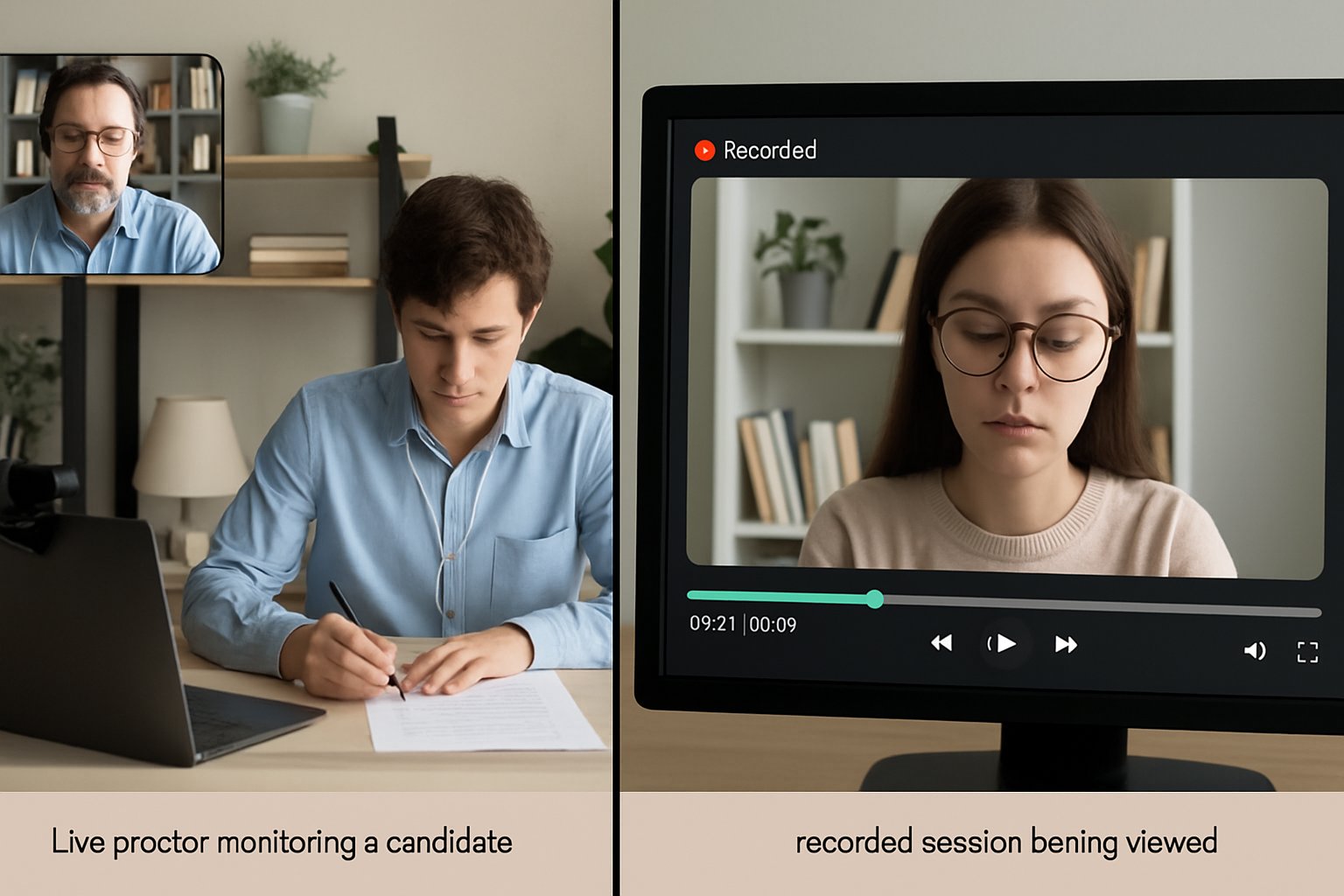
Two dominant models compete for attention: live vs recorded proctoring and record-and-review. Each promises security, yet each carries unique risks, costs, and privacy impacts. This article compares both, leverages fresh research, and guides decision makers.
Moreover, we place the showdown in context of booming online exam proctoring adoption, rapid AI innovation, and intensifying legal scrutiny. Read on to learn which option truly strengthens academic integrity.
Finally, we assess how behavior detection in online exams evolves as algorithms mature and hybrid models emerge. Armed with evidence, leaders can align policy, budget, and learner trust.
Why Exam Security Matters
Cheating undermines learning outcomes, accreditation, and public confidence. Systematic reviews reveal self-reported dishonesty near 45% in unmonitored settings.
Remote monitoring, whether live proctoring or asynchronous review, consistently lowers that figure. Yet, without robust online test proctoring processes, score inflation may still grant unearned credentials.
Therefore, security equals deterrence plus enforceability. Both require clear evidence chains and fair escalation procedures.
Live Proctoring Core Basics
Live proctoring connects candidates to human invigilators in real time. The proctor watches video, audio, and screen feeds and can intervene instantly.
Consequently, live online proctoring creates strong psychological deterrence because students know someone is watching. This form of online test proctoring provides synchronous oversight.
- Immediate intervention during suspicious actions.
- Higher deterrence than record review in live vs recorded proctoring comparisons.
- Operational expenses exceed options in live proctoring vs automated proctoring studies.
However, costs soar as sessions scale. Bandwidth, scheduling, and proctor-to-candidate ratios limit efficiency.
In summary, live proctoring offers speed and deterrence, yet budget and scale constraints remain. Next, we examine its asynchronous rival.
Record Review Model Explained
Record-and-review captures the entire session for later human evaluation, often guided by AI-based proctoring. This asynchronous online test proctoring option scales well because reviewers scan flagged clips instead of watching full-length tests.
Nevertheless, candidates can finish cheating before analysts intervene. This limitation features prominently in live vs recorded proctoring debates.
- Lower cost per attempt.
- Creates auditable evidence for appeals.
- Cannot stop real-time collusion.
To conclude, record review boosts scale and documentation, yet response speed suffers. We now explore emerging hybrids.
Hybrid Models Gain Traction
Vendors increasingly blend AI-based proctoring with human pop-in capability. Automated algorithms execute behavior detection in online exams and raise alerts within seconds.
When risks escalate, a live proctoring agent joins the session, merging deterrence with efficiency.
- AI triages thousands simultaneously.
- Humans focus on high-risk alerts.
- Costs fall versus full live proctoring vs automated proctoring extremes.
Thus, hybrid online test proctoring platforms promise balance between cost and control. Yet, their success depends on transparent hand-off rules.
Comparative Evidence Still Sparse
Academic meta-analyses confirm online exam proctoring generally cuts cheating. However, researchers note few randomized trials directly pit live proctoring vs automated proctoring or record review head-to-head.
Researchers agree that any online test proctoring beats unmonitored conditions, but precision metrics remain contested.
False positives, privacy disputes, and accessibility gaps complicate any simple security scorecard. Therefore, institutions should demand independent audits, transparent flag data, and published false-positive rates.
In short, evidence favors monitoring overall, but clarity on best mode remains limited. Procurement teams must fill the gap with data.
Legal And Ethical Concerns
Privacy advocates challenge remote surveillance in courts and media. EFF and ACLU highlight data retention and bias.
Moreover, differential impacts emerge when online proctoring software mandates webcams, quiet rooms, or high bandwidth.
Accessibility offices report that behavior detection in online exams sometimes misreads disability-related movements. Policy frameworks around online test proctoring must balance security with fairness.
Therefore, clear consent notices, opt-out paths, and robust appeals are essential.
Choosing The Best Fit
Selecting technology starts with exam stakes, cohort size, and risk tolerance. For high-stakes credentials, many experts still favor live online proctoring.
Conversely, large survey courses or corporate certifications may prioritize scale, choosing record review or hybrid online proctoring software solutions.
- Compare total cost of ownership.
- Inspect vendor ISO and SOC2 claims.
- Request behavior detection in online exams accuracy reports.
- Run pilot tests with diverse candidates.
Ultimately, secure online test proctoring depends on aligning policy, people, and platform.
Conclusion
Live, record-and-review, and hybrid models each improve integrity when compared to no monitoring. Live options deter through oversight, record review scales economically, and hybrids blend the strengths. Decision makers should weigh stakes, budgets, evidence gaps, and learner equity.
Why Proctor365? Proctor365 delivers AI-powered online test proctoring with advanced identity verification, behavior analytics, and scalable exam monitoring. Global exam bodies trust our platform to protect credentials without sacrificing candidate experience. Discover how Proctor365 boosts integrity, lowers costs, and simplifies compliance today.
Frequently Asked Questions
- What is the difference between live proctoring and record review proctoring?
Live proctoring uses real-time human oversight, while record review captures sessions for later analysis with AI. Proctor365 blends these methods to quickly detect and respond to suspicious behavior, ensuring exam integrity. - How does hybrid proctoring enhance exam security?
Hybrid proctoring combines AI behavior detection with human intervention, offering rapid alerts and cost-effective monitoring. Proctor365’s hybrid approach ensures efficient and reliable exam security while maintaining candidate trust. - How does Proctor365 ensure exam integrity and fraud prevention?
Proctor365 delivers AI-powered proctoring with advanced identity verification and behavior analytics. These features work together to prevent fraud, reduce cheating risks, and improve overall exam integrity for high-stakes tests. - What privacy measures are taken during online exam proctoring?
Effective proctoring includes clear consent, opt-out options, and strict data handling policies. Proctor365 prioritizes candidate privacy while implementing robust monitoring and compliance standards for secure, fair testing.