Exam security faces intense scrutiny. Universities rely on Remote Online Proctoring to keep assessments credible. However, privacy regulators, courts, and students demand stronger safeguards. Data Privacy Laws now evolve monthly. Ed-tech teams must track global updates while maintaining smooth delivery. Consequently, compliance missteps can lead to fines, litigation, and brand damage. This 2026 guide distills complex rules into actionable steps. It maps key jurisdictions, highlights litigation trends, and recommends technical controls. Moreover, readers learn how online proctoring software can support secure remote exams without eroding trust. Throughout, we reference market growth data and expert opinions. Institutions, certification providers, and corporate L&D leaders gain a clear roadmap to balance innovation and dignity. Cheating prevention in online exams stays front and center. We also benchmark vendor consolidation, revealing new procurement risks. Finally, we explain why Proctor365 remains a trusted partner for Remote Online Proctoring in this shifting landscape.
Compliance Landscape For 2026
Global Data Privacy Laws tighten around assessment data. The UK ICO will launch updated DPIA and ADM guidance before exams start next autumn. Meanwhile, the EDPB stresses impact assessments when biometric profiling drives decisions. Across the Atlantic, California’s STTPPA limits collection to what is strictly necessary for remote exam proctoring.
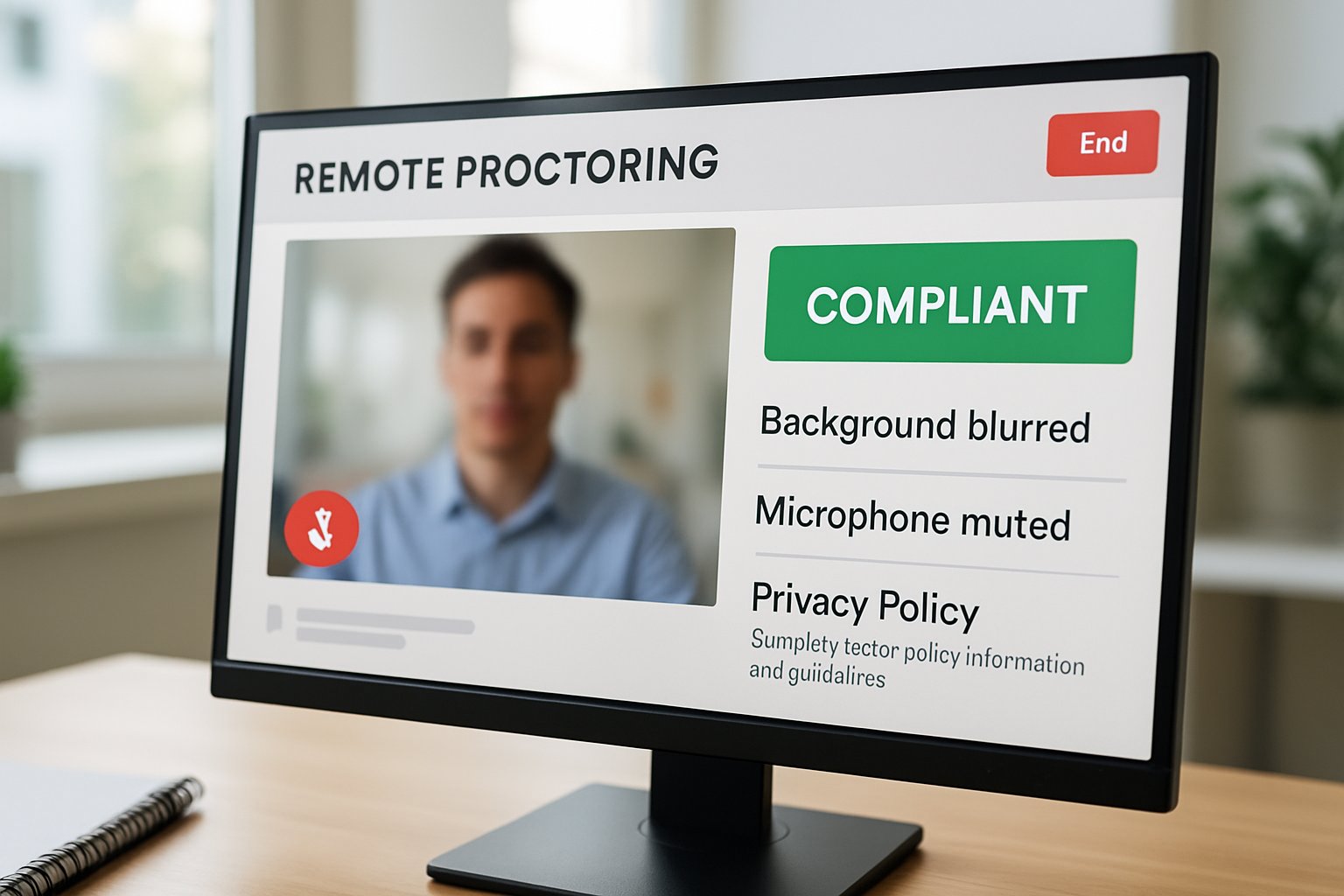
Other states propose bills on student surveillance, producing a fragmented patchwork. Therefore, institutions must map each jurisdiction before deploying online proctoring solutions. Proactive tracking reduces sudden exam disruptions and costly contract renegotiations.
The legal horizon demands constant monitoring. Failing that, compliance gaps will multiply rapidly.
Next, we examine the most active legal flashpoints.
Key Global Legal Hotspots
Room scans attract the fiercest courtroom attention. Ogletree v. Cleveland State ruled certain scans unconstitutional at public universities. Consequently, many institutions now disable forced home scans or offer on-site alternatives. Illinois BIPA lawsuits also target biometric collection by online proctoring software. Remote Online Proctoring policies must therefore exclude unnecessary face scans or risk BIPA penalties.
In Europe, Article 22 restrictions loom where AI scoring leads to academic sanctions. Therefore, controllers must guarantee human review and clear appeal channels. The UK Data Act adds fresh transparency duties for secure remote exams.
Litigation centers on biometrics, automated decisions, and intrusive scans. Address these hazards early to avoid headline risks.
Now, let’s turn to concrete mitigation tactics.
Risk Mitigation Checklist Essentials
A structured checklist simplifies compliance across regions. Use the following priorities when configuring remote exam proctoring.
- Perform a DPIA covering AI scoring, biometric capture, and retention schedules.
- Draft a robust Data Processing Agreement limiting storage to 30 days or less.
- Publish plain-language privacy notices before launching online exam proctoring pilots.
- Enable human review for every automated flag that might trigger sanctions.
- Document deletion proofs after each exam cycle to satisfy Data Privacy Laws.
- Set retention timers inside your Remote Online Proctoring dashboard to auto-delete footage.
Moreover, maintain SOC 2 evidence and vulnerability scans to reassure auditors. These actions address most regulator expectations and student concerns.
Checklists drive consistent, repeatable privacy practices. They also reduce expensive firefighting after complaints surface.
Next, we review technical configurations that matter most.
Remote Online Proctoring Practices
Modern Remote Online Proctoring relies on layered controls, not blanket surveillance. Firstly, video resolution should default to standard definition unless higher clarity proves essential for cheating detection. Secondly, continuous audio recording rarely survives necessity tests within Data Privacy Laws. Instead, trigger-based clips satisfy secure remote exams while protecting ambience privacy.
For biometrics, limit templates to liveness verification; avoid permanent storage. Many online proctoring software vendors now support Bring-Your-Own-Key encryption to enhance control. Furthermore, dashboards should expose false positive rates so faculty trust automated decisions.
Thoughtful configurations uphold fairness without chilling student privacy. Automation remains valuable when bounded by clear, minimal scopes.
Procurement choices can reinforce these safeguards or undermine them.
Procurement Red Flag Signals
Vendor documentation often reveals early warning signs. Consequently, procurement teams should scrutinize proposals line by line. Reject providers refusing audits, deletion proofs, or explicit limits on data reuse. Transparent pricing also shows true cost of online exam proctoring over contract life.
Additionally, insist on transparency around AI model updates and bias testing. Lack of metrics undermines cheating prevention in online exams because false alarms erode trust. Remember, contract clauses lose power without enforceable service-level remedies.
Diligent procurement hardens long-term compliance posture. Cutting corners today invites regulatory pain tomorrow.
Finally, let’s chart forward-looking action steps.
Strategic Future Action Steps
Regulators plan multiple guidance drops through 2026. Therefore, create an internal watchlist covering EDPB consultations, ICO releases, and US state hearings. Schedule quarterly policy reviews to update online exam proctoring settings accordingly.
Furthermore, survey students annually about perceived fairness and usability of remote exam proctoring. Combine feedback with incident metrics to guide continuous improvement.
Iterative governance prevents surprises and builds community trust. Ongoing monitoring converts regulation from threat to advantage.
We close with key insights and a proven partner recommendation.
Conclusion
Remote Online Proctoring will remain central to flexible assessment strategies. Yet, only organisations that embed privacy, transparency, and strong analytics will sustain credibility. Our guide showed how evolving Data Privacy Laws, litigation, and technology choices intersect. We reviewed actionable controls, procurement checks, and student engagement tactics for secure remote exams. So, why Proctor365 for your exams? Proctor365 delivers AI-powered Remote Online Proctoring with advanced identity verification, scalable monitoring, and proven global trust. Its real-time analytics, human review, and encryption help cheating prevention in online exams without invading privacy. Visit https://www.proctor365.ai/ to see how our platform protects integrity and simplifies compliance today.
Frequently Asked Questions
- What makes Proctor365’s remote online proctoring solution secure?
Proctor365 secures exams with AI-powered proctoring that incorporates advanced identity verification, scalable monitoring, and real-time insights. Its built-in human review and strict compliance with data privacy laws help prevent fraud while ensuring student privacy. - How does remote online proctoring ensure exam integrity amid evolving data privacy regulations?
Remote online proctoring utilizes layered controls such as DPIAs, encryption, and trigger-based recordings to balance rigorous fraud prevention with strict adherence to global data privacy laws, ensuring transparent and compliant exam practices. - What are key compliance considerations for remote exam proctoring in 2026?
In 2026, institutions must address evolving data privacy laws by conducting comprehensive DPIAs, enforcing strict data retention policies, activating regular human reviews, and ensuring vendor transparency to prevent litigation and maintain exam legitimacy. - How does Proctor365 protect student privacy during online exams?
Proctor365 protects student privacy by using encrypted, trigger-based recordings and limiting biometric data collection to liveness verification, ensuring compliance with data privacy laws while still detecting potential cheating.