Online assessment exploded during the pandemic. However, misconduct risk exploded as well. Institutions now lean on remote proctor software to keep exams fair without physical halls. The technology blends webcams, screen capture, data analytics, and machine learning into a continuous security layer. Yet, myths, legal rulings, and genuine limitations surround these tools. Understanding how the systems watch, decide, and sometimes fail helps leaders choose wisely.
Consequently, this article unpacks the AI pipeline, exposes the accuracy debate, and offers concrete mitigation tips. Readers from universities, certification bodies, and corporate L&D teams will gain a concise roadmap for deploying or auditing solutions. Throughout, we reference recent court decisions, peer-reviewed research, and vendor documentation to balance promise with reality. Choosing reliable software for online exam security now influences accreditation audits.
High Exam Integrity Stakes
Breach of assessment integrity erodes credentials and public trust. Moreover, reputational damage can haunt institutions for years. A 2025 review estimated remote learning fraud costs universities millions in resits, investigations, and support. Therefore, scaled surveillance became a necessary shield for mass online testing.
These realities justify careful oversight. Next, we dissect the technology stack.
Remote Proctor Software Stack
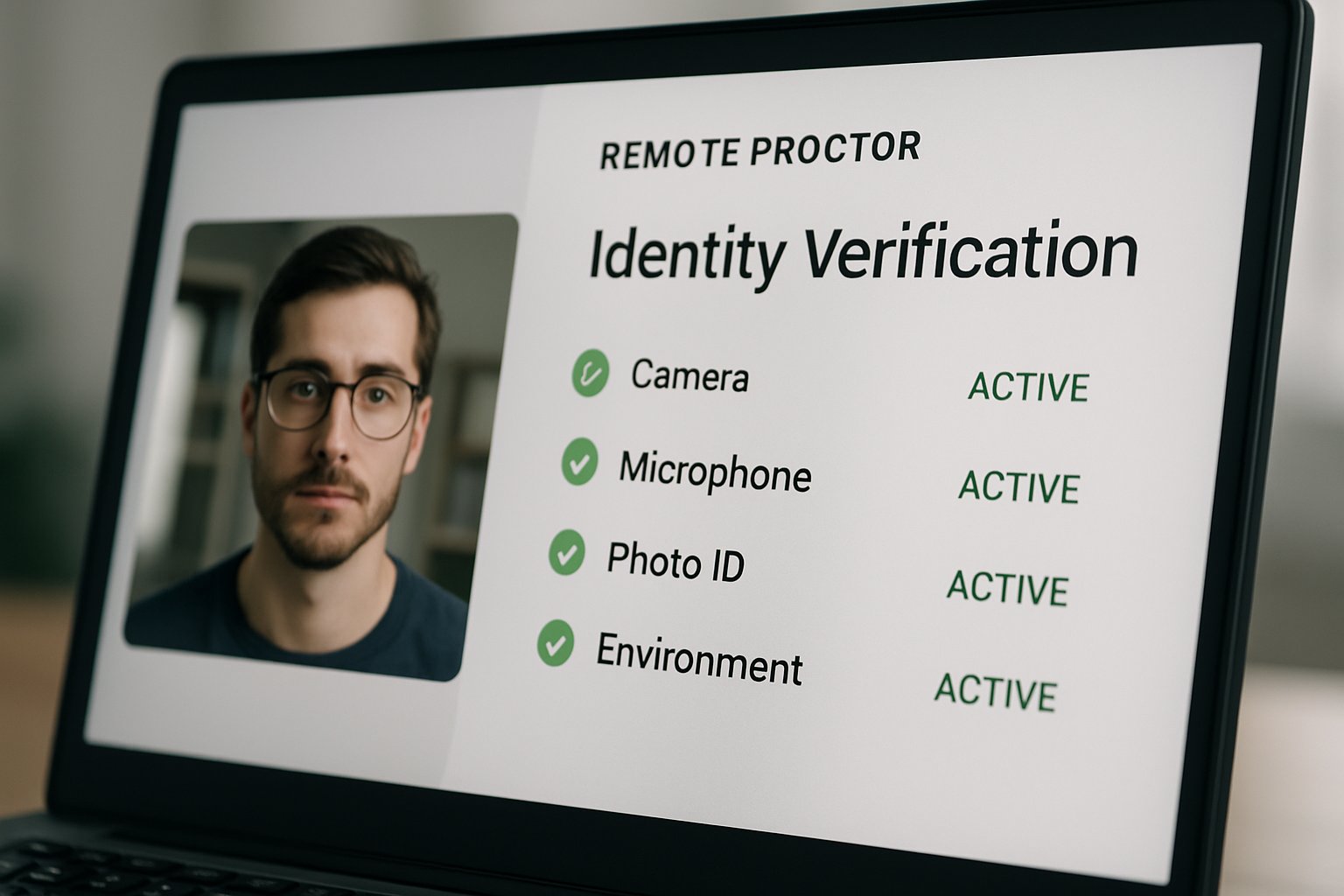
Modern remote proctor software integrates five real-time layers. First, identity verification captures an ID photo and live selfie. The system matches templates within milliseconds. Second, environment scans request a short webcam pan to spot notes or helpers. Third, a lockdown browser blocks navigation, copy events, and virtual machines. Fourth, continuous webcam, microphone, and screen feeds stream to computer-vision models. These models detect faces, gaze drift, secondary devices, and voices. Finally, behavioural analytics aggregate every flagged event into a risk timeline for human review. Each layer of software for online exam security feeds unified analytics.
Collectively, layers deliver continuous vigilance. Subsequently, we explore specific cheating flags.
Common Cheating Flag Triggers
Machine-learning models translate raw streams into discrete alerts. Moreover, each alert receives a severity score. Using remote proctor software, these signals appear in a searchable timeline.
- Face absent or swapped during exam.
- Prolonged gaze away from screen.
- Multiple faces or extra voice detected.
- Phone or paper visible in frame.
- Browser focus lost or copy attempted.
These flags do not equal guilt. However, accumulated anomalies often prompt manual investigation. Vendors claim adaptive thresholds reduce noise, yet independent audits still log false positives.
Knowing triggers helps educators brief candidates effectively. Consequently, reliability merits close attention.
Accuracy Limits And Bias
Academic studies highlight accuracy gaps across lighting, skin tone, and disability contexts. For instance, Burgess et al. found elevated false-alert rates for darker-skinned students under low light. Meanwhile, Ogletree v. CSU underscored privacy concerns, ruling forced room scans may breach constitutional protections. Vendors respond by stressing human review; nevertheless, bias persists if reviewers trust algorithmic rank scores.
Furthermore, determined cheaters still bypass controls using off-camera phones, hidden earpieces, or virtual machines. That reality proves remote proctor software is a deterrent, not an absolute barrier.
Leaders must balance benefits against documented shortcomings. Next, we outline practical mitigation steps.
Effective Mitigation Best Practices
Strategic policy reduces both cheating and student anxiety. Firstly, redesign high-stakes tests into open-book or project formats where possible. Secondly, publish transparent data-collection notices that meet California’s Student Test Taker Privacy Act. Thirdly, guarantee humans review every automated flag and offer appeals. Also, address infrastructure and audit needs proactively.
- Provide alternatives for learners lacking cameras or stable bandwidth.
- Run frequent equipment checks before exam day.
- Commission independent audits of software for online exam accuracy.
Moreover, combine remote proctor software with diversified assessment design rather than relying solely on surveillance. These moves strengthen legitimacy and reduce appeal rates. Finally, we examine market growth implications.
Fast Growing Market Outlook
Market analysts forecast remote proctoring revenues to top US$2.3 billion by 2031 at a 15% CAGR. Additionally, vendors now bundle LMS integrations and AI upgrades to meet blossoming demand from corporate credential programs.
Simultaneously, legislators push stricter privacy safeguards, and researchers call for open standards. Therefore, future winners will ship transparent, auditable remote proctor software that scales ethically.
Growth appears strong yet conditional on ethics. We conclude with key takeaways and a trusted solution.
Remote proctor software combines identity checks, environment scans, lockdown browsers, and AI analytics to flag misconduct at scale. However, bias, privacy, and technical evasion remain significant challenges. Institutions should pair policy reform, transparent data handling, and human review to maximise fairness while deterring fraud.
Why Proctor365? Proctor365 delivers AI-powered proctoring, advanced identity verification, and scalable monitoring trusted by global exam bodies. Our remote proctor software integrates seamlessly with leading LMS platforms and provides granular, human-verified reporting. Consequently, organisations cut cheating while respecting candidate privacy. Experience improved exam integrity today by visiting Proctor365.ai.
Frequently Asked Questions
- What is remote proctor software and how does it maintain exam integrity?
Remote proctor software employs identity verification, environment scans, and lockdown browsers alongside continuous webcam and screen monitoring. This solution enhances exam integrity and fraud prevention by combining AI proctoring with human review to ensure a secure and fair testing process. - How does Proctor365’s solution address challenges like bias and privacy issues?
Proctor365’s AI-powered system integrates transparent data handling, human review, and strict privacy safeguards. It utilizes advanced identity verification while ensuring fair examination protocols to minimize bias and maintain compliance with privacy regulations. - What role do human reviews play in remote proctoring systems?
Human review is crucial for verifying alerts from AI proctoring systems. Proctor365 pairs automated tools with human oversight to minimize false positives, ensuring exam security while safeguarding candidate privacy and promoting unbiased assessments. - What best practices can be implemented to reduce exam misconduct?
Institutions should redesign assessments into open-book or project formats, provide transparent data policies, conduct equipment checks, and combine AI proctoring with human review. These best practices enhance exam integrity and reduce potential cheating incidents.