Global programs grow fast. Consequently, assessment leaders must scale without losing integrity or blowing budgets. Online exam proctoring offers a path that avoids bricks-and-mortar test centers while maintaining rigorous oversight. However, success demands data-driven planning, legal awareness, and clear communication.
Moreover, market research shows double-digit growth and wide adoption across higher education, certification, and corporate L&D. Therefore, this guide breaks down the numbers, shares actionable steps, and flags the risks every program manager should know.
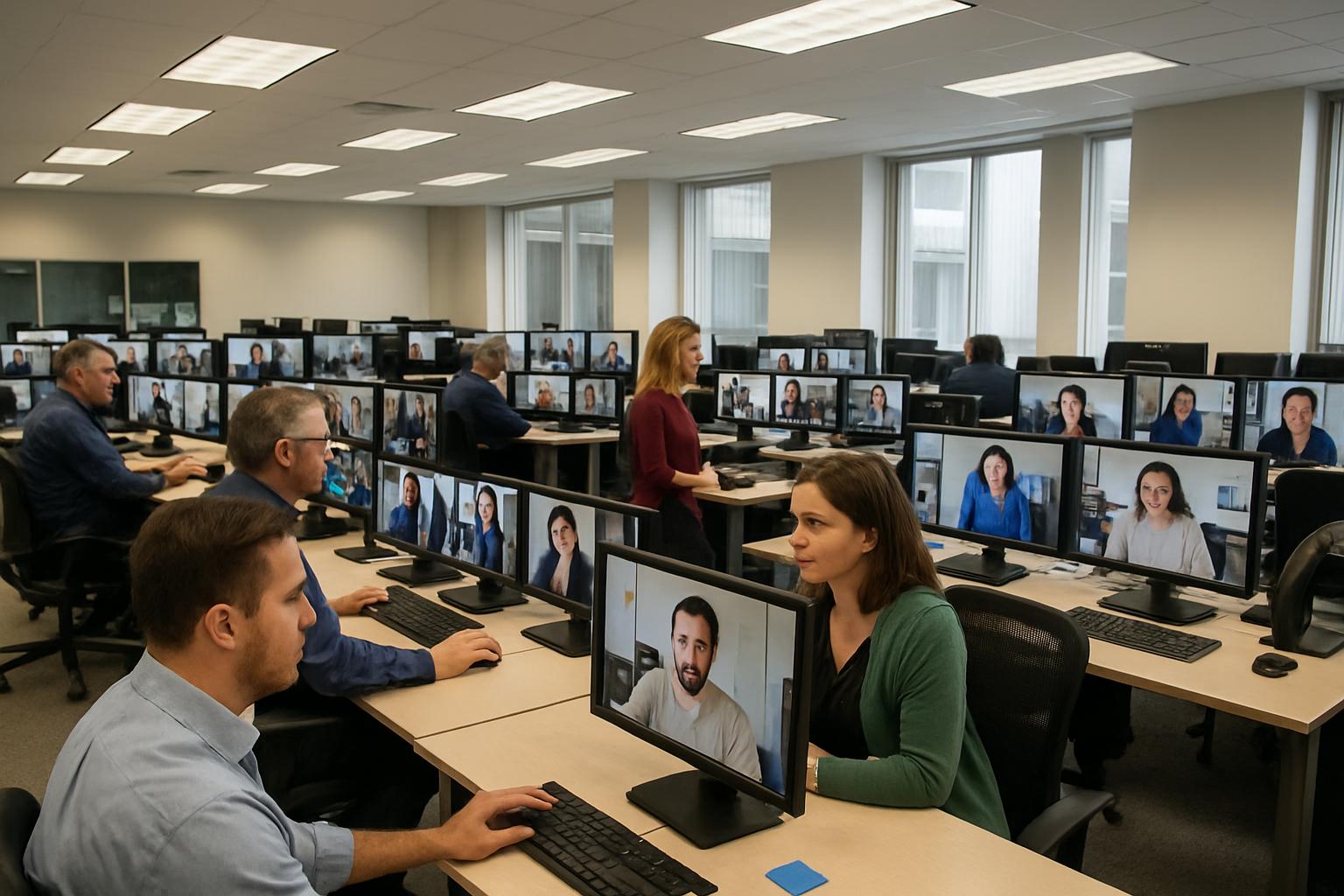
Market Growth Snapshot Now
The Insight Partners predicts the market will jump from US$869 million in 2024 to US$2.35 billion by 2031, a 15.5% CAGR. Similarly, EDUCAUSE found proctoring software referenced on 63% of North American campus sites. Furthermore, pricing remains predictable: US$15–30 for live sessions and US$10–25 for automated reviews.
These signals confirm demand. Consequently, many programs treat a proctored online test as the default for high-stakes exams.
Key takeaway: Investment momentum is strong; budgets must still match policy goals. Next, we examine impact factors.
Online Exam Proctoring Impact
A recent randomized experiment reported lower average scores under supervision, indicating reduced cheating. Moreover, vendors now embed analytics hubs that surface flag rates and resolution times, letting faculty refine settings quickly.
Nevertheless, student anxiety and false positives persist. Therefore, balanced policy and transparent workflows remain essential.
Key takeaway: Evidence supports deterrence, yet design decisions shape student trust. Let’s explore concrete benefits.
Core Scaling Benefits Explained
Institutions cite several practical wins:
- 24/7 global reach without physical rooms.
- Automated AI reviews that cut human cost.
- Recorded sessions that assist audits and appeals.
- Fast LTI and SSO integrations with major LMS platforms.
Furthermore, Honorlock’s Docebo case study claims 45,000 learners supported with same-day rollout and US$50K annual admin savings. Consequently, leaders see rapid ROI when workflows align.
Key takeaway: Benefits compound when technology, policy, and support synchronize. Next, we outline execution steps.
Critical Implementation Steps Now
Policy Planning Essentials Guide
First, define a risk matrix that pairs each assessment with an oversight level. Moreover, consult legal teams on biometric storage, retention, and consent requirements before contracts are signed.
Integration Testing Guide Now
Second, demand LTI 1.3, SSO, and REST APIs. Subsequently, run load tests that mimic peak concurrency for every proctored online test.
Student Support Communications Plan
Third, publish clear set-up guides, privacy notices, and appeal pathways. Additionally, create alternative assessment routes for learners lacking cameras or bandwidth.
- Pilot with a small cohort.
- Stress-test platform capacity.
- Measure flag accuracy and help-desk tickets.
- Iterate settings based on analytics.
Key takeaway: Structured pilots mitigate surprises and build stakeholder confidence. Now, consider legal exposure.
Legal Risk Management Essentials
Room scans face constitutional challenges; a U.S. district court ruled them unreasonable searches. Moreover, Illinois’ BIPA spurred class actions over biometric capture. Consequently, institutions must secure counsel approval, offer opt-outs, and set strict deletion schedules.
Activist groups highlight surveillance concerns, so transparent consent wording is non-negotiable for every proctored online test.
Key takeaway: Proactive legal reviews prevent costly litigation. After compliance, continuous monitoring matters.
Measuring Program Success Metrics
Dashboards should track:
- Concurrent session peaks versus vendor SLA.
- AI flag rate per 1,000 sessions.
- Average review and dispute resolution time.
- Equity indicators such as failure rates by device.
Furthermore, analytics inform threshold adjustments, assessment redesigns, and resource allocation. Therefore, data discipline sustains long-term integrity.
Key takeaway: Metrics close the feedback loop and justify investment. We conclude with next actions.
Final Takeaways And Action
Scaling assessments demands more than technology. Leaders must align policy, integration, student support, legal safeguards, and continuous analytics. When executed well, online exam proctoring deters cheating, safeguards reputation, and unlocks global reach.
Why Proctor365? Our AI-powered platform delivers live or automated monitoring, advanced identity verification, and elastic scale for any proctored online test. Moreover, global exam bodies trust Proctor365 to protect integrity without sacrificing user experience. Explore Proctor365 today and secure your next assessment cycle.
Frequently Asked Questions
- How does online exam proctoring enhance assessment integrity?
Online exam proctoring deters cheating and safeguards exam integrity through advanced AI monitoring and real-time analytics. Proctor365 uses live proctoring and automated reviews to ensure secure, reliable testing. - What benefits does scaling online proctoring deliver?
Scaling online proctoring offers 24/7 global reach, cost savings via automated AI reviews, secure identity verification, and detailed analytics that enhance exam security while optimizing operational efficiency. - How does Proctor365 help in fraud prevention during online exams?
Proctor365 utilizes cutting-edge AI proctoring and identity verification to detect suspicious behavior and prevent fraud, backed by robust analytics to continuously adjust and maintain exam integrity. - What legal and compliance measures should be considered with online proctoring?
Institutions must enforce legal safeguards, secure biometric consent, and ensure transparent workflows. Proctor365 aligns policy and technical integrations to meet compliance requirements and mitigate legal risks.