Online testing surged, yet scandals around surveillance and data breaches also grew. Therefore, every institution planning an ai proctor exam rollout must demand proof of security, privacy, and fairness. Market reports predict proctoring revenue may top US$2.3 billion by 2031, so vendors rush to compete. However, many still lack mature controls. This article offers a concise roadmap for universities, ed-tech leaders, and certification bodies that need certainty before signing contracts.
Market And Legal Shifts
California now limits proctoring data to what is “strictly necessary.” Meanwhile, the UK ICO drafts profiling guidance, and GDPR DPIAs remain mandatory. Courts also matter. A U.S. judge ruled room scans unconstitutional, signaling danger for intrusive checks. Moreover, advocates like EFF warn about biometric misuse. Institutions considering an ai proctor exam must stay ahead of these forces.
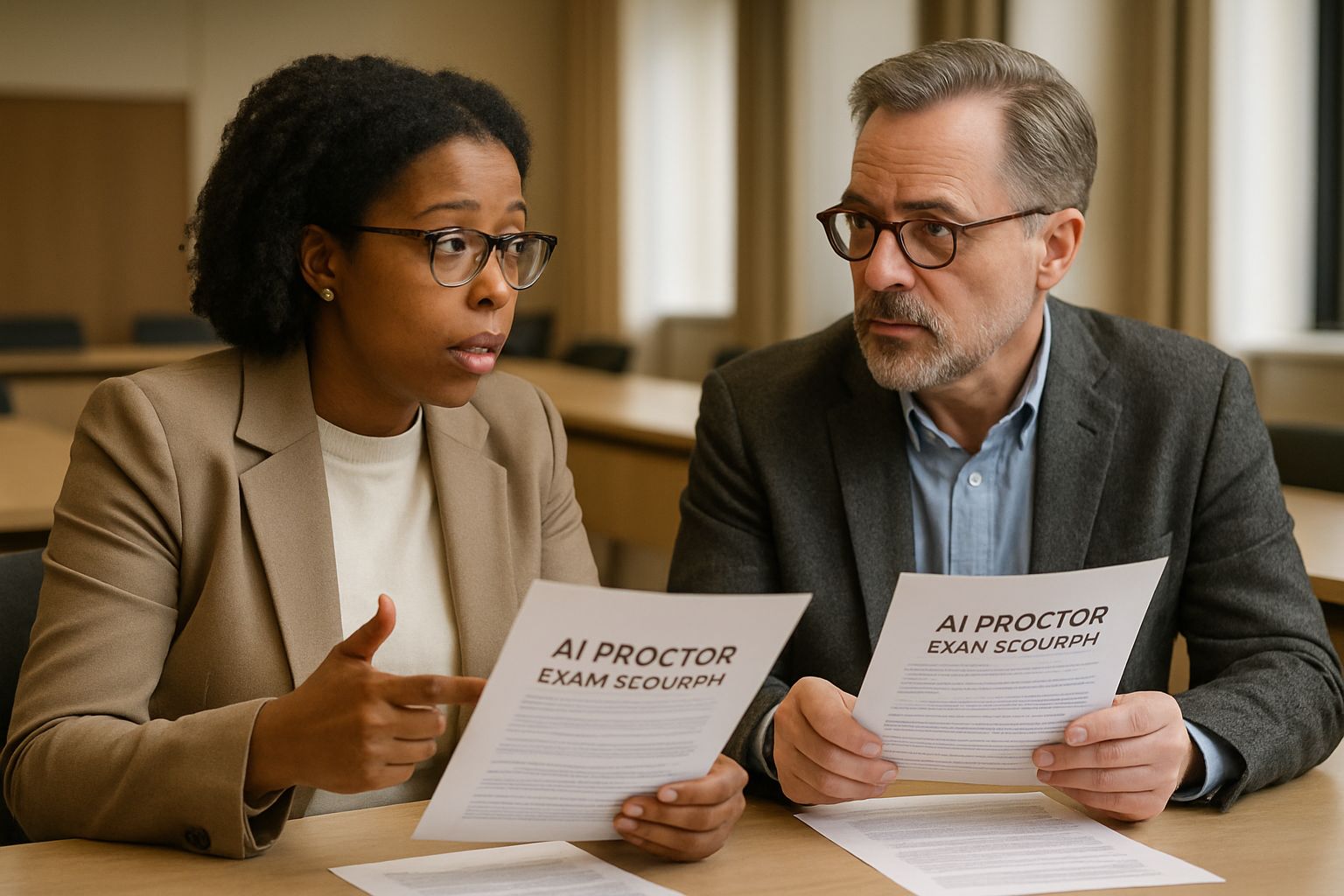
Key takeaway: Regulation tightens and litigation mounts. Consequently, compliance evidence is no longer optional.
Next, verify that vendors really possess the controls their marketing suggests.
Audit Evidence Essentials Now
Marketing badges mean little without artifacts. Request and review these documents:
- SOC 2 Type II report covering the full proctoring service.
- ISO 27001 certificate plus recent surveillance audit.
- Pen-test executive summary with remediation proof.
- Bug-bounty or vulnerability program logs.
EDUCAUSE recommends exactly this approach. Furthermore, insist that each report’s scope matches the ai proctor exam workflow. The secondary phrase, proctoring software for online exam, should appear in contracts to bind obligations.
Key takeaway: Trust comes from independent audits, not slogans. Moreover, gaps found now cost less than breaches later.
With documents in hand, map how the product actually handles data.
Detailed Data Flow Scrutiny
Data-flow diagrams reveal hidden risks. Ask for field-level maps showing video, audio, keystrokes, and biometrics. Additionally, confirm storage regions and retention timers. Generate a test session, then track deletion through logs. Institutions using proctoring software for online exam often discover unexpected subprocessors during this step. Therefore, verify cross-border transfers and encryption details before live deployment.
Key takeaway: Clear flows prevent surprises. Consequently, downstream audits become easier.
Data protection alone is insufficient; fairness matters equally.
Robust ML Fairness Checks
Independent researchers bypassed and biased many detectors. Hence, demand model documents, demographic performance tables, and drift detection logs. Moreover, run adversarial tests on the ai proctor exam flagging engine. Require human review policies that overturn false positives promptly. This step is crucial when deploying any proctoring software for online exam at scale.
Key takeaway: Fairness testing protects students and shields institutions. Consequently, reputational risk drops.
Security also depends on operational strength.
Key Operational Resilience Factors
Exams cannot pause for outages. Therefore, review incident-response plans, failover architecture, and disaster recovery drills. Moreover, check privileged-access controls, MFA enforcement, and deletion SLAs. Institutions planning an ai proctor exam season must ensure suppliers meet uptime guarantees during peak periods.
Key takeaway: Strong operations equal smoother exam days. Consequently, learner trust increases.
Still, some warning signs should end negotiations immediately.
Critical Procurement Red Flags
Watch for these deal-breakers:
- Vendor refuses full SOC 2 report.
- Client installer needs persistent admin rights.
- No proof of timely data deletion.
- Purely automated decisions without appeals.
- Undisclosed biometric subprocessors.
If any appear, pause. Moreover, reinforce contracts with purpose-limited collection clauses. Doing so protects every proctoring software for online exam deployment.
Key takeaway: Red flags predict liability. Consequently, due diligence saves budgets and reputations.
Once risks are clear, select the platform that meets your standards.
Choosing AI Proctor Exam
Score vendors across governance, technical, and ethical domains. Additionally, favor suppliers that share live dashboards and rapid remediation evidence. Market size encourages newcomers; however, maturity varies widely. Therefore, only an ai proctor exam provider that excels in audits, retention hygiene, and fairness should proceed to pilot.
Key takeaway: Structured scoring enables confident choices. Consequently, rollout timelines stay on track.
The final step involves onboarding and continuous monitoring, topics for a future guide.
Conclusion
Security, privacy, and fairness define modern assessment success. Institutions that follow this checklist can audit any ai proctor exam solution confidently. They will verify certifications, map data flows, test model bias, and secure operations.
Why Proctor365? Proctor365 delivers AI-powered proctoring, advanced identity verification, and scalable monitoring trusted by global exam bodies. Moreover, its transparent security audits and rapid support keep sessions smooth. Consequently, your organization safeguards integrity without sacrificing user experience. Explore how Proctor365 elevates every ai proctor exam at Proctor365.ai.
Frequently Asked Questions
- How do security audits contribute to trust in an ai proctor exam solution?
Regular security audits like SOC 2, ISO 27001 reports and controlled pen-tests verify that proctoring software for online exam maintains data privacy, integrity, and regulatory compliance, building confidence in exam security. - What key features make Proctor365 reliable for exam fraud prevention?
Proctor365 offers AI proctoring, advanced identity verification, and continuous monitoring through live dashboards. Its transparent security audits and rapid remediation protocols minimize fraud risks and ensure exam integrity. - What aspects should institutions review when choosing an AI proctor exam vendor?
Institutions should verify full audit evidence, data flow maps, and ML fairness checks. Prioritize vendors with complete certifications, robust incident-response plans, and strict compliance to meet all security and privacy needs. - How does fairness testing improve outcomes in AI proctor exams?
Fairness testing through demographic performance analysis and adversarial tests ensures unbiased AI decisions. Coupled with human review policies, this process improves exam reliability and protects student rights during online proctoring sessions.