Cheating did not disappear when exams moved online; it multiplied. Recent Guardian reporting shows thousands of UK students flagged for AI misuse in 2024. Universities now see the at home proctored exam as both opportunity and escalating risk.
Consequently, proctoring vendors respond with multi-modal AI that listens, watches, and locks devices. Meanwhile, regulators and privacy groups demand transparency and fairness from these tools. Finding balance requires clear understanding of how students cheat and how AI counters them.
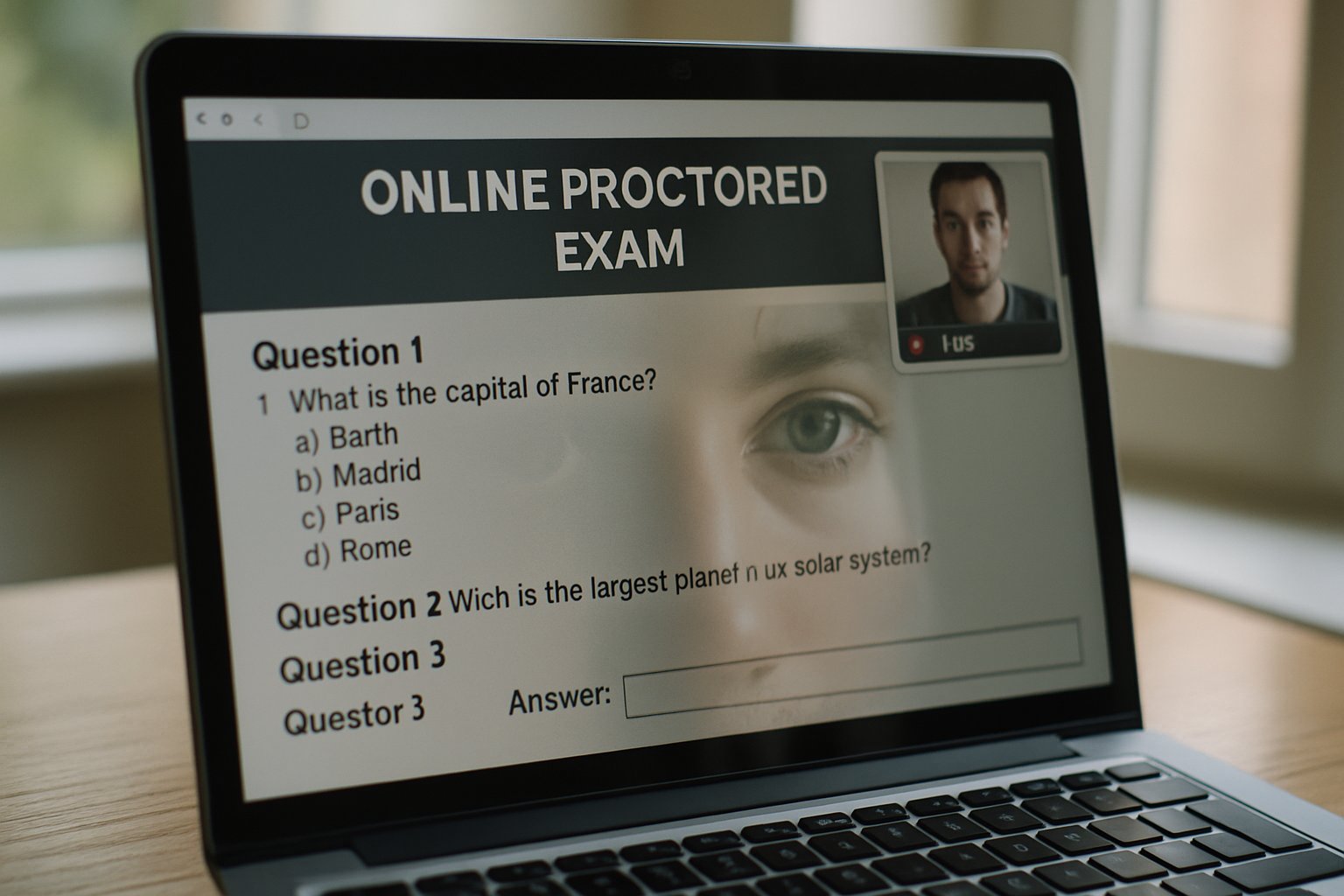
This article maps five common remote cheating tactics and the AI defenses neutralizing them. Moreover, we outline a practical remote exam security strategy for every stakeholder. Let us start with the recent surge in dishonest activity.
Remote Cheating Surge Trends
In 2023, the Journal of Academic Ethics reviewed decades of data. It found online exam cheating self-reports jumped from 30% pre-COVID to nearly 55% during lockdown. Phil Newton, lead author, warned that surveys likely undercount real misconduct.
Parallel institutional polls by Elon University show leaders deeply worried about generative AI abuse. Furthermore, Turnitin scanned 200 million papers and flagged 11% for significant AI content. Those numbers fuel urgent investment in stronger monitoring technologies.
Cheating rates and AI adoption are rising together. Therefore, institutions need a proactive remote exam security strategy.
Secondary Device Misuse
Smartphones, smartwatches, and voice assistants offer silent answer channels during timed tests. Honorlock lists this vector as the most reported violation in their 2025 data.
AI proctoring counters with audio watermarking that detects hidden devices through ultrasonic pings. Moreover, keyword recognition flags phrases like “Hey Siri” or “ChatGPT answer” in real time.
These signals alert reviewers before answers leak outside the test window. Consequently, the at home proctored exam regains deterrent power against quick Google searches.
Next, we examine AI-written answers.
AI Answers Detection Tactics
ChatGPT and similar models can output polished essays in seconds. Unsurprisingly, many students paste that text with minimal edits.
Turnitin’s 2024 update uses large language models to estimate the percentage of AI writing. It flagged three percent of submissions as over 80% machine generated.
Nevertheless, detectors can misfire, so vendors blend automated scoring with expert human review. Furthermore, instructors should redesign tasks toward authentic, staged responses difficult for bots.
Combined human and algorithmic scrutiny reduces AI ghostwriting at scale. Thus, the at home proctored exam remains credible even in the ChatGPT era.
Contract cheating, however, still threatens integrity.
Contract Cheating Market Growth
Essay mills now advertise on TikTok, Discord, and encrypted messaging apps. TEQSA blocked hundreds of such sites across Australia during 2025 alone.
AI helps here by rotating question banks and scanning the web for leaked items. Moreover, some systems auto-generate fresh variants, denying contractors reusable material.
Dynamic content makes outsourcing slower and pricier. Consequently, students reconsider risking an at home proctored exam violation.
Impersonation represents the next frontier.
Impersonation Identity Fraud
Some candidates hire proxies who resemble their profile photos. Others share credentials with friends in distant time zones.
Modern platforms deploy selfie ID match, biometric liveness, and keystroke dynamics to unmask impostors. Additionally, suspicious behavior triggers live human audits within minutes.
Verifying identity quickly discourages professional test takers. Therefore, the at home proctored exam sustains trust across global cohorts.
Technical bypasses still demand attention.
Technical Bypass Countermeasures
Resourceful students exploit virtual machines, screen overlays, or multiple monitors. In contrast, Respondus LockDown Browser blocks screenshots and detects extra displays instantly.
Moreover, companion apps run outside the browser sandbox, plugging operating-system loopholes. Institutions should integrate these tools within a broader remote exam security strategy.
Layered controls frustrate technical exploits. As a result, cheating costs outweigh benefits in an at home proctored exam.
Finally, we unite these defenses into one roadmap.
At Home Proctored Exam
A successful remote exam security strategy blends policy, design, and technology. Firstly, update honor codes with explicit AI and device clauses.
Secondly, choose AI proctoring that combines automated flags with swift human review. Thirdly, redesign assessments toward open-notes or applied scenarios less vulnerable to lookup.
- Flag rate versus confirmed violations
- False positive ratio across demographics
- Average human review turnaround time
- Student satisfaction survey scores
Tracking these metrics refines your remote exam security strategy continually. Consequently, integrity scales without crushing user privacy.
Let us close with actionable next steps.
In summary, secondary devices, AI text generators, contract writers, impostors, and technical hacks dominate remote cheating. However, multi-modal AI proctoring, dynamic content, biometric checks, and lockdown software neutralize each threat. Building a layered remote exam security strategy keeps every at home proctored exam credible.
Why Proctor365? Our AI-powered proctoring reviews video, audio, and desktop feeds in real time. Advanced identity verification confirms liveness and matches IDs seamlessly across devices. Moreover, scalable exam monitoring supports thousands of sessions and is trusted by global exam bodies. Start today and protect your next test with Proctor365’s platform at Proctor365.ai.
Frequently Asked Questions
- How does Proctor365 ensure exam integrity in remote exams?
Proctor365 employs AI-powered proctoring to monitor video, audio, and desktop feeds in real time, along with biometric identity verification, ensuring exam integrity and robust fraud prevention. - What technologies does Proctor365 use for detecting secondary device misuse?
Our platform uses ultrasonic pings, keyword detection, and real-time alerts to monitor secondary devices, ensuring any unauthorized usage is quickly identified to maintain a secure exam environment. - How does Proctor365 prevent AI-generated answer fraud during exams?
Proctor365 integrates advanced algorithms with human review to detect AI-generated answers, ensuring that suspicious content is flagged and scrutinized to uphold exam credibility and security. - What methods does Proctor365 apply to verify identity and stop impersonation?
We use selfie ID matches, biometric liveness detection, and keystroke dynamics to authenticate candidates, with live audits to prevent impersonation and enforce secure, credible remote exams.