Institutions worldwide now rely on an ai based remote proctoring system to protect academic credibility. However, escalating legal, ethical, and operational questions push decision-makers to review their toolkits. Consequently, a rigorous selection checklist has become essential for universities, exam bodies, and corporate programs. This article presents that checklist and the context driving each requirement. Moreover, many professionals ask how to prepare for an at home proctored exam while policies keep shifting. We answer that concern by translating recent research, market data, and regulatory signals into clear action points. Finally, you gain an integrated roadmap to secure remote exams in 2026 and beyond. The guidance aligns with international privacy rules and accessibility standards. Therefore, start ticking boxes today before the next exam window opens. Better preparation protects both institutions and learners from reputational fallout.
AI Based Remote Proctoring System
The ai based remote proctoring system market expanded quickly after 2020 lockdowns. Grand View Research projects double-digit growth, yet trust challenges now reshape procurement priorities. Meanwhile, ACCA will scrap most remote exams, citing AI-aided misconduct outpacing safeguards.
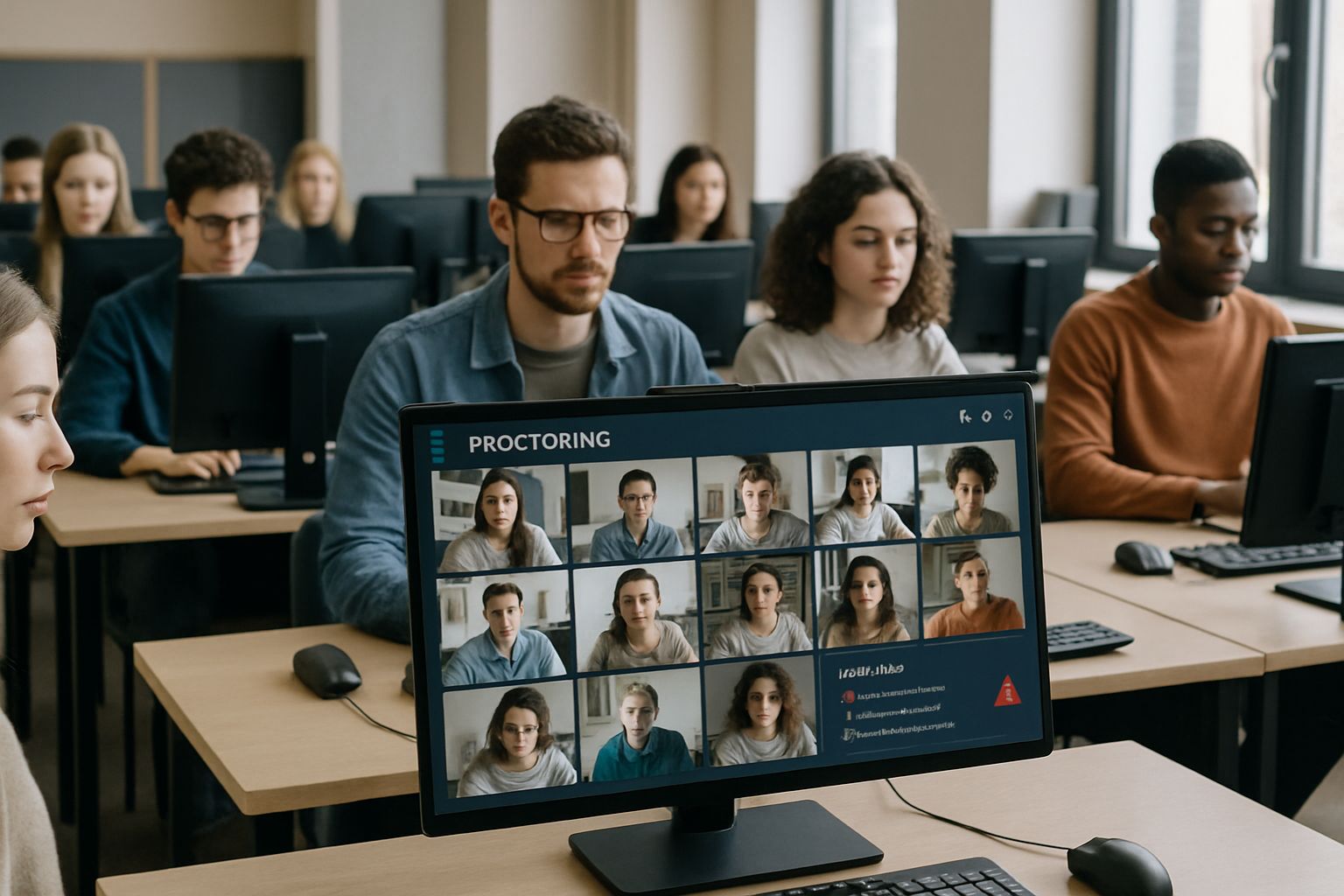
Nevertheless, many low- and mid-stakes assessments still demand scalable online invigilation. Therefore, institutions need refined criteria rather than blanket rejection. The next sections break those criteria into manageable checkpoints.
Key takeaway: demand evidence, not slogans. Next, we examine 2026 market forces.
Market Trends 2026
Recent twelve months delivered telling market signals. Firstly, professional bodies like ACCA reversed remote policies for high-stakes sittings. Secondly, privacy regulators intensified scrutiny over biometric data retention and algorithmic bias. Additionally, investors still fund vendors expecting midsize institutions to continue online testing.
Industry reports estimate the ai based remote proctoring system niche between $0.5 and $1.2 billion. However, CAGR forecasts vary and deserve careful validation before board presentations. Consequently, procurement teams should request third-party numbers directly from analysts.
Key takeaway: market optimism coexists with rising scepticism. Now, focus on the main risk factors driving that scepticism.
Critical Risk Factors
Four overlapping risks dominate board discussions. Privacy breaches expose sensitive recordings and identities. Algorithmic bias can falsely flag students from underrepresented groups. Accessibility failures may violate ADA obligations. Finally, network or browser crashes can terminate valid attempts.
- False-positive rates reported by vendors range from 2% to 9% per session.
- Up to 15% of help tickets stem from bandwidth or camera issues.
- NIST tests reveal demographic error gaps exceeding 10x between algorithms.
These numbers show why governance controls matter. Let’s convert risks into a concrete checklist.
Step By Step Checklist
The following ten domains mirror leading audit frameworks. When applied, they answer how to prepare for an at home proctored exam from an institutional view. Moreover, they help vendors align with global standards. Each item ensures your ai based remote proctoring system aligns with global trust standards.
Governance Contract Essentials
Demand a signed DPA, breach-notification clause, and SOC 2 evidence. Additionally, insist on post-contract data deletion within 30 days. Therefore, legal teams can enforce accountability.
Privacy And Data Minimization
Collect only video, audio, and metadata essential for the exam objective. Encrypt everything in transit and at rest using AES-256. Furthermore, set default retention below 60 days unless appeals remain open.
Identity Verification Accuracy Demands
Require liveness checks plus document matching backed by independent NIST-style reports. Institutions should also review demographic performance slices before deployment. Consequently, equity objections diminish. Precise thresholds save the ai based remote proctoring system from producing endless false flags.
Accessibility And Fairness
Publish an accommodations policy covering assistive tech, extended time, and alternate locations. Moreover, offer opt-outs for students with documented concerns. Clear communication reduces grievances later. Inclusive design strengthens any ai based remote proctoring system against discrimination claims.
Checklist completion provides a defensible audit trail. Next, test effectiveness through measurable pilots.
Pilot Success Metrics Guide
A short pilot validates assumptions before campus-wide rollout. Track technical completion rate, false-positive ratio, and student stress levels. Moreover, segment every metric by race, gender, device, and bandwidth. Evaluate cost per exam including human review hours.
Institutions also learn how to prepare for an at home proctored exam from student surveys. Feedback identifies confusing instructions and hardware gaps.
Pilot data converts theory into concrete return-on-investment. Armed with evidence, leaders can plan future strategies.
Future Remote Exam Strategies
Stakeholders now blend multiple assessment models. Some high-stakes tests return onsite, while quizzes stay online with an ai based remote proctoring system. Others redesign evaluations toward open-resource or oral formats resilient to generative AI. Nevertheless, remote proctoring will persist where convenience and access outweigh risks.
Therefore, keep updating policies, vendor contracts, and training materials annually. Also share pilot findings with peer institutions for collaborative improvements. Students still ask how to prepare for an at home proctored exam; transparent FAQs help them succeed.
Future readiness demands iterative governance. Finally, consider why Proctor365 addresses these evolving needs.
Conclusion
Remote assessment will stay, yet only disciplined governance secures trust. This guide shared risks, metrics, and steps to optimise your ai based remote proctoring system. Follow the checklist, run pilots, and update policies yearly. Proctor365 combines advanced AI analytics, robust identity verification, and elastic cloud scaling. Consequently, global exam bodies trust its 24/7 monitoring to protect billions of exam minutes. Moreover, the platform delivers detailed audit logs, low-bandwidth modes, and inclusive accommodation workflows. Elevate integrity now; visit Proctor365.ai to deploy an ai based remote proctoring system.
Frequently Asked Questions
- How does AI-based remote proctoring enhance exam security?
AI-based remote proctoring, like Proctor365’s system, leverages advanced AI analytics and identity verification to minimize fraud and ensure secure exam environments with transparent audit logs and robust data encryption. - What risk factors should institutions consider with remote exam proctoring?
Institutions must consider risks such as privacy breaches, algorithmic bias, and technical disruptions. Proctor365 mitigates these risks using multi-layer fraud prevention tools and scalable AI proctoring for secure exams. - How can institutions prepare for changes in remote exam strategies?
Institutions can prepare by following a structured checklist, running pilot tests, and updating governance protocols continuously. Proctor365 supports flexible AI proctoring solutions that adapt to evolving exam trends. - How do students prepare for an at home proctored exam?
Students should review clear exam instructions, test their connectivity, and verify their identity using robust online tools. Proctor365 emphasizes user guidance, ensuring fairness and smooth exam execution.