Professional credentials only matter when stakeholders trust the assessment behind them. Consequently, many awarding bodies now combine digital delivery with rigorous online test monitoring. This shift exploded during the pandemic and remains central to global certification strategy. However, critics still question privacy, equity, and technical reliability.
The solution that has prevailed is the remotely proctored exam, backed by AI and human review. In this article, we unpack why certification boards insist on that model. We also explore risks, mitigation tactics, and vendor selection tips.
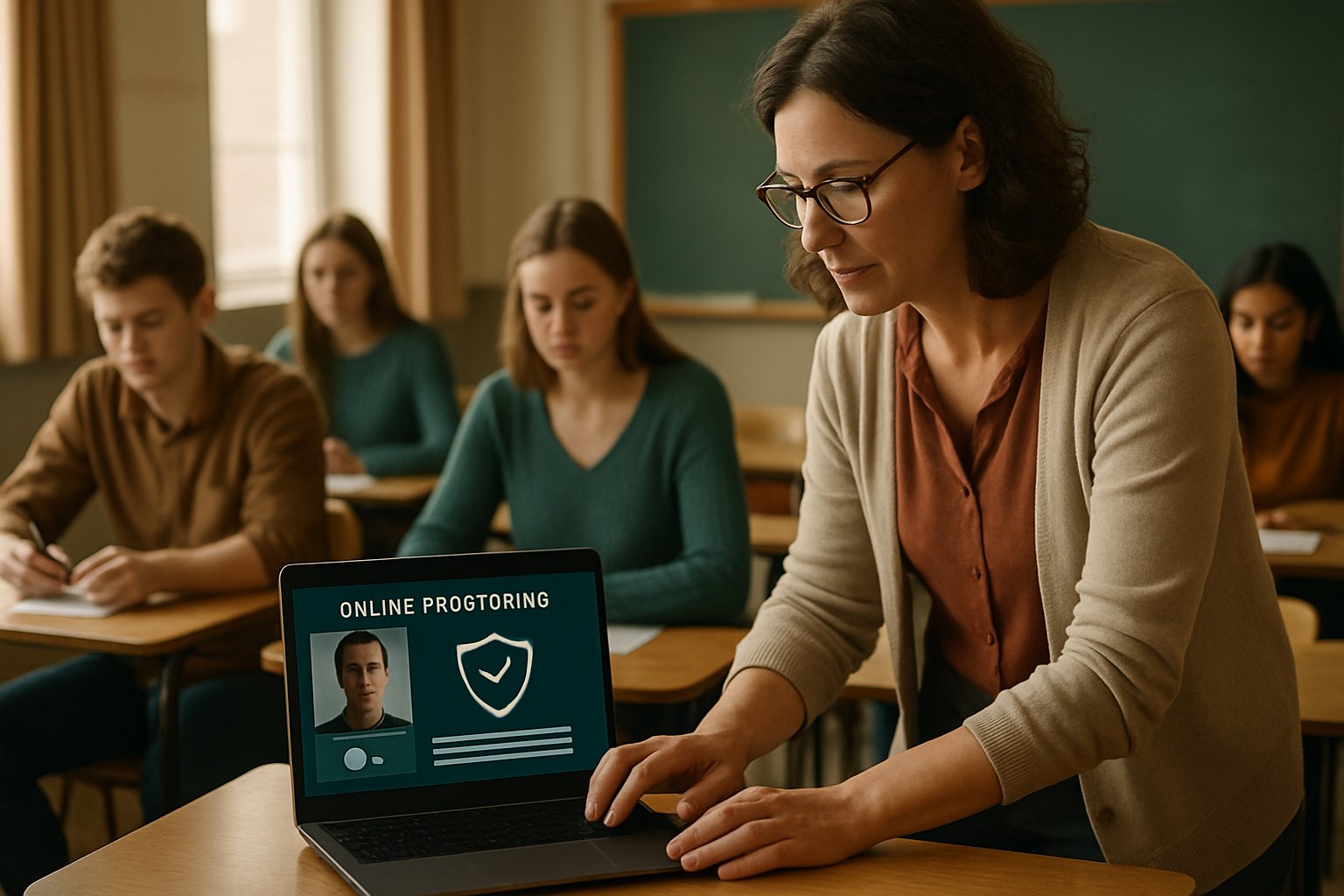
Protecting Credential Value Stakes
Certification value depends on employer confidence in score authenticity. Moreover, identity fraud or leaked items can erode that confidence overnight. Online test monitoring supplies verifiable video, audio, and system logs that investigators can later audit. Therefore, boards view monitoring as insurance protecting both brand reputation and candidate effort.
In short, integrity fuels credential worth. Next, we examine identity proof tactics.
Robust Identity Proof Steps
Every session starts with multi-factor identity checks. Candidates submit photo ID, then facial recognition validates live images against registration data. Because online test monitoring already controls the webcam feed, programs can overlay biometric matching without extra hardware. Consequently, proxy testers struggle to bypass these layered defenses.
Strong identity proof blocks impersonation. However, cheating attempts still evolve.
Evolving Fraud Threat Landscape
Cheating techniques grow more creative each quarter. Remote access tools, hidden earpieces, and item harvesting forums headline recent incident reports.
- Proxy testers logging in under stolen credentials.
- Screen-sharing with external answer farms.
- Group messaging apps coordinating live answers.
Live flags from online test monitoring alert security staff before significant damage occurs. Nevertheless, scale and accessibility also matter.
Fraud exists, yet detection improves. Our next focus is scale.
Scaling Online Test Monitoring
Millions of professionals live far from authorized test centers. Moreover, program budgets rarely cover global bricks-and-mortar expansion. A remotely proctored exam lets candidates test from home while preserving standardized conditions. Because online test monitoring works 24/7, programs can open rolling windows and reduce scheduling bottlenecks.
- Lower travel costs per candidate.
- Flexible retake scheduling within days.
- Rapid market expansion into new regions.
Scalability drives adoption momentum. Yet fairness concerns remain pressing.
Balancing Fair Testing Practice
Stakeholders also weigh privacy, bias, and accessibility. Academic studies found higher false-flag rates for darker skin tones. Therefore, vendors must validate algorithms and publish clear appeals workflows. Meanwhile, monitoring policies should always offer in-person alternatives for candidates lacking private spaces. Consequently, trust grows when transparency and options coexist.
Fairness protects both candidates and brands. Next, we review mitigation drills.
Mitigation Tactics Checklist Guide
Program teams can deploy a three-layer defense model. Firstly, use blended AI and human review for all severe flags. Secondly, disclose data retention schedules and allow prompt deletion requests. Thirdly, run psychometric checks across delivery modes to detect score anomalies. These steps reinforce credibility without excessive overhead.
Mitigation lowers operational risk. Finally, teams must choose partners wisely.
Selecting Right Proctoring Partner
Vendor ecosystems range from DIY lockdown browsers to full managed services. Certification leads should request security audits, data flows, and uptime metrics. Ask whether the platform supports a remotely proctored exam model with flexible language support. Also confirm that online test monitoring integrates with your LMS and analytics stack. Moreover, peer references from similar programs shorten evaluation cycles.
Diligent selection prevents unpleasant surprises. We conclude with key takeaways.
Conclusion
Professional certifications thrive when assessments stay secure, fair, and accessible. Identity proof, fraud prevention, and scalability make the remotely proctored exam indispensable. However, success hinges on transparent policy, careful vendor vetting, and continuous quality analytics.
Why Proctor365? Our AI-powered engine fuses advanced identity verification with real-time analytics to deliver unmatched integrity. Scalable cloud architecture allows you to extend online test monitoring worldwide without costly centers. Global exam bodies already trust our solution to safeguard thousands of high-stakes programs. Visit https://www.proctor365.ai/ to book a demo and elevate your next exam cycle.
Frequently Asked Questions
- How does remote proctoring help maintain exam integrity?
Remote proctoring leverages AI-driven monitoring combined with human review to ensure secure, fraud-preventative testing, helping maintain credential value through rigorous identity verification and real-time analytics. - What measures does Proctor365 use for robust identity verification?
Proctor365 employs multi-factor authentication with photo ID and live facial recognition, ensuring accurate identity matching and preventing impersonation with advanced AI proctoring and biometric checks. - How does Proctor365 support scalability and global access?
Proctor365’s cloud-based AI solution offers scalable, 24/7 online test monitoring. This reduces travel costs and scheduling bottlenecks, enabling secure assessments worldwide without the need for physical centers. - What steps does Proctor365 take to prevent exam fraud?
Proctor365 integrates blended AI and human review with real-time analytics, system logs, and biometric verification to create a layered defense that effectively minimizes fraud and preserves exam integrity.